Tag: hong lim park

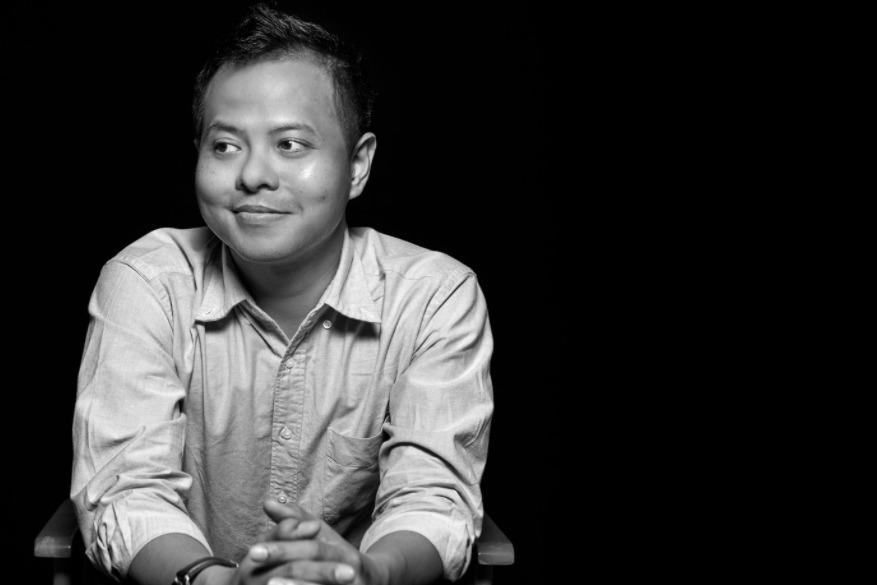
  • Damanhuri Abas: It’s Not About Anti-Halimah, It Is About The Election Process

    Damanhuri Abas: It’s Not About Anti-Halimah, It Is About The Election Process

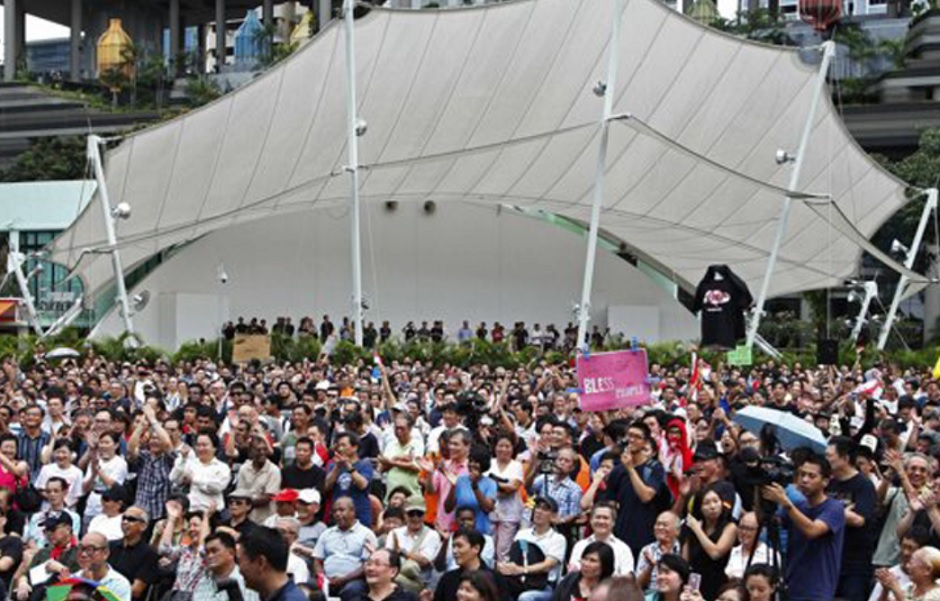
    The attempt to label this protest as anti-Halimah/Malay is misplaced. It was never about the person, it was about witnessing how the election process was systematically undermined, shortchanging citizen’s right to vote the best independent person for the vital role of Guardian of our National reserves as well as ensuring that meritocratic credentials are safeguarded in high public offices from potential conflict of interest situations.

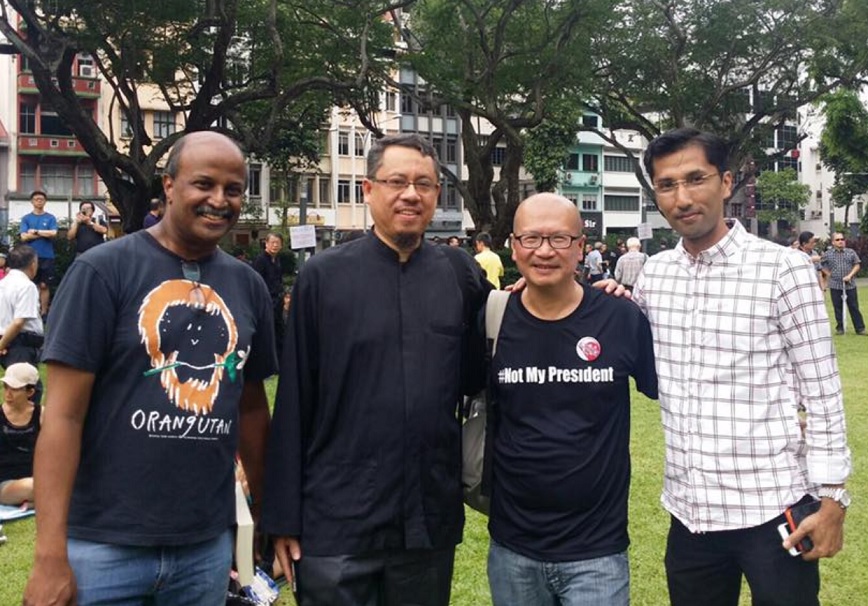
    While at HL, i met young concerned and disillusioned Singaporeans who asked important questions about race, race relations, racism, politics, reform, etc. Our exchanges sitting on the grass of HL revealed some interesting insights.

    1. What and who is the Malay race?

    Our race should never be what a committee decides. It is our ethnic identity inherited by birth and through organic cultural assimilation. No one should ever force an identity or race on anyone. After 52 years, society has evolved into a melting pot, creating a unique embracing Singaporean identity. This natural mix reflects social reality and is worthy of our celebration. However, when we politicise race, it gets messy very fast. This was clearly the case for this reserved PE when candidate’s race clearly do not fit the rigid pretentious race boxes and in the end was forced in anyway. It surely will be bruising. But its no fault of any candidate nor us, citizens. The blame lies squarely on those who imposed those rigid simplistic boxes on us to divide but then strangely claims it can unify.

    2. After 52 years, why is it that the Malay community needed this costly tokenism at the expense of our public money?

    Firstly, the community was never asked about it nor we wanted it. It was never our priority. The help that the Malay community needs is for the Government to stop boxing us in their box. If we had a box mentality to begin with, this country would never be multi-racial. The race boxes were legacies of Colonial past that the Government chooses to re-use instead of abandoning.

    3. What do the Malay community want?

    Fair chance to full unhindered access to equal opportunities in this country like every one else who are Singaporeans. Race based policies should stop immediately. Unjustified subliminal branding of Malays as inherently disloyal through unspoken security policies during National service must end. It is unjust and unfair that we as indigenous Malays are given a lower security clearance level by Mindef for no apparent reason explained for the last 52 years while new citizens from Mainland China, Myanmar, India, etc., etc., are given full or higher security clearance level than us. What have the Malays collectively done to inherit this blanket poisonous label?

    4. Why are there not many Malays at this protest event?

    The Malay leadership both in Government and in community have been systematically co-opted to be beholden and compliant. The outcome of which majority of the Malay community have seen and known only the PAP political leaders or friendly to PAP ones, throughout most of their lifetime. Any non-compliance to the status-quo is met with harsh consequences, ostracised and sidelined. Overtime, 52 years later, Malays are sceptical or suspicious of any non-Government related initiatives, they rather stay away and quietly support from a distance. For the Professionals, most are salaried employees and many are civil servants. So we see why the ‘endorsement’ of Mdm Halimah was fast and furious from the ‘community’. Sadly, the Malays by now are so used to singing from the same song-sheet, that they now do so, even without being asked. The rest, you can line the dots yourself.

    5. How can Singapore achieve political reform?

    The Government’s control on all aspects of life is dominant and almost total. This was achieved by design and numerous tweaking done overtime to guarantee that the political system and power structure remains unchallenged. Just think election process (GRC, gerrymandering, raising qualifying bars, short election campaign, changes to the constitutions and the parliamentary act), meritocracy vs elitism (SAP schools, nepotism and cronyism), ethnic quotas for HDB (low minority numbers used to justify GRC), the People’s Association (pro PAP), no media freedom, etc. We have a big daunting hazardous political mountain before us to climb. Every Singaporean must realise that for the opposition, public space is severely restricted, social media provides best outreach but its impact are small and limited. NGOs must participate in political related activism. Lawyers must raise their political game and no more remain a passive bystander. Finally, we need a unifying figure for this great reform effort, i.e. Dr Tan Cheng Bock or his equivalent.

    Personally, it was an afternoon well spent for the sake of our collective future. May this effort be blessed by God.


    Source: Damanhuri Bin Abas
  • Commentary: Why Only Protest Against An EP Reserved For Malays? It Involves Only One Job Opportunity..

    Commentary: Why Only Protest Against An EP Reserved For Malays? It Involves Only One Job Opportunity..

    SENSITIVE! BUT I AM SAYING IT AS A MATTER OF FACT:
    Some people are organising a protest against Reserved Presidential Election tomorrow @Hong Lim Park. They claim it is for fairness & an open system. This year’s EP was RESERVED FOR THE MALAYS.
    They can do as they wished. I only wish to ask the organiser/s & supporters:
    (i) Did you protest when the Government build SAP schools RESERVED FOR THE CHINESE?
    (ii) Did you protest when Malay-Muslims were not recruited to serve the military [NS or full-time]? Thus well-paying jobs in our armed services were RESERVED FOR NON-MALAYS / NON-MUSLIMS.
    Why you only protest against an EP RESERVED FOR THE MALAYS? It involves only ONE JOB OPPORTUNITY & ONCE AFTER 47 YEARS!
    And you do it for fairness & an open system? Come on! Let’s not lose our ability to give & take in some cases. I thought we are used to it. All for the sake of national unity.


    Source: Maidin Packer

  • Alfian Sa’at: Why I Don’t Attend Pink Dot

    Alfian Sa’at: Why I Don’t Attend Pink Dot

    Growing older, I find that my introverted nature is becoming more pronounced. One of the reasons why I decided not to go for Pink Dot this year is because I’m beginning to get more terrified of crowds. There’s always a moment when I’m surrounded by too many people when I start feeling dizzy and nauseous.

    And then there’s the issue of my nervousness around dogs. I know Pink Dot is an opportunity for some people to bring their pets along, pets which are as dear to them as family. But dogs–when there’s more than one, or two–have always put me on edge. This is not a problem of the dog-owners roaming the park but my problem alone. (And this is the learned mantra of any minority.)

    This isn’t supposed to be an indictment of Pink Dot’s agenda of inclusivity. I think every year the organisers attempt to provide an atmosphere as hospitable to as many as possible–sign language interpretation, differently-abled access, seating for seniors. But any embrace will come up short at some point because an arm span is finite.

    The space at Pink Dot is also inhospitable for others–those who fear crowds, or fear dogs, those without a pink or blue IC. It makes me think about the limits of inclusivity, the dangers of fantasising about utopian spaces, or spaces that aspire to speak for the entire community.

    In that anxiety to pack in bodies at the event, so as to create an optics of the local-indigenous, is bodily participation privileged over other forms of support? Be there or be square, be there or betray?

    While I support what Pink Dot stands for (and many of its organisers and ambassadors and volunteers are wonderful, tireless people whose activist work extends beyond Pink Dot), I can’t stand to form that dot. Neither can I stand any kind of guilt tripping over one’s absence there, as if fidelity to the cause must translate into piety towards Pink Dot.

    Ultimately I think of Pink Dot, no matter its organisational capacity, as part of something larger–and not as some large reservoir where other tributaries (no matter how many booths, how many representatives) are supposed to converge.


    Source: Alfian Sa’at

  • PinkDot Organisers Must Do More To Ensure Non-Participation Of Foreigners

    PinkDot Organisers Must Do More To Ensure Non-Participation Of Foreigners

    I am glad that only Singaporeans and permanent residents (PRs) can attend Pink Dot from this year onwards, and only local companies can sponsor it.

    It is important to disallow foreign individuals and organisations from interfering in Singaporean politics and social issues.

    We must stop foreigners from abusing values such as democracy, freedom of speech and human rights in Singapore, and from spreading their agenda here.

    The Pink Dot organisers should fence off Hong Lim Park and employ security officers and registration staff to ensure that only Singaporeans and PRs attend the event (NGOs seek clarity on organisers’ role at Speakers’ Corner events; May 17).

    Ace Kindred Cheong


    Source: www.todayonline.com

  • Singapore Ambassador: No Country Grants Absolute Right To Free Speech

    Singapore Ambassador: No Country Grants Absolute Right To Free Speech

    Ms Foo Chi Hsia, Singapore’s High Commissioner to the United Kingdom, has responded to a recent article in The Economist alleging a lack of free speech in Singapore, saying no country gives an absolute right to free speech.

    Society pays a price when the right to free speech is extended to fake news, defamation or hate speech, she added, citing the Brexit campaign and elections in America and Europe.

    “Trust in leaders and institutions, including journalists and the media, has been gravely undermined, as have these democracies. In contrast, international polls show that Singaporeans trust their government, judiciary, police and even media,” wrote Ms Foo in her letter to the UK-based weekly, which was published in its latest edition. “Singapore does not claim to be an example for others, but we do ask to be allowed to work out a system that is best for ourselves.”

    The article Ms Foo was responding to was published on March 9, titled Grumble and be damned. In it, the conviction of three protesters for creating a public nuisance at Speakers’ Corner was mentioned to back the allegation.

    Ms Foo noted that in this 2014 case, the individuals are not taken to court for criticising the government. Rather, they had “loutishly (barged)” into a performance by a group of special education needs children, “frightening them and denying then the right to be heard”.

    Ms Foo added that Singapore does not stifle criticism of the government, and there is free access to information and the Internet.

    “But we will not allow our judiciary to be denigrated under the cover of free speech, nor will we protect hate or libellous speech. People can go to court to defend their integrity and correct falsehoods purveyed against them. Opposition politicians have done this, successfully,” she said.

    Earlier this week, comments by one of the three protesters, blogger Han Hui Hui, on the same case were deemed by the Attorney-General’s Chambers as tantamount to scandalising the judiciary. Ms Han was given a week from Monday to remove and apologise for her various posts alleging impropriety on the part of judges who heard her case, or face contempt of court proceedings.

    Ms Han’s allegations of mistreatment by Singapore Prisons Service officers during her time in the lock-up for the case were also repudiated by the Ministry of Home Affairs.


    Source: www.todayonline.com