Tag: Indian

  • The Hypocrisy Of Racism And Multiracialism In Singapore

    The Hypocrisy Of Racism And Multiracialism In Singapore

    *when an old man hurls racist insults at a Malay lady*

    ‘Oh, this is a one-off incident. This should be condemned, but it is not reflective of our society at all.’

    *when madrasah kids are labeled extremists*

    ‘Oh, that is just one sick dude’s comments. Ignore him.’

    *when building a fence is suggested to cordon off foreign workers*

    ‘You must understand the context of the post. She is not racist; in fact, she gets along with the foreign workers in her ward very well!’

    *when an influential person remarks that Malays and Indians cannot speak English well*

    ‘His comments were taken out of context. Let us not be so quick to judge others.’

    *when racist, xenophobic and Islamophobic comments are made (on Facebook) on the comments sections of ST articles*

    ‘Those are just keyboard warriors. Who hide behind anonymity. Most Singaporeans are not like that.’

    ———

    *when there is one incident of Malays at a wedding standing up for a Chinese funeral procession that was passing by*

    ‘This is what makes Singapore, Singapore. *tears a bit* I love this country. Multiracialism, at its best. Majulah Singapura!’


    Source: Walid J. Abdullah

  • Thaipusam: Sweet Music, Noise, Or Public Disorder?

    Thaipusam: Sweet Music, Noise, Or Public Disorder?

    By M Ravi

    Thaipusam and the Right to Religious & Cultural Practice in Singapore

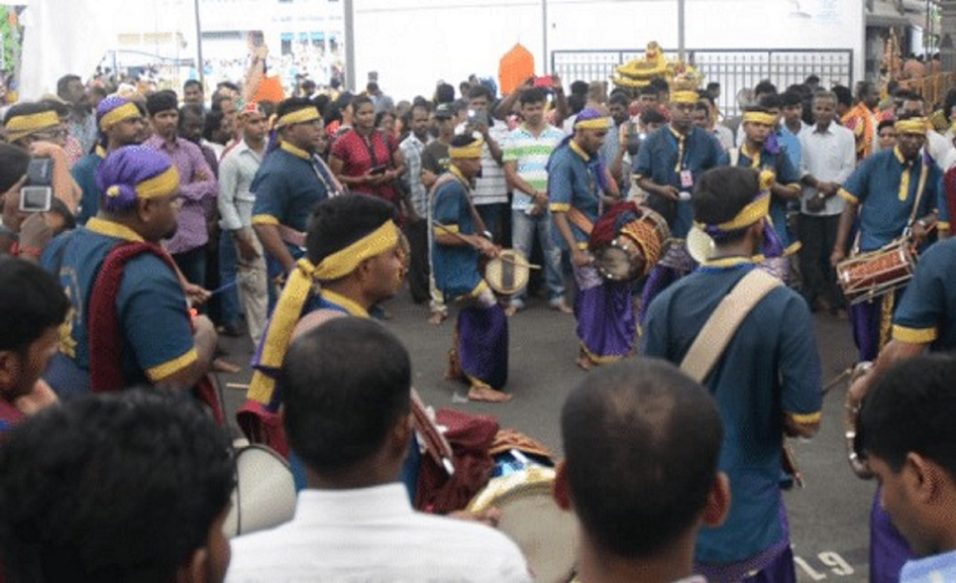
    Thaipusam has been an integral part of my religious and cultural upbringing. As a child, I attended, supported and even participated in the festival. Singapore’s Tourism Board lists Thaipusam as an event in its rich diverse cultural heritage calendar. Each year, the streets are lined with supporters, devotees and curious tourists alike. The festival, however, has been shrouded in controversy in Singapore – the consequence being that thousands of Singaporeans would rather chose to flock to Batu Caves in Malaysia to celebrate the festival.

    The reason for the controversy was a 42-year-old ban on the playing of live music during the festival. First imposed in 1973, the government argued that the blanket ban on loud live music was necessary to quell disorder as several fights often disrupted between competing groups, thus disrupting the procession and risking the lives of spectators and accompanying supporters.

    I have written previously about this “Silenced Festival” in my book Kampong Boy and how in 2011, I myself stepped up as a plaintiff with the Attorney-General’s Office and the Hindu Endowments Board (HEB) that is responsible for running and organising the festival, as the defendants. This was the first time someone challenged the live music ban in court. Unfortunately, my legal action before then Justice Steven Chong, did not succeed due to the points I listed in the book.

    The Legalities

    Article 15(4) of the Constitution gives the executive branch of the government the broad authority to restrict the practice of religion in accordance with the law – the caveat being that the decision-maker’s power to do so may be challenged in Court. Additionally, the Public Order Act and its related regulation empower the Commissioner of Police to impose such conditions as he deems fit for the purposes of making an application for a licence to hold a public assembly or a public procession.

    Of particular relevance to Thaipusam are regulations 8(1)c and 8(2)c which do not permit singing or music, gongs, drums or the playing of music-producing equipment. Also public processions require permits and applications which also have conditions attached.

    2015 Case

    In 2015, three men were arrested during a scuffle which took place during a Thaipusam festival. In the ensuing case, Vijaya Kumar s/o Rajendran v Attorney-General, the three Applicants cited their constitutional rights to freedom of religious practise and equality before the law to challenge the conditions which prohibited the use of musical instruments (other than at certain fixed points) during the procession.

    The Applicants argued that music from an urumi is a fundamental aspect of the religious practice of marching in the Thaipusam procession and that the music conditions imposed constituted a breach of their rights to practice their faith without interference.

    The case raised important questions including firstly, the proper meaning of the term “public order” under Article 15(4) of the Constitution, secondly, the type of state interests which can justify restricting a religious liberty, thirdly, the degree of harm that must be posed by a religious liberty before it can be restricted, and fourthly, whether the possible hostility of third parties to a person’s peaceful exercise of faith can be deemed as constitutionally relevant under the “public order” consideration.

    I got involved in the case through my connections with the legal team at Eugene Thuraisingam LLP representing the Applicants. Everything balanced on being able to prove that the relevance of musical instruments was an integral part of Thaipusam and therefore to the practice and religion of Hinduism. We tried to find experts in Singapore who were able to affirm the position in our favour. We were confronted with the reality that as most temples in Singapore are affiliated to the government’s HEB, no one was willing assist the Applicants. I recall the day, I travelled with Eugene Thuraisingam who led the legal team to seek Hindu experts from across the border who were willing to share the history and origins of the procession and to explain the relevance of music and devotional songs played during the festival. We were thrilled to find Tan Sri Datuk R. Nadarajah, Chairman of the Batu Caves temple in Kuala Lumpur.

    The expert stated that the “playing of the musical instruments forms an integral and inseparable part to the carrying of the Kavadis” because the music facilitates the Kavadi carriers to “enter into a trance” which then enables them to bear the enormous physical burden and pain of weight of the hoisted Kavadi. The music is an essential part not just to the procession but also to the “nature of worship”. The expert’s affidavit went as far as to state that the taking away of the musical instruments would be “traumatic” for the Kavadi carrier as the trance will be broken and he will feel immense physical burden and unbearable pain from the body piercings. Without the music, the devotee is more likely to be “distracted from focusing on the divine”.

    In the end, the High Court dismissed the application on the grounds that the public order proviso to freedom of religion was made out, and the differential treatment was justified. The Applicants appealed, but later decided to withdraw their case in the light of increased dialogue between interested parties and the announcement by the government to relax the live music rule.

    Music to the Ears – Latest Developments

    In 2016, Hindu devotees in Singapore received their first bout of good news. The 42 year old ban on live music was lifted and live music was allowed to be played from 3 stages at different points during the procession. Broadcasted music was also permitted at 7 other locations. The Chairman of HEB was able to proudly announce that “there won’t be a stretch that is without music”. He also added, “The kavadi bearers pierce their bodies, causing enormous pain, as part of the vows they have taken. The music will be useful in reducing the pain and enhancing their spiritual focus throughout their journey.

    The latest bout of good news came last week. This year’s festival which will fall on the 9th of February, will see music broadcasted at 23 points along the 4km stretch. Live music will be continued to be played at 3 stages where musicians will play traditional classical Indian instruments so that the younger generation understands their rich cultural heritage and be interested to learn these instead of the modern western style drums and bongos which have appeared at the festival in recent years.

    No doubt tremendous progress has been made to listen to feedback from the Hindu community and from devotees. Participants are still not yet allowed to bring their own musicians or musical instruments and some restrictions remain. I personally hope some faith will be restored in the celebration of this festival in Singapore and that fewer Singaporean Hindus see the need to cross the border to partake in such a monumental and colourful festival.

    As I wrote in my book, it is hard to think that over 155 years of tradition and devotion could be “cowed into quietude”.


    Source: www.theonlinecitizen.com

  • Commentary: Inter-Racial Marriages Nothing Special, Until I Met Those Facing Challenges

    Commentary: Inter-Racial Marriages Nothing Special, Until I Met Those Facing Challenges

    My own inter-ethnic relationship has been obstacle-free, writes Kane Cunico, but a documentary on mixed marriages has spurred others to share with me the struggles they face in gaining acceptance.


    SINGAPORE: Sàam gu ma, sei gu ma, baat gu che, sahp suk – Cantonese words I would have never imagined myself learning by heart, had I not married my ethnically Chinese wife whose dad’s side of the family is from Ipoh, Malaysia.

    Respectively, they mean this:

    Sàam gu ma: My father-in-law’s third oldest sister.

    Sei gu ma: My father-in-law’s fourth oldest sister.

    Baat gu je: The eighth sibling in the family and my father-in-law’s younger sister.

    Sahp suk:  The tenth sibling and my father-in-law’s younger brother.

    In my Indian-Eurasian household, which feels neither very Indian nor very Eurasian, we just call them aunty (insert name) and uncle (insert name).

    I have always been indifferent to my cultural roots, flippant to a point. I wouldn’t consider myself religious, but I am constantly open and curious about other people’s heritage.

    The same goes for my wife, who identifies herself as a third-culture kid.

    We both were fortunate to have parents who were willing to break their own cultural and religious traditions for their children, and compromise on a wedding that made everyone happy. Even while dating, race or religion never became an issue. I would call us rather happy-go-lucky.

    But the recent On The Red Dot series, Love Is (Colour) Blind, prompted me to reflect on just how lucky perhaps we were. The documentary profiled three mixed-race couples who spoke about the ups and downs of their relationships, from gaining family acceptance to bringing up their mixed-heritage children.

    In response, hundreds of netizens have commented on Facebook, eager to share their own experiences in inter-ethnic marriages. I was heartened to see all those different races and religions coming together – it was like those United Colors of Benetton ads I wished the world could be more like.

    Watch: The story of Martin and Esther

    But on the flip side, friends and not a few commentators on Facebook have asked: “Why is this even a story? Why talk about this? What’s the big deal? Inter-racial marriages have been around for a long time. Why single it out?”

    And in a way, they were right. I had never before seen it as a problem.

    WE’VE HAD IT EASY

    Yet in talking to some of those who wrote on our Facebook page, and re-watching the episodes, it struck me – my wife and I have had it easy, relationship wise.

    The same can’t be said of Facebook writer Hui Jing Ong. A Singaporean Chinese who is Buddhist, she married an Indian national who is Sikh. They have two children.

    In a telephone interview, she told me: “My parents are divorced, but my father until now cannot accept our marriage or children. He’s kind of a racist. My mum says as long as I’m happy, she’s okay with it.”

    Hui Jong Ong with her husband, Gurdev Singh, have two children. (Photo: Hui Jing Ong) 

    Another Facebook user, Jasmine Jay, had dated her husband-to-be for four years. He is Malaysian, Malay and Muslim, and she is Singaporean, Sikh and Catholic.

    Three and a half years ago, when she became pregnant, they decided to tie the knot. For three months, both deliberated on who should convert. They ultimately decided neither should. His family snubbed their wedding.

    “Even my mum said no to the wedding. But since the birth of our daughter, his family have accepted us,” said Jasmine in a phone interview.

    She added: “Today we have two children. I have a younger son and we both agreed the children will be Catholic.”

    Despite the continuing struggles, both have found happiness where their relationship once floundered in a quagmire of disapproval.

    Last year, 4,142 marriages in Singapore involved couples of different races, making up 21.5 per cent of all marriages for the year. In 2005, inter-ethnic marriages made up just 14.9 per cent.

    So mixed marriages may be becoming normalised; but many couples still face familial and societal obstacles to make it work.

    Watch: The story of Simon and Veronica

    Friends of ours in inter-racial relationships have had to try hard to win over their culturally traditional in-laws-to-be, who were worried about what others in their community might say or think.

    And such cultural conservatism isn’t just confined to our parents’ generation. Some young couples my wife and I meet have no qualms telling us that they wouldn’t want their children dating someone of another race.

    A recent survey by Channel NewsAsia, in partnership with the Institute of Policy Studies, reflects some of these response. The survey found that fewer than one in four Chinese respondents were accepting of a non-Chinese marrying into the family; while fewer than half of Indian respondents indicated acceptance of a non-Indian into their family, according to the survey.

    WHEN CHILDREN COME INTO THE PICTURE

    For newlyweds like my wife and me, who are looking forward to having children, we know we cannot keep taking a laissez-faire approach to our mixed marriage.

    At some point, matters of race and religion will come up, and perhaps these may actually turn out to be issues for both sets of parents, as Jasmine learnt.

    “Managing families – that is still a challenge,” said the 23-year-old stay-at-home mother and trained nurse.

    “So many awkward moments. How you spend your festivities and whose religion you follow. You will argue about what cultural name the child will have. Should it be Indian or Malay in our case? And what religion will the child practice?” she added.

    Jasmine Jay with her husband, Abdul Rahim, daughter Raphaela 3, and son Rayden, 6 months. (Photo: Jasmine Jay)

    “To be honest, it is tough, but my husband and I, only because we are quite neutral with race and religion, we told our parents to leave the decision to us. So we gave the children neutral names. There is no “daughter of” to follow my Indian heritage, and no “bin or binte” to follow his Malay heritage.

    “But the beauty is that they get to be a part of both our cultural and religious practices and festivities,” said Jasmine.

    “So just follow your heart and fight for your right, and hopefully, both sides can still remain a strong family.”

    Watch: The story of Norsham and Anne

    Another Facebook user, Hazre Salim, told me it’s really about planning far ahead.

    A Malay Muslim, he married a Chinese Buddhist about two years ago after they dated for a year. Hazre, a secondary school educator, was upfront about how religion was important to him. With her full understanding, they both pre-empted their parents very early on in their relationship.

    “I knew first and foremost there were going to be challenges: Parents, friends, religion. But we had supportive parents,” the 35-year-old said.

    “There will be instances where we cannot solve the problem straight away. Children will definitely be an issue; we will face it when it comes.

    “But we both believe that when two people get together and have faith and trust in each other, it will work out,” said Hazre, adding that when they cannot resolve matters on their own, “we go to our parents and figure it out”.

    Hazre Salim and Nur Iviana Tham sought the approval of their parents early on. (Photo: Hazre Salim)

    Hazre’s and Jasmine’s advice are timely. My wife and I will soon have to decide which religion our child will be a part of, and what second language they should learn at school.

    What race do we categorise our children under, when their ancestral tapestry has Italian, Indian, Chinese and Peranakan heritage woven into it?

    These are questions we do not have the answers to yet. But we are fortunate and optimistic.

    Fortunate, to be in a place where inter-ethnic marriages are fast becoming normalised, if they aren’t already; and where strangers, who have shared their stories online, are willing to give us the perspective we need.

    Optimistic, that our families, made up of a suks, gu mas, aunties, uncles, mums, dads, mamas and grandmas, are around to hopefully be as open as they have always been with two happy-go-lucky and culturally impartial children.


    Source: CNA

  • Zam Zam VS Victory: Hired Gangster Gets 6 1/2 Years Jail, 6 Strokes Of Cane For Slashing Victory’s Restaurant Supervisor

    Zam Zam VS Victory: Hired Gangster Gets 6 1/2 Years Jail, 6 Strokes Of Cane For Slashing Victory’s Restaurant Supervisor

    The owner of Singapore Zam Zam allegedly hired a secret society headman to slash a rival’s face, a court heard.

    Zackeer Abbass Khan, the owner of the well-known murtabak restaurant in North Bridge Road, had been having a dispute with a neighbouring murtabak restaurant.

    He allegedly paid $2,000 to his business associate Anwer Ambiya Kadir Maideen, who is purportedly a headman of the Sio Ang Koon secret society.

    Anwer then allegedly told his secret society member Joshua Navindran Surainthiran to carry out the vicious assault.

    It left the victim, Victory Restaurant supervisor Liakath Ali Mohamed Ibrahim, with a permanent scar.

    Mr Liakath had a 7cm cut over his right upper lip, which extended to his right cheek, and a part of the cut went through to the inner surface of the lip.

    On Tuesday (Nov 29), Joshua, 23, was sentenced to 6½ years’ jail and six strokes of the cane for the slashing and other crimes.

    He pleaded guilty to five charges: one of causing grievous hurt, two of rioting, and one each of disorderly behaviour and using criminal force against a policewoman.

    Five other charges were taken into account in sentencing as part of his plea bargain.

    A district court heard that on Aug 22 last year, Mr Liakath, 52, stood outside Victory to tout for customers. He had previously worked for Zam Zam from 1985 to 2004.

    When a policeman came by at about 6pm, Mr Liakath said he was touting for customers because staff from Zam Zam were doing so.

    Zam Zam staff Koleth Navas, 29, overheard this and an argument broke out between him and Mr Liakath.

    The officer told them to stop arguing before leaving.

    VICTIM THREATENED

    Shortly after, Zackeer, 45, allegedly threatened Mr Liakath in Tamil that he would “do him” within a week, the court heard.

    Koleth Navas and Zam Zam’s chef supervisor Koleth Abdul Nasir, 41, both also allegedly threatened Mr Liakath.

    Zackeer later contacted Anwer, 46, who owns As-Safeera Restaurant at Block 301, Serangoon Avenue 2, the court heard.

    Anwer in turn told Joshua that Zackeer had asked for Mr Liakath’s face to be slashed, in return for $2,000.

    Joshua got his elder brother Joel Girithiran Surainthiran, 24, allegedly also a Sio Ang Koon secret society member, to help him in the slashing. Joshua also asked his friend Ramge Visvamnathan, 19, to help him act as a lookout.

    The next day, Joshua and Joel met Anwer near As-Safeera. The latter showed them a picture of Mr Liakath on his mobile phone.

    The brothers then went to Golden Landmark Hotel, near Victory and Zam Zam, to observe Mr Liakath’s movements. At about 9.50pm, they saw him walking towards Victoria Street after work and trailed him to Little India MRT Station at Race Course Road. However, they were unable to find an opportunity to spring an attack.

    VICTIM’S CAP DEFLECTED KNIFE

    On Aug 26, Joshua, Joel and Ramge waited outside Victory. The brothers sat on a bench overlooking the eatery’s rear door, while Ramge stayed at the junction of North Bridge Road and Arab Street, where he could view Victory’s main entrance.

    At about 9.50pm, Joshua and Joel saw Mr Liakath walking along Arab Street towards Rochor Canal Road and Little India MRT station.

    They caught up with him at the junction of Rochor Canal Road and Sungei Road. Joshua swung a knife at Mr Liakath’s face. Although the weapon was partially deflected by the victim’s baseball cap, there were deep cuts to his right nose and right upper lip.

    During the attack, Mr Liakath also took out a small fruit knife, which caused a cut on Joshua’s left hand.

    Joel allegedly kept a lookout. The brothers fled after the slashing.

    Mr Liakath called his restaurant manager, who in turn contacted Victory’s managing director Abdul Raheem Muhamed, 46. The latter called the police.

    At about 12.30am on Aug 27, Anwer deposited $1,700 into Joshua’s bank account, the court heard.

    Joshua had earlier received an initial payment of $200. He told Anwer to keep $50 for getting him and Joel the job, and $50 for passing Ramge money to buy ice for the wound on his hand.

    Joel, Ramge, Zackeer, Anwer, Koleth Navas and Koleth Abdul Nasir have all been charged with engaging in a conspiracy to cause grievous hurt to Mr Liakath and/or criminal intimidation by threatening to hurt Mr Liakath.

    The cases for all six are at a pre-trial stage.

    OTHER OFFENCES

    Deputy Public Prosecutor (DPP) Claire Poh said Joshua had gone on a spree of violence across a period of more than two years, demonstrating “sheer lawlessness”.

    At about 2.45am on July 2013, Joshua and four friends assaulted two others at Clarke Quay. The five assailants had kicked and punched the victims.

    At the time, Joshua was on probation for an offence of causing hurt.

    At about 5.30am on Nov 28, 2013, while out on court bail, he also slapped a person at Liang Court.

    About 10 minutes later, he pushed a police woman’s right shoulder and spat at her face.

    While inside a police vehicle at about 6am, he also hurled vulgarities at a policeman.

    Out on bail again, and just two weeks before he was scheduled to plead guilty in court to his July 2013 rioting offence, Joshua took part in a gang fight at Liang Court, outside a club called Rumours.

    Joshua and five friends belonging to the Sio Ang Koon gang fought with six people from the Ang Soon Tong triad society of the Ji It group on Oct 22, 2014.

    Joshua did not show up in court and remained at-large until he was arrested on Sept 21 last year for slashing Mr Liakath.

    DPP Poh asked for at least 7½ years’ jail and six strokes of the cane, while defence lawyer K Jayakumar Naidu asked for not more than six years’ jail and six strokes of the cane.

    After passing sentence, District Judge Salina Ishak allowed Joshua to speak with his mother and fiancee before he was taken away to prison. His jail term was backdated to the date of his remand on Sept 23 last year.


    Source: www.straitstimes.com

  • Malaysia Deputy Home Minister: Not True That Dr Zakir Naik Given Malaysian Citizenship

    Malaysia Deputy Home Minister: Not True That Dr Zakir Naik Given Malaysian Citizenship

    KUALA LUMPUR, Nov 27 — Deputy Home Minister Datuk Nur Jazlan Mohamed dismissed today a news report alleging that Indian televangelist Dr Zakir Naik has been given Malaysian citizenship.

    “Not true,” Nur Jazlan told Malay Mail Online when contacted.

    “There are many processes to follow and it takes decades to become a citizen,” he added.

    Nur Jazlan also told The Star Online that Malaysia does not automatically confer citizenship on anybody, unless said person is born in the country to Malaysian parents.

    The Pulai MP said he did not think that Dr Zakir would want to apply for Malaysian citizenship.

    Indian news outfit Hindustan Times cited unnamed representatives of Dr Zakir as saying that the Mumbai-based televangelist’s so-called Malaysian citizenship had come as a “package” together with his “Tokoh Maal Hijrah” award that he received from Malaysia in 2013.

    The publication also claimed that Dr Zakir now holds dual Indian-Malaysian citizenship although Malaysia does not allow such a thing.

    Hindustan Times said the fact that Dr Zakir is purportedly a Malaysian citizen on Malaysian soil would complicate investigations, as Malaysia has not allowed any extradition to India despite signing a treaty in 2010.

    The Muslim preacher is believed to be currently in Malaysia.

    Earlier this month, Times of India reported that the Indian government had imposed a five-year ban on Dr Zakir’s NGO, the Islamic Research Foundation (IRF).

    The daily reported that India’s National Investigation Agency is mulling terror charges against Dr Zakir, reportedly based on testimonies of about 50 terror suspects and convicts recorded from various jails, with those caught citing him as their motivation and source of inspiration.

    In April this year, the state of Terengganu offered Dr Zakir three islands for the preacher to open a branch for IRF, in addition to a religious school.


    Source: www.themalaymailonline.com