Tag: Indonesia

  • Seeking A Dream, Indonesian Family Finds Nightmare In Raqqa

    Seeking A Dream, Indonesian Family Finds Nightmare In Raqqa

    The 17-year-old Indonesian girl made a persuasive case to her family: Lured by what she had read online, she told her parents, sisters, aunts, uncles and cousins they should all move to Syria to join the Islamic State group.

    Each of her two dozen relatives found something in it for them. Free education and health care for the girls. Paying outstanding debts for her father and uncle. Finding work for the youngest men.

    And the biggest bonus: a chance to live in what was depicted as an ideal Islamic society on the ascendant.

    It didn’t take long before their dreams were crushed and their hopes for a better life destroyed as each of those promised benefits failed to materialize. Instead, the family was faced with a society where single women were expected to be married off to IS fighters, injustice and brutality prevailed, and a battle raged in which all able-bodied men were compelled to report to the frontline.

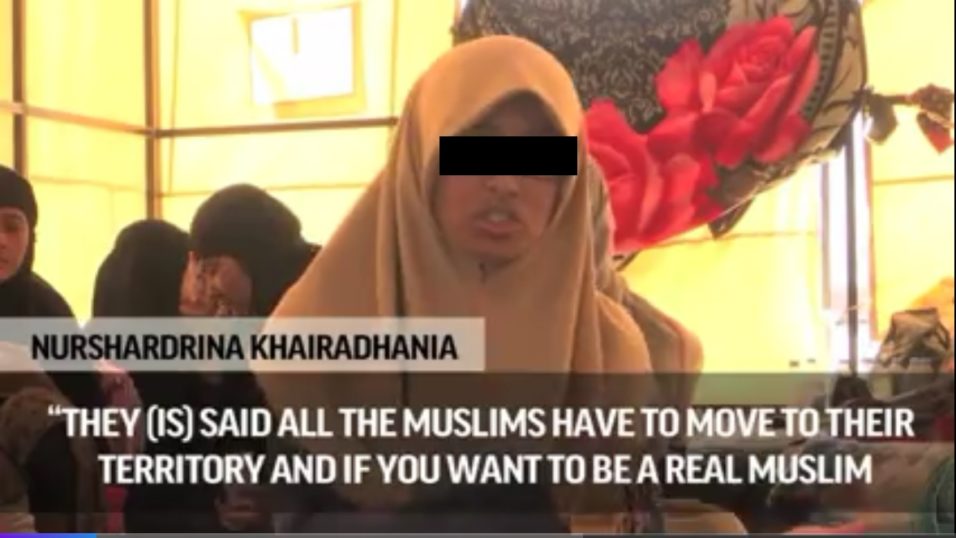
    In an interview with The Associated Press, Nurshardrina Khairadhania, now 19, recalled her family’s fateful decision to immigrate to the IS stronghold of Raqqa two years ago — and how, only months later, their bid to escape began.

    During that time the family endured separation, her grandmother died and an uncle was killed in an airstrike.

    “IS shared only the good things on the internet,” said the young woman, who goes by her nickname, Nur.

    She now lives with her mother, two sisters, three aunts, two female cousins and their three young sons in Ain Issa, a camp for the displaced run by the Kurdish forces fighting to expel IS from Raqqa. Her father and four surviving male cousins are in detention north of there. While the men are being interrogated by the Kurdish forces for possible links to IS, the women wait in a tent in the searing heat, hoping for the family to be reunited and return to their home in Jakarta.

    Nur’s family is among thousands from Asia, Europe, Africa, North America and the Middle East who chased the dream of a new Islamic society advertised by IS in slickly produced propaganda videos, online blogs and other social media. By the time they got there, the group’s brutal campaign of beheadings, kidnappings and enslaving women was well underway.

    For Nur and her sister, such images were part of a hate campaign against the nascent Islamic caliphate or simply justified punishment for crimes committed there.

    “I was afraid to see that. I first thought it was another group … who hates IS,” Nur said.

    Nur recalled calling her family together just months after the extremists’ declared their “caliphate” on territory seized in Syria and Iraq in the summer of 2014.

    Making her pitch, she recounted the benefits laid out on the IS blogs: her 21-year-old sister could continue her computer education for free. Her 32-year-old divorced cousin, Difansa Rachmani, could get free health care for herself and her three children, one of whom was autistic. Her uncle could get out from under the debt he incurred trying to save a struggling auto mechanic business in Jakarta — and could even open a new one in Raqqa, where mechanics were in high demand to build car bombs, the extremists’ signature weapon.

    For Nur, the Islamic State seemed to be the perfect place to pursue her desire to study Islam and train to be a health practitioner.

    “It is a good place to live in peace and justice and, God willing, after hijrah, we will go to paradise,” she recalled thinking, using the Islamic term for migration from the land of persecution to the land of Islam. “I wanted to invite all my family. … We went to be together forever, in life and afterlife.”

    The family sold their house, cars and gold jewelry, collecting $38,000 for the journey to Turkey and then on to Syria.

    But once in Turkey, the first quarrels began, over how or even whether to sneak into Syria. Seven relatives decided to head out on their own and were detained by the Turkish authorities while trying to cross the border illegally. They were deported back to Indonesia where, the family says, they remain under surveillance because the rest of their relatives had lived in IS territories.

    The saga of family separation had only just begun, however.

    After arriving in Islamic State group territory in August 2015, the family was divided again: the men were ordered to take Islamic education classes, and ended up jailed for months because they refused military training and service. After their release, they lived in hiding to avoid forced recruitment or new jail sentences. The women and girls were sent to an all-female dormitory.

    Nur was shocked by life in the IS-run dormitory. The women bickered, gossiped, stole from each other and sometimes even fought with knives, she said. Her name and those of her 21-year-sister and divorced cousin were put on a list of available brides circulated to IS fighters, who would propose marriage without even meeting them.

    “It is crazy! We don’t know who they are. We don’t know their background. They want to marry and marry,” she said.

    “IS wants only three things: women, power and money,” she and her cousin, Rachmani, said in unison.

    “They act like God,” Nur added. “They make their own laws. … They are very far from Islam.”

    In a separate, monitored, interview with the AP at a security center run by Kurdish forces in Kobani, north of Raqqa, where he and the other male family members were being questioned for possible IS ties, her 18-year-old cousin said that living under the extremists was like living in “prison.”

    “We (didn’t) want to go to Syria to fight,” he said, speaking on condition of anonymity for fear of retribution from IS or trouble with the Kurdish authorities or those back home in Indonesia. “We just wanted to live in an Islamic state. But it is not an Islamic state. It is unjust, and Muslims are fighting Muslims.”

    IS officials ignored Nur’s persistent queries about continuing her education in Raqqa. And because they refused to enroll in military service, the men never got the jobs they had been promised. When the battle for Raqqa intensified in June, IS militants set up checkpoints around the city, searching for fighters and came looking for the men.

    Rachmani did get free surgery for a chronic neck ailment and her son got attention for his autism and was finally able to walk. Soon after the family’s arrival, she was sent to the then-IS stronghold of Mosul in Iraq for the surgery.

    “I left my country for my stupid selfish reason. I wanted the free facilities,” Rachmani said. “Thank God I got my free (surgery) but after that all lies.”

    The family searched for months for a way to escape, a risky endeavor in the tightly controlled IS territory.

    When the Kurdish-led campaign to retake Raqqa from IS intensified in June, the family finally saw their opportunity. At great personal risk, Nur used a computer in a public internet cafe to search for “enemies of IS,” despite the danger posed by frequent raids carried out by IS there. She contacted activists and eventually found smugglers, who, for $4,000, got the family across the front line and into Kurdish-controlled territory. They turned themselves in to Kurdish forces on June 10.

    An Indonesian Foreign Ministry official said authorities have known for several months about the presence of Indonesian nationals, including Nur’s family, in the Ain Issa camp and were investigating their condition.

    “However, they have been two years living in the IS area, so the risk assessment of them is required and we have been facing obstacles to reach them as they are in an area not controlled by any official government, either Iraq or Syria,” said Lalu Muhammad Iqbal, the ministry’s director of Indonesian citizen protection.

    “I am very regretful. I was very stupid and very naive. I blame myself,” Nur said of the family’s plight. “May God accept my repentance because you know … it is not like a holiday to go to Turkey. It is a dangerous, dangerous trip.”

    Source: https://sg.news.yahoo.com
  • Trending: Hijab Cosplayers

    Trending: Hijab Cosplayers

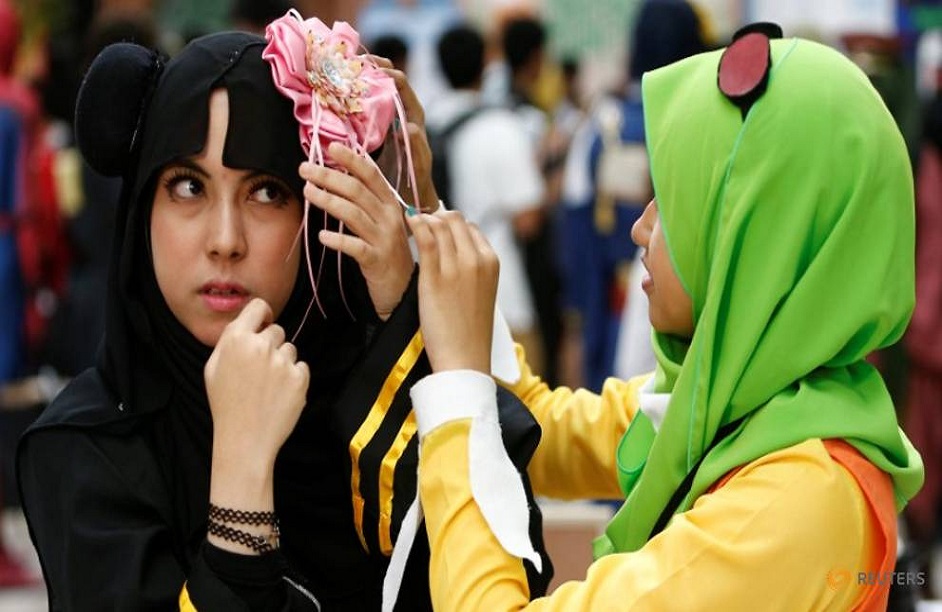
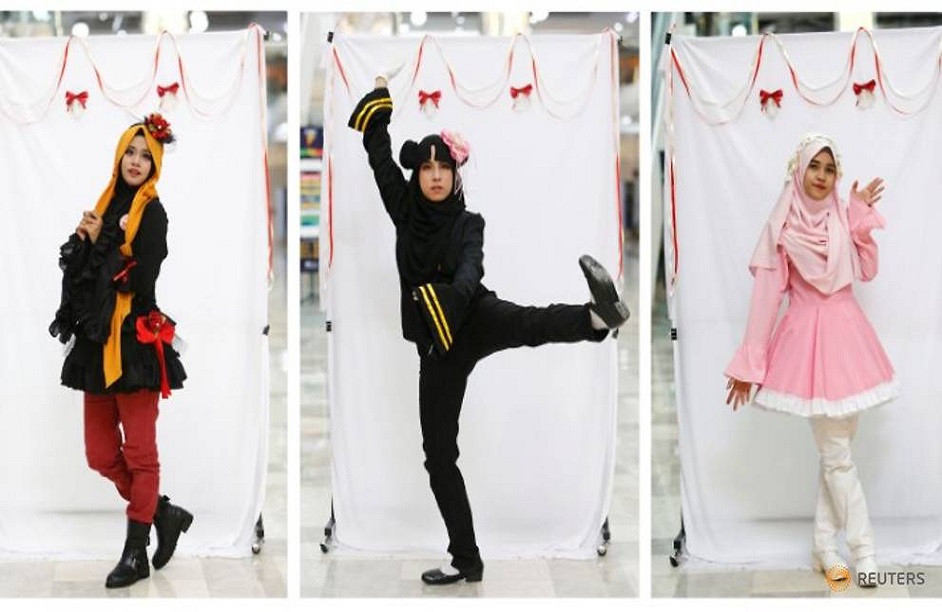
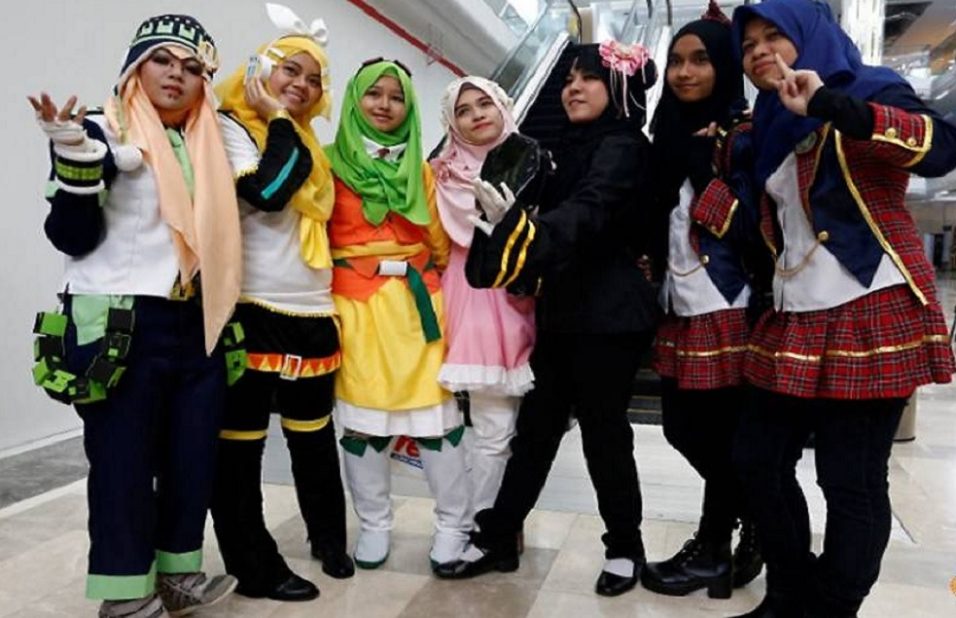
    After donning a blue Cinderella dress, Sind Yanti carefully arranges her pale yellow “hijab”, or traditional headscarf, into folds that resemble hair. She is among a growing number of young Muslim women in Southeast Asia who are taking part in “hijab” costume play, finding creative ways to incorporate the head covering into colourful fantasy costumes. Yanti’s fashions are inspired by Disney and Japanese anime characters, with artful hijab designs that resemble wigs or hoods. She can express herself while preserving the Islamic requirement of modest dress for women, Yanti said. Her made-to-order designs cost between 250,000 rupiah (US$18.79) and 500,000 rupiah each.

    The fashion play is also popular in neighbouring Muslim-majority Malaysia, where young people dressed as superheroes, warriors and princesses flocked to a cosplay show in Kuala Lumpur, the capital. Among them was 20-year-old film student Nursyamimi Minhalia, who wore a black hijab cut to form a fringe with two buns on either side. She did not include the hijab when she began cosplaying in 2012, but was later inspired by others wearing the headscarf.

    Costumed roleplay, which can feature revealing outfits and elaborate hair styles, has long been part of the fan culture linked to anime and comics. Hijab cosplay is a new phenomenon that appears to be growing in appeal among the wider Muslim community. Sharifah Maznah Syed Mohd, 48, whose son is an avid cosplayer, said the role-playing hobby was acceptable as long as participants stuck within religious boundaries. Yanti says hijab cosplay has helped her stay true to her faith even while enjoying the cosplay experience.


    Source: Reuters

  • Malaysian, Indonesian Muslim Groups Calls Starbucks Boycott Over LGBT Stance

    Malaysian, Indonesian Muslim Groups Calls Starbucks Boycott Over LGBT Stance

    A prominent Muslim group in Malaysia has joined calls by Islamic conservatives in Indonesia for a boycott of Starbucks to protest against the international coffee chain’s support of gay rights.

    Perkasa, a group with about 700,000 members that campaigns for the rights of ethnic Malay Muslims, said it agreed with calls this week by Muhammadiyah, Indonesia’s second-largest Muslim group, for a boycott of Starbucks over its pro-LGBT stand.

    Perkasa also agreed with the Indonesian group’s call for Starbucks’ operating license to be revoked, it said.

    Amini Amir Abdullah, who heads Perkasa’s Islamic affairs bureau, said Starbucks’ position challenged Malaysia’s constitution, which recognized Islam as the country’s official religion.

    “Our objection is because they are promoting something that is against the human instinct, against human behavior and against religion. That’s why we are against it,” Amini told Reuters in an interview on Wednesday.

    Muhammadiyah’s call for a boycott has gained support from the Indonesian Ulema Council, its top clerical body.

    The religious groups’ opposition to Starbucks came after a video from 2013 circulated online of pro-LGBT comments made by the company’s chairman and former chief executive, Howard Schultz..

    PT Sari Coffee Indonesia, which holds the license to run the Starbucks chain in Indonesia, said in a statement it was not affiliated with any political or ideological groups.

    “We are grateful and proud to have been a part of local communities in Indonesia for 15 years, always maintaining the deepest respect for, and adherence to, Indonesia’s local laws, culture and beliefs,” said Fetty Kwartati, a director at PT MAP Boga Adiperkasa, the parent company of PT Sari Coffee Indonesia.

    Some Muslims in Indonesia, however, said the boycott call would not stop them from buying Starbucks coffee.

    “I love their products, not their CEO,” said Jakarta resident Kornelius Kamajaya.

    The boycott call got a similar response from some in Malaysia.

    “Don’t make it such an issue that we have to boycott a company because of one small statement,” said Muhammad Azril Maridzuan, an assistant bank manager in Kuala Lumpur.

    Muslim groups should not “be so extremist” even though gay rights was against their religious beliefs, he said.


    Source: http://www.reuters.com

  • 15-Year-Old Indonesian Teenager Weds 73-Year-Old Bride

    15-Year-Old Indonesian Teenager Weds 73-Year-Old Bride

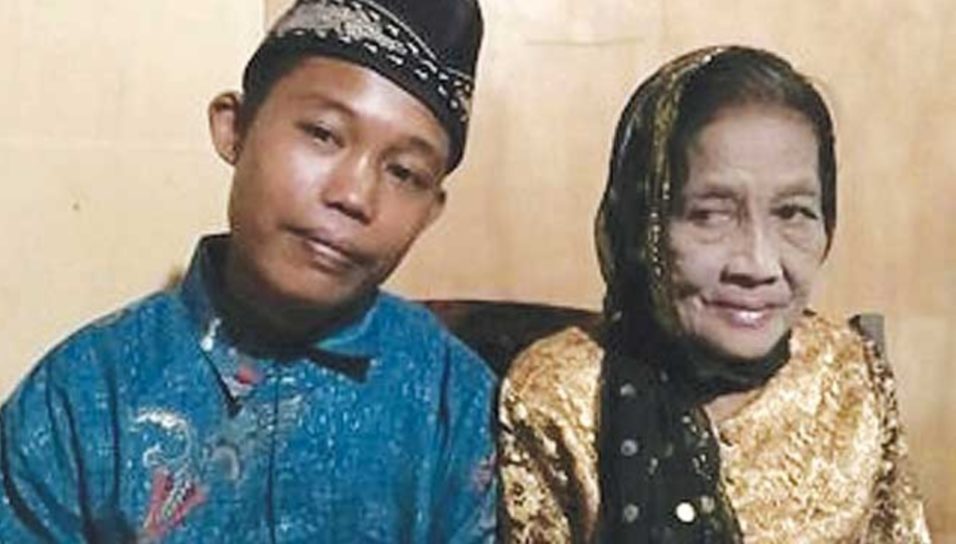
    A teenage boy has married his 73-year-old lover in a remote village on Indonesia’s Sumatra, officials said, after the unconventional couple threatened a double suicide if their match was thwarted.

    The romance began when septuagenarian Rohaya Binti Kiagus Muhammad Jakfar took care of her neighbour Selamet Riyadi, 15, who was suffering from malaria, the local village chief said.

    “Selamet is too young to marry but we married them anyway because he threatened to commit suicide,” village chief Cik Ani, told AFP, adding local officials also wanted them to “avoid the sin of adultery”.

    “Since the boy is an underage, we have decided to carry out the marriage privately,” he said.

    Riyadi’s father died several years ago and the boy was not properly cared for by his mother, who has remarried, Ani said.

    Rohaya has been married twice before, both times to divorcees and has at least one child from the marriages, but this time “she got a virgin”, Ani added.

    The marriage took place Sunday in the remote Karang Endah village in South Sumatra province, but sparked national interest when a video of the couple’s wedding vows went viral on social media outlets.

    “He said he was madly in love. We love each other,” Rohaya told reporters after the wedding.

    The video shows the unlikely couple reciting their vows in front of their relatives and friends.

    Under Indonesian law, the legal age for marriage is 19 for a man and 16 for a woman.

    Video: https://www.facebook.com/detikcom/videos/10155652343047079/


    Source: AFP

  • Indonesia Says Seized Islamic State Propaganda Books Likely Used By Children

    Indonesia Says Seized Islamic State Propaganda Books Likely Used By Children

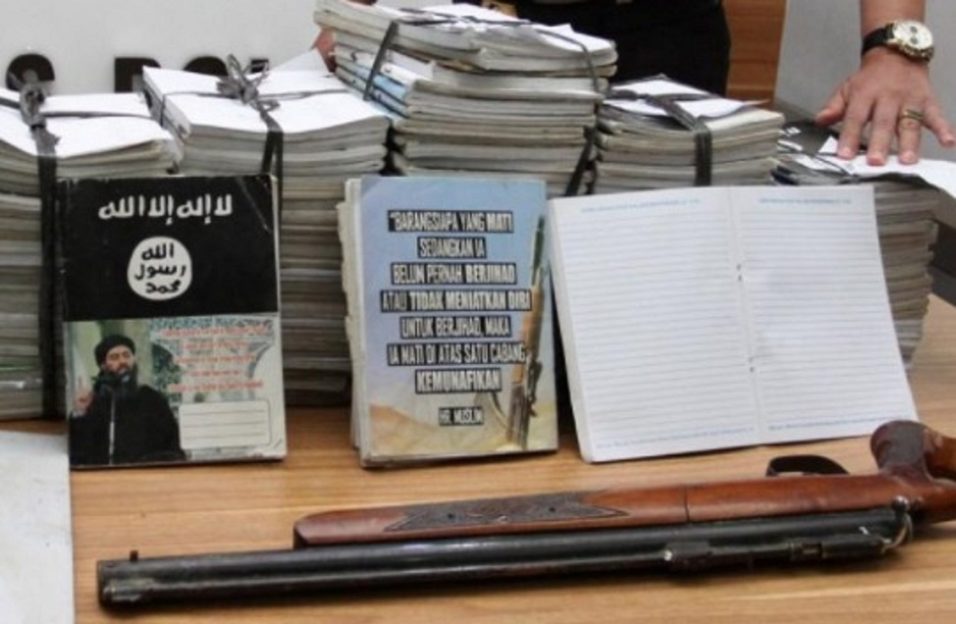
    JAKARTA – Indonesian police displayed on Friday scores of notebooks inscribed with Islamic State propaganda seized during a raid on the home of suspected militant and said some appeared to have been used by children.

    Police found hundreds of notebooks containing Islamic State propaganda in Indonesia during the raid in connection with the stabbing death of a policeman in Medan, the capital of North Sumatra province on June 25.

    At the top of every page of the books read the inscription: “You are all obliged to go to war”.

    Authorities believe Islamic State has thousands of sympathizers in Indonesia and are increasingly worried about the group trying to get a foothold in Southeast Asia as it loses territory in the Middle East.

    “We’re still investigating who funded the printing of these books,” police spokesman Rikwanto told a news conference.

    The material was displayed at the national police headquarters, alongside an air gun and other items.

    The front covers of the notebooks had a picture of Islamic State leader Abu Bakr al-Baghdadi and quotes attributed to him as made at Friday prayer,

    “Tell all the apostates in the Muslim countries, these are their last days. And tell every infidel, we’re not playing anymore,” a quote attributed to Baghdadi read.


    Children’s handwriting was found in some of the books, including notes about the solar system, which police said could mean the books had been used by children to take notes in school.

    Police believe the men were part of Jemaah Ansharut Daulah, an umbrella organization on a U.S. State Department “terrorist” list which supports Islamic State and has hundreds of Indonesian followers.


    Source: www.todayonline.com