Tag: ISIS

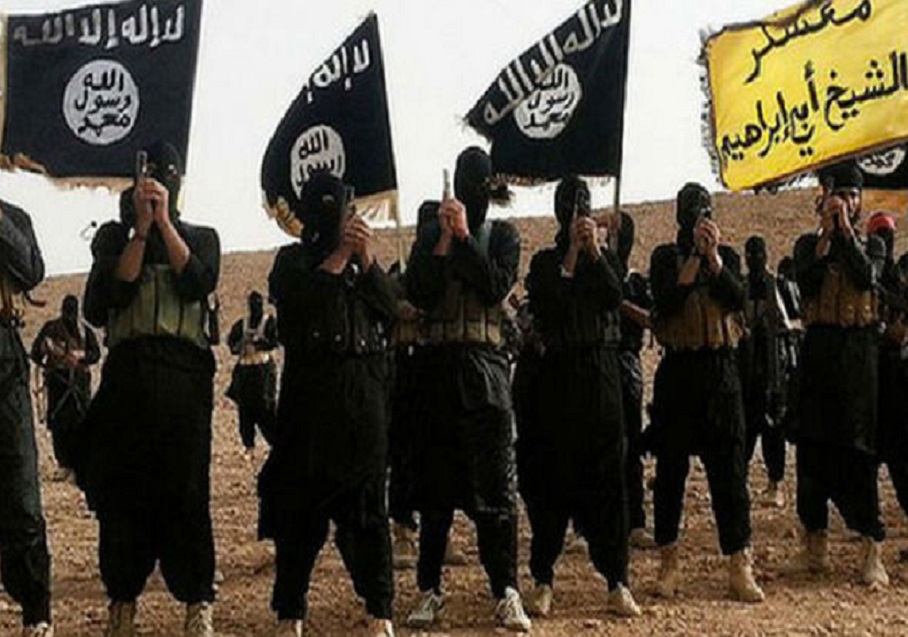
  • New ISIS Video Calls For Revenge For Fallen New Zealanders In Mosque Shootings

    New ISIS Video Calls For Revenge For Fallen New Zealanders In Mosque Shootings

    ISIS leaders have called for extremists to take ‘revenge’ in the wake of the New Zealand mosque shootings.

    The terror group’s spokesman, Abu Hassan al-Muhajir, is said to have issued the appeal in a 44-minute audio recording.

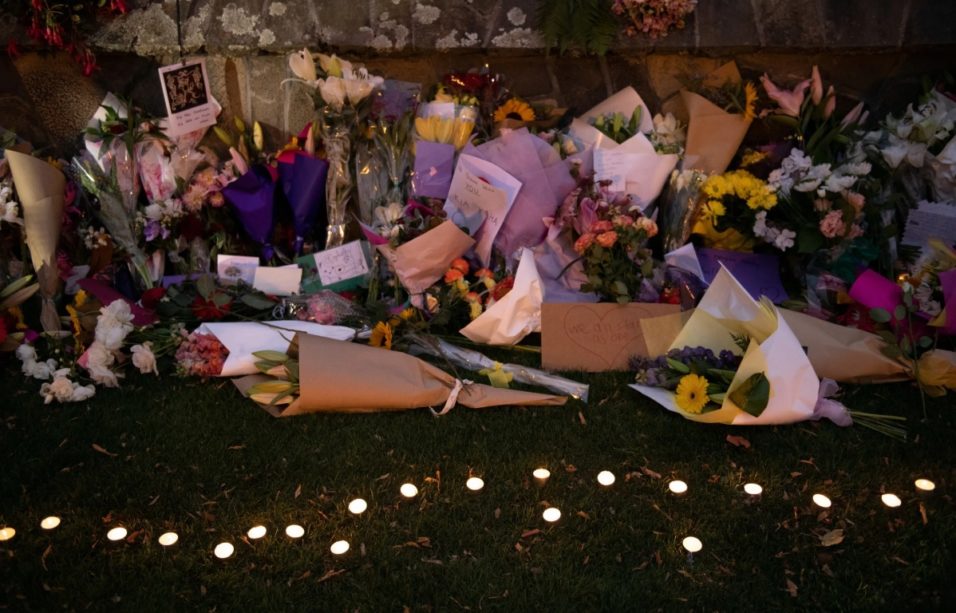
    Dozens of worshippers were murdered when a terrorist went on a gun rampage through two mosques in the city of Christchurch on Friday. Australian Brenton Tarrant, 28, a suspected white supremacist, was charged with murder on Saturday.

    According to the New York Times, Al-Muhajir broke six months of silence to call for revenge.

    ‘The scenes of the massacres in the two mosques should wake up those who were fooled, and should incite the supporters of the caliphate to avenge their religion,’ he said.

    He compared the Christchurch slaughter to the battle raging over the terror group’s last remaining slither of territory in Syria – the village of Baghouz.

    ‘Here is Baghuz in Syria, where Muslims are burned to death and are bombed by all known and unknown weapons of mass destruction,’ he added.

    The true identity of al-Muhajir, an invented name, is not known and it is understood that he has not appeared in any photographs or in ISIS propaganda videos.

    The attacks in Christchurch left 50 dead and 50 more injured with nine of the wounded victims described as being in a critical condition.

    Preparations were underway today to begin burials of victims after days of intense grieving.

    Bodies of the victims of Friday’s attacks were being washed and prepared for burial in a Muslim ritual process, with teams of volunteers flown in from overseas to assist with the heavy workload.

    ‘We’ve been very conscious of the need to work sensitively with requirement of each family,’ Sarah Stuart-Black, Director for the Ministry of Civil, Defence & Emergency Management, said at a press conference in Christchurch.

    Tarrant was remanded without a plea and is due back in court on April 5, where police said he was likely to face more charges.

    The victims, killed at two mosques during Friday prayers by a gunman with semi-automatic rifles, were largely Muslim migrants, refugees and residents from countries including Pakistan, Bangladesh, India, Turkey, Kuwait, Somalia and others.

    Source: MSN

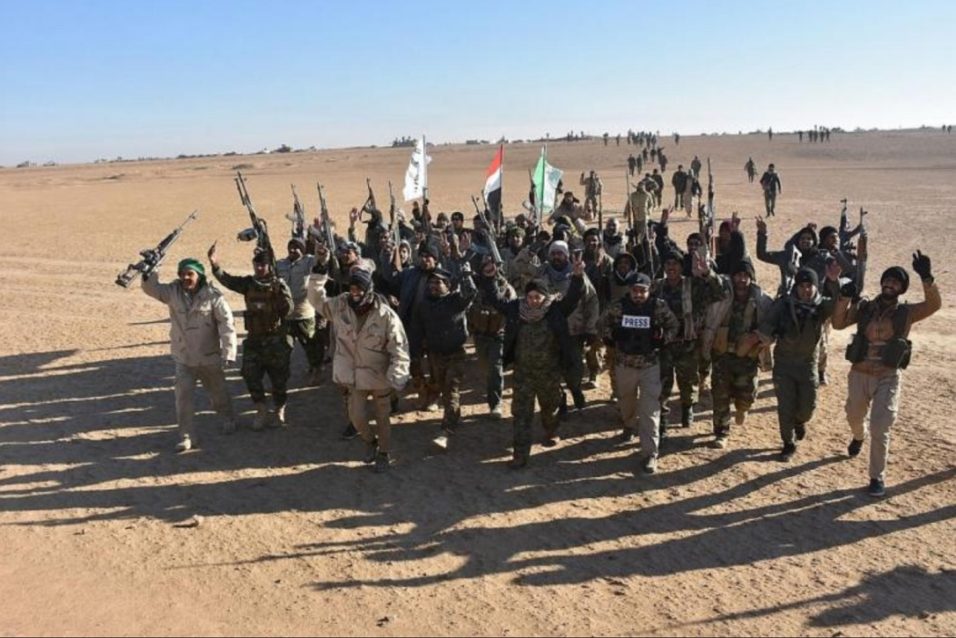
  • Iraq Declares The Country Cleared Of ISIS Forces. Is This The End Of Them?

    Iraq Declares The Country Cleared Of ISIS Forces. Is This The End Of Them?

    “Our forces are in complete control of the Iraqi-Syrian border and I therefore announce the end of the war against Daesh (ISIS),” Mr Abadi told a conference in Baghdad.

    “Our enemy wanted to kill our civilisation, but we have won through our unity and our determination. We have triumphed in little time.”

    As the authorities announced a public holiday yesterday “to celebrate the victory”, Mr Abadi said in a speech that Iraq’s next battle would be to defeat the scourge of corruption.

    ISIS seized vast areas north and west of Baghdad in a lightning offensive in 2014.

    Iraq’s fightback was backed by an air campaign waged by a US-led coalition.

    The US State Department hailed the end of the jihadists’ “vile occupation” but cautioned that the fight was not over.

    “The United States joins the Government of Iraq in stressing that Iraq’s liberation does not mean the fight against terrorism, and even against ISIS, in Iraq is over,” State Department spokesman Heather Nauert said.

    Iraq’s close ally Iran already declared victory over ISIS last month, as the jihadists clung to just a few remaining scraps of territory.

    But Mr Abadi said at the time he would not follow suit until the desert on the border with Syria had been cleared.

    On the Syrian side of the border, ISIS is also under massive pressure. Last Thursday, Russia’s defence ministry said its mission in support of the Syrian regime to oust IS had been “accomplished” and the country was “completely liberated”.

    Despite the victory announcements, experts have warned that ISIS retains the capacity as an insurgent group to carry out high-casualty bomb attacks using sleeper cells.

    Other experts warned that ISIS fighters have shifted bases to war-torn Afghanistan.


    Source: AFP

  • Analysis: Islamic State Distortion Of Hijrah: Emigrating For A Lost Cause

    Analysis: Islamic State Distortion Of Hijrah: Emigrating For A Lost Cause

    Since 2015 there have been at least a dozen Singaporeans investigated by the Singapore authorities for harbouring intention to travel or emigrate to the self-proclaimed Islamic State (IS). This year four individuals were detained for the same reason. In September, IS issued a propaganda video featuring a Singaporean who is known to have gone to Syria to join IS. In the brief three-and-a-half minute video, Megat Shahdan Bin Abdul Samad calls on Muslims to relocate to IS-controlled territories or locations where the group’s influence is present.

    He quotes a hadith or Prophetic saying that implicitly affirms that the duty of hijrah will not cease until the Final Hour (Doomsday). While most people would ignore or reject such a call, especially coming from a terrorist group, there will be a few who will fall prey to extremists’ exploitation of hijrah and other Islamic concepts. They include the literalists and those who understand the hadith without using appropriate tools of enquiry and interpretation used in the science of hadith. Like Shahdan, they would believe that relocation to IS fulfils a religious obligation.

    The Origin of Hijrah

    IS’ promotion of hijrah calls for a deeper examination of the concept. To begin with, what was the cause of hijrah as reported in Islamic history? Why did Prophet Muhammad encourage Muslims to emigrate? How should Muslims react to calls for hijrah? And why should terrorist propaganda and interpretation draped in scripture be roundly dismissed?

    Hijrah is Arabic for emigration. In the early days of Islam, Prophet Muhammad and his followers were ill-treated and harassed by polytheist Meccan Arabs over differences in religious beliefs. They were subjected to economic and social boycott and barred from marriage and trade. When these tactics failed to stop people from converting to Islam, the pagan Quraish clan resorted to physical abuse. This triggered the first hijrah to Ethiopia which was then ruled by a Christian king named Negus.

    The Quraish intensified their violence when they learned that several Muslims secretly sought refuge in Medina. The clan also plotted the assassination of the Prophet. This marked a serious escalation of efforts to stop the practice of Islam, from mistreatment to violence, including an assassination plot against the Prophet.

    These developments led to Prophet Muhammad’s emigration to Medina. This marked the second and final hijrah in Islamic history. Viewed in its historical context, hijrah was in effect a means to preserve the basic right to practise one’s faith and to protect one’s life.

    Distortion of Hijrah by IS

    IS however exploited hijrah to build up their human capital and resources in their newly-established ‘caliphate’ which they declared in June 2014. The group’s online magazine Dabiq (later known as Rumiyah) and weekly online Arabic newsletter An-Naba’, for instance, frame hijrah as a religious obligation, an act of worship that would bring a Muslim close to God, and a manifestation of true faith.

    IS claims that Islam requires Muslims to live in an Islamic state that practises Shari’ah law over a territory governed by non-Muslims or by Muslims administering man-made laws.

    IS asserts that Muslims should leave his country (especially in the Middle East) which was created based on the colonial era Sykes-Picot “false border demarcation” and relocate to IS to support the caliphate and redraw the borders. Both Hadith and Sunnah (Prophetic tradition and practice) were distorted to back these arguments. Shahdan’s video is a clear example of such distortion.

    The Correct Understanding of Hijrah

    IS’ narrative on hijrah needs to be debunked for its so-called religious justifications.

    Contrary to IS claims, hijrah to IS is not among the best forms of worship and does not make a Muslim closer to God. Many acts of worship bring a Muslim closer to God, from regular prayers and repentance to generous donations and charitable acts. A hadith was reported to have implied that whoever comes to the mosque of Quba (in Medina) and prays in it will have a reward similar to performing an umrah (small pilgrimage).

    This suggests that location is not fundamental to get closer to God but the performance and quality of a ritual. Hijrah to IS to achieve this goal is unnecessary.

    IS falsely claims that Prophet Muhammad instructed Muslims to sever ties with family and tribe by performing hijrah. The hadith was, in fact, a directive for a newly-converted Muslim to detach himself from the religious practices of his people, not blood ties. This is to distinguish himself from the other faith groups through his observance of religious obligations.

    Maintaining good relationship with non-Muslim family members is part of Islamic teachings. This is evident in the Prophet’s behaviour towards his two pagan paternal uncles. Hence, there is nothing Islamic when a Muslim leaves his family and heads to IS – like what Shahdan did – with the hope of receiving blessings from God and die as a martyr.

    Way Forward: Migration from Literalism

    Lastly, Prophet Muhammad was reported as saying that hijrah will not cease until repentance is ceased. Repentance will not cease until the sun rises from the west (a major sign of the end of time). Although the hadith is authentic, its reading must be complemented with the understanding of its implicit objective. Hijrah in this hadith does not suggest a physical relocation but rather a change in mindset and behaviour.

    Islam promotes progressive thinking and positive change in life. A believer must think of ways to become a better person each day to benefit not only himself but those around him including animals and nature. A Muslim who learns Islam by heart and perseveres to ponder upon its teaching marks a ‘hijrah’ in his cognitive attitude towards his faith, from a literalist to a pragmatist. Hijrah is also a manifestation of a paradigm shift.

    A Muslim who constantly seeks to upgrade his knowledge so that he could be of service to others is expressing a form of hijrah towards becoming a useful and productive Muslim. Similarly, a Muslim who strives to distance himself from evil is making hijrah towards becoming a better Muslim who understands his religion holistically. These counter-narratives can be understood from other prophetic sayings such as “An emigrant is one who ditches mistakes and sins”. In another hadith the Prophet was reported as saying: “An emigrant is the one that ditches from anything that Allah has forbidden.”

    The fall of IS’ de facto capital Raqqa is not likely to lead to a decline in the propagation of literalist, narrow and extremist interpretations of Islamic scriptures. IS will decentralise and exploit social media platforms to the fullest to maintain its hold over its followers and to radicalise even more vulnerable segments of society.

    Given this scenario, it is imperative that action be taken not only to debunk extremist teachings through various means but also to disseminate widely moderate and progressive values which will act as a ‘firewall’ against false, deviant and divisive ideas.

    *Muhammad Saiful Alam Shah is an Associate Research Fellow with the International Centre for Political Violence & Terrorism Research (ICPVTR), a constituent unit of the S. Rajaratnam School of International Studies (RSIS), Nanyang Technological University, Singapore. He is also a religious counsellor with the Religious Rehabilitation Group (RRG).


    Source: Eurasiareview

  • Mufti: Beware Of Messages That Misquote The Quran, Prophetic Sayings And Traditions To Justify Acts Of Violence

    Mufti: Beware Of Messages That Misquote The Quran, Prophetic Sayings And Traditions To Justify Acts Of Violence

    Singapore’s top Muslim leader has called on his community to be wary of messages that misquote the Quran as well as prophetic sayings and traditions to justify acts of violence.

    In his Friday (Sept 29) sermon delivered at all mosques here, Mufti Fatris Bakaram squarely refuted messages in ISIS’s recent propaganda video featuring Singaporean fighter Megat Shahdan Abdul Samad – and highlighted how they have grossly distorted Islamic teachings.

    The 39-year-old, who has been fighting on the frontlines in Iraq and Syria for four years now, had in the clip urged others to join him on the the terror group’s path of destruction, calling this “the path of the prophets”.

    Shahdan also claimed that Muslims must be hostile to believers of other faiths, and claimed he had answered the call of jihad and was under the leadership of a caliph.

    He also believed that anyone who followed ISIS and died while fighting for the terror group would die a martyr, noted Dr Fatris.

    “All of this is completely wrong. Islam has never considered the killing of innocent lives as jihad,” he said. “Islam does not allow for violence and oppression to prevail, places of worship to be destructed and heritage sites to be destroyed and blown up.”

    Those who participated in these crimes are under the “skewed impression” they will die as martyrs.

    And even worse, said Dr Fatris, they justify these heinous acts by misquoting Islam, the Quran and prophetic traditions.

    “It is obvious that what is being committed by ISIS is not just a crime towards Islam, but towards the global community,” he added.

    The Mufti made clear that ISIS’ actions are fundamentally against ethics and guidelines taught by the Prophet Muhammad.

    Dr Fatris said: “Now, more than ever, we will need to ensure that ourselves, families, and our beloved community have the religious resilience to challenge the messages that violates Islamic teachings and endanger the lives of humanity.”

    It is the responsibility of every Muslim to understand religious texts comprehensively, and the community should not simply and uncritically accept information from unknown sources without verification, he added.

    “Failure to comprehend the context of religious texts can lead to problematic and inaccurate interpretations,” said Dr Fatris, pointing out that various verses in the Quran have specific context, and cannot be applied to all circumstances.

    He added: “Applying these texts that are meant to be specific in nature to any situation is considered a deviance.”

    Dr Fatris urged the community to find out where and from whom their family members are obtaining religious instruction from in the hopes of protecting them from deviant teachings.

    The Islamic Religious Council of Singapore (Muis) in a statement on Friday expanded on Dr Fatris’ sermon, pointing out the problematic aspects of the ISIS video.

    Among other things, it highlighted how Shahdan intended to encourage and justify violence against non-Muslims, even when Muslims live in peace and harmony among them – which “goes strongly against the Quranic principle of reciprocating peace and harmony”.

    It added: “What Megat Shahdan has done is therefore blasphemous and un-Islamic, as it taints and distorts the intentions of our prophets to suit ISIS’ violent narratives.”

    Shahdan had parroted ISIS doctrine of encouraging Muslims to migrate to “Islamic territories”, noted Muis.

    “However, credible Muslim scholars worldwide have always maintained that Muslims should continue to be contributing citizens and co-exist harmoniously with other communities in diverse, multi-religious societies,” it said, adding that scholars in both the classical and contemporary periods, have said that there is no need for Muslims to migrate if they can practise their religion where they live.

    In Singapore, it said, the community is privileged to have the Administration of Muslim Law Act, which helps guide, support and ease religious life here.

    The Association of Adult Religious Class Students (Perdaus), citing the ISIS video as well, also released a statement on Friday, saying it rejects and condemns any expressions of religious violence and hatred.

    It believes an “open, consultative and evidence-based discussion on sensitive issues” is the way forward, and stressed the imporatnce for both Muslims and non-Muslims to learn about Islam from credible teachers under the Asatizah Recognition Scheme.

    Perdaus added that it regularly ensures teachers’ and students’ understanding and practice of Islam are deeply rooted in the local context.

    “We strongly believe that an Islamic education with an accredited institution and under credible teachers is an essential part of life in multicultural Singapore and should be made accessible to all,” it said.

    “Education plays a critical part in stomping out radical ideas and teachings, especially amongst those who have no one to turn to for answers.”


    Source: http://www.straitstimes.com
  • Crisis In Rakhine State Evoked Strong Emotions Across The Muslim World Drawing In ISIS And Al-Qaeda

    Crisis In Rakhine State Evoked Strong Emotions Across The Muslim World Drawing In ISIS And Al-Qaeda

    The plight of the Rohingya, an Islamic minority in Buddhist-majority Myanmar, has evoked strong emotions across the Muslim world.

    Many countries have protested against the persecution of the community, following a violent crackdown by the Myanmar army that left hundreds dead and sparked an exodus of more than 410,000 people from Rakhine to Bangladesh.

    But as rights groups urge world leaders to impose sanctions on Myanmar’s military, which is accused of “ethnic cleansing”, a darker danger lies ahead.

    Counter-terrorism experts say the crisis has attracted the attention of the Islamic State in Iraq and Syria (ISIS), as well as Muslim militants and hardliners in Indonesia and Malaysia.

    This may result in another longstanding conflict in South-east Asia, following the ongoing siege in the southern Philippine city of Marawi by Islamist militants.

    Echoing its strategy in southern Philippines, ISIS has routinely, through its online publication Dabiq, claimed that it plans to establish a base in Bangladesh to launch revenge attacks on the Myanmar government over its treatment of the Muslim Rohingya.

    Malaysian counter-terrorism chief Ayob Khan Mydin Pitchay said earlier this week that ISIS is exploiting the Rohingya crisis to recruit more fighters, particularly from South-east Asia.

    Indeed, latest developments out of Kuala Lumpur have revealed that a group of Malaysians had travelled to Myanmar, via Bangladesh and Thailand, to take on government troops there.

    Malaysian police in Kelantan state, which shares a border with southern Thailand, told news agency Bernama that it has identified more than 100 “rat trails” used for smuggling, and has stepped up patrols there to prevent the illegal entry of Rohingya and “untoward incidents”.

    Meanwhile in Indonesia, the Islamic Defenders Front (FPI) had called for “jihadists” to travel to Rakhine to fight on behalf of the Rohingya. The FPI has shown that it has the ability to mobilise hundreds of thousands of people, as seen in the many rallies it led against former Jakarta governor Basuki Tjahaja Purnama, a Chinese-Christian politician, for insulting Islam earlier this year.

    FPI spokesman Slamet Maarif was quoted by The Australian newspaper earlier this month as saying that the group is prepared to wage “jihad”, or a holy war, in Myanmar if the need arises. “That is why one of the main requirements for our recruits is the willingness to die as a martyr,” he said.

    Centre for Radicalism and Deradicalisation Studies executive director Adhe Bhakti said the real danger for Indonesia lies in whether elements of the Jemaah Ansharut Daulah (JAD), a local terrorist network with ties to ISIS, join the fray. “More influential groups in the context of ‘jihad’ such as the JAD have yet to appeal for fighters. If they do, that may pose a greater risk,” said Mr Adhe.

    Islamist militant groups have previously exploited the Rohingya crisis for their cause, notably in 2012 and 2015, but this current conflict has drawn wider attention.

    Mr Iftekharul Bashar, an associate research fellow at the S. Rajaratnam School of International Studies, said the crisis is unfolding at a time when ISIS is losing much of its territory in the Middle East and is trying to expand its hold in South Asia and South-east Asia.

    “The recent siege of Marawi… shows that ISIS penetration in the Rakhine state conflict cannot be ruled out,” he added.

    Datuk Ayob warned that Myanmar’s proximity to Malaysia would encourage ISIS to tap the conflict in Rakhine. “Myanmar is closer to Malaysia than Syria and the southern Philippines… and now Rakhine has become their latest destination for ‘jihad’,” he told Bernama news.

    The resurgent Al-Qaeda, which was behind the Sept 11, 2001, attacks in the United States, has also started to make its move, issuing a statement on Sept 12 calling for attacks against the Myanmar government over the Rohingya.

    While most of the attention by security agencies has been on ISIS, Mr Bashar warned that Al-Qaeda, and its affiliate in the Indian subcontinent known by the acronym AQIS, is equally dangerous.

    AQIS has not carried out any major attacks in Bangladesh in the past few years, but it has recently mentioned the Myanmar military as a key target, added Mr Bashar. “Although the majority of Muslims still support a peaceful settlement with Rohingya returning to their homeland, a smaller segment thinks that an armed ‘jihad’ is the only solution left to end the plight of the Rohingya.”


    Source: http://www.straitstimes.com/