Tag: K Shanmugam

  • Watain Concert Banned, Minister Dragged in Racial Issues Involving Malays, Muslims and the Christian Community in a Follow-up Explanation

    Watain Concert Banned, Minister Dragged in Racial Issues Involving Malays, Muslims and the Christian Community in a Follow-up Explanation

    In the wake of the government’s order to block a black metal band from playing here (just hours before the concert was due to start), Minister of Home Affairs K Shanmugam oddly dragged in racial issues.

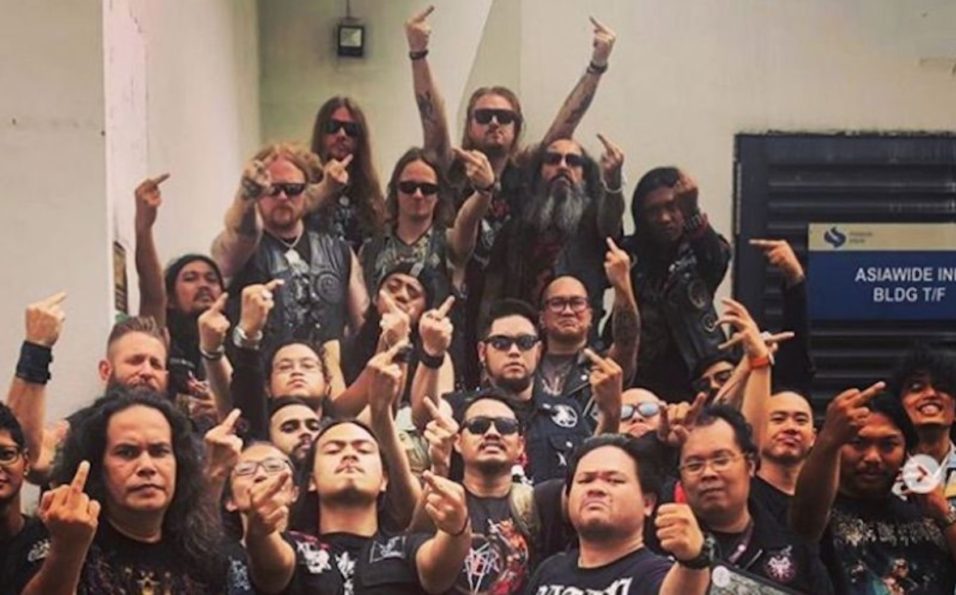
    In a speech at an appreciation lunch for Malay-Muslim anti-drug campaigners on Saturday, the minister honed in on a photograph taken at a meet-and-greet session between Swedish band Watain and their fans. The picture depicted Watain and their fans showing ‘the middle finger’ — a defiant (and very metal) response to the government’s decision to cancel the concert on grounds of preserving “public order”.

    According to Channel NewsAsia, Shanmugam detailed how the ministry would be unable to let the concert go ahead, given how Watain’s lyrical content held anti-Christian themes. Then he went into length about the photograph, harping on how it showed “primarily Malay young men”.

    “You have a group of Malay young men, showing the one-finger sign, supporting the group,” CNA quoted the minister.

    “If a group of Chinese went and showed the finger sign and said that we should allow it – how would you all have felt? It is the same.”

    Mentioning that the photo has gone viral “across the Christian community”, Minister Shanmugam stated that it was crucial to show that the picture does not represent what the Muslim community thinks.

    “They won’t realize that this a small group of Malays, but they may think, is this what Muslims think of us? So now we have to send the message that this is not what the Muslim community thinks. These are black metal group supporters, they are not the mainstream community.”

    In conversations with Christian leaders, Shanmugam pointed out how the leaders would oftentimes draw comparisons to how tough the government would quash anti-Islam sentiment, such as banning the Salman Rushdie book The Satanic Verses in Singapore.

    “(The leaders) said what these people (Watain) are saying is far worse, it is a hundred times worse about Christianity – how come you would allow that?” said Shanmugam to The Straits Times.

    “They said you treat the Muslim community differently than the Christian community.”

    Shanmugam acknowledged there was “some truth” to what the leaders said but said it was not fully true “but it is an approach”.

    He also pointed out to Channel NewsAsia that not all bands would be banned because they spoke about Christianity.

    ———————————————————————————————————————————————————–

    The aftermath?

    It led to confusion among the Muslim community. How did this become an issue that involves the Muslim community? Is the minister trying to be a “hero” that saved the Muslims from depicting a bad, intolerant stand against Christians? What has the brown-skinned fans in the photo got to do with Malays in general, or worse representing what the Muslim community in Singapore thinks about the Christians. Is it because there is a stereotype about Malays in Singapore where they are called Mat Rockers? And who are these brown-skinned fans in the viral photo? Are they even Malay/Muslims from Singapore?

    What was the Minister thinking by saying all this?

    Source: Coconut, Yahoo, The Straits Times and Channel NewsAsia

  • [Fake News] A US Article Claims Singaporean ISIS Fighter Was Spotted In Tampines And Police Warn Not To Approach

    [Fake News] A US Article Claims Singaporean ISIS Fighter Was Spotted In Tampines And Police Warn Not To Approach

    In the fake article from Houston News, it wrote about how one of Singaporean most wanted fugitives, Megat Shahdan Abdul Samad, thought to have been at large in Syria, has apparently been spotted in Tampines, a planning area and residential town located in the East Region of Singapore.

    “Megat Shahdan, 39 has reportedly been seen at Tampines, with police warning the public not to approach the dangerous bloody ISIS member and also help the police with any vital information to trace his hideout. He is wanted most recently for his alleged links witht the ISIS ranks.”

    “It’s the disguises, it’s his criminal entity network and it’s his ability to blend into the community,” the assistant commisioner said of the Megat Shahdan’s ability to avoid apprehension.

    “He is a master of disguise so he may jave camouflaged himself in so many appearances.” Megat Shahdan is Singaporean “number one” fugitive, the senior officer added. “This man is dangerous… he has a significant criminal history.”

    Editor’s Note:

    It was reported in the news a few days ago that Home Affairs Minister K. Shanmugam issued a statement confirming that Megat Shahdan is still believed to be in Syria, not in Tampines.

    Megat Shahdan left Singapore in 2014 to work in the Middle East, where he is believed to have been radicalised, the ministry said in its statement.

    “He subsequently made his way to Syria to join ISIS’ ranks. He is believed to still be with ISIS in Syria.”


    Rilek1Corner

  • Shanmugam: “Definisi kelas pertengahan bagi saya adalah memiliki flat sekurang-kurangnya empat bilik berharga purata $300,000”

    Shanmugam: “Definisi kelas pertengahan bagi saya adalah memiliki flat sekurang-kurangnya empat bilik berharga purata $300,000”

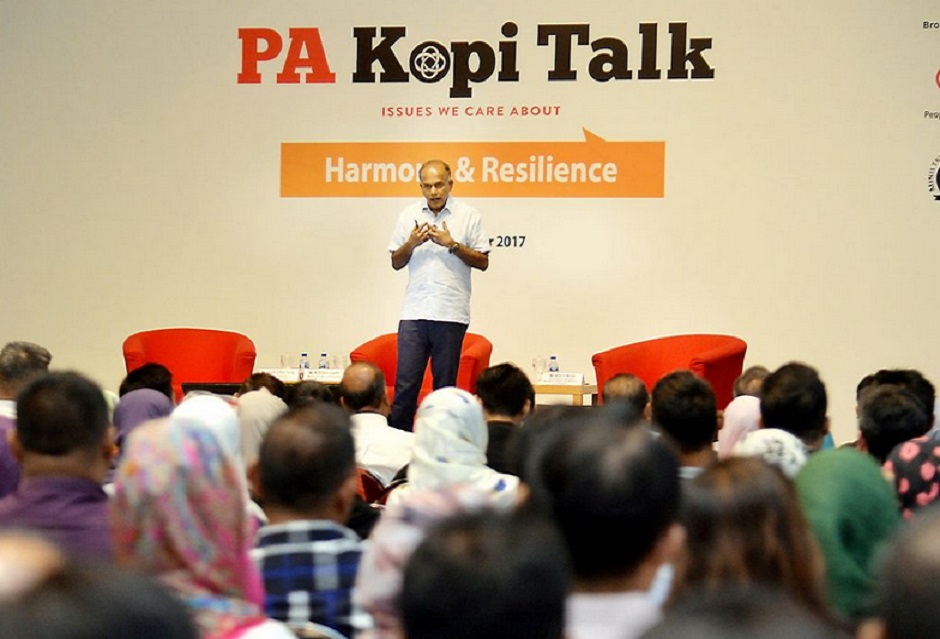
    KEMAJUAN yang ditunjukkan masyarakat Melayu/Islam Singapura boleh menjadikan mereka contoh kilauan bagi semua masyarakat Islam di dunia, kata Menteri Ehwal Dalam Negeri merangkap Undang-Undang, Encik K. Shanmugam. Namun, beliau menggariskan tiga cabaran yang boleh menghambat kemajuan itu termasuk ideologi radikal dan pengganasan yang perlu dikekang. Secara umum, beliau berkata bahawa kemajuan masyarakat Melayu dalam pelbagai ukur tara dari segi bidang pendidikan dan ekonomi merupakan satu contoh yang baik kepada masyarakat Islam lain di dunia.

    “Kita tidak memberikan mereka ikan tetapi mengajar bagaimana memancing. Kita mengambil laluan lebih lama, tetapi kini, kita mempunyai masyarakat yang utuh, lebih berpelajaran, lebih banyak aset dan bersedia menghadapi masa depan,” kata beliau, ketika berucap di Kopi Talk, satu sesi dialog Keharmonian dan Daya Tahan anjuran Persatuan Rakyat (PA), yang dihadiri sekitar 400 pemimpin akar umbi dan kakitangan Melayu/Islam daripada PA di The Grassroots’ Club malam tadi. Dalam bidang pendidikan, peratusan murid Melayu darjah satu yang meneruskan pendidikan ke peringkat posmenengah berganda daripada 45 peratus pada 1995 kepada 93 peratus pada 2015. Mereka yang akhirnya mendapat ijazah dan diploma meningkat daripada 15 peratus pada 2010 kepada 21 peratus pada 2015.

    Lebih ramai Melayu bekerja sebagai karyawan, pengurus, eksekutif dan teknisyen (PMET) – daripada 7 peratus pada 1980 kepada 28 peratus pada 2010. Dari segi pemilikan rumah, hampir 90 peratus keluarga Melayu memiliki rumah mereka sendiri dan lebih 70 peratus tinggal di flat empat bilik atau lebih besar termasuk rumah privet. “Definisi kelas pertengahan bagi saya adalah memiliki flat sekurang-kurangnya empat bilik berharga purata $300,000. Selepas subsidi, tujuh dalam setiap 10 anggota masyarakat Melayu memiliki ekuiti bernilai $150,000 hingga $200,000. Ini merupakan satu pencapaian,” katanya. Malah, secara median, pendapatan bulanan keluarga Melayu per kapita telah meningkat berganda sejak 1990.

    Menurut Encik Shanmugam, kemajuan itu dicapai hasil usaha berterusan masyarakat Melayu, pertubuhan Melayu/Islam dan pemerintah. Meskipun kemajuan itu menggalakkan, Encik Shanmugam menggariskan tiga cabaran utama yang dihadapi masyarakat Melayu/Islam Singapura iaitu pengaruh fahaman radikal dan pengganasan yang merupakan satu keprihatinan yang perlu ditangani, membantu PMET Melayu/Islam yang kehilangan pekerjaan mendapatkan semula pekerjaan, dan peratusan tinggi orang Melayu yang menyalah guna dadah dan meringkuk dalam penjara. Usaha membendung ideologi radikalisme amat penting kerana proses menjadi radikal semakin pantas, kata Encik Shanmugam.

    “Sebelum ISIS, masa yang diambil untuk menjadi radikal ialah 22 bulan, tetapi kini ia mengambil masa sembilan bulan. Malah, terdapat juga mereka yang menjadi radikal dalam tempoh satu hingga dua bulan. Bahkan, lebih ramai wanita yang menjadi radikal,” kata beliau. Minggu lalu, Kementerian Ehwal Dalam Negeri (MHA) mendedahkan bahawa Imran Kassim, 34 tahun, dikenakan Perintah Tahanan (OD) kerana cuba menyertai perjuangan bersenjata di luar negara, manakala Shakirah Begam Abdul Wahab, 23 tahun, dikenakan Perintah Sekatan (RO) kerana memulakan dan mengekalkan hubungan dengan pejuang pengganas asing. Bagi membantu PMET yang kehilangan pekerjaan, sebuah jawatankuasa dibentuk yang diketuai Setiausaha Parlimen (Ehwal Dalam Negeri), Encik Amrin Amin; dan Setiausaha Parlimen Kanan (Pendidikan merangkap Pembangunan Sosial dan Keluarga), Profesor Madya Muhammad Faishal Ibrahim.

    Encik Shanmugam juga menyuarakan keprihatinan mengenai peratusan Melayu yang tinggi yang menyalah guna dadah dan meringkuk dalam penjara. Lebih separuh atau 53 peratus individu yang ditangkap kerana salah guna dadah merupakan orang Melayu tahun lalu, meningkat daripada 32 peratus pada 2006. Pemerintah, katanya, akan terus menyokong masyarakat Melayu/Islam dan respons mereka terhadap cabaran-cabaran itu akan menentukan kejayaan mereka. “Kita mempunyai masyarakat Melayu yang berkeyakinan, rancak, moden dan dapat berintegrasi dengan masyarakat lain. Usaha itu masih belum selesai dan perlu diteruskan,” tambahnya.


    Source: Berita Harian

  • 2 Islamophobic Foreign Christian Preachers Barred From Speaking In Singapore For Inflammatory Comments

    2 Islamophobic Foreign Christian Preachers Barred From Speaking In Singapore For Inflammatory Comments

    Two foreign Christian preachers recently had their applications to speak in Singapore rejected, the Ministry of Home Affairs (MHA) said on Friday (Sep 8), as the preachers had made “denigrating and inflammatory comments of other religions”.

    They are required to have a Miscellaneous Work Pass (MWP) to preach in Singapore. In its media release, MHA said that the decision to reject the applications was made by the Ministry of Manpower (MOM), in consultation with MHA.

    Home Affairs and Law Minister K Shanmugam cited the two cases at an Institute of Policy Studies forum earlier on Friday, when he spoke of how Singapore’s approach to terrorism should not be seen as a “knee-jerk reaction” to the global terrorist movement.

    Mr Shanmugam stated that he did not usually combine the words “Islam” and “terrorism”, as terrorism can exist in any religion.

    “Just as I have banned Muslim scholars or preachers from coming into Singapore, the most recent banning has been as regards to Christian preachers. They were very Islamophobic in their statements outside of Singapore and we decided that we will ban them,” he said.

    One of the preachers had described Allah as “a false god”, asked for prayers for those “held captive in the darkness of Islam”, and referred to Buddhists as “Tohuw people” (a Hebrew word for “lost, lifeless, confused and spiritually barren” individuals) who can be saved only by converting to Christianity, MHA said in its subsequent media release.

    The other preacher had variously referred to “the evils of Islam” and “the malevolent nature of Islam and Mohammed”, and called Islam “not a religion of peace”, “an incredibly confused religion”, interested in “world domination” and “a religion based on … adhering to uncompromising and cruel laws often focused on warfare and virtual slavery”, MHA added.

    “Such teachings are unacceptable in Singapore’s multi-racial, multi-religious society, and the Government will not allow religious preachers of any faith to run down other religions or spread ill-will among the religions,” MHA said.

    “This is to safeguard the social harmony and cohesion that have been painstakingly built up since Singapore’s independence.”

    A foreigner who wishes to deliver a talk in Singapore that is related to religion, race or politics, is required to obtain an MWP.

    In its media release, MHA said that the granting of an MWP was a privilege accorded to a foreigner and not an entitlement.

    It added that MOM consults relevant agencies in its assessments of MWP applications and that each application is considered on its own merits.

    POSSIBLE CHANGES TO LEGISLATION

    During the forum, Mr Shanmugam also said that Singapore was looking to strengthen the Maintenance of the Religious Harmony Act (MRHA).

    The minister said Singapore’s approach to social inclusion was “fundamental and central to the DNA and the thinking and workings of the Government for the last 50 years”.

    “We know that if we don’t get this right, nothing else will go right,” Mr Shanmugam said.

    Part of this was a legal framework that enacted strict laws on hate speech, which he said he was prepared to defend at “any forum anywhere in the world” and had done so.

    The MRHA, targeted specifically at clerics, would be strengthened in the context of “the experiences that we have seen in the region”, Mr Shanmugam said.

    “We have now seen what can happen with clerics all over the world and how, when they move in the political sphere wearing their robes, it becomes very dangerous of any religion. We don’t allow that in Singapore … You stick to religion, you don’t get involved in the sphere of politics.”

    In response to queries, MHA said that it was reviewing the need to enhance Singapore’s legislative provisions to safeguard racial and religious harmony in the country.

    The ministry added that it would give details when the review is completed.


    Source: http://www.channelnewsasia.com

  • Low Thia Khiang: Government Must Address Conflicts Of Interest

    Low Thia Khiang: Government Must Address Conflicts Of Interest

    Workers’ Party’s Low Thia Khiang questioned the role of Law and Home Affairs Minister K Shanmugam in the Ministerial Committee on 38 Oxley Road, noting that Mr Shanmugam was formerly a “close personal friend of Mr Lee Kuan Yew and other members of the Lee family”.

    He also asked why lawyer Lucien Wong, who previously served as PM Lee’s personal lawyer, could have been appointed the Attorney-General last year.

    “Is there also a conflict of interest here? Was this consideration taken into account when he was appointed the Attorney-General? Can the Prime Minister clarify the role of the Law Minister and the Attorney-General in this matter and explain to the House whether there is any conflict of interest,” he said.


    Source: www.todayonline.com