Tag: Khaw Boon Wan

  • Michael D Barr: Singapore’s Government Embroiled In Domestic Crisis Management

    Michael D Barr: Singapore’s Government Embroiled In Domestic Crisis Management

    Author: Michael D Barr, Flinders University

    2017 was a horrible year for Singapore’s government — and for Prime Minister Lee Hsien Loong in particular.

    It began with an open and vocal stoush with China. Late in 2016 the Chinese government confiscated millions of dollars’ worth of Singapore’s military hardware passing through the port of Hong Kong. The action was in part retaliation for Lee’s vocal endorsement of the US position on China’s militarisation of the South China Sea.

    China released Singapore’s military hardware in late January, but then sent a new message of displeasure — Singapore was not welcome at Xi Jinping’s Belt and Road Forum in May 2017. While Lee did not attend the Forum, he later led high-level delegations to both Beijing and Washington, successfully recovering much lost ground.

    Singapore’s ongoing balancing act between China and the US will continue in 2018 with a new factor in play — it is Singapore’s turn as Chair of ASEAN. This position puts Lee on the front line of regional attention. Awkwardly for this balancing act, Lee’s first statement as incoming Chair was a declaration of hope that the United States would continue its engagement with ASEAN and the region.

    Recovering lost ground in foreign policy might be a modest achievement. But domestically, the government is in a state of perpetual crisis management interspersed with misguided political judgements.

    The first domestic crisis of 2017 erupted in June when Lee’s brother and sister, Lee Hsien Yang and Lee Wei Ling, turned to foreign media and social media to reveal ongoing legal disputes over their father’s will. The dispute was not over money but rather over control of the family home. Prime Minister Lee wants to turn it into a national monument to his father, but his siblings want to follow their father’s wishes by bulldozing it.

    This family argument over inheritance became a national issue when the siblings accused Lee Hsien Loong of abusing his power as prime minister to build a family cult around his father’s name — all to bolster his own standing and to smooth the eventual rise to the prime ministership of his son, Li Hongyi. This unresolved dispute has damaged both the Lee brand and Li Hongyi’s prospects of entering politics.

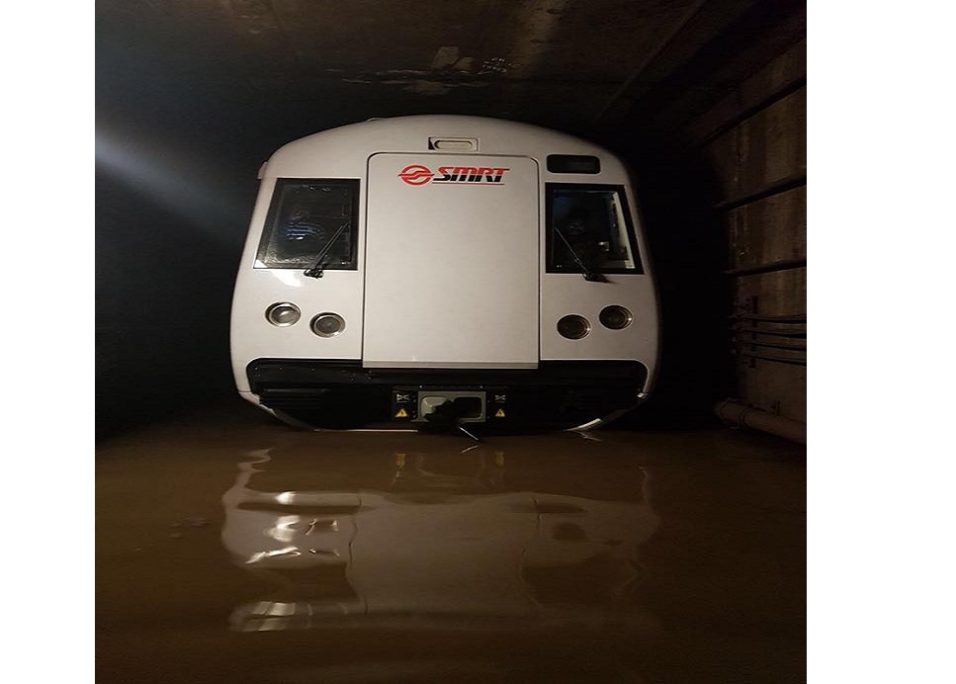
    A second major crisis erupted in October when the regular pattern of train breakdowns on the Mass Rapid Transport system escalated into a major episode — a pumping station in a tunnel failed during an ordinary storm causing an entire train line to be closed by flooding for 20 hours. The cause of the problem proved to be mundane — maintenance work had been neglected and work sheets falsified.

    The Minister for Transport Khaw Boon Wan magnified the damage by unilaterally exonerating both the government and the senior management of Singapore Mass Rapid Transit Corporation. He was particularly singled out for exonerating its CEO Desmond Kuek, whom he thanked as a ‘volunteer’ — a role for which he is paid S$1.87 million (US$1.39 million) per year. Khaw went on to praise him for having his ‘heart in the right place’.

    This episode of ordinary mismanagement was politically significant because it highlights an established pattern of widespread administrative failures and deteriorating government services under Lee’s watch. It also confirmed the perception that highly paid ‘establishment’ figures are protected from the consequences of their actions. Back in 2008 Lee offered similar protection to former deputy prime minister and minister for home affairs Wong Kan Seng when he let an alleged terrorist escape police custody. Wong retained his positions in Cabinet for another three years because Lee stated he had only made ‘an honest mistake’.

    The government has also made several political missteps in 2017. Such missteps included Lee’s odd selection of topics for his National Day Rally Speech in August — a speech equivalent to the US State of the Union address. With Singapore facing challenges on many fronts — managing Xi Jinping and Donald Trump, the South China Sea, rising protectionism, trains, the economy and challenges to Singapore’s role as an air hub — he lectured the population on the dangers of diabetes, which seems to have left most people nonplussed.

    Singaporeans had also been anxiously awaiting new developments on Lee’s successor since he announced in 2016 that he intended to step down as prime minister in 2020. In a country where both the populace and the markets expect long lead times for prime ministerial succession planning — generally a warning of five years or more is given — concern is starting to grow that no clear successor has either been named or emerged.

    Perhaps Lee’s greatest misstep was his handling of the presidential election. The government’s preferred candidate for president was almost defeated in the 2011 elections by popular Chinese rival Tan Cheng Bock. Tan was planning to run again and so the government excluded him by restricting eligibility for election to ethnic Malays under the rather thin cover of enhancing multiracialism.

    This was effective in removing any challenge from Tan, but left just one candidate in the race after two of the three Malay candidates were excluded on other grounds. The episode left a widespread impression that the constitution and the electoral rules are just the plaything of the government, and has done significant damage to both the standing of the presidential office and the government.

    While Singapore’s government has made some positive steps in terms of foreign policy in 2017, its handling of domestic issues has been sub-par. It was a particularly messy year for a government that claims to be preparing for a generational handover in 2020, and it does not bode well for the longevity of the Lee Kuan Yew model of governance.

    Michael D Barr is an Associate Professor of International Relations in the College of Business, Government and Law, Flinders University.

    This article is part of an EAF special feature series on 2017 in review and the year ahead.


    Source: eastasiaforum.org
  • Victim’s Account: SMRT Train Collision At Joo Koon

    Victim’s Account: SMRT Train Collision At Joo Koon

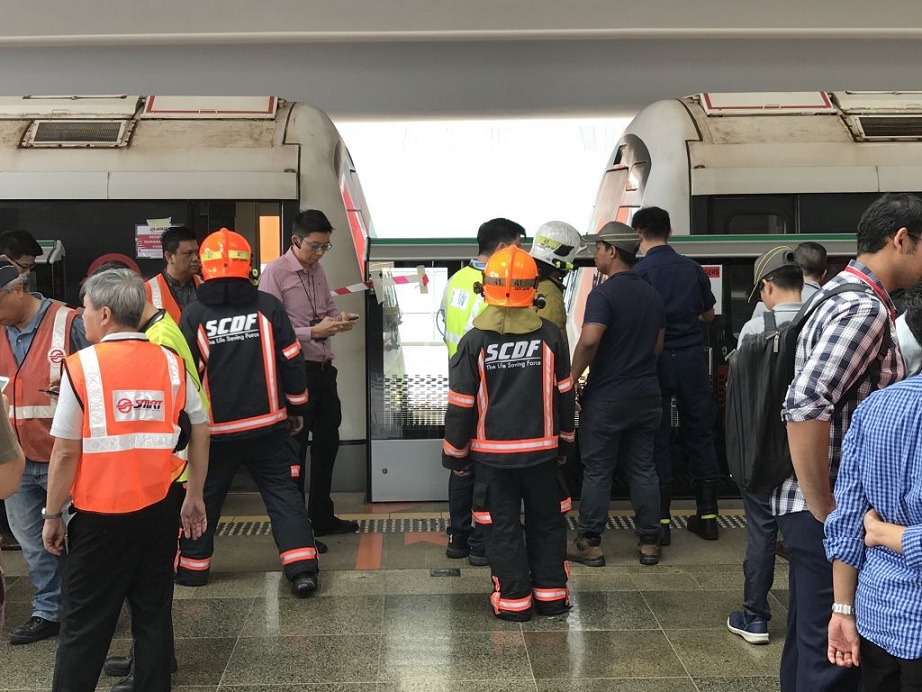
    15 November morning, I was riding the MRT towards Joo Koon from Pioneer. I was at the front cabin of the train that almost reached Joo Koon MRT. At exactly 8.20 am, there was a loud bang, and a violent shaking threw everyone onto the floor. The lights also suddenly went out. I almost thought we were about to fall over.
    From the pilot cabin, we could hear the Driver speaking on the radio. He spoke to the control center that the train behind had collided with the train behind.
    A Bangladeshi or Indian man could not get up. He hit his head in the collision. A Caucasian man (possibly from Europe), rendered assistance.
    I tried pressing the comms button, but there was no response. The Caucasian man spoke to the driver through the opening of the door, informing that there is an injured person on board.

    An SMRT staff came from the other side to check on the casualty. He probably came from the rear of the train. We asked him if it was possible to open the train door to let the injured person out. The staff said that if the train door was opened, then all the train doors would be opened at the same time, which would endanger passengers walking on the electrified tracks. I asked him if it was possible to just open only a single door. He replied they cannot control it like that.
    After a long time, the front door from the driver side was opened. 2 passengers helped the injured man to his feet and got him out first. The rest of us then followed outside. It was 8.50, half an hour since the collision.

    At the control station of Joo Koon, people were forming a long queue. They were queuing to get the excuse sheet, as well as to cancel the overstay status, as they cannot tap out with their EZ Link cards. To my dismay, I realized that the gantry of Joo Koon was still deducting fares. The one thing that never breaks down. I approached the staff, explained the fare deduction should be cancelled. She told me that she has no power to make such a decision, and just referred me to another staff. After approaching 3 staff, the male SMRT staff opened one gate with no fare deduction. I told him the fare waiver should be for the whole station, not just one gate, but he said this was the best he could do.

    It was a bad experience, but I could say I was lucky enough to get away with just a few bumps. Others weren’t so lucky. This has already become the norm. And you can see the resilience of Singaporeans from the way we tap on our phones even as we were stuck on board.
    I would like to thank Mr Khaw for such an experience, because every time he opens his big mouth, an incident is never far behind. More to come. Maybe better not say what next or else our loved ones may be trapped inside. The families of the top ‘unaccountability’ not involved bcos they are elitistically and affluentably chaffeured !!!!!😎😎😎😎😎


    Source: Chen GJ

  • Commentary: Vote Wisely In The Next Election

    Commentary: Vote Wisely In The Next Election

    The train collision marked a new low for SMRT and our Nation. Louder comes the call for heads to roll from the very top. What is at the root of the SMRT failures?

    SMRT is a corporation (private) that is owned by the Government. Supposedly, this model of corporatizing public services serve to benefit all stake holders. We hear this idealistic scenario again recently in Parliament, when Mr Khaw Boon Wan made the same points in response to questions. But have all stakeholders benefited as claimed or only their select few?

    A private corporation exist for profit while a public service exists to serve the public. So there is a fundamental problem to begin with when the Government decides to run public services like a business. Try as you will but you cannot have the cake and eat it too.

    After more than 50 years of running the country like a business against all wisdoms cautioning the dangers of profiting off public services, Singaporeans are witnessing the inevitable happen. The so-called efficiency comes at a huge expense to the public. When public officers meant to serve public interest failed their fiduciary duties as the structure of check and balances are compromised by colluding conflict of interests producing a public/private self-serving mess that we now inherited.

    When the next election comes, we must correct this by voting our rights to take back this Nation and stop their failed projects (HDB, COE, ERP, CPF, 6.9 Million people, etc.) on their tracks.


    Source: Damanhuri Bin Abas

  • Commentary: Leaders Are No Longer Chosen On The Basis Of Merit

    Commentary: Leaders Are No Longer Chosen On The Basis Of Merit

    The image of a ponding MRT on its submerged track is iconic and deep with prophetic tell-tale signs of the state we are in as a Nation.

    The admission of a culture of complacency in SMRT by its very CEO has served to expose the parasitic cancer eroding all that we have build as a Nation, when we abandoned what we used to champion, i.e., meritocracy.

    Leaders are no longer chosen on the basis of merit, required expertise and capabilities for the core functions demanded. Political interests to maintain control and power dictates who gets any top jobs. The best gets sidelined for not being correctly aligned politically. The mantra of the best man for the job no longer applies.

    A pervasive culture of silence exist deterring anyone to speak up for the truth which in today’s high salaried pseudo corporate top jobs potentially means foregoing that politically laced iron rice bowl. We are doing everything that the best management gurus warned against. Never to compromise separation of powers to ensure adequate checks and balances as well as non tolerance to conflict of interest situations.

    Now instead, an elitist tight clique safeguards their own vested interest as they run the faltering Singapore Inc. The reminder and caution of pitfalls when government do business is simply ignored. Lessons strangely don’t apply of gross abuse that always happen when the sacred lines on separation of powers that must never be crossed disappears.

    Emblematic of this chronic malaise is the blurring between who is checking who. We are shockingly reminded again of this sickness with the reply Minister Khaw gave to Low’s question in parliament. The information of how checks and balances are ensured between Ministry, Stat boards and Operators are vital and valid and must be clearly answered. Simply brushing aside such queries in parliament with pathetic line of we know what we are doing and can be trusted will not do anymore.

    Singaporeans must remember all these moments and there are surely plenty now to list. Government must never be allowed to get away with excuses instead of explaining why things fail and must take responsibility for their failures which clearly is the case with poor judgement on top executive choices. Poor decisions and bad judgments must have consequences.

    Ultimately, the root of the problem begins in government. This government has abandoned all the lofty ideals of governance that our founding fathers stood for and defended. The government has no checks and in truth we the People made it so. With no real accountability by the government to the people, the inevitable will happen. Remember this image when we next go to the polls and vote wisely.


    Source: Damanhuri Bin Abas

  • Khaw Boon Wan: Management Of Local Rail Operators Were Distracted

    Khaw Boon Wan: Management Of Local Rail Operators Were Distracted

    In hard-hitting remarks about the state of Singapore’s rail reliability, Transport Minister Khaw Boon Wan said on Monday (May 30) that “complacency and certainly distracted management” led to the current state of affairs, as he outlined areas the rail operators need to shape up in.

    At a forum on infrastructure maintenance on Monday, Mr Khaw set an “audacious” target for local transport operators SMRT and SBS Transit by 2020: The Taipei Rapid Transit Corporation’s (TRTC) scorecard of clocking 800,000 train-kilometres before hitting a delay that exceeds five minutes. The current performance of the two local rail operators in the first quarter of this year averages out to 160,000 train-km.

    Pointing to how TRTC had studied Singapore’s rail network in its early years, Mr Khaw, who is also Coordinating Minister for Infrastructure, said: “We were then an exemplary MRT player and a subject of study. Unfortunately, maybe due to complacency and certainly distracted management attention, we lost our earlier mojo.

    “At the moment, I would describe the cup as ‘three-quarters empty’. But I appreciate the efforts of our colleagues who have made the cup ‘one-quarter full’. I am confident we will have a full cup in due course,” he added.

    TRTC is the second role model — and a more prolific one — that Mr Khaw has said Singapore’s rail network should emulate. In October last year, shortly after he took over the transport portfolio, Mr Khaw had said Hong Kong’s Mass Transit Railway’s performance of about 300,000 train-km between disruptions was a target for Singapore to catch up with.

    On Monday, Mr Khaw said that having been in politics for more than two decades, he believed in under-promising, so as to over-deliver. “However, when organisations (need) to be transformed, I think we need to do the opposite: Set clear stretch targets, motivate the troop, aim high and work our butts (off).”

    He added: “If we fail in absolute terms, it could still be very significant. But if we work hard at it, with a little bit of luck, we may achieve these audacious targets.”

    Mr Khaw also pinned down what he learnt about TRTC’s method to achieving their “remarkable” train reliability performance, from a study trip two weeks ago led by the Land Transport Authority (LTA). TRTC had an organisation structure where employees at all levels had strong ownership of service reliability. The operator’s engineering excellence shows in the way it captures and analyses data about the state of the network’s hardware, allowing it to carry out timely replacement and preventive maintenance. Workers are also passionate about their jobs, which speeds up response when incidents crop up.

    Mr Khaw set a target of 200,000 train-km between delays by year end and 400,000 train-km by 2018. He also said the LTA will develop a system that gives an overview of asset requirements across all MRT lines in the next three years. “This will enable us to systematically assess the asset condition and (let them be)reviewed by both operators and LTA,” he said.

    He added that a review of the operators’ incident response and recovery procedures is under way. Also in the pipeline is a new centre to boost currently “minimal” testing and repair capabilities for electronics in the rail network.

    For now, staff from the LTA and both operators will be sent to workshops in Taiwan to improve their asset maintenance practices and engineering.

    Mr Khaw said: “This will allow our operators to jump-start their review of their maintenance programmes and reliability efforts. There’s no point reinventing the wheel. Please chuck away whatever ‘not invented here’ syndrome. We have no time for reinvention anyway … our commuters can’t wait.”

    Transport analyst Lee Der-Horng, from the National University of Singapore, said the difference between TRTC’s and Singapore’s rail reliability performance lies in operations. Employees there have a strong sense of ownership and strive to be perfectionists at work, he noted.

    But he pointed out that as wages in Taiwan are also comparatively lower, it frees up resources to be channelled towards other areas of need.

    Dr Walter Theseira, a senior lecturer at UniSIM, felt that tackling major disruptions would be more important in keeping commuters happy.

    “Major disruptions that take down the entire system or parts of it and require commuters to find alternatives such as bus bridging are much more of an inconvenience than just momentary delays of a few minutes,” he said. “The public continues to be sceptical that quality has actually improved because the frequency between major disruptions has not improved.”


    Source: www.todayonline.com