Tag: Malay community

  • Commentary: Halimah Yacob Has Abandoned And Betrayed Residents That Voted For Her In The First Place

    Commentary: Halimah Yacob Has Abandoned And Betrayed Residents That Voted For Her In The First Place

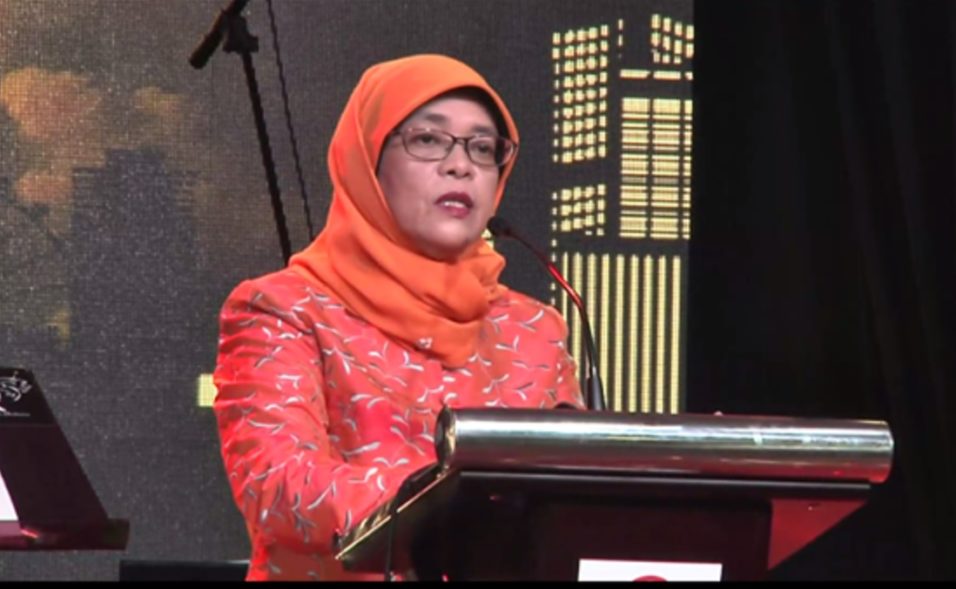
    She was voted by the residents living in Marsiling-Yew Tee GRC, yet instead of serving the residents as she was voted in for the next 5 years, she abandoned the residents who had voted for her and choose to run in September’s Presidential Election. And wayang so much whether want to contest in the election, no way would I voted for this joker who abandons the residents and abandons her constituents and self-claim herself Malay while her father is an Indian.

    She betrays the residents who had voted for her in Marsiling-Yew Tee GRC and betray her own race. What would you expect if she was voted in, perhaps would be even worse than Tony Tan who has done nothing while being a president.


    Source: Wong Hong Teng

  • Osman Sulaiman: Dilemma Of A Malay Voter On Reserved Presidential Election

    Osman Sulaiman: Dilemma Of A Malay Voter On Reserved Presidential Election

    Dilemma of a Malay voter this coming reserved Presidential Election (PE)

    What participation means for the Malay voters.

    1. Reserving the PE only for Malay candidates is against the grain of meritocracy. The central tenets that our country is built on.

    2. Participation would mean condoning and prolonging race based policies that further divide our nation.

    3. Allowing ourselves to be used as a political pawn for self-serving purposes.

    4. We perpetuate the perverse narrative by the gov that Malay community cannot win an open election without assistance

    5. The community descend to a less dignified level as we become part of a flawed system.

    Even if the above dont prick us, there is the issue of who do we vote for? At present, these 3 hopefuls.

    1. Halimah Yaacob
    2. Salleh Marican
    3. Farid Khan

    We know that the president’s role is largely ceremonial. With the new changes to our Elected Presidency System, our president’s discretionary powers are further abridged. And who gets to be president, would not matter as much before.

    I’ve seem some who has indicated that they would probably spoil their votes.

    What non-participation or spoiling the vote would mean for the voters.

    1. If Mdm Halimah contest, she would most probably win the election. History has shown that when the ruling party endorses a candidate, that someone would go on to win the election.

    Spoiling the vote would most definitely hand Mdm Halimah the coveted spot. I dont think this will be ideal as we would want someone who isnt too closely related to the ruling party.

    2. If we abstain and not turn up to vote, we are excluding ourselves from nation building and at the same time democracy.

    3. Part of democracy is to show our voice through our votes no matter even if we are in the minority. Not participating would mean the result would not reflect the true sentiments of the people.

    So do we participate, or no? It’s a tough call.


    Source: Khan Osman Sulaiman


  • Damanhuri Abas: Sempena Kita Melayu Dan Budaya Melayu Kita

    Damanhuri Abas: Sempena Kita Melayu Dan Budaya Melayu Kita

    Sempena Kita Melayu dan Budaya Melayu kita:-

    1. Kepelbagaian yang sempit tidak mencerminkan kematangan bangsa dan negara dan bercanggah dengan hakikat masyarakat berbilang kaum yang telah dan segar wujud di Singapura. Keindahan warna warni dalam bangsa melayu sendiri janganlah di kelirukan dengan kejumudan persepsi fikiran kita yg cuba membenarkan definasi melayu yang terbatas.

    2. Kenapa acapkali pandangan-pandangan yang bercanggah sering timbul dari Pemerintah. Dalam satu aspek seperti isu Presiden Melayu, kita disuruh bersikap inclusive menerima orang lain yang telah dimelayukan. Tapi dalam hal gaya hidup tidak pulak bersikap inclusive malahan sangat jumud and cetek pandangan.

    3. Bila lagi Pemerintah nak ubah sikap dan menerima setiap lapisan cerdik pandai tanpa pengkecualian dari kumpulan mahupun individu yang prihatin dan peka terhadap kepentingan bangsa melayu. Setelah 50 tahun menentukan kepimpinan melayu yang Pemerintah suka, apakah hasil yang boleh dibanggakan.

    4. Hari ini tidak ada kekuatan dan mercu tanda sosial yg seharusnya sudah pun wujud yang kita orang Melayu boleh banggakan. Orang India ada Little India, orang asing filipina ada Little Manila, kita tidak ada apa yang setanding padahal jumlah kita lebih ramai dibandingkan golongan minoriti tersebut. Di mana silapnya.

    5. Sikap curiga pemerintah terhadap golongan yang di luar jangkawan kuasa mereka harus dihapuskan. Ia bertentangan langsung dengan budaya melayu yang meraikan kepelbagaian, mementingkan gotong royong dan kesatuan tak kira siapa yang ingin menyumbang.

    6. Kita mempunyai hak istimewa dalam perlembagaan negara yang menjamin status melayu sebagai pribumi. Adakah status ini setelah 50 tahun merdeka menguntungkan atau sebaliknya. Sudah tiba masanya untuk kita mengkaji dan membincang secara terbuka dan jujur demi mendapat jawapan yg tepat supaya bangsa ini boleh benar-benar berdikari dan mustahil bangsa ini tidak mampu menandingi pencapaian bangsa-bangsa lain jika diberi peluang yang sama.

    7. Banyak isu yg lebih penting yg kita ketepikan dalam menyemarakkan sejarah kebudayaan bangsa melayu di bumi Temasek ini. Janganlah kita mempersendakan kemampuan bangsa kita sendiri dengan kejumudan minda kecil kepimpinan mereka dalam merumitkan sesuatu yang sudah menjadi perkara lumrah.

    8. Kita bertanggungjawab bersama untuk menyemaikan sifat kebanggaan kepada bangsa melayu kita dalam jiwa setiap anak muda kita. Sebenarnya terlalu lama anak-anak muda kita dikecewakan daripada merasai naluri murni yg terpendam dalam jiwa mereka. Mereka rindukan jatidiri melayu Singapura yang boleh dibanggakan. Menjadi kesilapan besar jika orang melayu yang bangga dengan sejarah dan budaya bangsa mereka dianggap tidak setia kepada negara. Ini bukanlah keindahan kepelbagaian bangsa yang termaktub dalam perlembagaan negara.


    Source: Damanhuri Bin Abas

  • AMLA: New Rules To Be Implemented For Muslim Couples On Marriage And Divorce

    AMLA: New Rules To Be Implemented For Muslim Couples On Marriage And Divorce

    Muslim couples who are minors will have to attend a compulsory marriage preparation programme, while couples seeking a divorce also have to attend a marriage counselling programme, as part of a string of changes to the Administration of Muslim Law Act (AMLA) passed in Parliament on Tuesday (Aug 1).

    Muslims who are younger than 18 and want to get married must attend and complete a marriage preparation programme approved by the Ministry of Social and Family Development. These sessions are aimed at helping couples better understand, clarify and address any concerns that they and their families may have about marriage.

    They will also learn essential skills like how to build a stable marriage and family at marriage education workshops for the minor couples to learn essential skills and knowledge to build a stable marriage and family.

    Parents of these couples, who will now also be required to give consent to the marriage, are also encouraged to be involved in such sessions. Previously, only the consent of the wali, the lawful guardian for the marriage of a Muslim woman, is required.

    Muslim marriage numbers are on the rise, while minor marriages – where at least one party was below 21 years at the time of marriage – have been in “steady decline.” Divorce rates have also remained stable.

    Nevertheless, Minister-in-charge of Muslim Affairs Dr Yaacob Ibrahim pointed out that minor marriages are more “vulnerable”. Citing the trend of Muslim marriages involving younger grooms, the recent marriage cohorts have seen one and a half times the divorce rate compared to older grooms, he said.

    “This move thus reinforces the importance of parents’ or guardians’ support in a minor marriage as their guidance, especially in the crucial initial years of the marriage, is critical to help younger couples build strong marriage foundations for a lifetime,” said Dr Yaacob.

    To provide greater support for divorcing Muslim couples, they will be required to first attend the Syariah Court’s Marriage Counselling Programme, before seeking a divorce, so as to see if the marriage can be saved.

    About 64 per cent of divorce cases in the last five years involved at least one child of the marriage under 21 years old, with more than 85 per cent of these involving at least one child under 14 years.

    Since the Syariah Court introduced the programme in 2004, over 33,000 couples have been counselled, and almost half of these marriages have been saved, said Dr Yaacob.

    If the couples decide to go ahead with the divorce, this programme will provide the platform to discuss care and living arrangements for their children, while counsellors on hand can refer them to other services like financial assistance or education support for school-going children.

    The Syariah Court will also have the power to refer parties for further counselling or a family support programme at any stage of their divorce proceedings.

    For instance, it can order a registered medical practitioner, psychologist, counsellor, social worker, or mental health professional to examine and assess the child.

    The AMLA covers the three public agencies – the Islamic Religious Council of Singapore (MUIS), the Registry of Muslim Marriages (ROMM) and the Syariah Court – dedicated to implement and administer the provisions of the Act.

    The AMLA was last amended in 2008 to strengthen these key institutions, as well as to improve the quality of life for the Muslim community in Singapore.

    Several amendments were also made to enhance the management of Muslim assets, most notably the wakafs (Muslim endowments) and the Mosque Building and Mendaki Fund (MBMF).

    In 2017, MUIS disbursed $3.1 million of the revenue generated from wakafs to various beneficiaries such as mosques, madrasahs, and Muslim organisations. This amount is nearly 3 per cent more, or about $90,000, compared to the previous year.

    Of the total disbursement, more than $1.52 million was channelled to 27 mosques to help fund upgrading projects and to support mosque programmes.

    “All these are a result of MUIS’ management of the wakafs, which include careful planning to ensure maximisation of wakaf returns, and attracting good tenants for wakaf properties…We must continue to ensure that the wakafs are well managed so as to maximise their potential,” said Dr Yaacob.

    To enable MUIS to better safeguard against the mismanagement of wakafs, there will be expanded grounds under the AMLA to which a trustee or mutawalli (those appointed to manage the wakaf) can be removed. For instance, when a mutawalli fails to furnish information or particulars as required by MUIS, or fails to allow MUIS’ inspection of wakaf properties, accounts, and records. This is to ensure greater transparency and clarity, and to allow for more timely intervention.

    Current provisions enable MUIS to do so when it appears that the wakaf has been mismanaged, or if there have been no trustees appointed. However, for these conditions to be met, the wakaf “might already be in jeopardy”, explained Dr Yaacob.

    Additionally, the appointment of a new trustee to a wakaf will be void unless there is MUIS’ prior approval in writing, so that MUIS can ensure that the individuals appointed as trustees are qualified to manage the wakaf.

    A court must also not entertain or proceed with any proceedings relating to the appointment or removal of wakaf trustees and mutawallis, as it will fall on parties to work with MUIS to such matters.

    MUIS will also be able direct a portion of the income of the wakaf towards a sinking fund, primarily for the upkeep and development ofthe wakaf , such as repairs or installation works.

    Citing how many of the trust deeds of older wakafs do not specifically address long-term upkeep of the wakaf, including that of the creation of a sinking fund to maintain it for the long run, Dr Yaacob said that such properties often fall into disrepair given the lack of sufficient savings or reserves.

    Lastly, he reiterated that the MBMF can be tapped for the purchase of new or additional land or property for existing and future mosques, as well as for the building or maintenance works of any religious education premises or facilities.

    Wrapping up his speech, Dr Yaacob said: “The amendments we are proposing today seek to better protect Muslim families because they are the very building blocks of a strong and resilient community.We want to reinforce our institutions so that they are effective in serving the community.”

    He added: “We want to enhance the management of our assets so that the community continues to benefit from them and prosper.”


    Source: http://www.todayonline.com
  • Call To Preserve Unique Singapore Malay Culture

    Call To Preserve Unique Singapore Malay Culture

    Malays in Singapore have their own special version of Malay culture, which melds with the country’s multiracial setting, and the community must put in greater effort to grow and preserve this unique culture, said Environment and Water Resources Minister Masagos Zulkifli.

    He made this call yesterday as he announced new plans for Malay grassroots groups under the People’s Association to focus on building stronger bonds within the community, and between the community and other races.

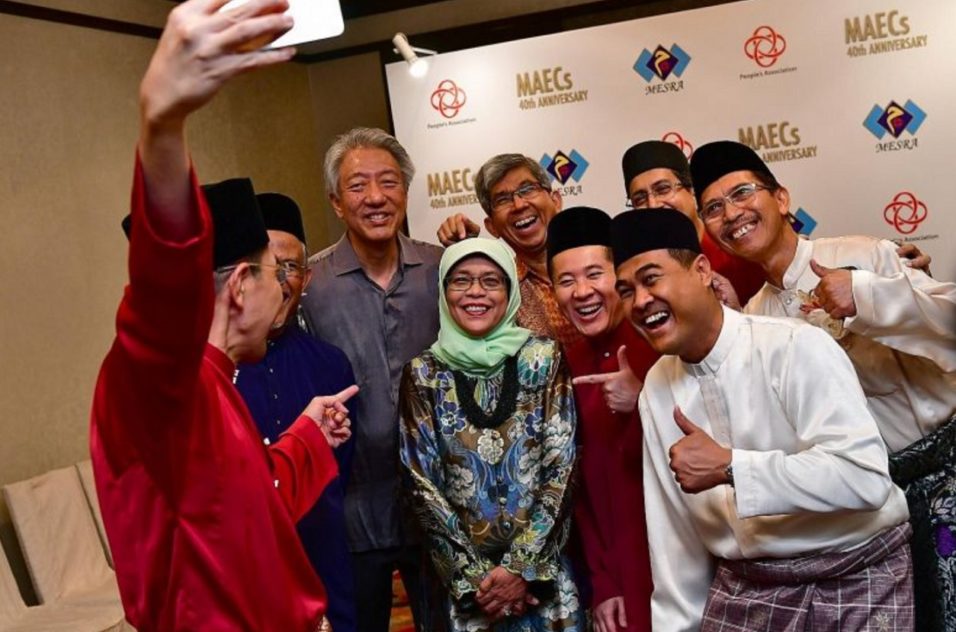
    Speaking at a dinner celebrating the 40th anniversary of the Malay Activity Executive Committees (MAECs), Mr Masagos said the local Malay identity provides a “bulwark against the threat of incoming doctrines which are… very inimical to our multiracial society”.

    He noted in a speech that external influences have threatened to erode this culture, adding that some local traditions have come under attack by extremists.

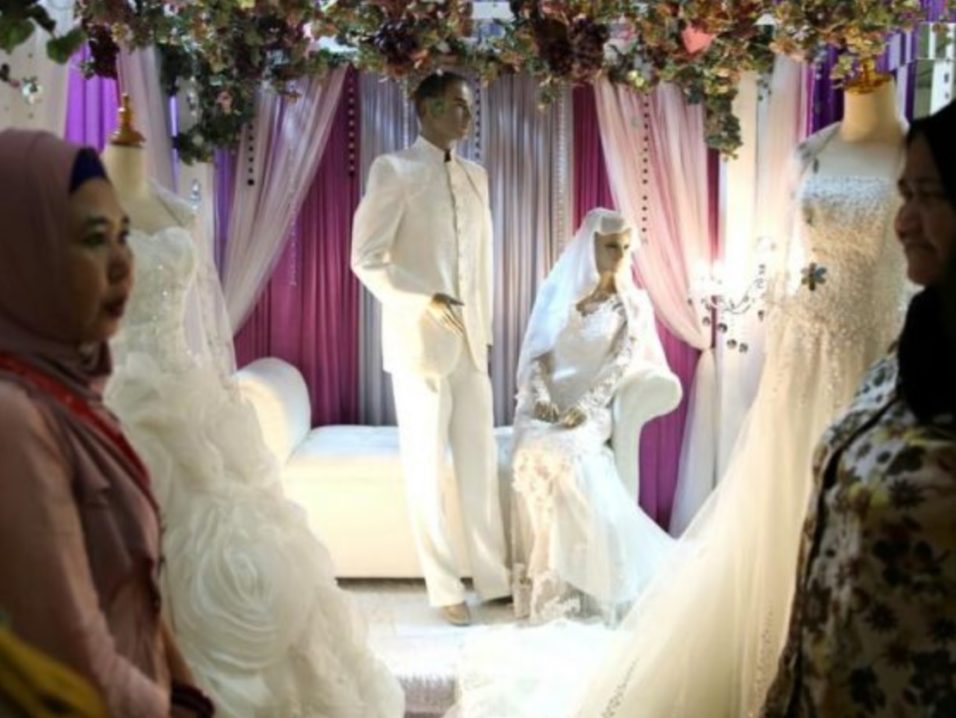
    He pointed to how they have labelled the Malay wedding practice of persandingan, where newlyweds sit together on a dais, as having Hindu influences. Some have also claimed that the Arab way of dressing is “more superior” to the local Baju Melayu.

    “Extremists know they must first supplant our confidence in our identity, both in our religious practice and culture, before they can replace it with one of their own,” he said.

    He urged people to guard against such insidious influences, saying that failing to do so could result in the erosion of Malay culture and the rejection of local teachings of Islam that embrace harmony.

    He added that Malay Singaporeans should be confident of their cultural and religious practices.

    The 97 MAECs and their coordinating body, the Malay Activity Executive Committees Council – known by its acronym Mesra – can also help to guard against this threat of radicalism and exclusivism, he said, by helping to foster a sense of cohesion among the different races. Mr Masagos is adviser to Mesra.

    The committees, which were formed as Malay cultural groups in 1997, will expand their focus to “get people out into common spaces, where people across all walks of life have the opportunity to interact and get to know one another”, Mr Masagos said to about 900 MAEC members and community partners.

    As part of this effort, Mesra will also be managing programmes in the upcoming Wisma Geylang Serai, a new five-storey civic centre in Paya Lebar slated to open next year, which will be a hub for Malay heritage.

    Senior Minister of State for Defence and Foreign Affairs Maliki Osman, who will lead the initiative, said the centre will host the annual Hari Raya Bazaar and Hari Raya light-up, and also work with the National Arts Council to bring in cultural groups, among other things.

    He added that he hoped the new hub will help preserve and grow the Malay culture and become a space where people of all communities will “gravitate” to learn about Malay heritage.

    Deputy Prime Minister Teo Chee Hean, who also delivered a speech in Malay at the dinner, welcomed the plan by the Malay-Muslim community to “work more closely with all communities to build a more secure, cohesive multiracial and multi-religious Singapore”.

    He added that all communities here can see the significant steps the Malay-Muslim community has taken to counter exclusivism, extremism and radical teachings.

    “I am glad that other communities in Singapore have expressed their support and solidarity with our Malay-Muslim community… All communities have to reach out, strengthen understanding and build trust,” he said.

    Yesterday, eight MAEC members were given awards for their contributions to the community.


    Source: http://www.straitstimes.com