Tag: malay

  • Generasi Muda Harus Diajar Kenali Masakan-Masakan Melayu

    Generasi Muda Harus Diajar Kenali Masakan-Masakan Melayu

    Ia memang digemari ramai. Namun, mungkin tidak ramai yang tahu, malah tidak mahu menyingsing lengan dan ‘berkelentang-kelentung’ di dapur untuk memasaknya – lebih-lebih lagi golongan muda. Itulah dilema dan kemungkinan juga suatu ‘krisis awal’ bagi makanan tradisi Melayu.

    Apakah akan muncul senario di mana tiga suku orang Melayu tempatan yang tidak tahu memasak makanan tradisi Melayu pada dekad-dekad mendatang? Apakah makanan Melayu akan setakat berada dalam buku dan arkib sahaja, tetapi bukan amalan dan basahan?

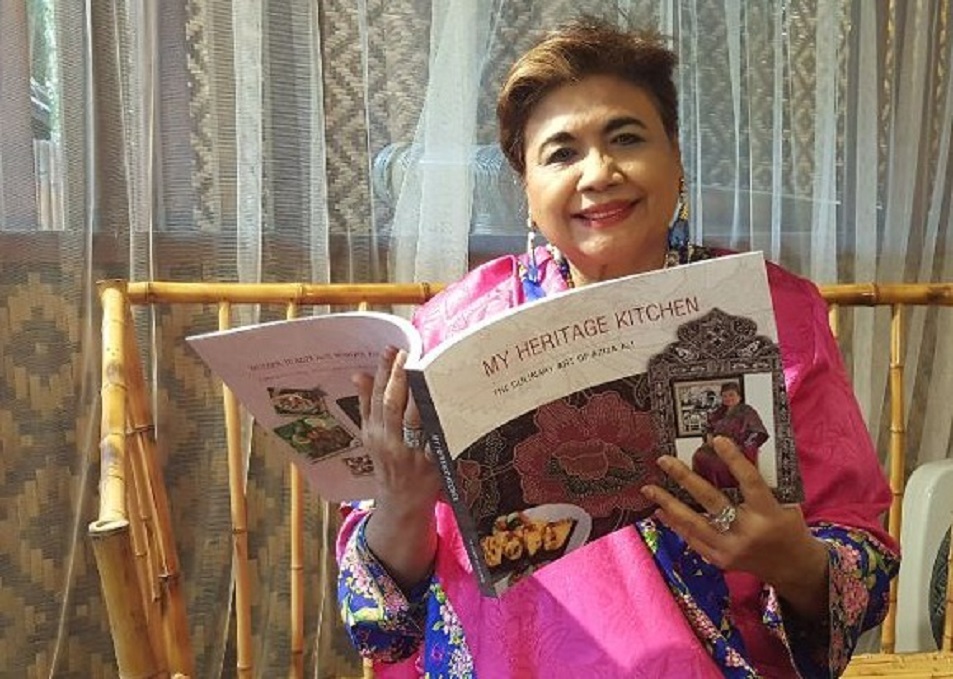
    Lantaran kesedaran tentang kemungkinan seperti itulah, tokoh yang tidak asing lagi dalam bidang masakan Melayu, Aziza Ali, memutuskan untuk menghasilkan sebuah buku resepi warisan turun-temurun demi memperkenalkan generasi muda kepada juadah tradisional Melayu kita.

    Buku ‘My Heritage Kitchen – The Culinary Art of Aziza Ali’ itu menonjolkan hidangan-hidangan warisan keluarga Cik Aziza, yang berketurunan Melayu berdarah campuran Jawa, Cina dan juga Arab.

    Berucap di sidang media bagi memperkenalkan buku tersebut kelmarin (19 Jul), Cik Aziza melahirkan rasa bimbang bahawa generasi muda sekarang begitu terbiasa dengan makanan yang mudah dan segera. Maka itu, penting untuk masyarakat memastikan bahawa golongan itu kembali mengenali makanan Melayu dan “belajar makan” masakan tradisional Melayu.

    “Jika tidak, ia akan dilupakan dan hilang,” tegas Cik Aziza, 68 tahun.

    JENGKOL? JERING? TEMPOYAK? GETAS-GETAS? JADI ‘MAT SALLEH’?

    Sebut sahaja makanan orang Melayu seperti jengkol, tempoyak, jering, rebung dan cincalok. Atau kueh seperti gandus dan getas-getas? Itu semua semakin menjadi ‘asing’ bagi generasi lebih muda. Itu jugalah yang mahu cuba diubah Cik Aziza, yang suatu waktu dahulu pernah mempunyai restoran mewah atau ‘fine dining’ Melayu yang pertama di Orchard Road.

    Babat Jengkol antara resepi yang dikongsi oleh Cik Aziza. (Gambar: Petikan dari buku My Heritage Kitchen)

    Buku terbarunya itu menjadi senjata. Diharapkan, menerusi buku itu generasi muda akan lebih mengenali bahan-bahan masakan tradisional yang mungkin jarang atau tidak pernah mereka dengar.

    “Saya memperjuangkan budaya Melayu menerusi makanan kita. Inilah kekuatan saya. Saya sedang memperkenalkan budaya kita, khususnya makanan kita kepada generasi muda. Kalau tidak mereka akan terus menjadi ‘mat salleh’ dan ini amat menyedihkan.

    “Saya sendiri gemar memasak makanan Eropah, malah makanan-makanan lain juga. Tetapi tidak melupakan makanan tradisional kita,” ujar Cik Aziza.

    Buku terbaru Cik Aziza disokong oleh Lembaga Warisan Negara (NHB), Muzium Negara Singapura, Akademi Globalchef at-Sunrice, Galeri Maya dan Restoran SERI.

    Sebanyak 1,000 naskhah buku itu dicetak dan akan dilancarkan secara rasmi di Akademi Globalchef at-Sunrice esok (23 Jul).

    IBU BAPA MESTI PUPUK DARI KECIL

    Menjawab pertanyaan BERITAMediacorp tentang bagaimana untuk menarik generasi muda supaya minat mempelajari cara-cara menyediakan juadah tradisional kita, Cik Aziza berkata ibu bapa perlu memainkan peranan utama.

    “Saya percaya bahawa apa saja yang (hendak diajarkan kepada anak-anak) perlu diterapkan sejak mereka kecil. Ibu bapa mesti memupuk minat dan meningkatkan kesedaran mereka kepada pelbagai jenis hidangan.

    “Jangan dimulakan dengan sesuatu yang rumit atau sukar. Orang muda, apabila mereka mahu memulakan sesuatu, mereka perlu memulakan dengan yang mudah terlebih dahulu,” Cik Aziza memberitahu BERITAMediacorp.

    Cik Aziza juga menekankan dua ciri utama yang perlu ada dalam diri seseorang sebelum mereka memulakan sesuatu yang baru – seperti belajar memasak untuk mendalami ilmu mengenai masakan tradisional Melayu – iaitu kesungguhan dan minat.

    “Jika anda mempunyai kesungguhan dan minat, anda akan dapat melakukannya dengan betul. Apabila anda mempunyai tekad yang kuat, minat akan bertahan selama-lamanya. Jika anda mahu melakukannya, tetapi tiada kesungguhan, hasilnya tidak akan memuaskan. Namun, walaupun anda tidak tahu memasak, tetapi ada minat, anda boleh pergi jauh. Tidak ada apa pun yang mustahil,” tambah Cik Aziza.

    BUKU MASAK UNIK, BELUM PERNAH DIBUAT ORANG – 20 LUKISAN DALAM BUKU MASAK!

    Selain menawarkan lebih 70 resepi warisan dari empat keturunan – Melayu, Jawa, Cina dan Arab – dalam satu buku berbahasa Inggeris, ‘My Heritage Kitchen The Culinary Art of Aziza Ali’ (Dapur Warisan Saya – Seni Memasak Aziza Ali) – yang merupakan buku beliau yang keempat – turut menonjolkan beberapa ciri unik.

    Mungkin ini belum pernah dibuat orang, tetapi buku resepi itu memuatkan sebanyak 20 koleksi lukisan Cik Azizah.

    “Buku ini istimewa. Amat istimewa berbanding buku-buku lain kerana saya memuatkan lukisan-lukisan saya dan ini belum pernah dilakukan sebelum ini,” ujar Cik Aziza. Beliau memberitahu BERITAMediacorp “saya selalu mahu menjadi yang pertama melakukan sesuatu”.

    Salah satu lukisan Cik Aziza dalam buku terbarunya.

    Sebelum ini, Cik Aziza pernah menulis buku Aziza’s Creative Malay Cuisine (2001) dan Sambal Days, Kampong Cuisine (2013). Beliau juga pernah terlibat dalam penghasilan buku A Village Remembered – Kampong Radin Mas 1800s – 1973 (2013).

    Menerusi buku terbaru itu para pembaca juga diajak mengenali keluarga Cik Aziza, di samping mengimbau kenangan-kenangan menarik semasa beliau membesar dan bagaimana sikap telaten serta kesenian ibunya dalam menyiapkan sesuatu hidangan mencetuskan minat yang mendalam bagi dirinya.


    Source: http://berita.mediacorp.sg
  • Gilbert Goh: This Is How You Can Spoil Your Votes

    Gilbert Goh: This Is How You Can Spoil Your Votes

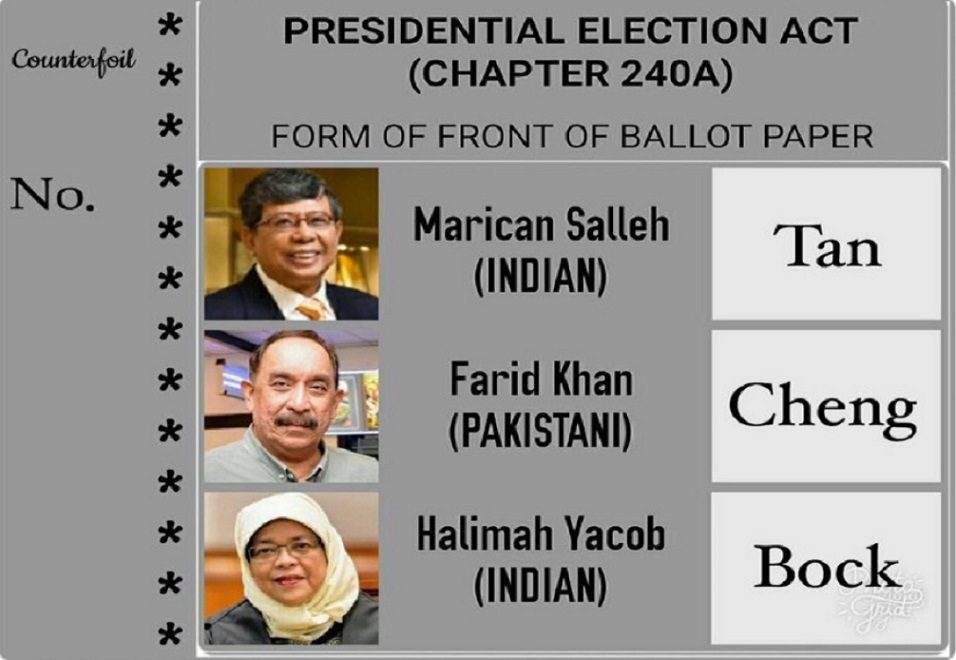
    This is one way to spoil your vote in protest against the manipulated Reserved Presidential Election.

    You can also draw on the voting slip or mark two or more crosses on the boxes depending on the number of candidates.

    You can of course vote against the PAP-approved candidate by voting for the other contestants.

    In case of a walk-over, Singaporeans will have no chance to cast any spoil votes.

    Note that it is not an offence to spoil your vote in any election here. There is an average of 2 to 2.5% of spoilt rejected votes in our previous general elections.

    The previous PE has attracted a 1.7% spoilt votes out of a total of 2.1 million eligible voters.

    But if you don’t turn up in any election to vote which is compulsory, the Election Department can debar you from voting in the next GE in 2020. Subsequently, you may need to reapply to be placed in the electorate list for the next election to vote.

    Join a group of concerned Singaporeans to participate in a legitimate protest against the coming PE in September by spoiling your vote. The high percentage of spoilt votes will embarrass the government and more importantly show that Singaporeans have rise up as a loud voice in protest against the coming PE.

    This will be the first time that Singaporeans have commit themselves amass as a united voice to protest against this racist PE where none of the three candidates so far are Malays.


    Source: Gibert Goh

  • Jufrie Mahmood: PAP Only Looking For Someone They Regard As Malay

    Jufrie Mahmood: PAP Only Looking For Someone They Regard As Malay

    Are they looking for a genuine Malay or someone they regard as Malay? If religion is not a factor then thousands of pinoys who have been granted citizenship are more Malay than any of the three declared candidates.

    Surely everyone knows that religious conversions are a common occurance. But has anybody ever heard of RACIAL conversion?

    Its obvious that the PAP will stop at nothing to prevent Dr Tan Cheng Bock from contesting – even if they end up making fools of themselves or paint themselves into a corner.

    One people, one nation, one Singapore? BULLSHIT!!!!


    Source: Mohamed Jufrie Bin Mahmood

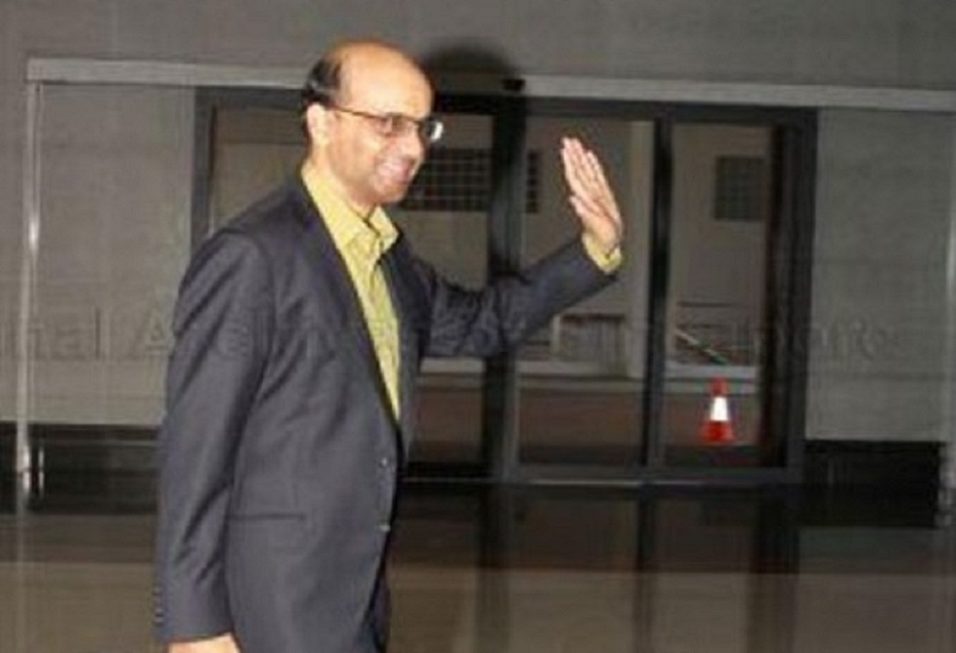
  • Tharman Is Malay

    Tharman Is Malay

    Singaporeans from all walks of life, who are race-blind, have come out to declare that Tharman Shanmugaratnam is Malay.

    This after they believe race is a fluid concept, where a woman with Indian descent can become President in an election reserved for Malay candidates.

    One Singaporean, Zuo Zhong Tong, said: “There is no doubt Tharman is Malay.”

    “If there is one person who can be president of Singapore, it is Tharman.”

    “He will unify the country and Singaporeans will stand tall and proud for once.”

    However, other locals said by declaring Tharman as Malay, it will open a can of worms.

    Another local, Ma Lai Ren, said: “If Tharman is Malay, then Tan Cheng Bock is also Malay.”

    “But no, he is now Tan Cheng Blocked.”

    “So he is not Malay.”

    At press time, most Singaporeans don’t care about the upcoming presidential election in September 2017 because it is not a real election.


    Source: http://newnation.sg

  • Academic: Malay Presidential Candidates Should Be Judged By Ability To Articulate Singapore’s Interests

    Academic: Malay Presidential Candidates Should Be Judged By Ability To Articulate Singapore’s Interests

    Just who should be considered a “Malay”? Article 19B of the Singapore Constitution defines a Malay as “any person, whether of the Malay race or otherwise, who considers himself to be a member of the Malay community and who is generally accepted as a member of the Malay community by that community”.

    This definition also applies to Malay candidates intending to stand in a Group Representation Constituency (GRC) in a general election. The law requires that in a GRC, at least one member of the team is a Malay, an Indian or from other minority communities.

    The definition of Malay here is quite an open, all-inclusive one.

    In Malaysia, the issue of Malay identity has been widely discussed by sociologists. Debates over who qualifies as Malay took place against the backdrop of the New Economic Policy, which grants Malays certain economic and other benefits.

    Sociologists underline three schools of thought on Malay identity. The first is primordialism, which underscores the role of ancestry. Thus, a person’s ethnic identity is determined by birth. But inter-ethnic marriages have made this perspective irrelevant.

    The second is constructivism, which highlights the heterogeneity of the social group called “Malays”. Essentially, this argues that identity is constructed socially and that, over time and across communities, the definition of what a Malay person is can become porous.

    Scholars upholding more extreme interpretations of this perspective grapple with the role of Islam: how important a marker of Malay identity is it? Can someone living in Malaysia (or Singapore), become Malay (masuk Melayu) if he or she embraces Islam?

    The third perspective is situationalism, which implies that some people identify with Malayness when it is advantageous to be part of the community.

    Ultimately, there is generally a stable core which the majority of Malays identify with. In Malaysia, this is recognised in the Malaysian Constitution: Malays are Muslims, speak the Malay language and follow Malay custom.

    VOICE OF THE COMMUNITY

    How is acceptance into the Malay community measured, as worded in the Singapore Constitution?

    So far, online discussions have emphasised the presidential aspirants’ race, their ability to converse in the Malay language and religion. The extent to which these aspirants have spoken for their community is somehow neglected.

    Here, Singaporeans should draw inspiration from the history of the Malays. Singapore Malays have identified some prominent names as part of their community, though they may not strictly come from the Malay race. These individuals have defended the Malays and struggled for their plight.

    One such individual was Abdullah Abdul Kadir Munshi (1796-1854), a famous chronicler, Malay language teacher and interpreter who worked for Sir Stamford Raffles. His grandfather was of Yemeni Arab descent and his grandmother a Tamil. Malays accept Munshi Abdullah as an intellectual. He wrote on the plight of the Malays during the feudal era and colonial period, and was critical of the Malay ruling class for not investing enough in educating their people.

    The other personality was Professor Syed Hussein Alatas (1928-2007), a former head of Malay Studies at the National University of Singapore. Of hadrami (Yemeni) descent, the sociologist spent most of his life in Malaysia and Singapore. His writings focused on the modernisation of the Malays and the community’s development lag. He also wrote a pioneering book, The Myth Of The Lazy Native, debunking negative stereotypes about the Malays imposed by colonial scholars.

    A name more familiar to Singaporeans is that of Mr Yusof Ishak, whose ancestors originated from Sumatra in Indonesia.

    Throughout his life, Mr Yusof struggled for the Malays. In 1939, he founded the newspaper Utusan Melayu because he wanted the Malays to have an equal voice in the public sphere which, he claimed, was dominated by Indian Muslims and Arabs. Having shown this empathy for his community, Mr Yusof fit smoothly into the role as Singapore’s first head of state.

    Today, Mr Yusof is remembered as an outstanding member of the pioneer generation, as someone who defended multiculturalism and meritocracy, the building blocks of Singapore society.

    In today’s context, there is a convergence of interests among all ethnic communities. It is difficult to distinguish Malay issues from Chinese or Indian ones, and problems facing Singaporeans are not unique to any community.

    Thus, Malay presidential candidates should be judged by their ability to articulate the interests of Singaporeans.

    Granted, the role of the presidency is not a political but symbolic one. The president is not required to act as a check and balance on the Government, apart from being a gatekeeper of the country’s reserves and key public appointments.

    Still, Singaporeans expect their president to rise to the occasion and unite all citizens in times of crisis. So, a candidate’s track record of speaking up for their people is key.

    • The writer, Norshahril Saat, is a fellow at the ISEAS – Yusof Ishak Institute, and author of Yusof Ishak: Singapore’s First President.


    Source: www.straitstimes.com