Tag: malay

  • Self-Proclaimed “Business Mentors” Have No Credibility, Harming Community’s Progress

    Self-Proclaimed “Business Mentors” Have No Credibility, Harming Community’s Progress

    Don’t u dare call urself an Entrepreneur or a Businessman if all u do is rely on ur fake workshops to be full.. What happens when u run out of people to “inspire”, what happens when u run out of minds to manipulate?

    Trust me when I say that there are many that do not dare to speak up on this, for fear of being shut down, ridiculed or ganged up by these Fake Millionaire Mentors. Suit and tie konon, pose infront of other people’s cars, podah! Kocek kosong..

    Siapa makan cili, dia rasa pedas. Not happy, delete and block me or straight up challenge me but make sure u are better then me or I will shut u down. If u have to knw, before u go up against me in business prowess, the sales target is 2 million a year, coz thats my sales target. If the target is too high for u, then turn around and walk away but If u think the target is not much for u or anyone in ur “Mentor Community”, get this, I achieve this target year in and year out, even when im sitting at home doing nothing. Even when Im sleeping. Even when Im on holiday. Even when Im ranting about u on Facebook. And I dont have to cheat and promise anyone the World to achieve this target. I make new prospects each minute of each day being who I am. U loose prospects everyday pretending to be who u are definitely not. So if u think, u can teach me about business, lu relak sua bruder….

    U wanna go toe to toe with me, then make sure ur businesses are also toe to toe with mine. Otherwise, just take my rants as they are and do ur business elsewhere (like on a different continent perhaps) and please STOP cheating my fellow Muslim sisters and brothers out of their time, ambitions and money.

    I am the real “Zero to Hero” … not u.
    U are more like the Zero to Minus One…
    And dont think I do not knw where ur awards came from or how much u had to pay for em…lol

    There are NO short cuts when it comes to making money or running a business and as soon as the Malay community realise and believe that, ur classes will be empty… then what u gonna do? Teach baking ah? At least that is a profession and business I can respect 10x more…

    On the same note, I urge everyone who is about to be duped of their time and money, pls do a proper background check on these mentors. Find out,

    1) Is my mentor the real deal, or a copy and paste on the blackboard kinda guy? They better be teaching something that u cant get free from Google.

    2) Does my mentor have and own the luxuries that he claims to have? Or is it all just hocus pocus and mambo jumbo.

    3) If my mentor is rich, how did he become rich? Did he make it from a business or did he make it from his so called seminars and classes, and if he did become rich from his full house classes, then u are better off if he teaches u how to run classes instead of teaching u on how to start up and be successful at a business he never owned or never did…

    P.s : Im about to loose at least 10 FB friends…
    But I am about to make a hundred more new and genuine ones…

    #BhaiAngullia
    #InYourFaceMentorForFree


    Source: Bhai Hafiz Angullia

  • Four Decades Of A Malay Myth

    Four Decades Of A Malay Myth

    Masturah Alatas takes a close look at the legacy and impact of her father’s seminal study of ‘Malayness’, The Myth of the Lazy Native, which turns 40 this year.

    “Our Production Manager estimates that we would very likely have finished copies of both books in December, and would therefore be able to publish in January, 1977.”

    With these long-awaited words that reached Singapore in a letter dated 14 September 1976, Malaysian sociologist Syed Hussein Alatas (1928-2007) received confirmation that his books, The Myth of the Lazy Native and Intellectuals in Developing Societies, would finally be published in London by Frank Cass.

    Murray Mindlin was the Cass editor who wrote the letter. He also happened to be the Hebrew translator of James Joyce’s Ulysses, a fitting fact since The Myth of the Lazy Native (henceforth Lazy Native) was caught up in its own, long-drawn-out publishing odyssey. Shunned by publishers in Malaysia and Singapore, Alatas first submitted Intellectuals to Frank Cass in early 1972 at the suggestion of social anthropologist, Ernest Gellner. In corresponding with Cass editors about that book, later the same year Alatas casually mentioned that he was completing the Lazy Native that he had started working on in 1966.

    “At the moment I am finishing a manuscript of about 100,000 words on the myth of the lazy native in the Philippines, Indonesia and Malaysia, from the 16th to the 20th centuries. It is a study of the function and origin of this myth in the colonial ideology. Dutch, Malay and English sources are used. The discipline applied is the sociology of knowledge. To the best of my knowledge, this is the first work of its kind,” Alatas wrote.

    Young editor Jim Muir, who would later become the BBC’s correspondent for the Middle East, immediately asked to see the manuscript. Struck by the title and subject, he felt Lazy Native “would probably fit very well into our Library of Peasant Studies.”

    The story of the publishing vicissitudes of Lazy Native is documented in my book, The Life in the Writing (2010), as is the work’s international reception by the likes of Victor Gordon Kiernan, Edward W Said, Ziauddin Sardar and many others.

    There are several ways to assess the status of Lazy Native in the 40 years of its existence. We can check databases to see where it has been cited and syllabi to know where it is taught. Social media will give us an idea of who is reading it, talking about it, and going to conferences, seminars and festivals where it is studied.

    One could say that a revived interest in the book is due, in part, to the efforts of his son and my brother, Syed Farid Alatas, a sociologist at the National University of Singapore, not just through teaching, public speaking and his own writing but also because he solicited a reprint of a paperback and more affordable edition of Lazy Native from Routledge (2010). Malaysians will remember that the hardback Cass edition of Lazy Native once went for over 400 ringgit (roughly $US90 in today’s money). Syed Farid Alatas was also proactive in getting a second edition of the Malay translation of the book, Mitos Pribumi Malas, reissued with Dewan Bahasa dan Pustaka (2009).

    It is worth mentioning—as translation studies scholar Nazry Bahrawi has noted—that the Malay translation, or rather adaptation of Lazy Native from the 1987 Indonesian translation, contains some omissions, including excluded lines and passages that are present in both the English and Indonesian versions. One omission is the line “The degradation of the Malay character is an attempt by the ruling party to absolve itself from blame for real or expected failures to ensure the progress of the Malay community” (Lazy Native, 1977, p 181). The book contains no note from the translator, Zainab Kassim, as to the reasons for these omissions.

    Whatever the case, we can conclude that irrespective of the availability of the book in English and Malay, what the quality of the Malay translation is, or how much or little it is actually read and talked about, Lazy Native seems to have found its place in the sun as a classic, and not just because Bahrawi and other scholars recognise it as a seminal text located within postcolonial theory. Not only has the Lazy Native walked right out of the Library of Peasant Studies into the libraries of Malay studies, cultural studies, sociology, history and literature—not to mention the personal libraries of many Malaysians— the book also seems to be sitting in the collective Malaysian imagination as a disgruntled trope, even though Syed Hussein Alatas himself had doubts about how many people had actually read and understood it.

    It is therefore legitimate to ask: after 40 years, is the myth of the lazy native still a myth? Former Malaysian Prime Minister Tun Dr Mahathir Mohamad seems not to think so. According to him, the Malays are lazy because they don’t study hard enough, they can’t master English and they prefer to become Mat Rempit (motorcycle gangsters). What is missing from the narrative is if it is laziness or hard work that has to do with how the current Prime Minister, Najib Razak, was able to allegedly channel more than $1 billion into his personal bank accounts.

    Historian Zaharah Sulaiman, instead, believes that if “Malays are called lazy and not innovative, it’s because the knowledge, the peoples who have the knowledge have gone extinct,” and that ‘foreign invasions’ that led to the ‘grabbing’ of riches has a lot to do with the extinction of this knowledge.

    But in the chapter “The disappearance of the indigenous trading class”, Alatas does not so simplistically attribute the destruction of the trading class to foreign invasion. If anything, he provides sociological analysis showing how local rulers were sometimes complicit with colonial masters in bringing about the disappearance of the native trading class — for example when local chiefs acted as agents for the Dutch East India Company.

    Alatas framed his critique of colonial capitalism that exploited the image of the lazy native with economic and sociological analyses. Indeed, he called it “colonial capitalism” and not white capitalism. And nowhere in Lazy Native does he blame the other ethnicities of Malaysia—the Chinese or the Indians—for the condition of the Malays.

    It is important to understand this to distance the kind of critique Alatas performs in Lazy Native and the language he uses from, say, rants about  “Chinese privilege” in Singapore, in which the term itself makes a direct link of ethnicity—one ethnicity in particular—to majority class and political privilege, and abuse of power. If Alatas has tried to help us see the wrongness in the ideological necessity of giving laziness a Malay face, we are invited to think about the wrongness in the ideological insistence of giving a Chinese face to privilege.

    Finally, Lazy Native has inadvertently generated it own myth that needs to be debunked if we are to understand what unique scholarship really means— the claim that the book contributed to Edward W Said’s thesis on Orientalism. This claim has been made by several scholars all over the world.

    Orientalism (1978) was already written and sent off to the publisher when Alatas’ book came out the year before Said’s did. At the time, the two men never even knew or corresponded with each other.

    I know this because both men told me so.

    Masturah Alatas is a writer and teacher who lives in Macerata, Italy. She is the author of The girl who made it snow in Singapore (2008) and The life in the writing (2010), a memoir-biography about her father, Syed Hussein Alatas.

    The Myth of the Native Lazy marks 40 years of publication today.


    Source: www.newmandala.org

  • Kisah Menarik Dua Gerai Melayu Rancakkan ‘Bazar Raya’ Tahun Baru Cina

    Kisah Menarik Dua Gerai Melayu Rancakkan ‘Bazar Raya’ Tahun Baru Cina

    Siapa kata anda tidak boleh membeli makanan halal sambil menikmati suasana perayaan Tahun Baru Cina di Chinatown? Dan siapa kata anda tidak boleh mendapatkan kuih dan kek tradisional Melayu dan sebagainya di ‘bazar raya’ Tahun Baru Cina?

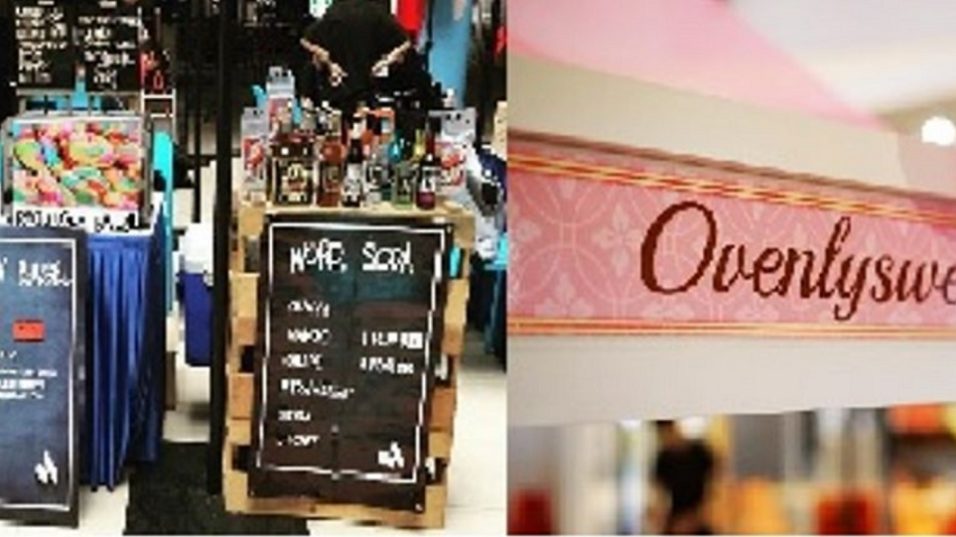
    Itulah yang ditawarkan dua kedai anak Melayu, bernama Ovenly Sweet dan Word, di bazar-bazar sedemikian sempena Tahun Baru Cina yang bakal menjelang.

    BERITAMediacorp meninjau-ninjau keunikan berniaga di pasar malam Tahun Baru Cina yang terletak di Temple Street di kawasan Chinatown dan juga menyelam pengalaman anak Melayu yang menyewa sebuah kedai sementara bagi Tahun Baru Cina di pusat beli-belah Bedok Mall.

    WORD – SATU-SATUNYA KEDAI MUSLIM TEMPATAN DI CHINATOWN

    Kedai Word memang dikenali dalam kalangan masyarakat Melayu/Islam tempatan. Bukan setakat memiliki sebuah kafe di kawasan Upper Thomson, Word juga pernah menyertai pasar malam-pasar malam tempatan seperti bazar Hari Raya di Geylang Serai.

    Namun bagi pasar malam di Chinatown, ia adalah pengalaman pertama Word terjun berniaga dalam pasaran Cina. Cik Toni Lee Anwar Ali, 37 tahun, dari Word berkata tujuan Word membuka kedai di pasar malam berkenaan adalah untuk mencuba nasib di pasaran yang berbeza. Jadi, beliau menganggap pasar malam Chinatown tahun ini sebagai masa dan platform yang terbaik untuk melakukannya.

    Antara hidangan menarik Word. (Gambar: Facebook/ Word)

    Terkenal dengan hidangan ringan seperti ‘bagel’ pelangi dan minuman yang berwarna-warni, Word menyatakan ia tidak membuat sebarang penukaran kepada hidangan yang ditawarkan di Chinatown. Makanan-makanan dan minuman-minuman yang unik itu adalah bagi menarik golongan belia yang mengunjungi pasar malam tersebut.

    YOUTHEATS@TEMPLE STREET

    Matlamat yang disasarkan Word sesuai sekali dengan pasar malam di Temple Street. Ini kerana BERITAMediacorp difahamkan buat julung-julung kalinya pasar malam anjuran Jawatankuasa Perundingan Rakyat Kreta Ayer-Kim Seng (KA-KS CCC) itu memperuntukkan satu bahagian khas di pasar malam tersebut buat para usahawan muda.

    Diberi nama YouthEats@Temple Street, KA-KS CCC menyatakan, tahun ini pihaknya mengkhususkan tempat bagi para usahawan muda menawarkan pelbagai makanan perayaan dan makanan yang unik. Ia berlangsung dari 6 hingga 27 Januari.

    Itulah yang dimanfaatkan Word bagi memperkenalkan makanan jualannya dan menempa nama dalam pasaran yang berbeza daripada yang pernah ia sertai sebelum ini.

    PERBEZAAN PELANGGAN MELAYU DENGAN CINA

    Cik Toni memberitahu BERITAMediacorp walaupun hidangan yang ditawarkan Word tidak berbeza daripada pasar malam di Geylang dahulu, cabaran utama yang dialami beliau adalah tujuan para pelanggan yang berkunjung ke Chinatown.

    “Jika pasar malam di Geylang, para pelanggan, lebih-lebih lagi orang Melayu, mereka memberi tumpuan untuk membeli makanan. Tetapi di sini, para pelanggan lebih tertumpu untuk membeli persiapan Tahun Baru Cina,” jelas Cik Toni kepada BERITAMediacorp.

    Jadi, ini juga bermakna, bukan ‘beli sini makan sini’.

    BUAT KAJIAN DAHULU SEBELUM INI

    Botol kuih Ovenly Sweet yang siap dengan hiasan perayaan Tahun Baru Cina. (Gambar: Facebook/ Ovenly Sweet)

    Bagi Pengurus Operasi Ovenly Sweet Fakhrul Arifin, pengalaman bergaul dengan kawan berbangsa Cina membantu beliau membuka kedai sementara di pusat beli-belah Bedok Mall. Beliau yang juga boleh bertutur dalam bahasa Mandarin dan Hokkien memberitahu BERITAMediacorp bahawa pengalaman itu membuat beliau mengenali budaya pelanggan yang disasarkan Ovenly Sweet.

    “Saya belajar daripada para pelanggan saya tentang citarasa mereka dan selepas itu, saya memberitahu dan memberikan idea-idea kepada isteri dan ibu mertua saya yang merupakan pembuat kuih muih Ovenly Sweet,” ujar beliau yang berusia 37 tahun.

    Encik Fakhrul dan isterinya, serta pemilik Ovenly Sweet, Cik Juliana, 36 tahun, mendapati beberapa perubahan kepada kuih yang dijual juga perlu dilakukan bagi mengikut citarasa para pelanggan mereka yang lebih 90 peratus terdiri daripada kaum Cina.

    “Kami tidak tertumpu kepada kuih muih yang terlalu manis seperti Tapak Kuda dan Nutella Tart yang lazimnya menjadi tempahan utama kami semasa perayaan Hari Raya,” tambah beliau.

    Encik Arifin sempat berkongsi kepada BERITAMediacorp, bahawa cara operasi beliau juga harus menjalani beberapa perubahan. Ini kerana para pelanggan beliau semasa musim perayaan Tahun Baru Cina mahukan rasa yang segar dan ‘baru dibuat sendiri’.

    Jika semasa musim perayaan Hari Raya, para pelanggan tidak kisah membelinya lebih awal sebelum perayaan bermula. Perkara itu berbeza sekali bagi perniagaan untuk bazar Tahun Baru Cina. Menurut Encik Arifin, para pelanggan beliau akan membayar deposit sahaja dan hanya mahu mengambil kuih muih itu beberapa hari sebelum hari perayaan.

    PELANGGAN CINA SUKA LIDAH KUCING, LEBIH NENAS PADA KUIH TART KERANA ADA ‘ONG’

    Pasti ramai tertanya lakukah penjualan kuih muih Melayu semasa perayaan Tahun Baru Cina. Encik Arifin berkata: “Yang saya dan isteri terkejut, kuih lidah kucing kami yang paling laku dijual sehinggakan sudah habis bekalan kami.

    Antara kuih yang dijual Ovenly Sweet semasa perayaan Tahun Baru Cina. (Gambar: Facebook/ Ovenly Sweet)

    “Pelanggan saya memberitahu saya ‘Wah sangat warna-warni! Saya suka! Moga-moga ia membawa keceriaan kepada rumah dan keluarga saya semasa perayaan itu nanti.’”

    Jika rasa kuih itu penting bagi masyarakat kita apabila mahu membeli kuih muih semasa perayaan Hari Raya, bagi para pelanggan Cina makna-makna kuih itu lebih menjadi perkara utama yang harus dipertimbangkan.

    “Walaupun pelik tetapi benar. Mereka lebih suka kuih tart yang kelihatan keemas-emasan dan bukan yang gelap. Inti nenas pula harus berlebihan pada tart. Ini kerana nenas dalam bahasa mereka bermakna ‘mendatangkan kemewahan’ atau ada ‘ong’ (rezeki). Jadi mereka mahukan kuih tart sebegitu. Baru-baru apabila saya jual, saya rasa pelik juga,” seloroh Encik Arifin kepada BERITAMediacorp.

    Walau apa-apapun pelibatan Word dan Ovenly Sweet dalam perayaan Tahun Baru Cina membuktikan kepada kita bahawa ada peluang untuk kita sama-sama menikmati suasana meriah sambutan Tahun Baru Cina. Bak kata pepatah, ‘tak kenal maka tak cinta’.

    Source: BeritaMediacorp

  • Write To MP Against Upcoming Reserved Election

    Write To MP Against Upcoming Reserved Election

    Earlier today, I wrote an e-mail to my MP and Speaker of Parliament, Mdm Halimah Yacob, to express my total disagreement on the coming Reserved Presidential Election.

    Even though I know that what I wrote to her maybe put aside, I still feel that as her resident and as a Singaporean, she should know and be aware of the sentiment on the ground.

    Not all Malays are supporting this reserved Election, as it is a big insult to the community by the PAP Government.

    I will like to urge all who are against the reserved Election to write in to your MPs too.


    Abdul Rashid

    Reader’s Contribution

  • Is She Out Of The Race? Singaporeans Knows She’s Indian?

    Is She Out Of The Race? Singaporeans Knows She’s Indian?

    I saw a post on facebook and wanted to share it because it might have a significant effect to Singapore and our malay community here.

    As you know the presidential election is coming, and Halimah Yacob might probably not be a ‘Malay’. It turns out that she actually had an Indian-Muslim father and her IC would have stated ‘Indian’ had her father not pass away before the registration. So now it really depends on the new committee to declare her either ‘Malay’ or ‘Indian’.

    But the lady had been a close friend to the Muslim society throughout the years, definitely a better people’s choice as compared to other potential Malay presidential candidate.

    Sumbanganya terhadap rakyat Singapura memang disanjung tidak seperti ahli-ahli politik yang lain. Tak tahulah apa yang akan terjadi nanti beberapa bulan kemudian. Adakah negara kita dilanda jenis politik perkauman?

    Maaf kalau tersilap, saya mahu kongsi maklumat sahaja.


    Ros

    Reader’s Contribution