Tag: Muslim

  • Paderi Agung Itali Jangka Eropah Bakal Jadi Benua Muslim

    Paderi Agung Itali Jangka Eropah Bakal Jadi Benua Muslim

    Itali pada masa akan datang akan menjadi salah sebuah negara Muslim. Kenyataan itu dikatakan Paderi Agung negara itu Monsignor Carlo Liberati.

    Menurut beliau, bukan saja Itali tetapi juga seluruh benua Eropah. Ini disebabkan banyaknya pendatang dari negara-negara Muslim yang masuk ke benua tersebut.

    Paderi Emeritus dari bandar Pompeii juga menyatakan perkara yang sama.

    “Dalam masa 10 tahun, kami akan menjadi Muslim kerana kebodohan kita sendiri. Itali dan Eropah hidup sebagai penyembah berhala dan atheis,” kata Paderi Emiritus ditukil Daily Mail pada Sabtu (14 Jan).

    Menurut beliau, jumlah orang yang mempunyai agama di Itali mengalami penurunan mendadak sejak para pendatang masuk ke benua Eropah.

    Itali menjadi tujuan utama 330,000 pendatang Muslim. Kebanyakan daripada mereka berasal dari Afrika, Timur Tengah dan Asia.

    Jumlah Muslim di Itali sekarang ini naik mendadak seramai 2 juta orang pada akhir tahun 2015, menurut data statistik rasmi Itali.

    Source: BeritaMediacorp

  • Islam Is A Woman-Friendly Religion

    Islam Is A Woman-Friendly Religion

    There is widespread Islamophobia in the world today and Islam, that literally means ‘peace’, is continually vilified. The religion has perhaps come under maximum criticism for its alleged mistreatment of women. However, Muslim women feel that Islam is at the forefront of gender justice and it has been misinterpreted by proponents of patriarchy to subjugate women over the ages.

    An equal Quran

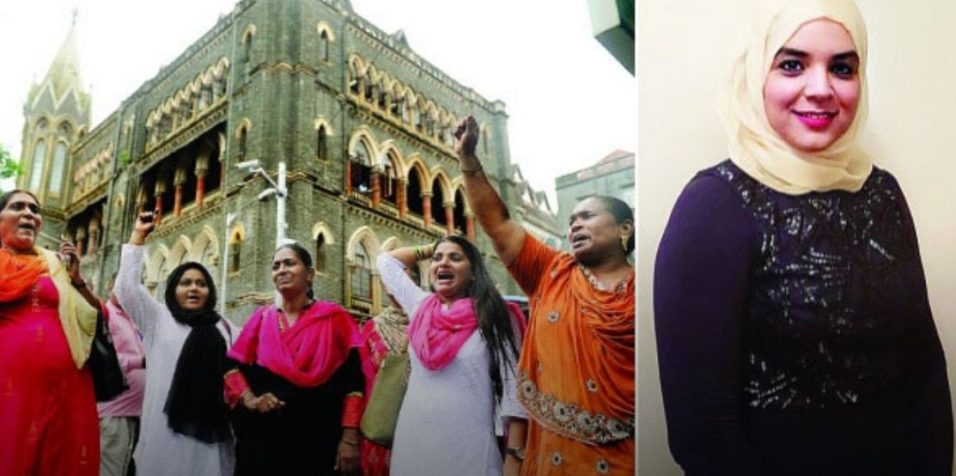
    Zakia Soman of the Bharatiya Muslim Mahila Andolan (BMMA) says, “The Holy Quran says man and woman are equal in the eyes of Allah and will be rewarded equally for their good deeds on the Day of Judgement. They will also be punished equally for their bad deeds.” Soman is the co-founder of BMMA that has been at the forefront of fighting for women’s rights and recently emerged victorious in securing for women the right to enter the sanctum sanctorum of the Haji Ali Dargah in Mumbai.

    She says Islam never discouraged women from gaining an education or working. “Prophet Muhammad’s first wife, Bibi Khadija, ran a multi-national business empire spread across Syria, North Africa and Arabia. His other wife, Aisha, was renowned for her knowledge of the law. She was a teacher and also played an important socio-political role by making public speeches, meeting representatives of different factions in a bid to secure consensus and keeping the community together after the Prophet’s death. How could that have been possible if women were considered inferior to men,” asks Soman.

    Hijab of liberation

    Sahar Suhail Deshmukh, who was born in Saudi Arabia, grew up in Canada, and now lives in England, agrees that Islam is misunderstood. She points out that modest dressing is prescribed for both men and women in Islam. Deshmukh who has been willingly wearing a hijab since she was 16 says she feels judged for following her religious beliefs. “People look at my hijab and feel I’m oppressed. They don’t understand how liberating it is to wear a hijab or even a burqa. I don’t have to worry about constantly adjusting my clothes so that nothing is showing when I bend or sit down. I don’t have to worry about distractions like styling my hair. My hijab sets me free and I feel more focused when I wear it,” explains Deshmukh.

    Islam empowers women

    “Islam was one of the first religions to officially encourage widow remarriage,” says Deshmukh, who insists Islam is a feminist religion. It empowers women by laying down the law with respect to women’s rights regarding property, marriage, divorce, wages and division of domestic responsibilities. “It is a well-documented fact that Prophet Muhammad shared domestic duties with his wives and advised husbands to do everything in their power to ease their wives’ burdens,” points out Deshmukh. She says Mehr is the best example of the feminist side of Islam. “It is a form of financial security for a woman in case of her husband’s death or if she is ousted from her marital home or any other kind of crisis,” explains Deshmukh.

    Misunderstood customs

    There are some outright misogynist practices such as Halala and Mutah. In Halala, if a couple gets second thoughts after divorce and they wish to reunite, the woman must first marry another man, consummate the marriage, get divorced and only then can she remarry her first husband. Soman informs that this was a custom that evolved without any sanction or mention in the Quran.

    Mutah, or temporary marriage, was a custom for soldiers who were away from their wives. Over time it has been misused and young girls have been forced into this form of temporary marriage. On practices such as triple talaq, Soman insists they were never prescribed in religious texts. “There is no Quranic sanction for triple talaq,” says Soman. She believes that clarity can be brought about by properly codifying Islamic Law and enacting reforms instead of establishing a single common law. Many people believe that UCC might erase Islam’s cultural identity including some of the woman-friendly Islamic laws.


    Source: DnaIndia

  • Wanita Dirogol Secara Sistematik Di Myanmar

    Wanita Dirogol Secara Sistematik Di Myanmar

    Ketika  tentera kerajaan Myanmar semakin menghampiri kampung Pwint Phyu Chaung, penduduk hanya mempunyai beberapa pilihan.

    Noor Ankis, 25 yang membuat keputusan untuk tidak melarikan diri mengatakan beliau dipaksa melutut dan kemudian dipukul sebelum dibawa ke suatu tempat rahsia untuk dirogol tentera kerajaan.

    Rashida Begum, 22 pula memilih untuk terjun ke dalam sebuah sungai bersama tiga anaknya. Seorang anak Rashidah yang masih bayi hanyut dan gagal dijumpai dalam kejadian tersebut.

    Cerita-cerita dari pelarian Myanmar ini yang kini tinggal di Bangladesh memberikan gambaran jelas mengenai keganasan tentera kerajaan sejak beberapa bulan lepas.

    Kisah mereka juga selari dengan laporan yang didedahkan oleh pertubuhan-pertubuhan hak asasi manusia.

    Dalam laporan tersebut, tentera kerajaan memasuki kampung-kampung di utara Rakhine dan melepaskan tembakan secara rawak, menembak pelancar roket dan memusnahkan kediaman sementara kanak-kanak dan wanita dirogol secara sistematik.

    Dari imej satelit yang didedahkan Humans Right Watch (HRW), kira-kira 1,500 kediaman telah dimusnahkan.

    Kempen kekejaman kerajaan Myanmar pula kini beralih ke arah selatan dan didakwa tidak akan berhenti sehingga kumpulan etnik Muslim, Rohingya dihapuskan.

    “Kami tak tahu langkah tentera kerajaan seterusnya, tapi kami tahu serangan ke atas orang awam sedang berterusan, kata Matthew Smith dari kumpulan Fortify Rights, dipetik laporan Irish Times.

    Lawan pengganas konon

    Sebuah suruhanjaya yang ditubuhkan kerajaan minggu lalu menafikan dakwaan pembunuhan beramai-ramai yang dilakukan tentera kerajaan di kampung-kampung yang telah dikepung.

    Para wartawan dan para penyiasat dari kumpulan hak asasi manusia pula dilarang menjejakkan kaki ke kampung-kampung tersebut.

    Myanmar menafikan melakukan sebarang pencabulan hak asasi, kecuali kejadian polis Myanmar yang dirakam membelasah penduduk Rohingya.

    [ARTIKEL BERKAITAN: Video polis Myanmar pukul etnik Rohingya viral]

    Penerima Hadiah Nobel, Aung San Suu Kyii pula dikecam kerana berdiam diri dan ketawa apabila soalan-soalan berkenaan penindasan etnik Rohingya ditujukan kepadanya.

    Kempen kekejaman kerajaan dilaporkan bermula pada Oktober selepas sembilan anggota polis dibunuh dan dipercayai dilakukan kumpulan pemberontak bersenjata dari etnik Rohingya.

    Sehingga kini, tiada sebarang suspek kejadian dikenal pasti.

    Kerajaan Myanmar menyifatkan orang ramai ‘tersalah anggap’ mengenai kempennya yang menyasarkan penduduk etnik Rohingya.

    Sehingga kini, dianggarkan 65,000 pelarian etnik Rohingya sudah melarikan diri ke Bangladesh, kata laporan Organisasi Migrasi Antarabangsa (IOM).

    Semua dirogol, semua dibakar

    Tentera kerajaan dilaporkan pergi dari rumah ke rumah untuk menangkap lelaki dewasa dan kemudian merogol wanita dan membakar rumah.

    Kampung Kyet Yoepin yang mengandungi 245 kediaman musnah dalam operasi dua hari pertengahan Oktober lepas, kata HRW.

    Muhammad Shafiq yang berusia 20-an mengatakan askar kerajaan akan membariskan lelaki berasingan dari wanita.

    Ketika seorang askar memegang tangan kakaknya, Shafiq melawan dan beliau dibelasah dengan teruk oleh tentera kerajaan dan ditinggalkan untuk mati.

    Shafiq kemudian melarikan diri bersama anaknya sambil dihujani peluru yang dilepaskan tentera kerajaan.

    Beliau kemudian bersembunyi di sebuah jelapang padi dan melihat dari jauh kampung Kyet Yoepin dibakar oleh kerajaan.

    “Dah tak ada rumah lagi. Semua sudah dibakar,” kata Shafiq.

    Tentera kerajaan suka wanita muda

    Noor Ankis mengatakan tentera kerajaan membongkar semua rumah pada waktu pagi untuk mencari wanita muda.

    “Mereka kumpulkan kesemua wanita beramai-ramai dan membawa mereka ke satu tempat.

    “Yang mana mereka suka, mereka rogol. Di tempat itu, hanya ada tentera kerajaan dan wanita, tiada orang lain,” jelas Noor Ankis.

    Sufayat Ullah, 20 terjaga dari lena tidur selepas dikejutkan dengan bunyi tembakan.

    “Tentera menggunakan parang apabila mereka sudah dekat dengan penduduk.

    “Kalau jauh, mereka tembak,” kata Sufayat mengingati kejadian ngeri berkenaan.

    Sufayat melepaskan diri selepas terjun ke dalam sungai dan berenang sejauh yang boleh.

    Beliau tinggal di dalam air selama dua hari sebelum mendapat tahu tentera kerajaan telah membakar kediaman keluarga. Ibu, ayah dan dua adik beradiknya ditinggalkan di dalam rumah yang sedang dibakar dan maut.

    “Saya rasa tidak tenteram. Mereka sudah bunuh ibu dan ayah saya. Apa lagi yang tinggal untuk saya di dunia ini?” katanya sambil mengelap air mata.


    Source: SinarHarian

  • Commentary: Inter-Racial Marriages Nothing Special, Until I Met Those Facing Challenges

    Commentary: Inter-Racial Marriages Nothing Special, Until I Met Those Facing Challenges

    My own inter-ethnic relationship has been obstacle-free, writes Kane Cunico, but a documentary on mixed marriages has spurred others to share with me the struggles they face in gaining acceptance.


    SINGAPORE: Sàam gu ma, sei gu ma, baat gu che, sahp suk – Cantonese words I would have never imagined myself learning by heart, had I not married my ethnically Chinese wife whose dad’s side of the family is from Ipoh, Malaysia.

    Respectively, they mean this:

    Sàam gu ma: My father-in-law’s third oldest sister.

    Sei gu ma: My father-in-law’s fourth oldest sister.

    Baat gu je: The eighth sibling in the family and my father-in-law’s younger sister.

    Sahp suk:  The tenth sibling and my father-in-law’s younger brother.

    In my Indian-Eurasian household, which feels neither very Indian nor very Eurasian, we just call them aunty (insert name) and uncle (insert name).

    I have always been indifferent to my cultural roots, flippant to a point. I wouldn’t consider myself religious, but I am constantly open and curious about other people’s heritage.

    The same goes for my wife, who identifies herself as a third-culture kid.

    We both were fortunate to have parents who were willing to break their own cultural and religious traditions for their children, and compromise on a wedding that made everyone happy. Even while dating, race or religion never became an issue. I would call us rather happy-go-lucky.

    But the recent On The Red Dot series, Love Is (Colour) Blind, prompted me to reflect on just how lucky perhaps we were. The documentary profiled three mixed-race couples who spoke about the ups and downs of their relationships, from gaining family acceptance to bringing up their mixed-heritage children.

    In response, hundreds of netizens have commented on Facebook, eager to share their own experiences in inter-ethnic marriages. I was heartened to see all those different races and religions coming together – it was like those United Colors of Benetton ads I wished the world could be more like.

    Watch: The story of Martin and Esther

    But on the flip side, friends and not a few commentators on Facebook have asked: “Why is this even a story? Why talk about this? What’s the big deal? Inter-racial marriages have been around for a long time. Why single it out?”

    And in a way, they were right. I had never before seen it as a problem.

    WE’VE HAD IT EASY

    Yet in talking to some of those who wrote on our Facebook page, and re-watching the episodes, it struck me – my wife and I have had it easy, relationship wise.

    The same can’t be said of Facebook writer Hui Jing Ong. A Singaporean Chinese who is Buddhist, she married an Indian national who is Sikh. They have two children.

    In a telephone interview, she told me: “My parents are divorced, but my father until now cannot accept our marriage or children. He’s kind of a racist. My mum says as long as I’m happy, she’s okay with it.”

    Hui Jong Ong with her husband, Gurdev Singh, have two children. (Photo: Hui Jing Ong) 

    Another Facebook user, Jasmine Jay, had dated her husband-to-be for four years. He is Malaysian, Malay and Muslim, and she is Singaporean, Sikh and Catholic.

    Three and a half years ago, when she became pregnant, they decided to tie the knot. For three months, both deliberated on who should convert. They ultimately decided neither should. His family snubbed their wedding.

    “Even my mum said no to the wedding. But since the birth of our daughter, his family have accepted us,” said Jasmine in a phone interview.

    She added: “Today we have two children. I have a younger son and we both agreed the children will be Catholic.”

    Despite the continuing struggles, both have found happiness where their relationship once floundered in a quagmire of disapproval.

    Last year, 4,142 marriages in Singapore involved couples of different races, making up 21.5 per cent of all marriages for the year. In 2005, inter-ethnic marriages made up just 14.9 per cent.

    So mixed marriages may be becoming normalised; but many couples still face familial and societal obstacles to make it work.

    Watch: The story of Simon and Veronica

    Friends of ours in inter-racial relationships have had to try hard to win over their culturally traditional in-laws-to-be, who were worried about what others in their community might say or think.

    And such cultural conservatism isn’t just confined to our parents’ generation. Some young couples my wife and I meet have no qualms telling us that they wouldn’t want their children dating someone of another race.

    A recent survey by Channel NewsAsia, in partnership with the Institute of Policy Studies, reflects some of these response. The survey found that fewer than one in four Chinese respondents were accepting of a non-Chinese marrying into the family; while fewer than half of Indian respondents indicated acceptance of a non-Indian into their family, according to the survey.

    WHEN CHILDREN COME INTO THE PICTURE

    For newlyweds like my wife and me, who are looking forward to having children, we know we cannot keep taking a laissez-faire approach to our mixed marriage.

    At some point, matters of race and religion will come up, and perhaps these may actually turn out to be issues for both sets of parents, as Jasmine learnt.

    “Managing families – that is still a challenge,” said the 23-year-old stay-at-home mother and trained nurse.

    “So many awkward moments. How you spend your festivities and whose religion you follow. You will argue about what cultural name the child will have. Should it be Indian or Malay in our case? And what religion will the child practice?” she added.

    Jasmine Jay with her husband, Abdul Rahim, daughter Raphaela 3, and son Rayden, 6 months. (Photo: Jasmine Jay)

    “To be honest, it is tough, but my husband and I, only because we are quite neutral with race and religion, we told our parents to leave the decision to us. So we gave the children neutral names. There is no “daughter of” to follow my Indian heritage, and no “bin or binte” to follow his Malay heritage.

    “But the beauty is that they get to be a part of both our cultural and religious practices and festivities,” said Jasmine.

    “So just follow your heart and fight for your right, and hopefully, both sides can still remain a strong family.”

    Watch: The story of Norsham and Anne

    Another Facebook user, Hazre Salim, told me it’s really about planning far ahead.

    A Malay Muslim, he married a Chinese Buddhist about two years ago after they dated for a year. Hazre, a secondary school educator, was upfront about how religion was important to him. With her full understanding, they both pre-empted their parents very early on in their relationship.

    “I knew first and foremost there were going to be challenges: Parents, friends, religion. But we had supportive parents,” the 35-year-old said.

    “There will be instances where we cannot solve the problem straight away. Children will definitely be an issue; we will face it when it comes.

    “But we both believe that when two people get together and have faith and trust in each other, it will work out,” said Hazre, adding that when they cannot resolve matters on their own, “we go to our parents and figure it out”.

    Hazre Salim and Nur Iviana Tham sought the approval of their parents early on. (Photo: Hazre Salim)

    Hazre’s and Jasmine’s advice are timely. My wife and I will soon have to decide which religion our child will be a part of, and what second language they should learn at school.

    What race do we categorise our children under, when their ancestral tapestry has Italian, Indian, Chinese and Peranakan heritage woven into it?

    These are questions we do not have the answers to yet. But we are fortunate and optimistic.

    Fortunate, to be in a place where inter-ethnic marriages are fast becoming normalised, if they aren’t already; and where strangers, who have shared their stories online, are willing to give us the perspective we need.

    Optimistic, that our families, made up of a suks, gu mas, aunties, uncles, mums, dads, mamas and grandmas, are around to hopefully be as open as they have always been with two happy-go-lucky and culturally impartial children.


    Source: CNA
  • Aku Tak Kenal Siapa Shia

    Aku Tak Kenal Siapa Shia

    I never had a friend who is Shia or anything other than Sunni. I was brought up in Singapore as a normal Muslim child. went to school, had a decent education and made several friends of different ethnicity.

    As i grew older, i had to fill up more forms like the G50, insurance papers or even resume and interview details of myself, and i got to know about my sect. that was when i learnt that i am a sunni. embarrassingly, i was a drop out from religious school back then when i was younger due to certain circumstances so this was something new to me. “Ini kau letak je sunni”, that was what i was told to write by a friend without any hesitation. And i still remembered it till today.

    So out of curiosity i asked him what the other side of sunni was (if there is any) and i was told about Shia. A small community of muslims that are of different teachings from us that we should not really speak of or supposed to know of. It was a surprise to me but i did not pursue the issue any further. Perhaps i would never know anything more anyway.

    I don’t know anything about shia or who are these shias in singapore. some people say that they may be among us and we would not know it. the question now comes down to how can we effectively embrace everyone in Islam, if there are like “closeted” muslims living around us though abiding by the same religion Islam? can they come out? Or are they not supposed to come out?


    Teh O

    Reader’s Contribution

deneme bonusu