Tag: Muslim

  • Hijabs Turning Heads As Advertisers Realise Potential In Muslim Market

    Hijabs Turning Heads As Advertisers Realise Potential In Muslim Market

    The hijab – one of the most visible signs of Islamic culture – is going mainstream, with advertisers, media giants and fashion firms promoting images of the traditional headscarf in ever more ways.

    Last week, Apple previewed 12 new emoji characters to be launched later this year, one of a woman wearing a hijab.

    Major fashion brands from American Eagle to Nike are creating hijabs, while hijab-wearing models have started gracing Western catwalks and the covers of top fashion magazines.

    Many Muslim women cover their heads with the hijab in public as a sign of modesty, although some critics see it as a sign of female oppression.

    But there is one thing most can agree on: When it comes to the hijab, there is money to be made.

    “In terms of the bottom line, absolutely they’re good for business… it’s a huge market and they are incredibly brand-savvy, so they want to spend their money,” said Ms Shelina Janmohamed, vice-president of Ogilvy Noor, a consultancy offering advice on how to build brands that appeal to Muslim audiences.

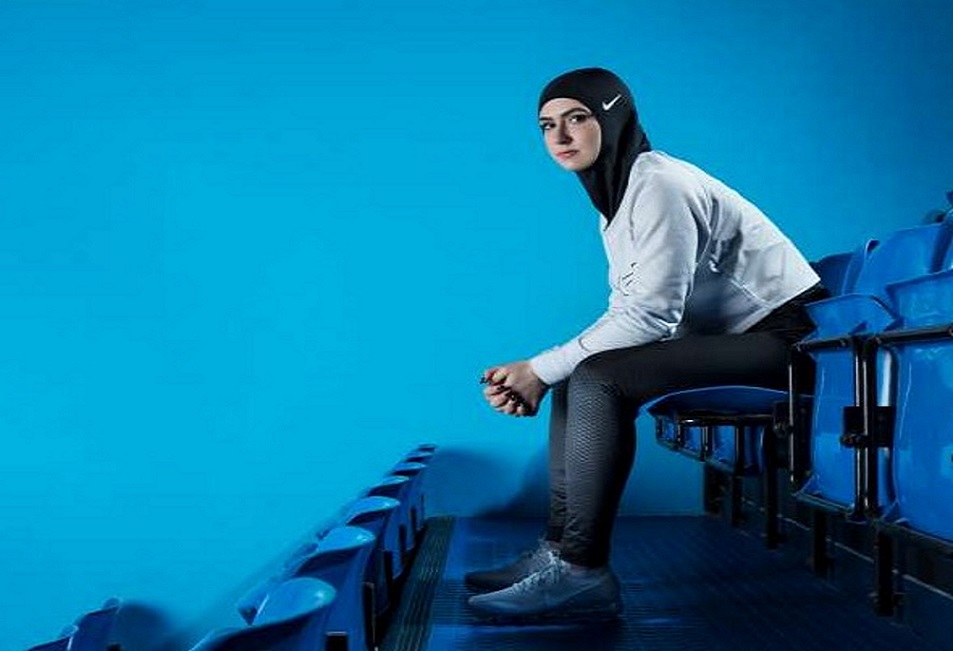
    Nike announced that it is using its prowess in the sports and leisure market to launch a breathable mesh hijab in spring next year, becoming the first major sports apparel maker to offer a traditional Islamic headscarf designed for competition.

    Last month, Vogue Arabia featured on its cover the first hijabi model to walk the international runway, Somali-American Halima Aden, who gained international attention last year when she wore a hijab and burkini during the Miss Minnesota USA pageant.

    “Every little girl deserves to see a role model that’s dressed like her, resembles her, or even has the same characteristics as her,” she said in a video on her Instagram account.

    Hijabs have also become more visible in Western advertising campaigns for popular retailers such as H&M and Gap.

    Ms Amani al-Khatahtbeh, founder of online publication Muslim- Girl.com, said from New York: “Brands, especially, are in a very strategic and potent position to propel that social good, to change the attitudes of society and really push us forward and take us to that next step.”

    In Nigeria, a medical student has become an Instagram sensation for posting images of a hijab-wearing Barbie, describing hers as a “modest doll” – unlike the traditional version. And mothers in Pittsburgh have started making and selling hijabs for Barbies in a bid to make play more inclusive.

    However, Ms al-Khatahtbeh warned of the potential for the young Muslim market to be exploited just for profit without any effort to promote acceptance and integration. “It can easily become exploitative by profiting off of communities that are being targeted right now, or it could be a moment that we turn into a very, very empowering one,” she said.

    Frustrated when she could not find an image to represent her and her friends on her iPhone keypad, Saudi teenager Rayouf Alhumedhi started an online campaign, the Hijab Emoji Project.

    She proposed the idea of the emoji last year to coding consortium Unicode that manages the development of new emojis, she said on her campaign’s website, helping to prompt Apple to create its hijab-wearing emoji.

    Ms Janmohamed of Ogilvy Noor said: “It’s only really in the last 18 to 24 months – perhaps three years – that bigger, mainstream brands have started to realise that young Muslim consumers are really an exciting opportunity.”

    A global Islamic economy report conducted by Thomson Reuters showed that in 2015, revenues from “modest fashion” bought by Muslim women were estimated at US$44 billion, with designers Dolce & Gabbana, Uniqlo and Burberry entering the industry.

    Ms Janmohamed, author of the memoir Love In A Headscarf, sees young hijabi representation in the digital communications and fashion space a step forward for tolerance.

    “It feels particularly empowering for young people to see themselves represented. So today, I think it is the least that consumers expect and anyone who doesn’t do it is actually falling behind.”


    Source: www.straitstimes.com
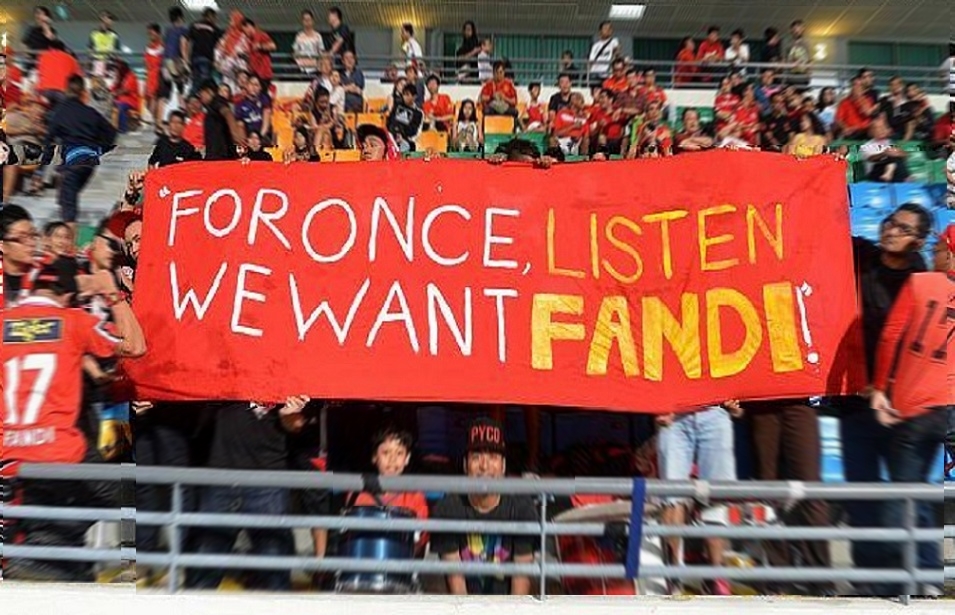
  • 6 Reasons Why Fandi Ahmad Should Not Run For Presidency

    6 Reasons Why Fandi Ahmad Should Not Run For Presidency

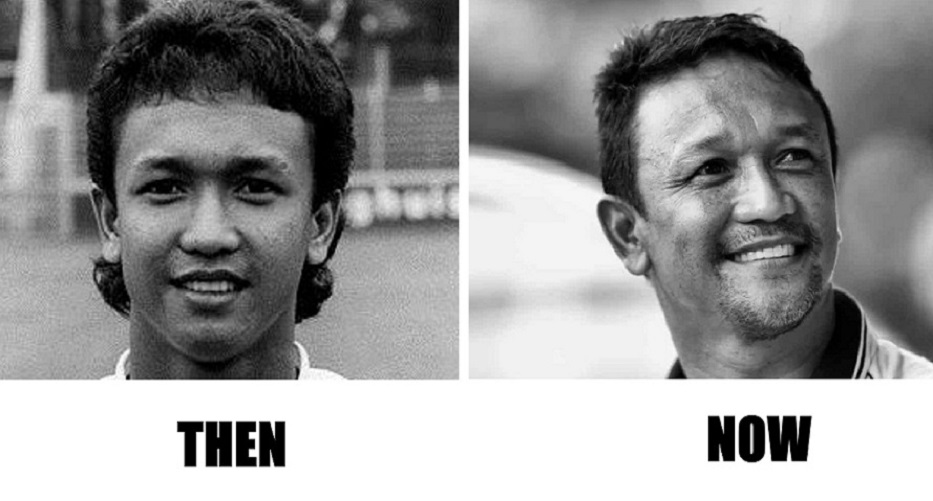
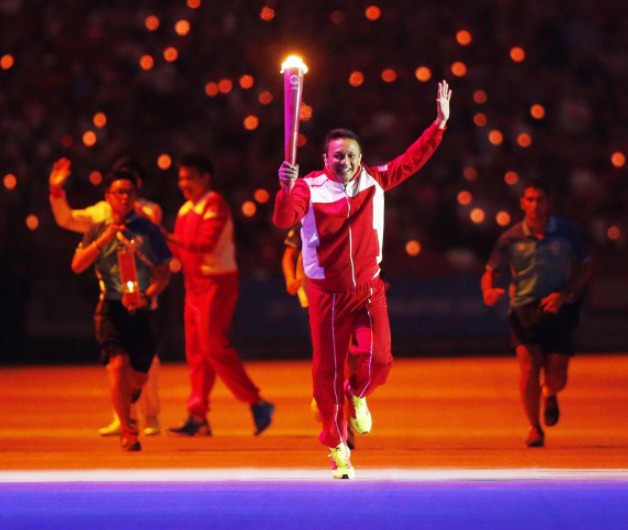
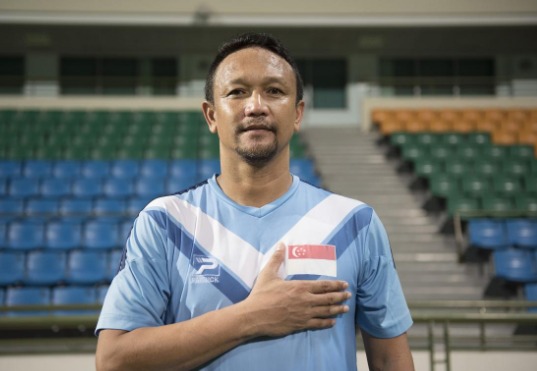
    Halimah Yacob, Salleh Marican and Farid Khan – three names that have not inspired confidence in their race to the Istana. Singaporeans are getting desperate to the point of encouraging presidential hopeful, Dr Tan Cheng Bock to become Malay. And then there’s Singapore’s favourite footballing son, Fandi Ahmad – a popular choice, even though we don’t see him qualifying as a candidate.

    Will Fandi make a good President?

    Here are 6 reasons why Fandi Ahmad should totally not become President:

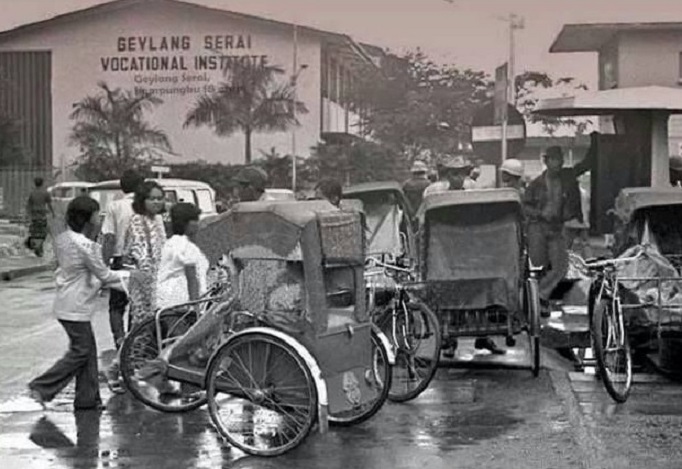
    1. He is not educated. He was from a vocational school and has never graduated from a university like many of our very elite millionaire Ministers. Even though he became rich from playing football and his business interests, he is still not considered elite like our Ministers.

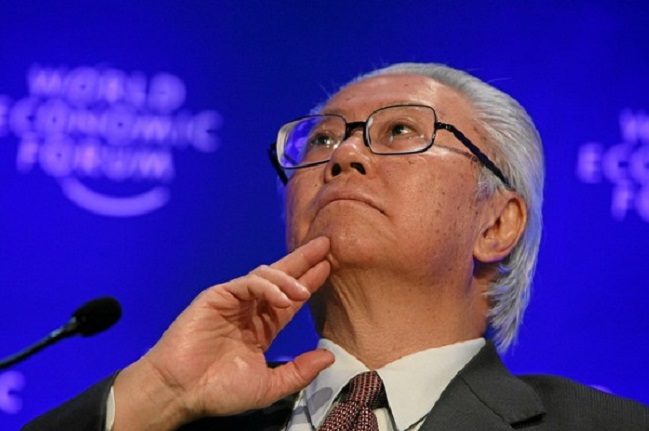
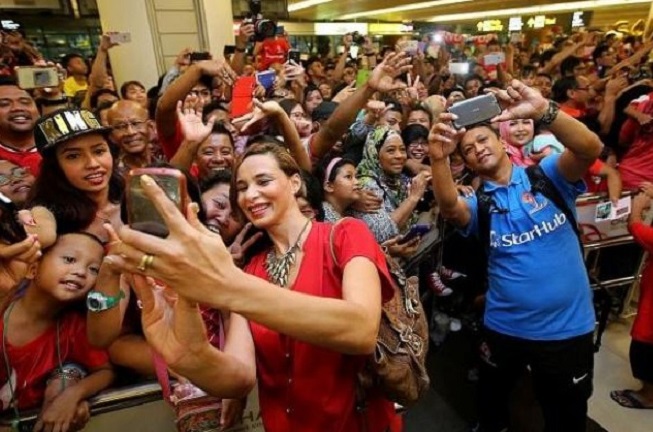
    2. Fandi doesn’t have the look of a President. He doesn’t have a back comb, and wear large glasses like our current President who is very Presidential and charming. When Tony Tan speaks, the room is quiet (because people fall asleep). Compare that to Fandi. Wherever he turns up, people make a lot of noise and mob him. How very un-presidential. Who would support Fandi?

    3. He is too handsome. The only President that was handsome was the late President Yusof Ishak. He will make all the men jealous. They will ban their wives from going to Istana open houses and National Day parades. We don’t want that too happen do we?

    4. Fandi is a sporting legend and national icon. How many sporting icons have served in public office? Sporting icons contribute back to the country through their grassroots work. Don’t meddle in the work of the elite leaders and the natural aristocrats of our land.

    5. For a prospective Malay President, he has too many friends from other races to be called truly Malay.

    6. Lastly, Fandi Ahmad is too humble. His humility is the stuff of legend, just like the man himself. Presidents cannot be too humble because they need to keep the political elites and natural aristocrats in check.

    There you have it, 6 reasons why abang Fandi shouldn’t run for Presidency. We totally don’t want a down-to-earth, humble, handsome and capable President who is Malay.

    Convinced yet?


    Rilek1Corner


    Disclaimer: We would totally vote abang Fandi if he runs for Presidency. Totally. We know Singaporeans would too. 

  • Lack Of Credible, Capable Candidates In Presidential Race A Worrying Sign

    Lack Of Credible, Capable Candidates In Presidential Race A Worrying Sign

    The Malay community in Singapore should stop bickering about the “Malayness” of the three potential candidates for September’s presidential election.

    What is of greater concern is that despite the election being reserved for Malay candidates, only two – Salleh Marican and Farid Khan – have stepped forward to announce their intentions to run. The third, Speaker of Parliament Halimah Yacob, has only hinted that she is looking to run for the nation’s highest office.

    The fact that only two individuals from the private sector have announced their intentions is indeed worrying for the Malay community. Could this be seen as the Malay community being incapable of producing enough potential leaders to serve our country?

    To be fair, the requirement for private-sector candidates to have been heads of companies with paid-up capitals of $500 million in shareholders’ equity on average over three years immediately disqualifies most Singaporeans, regardless of their race.

    This issue aside, I have been talking to community leaders to better understand if there really is a dearth in potential Malay leaders here. Most of them pointed out that there are successful individuals who are more than capable of performing the duties of a president.

    Names such as Shafie Shamsuddin, CEO of PT Trans Retail, which operates the Carrefour supermarket in Indonesia, and Bahren Shaari, CEO of the Bank of Singapore, were brought up. Former Members of Parliament such as Zainul Abidin Rasheed and Abdullah Tarmugi were also mentioned.

    To date, however, none of these individuals has stepped forward to announce an interest to contest the election.
     
    Community showing signs of progress

    But are they the only Malay candidates capable of competing in the election?

    The Malay community has made tremendous progress since independence. There are more Malays now holding important roles in the Singapore Armed Forces. We have successful Malay businessmen and scientists. The number of Malay graduates has been increasing throughout the years. We even have two full ministers in the Cabinet heading important ministries.

    But despite all these achievements, I think it is a shame that, thus far, only two members of the community have stepped forward to throw their hats into the ring.

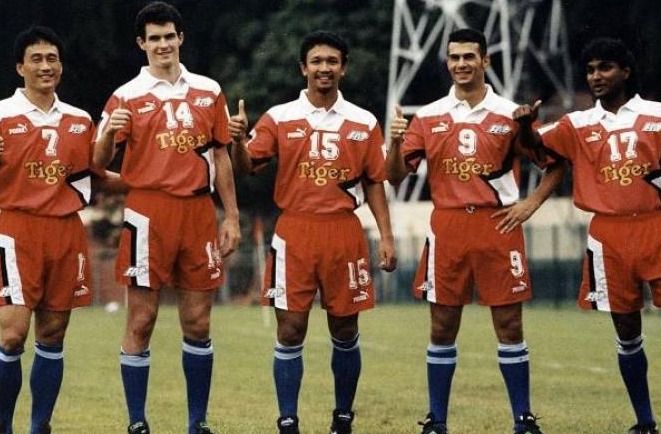
    It is like looking for a top striker to play in our national football team. Despite all the efforts made, the team have been unable to find someone capable of filling Fandi Ahmad’s boots.

    I have heard of complaints from the community that Singapore should have a Malay president again.

    “It is time. I think a Malay president should be elected as it is a symbol of our community’s success throughout the years,” said a friend of mine a few years ago.

    She pointed out that it is only fair that a Malay is given a chance to head the republic, pointing out that since the country’s first president Yusof Ishak, there have been three Chinese, two Indians and an Eurasian holding the post.

    Then again, do we elect a candidate into the Istana just because he or she is Malay? Or are voters going to choose the best person for the job?

    Potential Malay leaders out there but…

    I recently had a discussion with a community leader on Malay leadership in Singapore. He pointed out that there are potential leaders out there who have been identified for future roles in shaping the country.

    However, he also noted that these people may be contented with their jobs and are therefore reluctant to step forward to serve the nation.

    “There are Malays out there who can (do the job as president) but they are unwilling to do so. They have their reasons. Privacy is one of them and you have to understand this is not any job. This is the presidency we are talking about,” he said.

    Another veteran community leader whom I met said that the times have changed and that the younger generation of Malays are driven more by personal success in the private sector. Hence, there is a lack of interest in community service or public service at the highest levels among them, he added.

    “Do you think that they have time to give back to the community? I don’t think so!” he said.

    He has a point. Personally, I have friends who have successful careers in the private sector and are unwilling to give back to the community.

    “I contribute to Mendaki every month. That should be enough,” is the common answer I get whenever I ask them about serving the community.


    Source: https://sg.news.yahoo.com

  • Masih Ingat Mahadi Shor @ Obek Didi?

    Masih Ingat Mahadi Shor @ Obek Didi?

    Sejak tahun 1976 beliau membuatkan orang ketawa dengan lawaknya yang lucu dan bersahaja. ‘Slang’ atau telor percakapan bahasa Bawean beliau sering dimanfaatkan untuk menggeletek penonton dalam sketsa lawak.

    Sebagai pelakon, banyak drama TV, sandiwara dan persembahan pentas yang sudah beliau jayakan. Malah beliau boleh berbangga kerana pernah menjadi seorang pelakon filem – iaitu filem Puteri Gunung Ledang. Pelawak yang kami maksudkan itu ialah Mahadi Shor. Atau lebih mesra dipanggil Obek Didi.

    Kini Obek Didi, yang berusia 66 tahun, tidak sihat. Badannya semakin kurus. Beliau yang nama sebenarnya ialah Mohamed Shor, mengalami pelbagai penyakit seperti sakit jantung, darah tinggi, kencing manis dan sebelum ini diserang angin ahmar.

    Dalam wawancara dengan BERITAMediacorp ini, Mahadi Shor, yang pernah berkongsi pentas dengan legenda lawak seperti Benyamin S (Indonesia) dan Yahya Sulong (Malaysia) menceritakan bahawa kerana faktor kesihatan yang teruk pada tahun 2005 memaksanya mengenepikan pelibatan seninya. Beliau perlu menjalani pelbagai rawatan serta pembedahan demi merawat penyakitnya itu.

    Obek Didi bersama para pelawak terkenal dari Indonesia dan Malaysia iaitu Benyamin S dan Yahya Sulong.

    KATA DOKTOR: MAHADI SHOR BOLEH HIDUP 6 BULAN SAHAJA

    Tidak ramai yang tahu bahawa pelawak yang kelakar dengan wajahnya yang garang itu, pernah didiagnos oleh doktor bahawa beliau hanya dapat hidup enam bulan sahaja kerana komplikasi teruk yang dihadapinya. Ini setelah beliau dimasukkan ke hospital dan pernah koma selama seminggu.

    Isteri beliau, yang mahu dikenali sebagai ‘Rozi’ sahaja menceritakan, suaminya juga menjalani pembedahan angioplasty atau ‘ballooning’ sebanyak 2 kali kerana saluran darahnya tersumbat. Memang ajal maut di tangan Tuhan. Kini 12 tahun sudah berlalu selepas ramalan doktor itu, Mahadi Shor masih lagi meneruskan kehidupan.

    “Bila doktor cakap Obek Didi boleh hidup untuk enam bulan lagi, saya langsung tidak percaya dan terus mencari jalan lain untuk mengubatinya. Saya yakin segalanya terletak di tangan Allah. Manusia atau doktor hanya boleh merancang, tetapi Allah yang menentukan segalanya. Setelah meminta semua resit dan ubat-ubatan yang Obek perlukan, saya yang menjaganya sendiri.

    “Alhamdullilah, walaupun tidak sembuh sepenuhnya, Obek masih lagi bernyawa dan boleh meneruskan kehidupannya walaupun tak sesihat dahulu. Saya menganggap ini semua dugaan, dan saya menerimanya dengan reda dan penuh tawakkal,” ujar Cik Rozi yang sudah sekitar empat dekad berumahtangga dengan Mahadi Shor.

    Obek Didi menceritakan pengalaman beliau.

    Kini, walaupun pertuturan Obek Didi agak perlahan, beliau masih boleh lagi berbicara dan mengingati zaman-zaman ‘kegemilangannya’ dulu bersama pelawak-pelawak mapan yang lain.

    MENANGIS, HATI OBEK DIDI BAGAI DIHIRIS-HIRIS 

    Seorang pelawak memang pandai menyembunyikan perasaan sedih atau kesusahan yang dialaminya. Bagaimanapun Obek Didi tidak dapat menyembunyikan perasaannya tentang peristiwa yang berlaku tiga tahun lalu.

    Bukan, bukan tentang sakit tubuh yang beliau alami. Tetapi apabila anaknya yang bernama Ibrahim Yusof, meninggal dunia pada usia 42 tahun akibat barah hati Tahap 4. Hati Obek Didi bagai dihiris-hiris.

    “Ibrahim memang anak yang baik. Tak pernah meninggikan suara. Bila dia meninggalkan kami berdua, Obek rasa amat sedih sekali. Lagipun beliau meninggal di pangkuan ibunya. Obek tahu Allah menyayangi beliau, walaupun sedih tapi kami reda atas pemergiannya. Kami berdua masih merinduinya, terutama sekali isteri saya,” katanya sayu kepada BERITAMediacorp, sambil menahan air mata.

    Kini ayah kepada tiga orang itu mengaku masih lagi menangis bila teringatkan anaknya itu.

    TIDAK BEKERJA & MASIH PERLU BAYAR DUIT RUMAH 

    Menceritakan lebih lanjut tentang kehidupannya suami isteri, Cik Rozi berkata suaminya pertama kali diserang pelbagai penyakit selepas hanya enam bulan menutup warung menjual nasi padangnya di Ang Mo Kio dulu. Kedai bernama ‘Warung Obek Didi’ itu terkenal dengan jualan Mee Rebus dan Mee Soto terpaksa ditutup kerana kerja-kerja ubah-elok dan kos sewa yang melambung tinggi.

    “Bayangkanlah, hanya dalam masa 6 bulan kedai kami ditutup dan Obek mula duduk rumah, macam-macam penyakit mula menyerang. Semasa berjualan, kami bangun seawal 4.00 pagi dan terus bersiap-siap untuk masak dan kami membuat semuanya berdua. Dari pergi ke pasar, masak, cuci pinggan-mangkuk, layan pelanggan, semuanya boleh dilakukan. Namun kini setelah sakit, sejak lebih 12 tahun yang lalu, Obek Didi tidak boleh bekerja hingga kini,” jelas Cik Rozi sayu.

    Obek Didi kini memerlukan sokongan tongkat untuk berjalan kerana kakinya terlalu lemah.

    Cik Rozi, 64 tahun berkongsi kepada BERITAMediacorp bahawa segala perbelanjaan mereka seperti kos untuk ke pusat terapi boleh memakan ratusan dolar setiap bulan. Subsidi yang diterima hanya untuk mendapatkan ubatan di poliklinik sahaja. Itupun tiga bulan sekali. Semua pembayaran lain perlu ditanggung sendiri dan dibantu oleh dua orang anaknya.

    Flat 2-bilik mereka di Blok 32, Balam Road juga masih perlu dibayar setiap bulan secara tunai. Walaupun tidak mendapat apa-apa bantuan dari mana-mana badan setempat, Cik Rozi mengatakan teman-teman pelawak dan rakan artis yang lain, kerap juga menghulurkan bantuan kewangan untuk mereka berdua. Ini katanya meringankan sedikit beban kewangan mereka berdua.

    “Secara terus-terang, kami tidak mahu menyusahkan orang lain dan meminta-minta. Siapa yang tahu Obek sakit, tahulah, jika tidak, saya tidak pernah menghebohkannya. Bagi saya, rezeki itu Allah yang jamin, kalau ada rezeki kita, adalah di situ…Kami hidup dalam serba sederhana, tetapi kami amat bersyukur kepada Allah,” ujar Cik Rozi, nenek kepada 7 orang cucu.

    MAHADI SHOR INGIN KEMBALI MENGHIBUR, BERLAKON

    Walaupun kakinya kini agak lemah dan perlu bertongkat, kemahuan ingin berlawak dan menghiburkan para penonton masih utuh di sanubarinya. Obek Didi terharu kerana teman seangkatannya, seperti Husin Saaban pernah menjemputnya untuk menjayakan rancangan komedi, walaupun berkerusi roda dan berperanan kecil.

    Obek Didi bersama seorang lagi pelawak veteran, Husin Saaban.

    “Terakhir Obek berlakon komedi mungkin lebih dua tahun lalu, Husin (Saaban) yang menjemput. Obek memang teringin sangat nak berlakon lagi cuma, kaki yang tak kuat. Hendak juga jejakkan kaki di ofis (bangunan) Mediacorp yang baru,” kata Mahadi Shor menyuarakan rasa hatinya.

    “Walau apapun, Obek ingin mengucapkan terima kasih pada teman-teman artis dan teman-teman pelawak dan juga peminat yang banyak membantu. Seperti Husin Saaban, Ahmad Stokin, Hamzah Adon, Alias Kadir dan ramai lagi yang tak pernah melupakan Obek yang sakit ini dan terus bertanyakan khabar dan memberikan sumbangan yang ikhlas,” jelasnya dengan perasaan terharu dan penuh pengharapan.

    Obek Didi bersama Alias Kadir.

    Mahadi Shor sudah banyak mewarnai dan mengisi ruang lawak dan seni Melayu Singapura. Ketawa besar Mahadi Shor yang sudah menjadi ‘trademark’ beliau sama ada dalam iklan, drama komedi ataupun drama bangsawan, akan sentiasa dikenang para peminatnya.

    Cuma kini, dalam keadaannya sekarang, Mahadi Shor atau Obek Didi mungkin bertanya di benak hatinya, apakah peminat seni atau dunia seni Melayu Singapura, masih ingat dan akan terus mengingati beliau.


    Source: http://berita.mediacorp.sg

  • Provocative Korean Drama ‘Man Who Dies To Live’, Is Offensive To Muslims

    Provocative Korean Drama ‘Man Who Dies To Live’, Is Offensive To Muslims

    A Korean comedy drama series, Man Who Dies To Live, has earned the ire of Muslims throughout the world because of scenes that many netizens say are offensive to Islam and portray a false image of Muslims.

    The drama, which was broadcast on MBC TV in Korea since 19 July, tells the story of Jang Dal Goo, who travels to a Muslim country in the Middle East, becomes wealthy and lives a decadent life under the name of Saeed Fahd Ali. The story follows his exploits and his return to Korea to reunite with his long-lost daughter and husband.

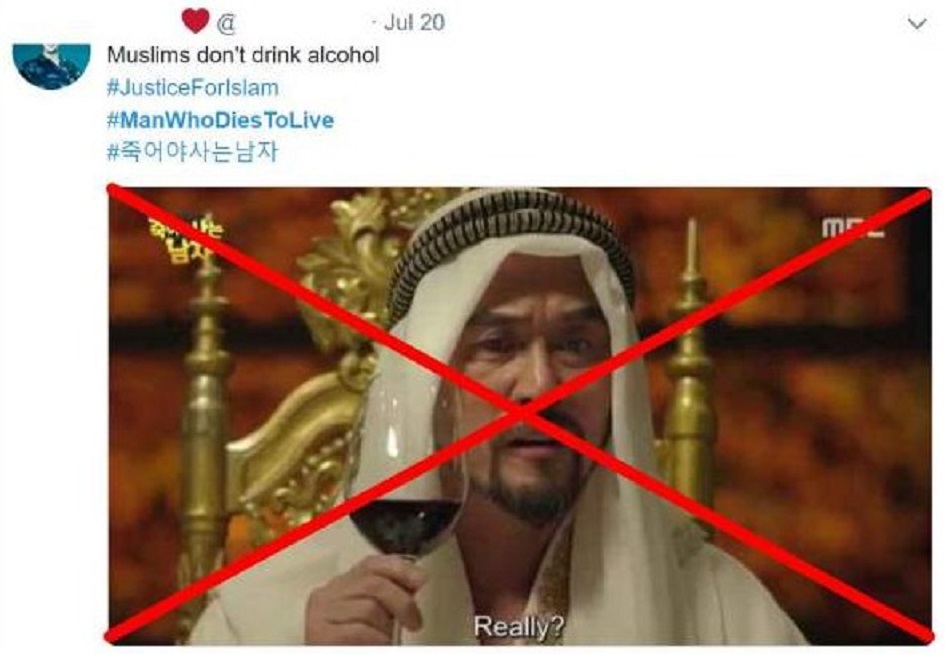
    In some scenes, Jang, who is dressed in stereotypical Arab thawb, headscarf and black robes, is openly seen meeting women dressed in hijabs and revealing swimsuits. He is also shown in one scene drinking wine for breakfast. In one of the drama’s posters, he also poses with his feet raised and placed near a book, which looks like the Quran.

    Twitter and Instagram users have raised a storm over the drama. Muslims netizens have instituted a boycott campaign and several movements to stop MBC from airing the show. They have also created a #JusticeForIslam and x-marked the drama’s posters as a way of showing their displeasure.

    Twitter user, @Sarw_Dope, wrote: “Never place the Quran that way next to a man’s foot. Stop disrespecting Islam and Arabs.”

    MBC has been forced to apologize on its official social media accounts, but defended the airing of the drama and said that all characters and events in the film were entirely fictional.

    “MBC has no intention in distorting any particular religion, culture or people,” its statement said in Arabic, Korean and English. “And we sincerely apologise for any harm that may have caused to the viewers in regards to the drama.”

    MBC said it would take “extreme caution in production from now onwards”.


    Source: www.allsingaporestuff.com