Tag: PM

  • Why Should Singapore’s Prime Minister Be Chinese?

    Why Should Singapore’s Prime Minister Be Chinese?

    Talk of the “rising star” of Deputy Prime Minister Tharman Shanmugaratnam has raised the old question of whether Singapore is ready for a non-Chinese Prime Minister. But why shouldn’t Singapore be ready?

    If Chee Soon Juan of the Singapore Democratic Party captured people’s attention during the general election period, Finance Minister and Deputy Prime Minister Tharman Shanmugaratnam has undoubtedly emerged as the darling of the post-GE period.

    There’s already a Tharman for PM Facebook page with, at the time of writing, over 760 likes. Reuters did aprofile on him as a “rising star”. As anchor minister of the Jurong Group Representation Constituency (GRC), his People’s Action Party (PAP) team coasted to victory with almost 80 per cent of the vote, an even better performance than the team in Ang Mo Kio GRC led by Prime Minister Lee Hsien Loong.

    If Singapore had a more competitive democratic system, Tharman could probably mount a leadership challenge within the party and win power. Yet the matter of Tharman’s suitability for leadership consistently runs into another question (apart from his own apparent unwillingness): is Singapore ready for a non-Chinese prime minister?

    The question was first brought up in the 1980s, when Singapore’s first prime minister Lee Kuan Yew revealed that he had considered then Minister for National Development, S Dhanabalan, to be a worthy successor, only to decide that the country was not ready for an Indian prime minister. This message was endorsed by Dhanabalan himself in 2007, when he said that he was “not saying it’s not possible [to have a non-Chinese prime minister], but I think it will take some time.”

    Current prime minster Lee Hsien Loong reiterated this in 2008 shortly after Barack Obama was voted in as the first black president of the United States of America:

    Will it happen soon? I don’t think so, because you have to win votes. And these sentiments – who votes for whom, and what makes him identify with that person – these are sentiments which will not disappear completely for a long time, even if people do not talk about it, even if people wish they did not feel it.

    Lee now believes there’s more of a chance for a non-Chinese prime minister as Singapore’s younger generations grow more accepting and are more ready to connect across racial lines, although he still notes the need to communicate with voters in Mandarin.

    The question is thus an old one. But it’s high time it got turned on its head: why shouldn’t Singapore be ready for a non-Chinese prime minister? Why shouldn’t we be able to have a non-Chinese prime minister right now (or whenever Lee Hsien Loong steps down)?

    The question about winning votes shouldn’t actually be an issue, seeing that Singaporeans don’t get to vote for the leader of the PAP, and therefore the Prime Minister, anyway. (In fact, most PAP members don’t get to vote for the leader of the PAP either; only cadre members – who are selected by the Central Executive Committee of the party – get to vote on the leadership in the Central Executive Committee.) Singaporeans only get to have a say over whether that candidate gets elected as an MP; once that’s done the leadership of the party is out of our hands.

    In any case, Tharman’s ability to win votes has been amply demonstrated in the recent general election, showing that it is not the ethnicity of the candidate, but the respect that he/she can command, that does the trick.

    The issue of being able to communicate in Mandarin might be more of a consideration. Chinese Singaporeans do make up the majority of the local population, and it would of course be important for the prime minister of the country to be able to connect with his citizens.

    Yet being a Chinese majority country has not stopped Singaporeans from electing non-Chinese leaders before. Singaporeans got to vote in their first general election in 1955, following the Rendel Constitution that gave all local citizens the right to elect the majority of seats in the Legislative Assembly. The Labour Front won enough seats to form a minority government. Their leader, and therefore Singapore’s first Chief Minister, was David Marshall, born to a Baghdadi Jewish family.

    Research by historian Dr Thum Ping Tjin based on the Chinese newspapers of the time shows that despite not being Chinese, Marshall was popular among the Chinese in Singapore, as they felt that he stood for labour rights and freedom from colonialism:

    While the Chinese press avoided endorsing any specific politicians, their editorials and readers’ letters show a clear respect for Marshall. They believed that he understood the Chinese, and felt the Labour Front would represent Chinese working class interests better than the businessmen of the [Progressive Party] and [Democratic Party].

    Throughout Singapore’s history there have been non-Chinese politicians who have managed to connect across racial lines and represent the people’s interests:Devan Nair, S Dhanabalan, Othman Wok and Joshua Benjamin Jeyaretnam among them. These men stood as candidates even before GRCs – supposedly introduced to help racial minorities get into Parliament – and have arguably done more to prove themselves and convince voters than any Chinese Singaporean former army officer parachuted into parliament on the coat-tails of an established anchor minister.

    Chinese-ness has for years been positioned as desirable, a criteria for success and power. Lee Kuan Yew has been described as a Chinese supremacist who believed that certain “Chinese” traits were crucial to Singapore’s success. Under the government’s CMIO (Chinese, Malay, Indian and Others) system of classifying everyone into neat racial categories, Singapore is an incredibly race conscious country.

    Yet this might not be giving Singaporeans enough credit. As voters, Singaporeans are more than capable of discerning who is or isn’t able to represent their best interests, regardless of the individual’s race. When push comes to shove, what really matters is the person’s ability to prove that he or she is a worthy representative and leader, and that’s a challenge for Chinese and non-Chinese politicians alike.

    It is therefore strange that comments that Singapore is “not ready” for a non-Chinese prime minister is accepted as a reasonable political statement, and not some sort of ahistorical concern trolling.

    Even if Singaporeans are voting along racial lines or according to racist assumptions, then what is needed is not a ruling out of a non-Chinese leader, but to tackle head-on the skewed value judgements and uneven playing fields faced by different racial groups, and to find the common ground and common concerns that Singaporeans have for their country. A prime minister, after all, represents the entire nation, not just the majority.

    Lee Kuan Yew himself said in 1965 that “[t]his is not a Malay nation, this is not a Chinese nation, this is not an Indian nation.” Singaporeans have been reminded of this often this year, the year of the nation’s Golden Jubilee as well as the year of his death. If this is indeed the vision of Singapore that we want to live up to, then there is no reason to doubt our readiness for a non-Chinese prime minister.

    The above article was first published on byline.com .

    Source: www.theonlinecitizen.com

  • Tharman Shanmugaratnam: I Won’t Be PM Unless They Forced Me To

    Tharman Shanmugaratnam: I Won’t Be PM Unless They Forced Me To

    In a public forum about what lies ahead of Singapore at the SG50+ Conference held by the Institute of Policy Studies, Deputy Prime Minister and Finance Minister Tharman Shamugaratnam unreservedly said that he will not be the next Prime Minister unless the ruling PAP Government forced him to. DPM Tharman said that he is neither interested in the PM role nor believe he is suitable for it:

    “Let me put it this way, we all have our preferences. And I was always, in sports, a centre half rather than centre forward. I enjoy playing half back and making the long passes, but I am not the striker.

    Unless I am forced to be, and I don’t think I will be forced to it, because I think we have got choices. It is not bad that we think so hard about succession, and we don’t always get it the way we expect it to be, but we think very hard about succession in Singapore.”

    Photo of Tharman by straitstimes Desmond Wee

    The forum host, CNN journalist Dr Fareed Zakaria, also asked DPM Tharman if Singapore will get to see a non-Chinese Prime Minister one day, of which DPM Tharman became politically-correct and ambiguously said “it is just a matter of time”.

    The issue on a non-Chinese Prime Minister has previously surfaced to the Prime Minister Lee Hsien Loong where he said it will not happen any time soon and that Singaporeans are not yet “totally race-blind and religion-blind”:

    “Will it happen soon? I don’t think so, because you have to win votes. And these sentiments – who votes for whom,and what makes him identify with that person – these are sentiments which will not disappear completely for a long time, even if people do not talk about it, even if people wish they did not feel it.

    …attitudes towards race had shifted in the last two to three decades as English provided more of a common ground, but said to get to “a position where everyone is totally race-blind and religion-blind, I think that is very difficult. You will not find it in any country in the world.”

    The Singapore Government has sparked heavy criticisms over the positions of the family and friends of the first PM Lee Kuan Yew. His eldest son, Lee Hsien Loong, became Singapore’s PM in 2004 and even until today, most people remains unconvinced Lee Hsien Loong attained his PM role without the help of his father. Lee Hsien Loong’s leadership has faced much criticisms as the PM leadership inherited the controversial aspect of his father’s (i.e. restriction of free speech), but none of the economic and social progress Singaporeans enjoyed during his father’s days. Lee Hsien Loong has been PM for the past 11 years, but unlike a real democracy, there is no legislated limit on the number of years he can be Prime Minister.


    Source:http://statestimesreview.com

  • Lee Hsien Loong Gets All Clear For Prostate Cancer

    Lee Hsien Loong Gets All Clear For Prostate Cancer

    Doctors have given Prime Minister Lee Hsien Loong the all-clear for prostate cancer, following a blood test two weeks ago.

    The test was done two months after Mr Lee underwent keyhole surgery in February for early-stage prostate cancer, which was discovered through a regular check-up. Doctors have said he has a 98 per cent chance of not dying from prostate cancer after 15 years, the Prime Minister said yesterday at the May Day Rally.

    But other health issues could crop up, Mr Lee said. Ill health could also affect other members of the Cabinet, weakening the team, he said.

    “Just because you are a minister does not mean you’re Superman. It doesn’t mean you won’t get ill, it doesn’t mean you don’t grow old,” he said. “If I lose any of them, my team will be weaker. Can I replace them quickly with people of the same quality and experience?”

    The current Cabinet is “balanced”, with some experienced ministers and newer ones who joined after the 2011 General Election, but Mr Lee, 63, said his job is also to build a strong leadership team for the future.

    “We will all grow old and we all need successors,” he said.


    Source: www.todayonline.com

  • Lee Hsien Loong Instructs The Revise Of Electoral Registers

    Lee Hsien Loong Instructs The Revise Of Electoral Registers

    Singapore’s voter rolls are being revised to ensure they are current.

    Prime Minister Lee Hsien Loong has directed that the revision of the registers of electors be made and completed by April 30, according to Monday’s Government Gazette.

    This is the second time the voter rolls will be revised since the 2011 General Election.

    The Parliamentary Elections Act requires that the voter rolls be updated not more than three years after a general election. It also provides for the Prime Minister to call for revisions from time to time.

    But the last revision, which was done last year, had already fulfilled that requirement as the election was held on May 7 in 2011.

    When completed, it showed that there were 2,411,188 eligible voters as of March 31 last year.

    To qualify as an elector, a person has to be a Singapore citizen. He must also be 21 years old or older as of Feb 1 this year and also cannot be disqualified as an elector under any written law.

    In addition, the person must have a Singapore residential address registered with the Immigration and Checkpoints Authority as of Feb 1 this year.

    This is so that his name can be entered or retained in the register for a constituency.

    The Elections Department will give details later about public inspection of the revised electoral rolls.


    Source: www.straitstimes.com

  • Top 10 Highest Paying Jobs In Singapore

    Top 10 Highest Paying Jobs In Singapore

    “Choose a job you love, and you will never have to work a day in your life.” —  some guy on the internet who may or may not be Confucius.

    Well, thanks maybe-Confucius, but not all of us have the luxury of being paid to do what we enjoy.

    For some people (okay, most people), money is what they look for in our job. Because money is more important that any form of job satisfaction.

    Which is why we need lists like these. We’ve checked out the Ministry of Manpower’soccupational wage table last updated in June 2014. Source for your next career move here:

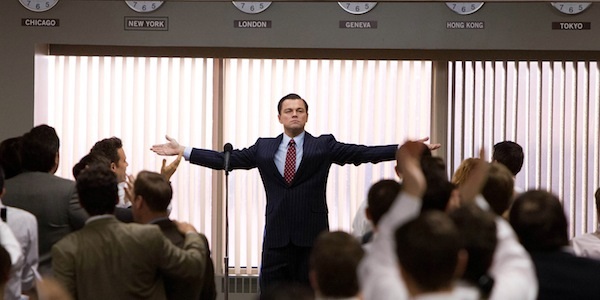
    10. Commodities Derivatives Broker (Median Monthly Wage: $10,000)

    leo-wolf-of-wall-street

    Source

    A commodity broker traditionally buys and sells goods such as oil, grains, or even coffee. A commodities derivatives broker, on the other hand, trades a variety of assets, such as shares and bonds. Potential employers include investment banks, financial clearing houses, and even international stock exchanges.

    With great power comes great responsibility. Accordingly, this job comes with Spider-Man levels of stress and responsibility. Commodity brokers also often have to work long hours, but it’s all good, because opportunities for promotion are aplenty, along with good salaries, and high bonuses. Just be prepared to slog it out for a least a while.

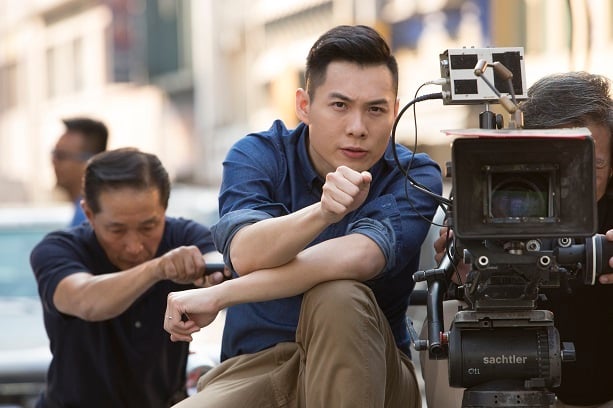
    9. Company Director ($11,800)

    Anthony-Chen-TigerBeer_Singapore_09032014_HKStreet_-354
    Source

    This is probably one of the harder jobs to just pick up. A company director refers to individuals who have been either voted or appointed to a board of directors, and is responsible for the design and execution of the company’s corporate policy.

    Directors do not have to originally be employees of the company, and can sit on more than one board at any time. Which means these people pick up their salary from two or three different places. Pretty cool right.

    8. General Practitioner / Physician ($12,547)

    drhouseoops

    Source

    Turns out that guy you always go to for MCs is doing very well for himself, thank you very much. No such thing as Monday Blues for GPs, as they welcome lines of people queuing up for that precious slip of work-prevention paper.

    Being a doctor isn’t really that difficult. All you need are top notch grades to enter medical school (at least all As), minimum of five years of undergraduate study (along with enough money to fund said education), and be accredited with the relevant bodies before actually being able to whip out that trusty stethoscope and pump-action blood pressure monitor.

    7. Chief Operating Officer (COO) / General Manager ($13,135)

    nick_fury_director_of_s_h_i_e_l_d_wallpaper_by_anyayuy-d7arv3u

    Source

    A COO is typically the second-in-command to the Chief Executive Officer, and is in charge of day-to-day operations. A General Manager is responsible for managing profits and costs of the company. We’re not quite sure why these two rather different job scopes are bundled together.

    But we expect individuals who have the opportunity to rise to either position to have the ability, experience, and gumption to fulfill their roles with aplomb. Experience pays.

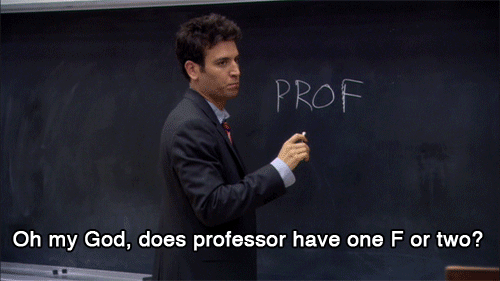
    6. University Lecturer ($13,684)

    tumblr_inline_mla31nLw791qz4rgp

    Source

    We have to admit, this one caught us a little by surprise. Who would have thought university lecturing is such a viable form of income? Turns out relentless research and occasionally ticking off the resident smart mouth is worth the trouble. Of course, lecturers come in many forms. The lucky students get the ones who actually want to teach over doing research.

    Potential university lecturers are typically required to have a Masters in their chosen field, but a Bachelor’s Degree may sometimes suffice.

    5. Chief Executive Officer (CEO) / Managing Director ($17,962)

    s09

    Source

    That’s right, the head honcho in most conglomerates comes in at only fifth in the list. Of course, the pay structure for CEOs can range wildly depending on company size, but being a CEO seems like a pretty safe bet to earn some serious moolah. Holders of an MBA generally have an advantage, but possessing a Master’s in the related industry is also useful.

    A CEO’s responsibilities are defined by the board, but should possess some level of leadership qualities, foresight, and be an effective communicator. Interested individuals may want to check out WikiHow’s guide to be a CEO, but we’re pretty sure this tutorial is hardly exhaustive.

    4. Advocate / Solicitor ($18,333)

    Subhas_Anandan_lawyer

    Source

    Unlike in other countries, lawyers in Singapore are part of what is known as a fused profession, where they are able to perform the duties of both an advocate or solicitor. An advocate speaks on behalf (“advocates”) of a client, and presents arguments and cases in the place of the client. A solicitor, on the other hand, are trained in all areas of the law.

    We’re pretty sure TV’s favourite occupation is also one of the coolest, if only because you get to cut off somebody in the middle of their sentence with a loud “OBJECTION” and getting to use words like “subpoena” and “impermissible”. Also, hot paralegals are a thing. Probably.

    Lawyers who are neither advocates nor solicitors are unfortunately not included in this entry, and can expect to bring home less than their colleagues.

    3. Specialist Medical Practitioner ($23,085)

    1487759_792642510761771_638116745_o

    Source

    There’s a reason why those specialists charge so much just to look at. They have spent ridiculous amounts of time to get to that tiny white office and large lab coat. After medical school — which takes a minimum  of five years — hopefuls have to further their education and undergo a multi-year residency in their chosen field before being able to register in Singapore as a specialist. The entire process can take anything from seven to nine years.

    If you’re lucky, you might become known as the ‘son of Punggol’!

    2. Minister ($91,666)

    HdnNy

    Source

    The gap between the top two paying positions and the rest is HUGE – a whopping $70,000.

    One sure-fire way to be a minister is to sign on with either the Army, Navy, or Air Force. Don’t believe us? Let’s take a look at current ministers who were once served in the military.

    • Brigadier General Tan Chuan-Jin : Minister for Manpower
    • Rear-Admiral Lui Tuck Yew (Former Chief of Navy): Minister for Transport
    • Rear-Admiral Teo Chee Hean (Former Chief of Navy): Deputy Prime Minister, Co-ordinating Minister for National Security, Minister of Home Affairs
    • Major General Chan Chun Sing (Former Chief of Army): Minister for Social and Family Development

    4 ministers of a 17-member Cabinet is actually a pretty decent ratio. Of course, just because they previously held high positions in fatigues doesn’t mean they’re actually competent ministers. We’ll just let you decide.

    Getting into higher positions can in the military can also lead to better job prospects in Government-linked organizations as well. Just ask SMRT CEO Desmond Kuek (Former Chief of Defence Force) and S-League CEO Lim Chin (Former Chief of Artillery).

    1. Prime Minister ($183,333)

    060603-N-0696M-382

    Source

    With an annual salary of $2.2 million, Singapore’s Prime Minister (PM) comfortably eclipses the combined salaries of the next 5 highest paid world leaders, including US President Barack Obama. This works out to a monthly salary of about $183,333, which means the PM can buy a BTO flat every two months.

    Also, current Prime Minister Lee Hsien Loong happens to be a former Brigadier General in the Singapore Army, and is yet another soldier who made the jump to politics.

    Haters of the PM’s high salary should note that he actually accepted a 36% pay cut in 2012, so he’s actually working hard on it ok.

    At the end of the day, we’d all probably prefer doing something we enjoy. Unfortunately, not all of us have the opportunity to do so. Maybe the one thing that we actually enjoy is popping bubble wrap. How can that possibly be monetised? And so, banking is the natural option instead. Monetary or family constraints can force some to opt for that soul-sucking, higher-paying gig. Perfectly understandable. All we ask for is that this year, think less about the money, and more about the ones you’re earning the money for.


    Source: http://mustsharenews.com