Tag: Population

  • Attention: Malay Population In Singapore At Its Peak Due To All Muslims Considered A Malay

    Attention: Malay Population In Singapore At Its Peak Due To All Muslims Considered A Malay

    It’s getting more and more confusing now. Or is it not?

    If “people” are saying that religion determines the race then this a development in a way. Let’s do some mathematical analysis.

    The given arguments are:

    A Malay is not a Malay only if he/she is a Christian. (lose)

    An Indian is a Malay if he/she is a Muslim. (add)

    So going by the same argument,

    If a Chinese or a Caucasian(others) are Muslims, he/she is a Malay. (add)

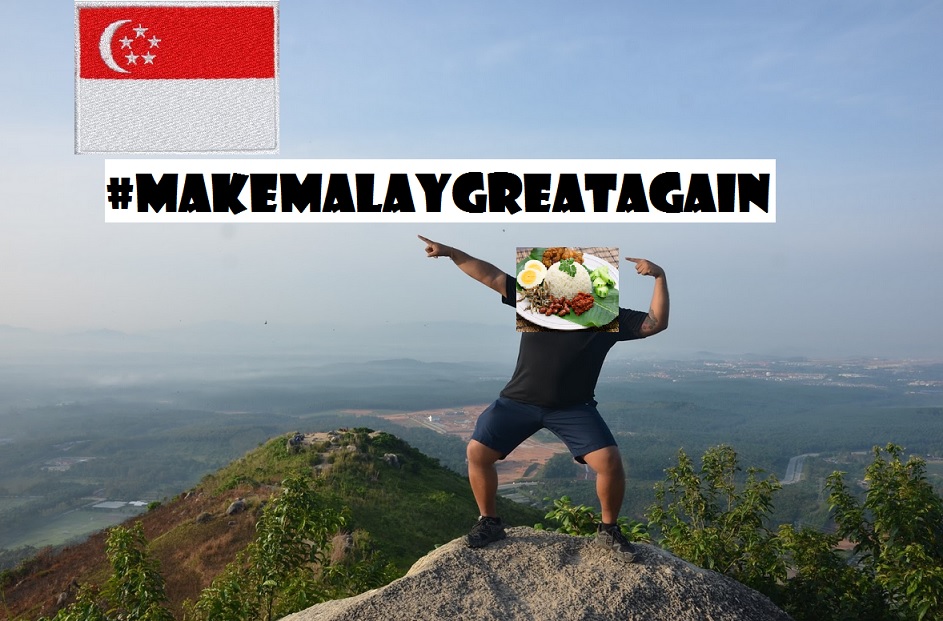
    Well then let’s revise the national population ratio. Overall there should be more Malays now because technically all Muslims are considered as Malays. And there should be a reduction of in the population of Indians and Chinese now that their Muslims brethren are classified as Malays. So hurray! Our Malay population has grown! #makemalaygreatagain

    (What about Indians or Chinese who are Christians? Because generally Indians are Hindus and Chinese are Taoists or Buddhists. Jeng jeng jeng….)


    Rilek1Corner

  • Shanmugam Stresses Need To Uphold Racial Equality

    Shanmugam Stresses Need To Uphold Racial Equality

    The need for Singapore to remain committed to protecting its minorities was stressed by Home Affairs and Law Minister K. Shanmugam yesterday, as anti-Islamic and anti- immigrant sentiments jolt the world and the region grapples with growing polarisation along religious lines.

    “In the face of all this, the Government has to convey a clear message: We are all Singaporeans. We guarantee the safety, security and freedom of religion to all, including the Muslim community,” he said. “And as a community, we must covenant to ourselves to never allow xenophobia and majoritarianism to override the protection and guarantee of equality, particularly to minorities.”

    With 74 per cent of the population being Chinese, “our system of elections means majoritarianism could have easily taken hold and can, in future, easily take hold”.

    He credits Singapore’s founding leaders for laying the foundation that includes ensuring equal opportunities for the minorities.

    Mr Shanmugam’s robust statement on Singapore’s core principle of equality for those of all races and religions follows the upheavals of the past week after US President Donald Trump’s order suspending refugee intake and temporarily keeping the citizens of seven Muslim-majority countries out of the US.

    At a seminar on religion, conflict and peacebuilding, he said the US changes, made suddenly, present a serious risk to Singapore. The travel curbs, he noted, reflect anti-Islamic feelings gaining ground in the United States and Europe. “It is a groundswell fuelled by fear and a substantial element of racism. Many otherwise reasonable people are also supporting such movements,” he said.

    Singapore, with a 15 per cent Muslim population, could easily slide into a similar situation, he added. Hence, it is imperative that the Government steer clear of engaging in racial politics, Mr Shanmugam said.

    But it can do this only with the community’s support, he added.

    While the majority must back these efforts, the minorities must play their part, and not grow increasingly exclusive. Both sides need to “work together to increase common space, and work with the Government that is determined to hold the common space together”, he said.

    “That is the only way we can resist the tide of populism that is sweeping the rest of the world. We keep to our way of life,” he added.

    The two-day symposium is organised by the S. Rajaratnam School of International Studies under its Studies in Inter-Religious Relations in Plural Societies Programme.

    In his address, Mr Shanmugam sketched his view on what has led to the anti-Islamic wave in the West, Singapore’s approach in avoiding the backlash elsewhere against minorities, and regional trends that could agitate Singapore’s minorities.

    Pointing to the Chinese majority, he noted that Singapore has avoided majoritarianism by ensuring equal opportunities regardless of race or religion, guaranteeing religious freedom and clamping down strongly on hate speech.

    “The result is, regardless of all else, you can walk with a sense of being yourself, comfortable in your own skin, as an equal citizen… That is the lived reality of a Singaporean,” Mr Shanmugam said.

    But this takes work, he said, noting that the Government has not taken a laissez faire approach. Without active state intervention, he said, “you will get segregated communities, segregated schools, the lessening of common space and a reduction of opportunities for minorities”.

    Urging racial and religious leaders to champion integration and interaction, he said: “This is critical… to preserve what we have in Singapore.”


    Source: ST

  • Singapore Doesn’t Lack Space For Population Of 10 Million

    Singapore Doesn’t Lack Space For Population Of 10 Million

    “Land scarcity is a very real problem for Singapore, which explains the ever-increasing land costs and property prices which are driven by pent-up demand.”
    — SGPropertyReviews.com,
    Jan 11, 2014

    Singaporeans have been brought up to accept statements like this as a gospel truth. Many do not even question the meaning of scarcity and without looking at the growth of the nation, do not realise that Singapore’s land size has increased by 100 square kilometers in the last 35 years. Add to that the advances in space planning, improved transport systems, enhanced construction capabilities leading to a much higher population density and “Voila!”, we have 5.54 million people today.

    Traffic travels along the Tampines Expressway past public buildings in Punggol (right), while a man enters his home in Sengkang, where the number of flats under HDB management are projected to increase to 92,000 from the current 59,497

     The brief statistics are, in the 35-year period between 1980 and 2015, our population grew 129% from 2.41 million to 5.54 million, made possible by a 16% increase in land size from 617.9 sqkm to 719.1 sqkm and a 97% increase in population density from 3,907 people per sqkm to 7,697 people per sqkm.

    Table 1: Singapore’s land size grew by 100 sqkm while her population grew by 3.1 million over the 35-year period from 1980 to 2015.

    Year Population Land size Population density (per sq km)

     1980*

    2,413,945

    617.9

    3,907

    1985

    2,735,957

    620.5

    4,409

     1990*

    3,047,132

    633.0

    4,814

    1995

    3,524,506

    647.5

    5,443

     2000*

    4,027,887

    682.7

    5,900

    2005

    4,265,762

    696.9

    6,121

     2010*

    5,076,732

    710.4

    7,146

    2015

    5,535,002

    719.1

    7,697

    Notes:
    * Census of population
    Prior to 2003, data are based on Singapore’s land area as at end-December. From 2003 onwards, data are based on Singapore’s land area as at end-June.
    Data on population from 2003 onwards exclude residents who have been away from Singapore for a continuous period of 12 months or longer as at the reference period.
    Source: SingStat, Century 21 (IPA)


    Even though land reclamation allowed us to increase our land mass, there are many amongst us who do not feel that there is ever enough, and continue to insist that 719.1 sqkm of land is considered scarce.

    Scarcity or otherwise, let us at least recognize that we have carried a misconception for several generations: the phrase “land is scarce” does not equate to “space is scarce”. We have been stacking more and more people on top of one another and packing people closer together to create higher and higher population density.

    Technology has improved. Our capabilities have improved. Lifestyles have changed. Today we are better able to accommodate higher population densities because of better construction standards, better space planning, better transport systems and we have flexible working hours with many knowledge workers working longer hours in cafes and from homes.

    For those who have not been putting the various pieces of the Master Plan together, we present a summary of various pieces of “work in progress” in the real estate front that will allow Singapore to accommodate a 10 million population from around the year 2050. We also make the bold assumption that the Transport and Health authorities are expanding their capacity to match the population increase.

    One more somewhat audacious assumption on the back of our low birthrates: Singapore’s environments and economy will remain sufficiently attractive such that there is a constant stream of population inflow to sustain a population growth to 10 million people.

    Based on scattered bits of public information announced over the past few years and gluing them together with our assumptions, the sections below will reveal to us how the residential landscape can evolve to house our growing population.

    Existing HDB towns – 535,144 more units in the pipeline

    Table 2 provides us with a glimpse of the long term dwelling plans undertaken by the Housing & Development Board (HDB). For 23 of the HDB towns, their total land area and the total number of flats currently being managed by HDB. The projected maximum number of dwelling units, which includes HDB flats and future government land sales for private residences, are also listed. Do note that the projected ultimate number does not include residences that will be built on private land, or enbloc redevelopments of apartments on state land.

    Table 2: HDB towns and their projected target of dwelling units.

    HDB towns

    Land size (Ha)

    Flats under
    HDB management

    Projected ultimate
    number of units

    Ang Mo Kio

    638

    49,169

    58,000

    Bedok

    937

      60,115

    79,000

    Bishan

    690

    19,664

    34,000

    Bukit Batok

    785

    32,275

     53,000

    Bukit Merah

    858

    51,885

     68,000

    Bukit Panjang

    489

    34,463

     44,000

    Choa Chu Kang

    583

    42,393

    62,000

    Clementi

    412

    25,480

    39,000

    Geylang

    678

    29,256

    49,000

    Hougang

    1,309

    51,646

    72,000

    Jurong East

    384

    23,379

    30,000

    Jurong West

    987

    71,755

    94,000

    Kallang/Whampoa

    799

    35,740

    57,000

    Pasir Ris

    601

    29,207

    44,000

    Punggol

    957

    35,515

    96,000

    Queenstown

    694

    30,546

    60,000

    Sembawang

    708

    20,311

    65,000

    Sengkang

    1,055

    59,497

    92,000

    Serangoon

    737

    21,293

    30,000

    Tampines

    1,200

    66,599

    110,000

    Toa Payoh

    556

    36,439

    61,000

    Woodlands

    1,198

    62,675

    98,000

    Yishun

    778

    56,698

    84,000

    Other Estates

    22,856

    25,000

    Total

    968,856

    1,504,000

    To be built

    535,144

    Note:
    “Toa Payoh” town includes Bidadari
    “Other Estates” include Bukit Timah, Central Area and Marine Parade
    Land size includes private developments on private and state land.
    Projected ultimate figures include private developments under Government Land Sales Programme.
    Source: HDB “Key Statistics – HDB Annual Report 2014/15”, Century 21 (IPA)

    From the differences in the totals, we see that sufficient land has been set aside to build another 535,144 dwelling units in the next decade and beyond. However, these units reside purely within HDB towns and various large private residential estates such as Bukit Timah, Newton-Novena, Tanglin and the Downtown Core have not been included.

     New residential precincts – an additional 534,000 units?

    In the past 10 years, announcements have been made regarding new residential precincts such as Woodlands North Coast, Jurong Lake District, Tampines North and Bidadari. The additional housing capacity planned in these new precincts have been included in the projected ultimate numbers listed under the HDB towns of Woodlands, Jurong East, Tampines and Toa Payoh in Table 2.

    In addition, there are four more new residential precincts that are being planned.

    The operations in Paya Lebar Air Base will cease from 2030 onwards and we may expect the first HDB flats to begin construction perhaps two years later. The advantage this brings to the immediate neighbourhoods such as Hougang and Aljunied is that height restrictions may be lifted and plot ratios increased significantly.

    Fancy being a resident of Pulau Brani? The Greater Southern Waterfront will begin its transformation from 2027, when the City Terminals start to relocate to Tuas, followed by the Pasir Panjang Terminal around year 2030.

    Tengah could be named as a new HDB town when details of its plans are revealed. This precinct has been set aside in the master plans for some time now and with the recently announced plans to develop the new Jurong Innovation District, plans for the Tengah new town could be accelerated.

    The overall plans for Marina South Residential District was crystallised starting from a design competition held in 2007. Plot ratios assigned to the residential blocks at “Gardenfront Residences” are relatively high at between 4.9 and 5.6, allowing the lucky residents to have a clear view over the Sky Trees in Gardens By The Bay.

    Increasing plot ratio, improving space planning

    Intensifying land use and increasing population density are made possible through several elements. Plot ratios across the country can be increased due to better planning and integration with public transportation and changing lifestyles. Example can be seen from the rebuilding of old estates such as Commonwealth, Tanglin and Dawson where old 10-storey blocks with open-air carparks were demolished and replaced with new 40-storey blocks that are built closer and integrated with amenities such as carparks, clinics, supermarkets and community facilities to boot.

    In private housing, apartment sizes are shrinking, especially when the increase in single person households support the proliferation of shoebox units. The smaller average size of apartments has led to an increase of about 20% more residential units than what is planned for each government land parcel sold.

    Looking forward

    The current total stock of residential units exceeds 1.3 million and together with alternative accommodation types such as dormitories and serviced apartments, Singapore can comfortably house 5.54 million people. Based on the tabulations in the sections above, I believe that Singapore has sufficient capacity to add 1.1 million more housing units without further reclamation of land. We can then comfortably welcome another 4.5 million people.

    Someone recently said that “with inflation, the rising cost of living and land scarcity, property prices will continually rise in Singapore over time, which makes property a great investment.” I think he will be correct, provided we can continue to keep the population growing.

    Ku Swee Yong is a licensed real estate agent and the CEO of Century 21 Singapore. He recently published his fourth book “Weathering a Property Downturn”.

    This article appeared in The Edge Property Pullout, Issue 727 (May 9, 2016) of The Edge Singapore. 

    Related Articles From TheEdgeProperty.com.sg


    Source: https://sg.finance.yahoo.com

  • Former HDB CEO: Singapore Must Plan For 10 Million Population

    Former HDB CEO: Singapore Must Plan For 10 Million Population

    Singapore must start planning for a population that could possibly hit 10 million, Liu Thai Ker, the man often credited as the architect of modern Singapore, told CNBC.

    The bold number suggested by Liu, who served as the chief executive of the Housing Board from 1979-1989 and then as CEO and chief planner of the Urban Development Authority from 1989-1992, is nearly double the current 5.3 million population and significantly higher than the 6.9 million figure proposed by the Singapore government in its 2013 Population White Paper.

    In the white paper, the government described its vision of raising the country’s population by as much as 30 percent in the next two decades to ensure the economy remains dynamic. However, the move sparked strong objections amid rising discontent in the land-scarce nation over soaring housing costs and an influx of immigrants.

    But Liu stands by his theory, saying that population growth is pivotal to Singapore’s future.

    “One fundamental thing about urban planning is, don’t try to stop or control or curb population growth,” Liu, who is now chairman at the Centre for Liveable Cities and senior director at RSP Architects Planners and Engineering, said.

    Read MoreHow Singapore can stay relevant after 50th

    “We should allow Singapore to grow and plan for a much bigger population… like 10 million people. We should ask ourselves: How long do we want Singapore to remain as a sovereign country? Even at 10 million people and assuming a population growth rate of 1 percent, we will only last slightly over 100 years and that’s not a long time,” he added.

    The country, which is battling worrying demographic changes, also needs immigrants to keep its economic engines running. With a fertility rate of only 1.2, far below the replacement rate of 2.1 and one of the lowest in the world, an ageing population would lead to profound problems for Singapore, the country’s Prime Minister Lee Hsien Loong said at a conference earlier this month.

    Liu agrees: “Being such a tiny place, there is a propensity toward homogeneity of ideas and concepts. For us to nurture a creative society, we need people from outside. In fact, one of the reasons why Singapore could succeed was because we were a heterogeneous society at the beginning, with people from all over the world.”

    But even as population numbers accelerate, Singapore’s achievements in urban development and innovation must be maintained.

    “We must continue to keep the city green and attractive for businesses, as well as good talent to come,” Liu told CNBC.

    Lessons from Singapore

    Apart from being well-known as a ‘garden city’ where flora and fauna is weaved into the urban fabric, the stability and efficiency of Singapore’s urban infrastructure serves as a role model for many developing nations.

    To emulate the success of the Southeast Asian city-state, governments in these developing countries will need to take the lead, according to 77-year-old Liu.

    “It may not sound democratic in a Western sense but in Asia or even Africa, the government must play a big role when there’s a great need for development. Because if you leave it to the businesses or private sector, they will inevitably focus more on the business side of things.”

    For that reason, it is imperative that government leaders educate themselves on urban development, the architect-planner added.

    “Leaders must be humble enough to learn what makes a good city. Mr Lee understood what made a good city from his days in Cambridge, but he spent all his life learning from urban success stories,” said Liu, referring to Singapore’s founding father Lee Kuan Yew.

    Singapore ‘needs entrepreneurs’ in the post-LKY era

    “Leaders must also be ruthlessly rational… and I often explain to foreign dignitaries that the highest authority in Singapore is something called the truth. The Prime Minister and President will listen [even if it was] a lowly civil servant who said the truth. That, to me, is an important aspect of Singapore’s success story.”

    Liu retold the story of Lee ‘s decision to construct low-cost flats in high-rise buildings – known as HDBs – even though such high-density housing was condemned by experts in the 1960s. Towering skyscrapers have since become a symbol of the nation’s successful public housing strategy and urban landscape.

    “We must subscribe to ‘clarity equals courage.’ It is not good enough to have courage and charge ahead blindly. it is also not good enough to just follow the world. You need to think what your city needs and have the courage to move ahead even [if it is] against the world’s trends,” he added.

    Lee Kuan Yew was Singapore’s first and longest-serving prime minister, who oversaw Singapore’s transformation from a sleepy British colonial outpost into a global metropolis within a single generation. He died on March 23 at the age of 91.


    Source: www.cnbc.com

  • More Filipinos Moving Into More Industries In Singapore

    More Filipinos Moving Into More Industries In Singapore

    One of Singapore’s most popular comic characters happens to be a Filipino maid called Leticia Bongnino.

    A fictional character from a television sketch show, she embodies a stereotype familiar to Singaporeans who have long relied on Filipinos to tend to their homes.

    But it is also a stereotype that has become outdated, as more Filipinos move into new professions here.

    These days a Singaporean professional is likely to have Filipino colleagues. With many more taking up service sector jobs, he is also likely to be served by a Filipino at a restaurant, supermarket, or doctor’s clinic.

    The estimated number of Filipinos working in Singapore tripled in the past decade to about 167,000 as of 2013, according to Philippines census data. The Singapore government declined to provide the BBC with official figures.

    But their rising visibility in Singapore’s society has drawn attention. Amid increasing general resentment towards foreigners, a backlash towards Filipinos has taken place.

    Earlier this year, a plan to hold a Philippines Independence Day celebration on Singapore’s main shopping street Orchard Road was cancelled following online complaints by some Singaporeans who said the space was special to locals.

    One blogger called the move “insensitive”, saying: “Celebrating your Independence Day openly in the public (especially [at a] iconic/tourist location like Orchard Road) is provocative.”

    Prime Minister Lee Hsien Loong said he was “appalled” by those who had harassed organisers, calling them a “disgrace to Singapore”. Many Singaporeans also lambasted those who complained about the event.

    But anti-Filipino sentiment has continued to swirl online, culminating in a blog titled Blood Stained Singapore suggesting ways to abuse Filipinos, calling them “an infestation”.

    The suggestions, which included pushing Filipinos out of trains and threats to spray insecticide on them, alarmed the public. The blog was eventually taken down by Google for infringing content rules.

    Picture of Lucky Plaza, a Filipino hub in Singapore
    Picture of Ngee Ann City shopping mall at Orchard Road in Singapore

    Change in profile

    The Philippines ambassador to Singapore, Antonio A Morales, told the BBC in a recent interview that “by and large” Filipinos were accepted in Singapore, and his embassy had not received any complaints of physical abuse.

    But he expressed concern about “the few Singaporeans” who have lashed out, and condemned the blog that suggested abusing Filipinos.

    “I think it was unfair and racist and discriminatory,” he said, adding that the blogger had still not been identified. Singapore police have launched an investigation and say the case is still being probed.

    Part of the problem is that Filipinos are willing to take on jobs for lower salaries, with working conditions unacceptable to Singaporeans.

    The trend has made Filipinos “easier to exploit”, disadvantaging both them and Singaporeans, said migrant rights activist Jolovan Wham.

    Sociologist Tan Ern Ser said that when Filipinos were mostly domestic workers, “they posed less of a threat, since they were in jobs which were less attractive to locals.”

    But now, “they may be perceived as competitors for jobs in sales, services, or professions that Singaporeans would take up but preferably at higher wage levels, consistent with their aspirations”.

    The rise of anti-foreigner sentiment here is a recent phenomenon, with increasing immigration triggering underlying anxieties, say observers.

    “Over the decades, the ruling government has emphasised that we are a small island with a lack of natural resources,” noted sociologist Terence Chong.

    But this “survivalist rhetoric”, meant to spur on citizens, has now had the inadvertent effect of creating resentment against foreigners who are seen as competition for limited resources.

    ‘Keep our heads down’

    Filipinos here said that Singaporeans have been accepting, although they are concerned about escalating anti-foreigner sentiment.

    Media executive Jina L said Filipino professionals like her “keep our heads down” in Singapore. “We can be vocal, but we know when we should keep a low profile,” says the 49-year-old permanent resident.

    Restaurant supervisor Michelle Villegas, 31, felt “sad and worried” about online attacks. At work she has encountered customers who have made fun of her for being Filipino.

    She came to Singapore five years ago after her sister, who found a job working at the airport, urged her to follow suit. “She told me that the work is good and the salary is much better than back home because you earn in Singapore dollars. It is also very safe, so I like it here,” she said.

    She is now also worried that the government will not renew her employment pass, as labour rules have been tightened following public unhappiness over the influx of foreigners.

    Commuters walk inside the Raffles Place MRT station during rush hour at the central business district area on 13 February 2013 in Singapore
    People sit at bars along the Boat Quay in Singapore on 21 June 2013.
    Grey line

    Singapore immigration

    • Worried about a fast-ageing society, Singapore has allowed in more foreigners over the past decade, increasing the population by 33% to 5.47 million.
    • The proportion of foreigners has nearly doubled to 29% in that same period.
    • Some Singaporeans have complained about crowded public transport, high housing prices, and a lack of good jobs. The citizen unemployment rate remains low at 3%.
    • Widespread unhappiness led to the ruling People’s Action Party scoring its lowest-ever share of votes in the 2011 general election.
    • Since then the government has made it more difficult to hire cheap foreign labour, and incentivised productivity and innovation – but progress has been slow.
    • It also ramped up transport infrastructure and housing, and attempted to cool the property market.
    Grey line

    Tightening manpower rules

    One way Singapore has tried to solve the labour crunch while placating the public’s desire for fewer foreigners is outsourcing jobs to other countries.

    In the Philippines, the Singapore government-linked company Keppel set up shipyards in Batangas and Subic Bay. Last year a government agency tasked to find opportunities for Singapore companies overseas set up an office in Manila.

    “Instead of our workers coming here, Singaporeans can bring their jobs to other countries, to our labour centres,” said Mr Morales.

    But not all jobs can be sent offshore – and Singapore still needs to fill many job vacancies perceived as unattractive.

    Meanwhile, Singaporeans still can’t get enough of Leticia Bongnino – but her writers are acknowledging the changing times. In a recent sketch, she reeled off the names of fictional relatives working at a call centre, department store and café in Singapore.

    Beaming, she said: “Now there are a lot of Filipinos in Singapore… Leticia is very happy as almost all my relatives are here.”


    Source: www.bbc.com