Tag: PRC

  • 3 Things SAF Can Do With The Returned Terrexes

    3 Things SAF Can Do With The Returned Terrexes

    Finally, the PRC government is returning our Terrexes to us. They had so much time with the Terrexes that they probably copied every inch of it and are already manufacturing battalion-sized Terrexes somewhere in China now.

    So what do we do with the Terrexes? Here are our suggestions:

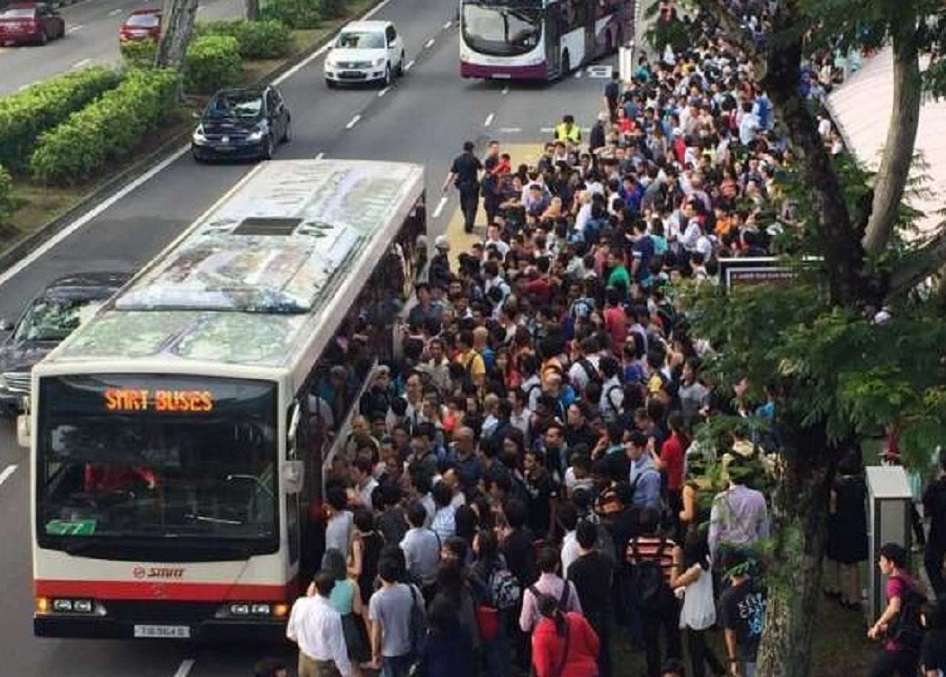
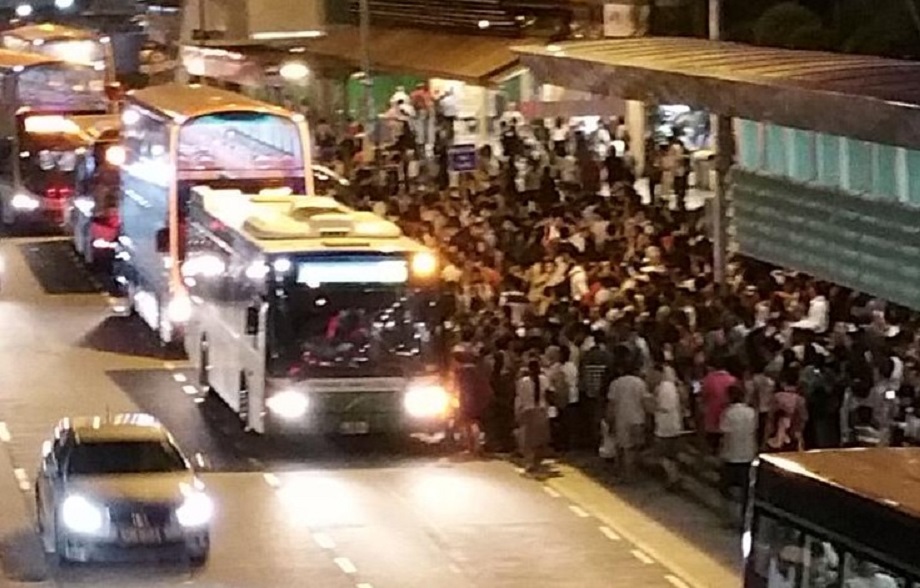
    1. Deploy the Terrexes to ferry people in times of another inevitable MRT disruption. More specifically, they could ferry the very old and very young to their next destinations. Have you seen the crunch that people get themselves into when trying to get on the bridging bus services? With the Terrexes, no one will dare get in their way.Disruption 1Disruption 2
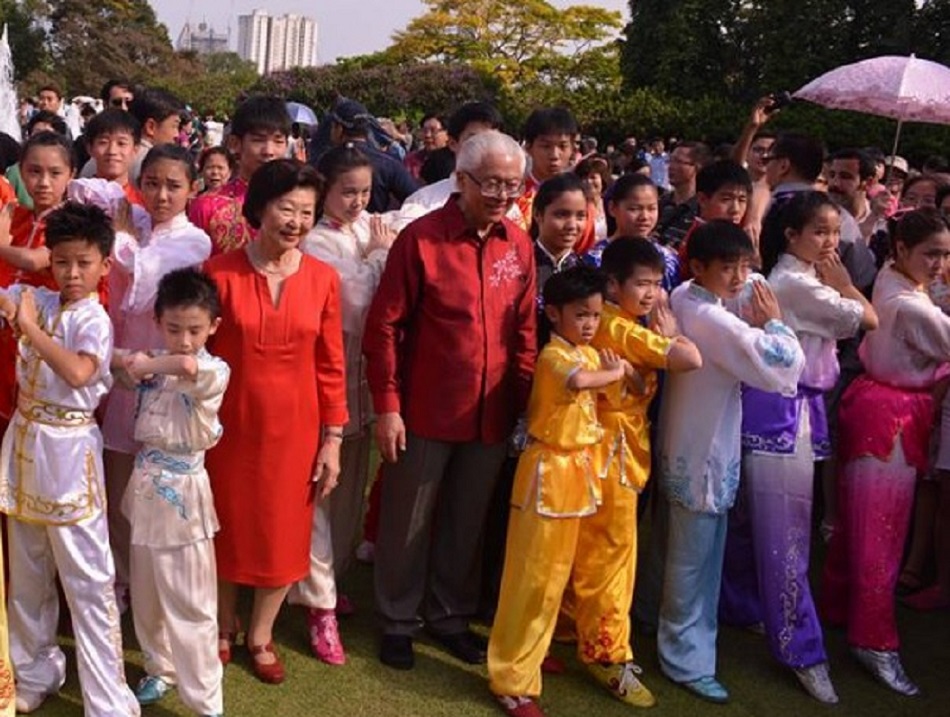
    2. Set them up to provide joy-rides at the Istana, at every public holiday open house. The Istana is sprawling. The children will love the adventure.Open House
    3. Display them in the Army Museum. The best way to learn and progress is to learn from mistakes made in history.Army Museum


    Any better ideas?


    Rilek1Corner


  • PRC Netizens Irked By Dr Mahathir’s Remarks On Forest City Project, Wants To Boycott Malaysia

    PRC Netizens Irked By Dr Mahathir’s Remarks On Forest City Project, Wants To Boycott Malaysia

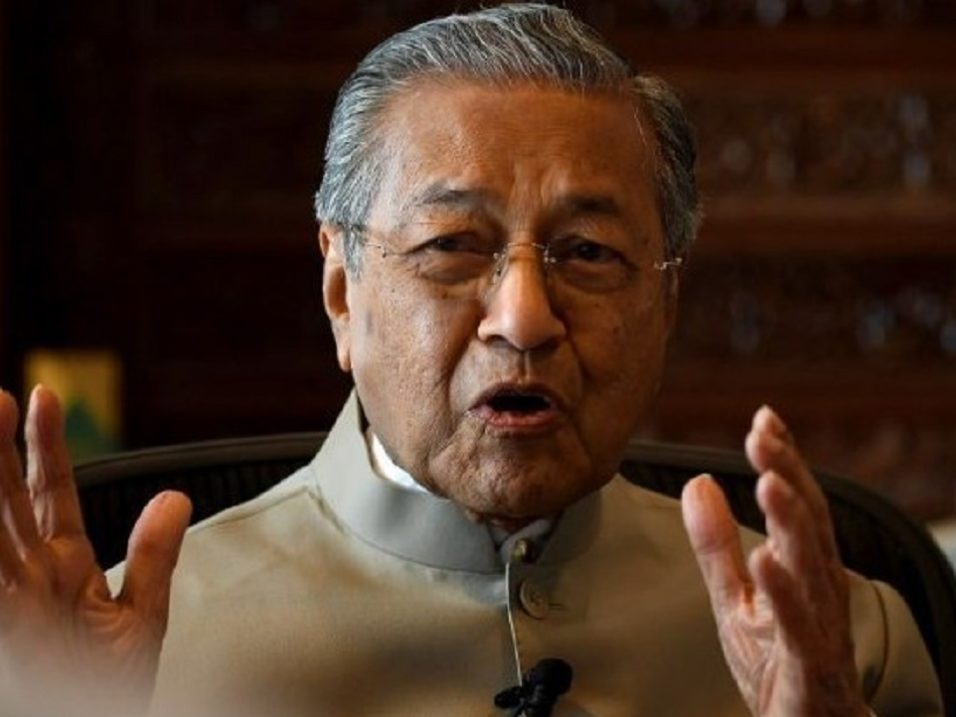
    BEIJING — Chinese netizens have criticised former Malaysian prime minister Mahathir Mohamad over his comments that China’s investment in the Forest City property project in Johor Baru is a threat to Malaysian sovereignty.

    “Being an old friend for over a decade, Dr Mahathir had turned on China. It’s a big deal,” influential state-run tabloid Global Times quoted netizen yuchundaxianglianzhuli as saying.

    “Shall we boycott Malaysia for this?” netizen jiemohu wrote on Sina Weibo.

    Writing in his blog, Dr Mahathir had attacked the Forest City project as a “foreign enclave”.

    “Much of the most valuable land will now be owned and occupied by foreigners,” noted the 91-year-old, who was current Malaysian premier Najib Razak’s former mentor and now one of his biggest critics.

    “In effect, (land occupied by the Forest City initiative) will become foreign land,” Dr Mahathir added.

    He also claimed that more than 700,000 Chinese nationals will be brought into Forest City, alleging that the Chinese citizens would be given identity cards to enable them to vote in the coming general election.

    The Chinese embassy in Malaysia has criticised Dr Mahathir’s remarks.

    In a statement released on its official website, the embassy said: “Somebody applauded Sino-Malaysian relations in office but fanned the flame of anti-Chinese sentiment after.

    “We can expose the lie behind claims that Chinese investment is stealing job opportunities from Malaysia.”

    Sultan Ibrahim of Johor has also reprimanded Dr Mahathir over his Forest City claims.

    “He is giving the impression that Johor is surrendering land to the Chinese and that we are giving up our sovereignty, comparing even how we gave up Singapore to the British, the sultan told The Star.

    Sultan Ibrahim also accused Dr Mahathir of fearmongering by playing racial politics that he said had no place in Johor.

    Forest City is a US$100 billion (S$143 billion) property development by Chinese firm Country Garden.

    The firm has partnered Esplanade Danga 88, an associate company of Kumpulan Prasarana Rakyat Johor, which is the southern state’s investment arm. The largest shareholder of Esplanade Danga 88 is Sultan Ibrahim.

    The 1,386ha Forest City encompasses the development of facilities for business, tourism, hotel, residence, services and others, built on four man-made islands in Iskandar Malaysia.

    Construction began in February last year and about 8,000 apartments have been sold, the company said.


    Source: www.todayonline.com

  • No Influx Of Chinese Nationals In Johor

    No Influx Of Chinese Nationals In Johor

    JOHOR BARU • Investments from China into Johor are part of a global trend and it does not make sense to say that there will soon be 700,000 Chinese nationals living in the southern state, said Johor Menteri Besar Mohamed Khaled Nordin.

    He made the remarks to rebut a claim by former prime minister Mahathir Mohamad that housing projects in Johor such as Forest City township will result in an influx of Chinese nationals into the state.

    Datuk Seri Khaled said China has become an economic powerhouse with a large middle class that has a strong appetite for property all over the globe, the Malay Mail Online news website quoted him as saying on Thursday.

    And Dr Mahathir, who was prime minister for 22 years, should understand the importance of foreign investments as he had flown all over the world to ask investors to put money in the country.

    “This is a global phenomenon and it behoves all parties, particularly the private sector, to attract investment from China and, specifically, to Johor. More so when Johor is just next to Singapore,” Mr Khaled said in a statement.

    “But it is wildly inaccurate to state that property… is only for the Chinese. What more when developers in Johor do not target only Chinese as their prospects.”

    Dr Mahathir, who now leads an opposition party, claimed in a speech late last month that a “gigantic city” being built in Johor would be peopled by Chinese nationals.

    He further claimed that he had heard that they would be given Malaysian identity cards to vote for Prime Minister Najib Razak’s ruling coalition.

    “This is the frightening story I heard, that there is an attempt to issue ICs to foreigners to support Najib in the next general election,” he said in a speech at an opposition rally last week, as quoted by the Malaysian Digest news site.

    “Johoreans, Malays or even local Chinese and Indians can’t fill up this gigantic city that can hold 700,000 people. Foreigners will be imported to fill these houses being funded by Chinese developers, to settle them into our community,” Dr Mahathir said.

    Rebutting the claim, Mr Khaled said the 1,386ha Forest City project, which is being built on four man-made islands, is a project lasting 30 years.

    “Marketing for residential properties in Forest City is not concentrated only in China but also in Australia, Middle East and other countries, and it is only offering 10,000 units,” he said, as quoted by Bernama news agency.

    “After 30 years, maybe there will be 700,000 foreigners in Johor but it is unlikely all of them will be Chinese nationals.”

    He added: “We, in Johor, do not want to be the backyard of Singapore. We want to develop on our own efforts, our capability, strength and on the position of Johor itself.”


    Source: www.straitstimes.com

  • Chee Soon Juan: Lee Hsien Loong’s Unstatesman-Like Behaviour Ruining Relations With China

    Chee Soon Juan: Lee Hsien Loong’s Unstatesman-Like Behaviour Ruining Relations With China

    It is clear that Singapore’s relations with China has deteriorated in recent years and LHL’s utterances have not helped. The couple of wisecracks he made – saying that all the Chinese people need to do was to turn on the tap if they wanted pork soup after pig carcasses were found in the rivers or get free smokes simply by opening windows because of the smog – were, to put it mildly, eyebrow-raising.

    Such humour, while one might expect from a stand-up comic, has to be off limits to a head of government. Does this even need to be pointed out?

    To make matters worse, Lee made these injudicious remarks in front of an American audience, a country that China sees as its intense rival, and drew much laughter. How do you think we would react if another country’s leader made some jokes about Singapore?

    And when matters came to a head regarding the South China Sea, Lee presumed to lecture China on the rule of law, forgetting his own abuse of the rule of law in Singapore. And when frustrated over the demise of the TPP, he lashed out that China was no more the middle kingdom. The tone-deafness defied belief.

    Would not such views have been better expressed behind the scenes? Did the jokes contribute to an already aggravated atmosphere?

    No one determines who we trade and build alliances with. Singaporeans will not be dictated to by any foreign power and we will meet any such challenge with united resoluteness.

    But when our prime minister deprecates other countries, he must be called out. To remain silent or, worse, call for unintelligent loyalty to him on such occasions is to endanger our country’s interests and jeopardise our people’s well-being.

    As PM, Lee must realise that what he says on the international stage impacts greatly on ordinary Singaporeans. Unstatesman-like remarks that harm our country’s international relations must stop.


    Source: Chee Soon Juan 徐顺全

  • Donald Low: Singaporeans Need To Get Facts Right On Singapore’s Role In China’s Economic Modernisation

    Donald Low: Singaporeans Need To Get Facts Right On Singapore’s Role In China’s Economic Modernisation

    The Singaporeans who think that the current kerfuffle with China shows that the Chinese government has forgotten that it was Singapore that inspired China’s economic modernization (beginning with Deng Xiaoping’s visit to Singapore in 1978) really need to get their heads (and their understanding of economic history) checked.

    First, the Chinese do not forget easily.

    Second, it is simply not true that Singapore’s development story was of great relevance for China. China’s development experience of the last thirty years has a lot more in common with Japan, South Korea and Taiwan’s experience: export-led industrialization through home-grown firms rather than MNCs, industrial policy aimed at developing indigenous capabilities rather than simply importing technologies from abroad, maintenance of tariff barriers (rather than the free trade that Singapore practised) for relatively long periods to benefit local companies, financial repression rather than a liberalized capital account, relatively weak rule of law, government-business relations that are quite cosy and corrupt, etc. All these practices are more reminiscent of China’s northeast Asian neighbors than of Singapore. So it’s simply not true that our development experience was an important role model for China; it’s delusional for us to think we are—then, or now.

    To the extent that the Chinese were interested in the Singapore experience at all, it has more to do with how the state maintained law and order, political stability and one party rule in an ostensibly democratic environment.


    Source: Donald Low