Tag: Rules

  • How Singapore Elected A President Without A Vote: Only One Eligible Candidate Thus Victorious By Default

    How Singapore Elected A President Without A Vote: Only One Eligible Candidate Thus Victorious By Default

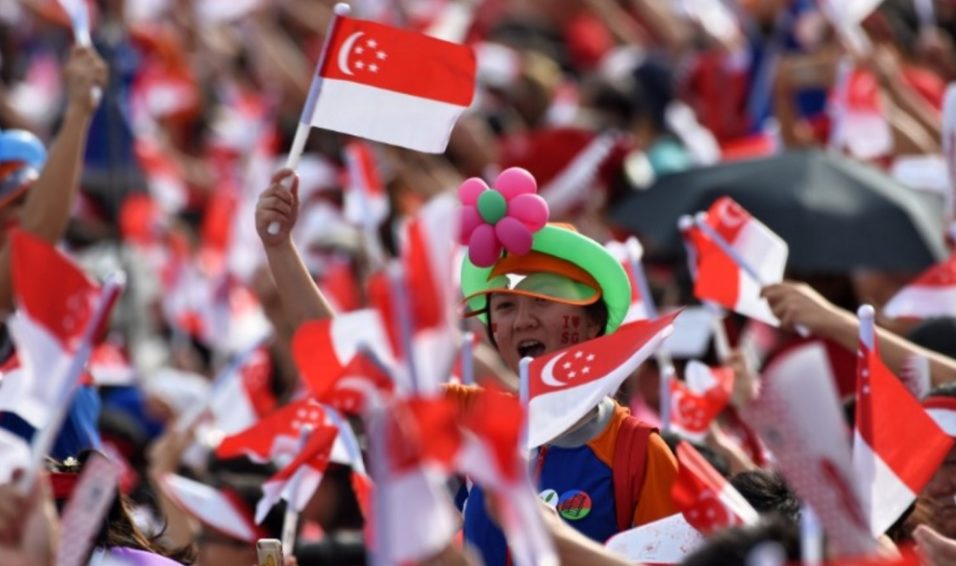
    Singaporeans were meant to go to the polls at the end of next week to vote for a new president, but they’ll no longer have the chance, with only one candidate qualifying for the race. Former Speaker of Parliament Halimah Yacob has emerged victorious by default, after other presidential hopefuls fell foul of new rules.

    “I can only say that I promise to do the best that I can to serve the people of Singapore and that doesn’t change whether there is an election or no election,” she told reporters Monday. What should be a moment of celebration — Halimah will be Singapore’s first female president — has proved contentious for several reasons and appears at odds with Singapore’s reputation as a technocratic and efficient city state. While the office of president is largely a ceremonial role in Singapore, he or she has power to veto some of the government’s decisions, for example in fiscal matters that touch on the country’s reserves, or key appointments in the public service. “The only beneficiaries from this reserved presidential election are Halimah Yacob and her team, as well as Singapore’s opposition, which now has a new line of attack against the PAP (People’s Action Party). The rest of Singapore has suffered,” Sudhir Vadaketh, a Singapore author and commentator, told CNN. Halimah was, until recently, a loyal member of the ruling PAP, which dominates Singaporean politics.
    “All Singaporeans are unhappy that meritocracy and electoral fairness, core Singaporean values, have been eroded to fulfill perceived political goals.”

    Racial politics
    In this election, for the first time, candidates to become Singapore’s president could only come from one racial group: Malays. It’s a radical policy that would likely prove divisive elsewhere but it’s one the Southeast Asian nation said was necessary to ensure better representation among the country’s three main races: Chinese, Indian and Malay.
    “It shows we don’t only talk about multi-racialism, but we talk about it in the context of meritocracy or opportunities for everyone, and we actually practice it,” Halimah told The Straits Times newspaper, before declaring her intention to contest the election.

    The new rules also set stricter criteria on the background of candidates. For example, those from the private sector are required to be a chief executive of a company, with at least $370 million in shareholders’ equity. The two other Malay presidential hopefuls — businessmen Salleh Marican and Farid Khan — failed to gain Certificates of Eligibility from the Presidential Elections Committee on these grounds, although the Presidential Elections Committee could have exercised its discretion to allow them to run for the office. Critics charge that the new rules are a way for the government to stage-manage the election and prevent opponents from running.

    In August, Singapore’s appeal court ruled against a legal challenge to the new system by ruling party lawmaker turned critic, Tan Cheng Bock. Tan had narrowly lost the previous presidential election in 2011 to Tony Tan, a former deputy prime minister widely recognized as the government-favored candidate, and planned to run again. Singapore’s population is 74% Chinese, 13% Malay, 9% Indian and 3.2% are the ambiguously named “Others.”

    New rules
    The announcement late Monday by the Elections Department that only one candidate had qualified marks an underwhelming conclusion to a controversial election carried out under changes to the elected presidency system in Singapore voted through Parliament earlier this year. Specifically, the amendment states that an election will be reserved for candidates from a particular racial group if the previous five elections have not produced a president from that racial group. In Singapore, it’s dubbed a “hiatus-triggered model.”

    “Every citizen, Chinese, Malay, Indian or some other race, should know that someone of his community can become President, and in fact from time to time, does become President,” said Lee Hsien Loong, Singapore’s prime minister, last November before the new rule was introduced. Singapore hasn’t had a Malay president since the country’s first President Yusof Ishak, who served as head of state from 1965 to 1970. Subsequent presidents have been from the Eurasian, Chinese and Indian communities.

    Debate
    The election has also triggered debate on who is Malay and raised questions over how an individual’s race can be determined. Candidates were required to be assessed by a five-member community panel to certify their race as Malay as part of the qualifying criteria. Halimah, who has successfully stood as a Malay candidate in previous general elections, is reported to have an Indian father. Moreover, Salleh Marican also has an Indian father, while Farid Khan’s identity card lists his race as “Pakistani,” the government-controlled Straits Times reported. What’s more, critics point out that, if the goal really was to improve racial representation and justice, more meaningful measures could be adopted.

    The Chinese form the majority in Singapore and often dominate in positions of power and influence. Singapore’s prime minister has always been Chinese, and it was only in 2015 that the country finally had more than one Malay minister in the Cabinet at one time. The Malay community typically have lower incomes and grapple with institutional discrimination, such as in the armed forces.

    “While reserving the presidential elections for only Malays is a highly symbolic gesture, there is a need to do more for concrete issues faced by the Malay community such as discrimination, lack of social mobility and relative poverty,” lawyer Fadli Fawzi told CNN. “I think that it is more important to focus on removing barriers and improving the lot of the man on the street rather than reserving slots for one or two individuals.”

    Speaking at a forum on Friday, Chan Chun Sing, a minister in the Prime Minister’s Office, acknowledged the unpopularity of the new system, saying that it would be a “hard journey” to convince Singaporeans that the change was necessary. He denied accusations that the amendments were made for political gain. “We are prepared to pay the political price, because we think the future of our country is much more important than any political capital that we may have,” he said.


    Source: http://edition.cnn.com
  • SDP On EP Walkover: PAP’s Contempt For Our Constitution And Our Flag Must Be Roundly Condemned

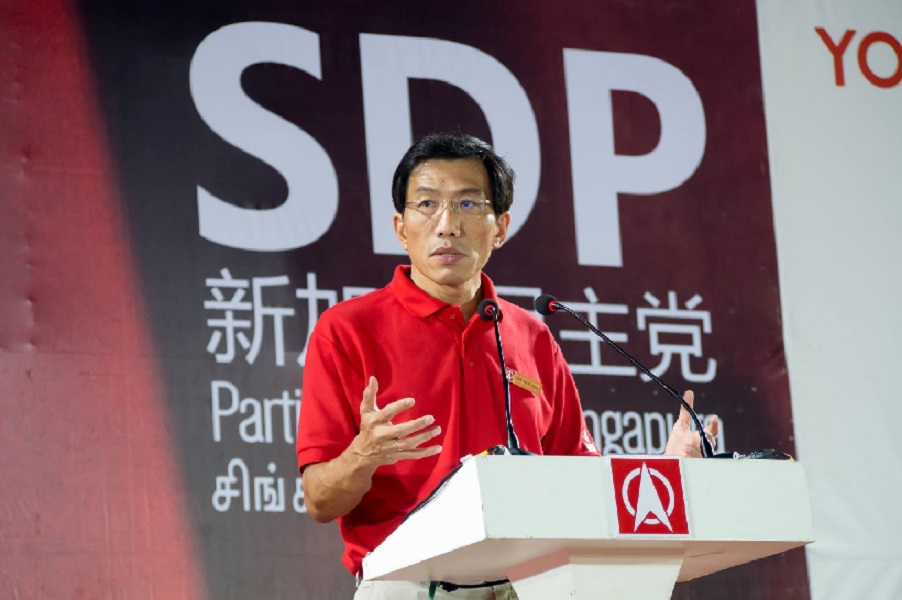
    SDP On EP Walkover: PAP’s Contempt For Our Constitution And Our Flag Must Be Roundly Condemned

    Singapore Democrats

    The walkover of the Presidential Election comes as no surprise. The PAP had changed the rules and revised the criteria of the Elected Presidency to pave the way for Ms Halimah Yacob to assume the office.

    Nevertheless, this is a sad day for Singapore. The rule of law has been mercilessly mocked and denigrated. The contempt the PAP has shown for our constitution and our flag which symbolises the ideals of democracy, unity and progress must be roundly condemned.

    By doing what it has done, the PAP has shown yet again that its only goal is to strengthen its grip on power. That the goal is detrimental to the interests and progress of Singapore is of secondary concern to the party.

    It is bad enough that the PAP has manipulated the system to get one if its own to become the president. That it has dangerously played the race card and divided the people to achieve this must be of grave concern to all Singaporeans.

    The SDP protests this outcome in the strongest manner possible.


    Source: http://yoursdp.org

  • The 10 Golden Rules On Ethics And Social Etiquette From Surah Hujurat

    The 10 Golden Rules On Ethics And Social Etiquette From Surah Hujurat

    The Holy Quran was sent down in order as a huda, a righteous guidance for people to learn from and to utilise as a means to gain closeness to Allah (swt). One example of the best of guidance comes from Chapter 49 of the Quran, Surah Hujurat, which came down to the Prophet in the city of Medina. In this short Chapter, (containing on 18 verses) Allah (swt) instructs us on how to deal with one another with the best social etiquette. Here are 9 examples from this Chapter:

    1. Fa Tabayanu

    يَـٰٓأَيُّہَا ٱلَّذِينَ ءَامَنُوٓاْ إِن جَآءَكُمۡ فَاسِقُۢ بِنَبَإٍ۬ فَتَبَيَّنُوٓاْ أَن تُصِيبُواْ قَوۡمَۢا بِجَهَـٰلَةٍ۬

    “Oh you who believe; if an evil-doer comes to you with a report, look carefully into it, lest you harm a people in ignorance.” [Verse 6]

    Here the believers are instructed to look carefully into the news and reports that are given to us, in order to distinguish right from wrong, ahead of disseminating it to others. If we don’t do this, it becomes easy to distribute false information and this can harm those around us who may take the reports at face value.

    2. Fa Aslihu

    وَإِن طَآٮِٕفَتَانِ مِنَ ٱلۡمُؤۡمِنِينَ ٱقۡتَتَلُواْ فَأَصۡلِحُواْ بَيۡنَہُمَا‌ۖ

    “And if two parties of the believers quarrel, make peace between them.” [Verse 9]

    This one is pretty self-explanatory. If there is a group who is quarreling, taking the initiative to resolve the problems between them is something that is not only rewarding in this life but also in the hereafter. The same verse continues to discuss justice:

    3. Wa Aqsitu

    فَإِن فَآءَتۡ فَأَصۡلِحُواْ بَيۡنَہُمَا بِٱلۡعَدۡلِ وَأَقۡسِطُوٓاْ‌ۖ إِنَّ ٱللَّهَ يُحِبُّ ٱلۡمُقۡسِطِينَ

    “Then if it returns [the quarrel] make peace between them with justice and act equitably; surely Allah loves those who act equitably.” [Verse 9] 

    Again, it reminds us to keep the peace but to ensure that one is fair and just in the resolving of this issue. Further to this, it serves as a reminder as to the qualities that Allah (swt) wishes for the believers to have and in this case, it is being equitable.

    4. La Yaskhar

    يَـٰٓأَيُّہَا ٱلَّذِينَ ءَامَنُواْ لَا يَسۡخَرۡ قَوۡمٌ۬ مِّن قَوۡمٍ عَسَىٰٓ أَن يَكُونُواْ خَيۡرً۬ا مِّنۡہُمۡ

    “Oh you who believe; let not (one) people laugh at (another) people, perchance they may be better than them.” [Verse 11] 

    It is often we look down on people as we believe that they are lesser than us in some way. Here we are instructed not to laugh or mock others, especially since there is a chance that they are better than us in some way or another. This verse then continues to discuss name calling:

    5/6. Wa La Talmizzu, Wa La Tanabazu

    وَلَا تَلۡمِزُوٓاْ أَنفُسَكُمۡ وَلَا تَنَابَزُواْ بِٱلۡأَلۡقَـٰبِ‌ۖ

    “And do not find fault with your own people, nor call one another nicknames.” [Verse 11] 

    This leads on from the previous part and reinforces the fact that name calling may be a side-effect of putting yourself on a pedestal ahead of others. It also reminds us to avoid doing one of the things that is extremely rife in a good many communities, and that is finding fault within our own ranks.

    7. Ijtanibu Katheeran Minal Than

    يَـٰٓأَيُّہَا ٱلَّذِينَ ءَامَنُواْ ٱجۡتَنِبُواْ كَثِيرً۬ا مِّنَ ٱلظَّنِّ إِنَّ بَعۡضَ ٱلظَّنِّ إِثۡمٌ۬‌ۖ

    “Oh you who believe; avoid most of suspicion for surely, suspicion in some cases is a sin.” [Verse 12]

    Many times we tend to base our ideas on people on sneaking suspicions on who they are rather than who they truly may be. Allah (swt) also warns us that at times, suspicion is akin to a sin.

    8. Wa La Tajassasu

    وَلَا تَجَسَّسُواْ

    “And do not spy on one another.” [Verse 12] 

    This one really is a no-brainer but is something so incredibly vital to so many of our modern day surveillance states. With this, Alla (swt) reminds us that for the best social etiquette, one should avoid it.

    9. Wa La Yaghtaaba Ba’thukom Ba’th

    وَلَا يَغۡتَب بَّعۡضُكُم بَعۡضًا‌ۚ أَيُحِبُّ أَحَدُڪُمۡ أَن يَأۡڪُلَ لَحۡمَ أَخِيهِ مَيۡتً۬ا فَكَرِهۡتُمُوهُ‌ۚ

    “And do not backbite one another. Does one of you like to eat the flesh of his dead brother, and you abhor it.” [Verse 12]

    The Quran here brings forth a comparison to highlight how heinous the act of backbiting is, and likens it to devouring the flesh of your own brother. For a functioning society and for people of high morals, one should not backbite.

    10. Inna Akramakom ‘ind Allah Atqaakom

    إِنَّ أَڪۡرَمَكُمۡ عِندَ ٱللَّهِ أَتۡقَٮٰكُمۡ‌ۚ

    “Surely the most honourable of you with Allah is the one among you who is most careful of his duty.” [Verse 13]

    The start of this verse is usually cited when it comes to discussion on marriage and equality, reminding people that they were created of a male and a female and into tribes and families so that we may get to know one another. The verse then continues to highlight one of the most important verses on equality, reminding us that nothing puts one human over the other in the eyes of Allah, not gender, faith, tribe or anything in between; the ones who are most honourable in the eyes of the Lord is one who carries himself with taqwa, piety, and God consciousness.


    Source: The Muslim Vibe