Tag: SG50

  • Pioneer Estate Now A Ghost Town

    Pioneer Estate Now A Ghost Town

    Singapore’s first 10-storey flats, colloquially known as “chap lau chu” in Hokkien, are seven blocks of brown and beige-coloured flats in Commonwealth Drive.

    Built in the early 1960s, this pioneering “mini estate” introduced Singaporeans to the concept of a self-contained “public housing precinct” with several tall housing blocks next to a food centre.

    Decades later, the once-bustling neighbourhood lies vacant.

    After the area was earmarked for redevelopment in 2008, residents of blocks 74 to 80 and businesses cleared out by early last year.

    The abandoned estate has sat in limbo since, awaiting the wrecking ball which is expected to strike later this year.

    Entrances to the stairways of flats are gated and padlocked to keep away loiterers.

    An eerie silence hangs in the aisles of shuttered provision stores and the odd childcare centre or barber shop below the blocks.

    In the courtyard lies a worn-out playground and pavilion that were once a distraction to children and their elderly caregivers on many an afternoon.

    “It has an eerie vibe, especially when night falls and you see the leaves scattered all over the desolate streets,” said Mr Jason Seow, 45, a former Tanglin Halt resident who returned to photograph the place before it is torn down.

    As the nation relentlessly renews itself, more housing estates have been left deserted.

    These are curious places, caught in between yesterday and tomorrow, with everything intact but its inhabitants gone.

    Over the last decade, 19 projects have been completed under the Housing Board’s Selective En bloc Redevelopment Scheme. This means that residents in all these 19 areas have vacated their flats.

    However, the old blocks of flats in seven of these sites are either still in various stages of demolition or set aside for interim use or conservation today.

    The ghost town in Commonwealth Drive has become a spot for some to linger.

    On a warm weekday evening, two Chinese construction workers cut through the blocks to get groceries from the supermarket across the road.

    On the way back, they went to sit on the concrete floor at the fringe of Block 76, shelling peanuts and drinking rice wine.

    They later used a small sandy track that winds through the dense vegetation to get back to their nearby worksite.

    Security supervisor Tong, who declined to give his full name, found himself early for his night shift that same evening and sat down at a stone table for a rest.

    “This is a special place because there’s no one here and the quiet clears my mind,” said the 65-year-old.

    After 20 minutes, he left via another shortcut that office workers use to pass through the empty estate to get to Biopolis and Commonwealth MRT station.

    Hollowed-out neighbourhoods like these can also become hot spots for crime. In April, a researcher was slashed in the dim and derelict shortcut at night.

    Her employer, the Agency for Science, Technology and Research (A*Star), has advised staff against using the public footpath.

    Surveillance cameras have since been installed there by JTC Corporation. The Housing Board said it conducts inspections every day to “deter unauthorised entry into the vacated site”.

    The seven blocks are part of the authorities’ biggest housing redevelopment project to date, with 3,480 flats in 31 blocks in Tanglin Halt Road and Commonwealth Drive slated for demolition.

    Affected residents have the option of moving to new flats in the nearby Dawson estate.

    Residents said the abandoned estate’s destruction seems inevitable, given that its once-distinctive “10-storey” look is now overshadowed, literally, by modern skyscrapers with futuristic names such as Galaxis, Sandcrawler and Fusionopolis.

    Yet one stubborn presence continues to haunt the forlorn corridors – karung guni man Chua Thiam Seng, 62.

    The long passageways below the flats are strewn with cardboard boxes and cans that he collects from occupied flats and coffee shops across the road.

    “This is my office,” he said with a toothless grin. Mr Chua has been a rag-and-bone man in the neighbourhood for the past 20 years.

    He claims to have taken up HDB’s offer of a new flat nearby after the relocation exercise, but he still sleeps in a little corner on cardboard beneath his former block on most nights.

    He added that it was for convenience, but reporters have spotted him cleaning up at a nearby market many mornings.

    The bachelor reminisced about the old days when the close-knit community would gather in coffee shops or outside the lottery shop to exchange gossip.

    He lamented: “They don’t construct flats like these any more and though my neighbours have moved nearby, they are not as close as before.”


    Source: http://news.asiaone.com

  • Separation 1965: The Tunku’s ‘Agonised Decision’

    Separation 1965: The Tunku’s ‘Agonised Decision’

    Did Singapore ask to leave Malaysia of its own accord or was it forced out against its will?

    Fifty years after Singapore’s separation from Malaysia, the question is still moot. This review of the events leading to the separation seeks to throw light on the conundrum.

    Singapore separated from Malaysia on Aug 9, 1965, by a constitutional fiat that formalised an agreed settlement between the state of Singapore and the federal government.

    The act of separation was effected by the Malaysian Parliament adopting an Amendment to the Malaysian Constitution and ratifying an Agreement on Separation signed by the governments of Singapore and Kuala Lumpur. It was put into action by a Proclamation of Independence of Singapore by then Prime Minister Lee Kuan Yew that was read over Radio Singapore.

    That agreement was negotiated by leading members of the two governments to bring about an amicable solution to an increasingly bitter and intractable conflict between their ruling parties.

    However, it was then Malaysian Prime Minister Tunku Abdul Rahman who initiated the move to “hive off” Singapore from Malaysia.

    As he explained at a press conference after the passage of the Separation Act: “It was my idea that Singapore should leave the federation and be independent. The differences between the state government of Singapore and the central government of Malaysia had become so acrimonious that I decided that it was best that Singapore went its own way. Otherwise, there was no hope for peace.”

    This confirms that Singapore was forced to leave Malaysia at the Tunku’s behest. It was not Singapore that sought to secede or initiated the negotiation to separate from Malaysia, as some scholars seek to argue.

    Indeed, in the months leading to its constitutional eviction, Singapore had been warned by Malaysian leaders against seeking secession or a partition of Malaysia between the former states of Malaya and the new states – Singapore, Sarawak and Sabah, as well as Penang.

    That partition had been proposed by Singapore as an alternative constitutional arrangement for a looser confederation. The proposal had developed from the call made by political parties grouped in the Malaysian Solidarity Convention for a “Malaysian Malaysia” that would ensure equality among all the states and ethnic groups in the country.

    This dual demand infuriated the ruling Alliance in Malaysia, especially the dominant Umno. Sections of the ruling parties called for strong retaliation against Singapore’s ruling People’s Action Party (PAP), which they accused of treason for seeking secession. Some “ultra nationalists” called for the arrest of Mr Lee and even imposing direct central rule on Singapore.

    As the conflict of words raged and Malay passions were roused, Malaysia’s senior leaders feared that violence might break out, leading to racial clashes across the whole country.

    Tunku’s surgical solution

    It was against this deteriorating political situation that the Tunku began to consider a surgical solution to this intractable problem, to cut the Gordian knot, as it were.

    The Tunku had left for London in mid-June for a Commonwealth Prime Ministers’ Conference.

    I interviewed him on behalf of Radio Television Singapore (RTS) before his departure at the Paya Lebar International Airport, but he declined to say anything about the altercations between Malaysian politicians and Singapore leaders.

    In London, the Tunku was hospitalised with shingles and he thought long and hard about the problems with Singapore. His conclusion: “There would be no end to the bickering with Singapore except perhaps if Mr Lee Kuan Yew is made prime minister in the real sense of the word.”

    Indeed, the Tunku asked Minister Lim Kim San, who had gone to London with him, to tell Mr Lee (“your PM”) that “he can attend the next Prime Ministers’ Conference on his own”.

    That was the first indication by the Tunku that he would give Singapore independence, Mr Lim later said, although he missed the implication of the Tunku’s cryptic remark at the time.

    The Tunku wrote to his deputy, Tun Abdul Razak, telling him how he felt about the relations with Singapore and to talk things over with Mr Lee. Tun Razak met Mr Lee on June 29, but found it impossible to reach any meeting of minds. In Mr Lee’s recounting of the meeting in his memoirs The Singapore Story, Tun Razak went back on his previous agreement to consider a looser arrangement for Singapore and insisted on total capitulation in political activity, defence, foreign affairs, security and finance.

    However, as recounted by Dr Goh Keng Swee, when he met Tun Razak and Dr Ismail (Abdul Rahman), the Home Affairs Minister, in Kuala Lumpur on July 13, Dr Goh proposed that Singapore leave Malaysia to become an independent state. This proposal jived with the Tunku’s idea for Singapore to leave the federation.

    At a second meeting on July 20, Dr Goh told Tun Razak and Dr Ismail that Mr Lee was in favour of secession of Singapore and it should be done quickly, by Aug 9 when Parliament was to reconvene.

    On his return from London on Aug 5, the Tunku was asked by pressmen at the airport, including me, if he would be meeting Mr Lee to discuss the political differences raging between the two sides.

    His reply was non-committal, almost nonchalant, saying he would meet Mr Lee if there was anything to discuss. Little did we know that serious talks between Tun Razak, Dr Ismail and Dr Goh were going on in Kuala Lumpur, with Mr Lee in the Cameron Highlands consulted, on the total hiving off of Singapore from Malaysia.

    Tun Razak gave a full report to the Tunku on his return home. After Tun Razak and Dr Ismail had negotiated the terms of separation with Dr Goh and Mr E.W. Barker, the Tunku held an emergency meeting of his core Cabinet members on Aug 6, and approved the draft Bills to amend the Constitution and get Singapore to withdraw from the federation.

    On Aug 7, the Tunku said, the “big shots” of the PAP (meaning Mr Lee), called at his residency and signed the Separation Agreement, while other members of the Singapore Cabinet signed it in Singapore or at Singapore House in KL.

    Even at the last minute, Mr Lee asked the Tunku if he really wanted to break up Malaysia, which they had spent years to bring about. Would it not be wiser to go back to their original plan for a looser federation or confederation?

    But the Tunku demurred. “There is no other way out. I have made up my mind. You go your way and we go our own way,” Mr Lee recalled him saying.

    Secrecy had to be of the essence on both sides of the Causeway for fear of opponents of the separation reacting with violence to the agreement.

    Special Parliament session

    The first inkling we in RTS had that something was happening was the departure of several ministers from Singapore to KL on Aug 7. I was instructed to fly to KL on Aug 8 to cover the special session of Parliament on Aug 9, a Monday.

    I was joined in KL by fellow reporters Lim Kit Siang and Fuad Salim. In Parliament, we found only Mr Devan Nair, PAP MP for Bungsar, present. Some of the Singapore MPs were at Singapore House. Mr Nair and I listened to the Tunku’s speech moving the Separation of Singapore Bill on a certificate of urgency, via the in-house sound system in his office.

    When the session was adjourned, we learnt the Bill had been passed without opposition, although Umno Secretary-General Syed Jaafar Albar had left the chamber before the vote and expressed his disagreement with the separation. He, like the other ultras, wanted to maintain Malay rule over Singapore, forcibly if need be.

    When Separation was announced by the Tunku over Radio Television Malaya and the Proclamation of Singapore’s Independence read over Radio Singapore at 10am, Singaporeans received the news with a mixture of relief, regret and foreboding, although some quarters in Chinatown let off firecrackers in celebration.

    And when Mr Lee went on Radio Television Singapore to explain the circumstances leading to the separation, it was clear that he had been forced to accept Singapore’s eviction from Malaysia.

    It was, he said, a moment of anguish for him, having devoted his whole life to bringing about a united Malaysia, whose people were bound by ties of kinship, geography and history.

    He and Dr Goh had negotiated the terms of Separation to ensure that Singapore would be truly independent while continuing to have access to the water supply from Johor for its survival.

    And Singapore would be on its own for all its multiracial population, living in peaceful amity with the rest of Malaysia. Thus did Singapore achieve independence while avoiding a forcible integration in a Malaysia riven by interracial tension and hostility from a communal political system.

    That is the “coup” that Mr Lee and his PAP colleagues carried out for the people of Singapore, to achieve an independent and sovereign Singapore.

    However, it was the Tunku who played the decisive role in this saga.

    It was his agonised decision to let Singapore go that tipped the scales in favour of separation. Otherwise, the fracas between the state and central governments could well have become more intense and impossible to resolve, with no way out but an inevitable forceful denouement, that is, the arrest of Mr Lee and his senior lieutenants and the imposition of direct federal rule by the central government on Singapore.

    The Tunku was magnanimous in telling Mr Lee to leave Malaysia. If there is one person that Singapore should thank for its independence, it is Tunku Abdul Rahman Putra, the first prime minister of Malaysia.


    •The writer, Mushahid Ali, a senior fellow at the S. Rajaratnam School of International Studies, Nanyang Technological University, was a reporter with Radio Television Singapore from 1963 to 1966 and later with the Ministry of Foreign Affairs from 1970 to 2001.


    Source: www.straitstimes.com

  • Elections Department Announces Changes To Elections-Related Processes

    Elections Department Announces Changes To Elections-Related Processes

    The Elections Department (ELD) on Thursday (Aug 20) announced a series of revisions to some elections-related processes, “as part of ongoing efforts to update and enhance election processes”.

    Increase in Parliamentary Election Expenses Limit

    To account for inflation, the maximum spending limit will be raised from S$3.50 to S$4.00 for every voter on the register of electors for the electoral division in which a candidate is seeking election to be a Member of Parliament, the ELD said.

    “The law imposes a ceiling on a candidate’s election expenses to ensure a level playing field. Spending in excess of the maximum amount in the law is an illegal practice.”

    Maximum number of posters and banners in Electoral Divisions

    A maximum number of posters and banners that can be displayed is set for each candidate or group of candidates contesting in an electoral division. In past elections, candidates were provided this maximum number after the close of nomination proceedings (on Nomination Day).

    “To better facilitate candidates’ planning, ELD has published on its website in advance the formulae to compute the maximum number of posters and banners for each electoral division,” the department said.

    The maximum number of posters and banners allowed is:

    1 poster to every 50 electors in the register (rounded to nearest 100), subject to minimum of:

    • 500 per SMC,
    • 2,000 per 4-MP GRC,
    • 2,500 per 5-MP GRC, or
    • 3,000 per 6-MP GRC.

    1 banner to every 5,000 electors in the register (rounded to whole
    number), subject to minimum of:

    • 5 per SMC,
    • 20 per 4-MP GRC,
    • 25 per 5-MP GRC, or
    • 30 per 6-MP GRC.

    Closer placement for the display of posters and banners

    Candidates are not allowed to display posters and banners within a designated radius from a polling station, to minimise undue influence on voters.

    As there has been a significant increase in the number of polling stations to improve voter accessibility, the current 200-metre prohibition zone has resulted in limited areas for the legitimate display of posters and banners, especially in built-up residential estates, the ELD said.

    “Hence, the radius of the prohibition zone for the display of posters and banners will be reduced from 200 to 50 metres.”

    Malay Community Committee and Indian and Other Minority Communities Committee

    Every group of people who wish to stand for parliamentary election in a group representation constituency (GRC) is required to have at least one candidate belonging to either the Malay community, or the Indian and other minority communities.

    In addition to the nomination paper and Political Donation Certificate, the group is required to produce a Certificate of the Malay Community Committee (MCC) or a Certificate of the Indian and Other Minority Communities Committee (IOMCC) to the Returning Officer on Nomination Day, the ELD said.

    To be issued the certificate, the person must apply to the appropriate committees by submitting the completed forms (hardcopy) to the Elections Department.

    Ballot Paper to include candidates’ photos

    To make it easier for voters, especially the elderly, to identify the candidates they wish to vote for, candidates’ photos will be included in the ballot papers for the next General Election, ELD announced.

    The new ballot papers will be larger to accommodate the photos.


    Candidates’ photos on the ballot papers were introduced for the first time at the 2011 Presidential Election, garnering generally positive public feedback.

    Other format changes to help voters mark their choices clearly include white boxes against a darkened background, and wider gaps between the boxes to mark “X” to prevent voters from marking across boxes of different rows.

    Details of the format changes will be made known closer to Polling Day of the General Election.

    CHANGES REQUIRE CANDIDATES TO BE VISIBLE TO VOTERS: ANALYST

    Political analyst Eugene Tan, an Associate Professor at the Singapore Management University’s School of Law, said the changes would require candidates to be visible to the voters.

    “That just means having to walk the ground, not just during the hustings but also in between elections. I think this will help the candidates be more recognisable, and I think that is very important because you are choosing a representative to represent you in Parliament and I think it’s important that the candidates are people who are familiar with the issues, and with the voters,” he said.

    “I think having the photos on the ballot papers would also remind voters as to who precisely they are voting for. In the past, there’s been a lot of reliance on the party name, party logo – but I think with this change, it’s not just the party that matters, but also the candidates, because ultimately it’s also about putting in place people in Parliament,” he added.

    When asked if the change will benefit the incumbents since their posters and banners are displayed in their constituencies, Assoc Prof Tan said the change would be benefit the People’s Action Party because “of the fact that they are represented in most constituencies”.

    “But it will also benefit any other party that conscientiously walks the ground in between General Elections,” he added.

    “I see the changes as an attempt to raise the standards – trying to ensure that people do not just vote for the parties, but also for the candidates. I think it is important that the two go hand in hand,” Assoc Prof Tan said.


    Source: www.channelnewsasia.com

  • The Most Cringe-Worthy, Poorly Thought Out Music Video Dedicated To SG50

    The Most Cringe-Worthy, Poorly Thought Out Music Video Dedicated To SG50

    Singlish
    Good grief, just look at this dreadfully thought-up video. Truly, our Gods have abandoned us — these kids are the actual future generation of Singapore.

    The video claims to be a “featurette film celebrating Singaporean lingo”, and thus it already wins the award for the most disconnected motif. What in the world do 50 supercars, a troupe of dancing millennials and a whole cavalcade of cleavage have to do with the patois adopted by everyday Singaporeans?

    Let’s break it down.

    That’s cool, you mentioned all the languages spoken by our people. But where’s the actual racial diversity in this video?

    Nope, nope, nope. Singapore is, and will not be represented by a private jet in a private hangar heralded by youths donning overpriced street-formal wear.

    This is giving us a very confusing boner.

    “WALAO EH. You go order your fifth Ferrari, you bojio me”

    *Disclaimer: Not actual heartland

    *Still not actual Pasir Ris heartland

    You love colloquial Singaporean English like how you love flaunting your luxury supercar that only 17% of Singaporeans can afford?

    Who the fuck wrote these lyrics…

    Singapore experienced a brief millisecond of tremor as thousands of our pioneers rolled in their graves. Hashtag Godawful.

    You spelled “cringeworthy” wrong, bro.

    Roll credits. Well-intentioned; piss poor execution. Try again in the next 50 years.

    Source: http://singapore.coconuts.co
  • #SG50: A Changing Singapore Questions Its Miracle

    #SG50: A Changing Singapore Questions Its Miracle

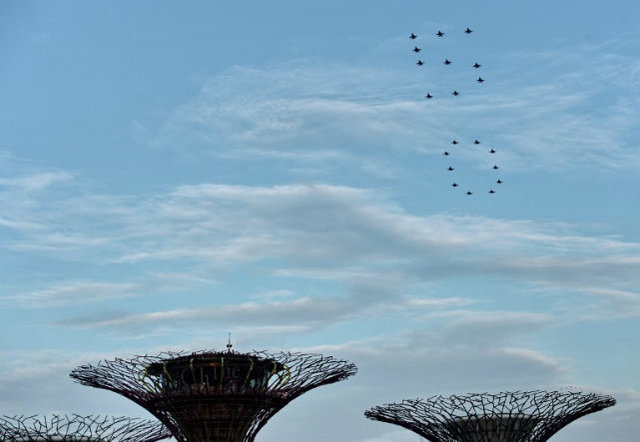
    The red and white flags are everywhere. Military planes form the number 50 in the azure skies above the magnificent Marina Bay Sands. The Merlion proudly stands as tourists and locals snap the obligatory selfie on this special occasion. It is Singapore’s birthday, but not everyone is on party mode.

    “We work, work, work. Very stressed. Everything expensive, nothing free lah. This island is for rich people, not poor people,” said one “uncle,” the term Singaporeans use to refer to taxi drivers and elderly men.

    It is a creeping sentiment that contrasts with the splashy parade and fireworks on the city-state’s 50th independence day on Sunday, August 9. As Singapore’s government trumpets the third-world to first-world catchphrase, some of its citizens point to inequality, glitches in the train system, and the growing competition with foreigners for jobs and space. (READ: #SG50: Foreign workers less welcome in Singapore?)

    Along with the celebration is an anxiety that the success that drove the Southeast Asian nation to the top of global economic rankings will gradually taper off.

    While the late strongman Lee Kuan Yew’s Singapore valued economic growth, a younger, well-heeled generation of Singaporeans is questioning the same policies that brought the country prosperity, and the costs of its fairytale-like transformation. Where is this shifting Singapore headed?

    GRAND CELEBRATION. The Republic of Singapore Air Force fighter jets fly in a 50 formation over the Garden by the Bay's Supertrees during a preview for the 50th Singapore National Day celebration on August 1, 2015. Photo by Roslan Rahman/AFP

    GRAND CELEBRATION. The Republic of Singapore Air Force fighter jets fly in a 50 formation over the Garden by the Bay’s Supertrees during a preview for the 50th Singapore National Day celebration on August 1, 2015. Photo by Roslan Rahman/AFP

    Generation gap

    The Singapore of the 21st century is often referred to as a victim of its own success.

    After the immigrant city was expelled from Malaysia in 1965, its founding fathers headed by Lee led its transformation into a modern metropolis. Obsessed with vulnerabilities like the lack of land and water, a central, paternalistic government prioritized economic security by providing public housing, education, and infrastructure.

    Yet this model focusing on material wellbeing led to more sophisticated demands.

    Kenneth Paul Tan, vice dean at the Lee Kuan Yew School of Public Policy, partly attributes the discontent to a generational gap.

    “An earlier generation might have felt very grateful, maybe more compliant but younger Singaporeans did not grow up like that. They were born into more affluent situations. The efficiency, sanitation were there. They don’t compare ourselves to cities doing badly. They compare ourselves to cities doing very well. So expectations are high for this government.”

    Despite being in a wealthy, high-tech metropolis, Singapore’s workers rank as the unhappiest in Asia, and have one of the longest work hours in the world. The hub for finance is also the most expensive in the globe, with a rising cost of living.

    Economist Donald Low, also with the Lee Kuan Yew School, said that social mobility is a key concern as the population ages, and as export-oriented economies like Singapore stagnate.

    “The questions that consume the minds of Singaporeans are: Do people feel their children have the chance to improve their standing in society? If I’m in the middle class, will my kids have a chance to be in the upper middle class?”

    “It’s harder for us to achieve the same levels of social mobility that we achieved in the first 30 years when Singapore progressed very rapidly from a poor nation to a rich nation,” Low told Rappler.

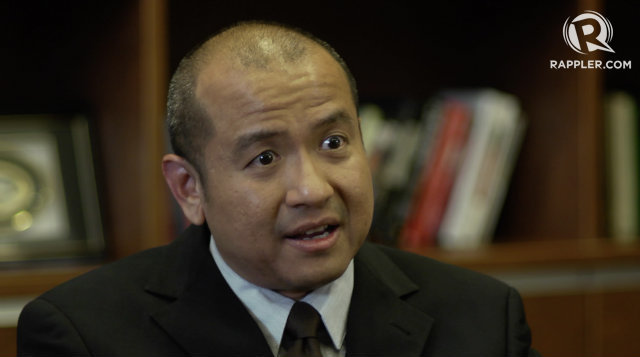
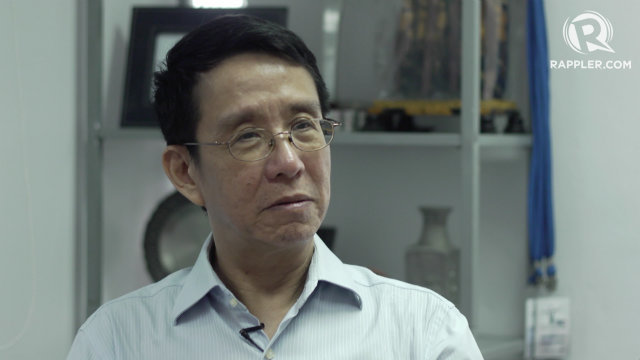
    GREATER EXPECTATIONS. Kenneth Paul Tan, vice dean at the Lee Kuan Yew School of Public Policy says the more educated, globally exposed younger generation of Singaporeans has greater expectations of the government. Photo by Adrian Portugal/Rappler

    GREATER EXPECTATIONS. Kenneth Paul Tan, vice dean at the Lee Kuan Yew School of Public Policy says the more educated, globally exposed younger generation of Singaporeans has greater expectations of the government. Photo by Adrian Portugal/Rappler

    Engaging while clamping down

    Part of what observers call this “new normal” is a more contested political landscape.

    While most political parties will celebrate getting 60% of the vote, Lee’s People’s Action Party (PAP) considered the result its worst setback in 2011. One of the world’s longest ruling parties, the PAP will vie for elections expected later this year or early 2016 where it might lose more seats to the opposition.

    PAP’s Tan Chuan-Jin, minister for social and family development, said the ruling party is adjusting to a more active electorate. (Read and watch: #SG50: Rappler Talk: Singapore after LKY – legacy, leadership, and change)

    “People appreciate the fact that ‘I had a role to play. I am not marginalized. I am not just a cog in this whole machinery that is Singapore but I have a stake.’ There’s a purpose. It’s a very different sense of being a citizen. That engagement is important. We definitely need to do a lot more of that,” he told Rappler.

    Yet some things never change. In an effort to get students more involved in social activities, the minister said the government is requiring them to do “voluntary outreach work.”

    He caught himself and quipped: “It’s kind of horrific if you think about it that way.”

    Part of the government’s adjustment is dealing with social media. While it has direct or indirect control of mainstream media and sued opposition politicians and foreign news outlets, it does not have the same hold over Facebook, Twitter, and other platforms in one of the world’s most wired cities.

    Singapore’s leaders tried to rein in expression online through lawsuits, and alicensing scheme for news websites.

    The government often justifies harsh controls on free expression as essential to fostering economic growth and social cohesion in a multicultural, multiracial society.

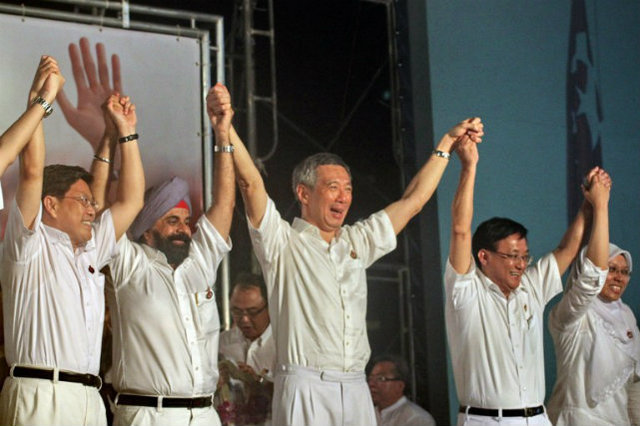
    WORST RESULT. One of the world's longest ruling parties, Singapore's People's Action Party again won the 2011 elections but suffered its worst setback. File photo by Mohd Fyrol/AFP

    WORST RESULT. One of the world’s longest ruling parties, Singapore’s People’s Action Party again won the 2011 elections but suffered its worst setback. File photo by Mohd Fyrol/AFP

    The cost of censorship

    Alex Au, a dissident blogger who has been forced to apologize and pay fines to the government for critical articles, said that the clampdown on free speech is counter-productive. He was convicted of “scandalizing the judiciary” for blogging about how the court handled LGBT cases.

    Au also cited the case of 16-year-old Amos Yee, jailed for 53 days for posting a video criticizing Lee and Christians. Au said the government went “totally overboard.”

    “A substantial number of Singaporeans has become restless, and are able to see through the relatively self-serving nature of these thin-skinned rules. There is a constant drumbeat of criticism on social media about these rules. The cost of self-censorship, the closing of minds far outweigh any benefit you could possibly gain from social harmony,” Au told Rappler.

    Even in the arts, the government has stuck to old practices like prohibiting critical content.

    To Singapore with Love, a film featuring political exiles made to mark the 50thanniversary, was banned.

    Vice Dean Tan, also chair of the Asian Film Archive, said that censorship hurts the development of the arts as well.

    “The real meaning of jubilee is forgiveness for past sins. If we took our jubilee in that spirit, it sets a stronger foundation for Singapore to go forward, and we should let the artists, people dealing with the soul of Singapore, contribute to that effort,” Tan said.

    BEYOND INFRASTRUCTURE. Dissident blogger and political commentator Alex Au says Singaporeans must demand for greater freedoms, not just better infrastructure. Photo by Adrian Portugal/Rappler

    BEYOND INFRASTRUCTURE. Dissident blogger and political commentator Alex Au says Singaporeans must demand for greater freedoms, not just better infrastructure. Photo by Adrian Portugal/Rappler

    ‘Creative rethinking’

    As the festivities die down and Singapore’s workers head back to their swanky offices, the future of the city-state is not as clear as the golden jubilee’s laser shows.

    Experts said the government is right in stressing the importance of maintaining Singapore’s economic dynamism. Yet with a changing demographic and more critical voices, the Lion City must rethink how it achieves that.

    “We have to reimagine various policies and institutions in Singapore,” said Low. “For a successful organization, creativity and innovation are not natural. My fear of the Singapore government is not so much complacency but failing to question the need to alter the very policies that have given us success.”

    For Au, Singaporeans must also go beyond questioning the breakdown of trains and traffic lights.

    “The engineering here will be good because people have no patience with poor engineering. But on the other front, when it comes to the environment, animal protection, human rights, poverty alleviation, treatment of migrants, there isn’t enough satisfaction.”

    He said the changing sentiment does not necessarily signal Singapore’s decline.

    “If you are not dissatisfied with the present, you can never progress or get to the next step. You have to be unhappy where you are.” – Rappler.com


    Source: www.rappler.com