Tag: Sikh

  • Tindak Balas Kepada ‘Better Beer Festival’: Dari Perspektif Agama Di Malaysia

    Tindak Balas Kepada ‘Better Beer Festival’: Dari Perspektif Agama Di Malaysia

    [RESPON KEPADA ‘BETTER BEER FESTIVAL’: Dari Perspektif Agama Di Malaysia]

    Sebelum ini kami sudah mengulas mengenai isu arak di dalam pandangan agama-agama dunia, dan kami berpandangan mengikut konteks Malaysia isu arak tidak relevan jika ia diurus di dalam skop kebebasan beragama. Ini kerana majoriti penganut agama di Malaysia adalah Muslim, Buddhis, Hindu, Kristian, dan Sikh yang mana adalah jelas di dalam kitab ajaran agama ini semua mengharamkan arak.

    Di Malaysia masyarakat cina bukan Islam adalah golongan yang mendominasi di dalam mengkonsumsi arak. Tidak hairan kerana minuman ini juga dilihat mula berkembang di China. Merujuk jurnal National Geographic: The Birth of Booze, bukti penciptaan arak terawal ditemui di Jiahu, China. Antara bahan yang digunakan adalah jagung, barli, beras, gandum, anggur, tebu dan lain-lain lagi. Ketika itu China masih mengamalkan kepercayaan shamanisme dan agama tradisi nenek moyang. Ia berlaku jauh sebelum lahirnya agama Buddha di India, dan agama Taoisme serta Konfusianisme di China.[1]

    Larangan Arak Dalam Agama Buddha

    Di dalam Pancasila (lima sila) ajaran Buddha, sila terakhir menyatakan perlu menghindari minuman yang memabukkan. Sebutan di dalam bahasa Pali

    “Suramerayamajja pamadatthana veramani sikkhapadam samadiyami” yang bermaksud menahan diri daripada meminum minuman memabukkan. Dan dari ayat ini terdapat banyak pandangan dari kalangan ilmuan Buddha dalam menghurai larangan ini. [2]

    Malah ilmuan Buddhis sendiri seperti Master Hsing Yun dalam bukunya The Five Precepts menyatakan sekiranya seseorang itu mengambil sedikit sahaja minuman keras tetap juga dilarang. Begitu juga dengan ilmuan yang lain:

    “The Vibhanga states that even as little as a drop the size of a dewdrop on the tip of a balde of grass is enough to constitute a violation. So, having even small glass of wine, even if it does not make one drunk, is a transgression.”[3]

    “It it known that intoxicants even in small amounts can make one less sensitive, heedless and easily swayed by the defilements. As one starts to enjoy getting high on intoxicants, the effect becomes addictive and usage increases.”[4]

    Larangan Arak Dalam Agama Kristian

    Di dalam Perjanjian Lama terdapat banyak ayat mengenai larangan meminum arak:

    a) Imamat 10:9,
    b) Bilangan 6:3,
    c) Ulangan 29:6,
    d) Hakim-Hakim 13: 4,
    e) 1 Samuel 1: 15,
    f) Amsal 20: 1, 31: 4-6,
    g) Yesaya 5: 11, 22: 24: 9, 28: 9,
    h) Mikha 2: 11

    Manakala larangan-larangan dalam perjanjian baru dalam Injil Lukas 1: 15 dan Efesus 5: 18.

    Larangan Arak Dalam Agama Hindu

    Ayat yang melarang meminum arak dalam kitab suci Hindu:

    a) Rigveda buku 8 hymn 2 ayat 12 ,
    b) Rigveda Buku 8 hymn 21 ayat 14,
    c) Athravaveda 6: 70: 1,
    d) kitab Manusmriti 7: 47-50,
    e) Manusmriti: 11: 55,
    f) Manusmriti 11: 91.
    g) Malah di dalam Kitab Manusmriti juga melarang menjual arak dalam Manusmriti 9: 225.

    Di dalam Hindu dibezakan diantara minuman Soma dan juga Sura. Soma ialah minuman yang digunakan untuk ritual keagamaan (zaman Vedik) dan dikatakan ia sejenis minuman memabukkan yang banyak kali disebut di dalam Veda (Rig Veda:1:116:7, 8:2:12, 10:131:4-5) tetapi resepi air ini sudah pupus dan tidak dapat dibuat sekarang. Ada yang mengatakan ia dibuat dari susu dan ada dikatakan ia dibuat dari sebuah pohon yang menjalar di gunung.[5]

    Manakala Sura pula adalah minuman beralkohol sepertimana arak-arak yang sedia ada pada hari ini.[6] Menurut Madhavi Bhaskar Kokhatkar di dalam jurnalnya Review: Surā, The Liquor And The Vedic Sacrifice mengatakan minuman Sura atau arak ini dilarang di dalam agama Hindu.[7]

    Walaupun Veda membenarkan meminum Soma, pada masa yang sama ia juga melarang meminum minuman yang beralkohol (Sura):

    “Minda yang lemah orang yang mengambil daging, minuman keras, dadu di papan judi, lelaki yang ghairah (ni-han) pada seorang perempuan- begitu juga biarkan pikiranmu, wahai yang tak terhindar (aghnya) kuatkanlah anakmu.” (Athravaveda: 6: 70: 1)

    Ini menunjukkan bahawa meminum minuman keras adalah dilarang malah di dalam kitab Manusmriti terdapat banyak larangan mengenai larangan meminum Sura:

    “Killing a Brahmana, drinking (the spirituous liquor called) Sura, stealing (the gold of a Brahmana), adultery with a Guru’s wife, and associating with such (fenders), they declare (to be) mortal sins (mahapataka).” (Manusmriti: 11: 55)

    “A twice-born man who has (intentionally) drunk, through delusion of mind, (the spirituous liquor called) Sura shall drink that liquor boiling hot; when his body has been completely scalded by that, he is freed from his guilt.” (Manusmriti 11: 91)

    Malah tidak menjadi isu apabila ketua Menteri negeri Bihar, Nitish Kumar mengharamkan arak di negeri majoriti Hindu itu pada awal April 2016.

    Larangan Arak Dalam Agama Sikh

    Dalam kitab agama Sikh Guru Granth Sahib Ji himpunan Guru Gobing Singh terdapat larangan meminum arak menurunkan kecerdasan dan merosakkan fikiran:

    ਜਿਤੁ ਪੀਤੈ ਮਤਿ ਦੂਰਿ ਹੋਇ ਬਰਲੁ ਪਵੈ ਵਿਚਿ ਆਇ ॥

    “Drinking the wine, his intelligence departs, and madness enters his mind” (Sri Guru Granth Sahib: hlm 554)

    Di dalam agama Sikh juga terdapat 5 larangan asas antaranya:

    1) Tidak boleh potong rambut
    2) Tidak boleh berkelakuan buruk
    3) Tidak boleh merokok
    4) Tidak boleh memakan daging yang disembelih
    5) Tidak boleh minum arak

    Larangan Arak Dalam Agama Islam

    Di dalam Islam, jika mahu dibandingkan bilangan dalil larangan minuman keras berbanding agama lain, tidaklah sebanyak terdapat di dalam Bible dan juga kitab-kitab Hindu. Akan tetapi oleh disebabkan muslim itu bermaksud seseorang yang tunduk patuh kepada arahan Allah maka kuantiti bilangan larangan itu bukan perkara utama kerana apa yang utama adalah mereka mengikut segala aturan yang disebutkan di dalam kitab suci. Sebab itu dilihat orang Islam lebih sensetif terhadap larangan ini. Di dalam al Quran terdapat beberapa ayat yang menyebut mengenai larangan arak:

    a) Surah al-Ma’idah: 90,
    b) b) Surah Al-Baqarah: 219,
    c) c) Surah an-Nahl: 97

    Amalan Agama Menggunakan Arak

    Adapun sebahagian agama animisme dan agama penyembah roh, kebiasaannya mereka akan menggunakan arak sebagai ritual keagamaan mereka. Hal ini boleh dilihat sebahagian besar Cult di Afrika dan masyarakat Afrika Amerika yang menggunakan arak di dalam amalan mereka seperti ajaran Candomble, Kumina, Voodoo, Umbanda, Quimbanda, Santeria dan lain-lain.

    Disamping itu juga, terdapat juga ajaran Kristian khususnya yang turut menggunakan arak di dalam ritual mereka. Sebab itu apabila dilihat sebahagian Kristian seperti Black Christ turut menggunakan arak disebabkan sinkretisme amalan masyarakat (animisme) mereka dengan ajaran Kristian yang disampaikan oleh pendakyah Kristian sehingga wujudnya pengambilan arak di dalam agama. Akan tetapi di Malaysia, perkara ini tidak ada dan tidak berlaku. Maka ia tidak boleh menjadi hujah kepada ia adalah anjuran ritual agama.

    Kesimpulan

    Jika dibandingkan antara kebaikan dan keburukkan dari kesan meminum arak nescaya senarai keburukkannya terlalu banyak untuk disenaraikan. Malah dengan pengambilan arak juga manusia boleh terjebak dengan jenayah yang lain-lain kerana akal mereka sudah tidak stabil lagi. Sebab itu terdapat akta mengenai kesalahan memandu dengan pengaruh alkohol di seluruh dunia. Malah jika difikir secara logik, sekiranya seorang individu yang mabuk boleh memberi kesan yang mudharat kepada orang awam apatah lagi sekiranya perkara itu dilakukan secara besar-besaran, pasti impak dan kesan dari orang yang mabuk itu memberi kesan yang lebih teruk kepada orang awam.

    Demikian itu, isu ini tidak relevan hanya dibincangkan di bawah rangka kebebasan beragama kerana tidak ada agama di Malaysia yang ‘membebaskan’ meminum arak. Kedua, isu ini perlu juga dibincang dibawah kesan dan mudharat yang bakal menimpa dari pesta orang ramai yang mabuk boleh memberi impak yang buruk kepada masyarakat. Ketiga, program sebegini tidak menguntungkan masyarakat dan negara malah membawa kepada kerosakkan moral, fizikal dan juga mental masyarakat.

    Oleh itu masyarakat masyarakat muslim, buddhis, kristian, hindu, dan sikh yang benar-benar mengikut ajaran agama perlulah bersatu untuk menjauhi bahana arak yang jelas memberi kesan buruk kepada masyarakat. Nilailah isu ini dari sudut yang luas dan bukan sahaja hanya fikir untuk keseronokkan dan keuntungan penjualan arak sahaja.

    Seorang manusia yang waras dan rasional sudah pasti akan menjauhi arak. Sebuah kisah sebagai penutup yang diceritakan oleh ilmuan Buddhis Master Hsing Yun dalam bukunya The Five Precepts:

    “There once was a man who wanted to “just have a little drink,” but he did not have a dish of food to go with it. Seeing that his next-door neighbour was raising an old hen that was cackling away, he stole the hen and killed it to make a dish to eat while he drank his liquor. Thus he had broken the precepts against killing and stealing in one fell swoop. When the lady of the house next door came home and asked about her hen, the man told her that he had not seen it, thereby breaking the precept against lying. By now the man was a bit drunk, and seeing how beautiful the woman was, he started flirting with her and touching her in an indecent manner.”

    “Consequently, he also broke the precept against sexual misconduct. It was because of consuming intoxicants that all five precepts were broken in one stroke.”

    Dengan hanya bermula sedikit ia boleh menyebabkan manusia melanggar semua hukum hakam dan ia diumpamakan ibu segala kejahatan. Sesuai dengan sebuah hadis mengatakan: الخمر أم الخبائث “Arak itu ibu segala kejahatan” (Silsalat al-Hadith as-Sahiha no: 1854).

    Nota akhir:

    [1] Lihat – (February 2017) Journal National Geographic: The Birth Of Booze Our 9000 year Love Affair With Alcohol, vol 231 no 2, hlm 48-49
    [2] Lihat Aggacita Bhikkhu (2010). The Importance of Being Morally Virtuous, Sasanarakkha Buddhist Sanctuary, Taiping, hlm 65-71 / Lihat Bikhu Dhammavuddho Mahathera, (2011). Pesanan Buddha, Sangha Foundation, Perak hlm 4 / Lihat – (2014). Buddha & Me: For Biginners, Ti-Ratana Buddhist Society, Kuala Lumpur, hlm 41 / Dr. K. Dhammananda, (2002). What Buddhists Believe, Buddhist Missionary Society Malaysia, Kuala Lumpur, hlm 210-211.
    [3] Lihat Veberable Fa Xun (2011). One Life Five Precepts, Shi Faxun, hlm 73
    [4] Lihat Chan Khoon San (2002). Introductory Course in Buddhism, Selangor Buddhist Association, Kuala Lumpur, hlm 89
    [5] Lihat Mark Cartwright (2016). Ancient History Encyclopedia: Soma – http://www.ancient.eu/Soma/
    [6] https://beerinindia.wordpress.com/tag/sura/
    [7] Madhavi Bhaskar Kokhatkar (1999). Surā, The Liquor And The Vedic Sacrifice, D.K Printworld, India, hlm 140

    R&D Team MRM


    Source: Firdaus Wong Wai Hung (Official)
  • Grab Singapore Driver Meets Baby Born In His Car

    Grab Singapore Driver Meets Baby Born In His Car

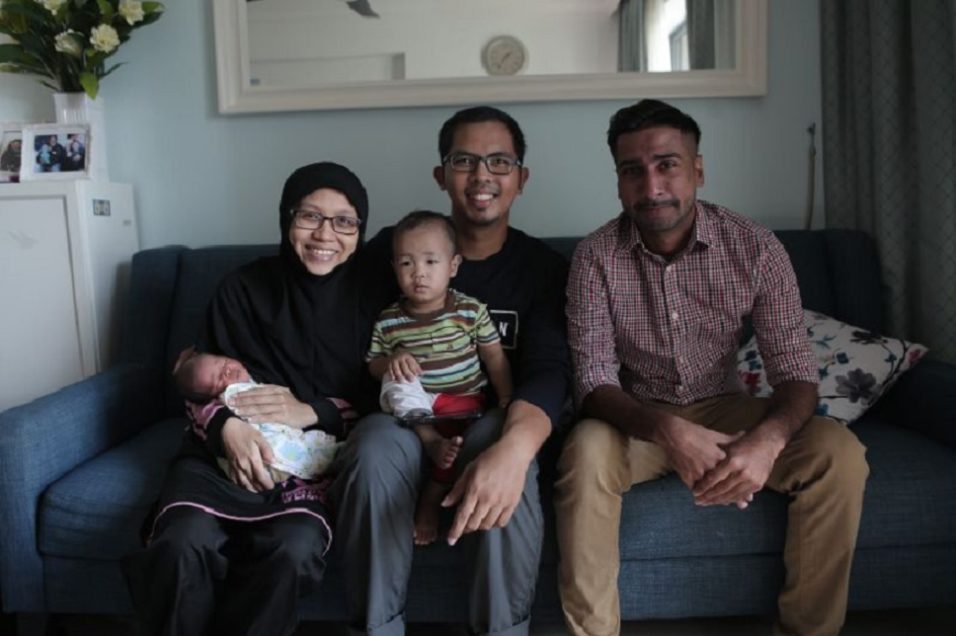
    Almost two weeks after a woman gave birth to a baby boy in the backseat of his car during a Grab ride to the National University Hospital (NUH), Alvinder Singh reunited with the newborn and his parents. The 28-year-old operations manager on Friday (25 Aug) visited airport emergency officer Musaddiq Khamis, 27, and his wife Liyana, 28, at the Upper Serangoon home where little Ahmad Luqmaan has been staying since his discharge from hospital.

    Singh had picked up Musaddiq and Liyana on 12 Aug through a Grabcar booking, which came with the message “pregnant wife in labour”. The couple did not call an ambulance as they thought they would have enough time to get to the hospital. Singh, who has only been driving with Grab for two months, said that he started hearing the cries of a child during the journey to NUH. “I looked back and he’s (Musaddiq) is smiling with the biggest smile in the world. Proud father,” he recounted.

    Being prepared

    For Musaddiq and Liyana, having a baby outside the hospital may not have been planned, but antenatal classes the couple had taken prior to the birth of their son helped prepare them for the possibility. Musaddiq’s experience of being prepared to deal with emergencies also played a part. “He knew how to comfort me when I was having labour pains. It’s important for a husband to keep calm so his energy can ‘spill’ onto me,” Liyana said with a laugh.

    Offering some advice to fathers-to-be, Musaddiq said the birth of a child is not just a “one-way” street. “The husband also has a part to play. Words of affirmation…reaffirms that ‘we can do this’. It’s not a one-man show, or a one-lady show. That’s something we managed to perform in an emergency,” Musaddiq said. “I can vouch for that,” Singh chipped in. “He did amazing.”

    Keeping in touch

    While the couple said they would probably wait until their son had at least reached Primary One before telling him the story of his birth, Singh said he hoped to visit the family again when the infant is slightly older and can have more interactions with him. “He’s also a soccer coach… can consider,” Musaddiq said of Singh. Singh visited Musaddiq and Liyana together with Grab Singapore country head Lim Kell Jay and Andrew Chan, head of Grabcar Singapore. The two Grab officials presented Musaddiq and Liyana with a Grab voucher worth $8,000, and fuel vouchers worth $800 to Singh.

    Source: Yahoo

  • Commentary: Inter-Racial Marriages Nothing Special, Until I Met Those Facing Challenges

    Commentary: Inter-Racial Marriages Nothing Special, Until I Met Those Facing Challenges

    My own inter-ethnic relationship has been obstacle-free, writes Kane Cunico, but a documentary on mixed marriages has spurred others to share with me the struggles they face in gaining acceptance.


    SINGAPORE: Sàam gu ma, sei gu ma, baat gu che, sahp suk – Cantonese words I would have never imagined myself learning by heart, had I not married my ethnically Chinese wife whose dad’s side of the family is from Ipoh, Malaysia.

    Respectively, they mean this:

    Sàam gu ma: My father-in-law’s third oldest sister.

    Sei gu ma: My father-in-law’s fourth oldest sister.

    Baat gu je: The eighth sibling in the family and my father-in-law’s younger sister.

    Sahp suk:  The tenth sibling and my father-in-law’s younger brother.

    In my Indian-Eurasian household, which feels neither very Indian nor very Eurasian, we just call them aunty (insert name) and uncle (insert name).

    I have always been indifferent to my cultural roots, flippant to a point. I wouldn’t consider myself religious, but I am constantly open and curious about other people’s heritage.

    The same goes for my wife, who identifies herself as a third-culture kid.

    We both were fortunate to have parents who were willing to break their own cultural and religious traditions for their children, and compromise on a wedding that made everyone happy. Even while dating, race or religion never became an issue. I would call us rather happy-go-lucky.

    But the recent On The Red Dot series, Love Is (Colour) Blind, prompted me to reflect on just how lucky perhaps we were. The documentary profiled three mixed-race couples who spoke about the ups and downs of their relationships, from gaining family acceptance to bringing up their mixed-heritage children.

    In response, hundreds of netizens have commented on Facebook, eager to share their own experiences in inter-ethnic marriages. I was heartened to see all those different races and religions coming together – it was like those United Colors of Benetton ads I wished the world could be more like.

    Watch: The story of Martin and Esther

    But on the flip side, friends and not a few commentators on Facebook have asked: “Why is this even a story? Why talk about this? What’s the big deal? Inter-racial marriages have been around for a long time. Why single it out?”

    And in a way, they were right. I had never before seen it as a problem.

    WE’VE HAD IT EASY

    Yet in talking to some of those who wrote on our Facebook page, and re-watching the episodes, it struck me – my wife and I have had it easy, relationship wise.

    The same can’t be said of Facebook writer Hui Jing Ong. A Singaporean Chinese who is Buddhist, she married an Indian national who is Sikh. They have two children.

    In a telephone interview, she told me: “My parents are divorced, but my father until now cannot accept our marriage or children. He’s kind of a racist. My mum says as long as I’m happy, she’s okay with it.”

    Hui Jong Ong with her husband, Gurdev Singh, have two children. (Photo: Hui Jing Ong) 

    Another Facebook user, Jasmine Jay, had dated her husband-to-be for four years. He is Malaysian, Malay and Muslim, and she is Singaporean, Sikh and Catholic.

    Three and a half years ago, when she became pregnant, they decided to tie the knot. For three months, both deliberated on who should convert. They ultimately decided neither should. His family snubbed their wedding.

    “Even my mum said no to the wedding. But since the birth of our daughter, his family have accepted us,” said Jasmine in a phone interview.

    She added: “Today we have two children. I have a younger son and we both agreed the children will be Catholic.”

    Despite the continuing struggles, both have found happiness where their relationship once floundered in a quagmire of disapproval.

    Last year, 4,142 marriages in Singapore involved couples of different races, making up 21.5 per cent of all marriages for the year. In 2005, inter-ethnic marriages made up just 14.9 per cent.

    So mixed marriages may be becoming normalised; but many couples still face familial and societal obstacles to make it work.

    Watch: The story of Simon and Veronica

    Friends of ours in inter-racial relationships have had to try hard to win over their culturally traditional in-laws-to-be, who were worried about what others in their community might say or think.

    And such cultural conservatism isn’t just confined to our parents’ generation. Some young couples my wife and I meet have no qualms telling us that they wouldn’t want their children dating someone of another race.

    A recent survey by Channel NewsAsia, in partnership with the Institute of Policy Studies, reflects some of these response. The survey found that fewer than one in four Chinese respondents were accepting of a non-Chinese marrying into the family; while fewer than half of Indian respondents indicated acceptance of a non-Indian into their family, according to the survey.

    WHEN CHILDREN COME INTO THE PICTURE

    For newlyweds like my wife and me, who are looking forward to having children, we know we cannot keep taking a laissez-faire approach to our mixed marriage.

    At some point, matters of race and religion will come up, and perhaps these may actually turn out to be issues for both sets of parents, as Jasmine learnt.

    “Managing families – that is still a challenge,” said the 23-year-old stay-at-home mother and trained nurse.

    “So many awkward moments. How you spend your festivities and whose religion you follow. You will argue about what cultural name the child will have. Should it be Indian or Malay in our case? And what religion will the child practice?” she added.

    Jasmine Jay with her husband, Abdul Rahim, daughter Raphaela 3, and son Rayden, 6 months. (Photo: Jasmine Jay)

    “To be honest, it is tough, but my husband and I, only because we are quite neutral with race and religion, we told our parents to leave the decision to us. So we gave the children neutral names. There is no “daughter of” to follow my Indian heritage, and no “bin or binte” to follow his Malay heritage.

    “But the beauty is that they get to be a part of both our cultural and religious practices and festivities,” said Jasmine.

    “So just follow your heart and fight for your right, and hopefully, both sides can still remain a strong family.”

    Watch: The story of Norsham and Anne

    Another Facebook user, Hazre Salim, told me it’s really about planning far ahead.

    A Malay Muslim, he married a Chinese Buddhist about two years ago after they dated for a year. Hazre, a secondary school educator, was upfront about how religion was important to him. With her full understanding, they both pre-empted their parents very early on in their relationship.

    “I knew first and foremost there were going to be challenges: Parents, friends, religion. But we had supportive parents,” the 35-year-old said.

    “There will be instances where we cannot solve the problem straight away. Children will definitely be an issue; we will face it when it comes.

    “But we both believe that when two people get together and have faith and trust in each other, it will work out,” said Hazre, adding that when they cannot resolve matters on their own, “we go to our parents and figure it out”.

    Hazre Salim and Nur Iviana Tham sought the approval of their parents early on. (Photo: Hazre Salim)

    Hazre’s and Jasmine’s advice are timely. My wife and I will soon have to decide which religion our child will be a part of, and what second language they should learn at school.

    What race do we categorise our children under, when their ancestral tapestry has Italian, Indian, Chinese and Peranakan heritage woven into it?

    These are questions we do not have the answers to yet. But we are fortunate and optimistic.

    Fortunate, to be in a place where inter-ethnic marriages are fast becoming normalised, if they aren’t already; and where strangers, who have shared their stories online, are willing to give us the perspective we need.

    Optimistic, that our families, made up of a suks, gu mas, aunties, uncles, mums, dads, mamas and grandmas, are around to hopefully be as open as they have always been with two happy-go-lucky and culturally impartial children.


    Source: CNA

  • High Court Rules Application For Judicial Review By Former Sikh Religious Counsellor With Singapore Prisons Service As Abuse Of Court Process

    High Court Rules Application For Judicial Review By Former Sikh Religious Counsellor With Singapore Prisons Service As Abuse Of Court Process

    The High Court has struck out an application by a former volunteer Sikh religious counsellor with the Singapore Prison Service (SPS) who had taken issue with the prison’s hair grooming policy for Sikh inmates and said his right to propagate his faith had been violated, after the SPS did not renew his volunteer pass.

    Justice Quentin Loh said the applicant, Mr Madan Mohan Singh, did not have reasonable cause and that his application to start judicial review proceedings on these issues was “frivolous, and vexatious and/or otherwise an abuse of the processes of Court”.

    Mr Singh, who was represented by lawyer M Ravi, had filed an application in 2013 to quash the labelling of Sikh prisoners as “practising” or “non-practising”. He had also sought a declaration that the SPS had violated his right to propagate his religion — which is contingent on him obtaining leave for the quashing order.

    In response, the Attorney-General applied to have these applications struck out.

    Based on the facts set out in Justice Loh’s judgment published yesterday, Mr Singh, a counsellor with the Singapore Anti-Narcotics Association’s Sikh Aftercare (Counselling) Services, began volunteering with the SPS in 2000.

    In 2010, he wrote to the SPS requesting a review of the prison’s hair grooming policy for Sikh inmates. Sikhs who have unshorn hair and beards at the point of admission can keep them unshorn during their incarceration. But those who had shorn their hair and beards at the time of admission or during incarceration would not be allowed to grow them out.

    In his request, Mr Singh asked the authorities to look into incidents where the policy had not been adhered to. He also objected to the terms “practising” and “non-practising” Sikhs, used at the time to distinguish between Sikh inmates with shorn and unshorn hair and beards.

    The SPS has since switched to using the terms “shorn” and “unshorn”.

    Following his request, the SPS saw a spike in the number of Sikh inmates requesting to keep their hair long. Upon investigation, it found Mr Singh had “actively and persistently encouraged” inmates to keep their hair and beard unshorn to challenge the policy. This was deemed a threat to prison discipline and safety. In December 2011, Mr Singh was told his volunteer pass would not be renewed.

    Mr Ravi had argued that Mr Singh had the right to seek the quashing order, as by not renewing his volunteer pass, the SPS was curtailing Mr Singh’s right to propagate his religion to a group of Sikhs to whom he owed a duty to rehabilitate.

    But Justice Loh disagreed, noting that the application, interpreted substantively, was to quash the hair grooming policy, not challenge the non-renewal of Mr Singh’s pass. Even if he accepted the argument that the policy was the reason for the non-renewal, this was still not an infringement of Mr Singh’s constitutional rights. This was because prisons are restricted spaces, within which inmates suffer temporary exclusion from society. “A person would thus ordinarily have no access to a prison, much less free access to propagate his religion to the inmates,” he said.

    Justice Loh also noted that Mr Singh did not object to the policy in the first 10 years of his stint with the SPS.

    Two prominent members of the Sikh community, including chairman of the Sikh Welfare Council’s Inmate Counselling Subcommittee Manmohan Singh, also filed affidavits on behalf of the Attorney-General attesting to the fairness of the policy, he said.


    Source: www.todayonline.com