Tag: Singapore

  • #SG50: A Changing Singapore Questions Its Miracle

    #SG50: A Changing Singapore Questions Its Miracle

    The red and white flags are everywhere. Military planes form the number 50 in the azure skies above the magnificent Marina Bay Sands. The Merlion proudly stands as tourists and locals snap the obligatory selfie on this special occasion. It is Singapore’s birthday, but not everyone is on party mode.

    “We work, work, work. Very stressed. Everything expensive, nothing free lah. This island is for rich people, not poor people,” said one “uncle,” the term Singaporeans use to refer to taxi drivers and elderly men.

    It is a creeping sentiment that contrasts with the splashy parade and fireworks on the city-state’s 50th independence day on Sunday, August 9. As Singapore’s government trumpets the third-world to first-world catchphrase, some of its citizens point to inequality, glitches in the train system, and the growing competition with foreigners for jobs and space. (READ: #SG50: Foreign workers less welcome in Singapore?)

    Along with the celebration is an anxiety that the success that drove the Southeast Asian nation to the top of global economic rankings will gradually taper off.

    While the late strongman Lee Kuan Yew’s Singapore valued economic growth, a younger, well-heeled generation of Singaporeans is questioning the same policies that brought the country prosperity, and the costs of its fairytale-like transformation. Where is this shifting Singapore headed?
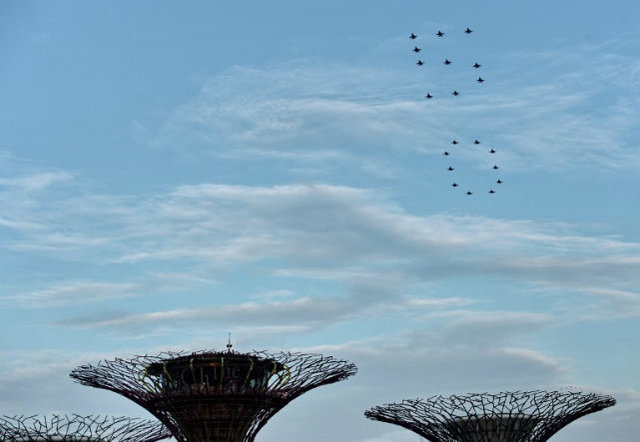
    GRAND CELEBRATION. The Republic of Singapore Air Force fighter jets fly in a 50 formation over the Garden by the Bay's Supertrees during a preview for the 50th Singapore National Day celebration on August 1, 2015. Photo by Roslan Rahman/AFP

    GRAND CELEBRATION. The Republic of Singapore Air Force fighter jets fly in a 50 formation over the Garden by the Bay’s Supertrees during a preview for the 50th Singapore National Day celebration on August 1, 2015. Photo by Roslan Rahman/AFP

    Generation gap

    The Singapore of the 21st century is often referred to as a victim of its own success.

    After the immigrant city was expelled from Malaysia in 1965, its founding fathers headed by Lee led its transformation into a modern metropolis. Obsessed with vulnerabilities like the lack of land and water, a central, paternalistic government prioritized economic security by providing public housing, education, and infrastructure.

    Yet this model focusing on material wellbeing led to more sophisticated demands.

    Kenneth Paul Tan, vice dean at the Lee Kuan Yew School of Public Policy, partly attributes the discontent to a generational gap.

    “An earlier generation might have felt very grateful, maybe more compliant but younger Singaporeans did not grow up like that. They were born into more affluent situations. The efficiency, sanitation were there. They don’t compare ourselves to cities doing badly. They compare ourselves to cities doing very well. So expectations are high for this government.”

    Despite being in a wealthy, high-tech metropolis, Singapore’s workers rank as the unhappiest in Asia, and have one of the longest work hours in the world. The hub for finance is also the most expensive in the globe, with a rising cost of living.

    Economist Donald Low, also with the Lee Kuan Yew School, said that social mobility is a key concern as the population ages, and as export-oriented economies like Singapore stagnate.

    “The questions that consume the minds of Singaporeans are: Do people feel their children have the chance to improve their standing in society? If I’m in the middle class, will my kids have a chance to be in the upper middle class?”

    “It’s harder for us to achieve the same levels of social mobility that we achieved in the first 30 years when Singapore progressed very rapidly from a poor nation to a rich nation,” Low told Rappler.
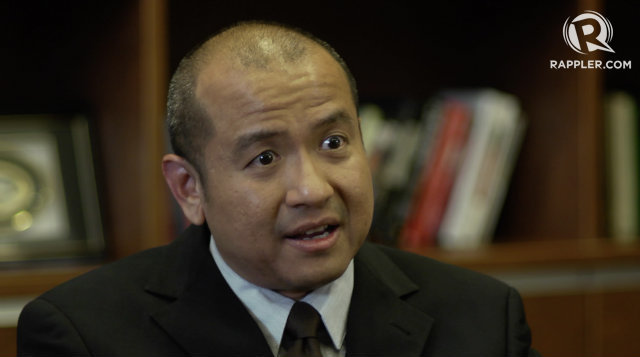
    GREATER EXPECTATIONS. Kenneth Paul Tan, vice dean at the Lee Kuan Yew School of Public Policy says the more educated, globally exposed younger generation of Singaporeans has greater expectations of the government. Photo by Adrian Portugal/Rappler

    GREATER EXPECTATIONS. Kenneth Paul Tan, vice dean at the Lee Kuan Yew School of Public Policy says the more educated, globally exposed younger generation of Singaporeans has greater expectations of the government. Photo by Adrian Portugal/Rappler

    Engaging while clamping down

    Part of what observers call this “new normal” is a more contested political landscape.

    While most political parties will celebrate getting 60% of the vote, Lee’s People’s Action Party (PAP) considered the result its worst setback in 2011. One of the world’s longest ruling parties, the PAP will vie for elections expected later this year or early 2016 where it might lose more seats to the opposition.

    PAP’s Tan Chuan-Jin, minister for social and family development, said the ruling party is adjusting to a more active electorate. (Read and watch: #SG50: Rappler Talk: Singapore after LKY – legacy, leadership, and change)

    “People appreciate the fact that ‘I had a role to play. I am not marginalized. I am not just a cog in this whole machinery that is Singapore but I have a stake.’ There’s a purpose. It’s a very different sense of being a citizen. That engagement is important. We definitely need to do a lot more of that,” he told Rappler.

    Yet some things never change. In an effort to get students more involved in social activities, the minister said the government is requiring them to do “voluntary outreach work.”

    He caught himself and quipped: “It’s kind of horrific if you think about it that way.”

    Part of the government’s adjustment is dealing with social media. While it has direct or indirect control of mainstream media and sued opposition politicians and foreign news outlets, it does not have the same hold over Facebook, Twitter, and other platforms in one of the world’s most wired cities.

    Singapore’s leaders tried to rein in expression online through lawsuits, and alicensing scheme for news websites.

    The government often justifies harsh controls on free expression as essential to fostering economic growth and social cohesion in a multicultural, multiracial society.
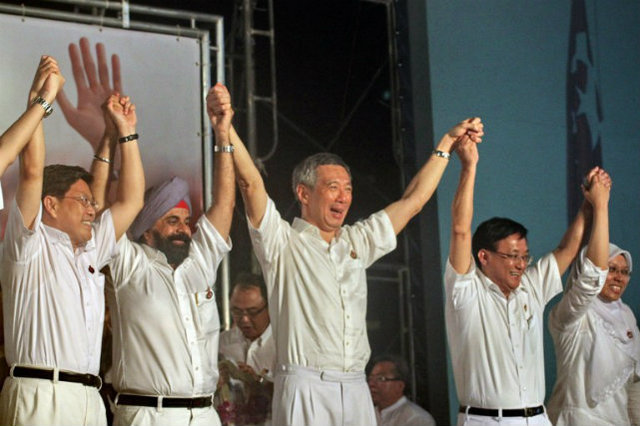
    WORST RESULT. One of the world's longest ruling parties, Singapore's People's Action Party again won the 2011 elections but suffered its worst setback. File photo by Mohd Fyrol/AFP

    WORST RESULT. One of the world’s longest ruling parties, Singapore’s People’s Action Party again won the 2011 elections but suffered its worst setback. File photo by Mohd Fyrol/AFP

    The cost of censorship

    Alex Au, a dissident blogger who has been forced to apologize and pay fines to the government for critical articles, said that the clampdown on free speech is counter-productive. He was convicted of “scandalizing the judiciary” for blogging about how the court handled LGBT cases.

    Au also cited the case of 16-year-old Amos Yee, jailed for 53 days for posting a video criticizing Lee and Christians. Au said the government went “totally overboard.”

    “A substantial number of Singaporeans has become restless, and are able to see through the relatively self-serving nature of these thin-skinned rules. There is a constant drumbeat of criticism on social media about these rules. The cost of self-censorship, the closing of minds far outweigh any benefit you could possibly gain from social harmony,” Au told Rappler.

    Even in the arts, the government has stuck to old practices like prohibiting critical content.

    To Singapore with Love, a film featuring political exiles made to mark the 50thanniversary, was banned.

    Vice Dean Tan, also chair of the Asian Film Archive, said that censorship hurts the development of the arts as well.

    “The real meaning of jubilee is forgiveness for past sins. If we took our jubilee in that spirit, it sets a stronger foundation for Singapore to go forward, and we should let the artists, people dealing with the soul of Singapore, contribute to that effort,” Tan said.
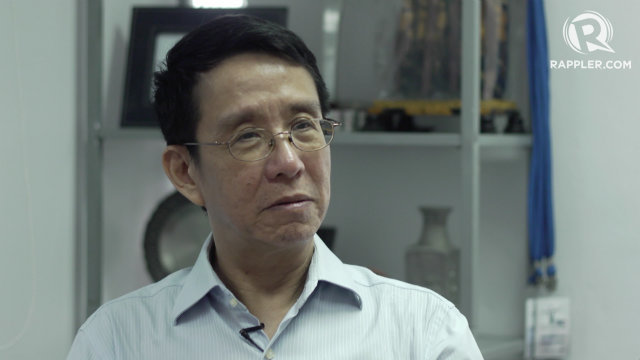
    BEYOND INFRASTRUCTURE. Dissident blogger and political commentator Alex Au says Singaporeans must demand for greater freedoms, not just better infrastructure. Photo by Adrian Portugal/Rappler

    BEYOND INFRASTRUCTURE. Dissident blogger and political commentator Alex Au says Singaporeans must demand for greater freedoms, not just better infrastructure. Photo by Adrian Portugal/Rappler

    ‘Creative rethinking’

    As the festivities die down and Singapore’s workers head back to their swanky offices, the future of the city-state is not as clear as the golden jubilee’s laser shows.

    Experts said the government is right in stressing the importance of maintaining Singapore’s economic dynamism. Yet with a changing demographic and more critical voices, the Lion City must rethink how it achieves that.

    “We have to reimagine various policies and institutions in Singapore,” said Low. “For a successful organization, creativity and innovation are not natural. My fear of the Singapore government is not so much complacency but failing to question the need to alter the very policies that have given us success.”

    For Au, Singaporeans must also go beyond questioning the breakdown of trains and traffic lights.

    “The engineering here will be good because people have no patience with poor engineering. But on the other front, when it comes to the environment, animal protection, human rights, poverty alleviation, treatment of migrants, there isn’t enough satisfaction.”

    He said the changing sentiment does not necessarily signal Singapore’s decline.

    “If you are not dissatisfied with the present, you can never progress or get to the next step. You have to be unhappy where you are.” – Rappler.com


    Source: www.rappler.com

  • The Evolution Of Tin Pei Ling

    The Evolution Of Tin Pei Ling

    “My greatest regret is that I didn’t manage to bring my parents to Universal Studios.”

    With those words, jaws dropped across the nation, and Tin Pei Ling, then 27, set herself on the path to becoming one of the most controversial personalities of General Election 2011.

    A senior associate with Ernst & Young at the time, with a degree in psychology, the candidate for Marine Parade GRC seemed markedly different from the usual People’s Action Party (PAP) candidate. Voters were used to seeing standing for election former generals, scholars and civil servants who were typically mature individuals in their 30s and 40s.

    Then came her first doorstop with the media, where she uttered those infamous words. Netizens began questioning her qualifications and wondered aloud if she had gotten in through her connections – she is married to Ng How Yue, former Principal Private Secretary to Prime Minister Lee Hsien Loong and now Second Permanent Secretary at the Ministry of Trade and Industry.

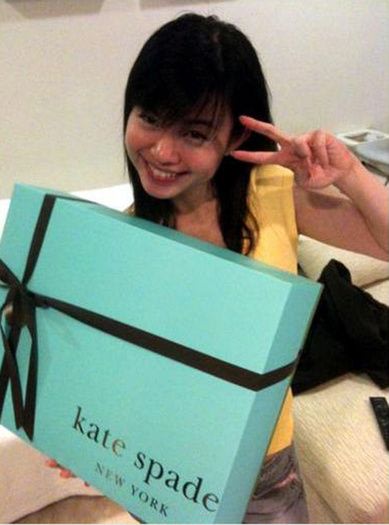
    Then this photo was unearthed:

    This was the infamous image of Tin that drew much flak from online users last year.This was the infamous image of Tin that drew much flak from online users last year.

    From that point on, there was no turning back.

    Many netizens were convinced that Ms Tin was too immature and inexperienced. She lacked substance. She could not speak well. She was being parachuted into power by riding on the coat tails of former Prime Minister and then-Senior Minister Goh Chok Tong.

    Perhaps even more crucially, she stood in stark contrast to one of her direct opponents: the National Solidarity Party’s (NSP’s) Nicole Seah, then 24. Attractive, composed and idealistic, Ms Seah had star power that Ms Tin simply could not match.

    Former politician Nicole Seah at an NSP rally in 2011. Former politician Nicole Seah at an NSP rally in 2011. 

    During an NSP rally, I personally witnessed the crowd booing the speaker before Ms Seah, urging him to get off the stage. When she had finished speaking and came to shake hands with supporters, one starstruck, middle-aged woman even told her: “Nicole, I will vote for you! You must fight for us in Parliament, okay!”

    If there was such a thing as preferred youth candidate, it was Ms Seah. Some even called NSP the Nicole Seah Party.

    All of which led to this memorable scene on Nomination Day, when the PAP team contesting Marine Parade came out to address supporters. Among my colleagues at the time, there were more than a few sniggers.

    When the PAP eventually won in Marine Parade with more than 56% of the vote – a historically low margin of victory in the ward – SM Goh acknowledged that Ms Tin had played a significant role in the reduced percentage.

    Outraged netizens even set up a Facebook page called Petition to Remove Tin Pei Ling as a MP. It attracted thousands of likes.

    To her credit, a chastened looking Ms Tin addressed the criticisms directly, “I hope that I’ll be given this opportunity in the next five years to prove myself through my actions, serving the residents of MacPherson.”

    But Ms Tin herself acknowledged that it would be an uphill task.

    An unfortunately timed video a year later seemed to sum up the prevailing sentiments towards her:

    In the years since 2011, Ms Tin looks to have thrown herself into the task of serving her constituency.

    She is a full-time MP, and the comments on her Facebook page (more than 18,000 likes), once vitriolic, are now largely positive:

    <span style=line-height: 19.2000007629395px;>Photo source: Tin Pei Ling Facebook page</span>
    Photo source: Tin Pei Ling Facebook page
    Photo source: Tin Pei Ling Facebook page


    Photo source: Tin Pei Ling Facebook page
    Photo source: Tin Pei Ling Facebook page

    Other than the occasional naysayer on social media, there was also plenty of goodwill towards Ms Tin when she gave birth recently.

    As evidenced from her Facebook page, she continued to serve even while heavily pregnant:

    Photo source: Tin Pei Ling Facebook page
    Photo source: Tin Pei Ling Facebook page

    Senior Minister Emeritus Goh posted the first photo of the happy family, along with a promise:

    Photo credit: MParader Facebook page
    Photo credit: MParader Facebook page

    How will Ms Tin fare this time round, especially as a candidate in her own right? We will just have to wait and see.


    Source: https://sg.news.yahoo.com

  • Woman Nabs Upskirt Pervert, But Police Let Him Off With A Warning

    Woman Nabs Upskirt Pervert, But Police Let Him Off With A Warning

    Last October, a gutsy young lady noticed something amiss when a man started getting too close for comfort. Her suspicions were proven right as she noticed the man trying to capture photos of her underwear from under her skirt.

    Outraged, she turned and kicked the pervert in the chest. She then pinned the man to the wall as she swiped the pervert’s phone from his grasp before calling the police. Police arrived shortly after to take the man into custody.

    As the pervert was led away by police, the brave young woman, Ms Chan, told him: “Good luck to you. You are so unlucky to have met me.”

    Unfortunately, this story does not turn out the way most people expected.

    10 months after his arrest, the pervert was issued a police warning and the case was closed. The police would not be taking any further action against the upskirt photographer.

    This is despite clear precedents of upskirt photographers being charged in court under S509 of the Penal Code. According to the Singapore Criminal Lawyer blog, “Insult of Modesty covers non-physical acts of sexual harassment. This includes, but is not limited to, taking of up-skirt photographs of women, flashing, uttering vulgarities intended to insult women.”

    “Insult of Modesty is defined by S509 of the Penal Code: whoever, intending to insult the modesty of any woman, utters any word, makes any sound or gesture, or exhibits any object, intending that such word or sound shall be heard, or that such gesture or object shall be seen by such woman, or intrudes upon the privacy of such woman.”

    Upon receiving notification from the police about the conclusion of her case, Ms Chan posted the news on her Facebook page, which was met with collective disappointment in the Singapore Police Force’s (lack of) action. Many netizens wondered why the police force took 10 whole months to pursue what seemed like a straight forward case before eventually turning up empty handed.

    If anything, this case might serve as an unhealthy precedent for future offenders, who may be emboldened to take the risk of upskirt photography to satisfy their vain pleasures.


    Source: www.allsingaporestuff.com

  • Man Loses Limbs After Food Poisoning Bout From Eating Raw Fish

    Man Loses Limbs After Food Poisoning Bout From Eating Raw Fish

    What initially seemed like a standard case of food poisoning – vomiting, diarrhoea and bouts of fever – turned into a matter of life and death for a 50-year-old man.

    After Mr Tan Hwee Boon was taken to hospital, he passed out and slipped in and out of consciousness for two weeks.

    When he finally woke up, a shock awaited him. His hands and feet had shrivelled and turned black.

    Doctors at Khoo Teck Puat Hospital (KTPH) then broke the dreaded news to Mr Tan – his hands and legs had to be amputated.

    The technician and his wife, Madam Choong Siet Mei, 47, a housewife, were distraught.

    While he was out cold, she had to endure the horror of seeing his hands and feet gradually turn gangrenous.

    Ironically, the drug that saved Mr Tan’s life was the cause of the gangrene.

    Madam Choong said: “I watched his limbs and nails turn from purple to black before they dried up. I couldn’t bear to tell him at first.

    “But after his near brush with death, I’m just glad his heart is still beating. Our children’s father is still alive.”

    Her husband’s ordeal started in the wee hours of July 13, when he felt giddy and suffered bouts of vomiting and diarrhoea in their four-room flat in Woodlands.

    The father of two was taken to KTPH in an ambulance and kept under observation at the hospital’s accident and emergency department, where he passed out.

    “When I first went in, I felt terrible and couldn’t really tell what was going on,” Mr Tan said.

    PASSED OUT

    “Before the doctors could tell me anything, I passed out. When I woke up, my hands and feet were already black.”

    In the first two weeks of his three-week stay in the intensive care unit (ICU), Mr Tan was given a drug that directs blood flow to his vital organs.

    “He had to take the drug to save his life,” said Madam Choong.

    The drug kept Mr Tan sedated and he drifted in and out of consciousness.

    “I called out to him and asked him if he recognised me. He would nod, then drift off to sleep.”

    She said she tried not to stay too long when she visited her husband of 16 years in the ICU.

    “It’s a cold, cold place. I couldn’t bear to see him in this state for long without crying.”

    During this period, she had even mentally prepared herself to lose her husband.

    “The doctor told me to be by my husband’s side with my two children and say words of encouragement so he would have the will to live,” she said.

    While the drug saved Mr Tan’s life, he had to deal with the side effect of having his limbs shrivel.

    The drug caused a narrowing of the blood vessels in his body, which meant less blood could flow to his extremities, said Madam Choong, who added that doctors had warned her about potential side effects among some patients.

    The lack of oxygen caused his hands and feet to turn purple, then dark red. Eventually, they turned black and the flesh started to shrivel.

    “It looked like his nails were bruised initially. Each time I visited him, I would look closely at his hands and feet. But I didn’t dare to tell him what was going on.”

    When TNP visited Mr Lim in hospital yesterday, his hands and feet were wrapped in thick bandages. His fingers and toes that peeked out from his bandages were blackened and looked hard and stiff.

    He can barely feel anything in his hands and feet, and cannot move them.

    “When I woke up, I was shocked to find my hands and feet in this state,” he said as he raised his hands.

    “I was so confused when the doctors tried to explain the situation to me.

    “They said my hands and feet may have to be amputated so that the infection won’t spread to the rest of my arms and legs.”

    His confusion turned to panic as he struggled with the shocking news.

    “Before I became unconscious, I thought it was just food poisoning.

    “Waking up and being told I might have to lose my limbs, I kept thinking there had to be another way.”

    Madam Choong also remained hopeful for a miracle and that somehow her husband’s limbs could be saved.

    But two days ago, the KTPH doctors said the only course of action is to amputate.

    A member of the team told TNP: “His hands and feet are black because there is no blood in them any more.

    “They are essentially dead and if we do not amputate them, the dead tissue would spread to the other parts of his body.”

    Today, Mr Tan will have his hands amputated – a course of action he has accepted as the only way to move ahead.

    ACCEPTING THE INEVITABLE

    But he admitted the initial days were spent in desperation trying to find a way to avoid it. He roped in his friends and family to help him research his condition.

    Their efforts proved futile, and Mr Tan was forced to accept the inevitable.

    “I was so scared. Not just for myself, but for my family,” he said as he looked as his wife.

    “I work as a technician. What future do I have at work now?”

    Mr Tan, who is the sole breadwinner of his family, has two children – a son, 14, and a daughter, 15.

    Admitting his nervousness about the operation, he joked: “If I’m afraid, I’ll just escape from the hospital at night.”

    After a pause, he added: “But I can’t run away because of my feet.”

    Madam Choong laughed at his self-deprecating comment, then her face gave way to grief as she tried not to break down in front of her husband.

    Mr Tan said his wife may have to look for a job. Apart from maintaining household expenses, he has chalked up a huge medical bill of $28,000, which is set to grow.

    But Madam Choong was in two minds about her husband’s suggestion.

    “There’s nobody to take care of him after his operation and I haven’t worked for 16 years.

    “Will I be able to find a job that will cover the cost of us hiring a helper to look after him?” she said.

    A medical social worker from the hospital said Mr Tan’s employer, Singapore Oxygen Air Liquide, is helping to seek workmen’s compensation for him that could amount to $15,000.

    The couple are also seeking financial aid from social service offices.

    Mr Tan does not want his children to be there when he enters the operating room today.

    “My children are mature but I can see that they are still shocked by what I have to do.

    “I don’t want to put them through any more emotional stress.”

    When asked about his plans in the future, Mr Tan looked resigned.

    “I have no more future,” he said.

    Madam Choong added: “We can only take one step at a time. There’s no use worrying so much.”


    “I was so scared. Not just for myself, but for my family. I work as a technician. What future do I have at work now?”

    – Mr Tan Hwee Boon


    “I watched his limbs and nails turn from purple to black before they dried up. I couldn’t bear to tell him at first.”

    – Madam Choong Siet Mei

  • Amrin Amin, Ong Ye Kung, Joins PAP’s Team For Sembawang GRC

    Amrin Amin, Ong Ye Kung, Joins PAP’s Team For Sembawang GRC

    The People’s Action Party (PAP) on Friday (Aug 14) officially introduced its new candidates for Sembawang Group Representation Constituency (GRC) for the coming General Election.

    Joining the five-member GRC are Mr Amrin Amin and Mr Ong Ye Kung, who were unveiled at the Sunshine Welfare Action Mission Home in Sembawang, a venue chosen as the party had already booked the location for a “kopi talk” with residents on the same day.

    Said Mr Khaw Boon Wan of the new-look slate for Sembawang GRC: “There will be continuity but some changes. It will not be a new team as Vikram Nair and Lim Wee Kiak will be in the team.

    “They all have their hearts in the right place. This is what we look for in our candidates. Capabilities are easy to judge – we have put them in places where we have seen them for a number of years. What is not so easy to assess is character, values.

    “We look for people who are honest, with high standards of integrity. Who are passionate about wanting to help others, with a sense of selflessness – we all live in this world for a larger cause, not just for ourselves, but to see how we can tap on our abilities to help the others to help others and hopefully make their lives better.

    “Ye Kung, Amrin are people we have assessed beyond their careers. In their spare time, do they make time for others? These are the type of people we think can add value to the team and more importantly help the residents in the north.”

    The five PAP candidates for Sembawang GRC will be:

    Mr Khaw Boon Wan, 62, Minister for National Development

    Mr Khaw is the Chairman of the PAP. He previously served as Health Minister from 2004 to 2011 and has been a Member of Parliament (MP) with Sembawang since 2006.

    “We won’t take support for granted. If we focus on doing what is right, doing what is needed for the residents, then any time is right (for a GE) – particularly if we have a good, informed electorate,” he said.

    “What is good politics? Why do we keep emphasising character, honesty, integrity? Think about Singapore over the past 50 years – out of nothing, we have created something. How did it come about? Compare this to other countries, which had much more than what we had, yet over 50 years, they have gone backwards. Is it because the people were less capable, less lucky? We think politics has a lot to do with it. If corruption is rampant, if politics becomes money politics – if huge amounts of money has to be raised to fight an election – that’s when cronyism cmes about.

    “Thanks to Mr Lee Kuan Yew, who suppressed money politics. He kept the cost of running for elections low. There is a limit to the amount you can spend on elections. Every party has to disclose – full transparency – and account for the amount spend.

    “This way, you keep politics clean. This is unique to Singapore; let us appreciate and protect that legacy. As long as every political party subscribes to this ethos – that candidates put forth are deemed to be honest, selfless, and who want to do something for Singaporeans – then the future of Singapore will be safe.”

    Dr Lim Wee Kiak, 46, eye surgeon

    Dr Lim is the chairman of the GPC for Defence and Foreign Affairs, and a member of the GPC for Finance and Trade and Industry. He was an MP with Nee Soon GRC before his Canberra ward was added to Sembawang after the Electoral Boundaries Review Committee released its report on Jul 24.

    Mr Vikram Nair, 37, lawyer

    Mr Nair is a member of the GPCs for Communications and Information, Finance and Trade and Industry, and Home Affairs and Law. He has been an MP with Sembawang since 2011.

    Mr Ong Ye Kung, 45, Director of Group Strategy, Keppel Corporation

    Mr Ong was a member of the PAP team in Aljunied GRC which lost to the Opposition Workers’ Party at the 2011 GE. He previously served as the Principal Private Secretary to Prime Minister Lee Hsien Loong and was also NTUC’s deputy secretary-general.

    “What have I learnt from 2011? A lot – big lessons and small lessons. The big lesson, as Minister Khaw mentioned, is that we never take things for granted. I don’t think people want total dominance, so even Ministers can lose their seats. We need to serve with our heart and soul. We can’t let one loss become a defeat, one setback become a failure,” he said.

    Asked about how the constituency compared to Aljunied four years ago, Mr Ong said: “What I feel is unique about Sembawang is that I ‘ve met many residents who like the different atmosphere, the rustic feel, which maybe you’ve noticed coming to Swami Home today. That special characteristic of Sembawang is something I’m still learning. While Singapore is a small island, it need not be homogenous.”

    Mr Amrin Amin, 36, corporate lawyer

    Mr Amrin has been active in grassroots work since 2004, starting in Chong Pang, Marsiling in 2013 and most recently Woodlands in 2014. He has served in various grassroots committees such as Citizens Consultative Committee and Community Club Management Committee. From 2004 to 2006, he was Law and Foreign Affairs Minister K Shanmugam’s legislative assistant.

    “I had an ordinary life but was blessed to have extraordinary people around me. I grew up in a 3-room HDB flat and went to neighbourhood schools in Singapore. I worked hard. But even with the hard work, I would not have had all these opportunities if not for my family’s support and our Singapore ecosystem,” he said, citing his parents’ need to take in multiple jobs during his childhood.

    “There are very few places in this world for someone like myself who is from an ordinary and minority background to be offered so many good opportunities. Having received so much from Singapore, I hope to give back.”

    He added: “Since my younger days, I’ve been active in community work. I’ve always taken an interest in what’s happening in my community, and doing what I can to help. I’ve met people from all walks and I’m very glad to be able to help some of them. Having received so much, I think it’s very important to pay it forward.”

    DEPARTING CANDIDATES

    The two new candidates will replace Senior Parliamentary Secretary Hawazi Daipi and Singapore table tennis president Ellen Lee, who will not be contesting the coming elections.

    Mr Hawazi, who is also Senior Parliamentary Secretary for Education and Manpower, will retire from politics after 19 years as a Sembawang GRC MP. His Marsiling ward was carved out to become part of the new Marsiling-Yew Tee GRC.

    Ms Lee, 58, has been an MP with Sembawang GRC since 2006. She is also the deputy chairman of the Government Parliamentary Committee (GPC) for Defence and Foreign Affairs and a member of the GPC for Health.

    “Ellen puts her heart and soul into whatever she’s doing. Community work is her passion. Residents take to her readily as she personifies dedication and compassion. She brought her expertise and empathy to her political work here in Woodlands. She’ll be greatly missed by the residents and my fellow candidates in Sembawang,” said Mr Khaw on Ms Lee.

    With Ms Lee’s departure, Sembawang could be represented by five men, should the PAP team be elected in. “Why is this an ‘all-boys’ team? The Party goes all out to try to persuade capable ladies to come out and take part in politics. Every election we try to improve the gender participation on the slate of candidates,” said Mr Khaw.

    “You have to look at the entire slate and not just at the GRC. In Parliament today, of the 80 PAP MPs, 18 are ladies. When the full slate is announced I’m sure you’ll see the proportion will be improved.”

    Dr Khaw and Mr Nair are the only remaining members of the PAP team which contested Sembawang GRC at the 2011 GE. Back then, the PAP won 63.9 per cent of the vote against a Singapore Democratic Party (SDP) team made up of candidates James Gomez, Jarrod Luo Jie, Mohd Isa, V Sadasivam and John Tan.

    The SDP has said it will not contest Sembawang GRC in the coming elections, announcing last week that it would make way for the National Solidarity Party (NSP) there to avoid a multi-cornered fight.

    “We welcome NSP’s participation and we hope they will disclose their candidates soon so voters can interact with them and know their plans,” said PAP Chairman Khaw. “Democracy is a contest of ideas – let the best ideas prevail and the stronger team win.”

    The ruling PAP has said it will announce its entire slate of candidates for the GE before the National Day Rally on Aug 23, in a break from tradition. On Wednesday, the PAP unveiled its team for Bishan-Toa Payoh GRC.


    Source: www.channelnewsasia.com

deneme bonusu