Tag: Singapore

  • HOME Helps Indonesian Domestic Worker Get $40,00 In Back Pay

    HOME Helps Indonesian Domestic Worker Get $40,00 In Back Pay

    Indonesian domestic worker Endang (not her real name) worked for 10 years for her employer and was only paid twice. The payments were not given to her directly but remitted to her family. She was not given a day off and disallowed from owning a mobile phone.

    Requests to return to Indonesia to visit her family were denied. Without any money or access to her passport, she was a virtual prisoner in her employer’s home.

    With the assistance of HOME, a claim was filed at the Ministry of Manpower and today she received more than $40,000 in back pay.

    Cases like Endang’s would not have come to light if not for organisations like HOME. Do support us by donating online at https://www.giving.sg/humanitarian-organisation-for-migrati… or doing an electronic transfer with the following bank details:


    Name of organisation: Humanitarian Organisation for Migration Economics
    Bank name: OCBC
    Account No: 652-821117-002
    Swift Code: OCBCSGSG


    Source: HOME

  • Presiden Melayu Tahun Ini, Adalah Melayu Ke-9 Jadi Ketua Negara Singapura. Ini Hujahnya…

    Presiden Melayu Tahun Ini, Adalah Melayu Ke-9 Jadi Ketua Negara Singapura. Ini Hujahnya…

    Singapura kini berada di ambang Pilihan Raya Presiden yang dikhususkan buat masyarakat Melayu. Bermakna, seorang Melayu akan menjadi Ketua Negara ini.

    Dua bakal calon, Encik Salleh Marican dan Encik Farid Khan sudahpun meluahkan hasrat untuk bertanding bagi jawatan tertinggi negara. Speaker Parlimen Cik Halimah Yaacob juga baru-baru ini memberitahu beliau sedang menimbangkan untuk menjadi calon Presiden.

    Jadi, apakah ini bermakna Presiden Melayu itu nanti adalah Ketua Negara kedua bagi Singapura selepas Presiden pertama, Presiden Yusof Ishak?

    Jawapannya ialah: Tidak.

    Singapura sebenarnya pernah menyaksikan sebilangan orang Melayu yang pernah menjadi Ketua Negara dalam sejarahnya. Ini hujah-hujahnya.

    KETUA NEGARA PERTAMA SINGAPURA – SANG NILA UTAMA

    Sistem pemerintahan Singapura sebelum merdeka merupakan sistem kerajaan, iaitu seorang Raja atau Sultan yang memerintah Singapura dengan kuasa mutlak.

    Antara ketua atau pemimpin Singapura yang pertama, dan juga pengasas kerajaan Singapura ialah Sang Nila Utama, juga dikenali sebagai Sri Tri Buana. Tentu ramai yang pernah dengar atau membaca kisah Putera asal Palembang itu tiba di Singapura pada tahun 1299.

    Menurut hikayat Sejarah Melayu, beliaulah yang menamakan pulau ini Singapura setelah ternampak seekor haiwan seperti singa semasa mendarat di pulau pasir putih ini. Beliau kemudian mendirikan kerajaannya di Bukit Larangan, yang sekarang dikenali sebagai Fort Canning.

    4 KETUA NEGARA SELEPAS SRI TRI BUANA

    Walaupun cerita pengasas Singapura itu tersebar luas dan dijadikan sebagai cerita rakyat, ramai orang yang mungkin tidak tahu bahawa selepas Sang Nila Utama atau Srti Tri Buana, sebenarnya ada lagi empat Raja yang memimpin kerajaan Singapura hingga 1498.

    Mereka adalah keturunan Sang Nila Utama.

    Raja-raja Singapura itu ialah (1) Sri Wikrama Wira, (2) Sri Rana Wikrama, (3) Sri Maharaja dan (4) Parameswara.

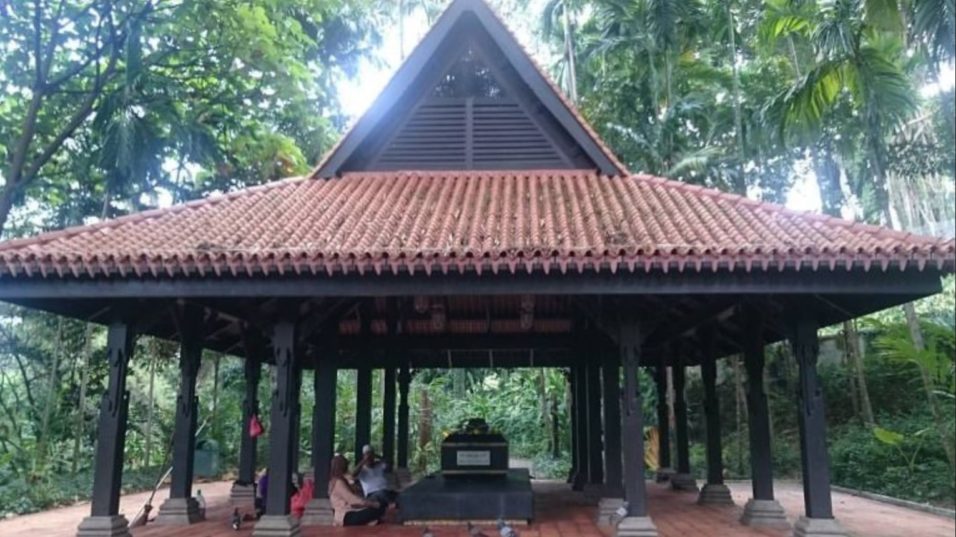
    Sebahagian sarjana dari Britain percaya bahawa Parameswara kemudian memeluk Islam dan menggunakan nama Sultan Iskandar Shah. Makam raja Singapura terakhir itu kini dipercayai bersemadi di bukit Fort Canning.

    Jadi, ini bermakna, Singapura sudah ada sekurang-kurangnya lima orang Raja dalam sejarahnya.

    Kerajaan Singapura kekal sehingga ke tahun 1498 apabila Majapahit membuat serangan terhadap kerajaan Sultan Iskandar Shah, yang melarikan diri dari Singapura dan kemudian mendirikan Kerajaan Melaka.

    SULTAN HUSSEIN SHAH YANG MEMERINTAH SINGAPURA

    Mengikut catatan sejarah, selang ratusan tahun kemudian, Singapura pernah diperintah oleh Sultan Mahmud Shah. Sultan Mahmud ketika itu memerintah kesultanan Johor yang termasuk Pahang, kepulauan Riau dan Singapura.

    Tengku Hussein pula merupakan anak pertama kepada Sultan Mahmud. Beliau bagaimanapun enggan mengambil alih pemerintahan bapanya, Sultan Mahmud.

    Bagaimanapun pada masa kerajaan Britain dan Belanda saling berlumba-lumba untuk menubuhkan pangkalan di rantau ini, pegawai Inggeris iaitu Sir Stamford Raffles dan Farquhar berpendapat bahawa lebih baik jika Tengku Hussein dijadikan Sultan bagi Kerajaan Johor.

    Dipendekkan cerita, Tengku Hussein menjadi ketua kerajaan di Singapura dan dimahsyurkan sebagai Sultan Hussien Shah.


    Pusat kerajaan Melayu ini terletak di Istana Kampong Gelam, yang kini menjadi Taman Warisan Melayu.

    Ini bermakna, selepas zaman Sultan Iskandar Shah, Singapura diperintah oleh sekurang-kurangnya dua orang Sultan Melayu atau ketua kerajaan – iaitu (1) Sultan Mahmud Shah dan (2) Sultan Hussein Shah.

    PRESIDEN SINGAPURA PASCA-KEMERDEKAAN

    Seorang lagi ketua negara Melayu muncul bagi Singapura muncul pada tahun lewat tahun 1950-an, apabila Encik Yusof Ishak dilantik sebagai Yang di-Pertuan Negara Singapura pada 3 December 1959.

    Beliau merupakan seorang tokoh masyarakat yang menggerakkan akhbar Utusan Melayu, salah satu akhbar utama di rantau ini.

    Pada 1965, Encik Yusof Ishak diangkat pula menjadi Presiden Singapura yang pertama apabila Singapura mencapai kemerdekaan – sehingga kini menjadi satu-satunya Presiden berbangsa Melayu bagi Singapura.

    SEKURANG-KURANGNYA 8 KETUA NEGARA MELAYU DI SINGAPURA

    Rumusannya, setelah mengambil kira hujah sejarah sejak zaman Sang Nila Utama, ternyata bahawa Singapura sebenarnya sudah mempunyai sekurang-kurangnya 8 Melayu yang pernah menjadi Ketua Negara selaku Sultan, Raja, Yang di-Pertuan Negara atau Presiden.

    Jadi, Presiden Singapura yang terbaru menyusuli Pilihan Raya Presiden pada September tahun ini nanti, akan menjadi Ketua Negara Melayu ke-9 atau sekurang-kurangnya yang ke-9 bagi Singapura.


    Source: http://berita.mediacorp.sg

  • Speaker Halimah Yacob To Run For The Presidency: Sources

    Speaker Halimah Yacob To Run For The Presidency: Sources

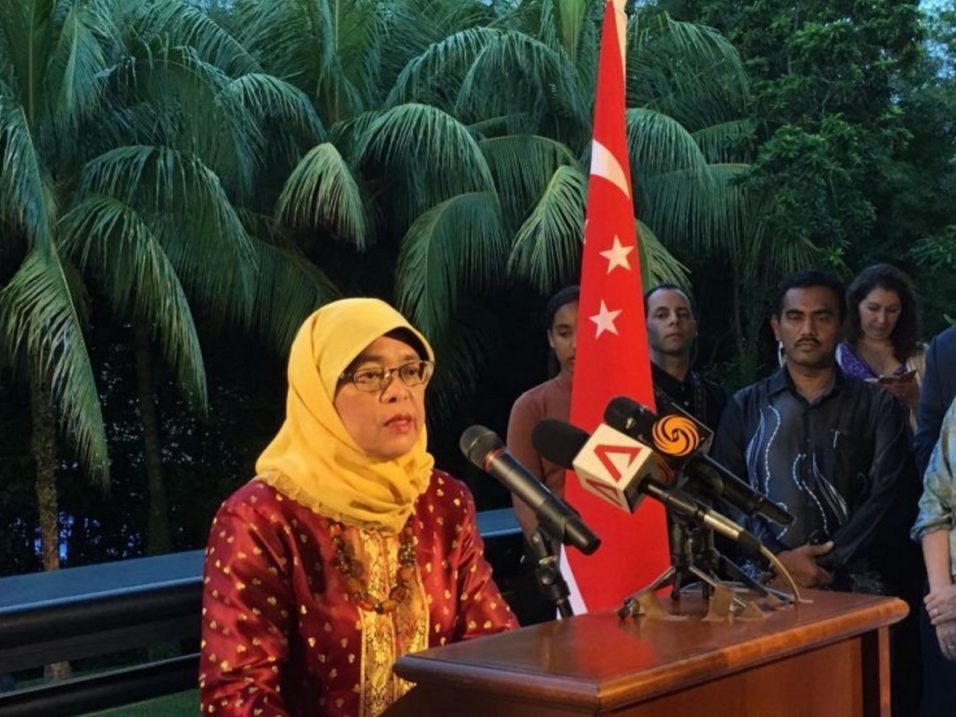
    Speaker of Parliament Halimah Yacob has decided to run in this year’s presidential election (PE), according to a source close to the 62-year-old.

    Halimah, who is also a Member of Parliament for Marsiling-Yew Tee GRC, has communicated her decision to run in the September election to grassroots leaders and People’s Action Party (PAP) activists, the source told Yahoo News Singapore on Thursday (27 July).

    The former union leader said that she is sad to leave her constituency after having served there for the past two years, added the source.

    When Yahoo News Singapore asked Halimah to comment on her bid for the presidency, she replied, “No. I am still considering.”

    Earlier this month, Halimah told reporters that she is thinking about running for the presidency. “The elected presidency is a very heavy responsibility and an important institution in Singapore, so it’s not something that one should take lightly,” Halimah said then.

    Signs of her impending run for the presidency have been growing for months. Another source in the PAP told Yahoo News Singapore that Halimah had indicated to party members as far back as March that she was planning to run for the country’s top office.

    If Halimah were to be elected as president, Singapore’s already strong ties with the Muslim-majority countries in Southeast Asia would be further enhanced, said the second sourceThis year’s PE has been reserved for Malay candidates following amendments made to the Presidential Elections Act earlier this year.

    Trained as a lawyer, Halimah began a long association with the labour movement in 1978 when she joined the National Trades Union Congress as a legal officer. She eventually rose to become Deputy Secretary-General of NTUC.

    The mother of five entered politics in 2001 when she successfully ran as part of the PAP team that contested Jurong GRC. The team was re-elected twice before she crossed over to Marsiling-Yew Tee GRC for the 2015 General Election, following the redrawing of electoral boundaries.

    Along the way, she also served as Minister of State at the Ministry of Community Development, Youth and Sports and the Ministry of Social and Family Development.

    In 2013, Halimah became Singapore’s first female Speaker of Parliament, replacing Michael Palmer after he was forced to step down over an extramarital affair.

    Prior to Halimah’s announcement, two other potential candidates, Farid Khan and Salleh Marican, had also announced their intention to run for the presidency.

    Farid, the chairman of Bourbon Offshore Asia Pacific, made the announcement at a press conference held at the Village Hotel Changi on 11 July.

    Salleh, the Second Chance Properties founder and CEO, spoke to  Yahoo News Singapore in an exclusive interview about his candidacy and Halimah as a potentially strong opponent in the election.

    Halimah has been stepping up her engagements with the unions, senior public servants and other groups in recent weeks, according to the posts on her public Facebook page.

    Halimah has been meeting union leaders and workers from the steel, petroleum, HDB, chemicals and other industries. She met with the French ambassador to Singapore, Marc Abensour, on Monday. At a dialogue organised by the Institute of Policy Studies on 17 July, she had a discussion with 50 corporate associates about improving Singapore and the lives of Singaporeans.

    In a Facebook post on her dialogue session with union leaders on Wednesday, she said, “We’re all fellow Singaporeans and regardless of race, we have stood together in solidarity for a common cause of securing a better life for our workers.

    “During our dialogue, I am reminded that it’s been almost 40 years and we shared many experiences of heartaches and celebrations of our journey together. There will be more to come as we strive to build a stronger Singapore for the next generations.”

    Source: https://sg.news.yahoo.com

  • The Lives They Live: She Fell For Her Man After Marriage

    The Lives They Live: She Fell For Her Man After Marriage

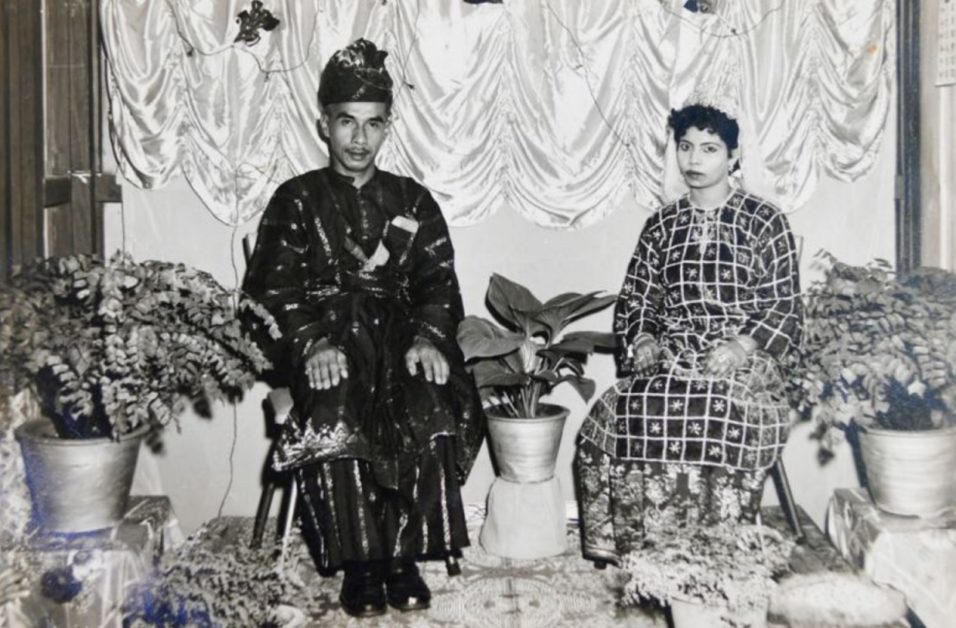
    In 1961, Madam Zulaika Mohamad Osman agreed to marry a man she had never met.

    She was 21.

    He was double her age, at 41 – a widower with one daughter.

    The matchmaker was a Chinese neighbour of hers, who worked with Mr Ismail Awang in the same construction company.

    Madam Zulaika, who has never gone to school, said in Malay: “My neighbour told me my husband was a good man and he would make a good husband and father. I said ‘yes’ immediately as I trusted my neighbour as he was like family to me.”

    Arranged marriages were the norm in those days, the 77-year-old said, and it did not occur to her that she should try to get to know her suitor before saying “I do”.

    So she said “yes” to the big question – without even knowing what her groom looked like or dating to see if they were compatible.

    About a month after she agreed to the match, Mr Ismail, a storeman, went to her home to propose marriage through her elders and the couple met for the first time.

    She was so nervous during that first meeting that she grabbed a relative’s baby to cover her face when he asked to see her.

    And she spent the rest of his visit hiding in the kitchen.

    They did not speak at all.

    “When I saw my husband for the first time, there were no feelings (of love). The feelings came later,” she said. “What struck me was that his hair was white. Even his eyebrows were white.”

    Three months later, they held their wedding ceremony.

    Match-made unions were the norm in Singapore back then, noted sociologist Mathew Mathews. The practice died out as a growing number of women became educated, joined the workforce and sought to make their own choices in life, he said. However, in pre-independence Singapore, educational and employment opportunities for women were limited and being match-made by one’s parents or relatives was the norm. Besides, everyone was expected to get married and start a family, said the senior research fellow at the Institute of Policy Studies.

    “There was also a greater expectation to follow parental wishes and one of the parents’ roles was to help ensure a good marriage match for their children,” he said.

    “Arranged marriages have always been associated with growing in love, rather than falling into love. Today’s notions of marriage differ considerably – people often don’t enter into marriage unless they fall in love.”

    Indeed, Madam Zulaika and Mr Ismail grew into love. Both shared common experiences, having suffered the loss of loved ones.

    She was an orphan. Her mother died of tuberculosis when she was just five. Her father, who did maintenance work in a market, died of a heart attack when she was in her teens. The second of six children, she started earning her own keep by washing clothes for others when she turned eight or nine.

    He was just as bereft, having lost his first wife and two children to various illnesses. He was left with just one daughter.

    After marriage, Mr Ismail became a hands-on husband and father, who helped around the house.

    This was unlike Madam Zulaika’s experience with other men.

    Growing up, all the men she saw left the chores and child-rearing to the women but not her husband. He changed diapers, bathed the children and helped with housework.

    “He also treated my family very well. He was very kind and would always help others. He was also a very gentle person,” she said.

    After a few months of matrimony, she found herself falling for his kindness and gentleness.

    He was ever ready to open his wallet and even his house to those in need. For example, he bought groceries for a relative whose husband abandoned her so that she would not go hungry. Relatives who needed temporary shelter were always welcome at their three-room flat in MacPherson.

    But Mr Ismail died suddenly of a heart attack after 17 years of marriage. He was 58 years old.

    The first few years after his death were the toughest. The couple have six children – two sons and four daughters. Their youngest child was only nine then.

    Madam Zulaika, who had worked throughout her marriage as a cleaner, continued to do so and only stopped in her late 40s when her children were all grown up.

    Today, five of her six children are married – and as a reflection of the times, all married for love. None of them went for arranged unions.

    This is a relief for Madam Zulaika who said she did not have to worry about her children’s marriages as they found spouses on their own.

    The youngest child, Ms Saleemah Ismail, 48, who is single and works in a charity, said of her parents’ marriage: “My parents had a great marriage and we grew up in a loving and nurturing home.”

    Madam Zulaika is now a grandmother to 11 and has three great grandchildren.

    “I miss my late husband and his gentleness. But my children love me the way that he loved me and so I don’t feel any missing holes in my life,” she said. “I feel we were destined to be together. I feel very lucky to have married him.”


    Source: http://www.straitstimes.com
  • Singapore Graduate Marries Malay Man In Secret Against Racist Mum’s Wishes

    Singapore Graduate Marries Malay Man In Secret Against Racist Mum’s Wishes

    I first got together with my Malay Muslim husband when I was 17 and I converted when I was 18. 2 weeks after I turned 21, we got married and have been happily married for the past 4 years. When I got married, I didn’t dare tell my racist mother as I was the only child. We also faced a lot of resistance from his mother because I wasn’t Malay. My mum only knew about my marriage after I graduated from university. I didn’t tell her not because I didn’t have the guts, but it was because I didn’t want her unkind words to poison my new marriage.

    She’s tolerating of my husband now, and she’s unable to make anymore snide remarks on seeing that I’m a thousand times happier living with him than I was with her. I went for the Islamic religious courses, do believe in Allah, but until today my mum has no idea that I converted. I don’t eat pork and I never found the Islamic laws to be much of a restriction to my daily life.

    I think when you’ve found the right guy to stick with you through thick and thin, nothing else matters. But choosing the right guy is really really important. Everything else is just secondary. Choosing my husband when I was 17 was the best decision of my life. I can’t imagine what my life would have turned out to be without him.

    Btw, he’s 12 years older than me, so I had lots of people judging us. People would ask, why you marry a Malay guy. And each time I faced their questions with a strong pride in my voice, “why not?” That usually shut them up. When we go out we overheard other people’s remarks like “got no Chinese guy to find meh?” But I never had to give them any fucks because I’m proud of my choice, and proud of my interracial marriage. Let the haters bitch as much as they want.


    Source: https://www.allsingaporestuff.com

deneme bonusu