Tag: Singaporeans

  • Doubts About Presidential Hopefuls Not Being Malay Enough Are Off Track

    Doubts About Presidential Hopefuls Not Being Malay Enough Are Off Track

    Singapore’s Malay community has long held an expansive view of race, a stand that reflects its confidence.

    The coming presidential election is the first to be reserved for candidates from the Malay community, following changes to the Constitution to ensure the highest office of the land reflects Singapore’s multiracial society.

    Yet there has been some contention on social media over the “Malayness” of would-be candidates, with some asking whether any of the aspirants who have stepped up or are mulling over a bid is “truly Malay”.

    It is as if the very nature of this year’s contest has misdirected energies towards securing the “most authentic” candidate instead of a Malay candidate who would make the best head of state.

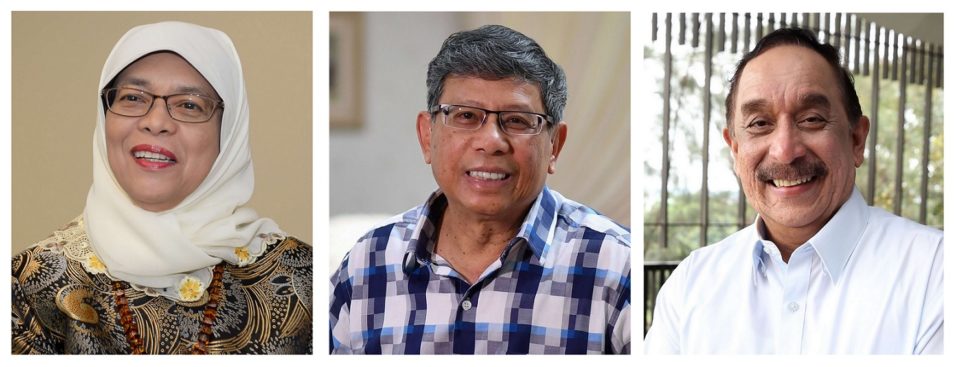
    Ironically, all three hopefuls – businessmen Salleh Marican and Farid Khan, and Speaker of Parliament Halimah Yacob – have been acknowledged by the community, peers and the media as prominent Malay individuals.

    They speak Malay, follow Malay customs and are, to some extent, role models for the community in business and public service. Why, then, has the question of whether they are “pure Malays” or “Malay enough” cropped up when it comes to the presidential election?

    Media attention on them may have played a part. Businessman Mohamed Salleh Marican, whose father is Indian, has been criticised for not being fluent in Malay, after his fumbling during a Facebook Live interview conducted outside the Elections Department where he had gone to collect the forms for the elected presidency contest.

    Businessman Mohamed Salleh Marican has been criticised for not being fluent in Malay, after his fumbling during a Facebook Live interview. ST FILE PHOTO

    Marine company chief Farid Khan has been panned for stating openly his Pakistani ethnicity, while declaring that he has always seen himself as a member of the Malay community as he speaks the language, practises the customs and gives back to it.

    Madam Halimah too has been pressed on the issue – past media reports noted her father was Indian – but she considers herself as very much a member of the Malay community, and has contested four general elections as a Malay candidate in a GRC or Group Representation Constituency.

    A number of community leaders and observers say the critics’ obsession with authenticity and purity flies in the face of tradition – it neglects the open, inclusive view of race that many Malays have adopted in welcoming new members to the community, which includes a wide range of admixtures and ethnicities.

    Mr Farid Khan has been panned for stating openly his Pakistani ethnicity, while declaring that he sees himself as a member of the Malay community. ST FILE PHOTO

    What is a Malay?

    Official records since 1824 have classified inhabitants of Singapore into four broad races – Malays, Chinese, Indians and Others. While Chinese and Indians have generally been understood to refer to people with forebears from China and India and migrants from the archipelago who trace their roots to these countries, Malay has included a variety of ethnicities regarded as indigenous to this region: Acehnese, Baweanese, Bugis and Javanese, among others.

    Yet the sense of affinity to a Malay identity was not strong up till the 1930s, when the burgeoning Malay-language press helped promote a nationalism that sought to improve the lot of the Malay community.

    The formation of the United Malays National Organisation in 1946 in Johor Baru – just across the Causeway – focused the minds of many Malays on issues of identity at a time of rapid change. For the first time, Malay would be clearly defined. Because the vast majority of Malays were Muslims and Islam had become closely associated with the Malay identity, the official definition of Malay in the Federation linked race with religion.

    Past media reports on Madam Halimah noted that her father was Indian – but she considers herself very much a member of the Malay community.   BH FILE PHOTO

    Article 160 of the Malaysian Constitution thus defined “Malay” as a person who professes the religion of Islam, habitually speaks the Malay language, conforms to Malay custom – and was before Merdeka Day born in the Federation or in Singapore, or one of whose parents was born in the Federation or in Singapore or living in both places; or is the issue of such a person.

    Article 152 of the Singapore Constitution also made clear the Government’s responsibility to constantly care for the interests of minorities, and referred to the special position of the Malays, “who are the indigenous people of Singapore”, and whose interests and language it had a duty to safeguard and support.

    After Separation, a Constitutional Commission headed by Chief Justice Wee Chong Jin discussed the issue of safeguards for minorities as well as, among others, the definition of Malay. It rejected calls to expand the definition to non-Malay Muslims and have Islam as a marker of Malayness. Instead, it chose not to explicitly define the races, languages or religious minorities in Singapore, in the hopes of a “united, multiracial multicultural society”.

    GRC debates

    However, concern over ensuring enough Malays will be represented in key institutions – Parliament, and more recently, the Presidency – meant there was a need to define who is a Malay in Singapore’s context.

    Thus when the concept of Team MPs – later GRCs – was discussed in the late 1980s, it was inevitable that the debate on what is a Malay should resurface.

    The Government said the idea behind GRCs was to ensure Parliament remained multiracial and to prevent the spectre of a House that might one day be without minorities.

    A Select Committee held hearings involving a wide range of representatives in 1987 and 1988, and many Malay leaders felt strongly about having Islam included in the definition of a Malay.

    The committee took the view that as Singapore is a secular state, it would not be appropriate for the state to spell out that a Malay must also be Muslim to contest in a GRC.

    There was one other issue: a good number of Malays had Indian, Arab or Other on their ICs due to their ethnicity or parentage, even though they had long associated with the Malay community.

    The Select Committee recognised this point. It also accepted a submission that sociologically, self-definition is the only valid way to define an ethnic group. “A person belonging to the Malay community must think of himself as Malay, and must be acceptable to the Malay community,” it said. “Therefore the legislation should not lay down prescriptive criteria as to who does or does not belong to the Malay community, but should define a mechanism to let the community decide for itself.”

    This mechanism has taken the form of a community committee, which the Select Committee report said would be “a safeguard against an unacceptable candidate being wrongly certified as a member of the Malay community”.

    At the same time, the Parliamentary Elections Act – and the latest amendments to Article 19B of the Constitution – define a person belonging to the Malay community as “any person, whether of the Malay race or otherwise, who considers himself to be a member of the Malay community and who is generally accepted as a member of the Malay community by that community”.

    A similar approach has been adopted for aspiring candidates for the presidential election in the latest round of changes to the law.

    Associate Professor Eugene Tan of the Singapore Management University School of Law notes the criteria for running as a minority in a GRC is the same as that for a presidential election.

    And during the debate on changes to the Presidential Elections Act on how race is defined earlier this year, MPs called for a broad, inclusive approach to be adopted.

    Singapore’s Malay community has long held an expansive view of race – and been open to newcomers and others keen to identify with it.

    It is a signal of confidence and courage – and nothing could be further from that than questioning whether someone who identifies as Malay and is accepted as Malay is “pure Malay” or “Malay enough”.

    So long as a person identifies as Malay and is generally accepted as such by the community, his Malayness should not be questioned.


    Source: http://www.straitstimes.com

  • Accident @ Junction Of Woodlands Centre Road; Appealing For Any Witness Or Video Recordings

    Accident @ Junction Of Woodlands Centre Road; Appealing For Any Witness Or Video Recordings

    Hi FBians,

    Please help to share this post. Your help is greatly appreciated.

    I am looking for witnesses/video recordings of an accident involving an FZ16 plate FBJ2974A and a Malaysian Lorry on the morning of 18th July 2017 between 5.45am-6.15am at the junction of Woodlands Centre Road before An-Nur Mosque.

    The rider, my uncle, is currently warded in KTPH with internal and external injuries.

    Witnesses/owners of video recordings can PM me or contact Shahrul @ 92316734.

    Thank you!


    Source: Faiz Dawood

  • Telling Stories To Spread The Love Of Malay During Malay Language Month (Bulan Bahasa)

    Telling Stories To Spread The Love Of Malay During Malay Language Month (Bulan Bahasa)

    Author and storyteller Jumaini Ariff’s fondest memories of the Malay language come from her childhood, when she listened to the radio at home.

    “I would sit at the counter while my mother was cooking, and other than speaking to her or annoying her, I would learn things like pantun (rhymes)… how they speak, how they addressed the elderly and… storytelling,” said the 38-year-old.

    With eight Malay-language books published, she sees herself as an educator for her tongue, which is why she jumped at the chance to be one of this year’s three duta bahasa (language ambassadors) for Bulan Bahasa, or the Malay Language Month.

    She has already participated in Bulan Bahasa multiple times.

    During its launch on Sept 9 at the Malay Heritage Centre in Kampong Glam, she will tell stories with live gamelan music accompanying her.

    There will be a series of programmes on 2017’s themes of ilmu (knowledge), budaya (culture) and mesra (relationships), spread out between Aug 15 and Oct 15, and in a mixture of Malay and English for members of the public to enjoy.

    The location of the launch, as well as the focus on culture as one of this year’s themes, means that most of the programmes will be in Malay.

    The festival was launched in 1988 by the Malay Language Council to encourage the use of Malay in the everyday lives of Singapore’s Malay community.

    Said chairman of the Bulan Bahasa 2017 committee, Ms Rahayu Mahzam: “Our legacy, stories and values can survive the test of time only if we make the effort to preserve our appreciation of the Malay language.

    “Our mastery of the language can only enrich our understanding of our Malay identity. It is important to perpetuate this in the younger generation so we can continue to flourish as one community.”

    Ms Rahayu told The Straits Times that the challenge lies in getting people to use Malay in their daily lives and to learn to appreciate the importance of preserving the Malay culture through the language.

    “The celebration of the Malay culture is out there – everybody loves Malay culture and it’s easy to have activities revolving around it, but the appreciation of how language ties in with that is not as strong,” she said, citing the example of silat, the Malay martial art form, and how people may not appreciate the strong links between the cultural value of the weapons and moves and the Malay words for them.

    In light of recent language gaffes, such as the use of a wrong character in the Speak Mandarin Campaign launch and wrongly typed Tamil in some National Day Parade pamphlets, she said that the Malay Language Council has a large network of people which it taps to ensure the correct translation and dissemination of Malay-language material.

    Ms Rahayu, who is a member of the council, said the network is composed of people such as literary experts, teachers and previous Bulan Bahasa language ambassadors.


    Source: http://www.straitstimes.com
  • Maklumat Penting Mengenai 35,000 Kubur Islam Yang Terjejas Di Pusara Abadi

    Maklumat Penting Mengenai 35,000 Kubur Islam Yang Terjejas Di Pusara Abadi

    35,000 kubur orang-orang Islam di Pusara Abadi akan terjejas dengan proses penggalian semula dan pengambilan tapak tanah bagi projek perluasan Pangkalan Udara Tengah, di bahagian barat laut Singapura.

    45,500 kubur Cina juga akan terjejas dalam proses itu, menjadikan kesemuanya 80,500 kubur terjejas di Choa Chu Kang.

    Ini diumumkan secara bersama dalam satu kenyataan media hari ini (18 Jul) oleh Kementerian Pembangunan Negara (MND), Agensi Sekitaran Kebangsaan (NEA) dan Penguasan Tanah Singapura (SLA).

    MULAI SEPTEMBER INI, 5,000 KUBUR ISLAM BOLEH DITUNTUT

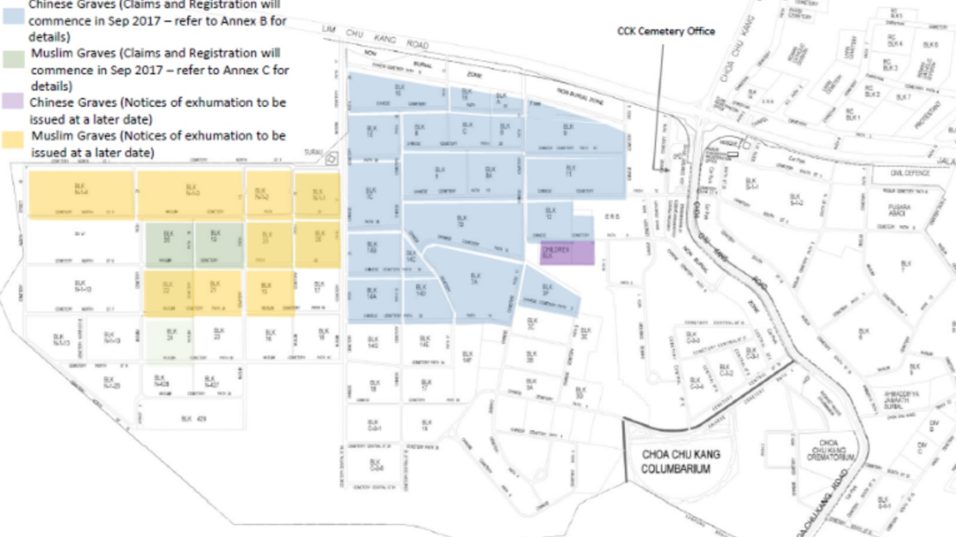
    Mulai September ini, sebanyak 5,000 kubur orang Islam di Pusara Abadi, dan 45,000 kubur orang Cina, akan menjalani mendaftaran untuk dituntut.

    Proses tuntutan dan pendaftaran itu melibatkan plot-plot kubur Pusara Abadi bagi Blok 19 dan Blok 20.

    Kesemua kubur itu sudah memenuhi tempoh pengebumian selama 15 tahun.

    Notis bagi penggalian lagi 30,000 kubur orang Islam akan keluarkan kemudian, setelah kubur-kubur itu juga mencapai tempoh pengebumian 15 tahun.

    (Gambar kawasan kubur Islam yang terjejas bewarna hijau dan kuning Gambar: NEA) 

    30,000 kubur itu terletak di blok-blok berikut:

    Blok 15
    Blok 21
    Blok 22
    Blok 25
    Blok 26
    Blok N-1-1
    Blok N-1-2
    Blok N-1-3
    Blok N-1-4


    Source: http://berita.mediacorp.sg

  • 5 Soalan Bersama Pengasas RoseValley, SMFW, Celebfest, Dian Rasid

    5 Soalan Bersama Pengasas RoseValley, SMFW, Celebfest, Dian Rasid

    Jenama RoseValley memang tidak asing lagi bagi masyarakat Melayu di Singapura. Kini ia mahu mengembangkan sayap sejauh Australia pula. Diasaskan tiga tahun lalu oleh Dian Rasid dan suaminya, Md Noor Hadi, RoseValley hanya bermula dengan penjualan produk-produk selebriti daripada Neelofa dan Emma Maembong.

    Sekarang, mereka bukan sahaja sudah bertambah maju, malah berjaya mengadakan acara besar-besaran di peringkat kebangsaan, termasuk Hujung Minggu Fesyen Gaya Sopan Singapura (SMFW) dan Celebfest yang turut diadakan di dewan-dewan gah Pusat Ekspo dan Konvensyen Sands, Marina Bay Sands dan Pusat Konvensyen Suntec.

    Berani mengorak langkah yang wajar dicontohi para peniaga tempatan, Cik Dian Rasid kini juga dipaparkan sebagai salah seorang daripada ‘wajah-wajah kejayaan’ dalam Kempen Ekonomi Masa Depan yang dilancarkan oleh Kementerian Perhubungan dan Penerangan (MCI).

    Minggu ini, wartawan Ira Musfirah mencungkil pemikiran Cik Dian Rasid, seorang mantan pensyarah Politeknik Temasek dan ibu kepada dua orang cahaya mata.

    SOALAN 1

    Ira: Apa antara cabaran yang anda hadapi sebagai pengasas bersama RoseValley?

    Dian: Terdapat pelbagai cabaran sebagai seorang usahawan. Ramai di kalangan ahli keluarga dan rakan-rakan kami yang tertanya-tanya mengapa kami meninggalkan kerjaya kami yang cukup baik itu. Kami terpaksa meyakinkan mereka bahawa kami tahu apa yang kami lakukan dan ini mendorong kami untuk terus membuktikan kepada mereka.

    Cabaran lain termasuk meyakinkan pembeli untuk membeli pakaian gaya sopan dan produk selebriti secara online melalui laman kami. Selain itu, kebanyakan daripada mereka biasanya menempah melalui Instagram dan belum pernah menggunakan sistem bayaran online seperti PayPal sebelum ini. Oleh itu kami juga harus membantu mereka untuk menggunakannya.

    SOALAN 2

    Ira: Anda sedang mengambil PhD dalam jurusan psikologi di Australia. Anda masih merancang untuk meneruskan pelajaran?

    Dian: Ya, saya masih ada rancangan. Malah, saya berhenti buat seketika kerana mahu mengukuhkan perniagaan saya dahulu. Pengalaman saya dalam bidang perniagaan sedikit sebanyak didorong oleh kajian PhD saya.

    Oleh itu, saya mungkin akan menyepadukan aspek-aspek tingkah laku pengguna dan bisnes ke dalam kajian saya. Insya-Allah saya akan cuba menyepadukan minat mendalam saya dalam psikologi dan perniagaan.

    SOALAN 3

    Ira: Apa yang mendorong anda untuk terus berjaya dalam bidang perniagaan?

    Dian: Pendorong utama saya adalah anak-anak saya, Ryan dan Alya. Mereka mendorong saya setiap hari untuk melakukan apa yang saya yakini. Dan saya anggap diri saya bertuah kerana mempunyai seorang suami yang sering memberikan sokongan, yang yakin pada impian saya dan yang saling melengkapi kemahiran saya.

    Sokongan yang diberikan oleh kedua-dua ibu bapa serta ayah dan ibu mertua terhadap perniagaan serta impian kami juga lebih memberikan saya dorongan. Sokongan keluarga memang banyak membantu.

    (Gambar-gambar: Dian Rasid/ Instagram)

    SOALAN 4

    Ira: Ada rancangan untuk memperluaskan perniagaan RoseValley?

    Dian: Kami bercadang untuk mengembangkan RoseValley ke luar negara terutama sekali di Australia dan di rantau ini.

    Kami berharap RoseValley dan usaha-usaha perniagaan tempatan lain akan sama-sama berkembang dan saling menyokong antara satu sama lain. Kita harus menyokong satu sama lain dan mewujudkan ekosistem perniagaan yang sihat.

    SOALAN 5

    Ira: Apa kata-kata nasihat yang dapat anda berikan kepada para usahawan yang baru berjinak-jinak dalam dunia perniagaan?

    Dian: Sebenarnya, saya juga masih hijau dalam dunia bisnes, hanya tiga tahun sahaja. Tetapi saya bersyukur atas sokongan dan peluang yang dihulurkan kepada saya dari pelbagai pertubuhan dan golongan masyarakat. Akan sentiasa ada individu yang negatif yang akan cuba menjatuhkan anda dan memberitahu anda bahawa anda tidak boleh mencapai impian anda. Mereka akan mengkritik idea anda dan cuba untuk membuat diri anda berasa kerdil.

    Bagi para usahawan baru, jadilah orang yang berani dan bijak. Jadilah orang yang berani untuk mempunyai impian, walaupun ia mungkin kelihatan mustahil. Jadilah orang yang berani untuk mengambil tindakan dan teruskan dengan apa yang anda yakini.

    Dan jadilah orang yang bijak – dengan mendengar pandangan pengkritik tetapi usah berasa mudah tawar hati. Ambil sahaja apa yang membina. Selain itu, usah merujuk kepada hanya satu sumber inspirasi dan carilah bahan-bahan rujukan yang lain juga.


    Source: http://origin-berita.mediacorp.sg

deneme bonusu