Tag: Tan Cheng Bock

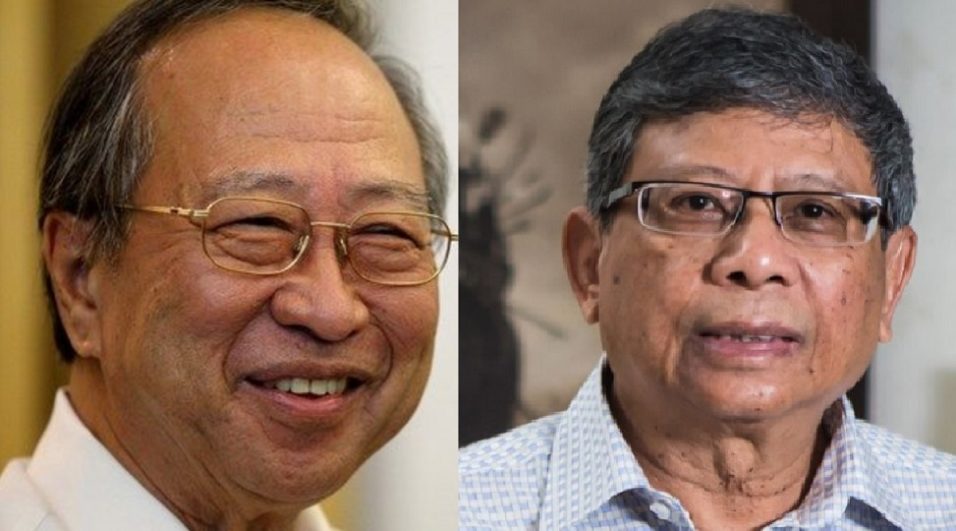
  • Of TCB And Salleh Marican: Both Directly Associated With The Establishment, Both Blocked From Potentially Contesting The Presidency

    Of TCB And Salleh Marican: Both Directly Associated With The Establishment, Both Blocked From Potentially Contesting The Presidency

    I am one of those who have highlighted the hypocrisy on both sides upon observing both sides and my views are from my personal perspective.

    Categorically, I am against the manipulation of the constitution particularly the reserved election on basis of race by the government of the day to maintain grip of power bases. This however does not automatically mean I am supportive of any claim of an alternative voice challenging the primary power base.

    There are inconsistencies in what have been said, what have been allowed to be said, what have been silence and what have been forced to be silenced.

    The example of double standard begins with the hashtag campaign of #notmypresident pointing to the legitimacy of the presidency rather than #notmygovernment or #notmydemocracy that would point to the mechanism and ideology used to manipulate the constitution. The campaign of #notmypresident must be nuanced with an alternative person for presidency. This is perhaps presented in the person of Dr Tan Cheng Bock, the best loser for PE2011. This is with the assumption that an open election by the revised criteria, he would qualify for candidacy. However, the little has been said about the Dr Tan’s capacity to meet the $500m company criteria that saw Mr Salleh and Mr Farid disqualified.

    The #notmypresident campaign was preceded with a spoil your vote campaign which in sum was intended as a protest against the reserved election (almost without mention of the manipulation of the eligibility criteria) simultaneously denouncing the nomination of Mr Salleh and Mr Farid as potential candidates who have stepped forward in full awareness of the changes of the eligibility criteria.

    What makes the movement inconsistent and precursor to double standard is the treatment and opinion accorded to Dr Tan, a former PAP MP who was blocked from contesting primarily on the grounds of a racially reserved election and the treatment and opinion accorded to Mr Salleh, a voluntary director at Temasek Foundation Cares on the grounds of not meeting the $500m criteria.

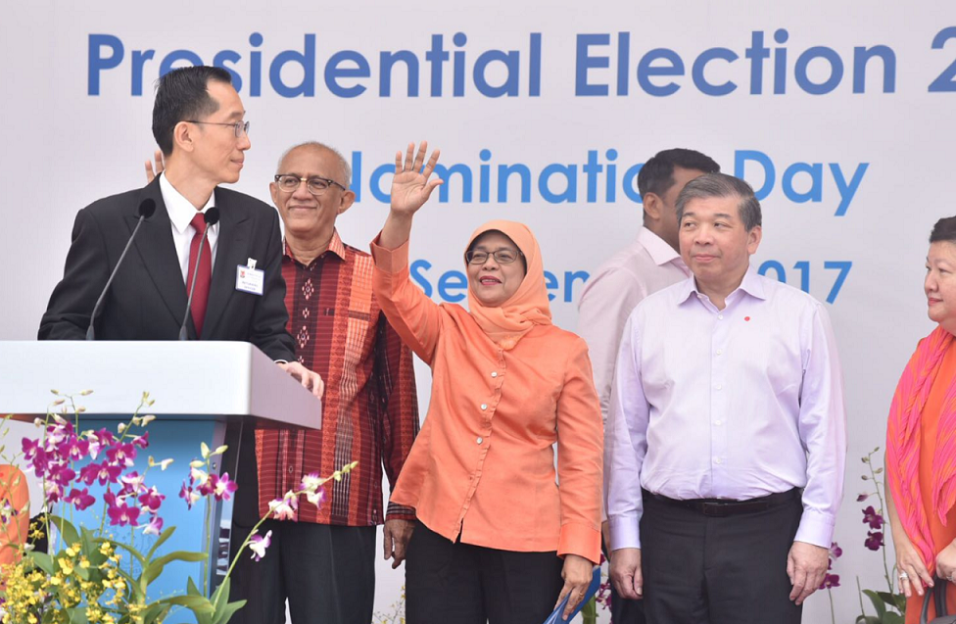
    Dr Tan was hailed as being robbed of the presidency while Mr Salleh was portrayed as a crony despite both are directly associated with the establishment and both were blocked from potentially contesting the presidency.

    The above inconsistency prompted me to ask if the anger was due to violated principles or violated opportunity of an individual.

    Unreservedly, I am supportive of Dr Tan’s challenge to the presidency. This does not mean that should a more qualified candidate be available, I should ignore.

    For example it has been widely publicised that Mdm Halimah has no financial background to be a custodian of the reserves. However, would Mr Salleh Marican be less qualified than Dr Tan C B in this aspect. What would the principle of meritocracy suggest?

    It is also known that Mdm Halimah is an immediate alumni of the establishment, however between Mr Salleh and Dr Tan, the association to the establishment of Dr Tan is as a former card carrying allowanced PAP MP who has refrained from joining a different political party since stepping down, while Mr Salleh was a volunteer director at a nonprofit community service arm of Temasek. What would the principle of independence suggest?

    Categorically I qualify that I am here not to pit Dr Tan against Mr Salleh but to highlight the tenor and treatment put forth by the alternative movement on two violated candidates, both with sound financial acumen, both with ties with the establishment and both non partisan to any political party at the time of planned candidacy.

    Thus I have to undertake a personal reflection and question aspects of privilege, rights and principles. With that, I need to caution myself against getting caught in a cult of personality because Democracy is not simply the propelling the voice of the majority (in the widest sense) or the rule of majority, democracy stands in symbiotic coupling to ensuring minority (in the widest sense) rights (in a sense just as wide).

    Without the latter, a discourse on Civil Liberties and Civil Rights that ensues will sit on an oppressive high ground as demand for justice on aspects where the majority feels shortchanged are heard loud while privileges that propels benefits to the same majority are retained in silence.


    Source: Rafiz Hapipi
     

  • Damanhuri Abas: It’s Not About Anti-Halimah, It Is About The Election Process

    Damanhuri Abas: It’s Not About Anti-Halimah, It Is About The Election Process

    The attempt to label this protest as anti-Halimah/Malay is misplaced. It was never about the person, it was about witnessing how the election process was systematically undermined, shortchanging citizen’s right to vote the best independent person for the vital role of Guardian of our National reserves as well as ensuring that meritocratic credentials are safeguarded in high public offices from potential conflict of interest situations.

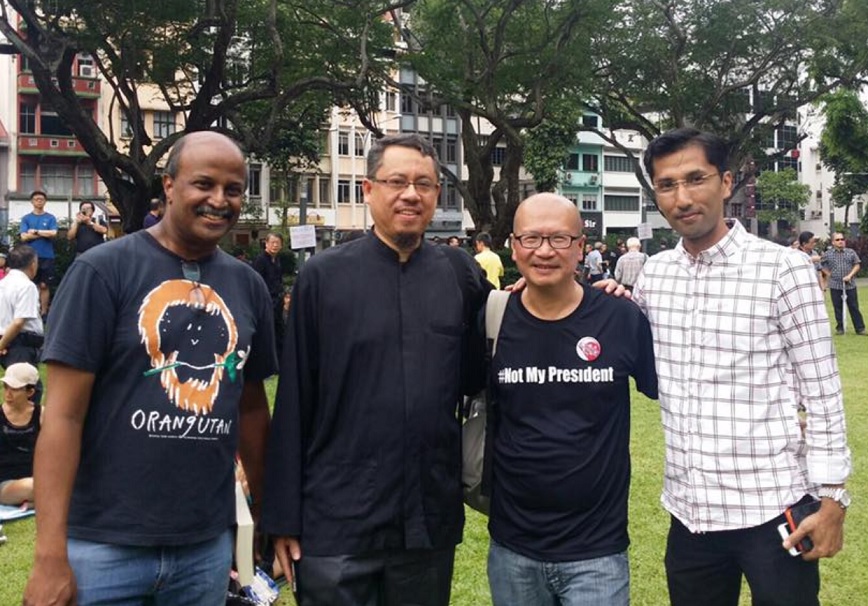
    While at HL, i met young concerned and disillusioned Singaporeans who asked important questions about race, race relations, racism, politics, reform, etc. Our exchanges sitting on the grass of HL revealed some interesting insights.

    1. What and who is the Malay race?

    Our race should never be what a committee decides. It is our ethnic identity inherited by birth and through organic cultural assimilation. No one should ever force an identity or race on anyone. After 52 years, society has evolved into a melting pot, creating a unique embracing Singaporean identity. This natural mix reflects social reality and is worthy of our celebration. However, when we politicise race, it gets messy very fast. This was clearly the case for this reserved PE when candidate’s race clearly do not fit the rigid pretentious race boxes and in the end was forced in anyway. It surely will be bruising. But its no fault of any candidate nor us, citizens. The blame lies squarely on those who imposed those rigid simplistic boxes on us to divide but then strangely claims it can unify.

    2. After 52 years, why is it that the Malay community needed this costly tokenism at the expense of our public money?

    Firstly, the community was never asked about it nor we wanted it. It was never our priority. The help that the Malay community needs is for the Government to stop boxing us in their box. If we had a box mentality to begin with, this country would never be multi-racial. The race boxes were legacies of Colonial past that the Government chooses to re-use instead of abandoning.

    3. What do the Malay community want?

    Fair chance to full unhindered access to equal opportunities in this country like every one else who are Singaporeans. Race based policies should stop immediately. Unjustified subliminal branding of Malays as inherently disloyal through unspoken security policies during National service must end. It is unjust and unfair that we as indigenous Malays are given a lower security clearance level by Mindef for no apparent reason explained for the last 52 years while new citizens from Mainland China, Myanmar, India, etc., etc., are given full or higher security clearance level than us. What have the Malays collectively done to inherit this blanket poisonous label?

    4. Why are there not many Malays at this protest event?

    The Malay leadership both in Government and in community have been systematically co-opted to be beholden and compliant. The outcome of which majority of the Malay community have seen and known only the PAP political leaders or friendly to PAP ones, throughout most of their lifetime. Any non-compliance to the status-quo is met with harsh consequences, ostracised and sidelined. Overtime, 52 years later, Malays are sceptical or suspicious of any non-Government related initiatives, they rather stay away and quietly support from a distance. For the Professionals, most are salaried employees and many are civil servants. So we see why the ‘endorsement’ of Mdm Halimah was fast and furious from the ‘community’. Sadly, the Malays by now are so used to singing from the same song-sheet, that they now do so, even without being asked. The rest, you can line the dots yourself.

    5. How can Singapore achieve political reform?

    The Government’s control on all aspects of life is dominant and almost total. This was achieved by design and numerous tweaking done overtime to guarantee that the political system and power structure remains unchallenged. Just think election process (GRC, gerrymandering, raising qualifying bars, short election campaign, changes to the constitutions and the parliamentary act), meritocracy vs elitism (SAP schools, nepotism and cronyism), ethnic quotas for HDB (low minority numbers used to justify GRC), the People’s Association (pro PAP), no media freedom, etc. We have a big daunting hazardous political mountain before us to climb. Every Singaporean must realise that for the opposition, public space is severely restricted, social media provides best outreach but its impact are small and limited. NGOs must participate in political related activism. Lawyers must raise their political game and no more remain a passive bystander. Finally, we need a unifying figure for this great reform effort, i.e. Dr Tan Cheng Bock or his equivalent.

    Personally, it was an afternoon well spent for the sake of our collective future. May this effort be blessed by God.


    Source: Damanhuri Bin Abas

  • Commentari: Perlantikan Secara “Paksa” Adalah Langkah Ke Belakang / 10 Sebab Kenapa Orang Terasa Marah Terhadap PE2017

    Commentari: Perlantikan Secara “Paksa” Adalah Langkah Ke Belakang / 10 Sebab Kenapa Orang Terasa Marah Terhadap PE2017

    Sebenarnya perlantikan secara “paksa” ini adalah langkah ke belakang (Regressive move) dan ini bukanlah kali pertama ia berlaku di Singapura. Mungkin Dr Maza tidak tahu perkara ini, khususnya point no 7.

    Natijah (Wanita bertudung menjadi presiden) tidak menghalalkan cara.

    Jangan mudah terpedaya dengan bentuk, sistem dominan hari ini dalamannya bersopak, maka mereka harus bersungguh-sungguh untuk tutup dengan baju besi hebat yang berkilat.

    Memang kalau diperhatikan dalam sejarah yang tidak berapa lama, mereka yang suka melaungkan slogan “Tajdid” ala modenisasi ini biasanya bersifat literalis dalam bab menanggapi sistem yang datang dari barat, sifat yang mereka benci dalam membaca teks agama mereka buat dalam membaca konteks. Sedangkan bukan sahaja teks, konteks juga kadangkala perlu ditakwil.

    “Pemilihan secara paksa” ini adalah untuk memastikan tiadanya dissenting voice yang benar-benar substantial daripada Presiden terhadap PAP.

    Dari En Mohd Khair :

    10 Sebab Kenapa ada orang begitu marah terhadap PE2017

    1. Tan Cheng Bock terhalang dari bertanding kerana calon dihadkan hanya kepada orang Melayu

    2. Satu-satunya calon Presiden yang Terpilih mempunyai ayah bukan dari keturunan Melayu

    3. Kriteria Presiden Terpilih diubah sehingga menyempitkan pilihan bagi calon-calon Melayu yang layak

    4. Tiadanya calon Melayu yang benar-benar dianggap Melayu tampil ke depan untuk bertanding. Kedua-dua calon lelaki mohon untuk bertanding datang dari susur galur Marican dan Khan, manakala yang dua lelaki lain adalah dari kaum Cina

    5. Definisi siapakah itu orang Melayu oleh pemerintah tidak diterima kerana dianggap sebagai terlalu longgar

    6. Siapakah Presiden Terpilih yang pertama? – Ong Teng Cheong atau Wee Kim Wee? Tan Cheng Bock mencabar bahwa Presiden Terpilih pertama bukan Wee Kim Wee, tetapi Ong Teng Cheong. Oleh itu, menurut kata Tan Cheng Bock, pilihanraya Presiden kali ini bukan yang terhad kepada kaum minoriti. Menurut pemerintah, Wee Kim Wee adalah Presiden Terpilih pertama kerana beliau Presiden Singapura yang pertama mempunyai bidang kuasa yang diluaskan oleh perlembagaan yang dipinda.

    7. Menghadkan Presiden Terpilih hanya kepada calon Melayu melanggar dasar meritokrasi Singapura dan Perlembagaan Negara

    8. Menghadkan Presiden Terpilih hanya kepada calon Melayu menguatkan lagi tanggapan yang masyarakat Melayu tidak boleh maju ke depan tanpa bantuan pemerintah – pola pemikiran bertongkat atau “crutch mentality”

    9. Kenapa Presiden Terpilih boleh dihadkan atau dikhususkan kepada kaum minoriti tetapi tidak pula untuk jawatan Perdana Menteri

    10. Kenapa tiada pilihanraya kecil apabila Puan Halimah Yacob mengosongkan kawasan undinya untuk bertanding bagi jawatan Presiden Terpilih

    Beberapa fakta relevan mengenai Kedudukan Presiden Singapura, samada dilantik atau diplih

    1. Puan Halimah BUKAN calon Presiden yang pertama kali menang tanpa bertanding. Sebelum ini, Mendiang S R Nathan juga pernah menang tanpa bertanding sebanyak DUA kali, iaitu pada tahun 1999 dan 2005, apabila tiada calon lain yang layak untuk terima Sijil Kelayakan atau Certificcate of Eligibility.

    2. Presiden-Presiden berikut dilantik, dan tidak dipilih melalui proses pilihanraya:
    2.1 Yusof Ishak, 1965 – 1970
    2.2 Benjamin Henry Sheares, 1970 – 1981
    2.3 Devan Nair, 1981 – 1985
    2.4 Wee Kim Wee, 1985 – 1993

    3. Perlembagaan dipinda pada 1991 untuk menjadikan kedudukan Presiden bukan lagi diisi dengan perlantikan, tetapi dipilih melalui proses pilihanraya. Kuasa Presiden juga diluaskan merangkumi kuasa terhadap perbendaharaan negara dan juga perlantikan jawatan-jawatan penting dalam pemerintah. Pindaan ini dilakukan sewaktu tempoh Presiden Wee Kim Wee. Dengan pindaan perlembagaan tersebut, Presiden Wee Kim Wee diberi kuasa seorang Presiden Terpilih. Presiden-Presiden Terpilih selepas itu adalah berikut:
    3.1 Ong Teng Cheong, 1993 – 1999
    3.2 S R Nathan, 1999 – 2005 – 2011
    3.3 Tony Tan, 2011 – 2017


    Source: Noor Deros

  • Dr Tan Cheng Bock: Don’t Be Afraid To Fight For What’s Right

    Dr Tan Cheng Bock: Don’t Be Afraid To Fight For What’s Right

    Happy National Day 2017

    Dear Singaporeans,
    This year has been an eventful year for me. In all that I have done, I believe that it has been for the good of our country. I want future generations to be proud of Singapore and all its achievements. Let us have the courage to stand up for our convictions. Never be afraid to fight for what is right. We all want the best for our nation.

    I look forward to celebrating National Day with my family and friends, and enjoying my grandchildren.

    My family and I wish you all a Happy National Day.


    Source: Dr Tan Cheng Bock

  • Dr Tan Cheng Bock: In A Democracy, We Must Question, Exchange Ideas

    Dr Tan Cheng Bock: In A Democracy, We Must Question, Exchange Ideas

    What is the definition of an Elected President? Does the government have the discretion to decide when to start a term count before a reserved election is triggered? And was the Attorney-General’s Chamber’s (AGC) advice to the Prime Minister on the reserved election a “mistake of law”?

    These were the issues that took centre stage during former presidential candidate Tan Cheng Bock’s appeal against a High Court ruling on his constitutional challenge to the timing of the reserved presidential election

    The case was heard on Monday (31 July) in a packed gallery at the Court of Appeal before five judges: Chief Justice Sundaresh Menon, Judge of Appeal Judith Prakash, Judge of Appeal Steven Chong, Justice Chua Lee Ming and Justice Kannan Ramesh. Some 50 members of the public, many of them supporters of Tan, also waited outside the courtroom.

    Tan and his wife Cecilia were both present. Aljunied Member of Parliament Sylvia Lim, whose name was referenced several times during the hearing, was spotted in the gallery, along with former National Solidarity Party chief Lim Tean.

    The High Court ruling

    This year’s presidential election is reserved for Malay candidates, following constitutional amendments last year that reserves an election for a particular racial group that has not been represented in the office for five consecutive terms. The term count starts from the late Wee Kim Wee, according to the government, as he was the first to wield the powers of an Elected President.

    Earlier this month during a High Court hearing on his legal challenge, Tan argued through his lawyer Chelva Retnam Rajah that the term count should start from the late Ong Teng Cheong as Wee was not elected by a popular vote. In rejecting his arguments, Justice Quentin Loh noted that the Constitution states that a President can be “any person for the time being exercising the functions of the office of the President”.

    Loh referred to two articles of the Constitution. Specifically, “Article 19B(1) provides for a Reserved Election for a community if no person from that community has held the office of President for any of the five most recent terms of office of the President” while “Article 164(1)(a) provides for Parliament to specify the first term of office of the President to be counted under Article 19B(1) (“First Term”).”

    The High Court then also found that there is nothing in the text or textual context which limits Parliament’s power by requiring Parliament to start the term count from the term of office of a popularly elected President.

    The appellant’s claims

    Rajah, who represented Tan again, argued his case against the ruling on three main points. Firstly, he maintained that Article 2 of the Constitution, which sets out the definition of the “president of Singapore”, refers only to an Elected President. The term count should therefore start with the late President Ong.

    Secondly, President Wee’s second term in office was only chosen for the start of the term count because Parliament mistakenly thought he was an Elected President. Rajah pointed out that the “specific mischief” outlined in Article 19B(1) was to invoke a reserved election if a particular race had not been represented for five consecutive elections.

    Thirdly, Parliament acted under a “mistake of law”, based on the advice of the AGC, which has not been publicly disclosed. Rajah noted Prime Minister Lee Hsien Loong’s speech to Parliament on 7 November last year, when Lee said, “We have taken the Attorney-General’s advice. We will start counting from the first President who exercised the powers of the Elected President, in other words, Dr Wee Kim Wee. That means we are now in the fifth term of the Elected Presidency.”

    Rajah noted that during the parliamentary debate on amendments to the presidential election last November, Aljunied MP Sylvia Lim had prefaced her questions with a statement that the Attorney-General advised the PM to start the term count from President Wee, “no one corrected her, not even PM Lee”.

    CJ Menon noted, “You’re saying (that) Parliament’s decision was repeatedly framed by the Attorney-General’s advice (and) predicated on legal advice which you contend is wrong.”

    In response, Rajah quipped, “Your Honour has perhaps understood my argument better than I have.”

    The respondent’s claims

    Proceedings were temporarily interrupted when Zeng Guoyuan, a would-be parliamentary candidate on multiple occasions, was escorted out of the gallery by a security officer after he continually interrupted the hearing with his remarks. “Don’t waste the court’s time,” he said, as he walked off.

    Representing the government, Deputy Attorney-General Hri Kumar said, “There has been a narrative since this application was filed…that there has somehow been a re-writing of history…that Wee Kim Wee has been deemed an elected president. (But) no one said he was an elected president…the government had to start the count somewhere and it gave its reasons for starting with Wee Kim Wee.”

    Kumar charged that Tan’s case was based on “staggering errors of fact, law and logic”. He stressed that Article 164, a transitional provision for Article 19B, gives Parliament “unfettered” discretion to decide when to start the term count and does not restrict it to popularly elected presidents.

    Addressing Rajah’s claim that there had been a “mistake of law” following the Attorney-General’s advice on the reserved election, Kumar denied this. “The nature of the advice was not disclosed or even discussed in Parliament. The Prime Minister started the count from Wee Kim Wee not because he was an elected president, but because he exercised the powers of the Elected President. It was a policy decision.”

    He added, “The appellant asserted that the Attorney-General had told the Prime Minister to start the count from Wee Kim Wee, which is not what the Prime Minister said at all.”

    Judgement has been reserved in the case. It is not known when the Court of Appeal will make its decision known.

    Speaking to reporters at the end of the hearing, Tan said, “It is not just acceptance (of the government’s decision), we must question it…If at the end, it is found we were wrong, then we accept it. That is what democracy is about: exchange of ideas.”

    His wife Cecilia added, “If we are right, the government should accept it as well.”

    Source: https://sg.news.yahoo.com