Tag: terrorism

  • Iraq Declares The Country Cleared Of ISIS Forces. Is This The End Of Them?

    Iraq Declares The Country Cleared Of ISIS Forces. Is This The End Of Them?

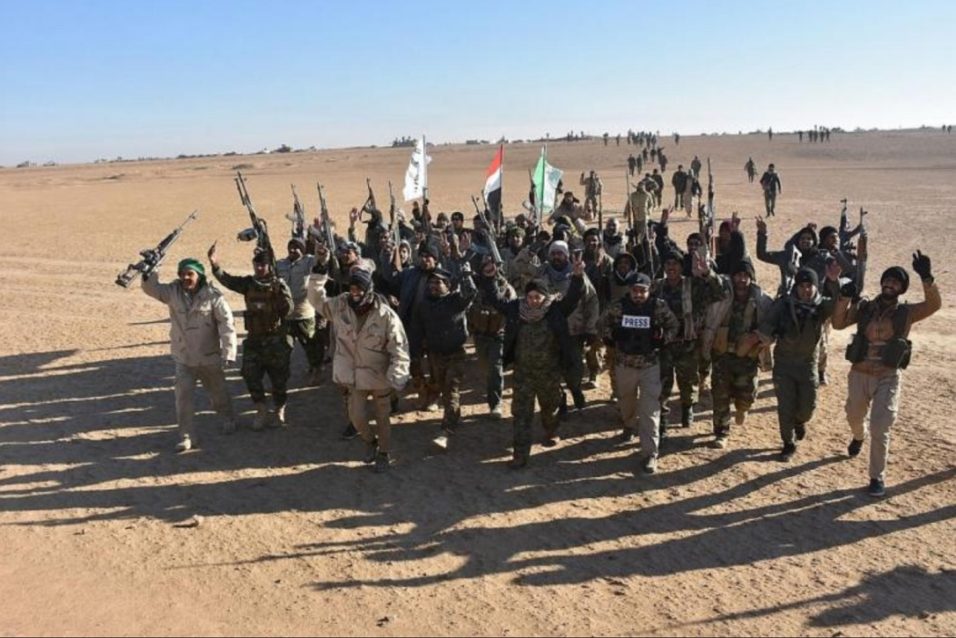
    “Our forces are in complete control of the Iraqi-Syrian border and I therefore announce the end of the war against Daesh (ISIS),” Mr Abadi told a conference in Baghdad.

    “Our enemy wanted to kill our civilisation, but we have won through our unity and our determination. We have triumphed in little time.”

    As the authorities announced a public holiday yesterday “to celebrate the victory”, Mr Abadi said in a speech that Iraq’s next battle would be to defeat the scourge of corruption.

    ISIS seized vast areas north and west of Baghdad in a lightning offensive in 2014.

    Iraq’s fightback was backed by an air campaign waged by a US-led coalition.

    The US State Department hailed the end of the jihadists’ “vile occupation” but cautioned that the fight was not over.

    “The United States joins the Government of Iraq in stressing that Iraq’s liberation does not mean the fight against terrorism, and even against ISIS, in Iraq is over,” State Department spokesman Heather Nauert said.

    Iraq’s close ally Iran already declared victory over ISIS last month, as the jihadists clung to just a few remaining scraps of territory.

    But Mr Abadi said at the time he would not follow suit until the desert on the border with Syria had been cleared.

    On the Syrian side of the border, ISIS is also under massive pressure. Last Thursday, Russia’s defence ministry said its mission in support of the Syrian regime to oust IS had been “accomplished” and the country was “completely liberated”.

    Despite the victory announcements, experts have warned that ISIS retains the capacity as an insurgent group to carry out high-casualty bomb attacks using sleeper cells.

    Other experts warned that ISIS fighters have shifted bases to war-torn Afghanistan.


    Source: AFP

  • ST Commentary: Of Minorities, Majorities And Sensitivities Across Race And Religion

    ST Commentary: Of Minorities, Majorities And Sensitivities Across Race And Religion

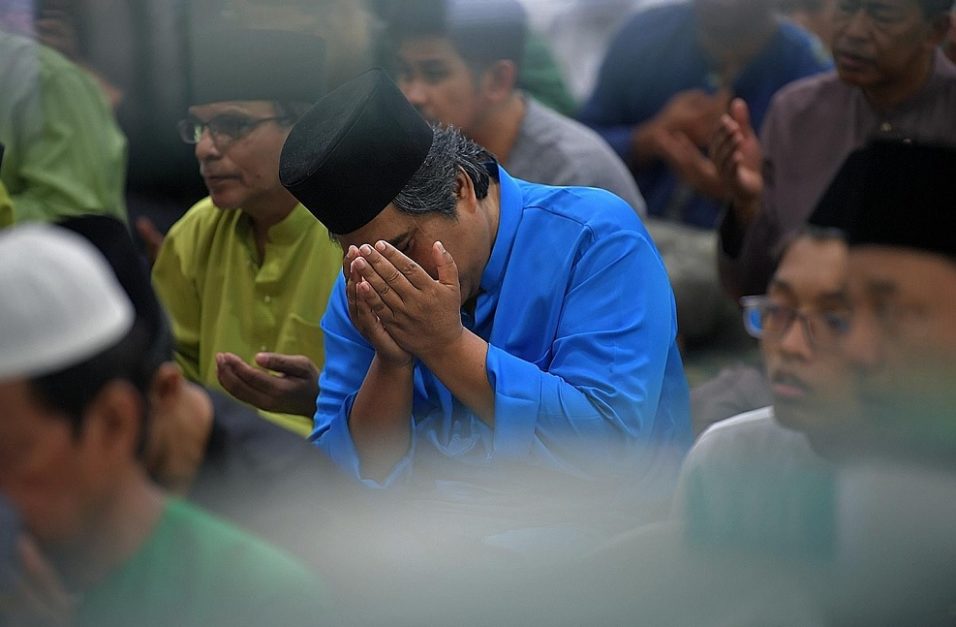
    Do individual Muslims have a special obligation to speak up when radicalised Muslims are in the news for attacks or arrests – such as by condemning the acts or clarifying that Islam is a religion of peace?

    Some non-Muslims in Singapore think so, and it can cause unease among their Muslim friends.

    This discomfort was given voice in Parliament this month, in speeches by two Muslim MPs, in the debate on a motion to strengthen multiracialism in the fight against terror.

    Ms Rahayu Mahzam (Jurong GRC) cited a conversation with a non-Muslim friend about terrorism. She was made to feel defensive and frustrated when he pressed her to say what “true Muslims” were doing to address the problem.

    “I told him, I do not know these people, I do not understand their psyche and it was unfair to put the burden on Muslims alone to resolve this issue,” she said.

    She found a similar situation playing out on social media, noting: “I saw many Facebook postings of Muslim friends condemning the terrorist attacks but also expressing similar frustrations of having to explain to non-Muslim friends that the terrorists’ actions were not aligned with Islamic teachings.”

    Dr Intan Azura Mokhtar (Ang Mo Kio GRC) also warned against “religious suspicion against the Muslims”, adding that “we cannot allow Muslims to feel apologetic for what these terrorist groups – which proclaim to carry out their heinous acts in the name of Islam – have done”.

    It is not that non-Muslims are not allowed to expect anyone from the Muslim community to come out firmly against terrorism or to detail what is being done about the problem within the community. The point here is that they should not expect each and everyone in the Muslim community to have to explain themselves to the satisfaction of any non-Muslim who happens to have doubts on where they stand.

    The fact is, each time someone in the Singaporean Muslim community is implicated in terrorist activity or detained for being radicalised, prominent representatives of the community do issue statements setting out in no uncertain terms the view of the community as a whole. These representatives may be from the Islamic Religious Council of Singapore or other groups, such as the Federation of Indian Muslims, or they may be political leaders who are Muslim. These statements should suffice.

    Non-Muslims should accept them in good faith as being representative of the views of Singaporean Muslims in general – which they are – and not require each individual Muslim they meet in the course of the day to have to prove his or her sincerity afresh.

    Pressing individual Muslims on the issue in person and on social media or requiring them to speak apologetically or to feel apologetic reflects an underlying distrust. It can feel like a slight. It is incumbent on non-Muslims here to be sensitive in their words and actions.

    The reality on the ground is that the Muslim community in Singapore is far more committed to multiculturalism and far less inclined towards the radical ideology of groups like the Islamic State in Iraq and Syria and Al-Qaeda than Muslims in most countries.

    The radicalised segment of Muslims here is very small by proportion. Furthermore, they receive virtually no support from the wider community. There is thus no basis for the kind of scepticism implied by the encounters Ms Rahayu spoke about. (If the radicals in fact receive a lot of latent warmth from ordinary Muslims, then it would be a different story. But that is not the case.)

    What non-Muslims should do, therefore, is: first, understand there is a majority who are distinct from a very small minority, and second, not let that minority colour the way they interact with the majority. But it is possible that the corollary is also true – that Muslims need to approach the issue in a similar way.

    Muslims can see things this way: There is a small minority of non-Muslims who lack prudence in the way they converse with Muslims on the issues of terrorism and radicalism. The broad majority of non-Muslims are not like that – they understand the subtleties or, if not, they are careful not to broach the topic. If this is true, then Muslims too should not allow the actions and words of a minority among non-Muslims to colour their interactions with the majority of non-Muslims.

    In other words, the majority of Muslims and the majority of non-Muslims – who together are the majority of Singapore – instinctively understand, believe in and show respect for multi-religious norms.

    But the two minorities complicate the picture – a Muslim minority who are radicalised, and a non-Muslim minority who are callous or ignorant in the way they speak or act.

    The worst outcome for Singapore is for the two minorities to be allowed to dominate the narrative, thereby dragging the whole of society into an insalubrious atmosphere of suspicion and counter-suspicion.

    The two majorities need to do two things. Each majority must draw a line of principle between itself and its minority, and it must then stand in solidarity with the other majority, so that society stays united.

    In the aftermath of terror attacks in the West, this majority-minority dynamic is often in play.

    In Britain, London and Manchester have reported sharp spikes in the number of anti-Muslim hate crimes after terrorist attacks in the two cities this year – that is, a minority of Muslims conducting attacks on society, and a minority of non-Muslims carrying out just as malignant reprisals on Muslims.

    But when the two majorities defend one another and show solidarity, they can prevail.

    An example of this was the #illridewithyou campaign, a social media campaign in Australia after the Sydney cafe hostage incident in 2014. Non-Muslim Australians offered to ride on public transport with Muslim Australians, to ensure the latter’s safety.

    When the two majorities stand as one, the two minorities are forced back into their dark corners on the fringe of society.

    In Singapore, no physical attack has happened yet, in one direction or the other. But if the country can guard against verbal unpleasantries, like those highlighted in Parliament this month, then there can be more confidence about preventing physical ones too.


    Source: http://www.straitstimes.com (Elgin Toh, Insight Editor)
  • Facebook Bans Posts On Rohingya Militant Group ARSA; Group Placed On ‘Dangerous Organisation’ List

    Facebook Bans Posts On Rohingya Militant Group ARSA; Group Placed On ‘Dangerous Organisation’ List

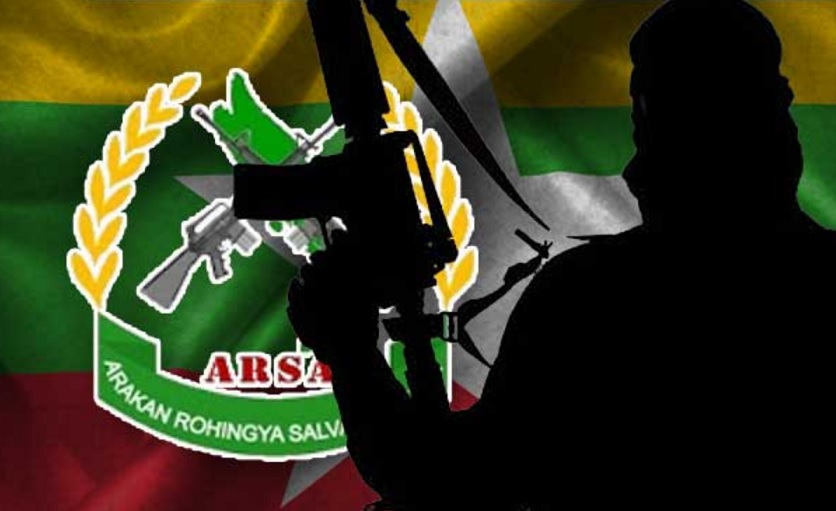
    Facebook has confirmed that the Myanmar militant outfit the Arakan Rohingya Salvation Army (ARSA) has been placed on its “dangerous organisation” list, The Guardian reported on Wednesday (Sep 20).

    The social media giant, according to the report, has asked its moderators to remove any content “by or praising” the group.

    Facebook’s rules and community standards ban posts by organisations which it deems as groups engaged in terrorist activities, crime, mass murder and organised hate.

    Attacks by ARSA militants on police posts and an army base in Rakhine on Aug 25 prompted a counter-offensive by the Myanmar military, as the Rohingya exodus to Bangladesh continues amid the ongoing crisis in western Myanmar.

    ARSA has been declared a terrorist organisation by the Myanmar government, which rebuffed the group’s ceasefire declaration on Sep 10. “We have no policy to negotiate with terrorists,” said State Counsellor Aung San Suu Kyi on Twitter.

    ARSA first emerged in October 2016 after it attacked three police outposts in the Maungdaw and Rathedaung districts of Myanmar, killing nine policemen.


    Source: http://www.channelnewsasia.com

  • Singaporeans Imran Kassim and Shakirah Begam Abdul Wahab Arrested Under ISA For Terror-Related Activities

    Singaporeans Imran Kassim and Shakirah Begam Abdul Wahab Arrested Under ISA For Terror-Related Activities

    Two Singaporeans – Imran Kassim, 34, and Shakirah Begam Abdul Wahab, 23, were arrested in July under the Internal Security Act (ISA) for terror-related activities. Imran Kassim was issued with an Order of Detention for intending to undertake armed violence overseas while Shakirah Begum was issued with a Restriction Order for initiating and maintaining contact with foreign terrorist fighters

    In a news release, MHA said Imran was radicalised by the violent propaganda of Islamic State (IS). He had tried to make his way to Syria to join IS on at least two occasions – in 2014 and 2015.  According to the authorities, he has also admitted that he was prepared to attack Singapore Armed Forces (SAF) personnel deployed in the global coalition to fight IS, or hold them hostages to demand ransom from the Singapore Government. “His radical and pro-militant views attracted the attention of people close to him, who then reported him to the authorities,” said MHA.

    As for the other suspect Shakirah, MHA said had actively initiated online contact with IS foreign fighters operating in the conflict zone, after learning of their activities from mainstream media reports and online sources. “She came across social media details of a foreign terrorist fighter and decided to initiate contact with him. Over time, she expanded her online contacts to several other foreign fighters,” said MHA. It added that Shakirah, an administrative assistant, did so mainly because she enjoyed their attention, and not because she had been deeply radicalised by the violent propaganda of IS.

  • Muslims Carried Out Just 12.4% Of Attacks In The US But Received 41.4% Of News Coverage

    Muslims Carried Out Just 12.4% Of Attacks In The US But Received 41.4% Of News Coverage

    Terror attacks carried out by Muslims receive more than five times as much media coverage as those carried out by non-Muslims in the United States, according to an academic study. Analysis of coverage of all terrorist attacks in the US between 2011 and 2015 found there was a 449 per cent increase in media attention when the perpetrator was Muslim. Muslims committed just 12.4% of attacks during the period studied but received 41.4% of news coverage, the survey found. The authors said the finding suggests the media is making people disproportionately fearful of Muslim terrorists.

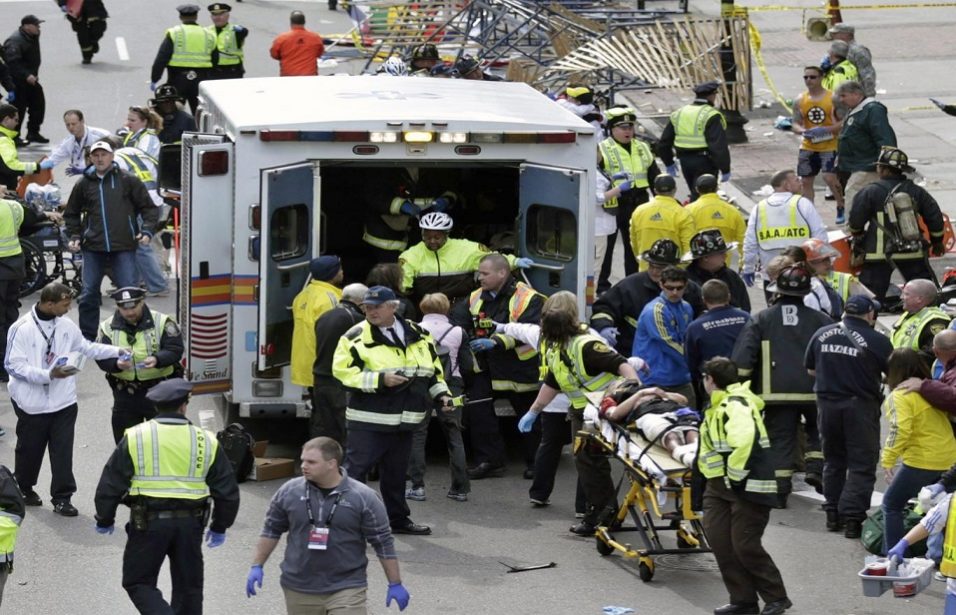
    Scientists studied US newspaper coverage of every terrorist attack on American soil and counted up the total number of articles dedicated to each attack. They found that the 2013 Boston Marathon bombing, which was carried out by two Muslim attackers and killed three people, received almost 20% of all coverage relating to US terror attacks in the five-year period. In contrast, reporting of a 2012 massacre at a Sikh temple in Wisconsin that left six people dead and was carried out by Wade Michael Page – a white man, constituted just 3.8% of coverage.

    A mass shooting by Dylann Roof, who is also white, at an African-American church in Charleston, South Carolina, killed nine people but received only 7.4% of media coverage, while a 2014 attack by Frazier Glenn Miller on a Kansas synagogue left three dead but accounted for just 3.3% of reports. All of the above attacks are considered to meet widely-used definitions of terrorism, according to researchers at Georgia State University.


    Source: Independent