Tag: women

  • Other Malay Stereotype Stories Surfaces After Viral Google & Canteen Helper Story

    Other Malay Stereotype Stories Surfaces After Viral Google & Canteen Helper Story

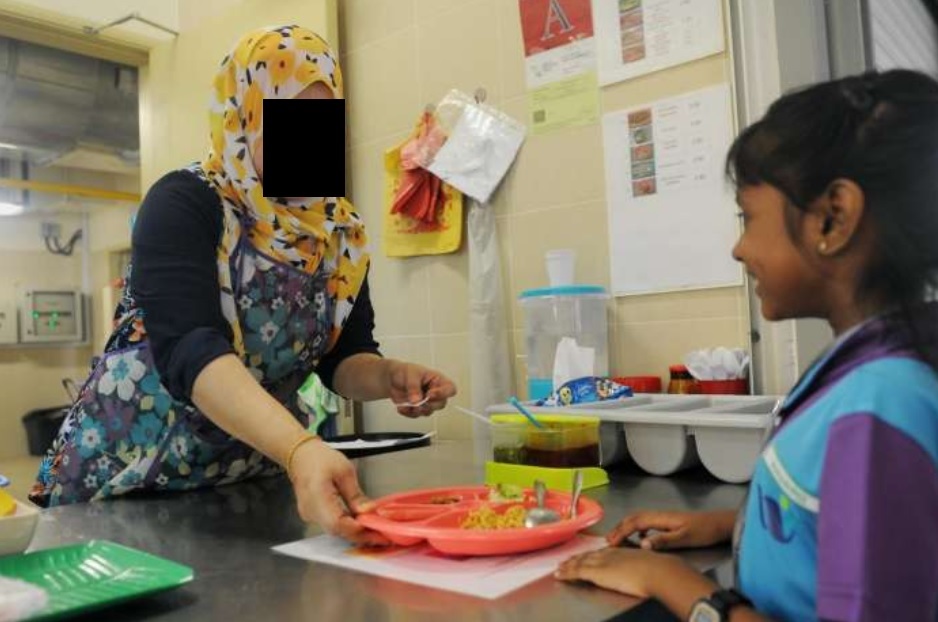
    After Singaporean woman, Atikah Amalina, who goes by the handle @thetudungtraveller, shared with the public of her experience with microaggression due to being Malay and wearing a tudung, a similar experience was shared by another lady named Ezura Al-Barakbah.

    Like Atikah whom a driver assumed worked in the canteen in Google, Ezura was stereotyped as a “kakak canteen who is uneducated and knows nothing but cooking.” Some even questioned how she got invited to Pesta Perdana and whether she religiously queued up at Mediacorp in order to get her hands on the tickets.

    This was her post in full,

    I know how it feels.

    They stereotype me as kakak canteen who is uneducated and knows nothing but cooking.
    So when they saw Medic Kid on TV then somemore got the cheek to say, ooh i thought you are a fulltime kitchen help.😱

    And asked me how come you got invited to Pesta Perdana ah?
    Is it you go Mediacorp queue up for the tickets ah😅

    I dont care about what others may think about me.
    All i know is i want to help the school and cook for the kids.
    It takes a huge village to raise a kid ok!!!

    I dont care if you look down on me pushing my trolley cart, wearing instant tudung and makeup less.

    Coz at the end of the day I loove cooking for the kids and arranged my busy schedule just to make time to cook for them

    Hey even though if I am just a kakak canteen in your eyes,
    A canteen cook is more knowledgable than you ok!!
    Must know costing, accounts, marketing be it for groceries or marketing on social media

    The stereotypes of a Malay lady wearing a hijab.. what else have you encountered?

    Share with us in the comments section.


    Rilek1Corner

  • One Lady Spoke Out About Being Sexually Harassed During Hajj, And Many Other Women Started Sharing

    One Lady Spoke Out About Being Sexually Harassed During Hajj, And Many Other Women Started Sharing

    While one might think that men would tame their vile urges while performing their religious Islamic duties in the holy city of Mecca, the reality is quite disturbing.

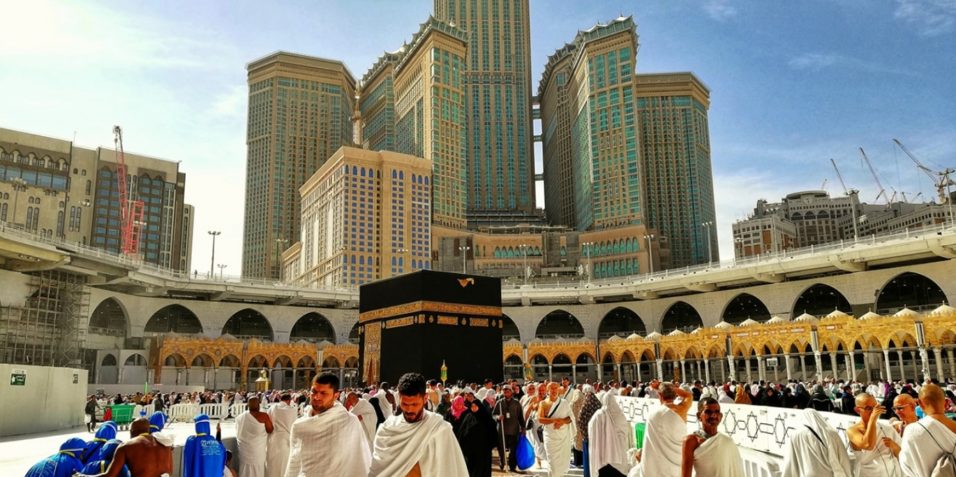
    Women have recently been speaking out about their experiences with sexual harassment while carrying out tawaf around the Kaaba during their pilgrimage to Mecca.

    It all started when Pakistani Sabica Khan shared a heartfelt Facebook post in which she detailed being harassed while performing tawaf, after which women began sharing their own encounters with sexual harassment in Mecca.

    On Facebook, she wrote:

    “*I was afraid to share this because it might hurt your religious sentiments*.

    While performing my tawaaf around the Kaaba after isha prayer, something really weird happened. It was my 3rd tawaf, and I felt a hand on my waist. I thought it was just an innocent mistake. I completely ignored. Then… I felt it again. It made me feel very uncomfortable. I kept moving. During my 6th tawaf I suddenly felt something aggressively poking my butt, I froze, unsure of whether it was intentional. I ignored and just kept moving slowly because the crowd was huge. I even tried to turn around but woefully couldn’t. When I reached the Yemeni corner, someone tried to grab and pinch my butt. I decided to stop there. Grabbed his hand and threw it off me *couldn’t move or turn around* I was literally petrified. Couldn’t even escape, so I stood, and turned around as much as I could, to see what’s happening, I turned around but… couldn’t see who it was.
    I felt so violated. I felt unable to speak out. Stayed quiet because I knew no one would trust me, or nobody would take it seriously, except my mum. So I told her everything when I returned to the hotel room. She was incredibly confused and devastated. After this incident, she never allowed me to go there again alone.

    It’s sad to say that you are not even safe at holy places. I’ve been harrased, not once, not twice , but thrice. My entire experience at the holy city is overshadowed by this horrible incident.

    I believe it’s totally okay and important to be open about harassment.
    Don’t know how many of you had similar experience there but this incident has unfortunately left me feeling upset.”

    Encouraged by Khan’s words, several women commented on the post with their own experiences.

    One woman, who chose to remain anonymous, said she has been sexually harassed multiple times during her many visits to Mecca for Umrah, the non-mandatory Islamic pilgrimage.

    She said harassment is most common in the queue leading to the Black Stone, a rock set into the eastern corner of the Kaaba.

    She explained that she has encountered “pinches and inappropriately being touched by male organs at the butt” on multiple occasions.

    As a result, during her recent visits to Mecca, she has been avoiding the Black Stone and performing tawaf in the outermost perimeter, which is less crowded.

    Others expressed their thoughts and experiences as they leave their comments on the issue.

    “Women aren’t safe anywhere, I experienced more or less same during tawaf at Huj 2010”

    “I had a similar experienced when a random guy with dare looks tired to put his hand over mine when i was leaning on one of Kabba’s walls…..Another one harassed me verbally…in both times i felt unsafe ans threatened even at Allah’s home…the holiest place on Earth but disgraces by human beasts.”

    “I am so, so sorry. Something along the lines of what you experienced happened to me as well. Do not let this overshadow your entire experience of performing your religious duty. You are so courageous to share this, and you are definitely not alone. That doesn’t make the situation any better, unfortunately. You did the right thing and did what you could to escape it. Im very sorry and making duas for you.”

    “You are not alone. I believe you. It happened to me as well. No hand on the wrist but definite poking on the butt. Twice. This ws when i was trying to touch the black stone. I also ignored it the first time around thinking while there was so much bumping going on, it must have happened by mistake. But the second time i was sure it was no mistake. I turned around but could only do a 90 degree turn which left me against the pushing crowd in a very wrong position and i started drowning in the crowd losing my breath. God knows how i was ale to get out but i do remember completing the last 2 tawafs and sitting to pray nafal prayers, thats when i realised i was still trembling.”

    “One of my friend had similar experience. You are so brave to open up.”

    “It doesn’t mean that those who are going to holy places have holy hearts. Majority of them are corrupt and sinful people. they perform their haj to deceive themselves and God but after they start doing more worst things.”

    “Places don’t matter, it’s the heart that needs to have God in it. You’re not the only one to have gone through this, Sabica. It certainly ruins the whole experience. Incidents of groping, harassing and pickpocketing in Harems are innumerable.”

    Source: stepfeed


    Rilek1Corner

  • Police Officers In Shanghai Knocked Down Woman And Child Over Parking Ticket [Video Viral]

    Police Officers In Shanghai Knocked Down Woman And Child Over Parking Ticket [Video Viral]

    Footage has emerged from China of a police officer slamming to the ground a woman holding a child.

    In the video, which was filmed in Shanghai on September 1, the woman holds a toddler with one arm as she argues with a police officer.

    When the woman begins to push the officer, he later slams her and her child to the ground hard.

    Two passersby rush to help the distressed child as the police restrain her mother with force.

    Some infuriated by the incident allegedly attacked the officers involved and was recorded in a separate video.

    The police officer has been suspended, according to local news.

    It is believed that the confrontation was over a parking infringement.


    Rilek1Corner

  • Bus Seats Mistaken For Burqas By Members Of Anti-Immigrant Group

    Bus Seats Mistaken For Burqas By Members Of Anti-Immigrant Group

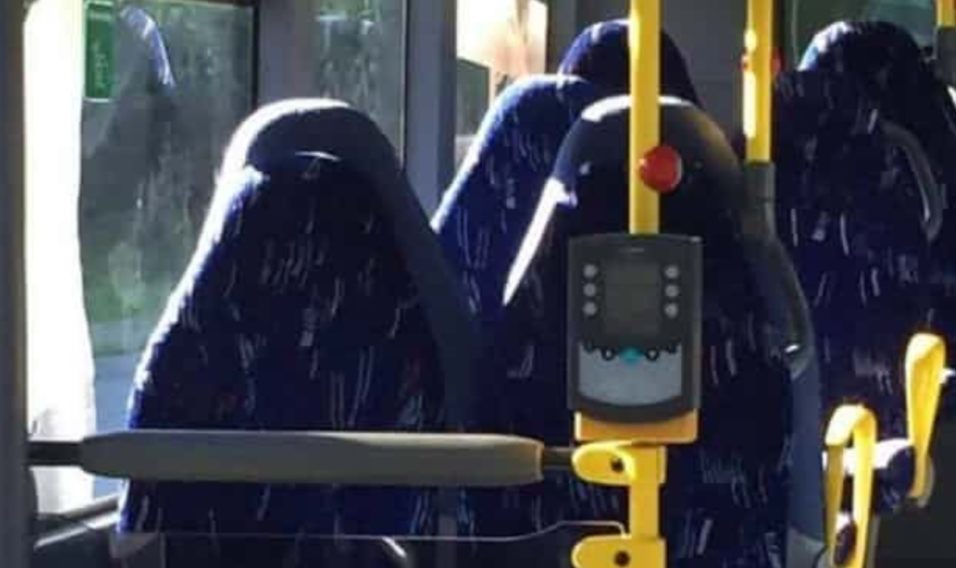
    A Norwegian anti-immigrant group has been roundly ridiculed after members apparently mistook a photograph of six empty bus seats posted on its Facebook page for a group of women wearing burqas.

    “Tragic”, “terrifying” and “disgusting” were among the comments posted by members of the closed Fedrelandet viktigst, or “Fatherland first”, group beneath the photograph, according to screenshots on the Norwegian news website Nettavisen.

    Other members of the 13,000-strong group, for people “who love Norway and appreciate what our ancestors fought for”, wondered whether the non-existent passengers might be carrying bombs or weapons beneath their clothes. “This looks really scary,” wrote one. “Should be banned. You can’t tell who’s underneath. Could be terrorists.”

    Further comments read: “Ghastly. This should never happen,” “Islam is and always will be a curse,” “Get them out of our country – frightening times we are living in,” and: “I thought it would be like this in the year 2050, but it is happening NOW,” according to thelocal.no and other media.

    The photograph, found on the internet, was posted “for a joke” last week by Johan SlĂ„ttavik, who has since described himself as “Norway’s worst web troll and proud of it”, beneath a question asking the group: “What do people think of this?”

    SlĂ„ttavik told Nettavisen and Norway’s TV2 he wanted to “highlight the difference between legitimate criticism of immigration and blind racism”, and was “interested to see how people’s perceptions of an image are influenced by how others around them react. I ended up having a good laugh.”

    It went viral in Norway after Sindre Beyer, a former Labour party MP who said he has been following Fatherland first for some time, published 23 pages of screenshots of the group’s outraged comments.

    “What happens when a photo of some empty bus seats is posted to a disgusting Facebook group, and nearly everyone thinks they see a bunch of burqas?” he asked in a post shared more than 1,800 times.

    The comments suggested the vast majority of the anti-immigrant group’s members saw the photo as evidence of the ongoing “Islamification” of Norway, although a small number pointed out it was in fact a picture of bus seats. One warned the group was making itself look ridiculous.

    Beyer told Nettavisen: “I’m shocked at how much hate and fake news is spread [on the Fedrelandet viktigst page]. So much hatred against empty bus seats certainly shows that prejudice wins out over wisdom.”

    The head of Norway’s Antiracist Centre, Rune Berglund Steen, told the site that people plainly “see what they want to see – and what these people want to see are dangerous Muslims”.

    Norway recently became the latest European country to propose restrictions on the wearing of burqas and niqabs, tabling a law that will bar them from kindergartens, schools and universities. France, the Netherlands, Belgium, Bulgaria and the German state of Bavaria all restrict full-face veils in some public places.

    The country’s minority government, a coalition of the centre-right Conservatives and the populist Progress party that faces elections next month, said in June it was confident it would find opposition support for the move.

    Per Sandberg, then acting immigration and integration minister, told a press conference that face-covering garments such as the niqab or burqa “do not belong in Norwegian schools. The ability to communicate is a basic value.”


    Source: https://www.theguardian.com

  • The Lives They Live: She Fell For Her Man After Marriage

    The Lives They Live: She Fell For Her Man After Marriage

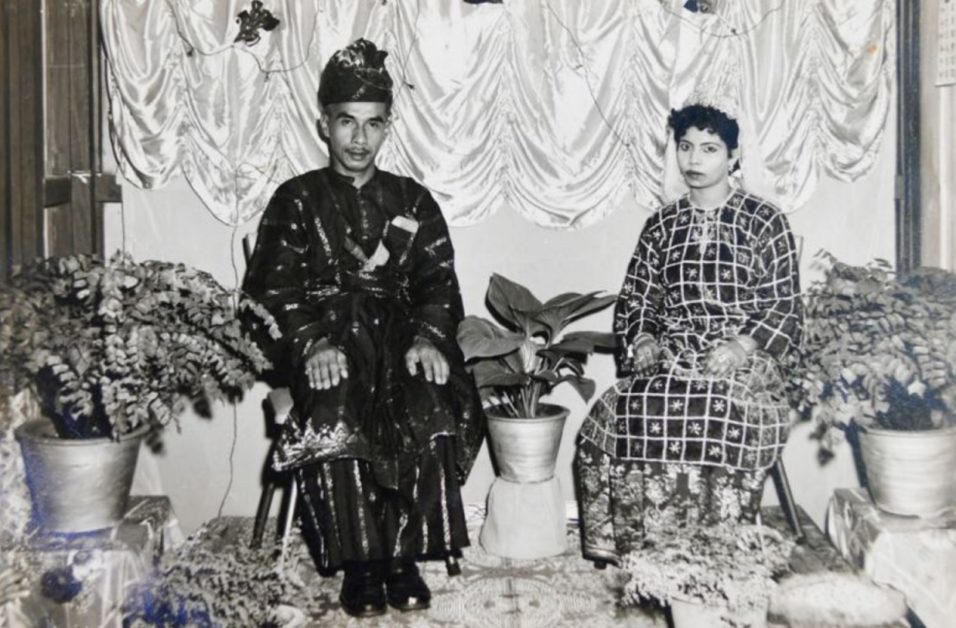
    In 1961, Madam Zulaika Mohamad Osman agreed to marry a man she had never met.

    She was 21.

    He was double her age, at 41 – a widower with one daughter.

    The matchmaker was a Chinese neighbour of hers, who worked with Mr Ismail Awang in the same construction company.

    Madam Zulaika, who has never gone to school, said in Malay: “My neighbour told me my husband was a good man and he would make a good husband and father. I said ‘yes’ immediately as I trusted my neighbour as he was like family to me.”

    Arranged marriages were the norm in those days, the 77-year-old said, and it did not occur to her that she should try to get to know her suitor before saying “I do”.

    So she said “yes” to the big question – without even knowing what her groom looked like or dating to see if they were compatible.

    About a month after she agreed to the match, Mr Ismail, a storeman, went to her home to propose marriage through her elders and the couple met for the first time.

    She was so nervous during that first meeting that she grabbed a relative’s baby to cover her face when he asked to see her.

    And she spent the rest of his visit hiding in the kitchen.

    They did not speak at all.

    “When I saw my husband for the first time, there were no feelings (of love). The feelings came later,” she said. “What struck me was that his hair was white. Even his eyebrows were white.”

    Three months later, they held their wedding ceremony.

    Match-made unions were the norm in Singapore back then, noted sociologist Mathew Mathews. The practice died out as a growing number of women became educated, joined the workforce and sought to make their own choices in life, he said. However, in pre-independence Singapore, educational and employment opportunities for women were limited and being match-made by one’s parents or relatives was the norm. Besides, everyone was expected to get married and start a family, said the senior research fellow at the Institute of Policy Studies.

    “There was also a greater expectation to follow parental wishes and one of the parents’ roles was to help ensure a good marriage match for their children,” he said.

    “Arranged marriages have always been associated with growing in love, rather than falling into love. Today’s notions of marriage differ considerably – people often don’t enter into marriage unless they fall in love.”

    Indeed, Madam Zulaika and Mr Ismail grew into love. Both shared common experiences, having suffered the loss of loved ones.

    She was an orphan. Her mother died of tuberculosis when she was just five. Her father, who did maintenance work in a market, died of a heart attack when she was in her teens. The second of six children, she started earning her own keep by washing clothes for others when she turned eight or nine.

    He was just as bereft, having lost his first wife and two children to various illnesses. He was left with just one daughter.

    After marriage, Mr Ismail became a hands-on husband and father, who helped around the house.

    This was unlike Madam Zulaika’s experience with other men.

    Growing up, all the men she saw left the chores and child-rearing to the women but not her husband. He changed diapers, bathed the children and helped with housework.

    “He also treated my family very well. He was very kind and would always help others. He was also a very gentle person,” she said.

    After a few months of matrimony, she found herself falling for his kindness and gentleness.

    He was ever ready to open his wallet and even his house to those in need. For example, he bought groceries for a relative whose husband abandoned her so that she would not go hungry. Relatives who needed temporary shelter were always welcome at their three-room flat in MacPherson.

    But Mr Ismail died suddenly of a heart attack after 17 years of marriage. He was 58 years old.

    The first few years after his death were the toughest. The couple have six children – two sons and four daughters. Their youngest child was only nine then.

    Madam Zulaika, who had worked throughout her marriage as a cleaner, continued to do so and only stopped in her late 40s when her children were all grown up.

    Today, five of her six children are married – and as a reflection of the times, all married for love. None of them went for arranged unions.

    This is a relief for Madam Zulaika who said she did not have to worry about her children’s marriages as they found spouses on their own.

    The youngest child, Ms Saleemah Ismail, 48, who is single and works in a charity, said of her parents’ marriage: “My parents had a great marriage and we grew up in a loving and nurturing home.”

    Madam Zulaika is now a grandmother to 11 and has three great grandchildren.

    “I miss my late husband and his gentleness. But my children love me the way that he loved me and so I don’t feel any missing holes in my life,” she said. “I feel we were destined to be together. I feel very lucky to have married him.”


    Source: http://www.straitstimes.com