Author: Rilek1Corner

  • Muslim States Discuss Rohingya Crisis

    Muslim States Discuss Rohingya Crisis

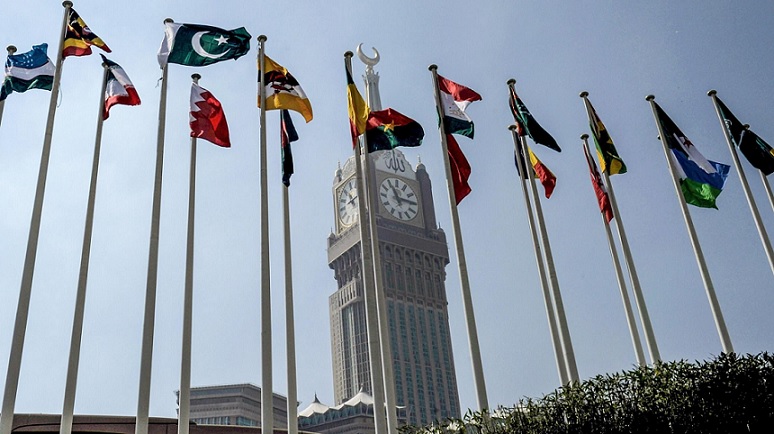
    The Organisation of Islamic Cooperation (OIC) is holding a special meeting in Kuala Lumpur on Thursday (Jan 19) called by Malaysia to discuss measures to deal with the conflict affecting the Muslim Rohingya minority in Myanmar.

    The OIC represents 57 states and acts as the collective voice of the Muslim world.

  • Life After Graduation: Special Education Students At Work

    Life After Graduation: Special Education Students At Work

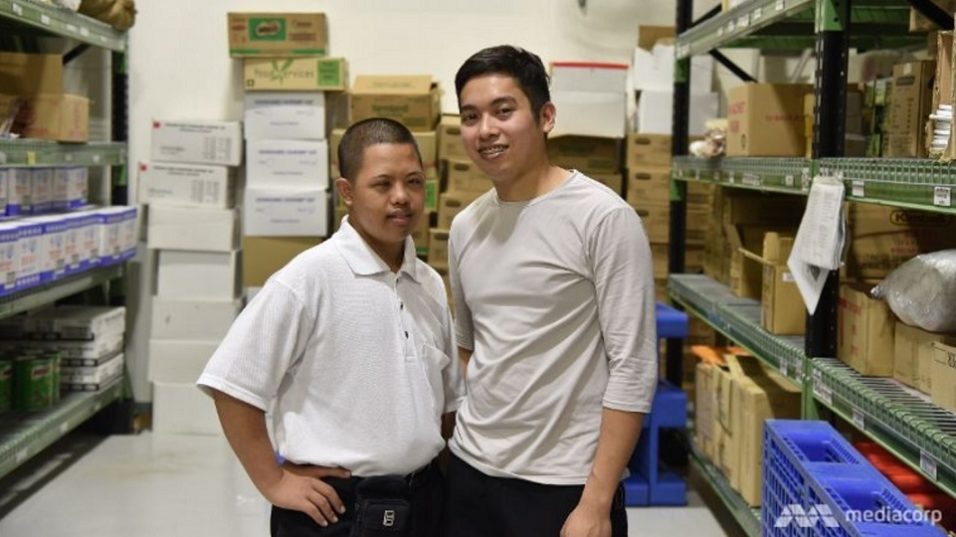
    “Faiz, can you pack all these things into a box and seal it?” asked Mark Maranan, lead cook at the central kitchen of restaurant chain Han’s central kitchen.

    Faiz Muhsin nodded. “One, two, three…,” the 20-year-old started counting while packing the items.

    The task may seem easy to most people, but for Faiz, who has a moderate to severe intellectual disability, it can be quite daunting.

    Faiz has been working at Han’s central kitchen for almost two years. In his final year at the Movement for the Intellectually Disabled of Singapore (Minds) in 2014, Faiz joined the School-to-Work (S2W) Transition Programme which prepares students with special needs to enter the workforce.

    Under the programme, Faiz was trained for about two months by SG Enable – an agency that helps people with disabilities – before he was deployed to Han’s for a nine-month internship.

    After the internship, he was offered a part-time position as a packer at the food and beverage chain. To help Faiz assimilate into the work environment, his supervisor Mr Maranan informed the team about his condition and they accommodated his working style.

    “He’s a quiet person so we need to adjust the way we communicate with him. We need to talk to him a bit slowly and we need to say it in short sentences so he can easily understand what we want him to do,” said Mr Maranan, who also described Faiz as a hardworking person who would often ask questions about his job.

    “Faiz can communicate quite well. Sometimes we also have lunch together. He’s like an ordinary person to me,” he said.

    Faiz’s job scope has also been expanded: He now helps out at the central kitchen, counting and marinating raw pieces of fish or chicken as part of the food preparation process.

    “I like my job. Free lunch, earn money. They (colleagues) are very fun,” Faiz said with a wide grin on his face.

    Faiz’ job scope has been expanded and he is now helping out with the food preparation process. (Photo: Lim Jia Qi)

    Others have not been as fortunate as Faiz. For Grace Cho, who has autism spectrum disorder (ASD) – a condition which hinders communication and interaction with people – there were difficulties in getting along with her co-workers.

    The challenge for the 28-year-old was not about finding for a job, but keeping one.

    After graduating from Mountbatten Vocational School in 2007, Grace took on several jobs before she was referred by an organisation that provides employment services for people with disabilities to work as a vegetable packer at a logistics company.

    Getting along with her co-workers at the company was not easy as she would often be scolded for not being fast enough on her job.

    “There were a lot of vegetables coming in and they (co-workers) started to rush for that. When it got jammed up, the vegetables dropped onto the floor … I was focusing on packing and sealing and I didn’t pick them up. Some of them said to me ‘You didn’t stop and help us pick up, you are not very good’,” Grace recounted.

    “I felt angry. I pushed the boxes and they dropped onto the floor. But they (co-workers) kept repeating that they had enough,” she said.

    Grace eventually left the job after less than a year. Her next job as a packer at a pharmaceutical company did not go well either as she was not clear about the workflow. “I got more things to pack. I don’t have a schedule and I didn’t know which one to do. I got confused,” she said.

    With her mother’s encouragement, Grace sought help from the Autism Resource Centre’s Employability and Employment Centre and she is currently working as a packer at The Green Corridor, where fresh fruits are processed and packaged for the supermarkets in Singapore.

    28-year-old Grace Cho took on several jobs before seeking help at Autism Resource Centre’s Employability and Employment Centre. (Photo: Lim Jia Qi)

    According to the Ministry of Education (MOE), about 300 students graduate from Special Education (SPED) schools each year. About 1 in 3 from each cohort went on to work in different industries including retail, hospitality, medical services as well as food and beverage.

    To help Singaporeans with special needs find employment, MOE has put in place various measures to prepare students in SPED schools for employment.

    These include having a framework for vocational education that guides SPED schools to develop a structured curriculum to help students with special needs gain employable skills.

    Students who obtained either the ITE Skills Certification at Metta School or Workforce Skills Qualification at Delta Senior School may apply for jobs in the open market or attend further training if they meet the pre-requisites for the courses, said MOE.

    President of the Autism Resource Centre Denise Phua said one of the reasons that adults with autism are not able to hold down a job for long could be because many of them were never exposed to the culture of work and what is expected on the job.

    “It is only in recent years that the quality of early intervention and education of students with autism is raised,” said Ms Phua, who is also a Member of Parliament.

    Another reason could also be due to low awareness among employers to put in place autism-friendly worksites, she added.

    While Ms Phua noted that employers have greater awareness than before and the emergence of more dedicated agencies to support people with special needs, more can be done to improve the current situation.

    “It’s about showing models, systems, possibilities and success that employment and work can be done for people with ASD,” she said.

    “It’s also about educating people and employers that there are different models of employment. For example, part time is one of the viable ways for people with special needs to be employed.”

    For Grace, she has been working at The Green Corridor for more than a year. Besides having a job coach onsite to guide her, there are also visual instructions and communication scripts to help her work independently.

    Grace working with her job coach at The Green Corridor located at the Enabling Village. (Photo: Lim Jia Qi)

    “The task that I was given I did it independently. I’m also following given schedule without someone telling me what to do next. I’m happy,” she said.


    Source: CNA

  • Write To MP Against Upcoming Reserved Election

    Write To MP Against Upcoming Reserved Election

    Earlier today, I wrote an e-mail to my MP and Speaker of Parliament, Mdm Halimah Yacob, to express my total disagreement on the coming Reserved Presidential Election.

    Even though I know that what I wrote to her maybe put aside, I still feel that as her resident and as a Singaporean, she should know and be aware of the sentiment on the ground.

    Not all Malays are supporting this reserved Election, as it is a big insult to the community by the PAP Government.

    I will like to urge all who are against the reserved Election to write in to your MPs too.


    Abdul Rashid

    Reader’s Contribution

  • Malaysian Radio DJ Johan Donated RM100,000 (S$31,900) To Victims In Syria

    Malaysian Radio DJ Johan Donated RM100,000 (S$31,900) To Victims In Syria

    Bagi peminat pelawak negara, Johan dan isterinya, Ozlynn Watie dan sering ‘menjenguk’ Instagram pasangan ini, pasti sudah mengetahui rumah mereka selalu dikunjungi teman artis yang datang untuk menjamu selera.

    Ekoran sikap pasangan itu yang bermurah hati mendapat reaksi dan komen positif daripada peminat yang sentiasa mendoakan agar keluarga mereka sentiasa dilimpahkan rezeki dek kerana sikap yang suka menjamu rakan artis lain.

    Jadi, tidak mustahillah Johan atau nama sebenarnya Mohd Yazid Lim Mohamad Aziz, 32, berhasrat menyumbang sebahagian wang kemenangan dalam program Super Spontan Superstar 2016 kepada mangsa perang Syria.

    Penderitaan dihadapi pelarian dari negara bergolak berkenaan, khususnya kanak-kanak, amat menyentuh hatinya membuatkan beliau menyalurkan sebahagian daripada wang kemenangan RM100,000 (S$31,900) program itu, Oktober lalu, kepada mereka.

    “Saya percaya pemberian yang ikhlas juga akan membuatkan rezeki seseorang bertambah.”

    “Buat masa ini, wang kemenangan berkenaan belum lagi saya terima, tetapi itulah niat saya jika ia diperoleh dalam masa terdekat,” katanya.

    Tambahnya,  beliau akan menggunakan saluran betul supaya sumbangan dihulurkan benar-benar sampai ke tangan pihak memerlukan.

    Selain itu, penyampai Era FM ini juga memasang impian untuk membina masjid di kawasan yang memerlukan.

    “Sejak dulu lagi saya membayangkan, alangkah bahagianya jika saya memiliki duit yang banyak kerana niat saya adalah untuk mencari keberkatan hidup.

    “Begitupun, hanya orang yang kaya mampu membina sebuah masjid. Namun, saya tidak bermaksud orang miskin tak boleh beramal sama kerana walaupun sedikit sumbangan kita, ia tetap diterima Allah,” katanya.


    Source: AgendaDaily

  • Saudi Arabia Quietly Spreads Its Brand Of Puritanical Islam In Indonesia

    Saudi Arabia Quietly Spreads Its Brand Of Puritanical Islam In Indonesia

    When Ulil Abshar-Abdalla was a teenager in Pati, Central Java, he placed first in an Arabic class held at his local madrasa. The prize was six months of tuition at the Institute for the Study of Islam and Arabic (LIPIA), a Jakarta university founded and funded by the Saudi Arabian government. At the end of six months, LIPIA offered him another six. He stayed on.

    After that, it offered him four more years of free tuition to obtain a bachelor’s degree in Islamic law, or shariah. He accepted that too. In 1993, after five years at LIPIA, he was offered a scholarship to continue his studies in Riyadh. He finally said no.
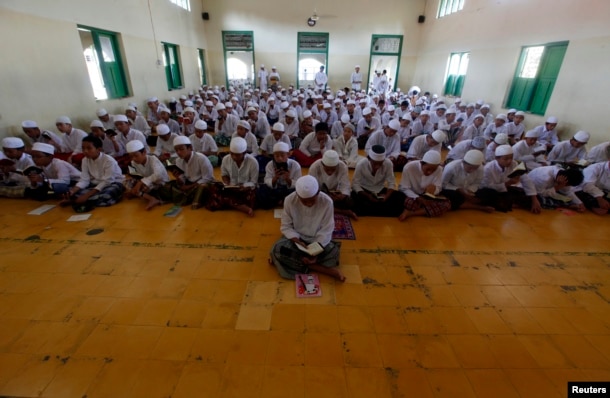
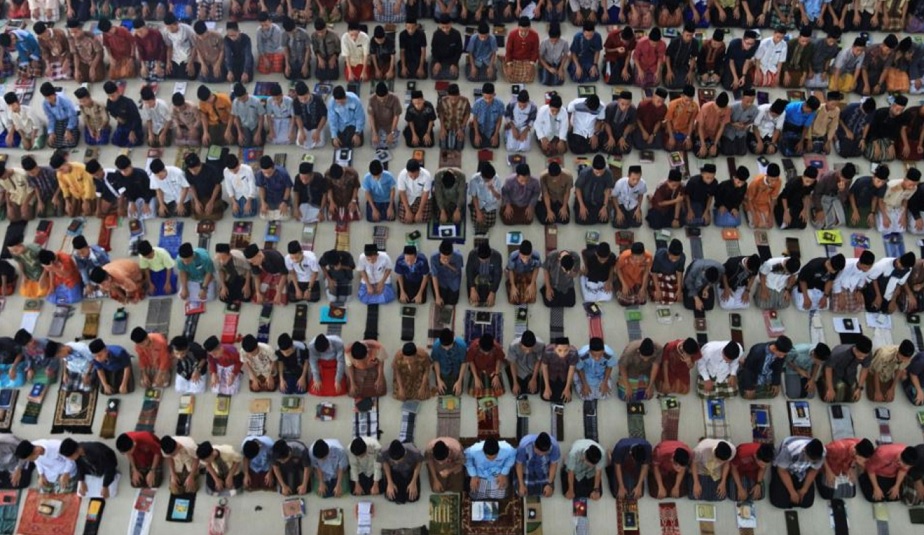
    FILE - Students pray during the first day of the holy month of Ramadan at Al-Mukmin Islamic boarding school in Solo, in Indonesia's Central Java province, August 1, 2011.

    FILE – Students pray during the first day of the holy month of Ramadan at Al-Mukmin Islamic boarding school in Solo, in Indonesia’s Central Java province, August 1, 2011.

    “Once you accept that, you’re on their payroll for life,” Abshar-Abdalla told VOA. “But they made it awfully easy to stick around. I’m from a poor family, and it was quite tempting… I think they managed to pull a few good minds from my generation that way.”

    Since 1980, Saudi Arabia has been using education to quietly spread Salafism, its brand of puritanical Islam, in Indonesia, the world’s most populous Muslim nation. The two main arms of this effort are LIPIA and scholarships for higher education in Saudi Arabia.

    Salafism is an ultra-conservative reform movement that advocates a return to Koranic times. LIPIA teaches Wahhabi Madhab, a strain of Salafi Islam expounded by the medieval Sunni theologian Ibn Taimiyah.

    “Saudi alumni” are now visible in many arenas of Indonesian public life, holding positions in Muhammadiyah, the Prosperous Justice Party, and the Cabinet. Some have also become preachers and religious teachers, spreading Salafism across the archipelago.

    The effects of Saudi Arabia’s massive soft power exercise on the Indonesian citizenry are just starting to become clear.

    ‘The most important post in Jakarta’

    The nexus of Saudi educational diplomacy is the religious attaché, a special office affiliated with its embassy in Jakarta. The office grants scholarships for students to study in Saudi Arabia, although the current attaché, Saad Namase, refused to confirm how many students were involved.

    “We don’t really work with the Indonesian government,” said Namase. “We just try to strengthen cultural ties between our two countries by, for example, holding Quranic recitation competitions.” On the topic of scholarships, he said many countries, including the Netherlands and the U.S. offer scholarships to Indonesian students and the Saudi program was just one among many.

    FILE - A teacher gestures during an Islam personality class during the holy month of Ramadan at the Al-Mukmin Islamic boarding school in Solo, Indonesia Central Java province, Aug. 2, 2011.

    FILE – A teacher gestures during an Islam personality class during the holy month of Ramadan at the Al-Mukmin Islamic boarding school in Solo, Indonesia Central Java province, Aug. 2, 2011.

    “The Saudi religious attaché is the most important post in Jakarta,” said Abshar-Abdalla, who now runs the Liberal Islam Network. “It is the portal for all Saudi efforts to influence Indonesian culture.”

    The attaché’s office also pays the salary of prominent Salafi preachers and supplies Arabic teachers to boarding schools across Indonesia, according to Din Wahid, an expert on Indonesia Salafism at the Syarif Hidayatullah State Islamic University in Jakarta.

    Beyond the attaché’s office, several Saudi Arabian universities directly offer scholarships to Indonesian students.

    One reason the Indonesian government is unlikely to present roadblocks to Saudi cultural expansion is its precarious annual Hajj quota, according to Dadi Darmadi, a UIN researcher who focuses on the annual pilgrimage to Mecca.
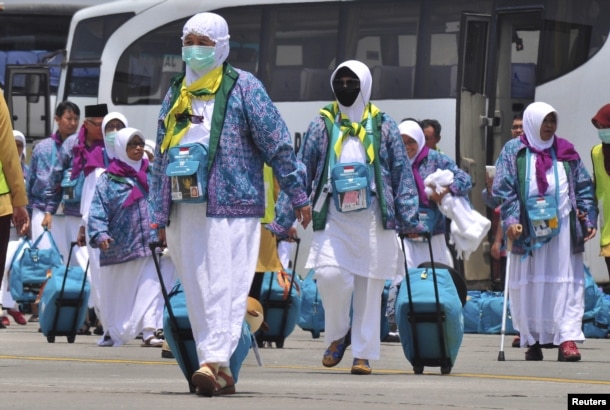
    FILE - Indonesian Haj pilgrims walk towards their flight at the airport in Solo, Central Java province, Indonesia, Sept. 17, 2015, in this photo taken by Antara Foto.

    FILE – Indonesian Haj pilgrims walk towards their flight at the airport in Solo, Central Java province, Indonesia, Sept. 17, 2015, in this photo taken by Antara Foto.

    “We were just granted 10,000 extra Hajj permits this year, which is still a drop in the bucket considering Indonesia’s population of 203 million Muslims,” said Darmadi, “I think Indonesia would hesitate to antagonize Saudi Arabia and prompt cuts to that hard-won quota.”

    Divergent paths

    Hidayat Nur Wahid, a member of Indonesia’s House of Representatives and a leader of the right-wing Prosperous Justice Party (PKS), is one of the most prominent national politicians who have passed through Saudi universities. He studied, through a series of scholarships, for an undergraduate, master’s and doctorate degree in theology and history of Islamic thought at the Islamic University of Medina.

    FILE -- In this July 5, 2013 file photo, worshipers visit the Prophet's Mosque in Medina, Saudi Arabia.

    FILE — In this July 5, 2013 file photo, worshipers visit the Prophet’s Mosque in Medina, Saudi Arabia.

    “The majority of Islamic texts are in Arabic, which is why I wanted to study in Saudi Arabia,” Nur Wahid told VOA. “Plus, the spirit of the Prophet Muhammad animates Medina. I enjoyed my years there.”

    Nur Wahid said he was not exposed to radicalism or “anti-social” teachings in Medina. “We just learned how to be good Muslims. And it’s a misconception that everyone who studies in Saudi Arabia becomes a preacher or religious teacher. Many graduates become officials or politicians like me.”

    “Since it is the place where Islam originated, many students think that Saudi Arabia represents authentic Islam,” researcher Din Wahid.

    Saudi theology had the opposite effect on Abshar-Abdalla, who gradually grew disenchanted with the Salafi movement during his five years at LIPIA.

    “Although I had some short-lived enthusiasm for that simplistic theology, I found it to be puritanical at its core,” said Abshar-Abdalla. Instead, he started to read various other Islamic texts on his own, including Sufi and Shia ones, and eventually founded the Liberal Islam Network (JIL) in 2001.

    Ironically, he himself was once recruited for the student movement that would develop into PKS. “I was invited for a rafting trip in Bogor one weekend at university, and I realized they were trying to get me to join Tarbiyah, the embryo of the current PKS party,” said Abshar-Abdalla. “I sort of ran in the opposite direction.”

    Extremist connection

    Although Saudi-educated preachers in Indonesia might be causing a subtle rightward shift in national ideology, a more immediate concern is whether Salafi teachings encourage terrorism or extremism.

    “By and large, I think not, because official Salafism is quietist, or apolitical, in order to preserve the authority of Saudi royalty in its homeland,” said Wahid. “That being said, when this ideology migrates back to Southeast Asia, all bets are off.”

    One prominent example of non-quietist, or jihadist, ideology is the Salafi-influenced Ngruki pesantren in Solo, Central Java, which has incubated a number of known Indonesian terrorists.

    And Zaitun Rasmin, a graduate of Medina Islamic University, was one of the chief organizers of the hardline demonstrations against the governor of Jakarta in late 2016. “He’s an example of an Indonesian Salafist who is unconcerned with being ‘apolitical,’” said Wahid.

    Wahid’s point is that, for all the resources Saudi Arabia is directing towards Indonesian students, it remains to be seen how exactly Salafi ideology evolves in its new Southeast Asian context. “There are three ‘flavors’ of Salafi ideology: quietist, political, and jihadist. We don’t know what exactly it looks like in Indonesia. All we know is that it’s here, and it’s growing.”


    Source: VOA
deneme bonusu