Author: Rilek1Corner

  • Me Against The Muslim community: A Convert’s View Of Islam

    Me Against The Muslim community: A Convert’s View Of Islam

    After almost 20 years as a Muslim, I have arrived at some conclusions that put me at odds with the community.

    1. I do not believe the hijab is necessary. It is a cultural affection of the Arabs that evolved into a political statement. It is not mentioned in the Qur’an. And the same with the niqab.

    2. I think halal certification is either a scam or an unfortunate cost. Unless there are obvious reasons to suspect otherwise, everything is automatically halal.

    3. I do not believe damnation permanent. Neither do I believe Salvation is exclusive to Muslims. That limits God’s Mercy.

    4. I think many “authentic” narrations, even in Swahih al-Bukhari, are fabricated. We should exercise more skepticism of problematic ahadits.

    5. I do not believe dog saliva is najis al-mughalazhah, or any restrictions on dogs as pets. That contradicts the Qur’an.

    6. I do not believe that non-Muslims are restricted from inheriting from Muslims. There is no such stipulation in the ayat. There were historical reasons for the hadits.

    7. I do not believe all forms of interest is necessarily usury, riba’. That is a fundamental ignorance of economics.

    8. I certainly do not believe in gender segregation in public places. Strict gender segregation is unnatural.

    9. The concept of an Islamic state is an oxymoron.

    10. Drawings and artistic representations of the Prophet (s.a.w.) are not automatically blasphemous.

    11. Stoning is not a valid means of capital punishment.

    12. Most hudud punishments are outdated, and specific to certain conditions that do not exist for most of us.

    I admit I never cared what Muslims think of me, orthodoxy or otherwise. I did not come to Islam to follow ingrained cultural practices and social beliefs masquerading as religion.


    Source: Terence Helikaon Nunis


  • 52 Ditahan Jabatan Agama, Naik Motor Dengan Bukan Mahram

    52 Ditahan Jabatan Agama, Naik Motor Dengan Bukan Mahram

    Rata-rata daripada 26 pasangan tidak mengetahui menunggang motosikal dengan seseorang yang halal nikah menyalahi undang-undang syariah Terengganu.

    “Saya tidak tahu menunggang dan membonceng motosikal dengan bukan mahram satu kesalahan,” kata mereka selepas ditahan Jabatan Hal Ehwal Agama Terengganu (JHEAT), lapor Sinar Harian.

    Lima puluh dua individu itu, berusia antara 16 hingga 42 tahun, ditahan dalam Op Bonceng di Batu Buruk di sini malam Khamis lalu dengan alasan “berkelakuan tidak sopan di tempat awam”.

    Ketua penolong pesuruhjaya penguatkuasa syariah JHEAT Nik Zulhaiza Ismail berkata mereka ditahan kerana didapati menunggang dan membonceng motosikal dengan bukan muhrim.

    Tambahnya, mereka akan dipanggil menghadiri sesi kaunseling di pejabat JHEAT sebelum diberi amaran dan ditahan selepas ini jika terus mengulangi kesalahan sama.

    Jika ingkar atau masih mengulangi perbuatan sama, mereka akan dikenakan tindakan menurut Seksyen 34 Enakmen Kesalahan Jenayah Syariah (Takzir) (Terengganu) 2001, katanya kepada akhbar itu.


    Source: TheMalayMailOnline

  • Jadi Cikgu, Jangan Sombong Dengan Makcik Cleaner

    Jadi Cikgu, Jangan Sombong Dengan Makcik Cleaner

    Minggu pertama sekolah, bila selisih dengan geng cleaner aku cuma senyum sahaja. Masuk minggu ke dua, aku mula menegur dan ajak berborak.

    Soalan pertama aku tanya,

    ” Akak ada anak sekolah tak? ”

    Dua orang cleaner ada anak sekolah, seorang lagi anak semua dah besar-besar dah. Yang ada anak sekolah, aku hadiah beg sekolah. Seronok sangat mereka.

    Nak jadi cerita, hari Khamis minggu lepas, masa aku mengajar kelas 1 Arif, seorang guru perempuan dari kelas tahun 1 Amal datang buat muka Nobita nak minta barang dengan Doraemon. Macam yang aku agak, dia cakap,

    ” Fadli, Fadli. Tolong jap. Ada masalah kat tandas. Murid tu… ”

    ” Kenapa dengan murid pula? Berak dalam seluar ke?” Soal aku bila dia bagi ayat tergantung.

    ” Tak, awak pergi tengoklah,” balas cikgu tu penuh harapan.

    Bila orang minta tolong, takkan nak tolak kan? Cikgu perempuan lawa pula tu yang minta tolong. Alangkan Batman tengah makan nasi pun bila nampak polis suluh lambang dia kat langit dia terus pergi. Aku pun lebih kurang macam tu juga la. Aku pun bergegas la ke tandas, ingatkan kenapa.

    Rupanya seorang budak ni dah bogel dah. Siap keluar tandas lagi. Seluar dah kat lantai. Bau busuk najis menerjah rongga. Sambil tutup hidung aku tanya la,

    ” Awak dah kenapa? Takkan dah tahun 1 tak pandai nak basuh berak lagi?”

    ” Pandai cikgu, tapi tak ada air la,” jawab budak tu cemas.

    Ah sudah. Aku mundar mandir cari baldi dan cebuk. Mana nak cekau tak tahu la. Mak cik cleaner nampak aku keresahan terus tegur,

    ” Kenapa cikgu?”

    ” Budak ni berak kak. Tapi tak ada air.”

    ” Tak apa cikgu, saya pergi ambil baldi dan cebuk, nanti saya ambil air kat paip kantin bawa ke tandas. Kat kantin ada air. Saya uruskan, cikgu pergi la mengajar,” terus mak cik cleaner tawar pertolongan.

    Setelah aku ucap terima kasih banyak-banyak, terus aku masuk kelas. Dah macam kena langgar garuda dah kelas bila cikgu tak ada. Yang ikut aku pergi tandas nak tahu apa kes pun ramai juga. Budak-budak, macam tu lah.

    Kau kalau cikgu ke, kerja opis ke, manager paling berkuasa kat planet bumi ke, jumpa cleaner, tegur-tegurlah. Jumpa orang bawah, jumpa kuli, senyum-senyumlah. Jangan sombong sangat dengan pangkat ni.

    Mana tahu kau tengah berak pula air tak ada. Puas la kau terpekik terlolong kat dalam tandas tu. Kalau kau sombong, cleaner dengar pun dia cepat-cepat lari. Takkan kau nak wasap bini kau kat rumah suruh hantar baldi dan cebok?

    Penyudahnya, lap la bontot kau dengan spender kau tu. Padan muka kau, siapa suruh sombong sangat.


    Source: OMM

  • Where Malay Royalty Once Lived And Worshipped

    Where Malay Royalty Once Lived And Worshipped

    You can say this was a “glam” kampung, given that it used to be where Malay royalty lived, but Kampong Glam, also called Kampong Gelam, is probably named after a tree.

    Still, Kampong Glam stands as a glamorous attraction today, with its Middle Eastern eateries and trendy fashion shops.

    Beyond these modern additions, sitting grandly in the heart of the enclave are two historic monuments – the Istana Kampong Gelam and the Masjid Sultan.

    The Istana Kampong Gelam was the palace of Sultan Hussein Shah, the 19th-century ruler of the Johor Sultanate which Singapore was part of, while the Masjid Sultan next door had been constructed shortly after upon his request.

    The two grand buildings serve as a reminder of the Malay royalty who once ruled the area.

    The Sultan’s original residence was a timber structure built on stilts in the traditional Malay style.

    According to the National Heritage Board’s (NHB) Preservation of Sites and Monuments division, the present two-storey brick-and-mortar structure was completed in 1843 and commissioned by his son and heir Tengku Mohammed Ali.

    The building’s design reflects both classical European and traditional Malay architecture.

    The round arches at the entrance porch showcase the European design influence, while its layout corresponds to Malay Limas house typology, where the main entrance leading to the main house is connected to an annexe where the kitchen would traditionally be located.

    Meanwhile, the Masjid Sultan, or the Sultan’s Mosque, was originally a single-storey brick structure built in the 1820s.

    Almost a century later, it was in need of repairs and a new mosque was planned. Irish architect Denis Santry from local architectural firm Swan and Maclaren was commissioned for the rebuilding project spanning 1924 to 1928.

    He designed it in an Indo-Saracenic style, which offers a mix of traditional Indian and Islamic elements.

    The mosque features two gold onion domes, and the base of each dome is adorned with glass bottle ends collected from poor Muslims as donations.

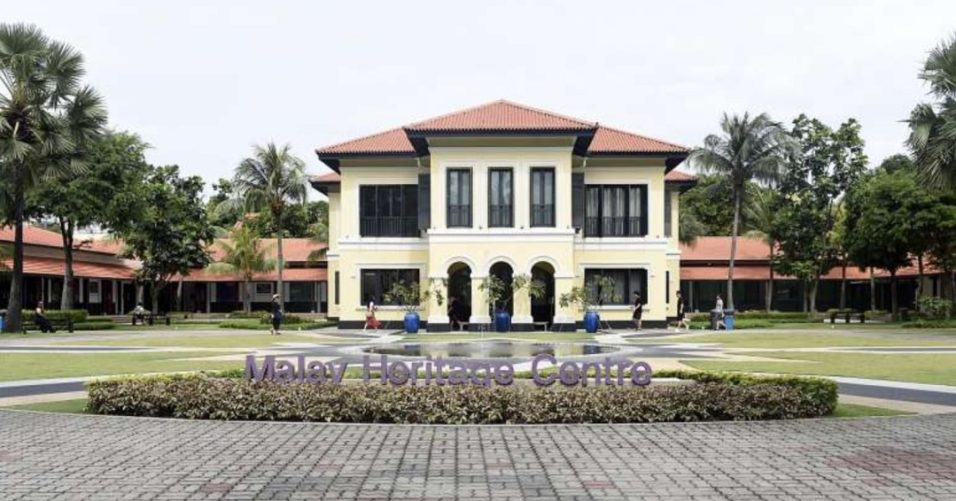
    These monuments are key in telling the larger story of early Singapore, said Ms Suhaili Osman, assistant curator of the Malay Heritage Centre, which now occupies Sultan Hussein’s former palace.

    For instance, porcelain plates dug up from the compound of the Istana Kampong Gelam bear the insignia of ceramic producers from Asia and Europe such as J. & G. Meakin of England. This reflects how the area near the Kallang Basin had thrived as an emporium, with goods from across the globe, in the 19th and 20th centuries.

    Chinese, Jawi and Dutch East India Company coins, also unearthed during two archaeological surveys in the early 2000s, further underscore the cosmopolitan nature of Kampong Glam as well as its economic importance.

    Ms Suhaili said the artefacts “prove that there are more layers to Singapore’s story beyond the traditional narrative of its early beginnings as a sleepy fishing village”.

    According to heritage conservation expert Johannes Widodo, an associate professor at the National University of Singapore, the Kampong Glam compound was laid out based on Hindu and Buddhist mandala symbol principles.

    The mosque and royal graveyard in Jalan Kubor functioned as its crown and the palace was its body, while a market town and old settlement stood as its feet.

    The Istana Kampong Gelam palace compound itself was allotted to Sultan Hussein, after he and Temenggong Abdul Rahman signed a treaty with Sir Stamford Raffles for the British East India Company to set up a trading post here on Feb 6, 1819.

    But to diminish the power of the royals, the British sliced up the area, with Victoria Street and North and South Bridge roads cutting through the place.

    In 1999, the Government announced that the Istana Kampong Gelam would be conserved.

    Some 79 beneficiaries and tenants, including Mr Tengku Shawal, the seventh-generation descendant of Sultan Hussein, were awarded a total of $350,000 a year for 30 years.

    The former palace was restored after its residents moved out and it was turned into the Malay Heritage Centre in 2005.

    The centre, which is managed by NHB in partnership with the Malay Heritage Foundation, houses six permanent galleries.

    Mr Harneis Hadir, general manager at the Malay Heritage Centre, said it aims to provide all communities that go through its doors “a holistic and well-rounded cultural experience”.

    He said visitors can look forward to the annual Malay CultureFest and a special exhibition on the Bugis community this year.

    The Masjid Sultan, meanwhile, took home the Urban Redevelopment Authority’s Architectural Heritage Award last year for its $4.6 million restoration, which included a fresh coat of paint for its golden domes and the addition of elderly- friendly facilities such as a glass lift.

    The mosque won in the restoration category which honours work done to sensitively repair and restore heritage buildings.

    The chairman of its board of trustees, Mr Mohamed Patail, 65, said the restored monument has attracted both worshippers and tourists far and wide.

    On the congregants, he said: “They feel a sense of belonging to the mosque, which is one of the oldest in Singapore. They also come here for a nice family outing – pray at a historically significant mosque, walk around the enclave and then eat at one of the nasi padang stalls.”


     

    Source: ST

  • Is Government A Person? Court Rules On Anti-Harassment Law Provision

    Is Government A Person? Court Rules On Anti-Harassment Law Provision

    In a rare split decision, the Court of Appeal ruled, 2-1, that the Government cannot invoke an anti-harassment law that allows persons to stop the publication of false statements against them.

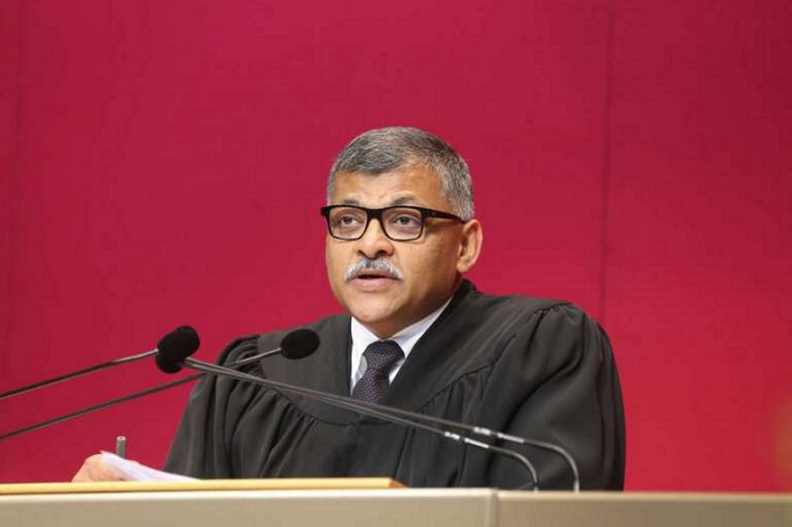
    Chief Justice Sundaresh Menon was the sole dissenting judge, in a case that hinged on the narrow legal question of whether the Government could be considered a “person” under Section 15 of the Protection from Harassment Act.

    Under the provision, a person who is a victim of a false statement can seek relief by asking the court to order that the statement not be published unless it drew attention to the truth.

    In a written judgment released yesterday, Judges of Appeal Chao Hick Tin and Andrew Phang ruled that the law applied only to human beings.

    However, Chief Justice Menon disagreed. He concluded that the Government does fall within the scope of “person” under the law and is able to apply under the provision for relief.

    The decision arose in a case in which the Attorney-General had invoked the law against five individuals who ran socio-political site The Online Citizen (TOC) as well as Dr Ting Choon Meng, co-founder of medical device firm MobileStats Technologies.

    MobileStats had sued the Ministry of Defence (Mindef) in 2011 for infringing its patent for a mobile emergency medical station. The suit was eventually dropped.

    In January 2015, TOC published an interview with Dr Ting, in which he made various allegations against Mindef.

    The ministry responded on its Facebook page, refuting his allegations that it had knowingly infringed his patent and that it had dragged out court proceedings to wear him down financially.

    TOC published Mindef’s statement in full and provided a link to it from the offending article.

    The next month, the A-G sought a court order that the allegations cannot be published without a notification that they were false and that Mindef’s statement gave the truth.

    In May 2015, a district judge found Dr Ting’s statements to be false and granted the A-G’s ap- plication.

    TOC, represented by Mr Eugene Thuraisingam, and Dr Ting, represented by Mr Choo Zheng Xi, appealed to the High Court, arguing that Mindef cannot apply for such an order as the Government is not a “person” under the provision.

    Judicial Commissioner See Kee Oon agreed, ruling that only human beings are entitled to apply for such court orders.

    The A-G then appealed to the Court of Appeal, Singapore’s highest court, arguing that there was no clear parliamentary intent to exclude the Government from the protection of the Act.

    The A-G argued that the objective of the provision was to deal with false statements and not merely harassment, so the Government and corporate entities have the right to invoke the law.

    Delivering the court’s majority decision, Justice Phang referred to parliamentary debates in which Law Minister K. Shanmugam talked about giving people a “lower tier” remedy against falsehoods.

    Justice Phang said it was clear that the minister’s focus was solely on human beings, pointing to the many references to “victims” and “harassment” in his speech.

    No references were made with regard to the rights of other entities, he noted.

    Justice Phang added that even if the majority accepted that the law applies to Mindef, they did not think it was “just and equitable” to grant an order against TOC and Dr Ting.

    He noted that TOC had provided a balanced view.

    “Additionally, Mindef was anything but a helpless victim. It is a government agency possessed of significant resources and access to media channels.”

    Through his lawyer Mr Choo, Dr Ting said he was glad that this episode was concluded.

    Mr Thuraisingam said his clients are “happy that the position they have taken has been vindicated by the High Court and the majority of the Court of Appeal”.


    Source: ST

deneme bonusu