Category: Politik

  • Appeal for Singaporean Muslim Women to Exercise their Freedom to Wear the Hijab At Work (by Sattar Bawany)

    Appeal for Singaporean Muslim Women to Exercise their Freedom to Wear the Hijab At Work (by Sattar Bawany)

    Appeal for Singaporean Muslim Women to Exercise their Freedom to Wear the Hijab (in Arabic) or Tudung (in Malay) at Work

    Recently the Irish Police has announced it will follow in the footsteps of its Scottish and Northern Ireland counterparts by allowing it’s Muslim Women Officers to wear the hijab while on duty. This is line with that adopted by police services such as the Police Northern Ireland (PSNI), Police Scotland, New Zealand Police, NYPD, and other police services in the UK, Australia and Canada. (https://www.irishlegal.com/…/muslim-garda-to-be-allowed-to-…).

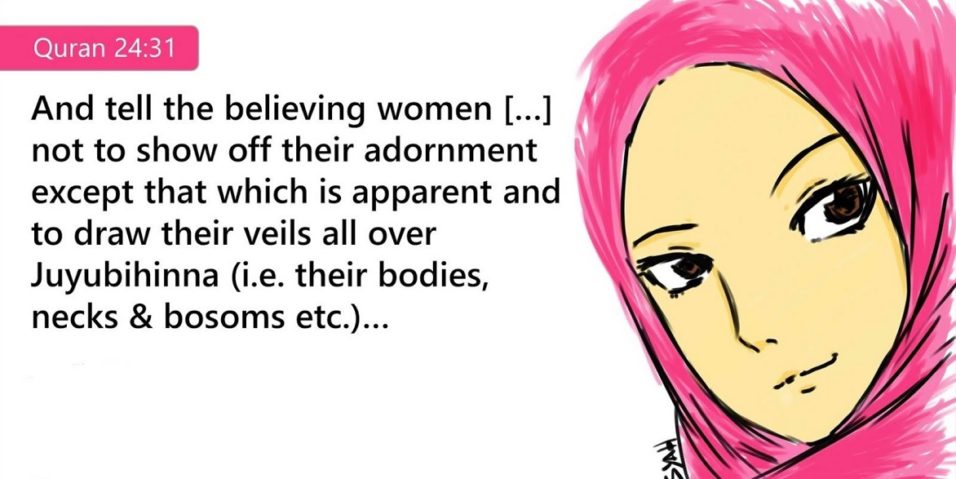
    The central reference points for the Islamic code of dressing are the Quran, the Hadiths which is a report of Prophet Muhammad’s (peace be upon him) sayings and the Sunna (normative examples set by Prophet Muhammad’s (peace be upon him) life. The references to head coverings found in the Hadiths, the Sunna, and the Quran, in particular, are believed to form the basis for the hijab or tudung being regarded as an integral part of a Muslim woman’s attire. (Reference: The Holy Quran Chapter 33 Verse 59: https://quran.com/33/59 and Chapter 24 Verse 31 https://quran.com/24/31)

    From my research, I have found that wearing the headscarf as part of practicing hijab or dressing modestly has become more common among Malay Muslim women in Singapore now compared, for example, to the 1950s and 1960s. This development occurred in line with the global Islamic Renaissance and revival in the 1970s.

    Today, as the photo of our Head of State, President Halimah Yacob, wearing the hijab hang in all public sector offices, one question being asked by the community at large is when will Malay-Muslim women in public service frontline roles, like police officers and nurses, be freely allowed to wear hijabs at work in Singapore.

    The local Muslim community has been informed by the Government from time to time that they understood the community’s perspective on the tudung and that the Government’s position has not been static, hence the community needs to be patient. However, it would seem that there is still much progress to be made on this issue. Nevertheless, hijab-wearing women are generally accepted in the workplace, as can be seen in many offices around Singapore. Nevertheless, anecdotal evidence suggests that the hijab is not accepted in many lines of work, including nursing, hospitality, and uniformed groups such as police, civil defence, and armed forces. In the case of nursing, this may create a strange contradiction where female Muslim doctors are permitted the hijab whereas their counterparts in nursing are not.

    The call for greater acceptance of the hijab in the workplace is not a rallying cry for the Islamisation of Singapore. Muslims by and large live in harmony with non-Muslim neighbours, colleagues, and peers. Greater recognition of the hijab would, in fact, encourage better integration among Singapore through a better understanding of the beliefs and practices of different communities. Acceptance of the hijab would also increase employment by encouraging greater participation of Muslim women in the workforce, without forcing them to choose between practicing their religion and earning a livelihood.

    In conclusion, I was reminded recently and moved by a young lady’s appeal that if Singapore is truly the multireligious and multicultural nation that we claim to be and if we were to be true to the words in our Singapore pledge, then perhaps our society today would be a better place and the workplace would be less discriminatory against a harmless woman in a headscarf who has similar goals and aspirations as any other regular Singaporean. Furthermore, a Muslim woman should be allowed to exercise her freedom to practice her faith (as enshrined in the constitution) and to don the headscarf at work if she so chooses.

    Credit: Sattar Bawany


    Rilek1Corner
  • Watain Concert Banned, Minister Dragged in Racial Issues Involving Malays, Muslims and the Christian Community in a Follow-up Explanation

    Watain Concert Banned, Minister Dragged in Racial Issues Involving Malays, Muslims and the Christian Community in a Follow-up Explanation

    In the wake of the government’s order to block a black metal band from playing here (just hours before the concert was due to start), Minister of Home Affairs K Shanmugam oddly dragged in racial issues.

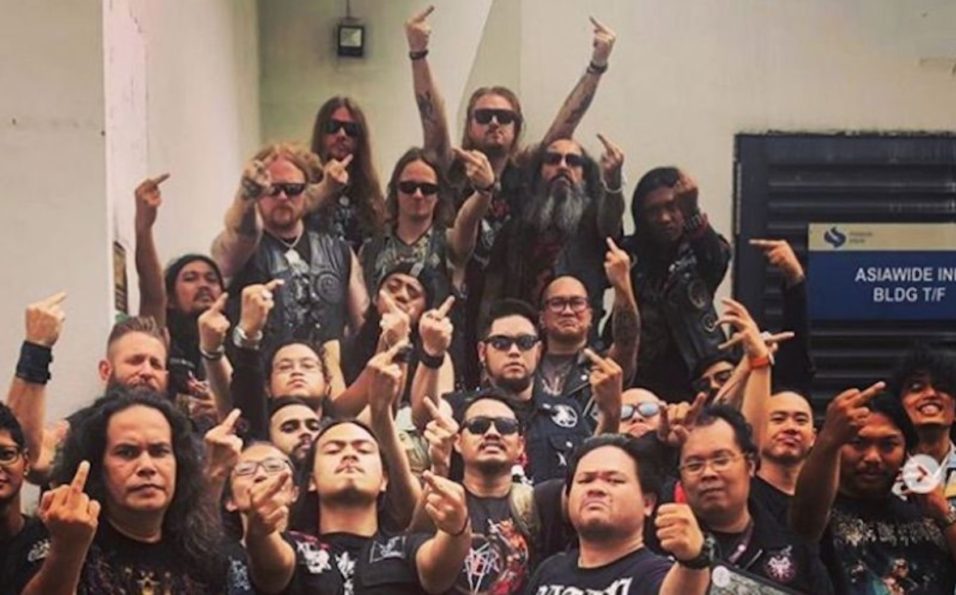
    In a speech at an appreciation lunch for Malay-Muslim anti-drug campaigners on Saturday, the minister honed in on a photograph taken at a meet-and-greet session between Swedish band Watain and their fans. The picture depicted Watain and their fans showing ‘the middle finger’ — a defiant (and very metal) response to the government’s decision to cancel the concert on grounds of preserving “public order”.

    According to Channel NewsAsia, Shanmugam detailed how the ministry would be unable to let the concert go ahead, given how Watain’s lyrical content held anti-Christian themes. Then he went into length about the photograph, harping on how it showed “primarily Malay young men”.

    “You have a group of Malay young men, showing the one-finger sign, supporting the group,” CNA quoted the minister.

    “If a group of Chinese went and showed the finger sign and said that we should allow it – how would you all have felt? It is the same.”

    Mentioning that the photo has gone viral “across the Christian community”, Minister Shanmugam stated that it was crucial to show that the picture does not represent what the Muslim community thinks.

    “They won’t realize that this a small group of Malays, but they may think, is this what Muslims think of us? So now we have to send the message that this is not what the Muslim community thinks. These are black metal group supporters, they are not the mainstream community.”

    In conversations with Christian leaders, Shanmugam pointed out how the leaders would oftentimes draw comparisons to how tough the government would quash anti-Islam sentiment, such as banning the Salman Rushdie book The Satanic Verses in Singapore.

    “(The leaders) said what these people (Watain) are saying is far worse, it is a hundred times worse about Christianity – how come you would allow that?” said Shanmugam to The Straits Times.

    “They said you treat the Muslim community differently than the Christian community.”

    Shanmugam acknowledged there was “some truth” to what the leaders said but said it was not fully true “but it is an approach”.

    He also pointed out to Channel NewsAsia that not all bands would be banned because they spoke about Christianity.

    ———————————————————————————————————————————————————–

    The aftermath?

    It led to confusion among the Muslim community. How did this become an issue that involves the Muslim community? Is the minister trying to be a “hero” that saved the Muslims from depicting a bad, intolerant stand against Christians? What has the brown-skinned fans in the photo got to do with Malays in general, or worse representing what the Muslim community in Singapore thinks about the Christians. Is it because there is a stereotype about Malays in Singapore where they are called Mat Rockers? And who are these brown-skinned fans in the viral photo? Are they even Malay/Muslims from Singapore?

    What was the Minister thinking by saying all this?

    Source: Coconut, Yahoo, The Straits Times and Channel NewsAsia

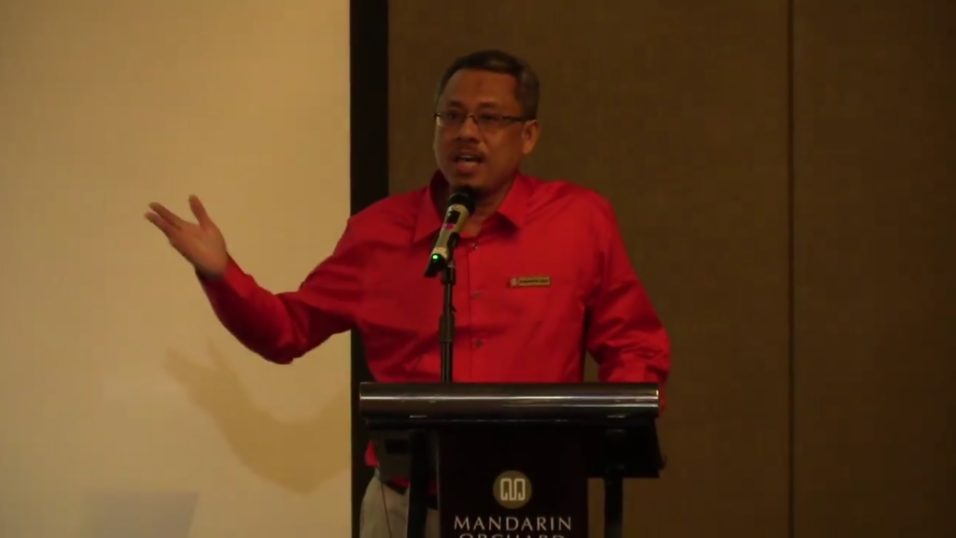
  • They (PAP) wanted to disrupt our plans, but God have a better plan for us (SDP); Damanhuri Abas

    They (PAP) wanted to disrupt our plans, but God have a better plan for us (SDP); Damanhuri Abas

    “Greetings friends and thank you for coming. What a nice place.. this is. We didn’t plan for this.”

    “They wanted to disrupt our plans, but God have a better plan for us.”

    Epic round of applause.

    That was how Damanhuri Abas started his speech at the SDP’s Campaign Kick-Off 2019 where he spoke on National and Malay issues. Close to 2 years ago if you remember, the man responded to an accusation that he uses religion to incite some ‘untoward things’. Yet today, this opposition politician who is driven by religion is standing on that stage. 

    You can watch more here.

    At the end of his speech, Damanhuri recited a Malay pantun that he wrote sometime after joining politics. 


    tanah liat, asal usul ku
    jasad dicorak, Tuhan yg satu
    siapa gerangan, anak melayu
    khazanah silam, sejarah lalu

    pulau ujong, dikenal dahulu
    bumi temasek, pantai membiru
    kota singa, nama negeri ku
    sergam indah, jasa ayah ku

    tempat melabuh, pedagang lalu
    gagah berani, laksmana melayu
    armada cheng ho, pernah berlalu
    duduk penjajah, haram bersatu

    kini merdeka, warga negara ku
    suratan takdir, kita disatu
    bangsa cina, india melayu
    minda penjajah, jadi seteru

    pelbagai kaum, berkah yg satu
    kibar bendera, bangga selalu
    merah putih, lambang jiwa ku
    kita rakyat, engkau dan aku

    maruah dibela, bukti cinta ku
    sumpah setia, ikrar sepadu
    berbeza acuan, tetap bersatu
    langit ku junjung, bumi pertiwi ku

    [English translation]:

    From clay, I’m made,
    shaped, by the One
    who is he, the Malay lad
    untold heritage, history’s past

    Tales of old, isle at the end
    Temasek’s soil, with azure sea
    lion city, my country’s name
    awe and majestic, with my father’s hardwork

    A port of call, to traders’ past
    courageously brave, the Malay warrior
    Cheng Ho’s armada, sailed nearby
    colonials came, begins the divide

    Free again, my countrymen
    destiny’s fate, gathers us
    we are Chinese, Indian and Malay
    colonial’s divide, we detest and fight

    Our racial mix, blessed by One
    forever proud, flags raised high
    red and white, embodies my soul
    we are citizens, you and I

    Honour protected, for you my love
    loyalty promised, unity pledged
    our molds differ, remains united
    the sky above I raise, on this land of mine

  • What happened to Singapore’s Bumiputra?

    What happened to Singapore’s Bumiputra?

    What happened to Singapore’s bumiputra?

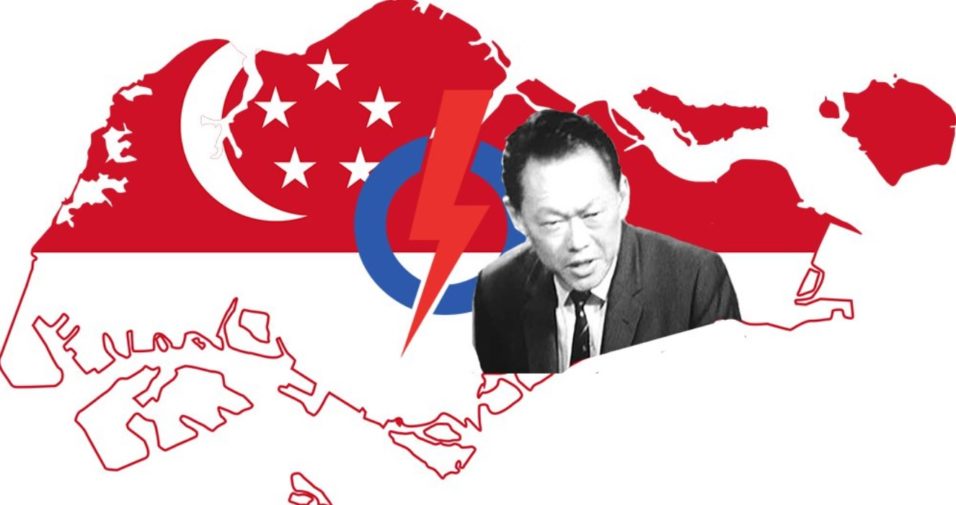
    It is a glaring fact that the Malays are weak economically but the situation doesnt come about naturally. It is the product of a cunning social engineering by the late Mr Lee Kuan Yew.

    It is easy to endorse the notion that the Malays are weak economically because they are lazy. This narrative is used to conveniently obscure the abhorrent policies of the PAP.

    There is no denying that our ‘decline’ started post independence once the PAP took power. It tilted the balance of play by starving the Malays of opportunities.

    There are many research papers done by professors like Lily Zubaidah and Michael D. Barr, to suggest that the PAP discriminatory policies are aimed at maintaining hegemony at the expense of the Malays.

    Our situation is compounded further when we recluse ourselves from political participation. Instead of rising up to the occasion and seek redress, our fathers acquiesce.

    Today, if we desire to reverse the damage, we cannot afford to be apolitical. Look at what decades of being indifferent brought us to.

    The easiest for us to do is to remove the problem from its core. We have had many Malay MPs in parliament. They have come and gone.

    Our current Malay MPs and Ministers are never cut out to bring about a change in the system. They have no real desire to uplift our society as a whole. Their senses are being numbed by the high paycheck they receive every month. Let’s not talk about rocking a boat, i dont think they can even muster the courage to rock a cradle.

    When our representative in parliament is a dud, then we have take it upon ourselves to replace these people come next election.

    #singaporebumiputra #singaporeanmalay #singaporehistory

  • Raja Bomoh dijangka bertanding PRU-14

    Raja Bomoh dijangka bertanding PRU-14

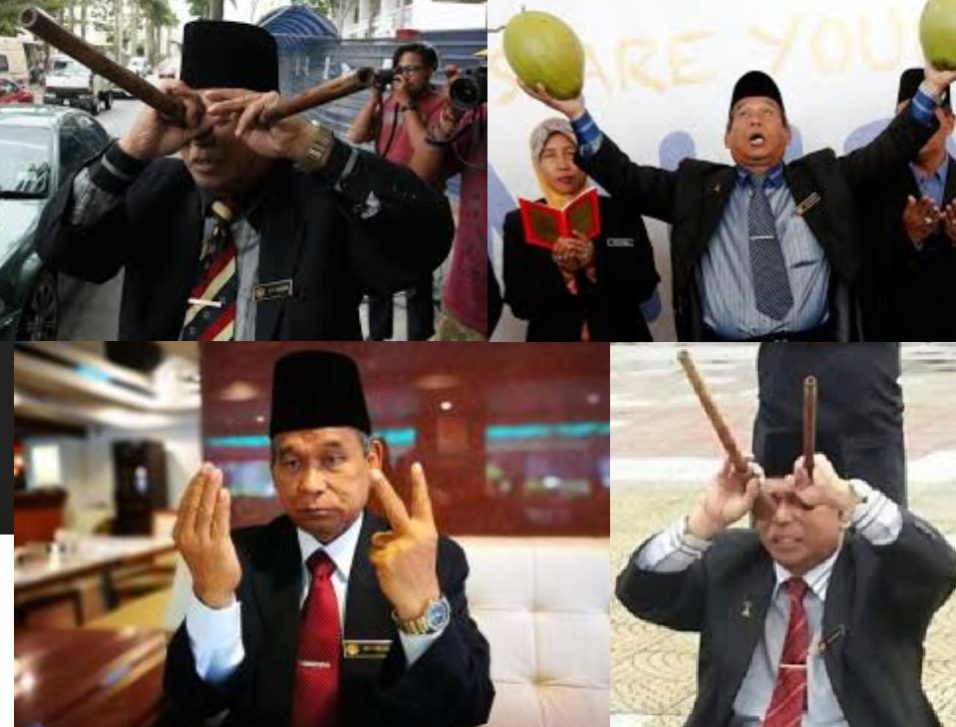
    IPOH: Ibrahim Mat Zin atau lebih dikenali sebagai `Raja Bomoh’, dijangka bertanding pada Pilihan Raya Umum Ke-14 (PRU-14) ini di dua kerusi iaitu Parlimen dan Dewan Undangan Negeri (DUN) di Perak.

    Difahamkan, Ibrahim berkemungkinan akan bertanding sebagai calon bebas di Parlimen Teluk Intan dan DUN Manjoi.

    Berdasarkan edaran media yang dilakukan pembantunya, sidang media pengumuman berhubung perkara itu akan dibuat di sebuah hotel di bandar raya ini pada jam 2 petang esok.

    Ibrahim juga dijangka akan menghadiri sidang media itu bagi mengumumkan sendiri penyertaannya pada PRU-14 kali ini.

    Menurut edaran itu juga, kesemua wartawan yang hadir perlu menunjukkan kad media untuk memasuki sidang media itu bagi memastikan hanya media sahaja yang berada dalam majlis berkenaan.


    Source: bharian