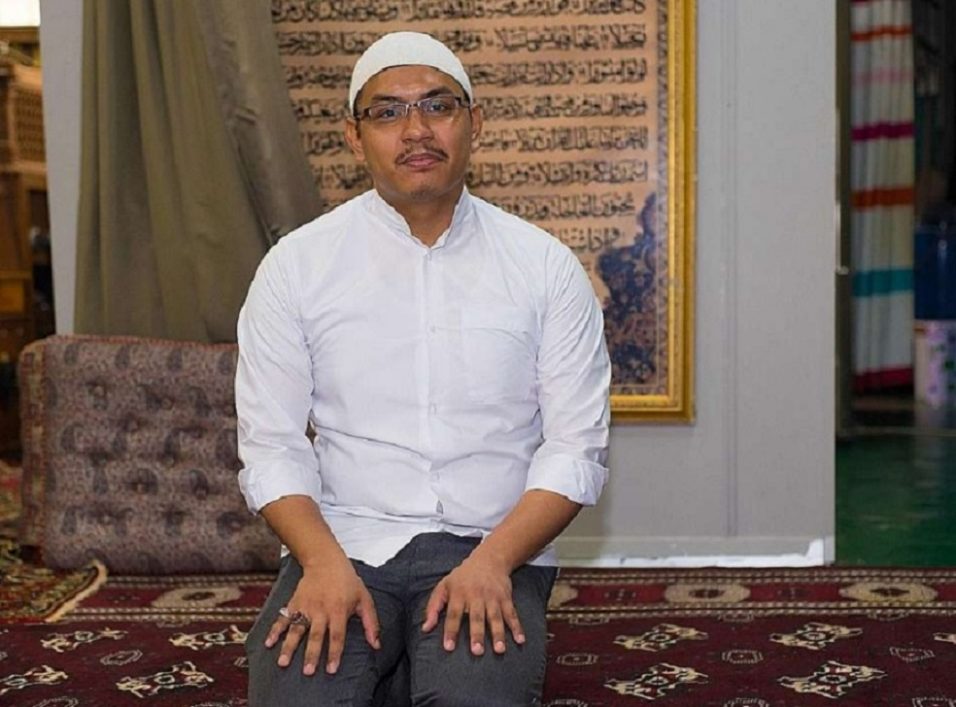
Mr Ahmad Murtadha Rosli, 26, is not your typical Singaporean university student. He attends classes from 8am to 5pm every Saturday to Thursday and shares a dormitory with nine other students.
His teachers are all men who wear turbans and long, flowing cloaks and teach using thick, vintage tomes. That is because Mr Ahmad is studying in a hawza that is a renowned Shi’ite Islam seminary in Qom, Iran.
Shi’ite Islam is the second-largest sect of Islam, after Sunni Islam. Both branches agree on many aspects of the religion, but are divided over Prophet Muhammad’s rightful successor.
More than 85 per cent of the world’s 1.5 billion Muslims are Sunni. In Singapore, Shi’ites make up less than 1 per cent of its Muslims, the majority of whom are Sunni.
The hawza in Qom, home to about 70,000 students, teachers and academics, is the largest Shi’ite seminary in the world. Smaller seminaries exist in other parts of Iran and in neighbouring Iraq, and even in Canada and the United Kingdom. Hawza graduates are accomplished in fields like Islamic law and faith. Many go on to become religious teachers, while some end up in politics. Iran’s Supreme Leader, Ayatollah Ali Khamenei, graduated from Qom.
The seminary attracts students from across the globe. Many come from India and Pakistan; others from countries like China, Austria and Russia. Singaporean students are rarer. Mr Ahmad’s father, Ustaz Mohammad Rosli Hassan, graduated from Qom nearly three decades ago. Now 52, Ustaz Rosli is the leader of the 5,000-strong Shi’ite community in Singapore.
“My name was placed under ‘Thailand’ when I first joined because ‘Singapore’ wasn’t in its system,” said Mr Ahmad. “There were a few other students from Singapore but, sadly, they (didn’t finish), maybe because the way of living over in Iran is too different.”
Since there was no other suitable candidate, Mr Ahmad added, he felt a responsibility to eventually replace his dad as leader.
Ustaz Rosli said: “Not everyone likes that role; it is a very challenging role. The community needs leadership – whether it comes from my family or not, it doesn’t matter. I am happy that Ahmad is willing (to take over from me), but there are tough challenges ahead.”
BACKACHES AND LONELINESS
The seeds of Mr Ahmad’s calling were planted when he was a 10-year-old seeing the hawza for the first time during a holiday in Qom. “I always told my dad I wanted to go there,” he said.
He attended secular schools and went from Yusof Ishak Secondary School to Ngee Ann Polytechnic, from where he graduated with a Diploma in Civil and Environmental Engineering. The decision to make the switch to a religious institution did not come easily.
“Being a religious teacher, you won’t be earning a lot,” Mr Ahmad said, as he worried about raising a family and not having enough savings to buy an HDB flat. “I thought about all that – it’s a sacrifice I have to make for the community.”
Two years ago, after completing his national service as a firefighter, Mr Ahmad packed his bags and left. “I thought it was like going to any other boarding school,” he said. “But at the end of the day, it’s a very different lifestyle.”
Until recently, Mr Ahmad’s classrooms did not have air-conditioning, computers and projectors. When he stepped inside his small dorm, he was shocked to find bunk beds that did not come with mattresses. “I was sleeping on a wooden frame,” he said. “My back was aching very badly.”
When it comes to classes, Mr Ahmad has the same timetable – comprising subjects like Persian, Quran studies and Islamic history – every day. Revision is done in pairs, where students take turns explaining a topic they learnt in class to each other. The school believes that encourages critical thinking and helps students to clarify misconceptions.
Mr Ahmad also had to adapt to unfamiliar conditions in Qom, a desert city 125km south-west of the capital, Teheran. “Singapore is very green, but Qom is very brown,” he said. “If you leave your shoes outside for three days, it will be covered with dust.”
On Fridays, when it is the weekend and there are no classes, Mr Ahmad plays football on a synthetic pitch with his friends from Malaysia. As meals are not provided on Fridays, they would cook dishes from home, like tom yam and chicken curry. “But it’s hard to find red chilli there,” he said. “Whenever someone visits, we would ask them to bring chilli powder or flakes.”
However, the company of friends did not stop him from missing home. “Sometimes, I would be very lonely,” he said. “I would just sit in my room and look at old pictures on my phone.” Despite that, Mr Ahmad felt encouraged by his desire to please his parents, whom he described as “very religious”. “This is the time I can prove to them that I want to be successful,” he said.
His moment of glory came when he scored full marks for an Arabic exam, a subject he initially struggled in because he lacked the foundation. “I would spend four hours doing my homework over and over again, just so I could get it right,” he recalled.
Mr Ahmad plans to study in Qom straight through to a PhD in the fundamentals of Islamic law – a process that will take at least 10 years. He doesn’t intend to return to Singapore until his father “decides to retire one day, or if he’s too old or sick”.
Right now, Mr Ahmad is taking a break from his studies. He has been back in Singapore since March last year to get married to his girlfriend of six years. The pair met and got together during their polytechnic days, when she was still a Sunni interested in the Shi’ite sect. About a year into their relationship, she switched over.
“Before, her parents were good to me,” he said. “After finding out that I was a Shi’ite and that she was slowly converting, things changed.” When Mr Ahmad approached her parents about tying the knot, they rejected him. So, the pair went straight to the Registry of Muslim Marriages. According to the Administration of Muslim Law Act, a Muslim marriage can still be solemnised by a religious official, or kadi, even if the bride’s parents object to it. But after questioning Mr Ahmad about his Shi’ite background, the kadi refused to proceed with the marriage.
“Now, we have to appeal through Muis (the Islamic Religious Council of Singapore); they are helping us a lot in settling the issue,” he said. Ustaz Rosli is confident his son will prevail in this “unwanted episode”. “Like it or not, he will be married officially in Singapore,” he said.
Mr Ahmad expects to know the outcome of his appeal soon. If things go to plan, his future wife will accompany him back to Qom, where she intends to enrol in the hawza. He just wants his ordeal to be resolved quickly. “I’m very much missing everything in Qom,” he said. “I wish the authorities would do things a lot faster.”
LIKE FATHER, LIKE SON
For Ustaz Rosli, life in the hawza could not have been more different. He arrived in Qom in 1986, during the tail end of the Iran-Iraq war that killed nearly half a million people.
“People were living in a tough situation,” Mr Ahmad recalled his father telling him. “Everything was so expensive back then.” During meal times, he added, students were issued coupons that entitled them to a serving of meat. “They didn’t get to eat meat or chicken on a daily basis, like how it is now.”
Ustaz Rosli graduated in 1990 before returning to Singapore, where he is now president of the Jaafari Muslim Association, a Shi’ite organisation based in Geylang. “There were people before us who lived through life in the seminaries with difficulties,” he said. “Anyone who wants to succeed me must be spiritually strong.”
Ustaz Rosli has also been a full-time religious teacher for more than 25 years, a job that has taken him to countries like Indonesia, the Philippines and the United States, where he gives lectures on Islamic studies. Mr Ahmad said his dad wanted to challenge the perception that religious teachers cannot be successful. “Back then, people used to think that there was no future in being an ustaz,” he said.
When Mr Ahmad comes home, he wants to be a religious teacher too. He thinks he will have no problems registering under the Asatizah Recognition Scheme, which requires Islamic religious teachers in Singapore to have at least a diploma in Islamic studies from a recognised institution.
The mandatory scheme, which kicks in from this month, aims to recognise qualified teachers and combat extremist ideology. “Although the majority of Muslims in Singapore are Sunni, Islam in Singapore is not monolithic. Sunnis and Shi’ites have lived in harmony in Singapore for many years,” said a spokesman for Muis. The scheme will ensure that asatizah can “serve as a reliable source of reference” for the Muslim community in Singapore, he added. “The Asatizah Recognition Board has begun engaging asatizah as well as centres providing Islamic education.”
Mr Muhammad Al-Baqir Buang, who is president of the Muslim Youth Assembly, another Shi’ite group with about 200 members, said: “The scheme will help to reduce extremist or radical thoughts from being spread to the masses by unqualified teachers. However, I have doubts about how far it can be implemented, given that there are some asatizah who teach in homes, and other loopholes that can’t be totally monitored.”
Nevertheless, Mr Ahmad said the scheme helps to deter “extreme” Islamic teachers who might label Shi’ites as heretics. “The authorities are trying to promote harmony between Shi’ites and Sunnis,” he said. “That is something that is good.”
Source: www.straitstimes.com
 ?
?