Category: Politik

  • Is Government A Person? Court Rules On Anti-Harassment Law Provision

    Is Government A Person? Court Rules On Anti-Harassment Law Provision

    In a rare split decision, the Court of Appeal ruled, 2-1, that the Government cannot invoke an anti-harassment law that allows persons to stop the publication of false statements against them.

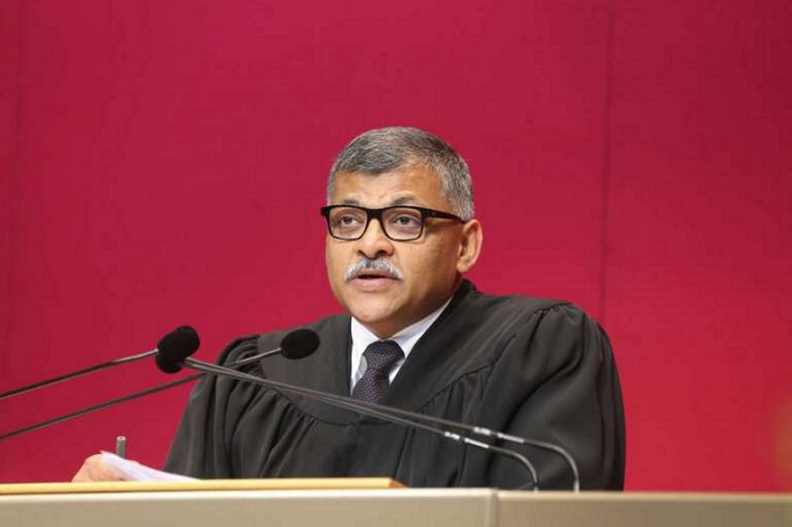
    Chief Justice Sundaresh Menon was the sole dissenting judge, in a case that hinged on the narrow legal question of whether the Government could be considered a “person” under Section 15 of the Protection from Harassment Act.

    Under the provision, a person who is a victim of a false statement can seek relief by asking the court to order that the statement not be published unless it drew attention to the truth.

    In a written judgment released yesterday, Judges of Appeal Chao Hick Tin and Andrew Phang ruled that the law applied only to human beings.

    However, Chief Justice Menon disagreed. He concluded that the Government does fall within the scope of “person” under the law and is able to apply under the provision for relief.

    The decision arose in a case in which the Attorney-General had invoked the law against five individuals who ran socio-political site The Online Citizen (TOC) as well as Dr Ting Choon Meng, co-founder of medical device firm MobileStats Technologies.

    MobileStats had sued the Ministry of Defence (Mindef) in 2011 for infringing its patent for a mobile emergency medical station. The suit was eventually dropped.

    In January 2015, TOC published an interview with Dr Ting, in which he made various allegations against Mindef.

    The ministry responded on its Facebook page, refuting his allegations that it had knowingly infringed his patent and that it had dragged out court proceedings to wear him down financially.

    TOC published Mindef’s statement in full and provided a link to it from the offending article.

    The next month, the A-G sought a court order that the allegations cannot be published without a notification that they were false and that Mindef’s statement gave the truth.

    In May 2015, a district judge found Dr Ting’s statements to be false and granted the A-G’s ap- plication.

    TOC, represented by Mr Eugene Thuraisingam, and Dr Ting, represented by Mr Choo Zheng Xi, appealed to the High Court, arguing that Mindef cannot apply for such an order as the Government is not a “person” under the provision.

    Judicial Commissioner See Kee Oon agreed, ruling that only human beings are entitled to apply for such court orders.

    The A-G then appealed to the Court of Appeal, Singapore’s highest court, arguing that there was no clear parliamentary intent to exclude the Government from the protection of the Act.

    The A-G argued that the objective of the provision was to deal with false statements and not merely harassment, so the Government and corporate entities have the right to invoke the law.

    Delivering the court’s majority decision, Justice Phang referred to parliamentary debates in which Law Minister K. Shanmugam talked about giving people a “lower tier” remedy against falsehoods.

    Justice Phang said it was clear that the minister’s focus was solely on human beings, pointing to the many references to “victims” and “harassment” in his speech.

    No references were made with regard to the rights of other entities, he noted.

    Justice Phang added that even if the majority accepted that the law applies to Mindef, they did not think it was “just and equitable” to grant an order against TOC and Dr Ting.

    He noted that TOC had provided a balanced view.

    “Additionally, Mindef was anything but a helpless victim. It is a government agency possessed of significant resources and access to media channels.”

    Through his lawyer Mr Choo, Dr Ting said he was glad that this episode was concluded.

    Mr Thuraisingam said his clients are “happy that the position they have taken has been vindicated by the High Court and the majority of the Court of Appeal”.


    Source: ST
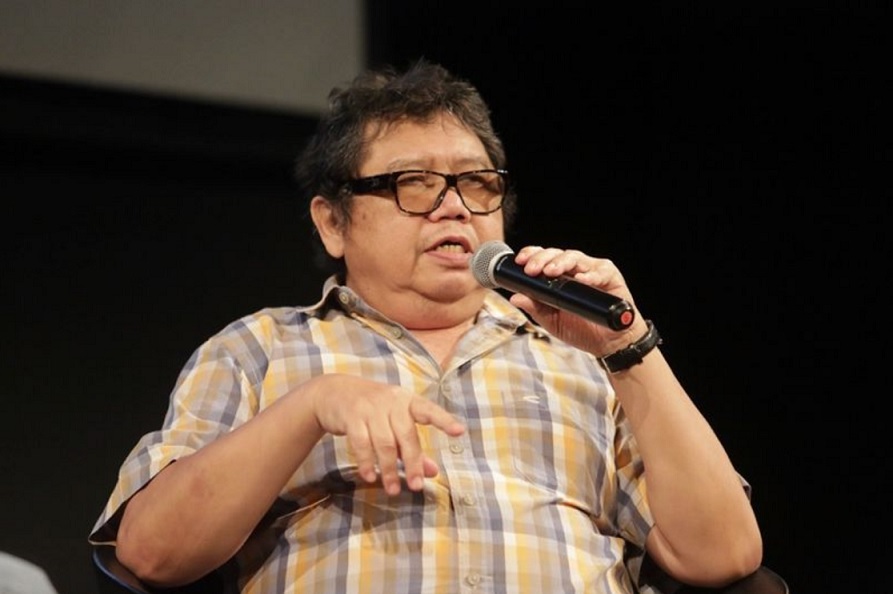
  • Cartoonist Lat In Hospital With Heart Problem

    Cartoonist Lat In Hospital With Heart Problem

    Cartoonist Mohammad Nor Khalid, popularly known as Lat, has been admitted to the Pantai Hospital here for what is believed to be a heart problem, Bernama reported.

    His younger brother, film director Mamat Khalid, said Lat, 65, was admitted to the intensive care unit of the hospital this morning.

    “His condition is stable,” he said when contacted by Bernama.

    Mamat said Lat was admitted to hospital last week for a heart problem but was discharged on Tuesday.

    The 65-year-old Lat, whose real name is Mohammad Nor Khalid, has published more than 20 volumes of cartoons in his illustrious career.

    He has also won various awards for his work, including the Fukuoka Asian Culture Prize in 2002.

    Lat’s best-known work is “The Kampung Boy” (1979), which was published in several countries across the world.

    In 1994, the Perak sultan bestowed the “Datuk” title on Lat, in recognition of the cartoonist’s work in helping to promote social harmony and understanding through his cartoons.

    He has published more than 20 volumes of cartoons since he was 13 years old.

    His works mostly illustrate Malaysia’s social and political scenes, portraying them in a humorous light without bias.

    Lat spent his youth in the countryside before moving to the city at the age of 11.

    When he was in school, he looked at ways to support his family financially and started contributing cartoon strips to newspapers and magazines. His first published comic book was “Tiga Sekawan” (“Three Friends Catch a Thief”).

    He became a reporter in the New Straits Times and also began contributing cartoons.

    His works, reflecting his view of Malaysian life and the world were featured in New Straits Times and Berita Minggu. They were also later used in advertisements.


    Source: freemalaysiatoday

  • Is She Out Of The Race? Singaporeans Knows She’s Indian?

    Is She Out Of The Race? Singaporeans Knows She’s Indian?

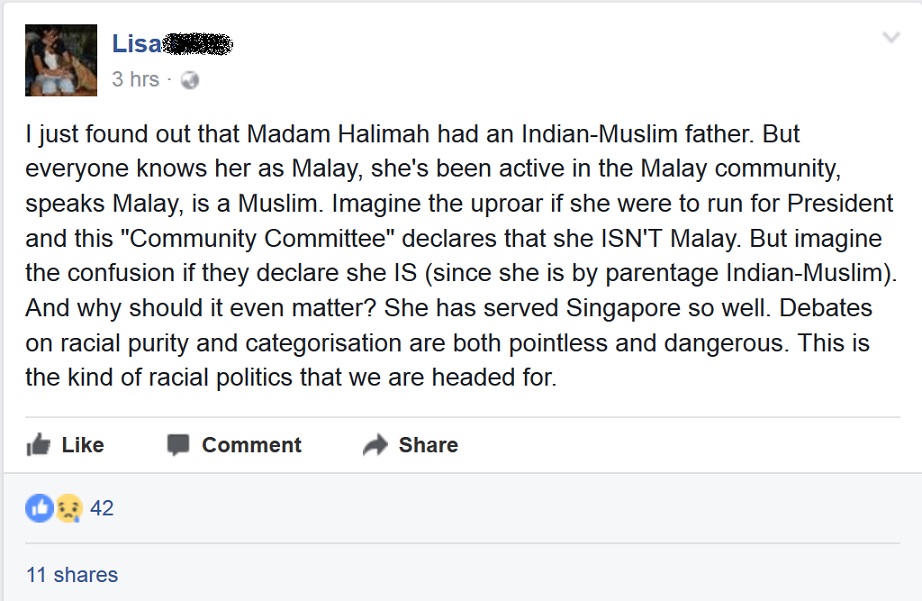
    I saw a post on facebook and wanted to share it because it might have a significant effect to Singapore and our malay community here.

    As you know the presidential election is coming, and Halimah Yacob might probably not be a ‘Malay’. It turns out that she actually had an Indian-Muslim father and her IC would have stated ‘Indian’ had her father not pass away before the registration. So now it really depends on the new committee to declare her either ‘Malay’ or ‘Indian’.

    But the lady had been a close friend to the Muslim society throughout the years, definitely a better people’s choice as compared to other potential Malay presidential candidate.

    Sumbanganya terhadap rakyat Singapura memang disanjung tidak seperti ahli-ahli politik yang lain. Tak tahulah apa yang akan terjadi nanti beberapa bulan kemudian. Adakah negara kita dilanda jenis politik perkauman?

    Maaf kalau tersilap, saya mahu kongsi maklumat sahaja.


    Ros

    Reader’s Contribution

  • New Malay President When Elected Will Be A Shame To The Malay Community

    New Malay President When Elected Will Be A Shame To The Malay Community

    The new malay president when elected will be a shame to the malay community in singapore. Just mark my words. If the current public servants now are talam dua muka, What good is there to look for in a president that is going to be malay just because the government say so.

    Potential candidates (that is likely picked by PAP) who applies for the position is to be assess by the new community committee to be verified of his or her ethnicity and eligibility. How far back are they going to trace his and his family’s DNA to make a sound and accurate assessment? Eligibility wise, Singaporeans generally know who has already been chosen if not yet. What is the point of the elections then right?

    Those whose names was published recently as potential candidates are now in the spotlight. For those who want to contest, i say good luck. But for those who is going to decline to participate or like Yacob in particular who gave his reasons for not doing so are just being a prick. Who would actually believe that anyone given a chance to get a $4 million paycheck for doing nothing will turn it down. Spare us citizens from the lame excuse of liking the work you doing now just because it is “affecting” Singaporeans. It doesn’t even sound right. So much for serving the citizens.

    No point having a Malay president for the sake of almost 50 years of not having one. One statement says it all. The malay taking that role is a shame to our malay community. we never asked for this in this way and there will never be justice in this. I’m sure many feel this way too.


    B. Doh

    Reader’s contribution


  • New Panel To Certify Ethnicity Of Presidential Hopefuls

    New Panel To Certify Ethnicity Of Presidential Hopefuls

    Potential candidates running for the presidency will need to have their ethnicities certified by a new Community Committee, under proposed legislative amendments tabled on Monday (Jan 9) for the new hiatus-triggered model to ensure the country has a minority President from time to time.

    The proposed Community Committee will be made up of a chairman and five members each from the Chinese, Malay, as well as the Indian and other minority communities. Depending on which ethnicity a prospective candidate submits an application under, the sub-committee for that particular community will determine if the individual belongs to that community.

    The Community Committee members will be appointed by the Prime Minister, on nomination by the Presidential Council for Minority Rights, according to the legislative changes mooted for the Presidential Elections Bill tabled for first reading in Parliament by Minister in the Prime Minister’s Office Chan Chun Sing on Monday.

    Last November, changes to the Elected Presidency scheme were passed into law, including instituting a mechanism that reserves an election for a particular ethnicity that has not had an elected representative for five consecutive terms. The upcoming presidential race due in August will be reserved for the Malay community.

    Under the proposed legislative amendments tabled on Monday, all prospective candidates will have to submit a community declaration, on top of the existing application for a certificate of eligibility with the Presidential Elections Committee (PEC). This applies for both open and reserved elections.

    The Elections Department said requiring a community declaration for an open election is needed to operate the hiatus-triggered reserved election process.

    Applicants can be rejected if they fail to submit an application with either committee.

    There is a possibility that in an open election, some candidates are not considered to be members of the three main communities — such as a naturalised citizen — or are rejected in their applications for the community certificates. But they can still contest in an open election as long as they meet the other criteria for the certificate of eligibility.

    In the event that no candidate is successfully nominated at a reserved election, the amendment Bill states that the Prime Minister will issue a fresh writ to call for an open election or a reserved election for the next eligible community.

    The new Community Committee is similar to the Malay and Indian and other minority communities committees found under the Parliamentary Elections Act, which determines if the potential candidate contesting in a particular Group Representation Constituency belongs to these minority groups
    Voters can know who will be on the new committee by May at the latest, just before prospective candidates can start applying for the certification. Applications for such certificates open three months before a sitting President’s term is up. President Tony Tan’s term lasts until end August.

    Given that applicants will need to submit more information to the PEC now that more stringent criteria for potential presidential candidates are in place, the application deadline was proposed to be extended to five days after the writ of election is issued, up from the current three days.

    To give the PEC more time to assess the applications, the Prime Minister’s Office also proposed that Nomination Day falls 10 days after the writ is issued, up from the current five.

    The Second Reading of the Presidential Elections (Amendment) Bill is expected next month.

    Other amendments under the Bill include improvements to the election processes, where the Returning Officer will automatically carry out a recount if the winning margin is 2 per cent or less. This is to avoid unnecessary delays. Currently, a recount is carried out only if a candidate or his counting agent applies for one — provided the winning margin is 2 per cent or less.

    Overseas voters could also have up to two calendar days after the writ is issued to register as an overseas elector, up from the current deadline on the day it was issued. Contingency procedures proposed include allowing the Returning Officer to provide up to an additional seven days for overseas votes to reach Singapore for counting.

    The same amendments for overseas voting processes will be made through future amendments to the Parliamentary Elections Act, which contains the relevant legislation.


    Source: Today

deneme bonusu