Category: Singapuraku

  • ST Commentary: Of Minorities, Majorities And Sensitivities Across Race And Religion

    ST Commentary: Of Minorities, Majorities And Sensitivities Across Race And Religion

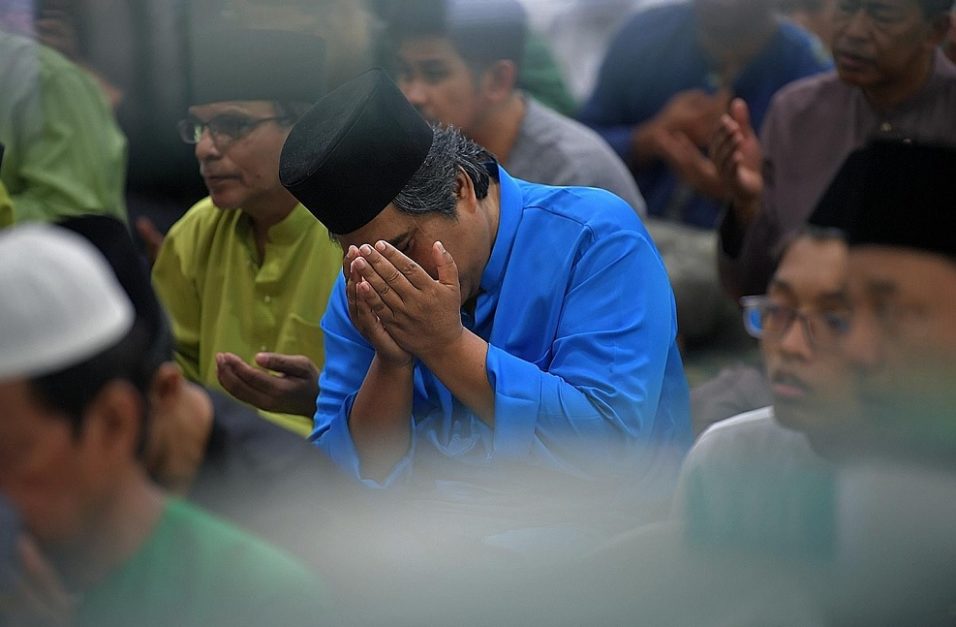
    Do individual Muslims have a special obligation to speak up when radicalised Muslims are in the news for attacks or arrests – such as by condemning the acts or clarifying that Islam is a religion of peace?

    Some non-Muslims in Singapore think so, and it can cause unease among their Muslim friends.

    This discomfort was given voice in Parliament this month, in speeches by two Muslim MPs, in the debate on a motion to strengthen multiracialism in the fight against terror.

    Ms Rahayu Mahzam (Jurong GRC) cited a conversation with a non-Muslim friend about terrorism. She was made to feel defensive and frustrated when he pressed her to say what “true Muslims” were doing to address the problem.

    “I told him, I do not know these people, I do not understand their psyche and it was unfair to put the burden on Muslims alone to resolve this issue,” she said.

    She found a similar situation playing out on social media, noting: “I saw many Facebook postings of Muslim friends condemning the terrorist attacks but also expressing similar frustrations of having to explain to non-Muslim friends that the terrorists’ actions were not aligned with Islamic teachings.”

    Dr Intan Azura Mokhtar (Ang Mo Kio GRC) also warned against “religious suspicion against the Muslims”, adding that “we cannot allow Muslims to feel apologetic for what these terrorist groups – which proclaim to carry out their heinous acts in the name of Islam – have done”.

    It is not that non-Muslims are not allowed to expect anyone from the Muslim community to come out firmly against terrorism or to detail what is being done about the problem within the community. The point here is that they should not expect each and everyone in the Muslim community to have to explain themselves to the satisfaction of any non-Muslim who happens to have doubts on where they stand.

    The fact is, each time someone in the Singaporean Muslim community is implicated in terrorist activity or detained for being radicalised, prominent representatives of the community do issue statements setting out in no uncertain terms the view of the community as a whole. These representatives may be from the Islamic Religious Council of Singapore or other groups, such as the Federation of Indian Muslims, or they may be political leaders who are Muslim. These statements should suffice.

    Non-Muslims should accept them in good faith as being representative of the views of Singaporean Muslims in general – which they are – and not require each individual Muslim they meet in the course of the day to have to prove his or her sincerity afresh.

    Pressing individual Muslims on the issue in person and on social media or requiring them to speak apologetically or to feel apologetic reflects an underlying distrust. It can feel like a slight. It is incumbent on non-Muslims here to be sensitive in their words and actions.

    The reality on the ground is that the Muslim community in Singapore is far more committed to multiculturalism and far less inclined towards the radical ideology of groups like the Islamic State in Iraq and Syria and Al-Qaeda than Muslims in most countries.

    The radicalised segment of Muslims here is very small by proportion. Furthermore, they receive virtually no support from the wider community. There is thus no basis for the kind of scepticism implied by the encounters Ms Rahayu spoke about. (If the radicals in fact receive a lot of latent warmth from ordinary Muslims, then it would be a different story. But that is not the case.)

    What non-Muslims should do, therefore, is: first, understand there is a majority who are distinct from a very small minority, and second, not let that minority colour the way they interact with the majority. But it is possible that the corollary is also true – that Muslims need to approach the issue in a similar way.

    Muslims can see things this way: There is a small minority of non-Muslims who lack prudence in the way they converse with Muslims on the issues of terrorism and radicalism. The broad majority of non-Muslims are not like that – they understand the subtleties or, if not, they are careful not to broach the topic. If this is true, then Muslims too should not allow the actions and words of a minority among non-Muslims to colour their interactions with the majority of non-Muslims.

    In other words, the majority of Muslims and the majority of non-Muslims – who together are the majority of Singapore – instinctively understand, believe in and show respect for multi-religious norms.

    But the two minorities complicate the picture – a Muslim minority who are radicalised, and a non-Muslim minority who are callous or ignorant in the way they speak or act.

    The worst outcome for Singapore is for the two minorities to be allowed to dominate the narrative, thereby dragging the whole of society into an insalubrious atmosphere of suspicion and counter-suspicion.

    The two majorities need to do two things. Each majority must draw a line of principle between itself and its minority, and it must then stand in solidarity with the other majority, so that society stays united.

    In the aftermath of terror attacks in the West, this majority-minority dynamic is often in play.

    In Britain, London and Manchester have reported sharp spikes in the number of anti-Muslim hate crimes after terrorist attacks in the two cities this year – that is, a minority of Muslims conducting attacks on society, and a minority of non-Muslims carrying out just as malignant reprisals on Muslims.

    But when the two majorities defend one another and show solidarity, they can prevail.

    An example of this was the #illridewithyou campaign, a social media campaign in Australia after the Sydney cafe hostage incident in 2014. Non-Muslim Australians offered to ride on public transport with Muslim Australians, to ensure the latter’s safety.

    When the two majorities stand as one, the two minorities are forced back into their dark corners on the fringe of society.

    In Singapore, no physical attack has happened yet, in one direction or the other. But if the country can guard against verbal unpleasantries, like those highlighted in Parliament this month, then there can be more confidence about preventing physical ones too.


    Source: http://www.straitstimes.com (Elgin Toh, Insight Editor)
  • 8 VS 3, All Myanmar Nationals, Fight Over Cigarettes At Peninsula Plaza, Seven Of Them Got Jailed 12 Months

    8 VS 3, All Myanmar Nationals, Fight Over Cigarettes At Peninsula Plaza, Seven Of Them Got Jailed 12 Months

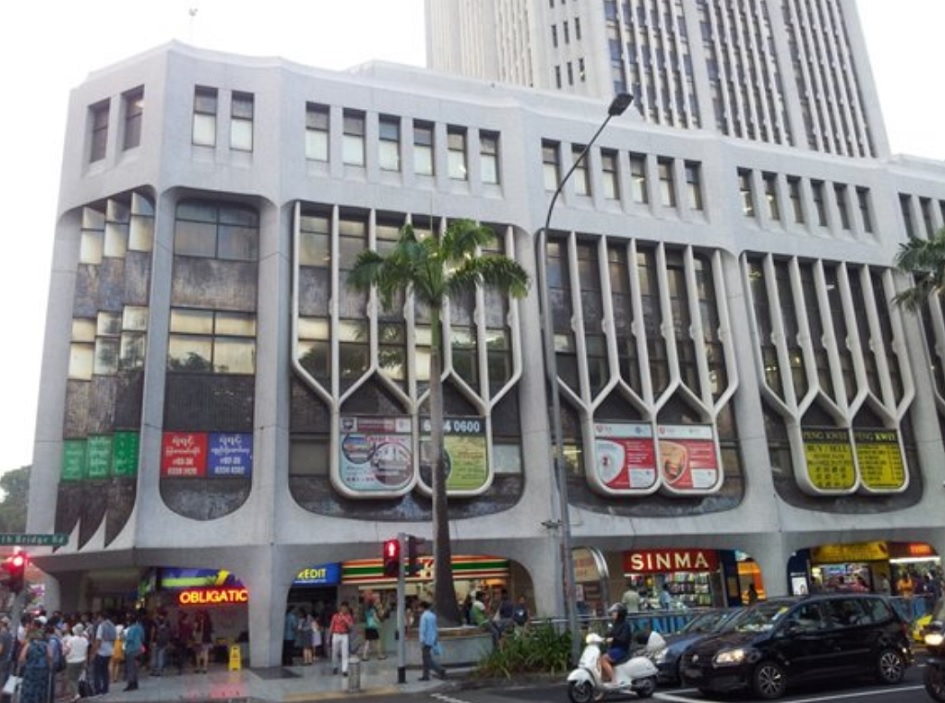
    Seven Myanmar nationals were sentenced to 12 months’ jail for rioting after they got into a fight with three fellow countrymen over cigarettes at Peninsula Plaza.

    The court heard on Friday (13 October) that on 4 June this year, Cung San Eng, 26, Tluang Uk, 39, Ronal, 30, Lal Tha Siama, 25, Thaung Sun, 29, Van Liaw Aung, 30, Aung Maw, 23, and another unknown male had been consuming alcohol since 3pm near Peninsula Plaza. The seven accused, who pleaded guilty to one charge of rioting, are work permit holders working in marine dredging, shipyards and construction.

    At about 10:35pm, a dispute broke out between the group of eight and a group of three other Myanmar nationals over cigarettes and a fight ensued.

    One of the victims, Wunna, 32, fell as a result of the scuffle. Several of the accused rained punches on Wunna as he lay on the ground. Wunna’s friends Pyae Phyo Zaw, 31, and Min Zaw, 40, attempted to stop the fight but were also assaulted by the group.

    The entire incident lasted for about one and a half minutes. Police arrived at 10:45pm and arrested Cung San Eng, Tluang Uk and Ronal. The rest were arrested after follow-up investigations.

    Deputy Public Prosecutor Claire Poh asked for a sentence of at least nine months for each of the accused, whom she said were part of an unlawful assembly. DPP Poh pointed out that the injuries to Wunna were not minor and that he had suffered a partially dislocated right foot and was given a week’s medical leave.

    In mitigation, the seven Myanmar nationals, who were unrepresented, said through an interpreter that they hoped for leniency. They told the court they were supporting their families in Myanmar and did not have income for four months since they were remanded.

    Referring to the December 2013 Little India riot, District Judge Imran Abdul Hamid said that Singapore takes a “very serious view of rioting offences”. As such, he said that the sentencing needed to be a deterrent so that Peninsula Plaza, commonly known as “Little Myanmar”, does not go the way of Little India.

    DJ Imran backdated each person’s sentences to the date when they were first remanded in June.

    Addressing the group, DJ Imran said, “My advice to you when you go back to Myanmar, tell your friends and family desiring to come to Singapore: Don’t mess around with our laws.”

    The group could have faced a maximum jail term of seven years and been liable to caning.

    Source: https://sg.news.yahoo.com

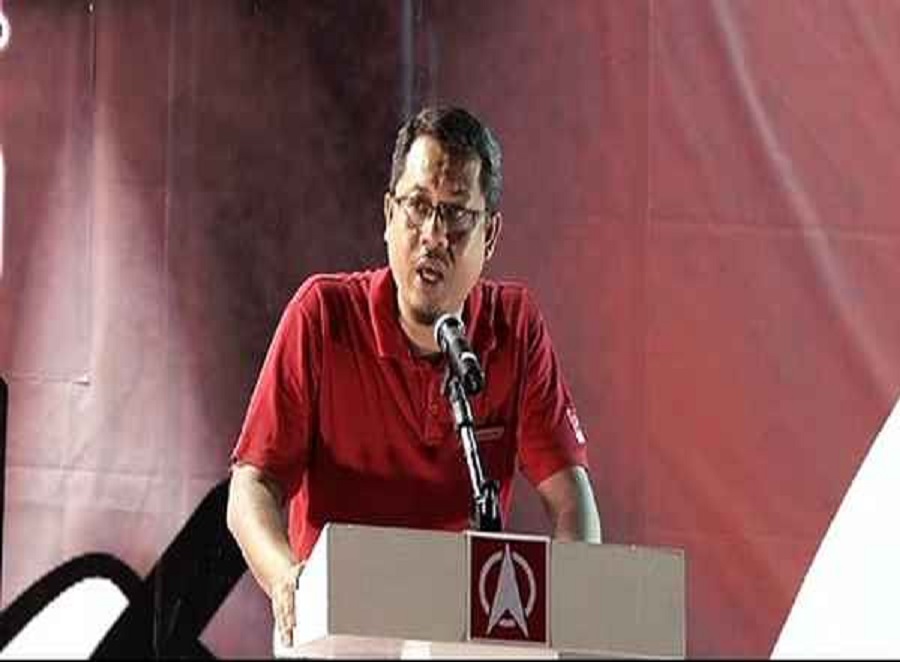
  • (Commentary) SDP Member Damanhuri Abas Talks About Race

    (Commentary) SDP Member Damanhuri Abas Talks About Race

    Now seems the best time to talk about race in light of recent events. First and foremost, I see blessings in our racial diversity. Mother earth intends us to be as diverse as she is. What we are as Chinese, Indian, Malay, Eurasian or others are inherited at birth and acquired in life through our own culture and tradition as well as the influence of wider society. Each community will celebrate its unique identity. Collectively, we are the real richness that makes up the true soul of our country. As a nation we are half a century old and undergo the normal formative stages in our identity shaping process. We should have passed the storming phase and be on our way into the norming phase.

    That storming phase is marked by a very top down highly politicised identity project for our nation. It has served its intended purpose in shaping a common narrative as a starting base. And yes, we do have that part of our history that ‘artificially’ placed us here courtesy of the Brits. We had to start somewhere and so it was politically set to be the British venture into this historically well-known economically strategic island. In that very British narrative, we all came from other lands, so be it that the indigenous people too originated from somewhere else, albeit just across the straits.

    So now as we move into the norming phase, we must strengthen that narrative into a more lucid unifying storyline bringing together the rich cultural tapestry of our diverse communities. One that is more historically sensitive and less politically serving. Progressive and building on lessons of history and not stagnating on past memories. A different set of people are needed to do so. It calls for less of the authoritative rational minds but more of the imaginative and creative hearts. Less engineering and more persuading. The artist in preference to the legalist. A truly ground up people’s project to draw from our own and collective past. A transparent exercise of heart, soul and mind to have an honest look into our history, all the bits of it.

    The dire uninspiring almost constant fear-mongering headlines of the day continues to dictate our society’s agenda. The intellectual landscape dedicated to rediscover who we are as a people is artificially absent. Instead, the focus is very much on reactionary think tanks serving externally driven agendas. Issues that divide are in focus, many others that unites are sadly sidelined. We must be ahead of this reactionary curve, that must be the mark that distinguishes us, a testimony of what education of our people surely should have brought us to, today.

    This is even more vital now, as we address the deeper issue of race and not from a myopic political view that has dictated our nation’s storming phase. We need to abandon the colonial mindset that looks at race as divisive and unhelpful, to be controlled, managed and politically exploited. Instead we must look at race through the lens of real living communities and their cherished heritage; recognized, celebrated and accorded equal importance by all. Surely the rich multi-racial Singapore story must be more than about a single person or a family. We can do it Singapore. After 52 years of nation building, we really do have the wealth of minds and the talents of hearts in abundance, waiting to be harnessed towards this beautiful noble national unifying people’s awakening project. So let us begin this worthy dignified conversation on race.


    Source: Damanhuri Abas

  • Masagos Zulkifli: Like Malaysia, Singapore Is Constantly Cautious And Concerned About Racial And Religious harmony

    Masagos Zulkifli: Like Malaysia, Singapore Is Constantly Cautious And Concerned About Racial And Religious harmony

    #masagos The Sultans in Malaysia issued a statement, expressing their concerns over divisive practices and mindsets that may jeopardise Malaysia’s multi-racial and religious harmony.

    The statement urged Malaysians to abide by the Constitution, and that Muslims should not unwittingly tarnish the religion by their actions which can be divisive.

    Like Malaysia, Singapore is constantly cautious and concerned about racial and religious harmony. While we have enjoyed decades of relative peace, global and local developments may unravel what we have built over the years. The Government needs to continuously be nimble in adapting to changes, and to carefully manage racial and religious relations. It has put in place policies like the Ethnic Integration Policy, GRC and recently, reserved President Election for each community.

    The Muslim community and MUIS too have worked hard to preserve their moderate practices in Singapore, and to prevent external influences from making the community an exclusive and extreme one.

    I wish citizens from both sides of the causeway will continue to maintain their strong inter-racial and religious harmony.


    Source: Masagos Zulkifli

  • Man Did Not Get ICU Slot In SGH Which Is Cheaper Than Gleneagles, Now Faces $78,000 Bill

    Man Did Not Get ICU Slot In SGH Which Is Cheaper Than Gleneagles, Now Faces $78,000 Bill

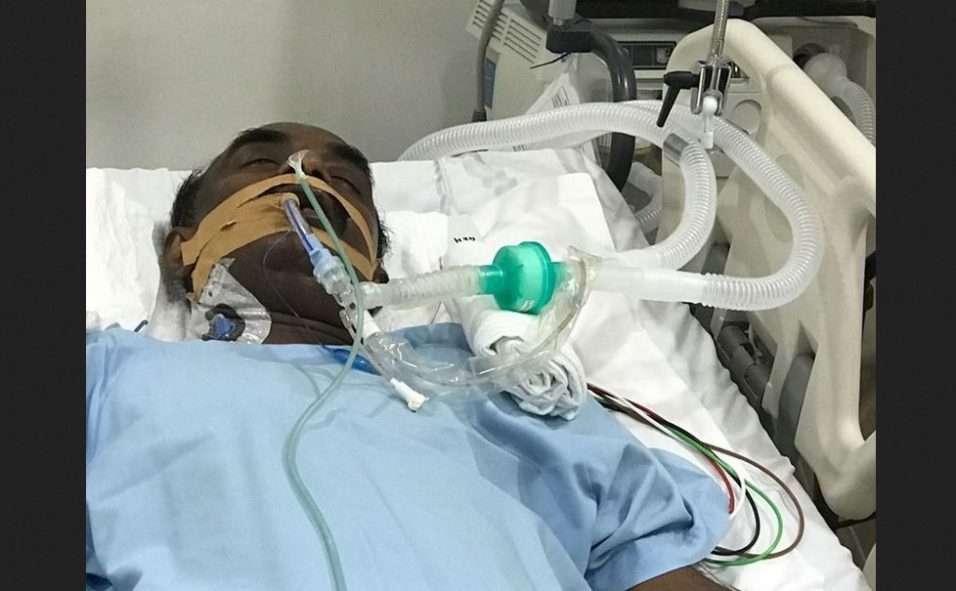
    Mr Thomas Lukose, 55, suffered a heart attack at Gleneagles Hospital while on night duty as a security guard, but couldn’t get a place in SGH for immediate treatment. The family wish for him transferred to the National Heart Centre Singapore (NHCS) because his insurance was not possible in the short time span. He had the operation at Gleneagles instead. Now he has to pay a $78K bill.

    A crowdfunding appeal by the family can be found here if you would like to help donate.

    59bba6f703d9e70006001e3b_1da9ee

    59bba5703ac6420006001db5_ee8df9

    Editor’s Note:

    It is really an unfortunate event for Mr Thomas. If he had managed to get a slot in SGH for his immediate treatment, things might have gone better for him. The family fought hard for him too while he was injured. If you feel bad for him, help lessen his burden by donating to the crowdfund.


    Rilek1Corner