Category: Singapuraku

  • Issues That Need To Be Addressed Fast Before The Formal PE 2017 Process Begins

    Issues That Need To Be Addressed Fast Before The Formal PE 2017 Process Begins

    PE 2017 by Former MP Inderjit Singh

    In less than 2 months, Singaporeans will get a new elected President. Unlike the past Presidential Elections (PE), the run up to this year’s PE has not been a smooth sailing one. Parliament passed a new ruling allowing for a Reserved Election. While many have questioned the wisdom of a reserved PE, Parliament has passed the law and this is our current system of how we will select our future Presidents.
    As the Head of State, the President must have the respect of all Singaporeans once he or she is elected (or appointed as in the past). After the new President has been elected in the reserved PE in September this year, I hope all Singaporeans will give that elected person the respect the office of the President of Singapore deserves.
    Many of us are saddened with the recent developments and comments from different quarters of society but I hope that we can put all these differences behind us. Once the new President is elected, we should all unite behind that person and focus on uniting the nation so that the respect accrued to the office of the President remains intact.
    To help that process, I feel that the following issues need to be addressed fast before we go into the formal PE 2017 process:

    1. For the purposes of effecting a reserved election, it is important to establish who our first elected president was Some feel that it is Mr Ong Teng Cheong. He was the first person who was formally elected to the office of President. Before him though, Mr Wee Kim Wee had exercised the powers of the elected president during his term, which was when the constitutional changes were made to allow for Singapore to have an elected President. The court will be deciding on this very soon, but I feel the policy makers could have avoided this question all together by paying more attention to this issue – the constitution could have said that the 5th election should be a reserved election and not the 6th. Nevertheless, once the courts decide, we have to move on.

    2. The concept of “Malayness” has also become a debatable issue. Questions about how Mendaki and SINDA classify who is a Malay and who is an Indian do not seem to be aligned with how a Malay or an Indian is defined for the purposes of a GE or a PE. For now, it is critical that the leaders of the Malay community and the government come out and make this position clear and hopefully this position will apply to all aspects of life in Singapore. I hope this can be resolved before the formal process of PE 2017 starts.

    3. This being the 1st ever reserved PE, many hope to see qualified Malays step forward and give Singaporeans an opportunity to choose their President. It is also very important that Singaporeans and the rest of the world see that we have enough qualified Malays in Singapore who meet the very stringent requirements set in the constitution. It will be a pity if we don’t have enough qualified candidates to choose from for the first ever reserved PE. So, I hope all those who meet the criteria, come forward for this wider call.

    4. While the constitution is open about having a current sitting government politician standing for the PE, some Singaporeans have expressed concerns on the prospects of a current government MP, still in parliament, resigning as an MP and immediately standing for the PE. The spirit of the Elected President is independence of office as intended by Mr Lee Kuan Yew when the idea was mooted. While I have no question about how each person will do his or her duty to serve the office they are elected to serve, public perception is also important. While Mr Ong Teng Cheong also did the same in 1993, I sense people are increasingly uncomfortable with this.

    As the Head of State, the President of Singapore holds the highest office and he or she must get the full respect of all Singaporeans. I hope the above issues are addressed before PE 2017 kicks off formally. It is good that Singaporeans are debating the issue of the reserved PE. My hope is that we can largely come to an understanding of the above 4 issues before we kick off PE 2017. And once our President has been elected, let’s all show respect for the President of Singapore and stand united as Singaporeans.


    Source: Inderjit Singh
  • Suitable Eligible Candidates Should Step Forward, Proper Contest Of Presidency Beneficial To Singapore

    Suitable Eligible Candidates Should Step Forward, Proper Contest Of Presidency Beneficial To Singapore

    By Lin Weijie

    The ruling party in Singapore, the People’s Action Party (PAP), has governed our country for more than 50 years. PAP has dominated the Parliament since independence. The judiciary has been highly supportive of the government. It can be beneficial for our country, government and even ruling party to have an independent, non-partisan and qualified President who is caring, capable, committed, credible and constructive (5Cs?). An additional bonus is if he or she has charisma. The eighth President of Singapore who assumes office in September 2017 should be able to successfully work with our government to lead, unite and care for our people while exercising his constitutional, ceremonial and community responsibilities as our Head of State. Who are the potential candidates?

    Currently, the two interested candidates from the private sector, Salleh Marican and Farid Khan do not meet the stated financial criteria as their companies to do not have shareholder equity of at least $500 million. Salleh Marican is an Indian-Muslim chief executive officer (CEO) who seems not very fluent in Malay language. Farid Khan, who grew up in Geylang Serai, is a CEO of Pakistani descent. The third potential candidate is Halimah Yacob, our Indian-Muslim Speaker of Parliament who expressed interest.

    The Singapore electorate can benefit from having suitable Malay-Muslim candidates taking part in this election. As Prime Minister Lee Hsien Loong said in Parliament, the 2017 Presidential Election will be reserved for Malay candidates.

    Presently, there are a few potentially eligible Malay CEOs who may qualify as possible private sector candidates. One of them is Alternate Member of the Council of Presidential Advisers and Bank of Singapore CEO Bahren Shaari, who has not ruled out running for the Presidential Election. He was appointed CEO in February 2015. Though he has not met the minimum three years criteria as CEO, the Presidential Election Committee (PEC) may approve of his application and allow him to run for this election, if he decides to take part.

    The other potentially eligible private sector candidate is Shafie Shamsuddin who has served as CEO of Carrefour in Singapore and Malaysia. He is currently, the president and chief executive of PT Trans Retail (Carrefour Indonesia). Shafie Shamsuddin was named the Outstanding Chief/Senior Executive (Overseas) of the Year at the 2016 Singapore Business Awards. In 2016, Singapore’s Government Investment Corporation (GIC) invested 5.2 trillion rupiah (SGD$387 million) for a 17% stake in PT Trans Retail.

    According to the Presidential Election 2017 Candidate Handbook, one of the financial requirements is that “the company must have, on average, at least $500 million shareholders’ equity, during the interested candidate’s most recent 3 years of service as chief executive”. It has yet to be ascertained if PT Trans Retail meets this requirement. The companies led by Salleh Marican and Farid Khan do not meet this requirement.

    From the public sector, other potentially eligible candidates include Minister Yaacob Ibrahim and Abdullah Tarmugi who served as Speaker of Parliament from 2002 to 2011. Minister Yaacob Ibrahim has publicly declared that he was not interested. Abdullah Tarmugi may be persuaded to step out of retirement from politics to contest for this election.

    Another possible candidate is Singapore’s non-resident Ambassador to Kuwait and Foreign Minister’s Special Envoy to Middle East, Zainul Abidin, who is the Indian-Muslim CEO of Mendaki from 1990 to 1993. He served as Minister of State for Foreign Affairs in 2004 and Senior Minister of State from 2006 till 2011, when he lost his parliamentary seat as part of the PAP team that contested in the General Elections for the Aljunied Group Representation Constituency.

    Though former Senior Minister of State Zainul Abidin may not meet the requirement 1.1.1a of holding the office of Minister for 3 of more years, the PEC may qualify him under requirement 1.1.1c, which specifies that he has “served for 3 or more years in an office in the public sector for which the PEC must be satisfied, having regard to the nature of the office and the person’s performance, that he has experience and ability comparable to a person who satisfies paragraph 1.1.1 (a)… The PEC must also be satisfied that he has the experience and ability to effectively carry out the functions and duties of the office of President.” There is also a similar clause for private sector candidates who might not meet the exact requirements. There should not be a walkover for this Presidential Election.

    Indeed, it can be beneficial for our country if we have highly suitable (5Cs?) and eligible candidates from both public and private sectors taking part in this reserved Presidential Election so that our citizens will not be denied the opportunity to take part in this democratic process and vote for our eighth President of Singapore.


    Lin Weijie is a director in the private sector. He has served more than 15 years in the public service, before providing consultancy services to overseas governments and organizations such as the World Bank


    Source: www.theindependent.sg

  • Gilbert Goh: Send Strong Signal To Government, Spoil Your Vote

    Gilbert Goh: Send Strong Signal To Government, Spoil Your Vote

    Once again, we reiterate our call for Singaporeans who are against this racist Presidential Election to spoil their votes.

    We believe in a meritocratic election whereby the best most-suitable candidate stands for election and let the people decide who is going to be their next President than letting race gets in the way.

    Singaporeans are fed up with our government who tried to lie to the people about taking care of the needs of the minority race by introducing a Reserved PE when in fact the main goal is to deter a unpreferred candidate from standing for the election.

    Its a known fact that Dr Tan Cheng Bock will lose in the forthcoming court appeal and Halimah – a Indian-Muslim will be the PAP’s preferred choice candidate.

    During last PE, 1.76% of the electorate spoilt their votes amounting to 37,000 voters. A spoilt vote is a legitimate vote of protest and it is not against the law.

    The Presidential Election is unlike that of a general election whereby much is at stake. The President has only custodial power and can’t intervene in the governance of the country. His main aim is to safeguard the billions of reserves we have in the country’s coffers.

    Its also a known fact that Halimah will win heavily due to her long-standing popularity with decades of strong grassroot experience having helmed the labour movement as the second in command.

    Even if all the opposition voters vote otherwise, she will still win heavily as most PAP supporters will root for her.

    Why not take this opportunity to unite together and spoil your vote to send a strong signal to the government that we are against this racist PE?

    We would rather that the government appoint our future President and do away with any PE as its wasting everybody’s time and the country’s resources.

    A strong spoil-vote PE will definitely send the right signal to the government not to meddle anymore with our constitution and stop abusing their power!

    #spoilvotecampaign


    Source: Gilbert Goh

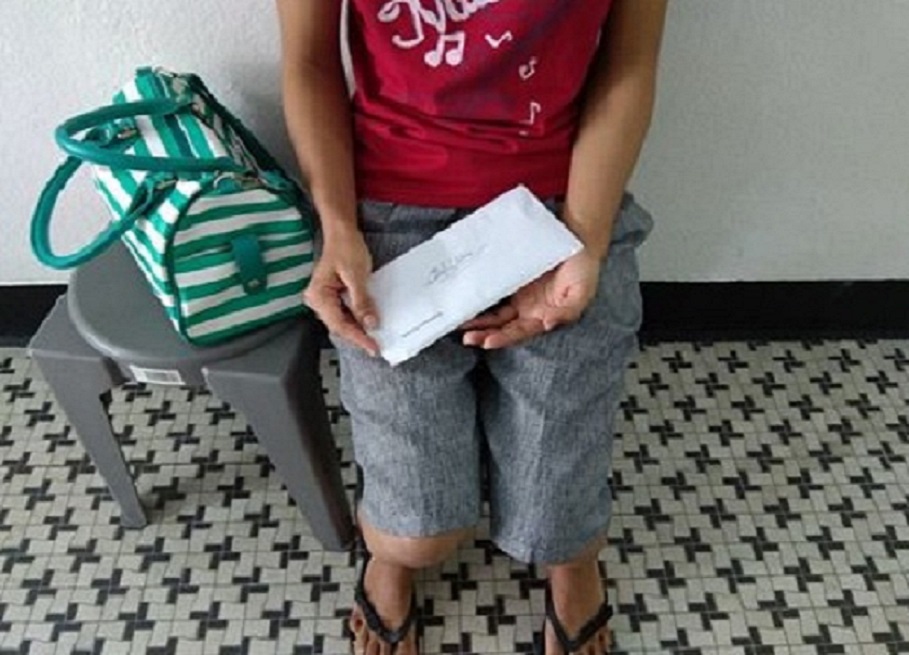
  • HOME Helps Indonesian Domestic Worker Get $40,00 In Back Pay

    HOME Helps Indonesian Domestic Worker Get $40,00 In Back Pay

    Indonesian domestic worker Endang (not her real name) worked for 10 years for her employer and was only paid twice. The payments were not given to her directly but remitted to her family. She was not given a day off and disallowed from owning a mobile phone.

    Requests to return to Indonesia to visit her family were denied. Without any money or access to her passport, she was a virtual prisoner in her employer’s home.

    With the assistance of HOME, a claim was filed at the Ministry of Manpower and today she received more than $40,000 in back pay.

    Cases like Endang’s would not have come to light if not for organisations like HOME. Do support us by donating online at https://www.giving.sg/humanitarian-organisation-for-migrati… or doing an electronic transfer with the following bank details:


    Name of organisation: Humanitarian Organisation for Migration Economics
    Bank name: OCBC
    Account No: 652-821117-002
    Swift Code: OCBCSGSG


    Source: HOME

  • Presiden Melayu Tahun Ini, Adalah Melayu Ke-9 Jadi Ketua Negara Singapura. Ini Hujahnya…

    Presiden Melayu Tahun Ini, Adalah Melayu Ke-9 Jadi Ketua Negara Singapura. Ini Hujahnya…

    Singapura kini berada di ambang Pilihan Raya Presiden yang dikhususkan buat masyarakat Melayu. Bermakna, seorang Melayu akan menjadi Ketua Negara ini.

    Dua bakal calon, Encik Salleh Marican dan Encik Farid Khan sudahpun meluahkan hasrat untuk bertanding bagi jawatan tertinggi negara. Speaker Parlimen Cik Halimah Yaacob juga baru-baru ini memberitahu beliau sedang menimbangkan untuk menjadi calon Presiden.

    Jadi, apakah ini bermakna Presiden Melayu itu nanti adalah Ketua Negara kedua bagi Singapura selepas Presiden pertama, Presiden Yusof Ishak?

    Jawapannya ialah: Tidak.

    Singapura sebenarnya pernah menyaksikan sebilangan orang Melayu yang pernah menjadi Ketua Negara dalam sejarahnya. Ini hujah-hujahnya.

    KETUA NEGARA PERTAMA SINGAPURA – SANG NILA UTAMA

    Sistem pemerintahan Singapura sebelum merdeka merupakan sistem kerajaan, iaitu seorang Raja atau Sultan yang memerintah Singapura dengan kuasa mutlak.

    Antara ketua atau pemimpin Singapura yang pertama, dan juga pengasas kerajaan Singapura ialah Sang Nila Utama, juga dikenali sebagai Sri Tri Buana. Tentu ramai yang pernah dengar atau membaca kisah Putera asal Palembang itu tiba di Singapura pada tahun 1299.

    Menurut hikayat Sejarah Melayu, beliaulah yang menamakan pulau ini Singapura setelah ternampak seekor haiwan seperti singa semasa mendarat di pulau pasir putih ini. Beliau kemudian mendirikan kerajaannya di Bukit Larangan, yang sekarang dikenali sebagai Fort Canning.

    4 KETUA NEGARA SELEPAS SRI TRI BUANA

    Walaupun cerita pengasas Singapura itu tersebar luas dan dijadikan sebagai cerita rakyat, ramai orang yang mungkin tidak tahu bahawa selepas Sang Nila Utama atau Srti Tri Buana, sebenarnya ada lagi empat Raja yang memimpin kerajaan Singapura hingga 1498.

    Mereka adalah keturunan Sang Nila Utama.

    Raja-raja Singapura itu ialah (1) Sri Wikrama Wira, (2) Sri Rana Wikrama, (3) Sri Maharaja dan (4) Parameswara.

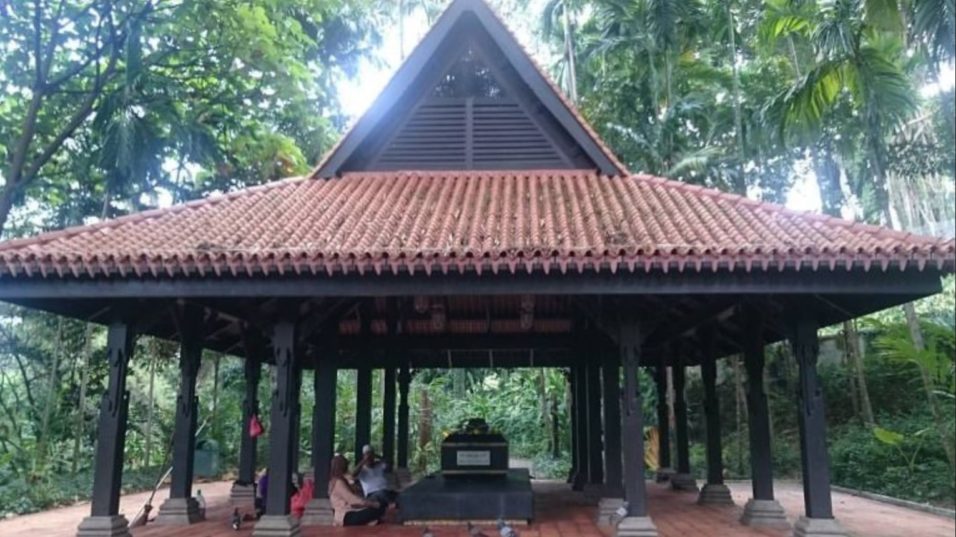
    Sebahagian sarjana dari Britain percaya bahawa Parameswara kemudian memeluk Islam dan menggunakan nama Sultan Iskandar Shah. Makam raja Singapura terakhir itu kini dipercayai bersemadi di bukit Fort Canning.

    Jadi, ini bermakna, Singapura sudah ada sekurang-kurangnya lima orang Raja dalam sejarahnya.

    Kerajaan Singapura kekal sehingga ke tahun 1498 apabila Majapahit membuat serangan terhadap kerajaan Sultan Iskandar Shah, yang melarikan diri dari Singapura dan kemudian mendirikan Kerajaan Melaka.

    SULTAN HUSSEIN SHAH YANG MEMERINTAH SINGAPURA

    Mengikut catatan sejarah, selang ratusan tahun kemudian, Singapura pernah diperintah oleh Sultan Mahmud Shah. Sultan Mahmud ketika itu memerintah kesultanan Johor yang termasuk Pahang, kepulauan Riau dan Singapura.

    Tengku Hussein pula merupakan anak pertama kepada Sultan Mahmud. Beliau bagaimanapun enggan mengambil alih pemerintahan bapanya, Sultan Mahmud.

    Bagaimanapun pada masa kerajaan Britain dan Belanda saling berlumba-lumba untuk menubuhkan pangkalan di rantau ini, pegawai Inggeris iaitu Sir Stamford Raffles dan Farquhar berpendapat bahawa lebih baik jika Tengku Hussein dijadikan Sultan bagi Kerajaan Johor.

    Dipendekkan cerita, Tengku Hussein menjadi ketua kerajaan di Singapura dan dimahsyurkan sebagai Sultan Hussien Shah.


    Pusat kerajaan Melayu ini terletak di Istana Kampong Gelam, yang kini menjadi Taman Warisan Melayu.

    Ini bermakna, selepas zaman Sultan Iskandar Shah, Singapura diperintah oleh sekurang-kurangnya dua orang Sultan Melayu atau ketua kerajaan – iaitu (1) Sultan Mahmud Shah dan (2) Sultan Hussein Shah.

    PRESIDEN SINGAPURA PASCA-KEMERDEKAAN

    Seorang lagi ketua negara Melayu muncul bagi Singapura muncul pada tahun lewat tahun 1950-an, apabila Encik Yusof Ishak dilantik sebagai Yang di-Pertuan Negara Singapura pada 3 December 1959.

    Beliau merupakan seorang tokoh masyarakat yang menggerakkan akhbar Utusan Melayu, salah satu akhbar utama di rantau ini.

    Pada 1965, Encik Yusof Ishak diangkat pula menjadi Presiden Singapura yang pertama apabila Singapura mencapai kemerdekaan – sehingga kini menjadi satu-satunya Presiden berbangsa Melayu bagi Singapura.

    SEKURANG-KURANGNYA 8 KETUA NEGARA MELAYU DI SINGAPURA

    Rumusannya, setelah mengambil kira hujah sejarah sejak zaman Sang Nila Utama, ternyata bahawa Singapura sebenarnya sudah mempunyai sekurang-kurangnya 8 Melayu yang pernah menjadi Ketua Negara selaku Sultan, Raja, Yang di-Pertuan Negara atau Presiden.

    Jadi, Presiden Singapura yang terbaru menyusuli Pilihan Raya Presiden pada September tahun ini nanti, akan menjadi Ketua Negara Melayu ke-9 atau sekurang-kurangnya yang ke-9 bagi Singapura.


    Source: http://berita.mediacorp.sg

deneme bonusu