Blog

  • Jufrie Mahmood: PAP Only Looking For Someone They Regard As Malay

    Jufrie Mahmood: PAP Only Looking For Someone They Regard As Malay

    Are they looking for a genuine Malay or someone they regard as Malay? If religion is not a factor then thousands of pinoys who have been granted citizenship are more Malay than any of the three declared candidates.

    Surely everyone knows that religious conversions are a common occurance. But has anybody ever heard of RACIAL conversion?

    Its obvious that the PAP will stop at nothing to prevent Dr Tan Cheng Bock from contesting – even if they end up making fools of themselves or paint themselves into a corner.

    One people, one nation, one Singapore? BULLSHIT!!!!


    Source: Mohamed Jufrie Bin Mahmood

  • Tharman Is Malay

    Tharman Is Malay

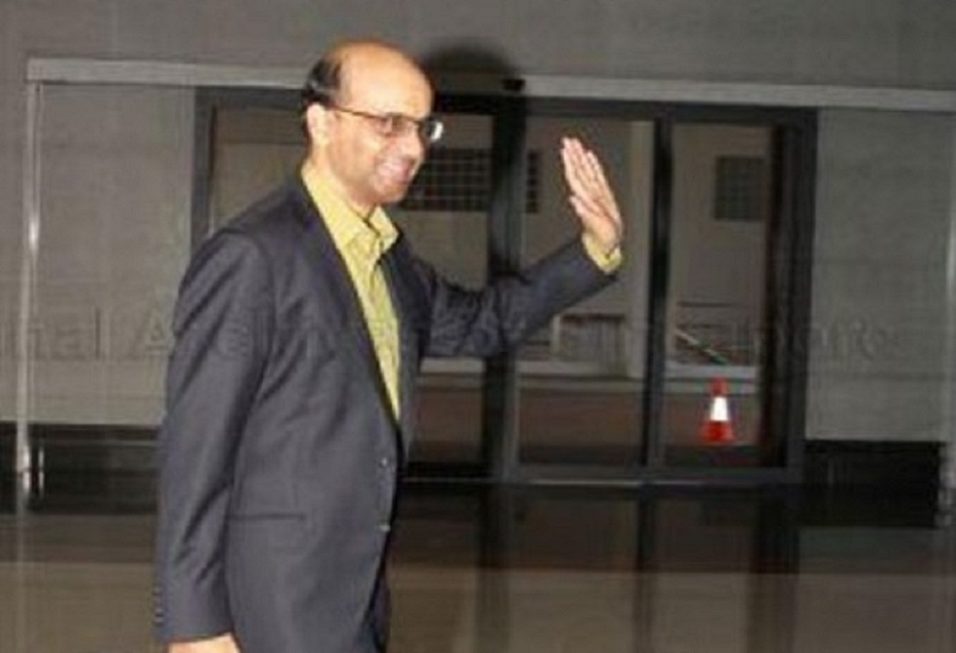
    Singaporeans from all walks of life, who are race-blind, have come out to declare that Tharman Shanmugaratnam is Malay.

    This after they believe race is a fluid concept, where a woman with Indian descent can become President in an election reserved for Malay candidates.

    One Singaporean, Zuo Zhong Tong, said: “There is no doubt Tharman is Malay.”

    “If there is one person who can be president of Singapore, it is Tharman.”

    “He will unify the country and Singaporeans will stand tall and proud for once.”

    However, other locals said by declaring Tharman as Malay, it will open a can of worms.

    Another local, Ma Lai Ren, said: “If Tharman is Malay, then Tan Cheng Bock is also Malay.”

    “But no, he is now Tan Cheng Blocked.”

    “So he is not Malay.”

    At press time, most Singaporeans don’t care about the upcoming presidential election in September 2017 because it is not a real election.


    Source: http://newnation.sg

  • Academic: Malay Presidential Candidates Should Be Judged By Ability To Articulate Singapore’s Interests

    Academic: Malay Presidential Candidates Should Be Judged By Ability To Articulate Singapore’s Interests

    Just who should be considered a “Malay”? Article 19B of the Singapore Constitution defines a Malay as “any person, whether of the Malay race or otherwise, who considers himself to be a member of the Malay community and who is generally accepted as a member of the Malay community by that community”.

    This definition also applies to Malay candidates intending to stand in a Group Representation Constituency (GRC) in a general election. The law requires that in a GRC, at least one member of the team is a Malay, an Indian or from other minority communities.

    The definition of Malay here is quite an open, all-inclusive one.

    In Malaysia, the issue of Malay identity has been widely discussed by sociologists. Debates over who qualifies as Malay took place against the backdrop of the New Economic Policy, which grants Malays certain economic and other benefits.

    Sociologists underline three schools of thought on Malay identity. The first is primordialism, which underscores the role of ancestry. Thus, a person’s ethnic identity is determined by birth. But inter-ethnic marriages have made this perspective irrelevant.

    The second is constructivism, which highlights the heterogeneity of the social group called “Malays”. Essentially, this argues that identity is constructed socially and that, over time and across communities, the definition of what a Malay person is can become porous.

    Scholars upholding more extreme interpretations of this perspective grapple with the role of Islam: how important a marker of Malay identity is it? Can someone living in Malaysia (or Singapore), become Malay (masuk Melayu) if he or she embraces Islam?

    The third perspective is situationalism, which implies that some people identify with Malayness when it is advantageous to be part of the community.

    Ultimately, there is generally a stable core which the majority of Malays identify with. In Malaysia, this is recognised in the Malaysian Constitution: Malays are Muslims, speak the Malay language and follow Malay custom.

    VOICE OF THE COMMUNITY

    How is acceptance into the Malay community measured, as worded in the Singapore Constitution?

    So far, online discussions have emphasised the presidential aspirants’ race, their ability to converse in the Malay language and religion. The extent to which these aspirants have spoken for their community is somehow neglected.

    Here, Singaporeans should draw inspiration from the history of the Malays. Singapore Malays have identified some prominent names as part of their community, though they may not strictly come from the Malay race. These individuals have defended the Malays and struggled for their plight.

    One such individual was Abdullah Abdul Kadir Munshi (1796-1854), a famous chronicler, Malay language teacher and interpreter who worked for Sir Stamford Raffles. His grandfather was of Yemeni Arab descent and his grandmother a Tamil. Malays accept Munshi Abdullah as an intellectual. He wrote on the plight of the Malays during the feudal era and colonial period, and was critical of the Malay ruling class for not investing enough in educating their people.

    The other personality was Professor Syed Hussein Alatas (1928-2007), a former head of Malay Studies at the National University of Singapore. Of hadrami (Yemeni) descent, the sociologist spent most of his life in Malaysia and Singapore. His writings focused on the modernisation of the Malays and the community’s development lag. He also wrote a pioneering book, The Myth Of The Lazy Native, debunking negative stereotypes about the Malays imposed by colonial scholars.

    A name more familiar to Singaporeans is that of Mr Yusof Ishak, whose ancestors originated from Sumatra in Indonesia.

    Throughout his life, Mr Yusof struggled for the Malays. In 1939, he founded the newspaper Utusan Melayu because he wanted the Malays to have an equal voice in the public sphere which, he claimed, was dominated by Indian Muslims and Arabs. Having shown this empathy for his community, Mr Yusof fit smoothly into the role as Singapore’s first head of state.

    Today, Mr Yusof is remembered as an outstanding member of the pioneer generation, as someone who defended multiculturalism and meritocracy, the building blocks of Singapore society.

    In today’s context, there is a convergence of interests among all ethnic communities. It is difficult to distinguish Malay issues from Chinese or Indian ones, and problems facing Singaporeans are not unique to any community.

    Thus, Malay presidential candidates should be judged by their ability to articulate the interests of Singaporeans.

    Granted, the role of the presidency is not a political but symbolic one. The president is not required to act as a check and balance on the Government, apart from being a gatekeeper of the country’s reserves and key public appointments.

    Still, Singaporeans expect their president to rise to the occasion and unite all citizens in times of crisis. So, a candidate’s track record of speaking up for their people is key.

    • The writer, Norshahril Saat, is a fellow at the ISEAS – Yusof Ishak Institute, and author of Yusof Ishak: Singapore’s First President.


    Source: www.straitstimes.com
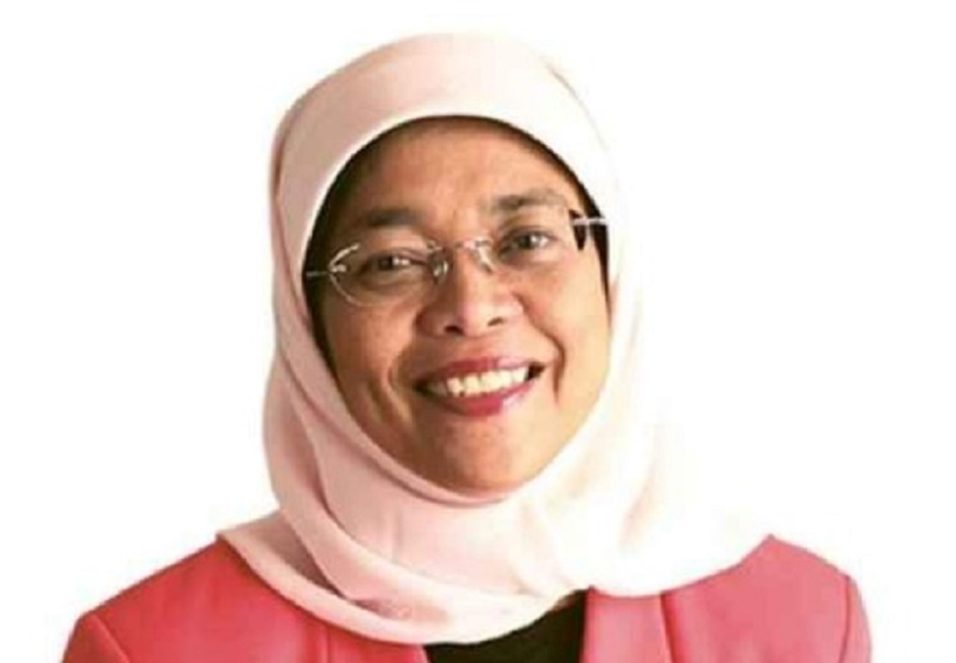
  • SDP Member: Marsiling Residents Indifferent To Halimah’s Presidential Candidacy, Wants By-Election

    SDP Member: Marsiling Residents Indifferent To Halimah’s Presidential Candidacy, Wants By-Election

    We continued our house visits at one of the HDB blocks in Marsiling this evening.

    We asked the residents 2 questions:

    1. The incumbent, Mdm Halimah Yacob, has indicated her interest to contest the next Presidential Election (PE). She claimed that she has received a lot of encouragement & blessings from Marsiling constituents. Are you supportive of her presidential bid?

    Most of the residents we spoke to appeared lukewarm to this question & did not seem really bothered if she would contest or not- let alone support her.

    2. If Mdm Halimah contests the next PE, she will have to resign from the PAP & vacate her parliamentary seat. Do you think a by-election should be called thereafter so that Marsiling-Yew Tee GRC residents have a chance to elect a full slate of 4 new MPs?

    All the residents we spoke to unanimously agreed that a by-election should be called.

    The residents’ sentiments are in sharp contrast to what Minister Chan Chun Sing has said in Parliament (https://www.theonlinecitizen.com/…/no-by-election-if-minor…/).

    In the last General Elections in 2015, the PAP campaigned based on the slogan: “With You, For You, For Singapore”.

    It will be interesting to see how they can continue to keep the above election promise when they deny the voters of Marsiling-Yew Tee their constitutional rights to elect new political representatives via a by-election.


    Source: Bryan Lim Boon Heng (林文兴)

  • Kes Penculikan Di Manila: Rakyat Singapura Lebih Berwaspada Lakukan Lawatan Ke Filipina

    Kes Penculikan Di Manila: Rakyat Singapura Lebih Berwaspada Lakukan Lawatan Ke Filipina

    Susulan berita seorang wanita Singapura yang diselamatkan dari penculikan di kasino Manila, mereka yang sering ke ibu kota Filipina itu mengatakan akan lebih berjaga-jaga apabila ke sana.

    Cik Melissa Chong, 27 tahun, seorang pengurus program bersama badan bukan mencari keuntungan, pergi ke Manila tiga kali tahun ini, demi tugas.

    Terkejut dengan khabar tersebut, beliau berkata: “Susah untuk bayangkan ia berlaku di tempat di mana kawalan keselamatannya ketat, dengan pengawal di pintu masuk dan periksaan beg … saya rasa tidak senang hati (apabila dapat tahu insiden itu)”

    Walaupun beliau tidak akan menangguhkan lawatannya ke sana pada bulan September ini, Cik Chong kini aku berfikir dua kali apabila hendak keluar pada waktu malam. Beliau juga merancang untuk menggunakan khidmat Uber kerana lebih mudah untuk menjejaki perjalanannya dengan membuat tempahan menggunakan aplikasi telefon bijak.

    Beberapa rakyat Singapura yang ditemui juga memberitahu Mediacorp mereka sememangnya berwaspada akan keselamatan diri ketika melancong ke Filipina.

    Encik Justin Kor, 25 tahun, siswazah baru Universiti Teknologi Nanyang, berkata semasa di Filipina Disember lalu, beliau lebih risau mengenai penyeluk saku daripada jenayah yang lebih berat. Apabila beliau ke kawasan setinggan Manila, Justin diberitahu untuk meninggalkan tempat tersebut sebelum matahari terbenam.

    “Saya yakin bahawa kehadiran polis akan (dipertingkat bagi menangani) kes-kes sedemikian.. tetapi saya akan lebih berjaga-jaga (apabila saya ke sana lagi),” katanya.

    Semalam, Polis Negara Filipina mengeluarkan kenyataan mengenai penculikan rakyat Singapura, Wu Yan yang berusia 48 tahun.
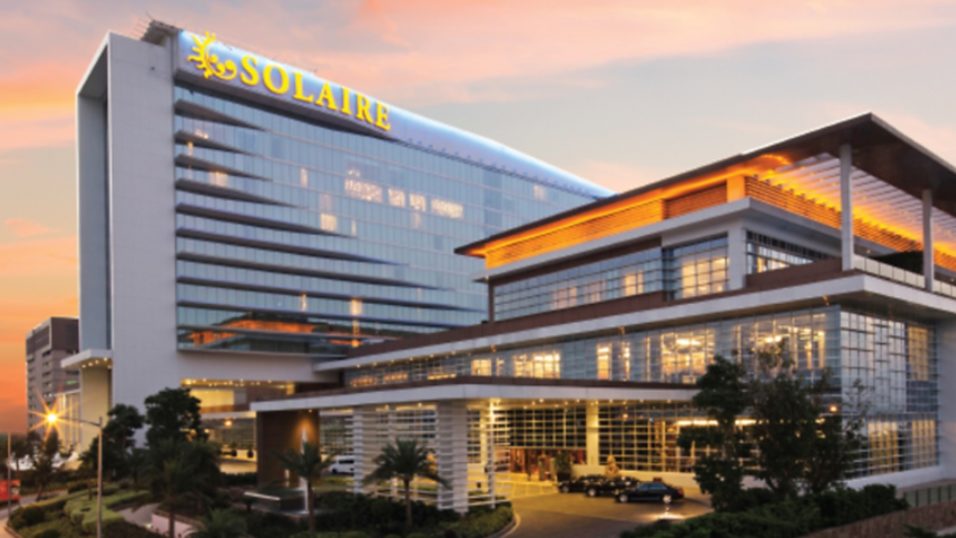
    Wanita tersebut berada di Solaire Resorts and Casino pada hari Isnin apabila berkawan dengan dua warga Malaysia yang mengajaknya ke sebuah lagi kasino di City of Dreams Manila.

    Sekitar 9.45 malam, suspek-suspek berkenaan menculik dan menahannya sebagai tebusan di sebuah bilik di Bayview International Condominium.

    Mereka juga menuntut wang tebusan US$180,000 (S$246,200).

    Wu berjaya diselamatkan keesokan harinya.

    Dua warga Malaysia bersama 41 lagi warga China diberkas, disyaki terbabit dalam sindiket tailong.

    Agensi-agensi pelancongan yang dihubungi Mediacorp, seperti Chan Brothers Travel, mengatakan pihaknya tidak menerima pemohonan untuk membatalkan tempahan ke Filipina.

    Pengarah Fascinating Holidays,Encik David Teo, 59 tahun, menganggarkan kemerosotan 10 hingga 15 peratus tempahan ke Manila. Namun demikian, beliau berkata para pelanggan selalunya lebih “berhati-hati” pada minggu-minggu pertama insiden sedemikian dan lupakannya selepas beberapa bulan.

    Jurucakap SA Tours menasihati para pelancong: “Jangan ikut orang yang tidak dikenali atau mudah percaya mereka yang menawarkan khidmat yang terlalu baik daripada yang biasa ditawarkan .. selalu berwaspada, bertindak bijak dan berhati-hati.”


    Source: http://berita.mediacorp.sg