Blog

  • (Commentary) SDP Member Damanhuri Abas Talks About Race

    (Commentary) SDP Member Damanhuri Abas Talks About Race

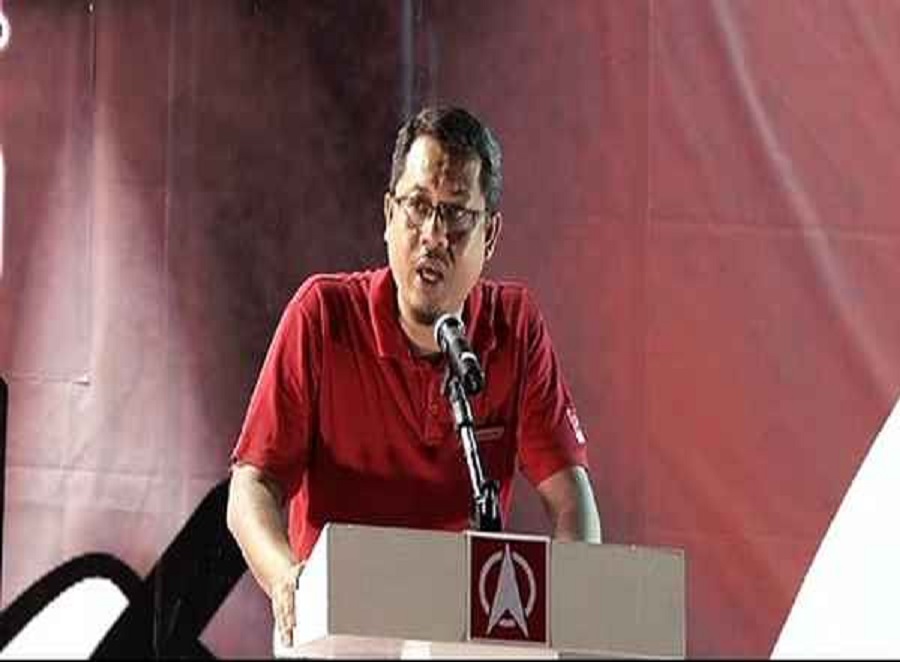
    Now seems the best time to talk about race in light of recent events. First and foremost, I see blessings in our racial diversity. Mother earth intends us to be as diverse as she is. What we are as Chinese, Indian, Malay, Eurasian or others are inherited at birth and acquired in life through our own culture and tradition as well as the influence of wider society. Each community will celebrate its unique identity. Collectively, we are the real richness that makes up the true soul of our country. As a nation we are half a century old and undergo the normal formative stages in our identity shaping process. We should have passed the storming phase and be on our way into the norming phase.

    That storming phase is marked by a very top down highly politicised identity project for our nation. It has served its intended purpose in shaping a common narrative as a starting base. And yes, we do have that part of our history that ‘artificially’ placed us here courtesy of the Brits. We had to start somewhere and so it was politically set to be the British venture into this historically well-known economically strategic island. In that very British narrative, we all came from other lands, so be it that the indigenous people too originated from somewhere else, albeit just across the straits.

    So now as we move into the norming phase, we must strengthen that narrative into a more lucid unifying storyline bringing together the rich cultural tapestry of our diverse communities. One that is more historically sensitive and less politically serving. Progressive and building on lessons of history and not stagnating on past memories. A different set of people are needed to do so. It calls for less of the authoritative rational minds but more of the imaginative and creative hearts. Less engineering and more persuading. The artist in preference to the legalist. A truly ground up people’s project to draw from our own and collective past. A transparent exercise of heart, soul and mind to have an honest look into our history, all the bits of it.

    The dire uninspiring almost constant fear-mongering headlines of the day continues to dictate our society’s agenda. The intellectual landscape dedicated to rediscover who we are as a people is artificially absent. Instead, the focus is very much on reactionary think tanks serving externally driven agendas. Issues that divide are in focus, many others that unites are sadly sidelined. We must be ahead of this reactionary curve, that must be the mark that distinguishes us, a testimony of what education of our people surely should have brought us to, today.

    This is even more vital now, as we address the deeper issue of race and not from a myopic political view that has dictated our nation’s storming phase. We need to abandon the colonial mindset that looks at race as divisive and unhelpful, to be controlled, managed and politically exploited. Instead we must look at race through the lens of real living communities and their cherished heritage; recognized, celebrated and accorded equal importance by all. Surely the rich multi-racial Singapore story must be more than about a single person or a family. We can do it Singapore. After 52 years of nation building, we really do have the wealth of minds and the talents of hearts in abundance, waiting to be harnessed towards this beautiful noble national unifying people’s awakening project. So let us begin this worthy dignified conversation on race.


    Source: Damanhuri Abas

  • Masagos Zulkifli: Like Malaysia, Singapore Is Constantly Cautious And Concerned About Racial And Religious harmony

    Masagos Zulkifli: Like Malaysia, Singapore Is Constantly Cautious And Concerned About Racial And Religious harmony

    #masagos The Sultans in Malaysia issued a statement, expressing their concerns over divisive practices and mindsets that may jeopardise Malaysia’s multi-racial and religious harmony.

    The statement urged Malaysians to abide by the Constitution, and that Muslims should not unwittingly tarnish the religion by their actions which can be divisive.

    Like Malaysia, Singapore is constantly cautious and concerned about racial and religious harmony. While we have enjoyed decades of relative peace, global and local developments may unravel what we have built over the years. The Government needs to continuously be nimble in adapting to changes, and to carefully manage racial and religious relations. It has put in place policies like the Ethnic Integration Policy, GRC and recently, reserved President Election for each community.

    The Muslim community and MUIS too have worked hard to preserve their moderate practices in Singapore, and to prevent external influences from making the community an exclusive and extreme one.

    I wish citizens from both sides of the causeway will continue to maintain their strong inter-racial and religious harmony.


    Source: Masagos Zulkifli

  • Malay Intellectual, Kassim Ahmad, Dies

    Malay Intellectual, Kassim Ahmad, Dies

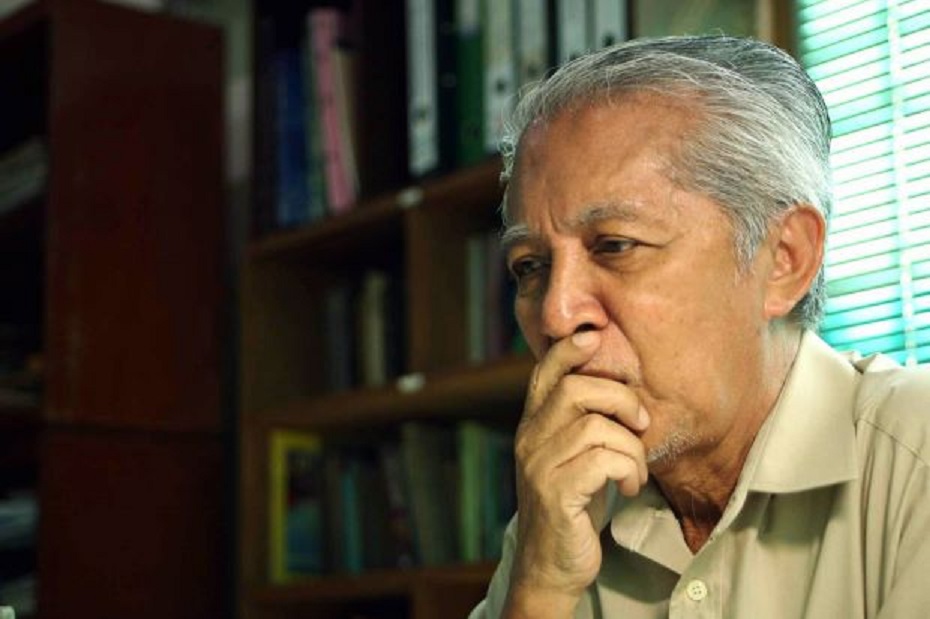
    RENOWNED Malay author and intellectual Dr Kassim Ahmad, who just turned 84 last month, died at 10am today at Kulim Hospital, where he had been in a coma since yesterday due to lung problems. His son, Ahmad Shauqi Kassim, confirmed the death. Kassim is survived by his wife, son, two daughters and 11 grandchildren. The Kedah-born author, who was labelled a Quranist and a bane of the religious authorities, had been warded since last month for lung problems. He was known as a thinking Muslim who dared voice and publish his non-mainstream views on Islam. He earned a reputation as a strong fighter for his continued fight against religious authorities at an elderly age.

    Two months ago, Kassim won a three-year legal battle against religious authorities for allegedly insulting Islam and disobeying the Federal Territories fatwa at a seminar in February 2014, where he had made remarks about religious scholars. Despite his frailty and weak health, he travelled to and from his home in Kulim and the shariah High Court in Putrajaya to defend his innocence until the prosecution finally dropped the charges against him. When the case was ongoing, Kassim vowed to fight to the end, telling the now-defunct The Malaysian Insider portal in a January 2015 interview that he believed he would win. He had confidence in his case, always speaking his mind whenever he talked about the authorities, even when they were after him.

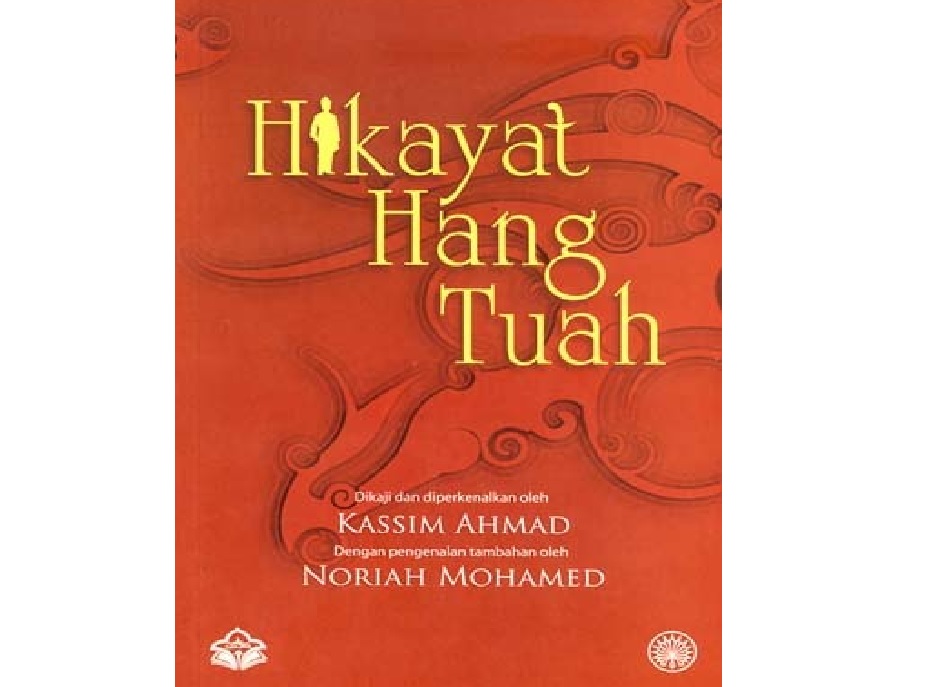
    “From my experience, religious people in the country are narrow-minded. This was never in Prophet Muhammad’s nature. They are doing what the Prophet never did in his life. It is as if they are talking on God’s behalf and nobody dares question them,” he said in the 2015 interview. Born on September 9, 1933, Kassim was active in the leftist Socialist Club as a student at Universiti Malaya in Singapore. He and several other UM students challenged the teaching and learning of Malay studies at the university, calling for a more open system. He grabbed national headlines in the 1950s with his dissertation on the characters of the popular Malay literary classic, “Hikayat Hang Tuah”, in which he hailed Hang Jebat as the real hero.

    Kassim worked as a Dewan Bahasa dan Pustaka research officer after university. During his time there, he worked on stories about Hang Tuah, the legendary figure in Malay literature. He next became a Malay Studies lecturer at the University of London’s School of Oriental and African Studies for four years. He turned down a permanent job at the school to return to Malaysia due to his interest in politics. He was an active member of Parti Sosialis Rakyat Malaysia (PSRM) under Ahmad Boestaman while working as a temporary teacher at Penang’s SM Abdullah Munshi. His services were terminated in 1969 after he distributed socialist party literature to his students.

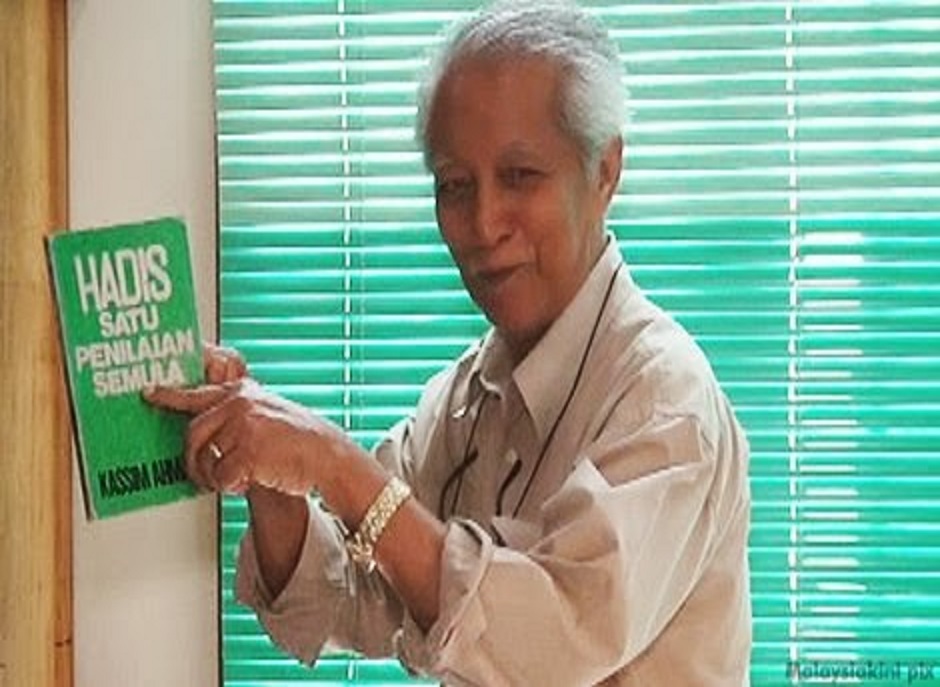
    He spent about four years detained under the Internal Security Act while with PSRM and was released about the time Dr Mahathir Mohamed, a good friend, became prime minister. Kassim served stints in politics, and joined Umno after PSRM.  He was also a freelance writer, translator, journalist, and teacher.  Kassim, who authored some 20 books and countless essays and poems, wrote much about Islam.  “Hadis: Satu Penilaian Semula” (Hadith: a Re-examination) got him labelled anti-hadith or Quranist. In the book, he challenged the infallibility of the purported words of Prophet Muhammad, causing it to be banned by the National Fatwa Council.

    It was his views in this book which he repeated at the February 2014 lecture that landed him in trouble with the religious authorities.  In a lecture titled, “The Nation’s Direction in the Next Thirty Years”, Kassim accused a class of ulama (religious scholars) of controlling Islam in Malaysia through a “priesthood caste” system and questioned the use of the hadith (the Prophet’s sayings and actions) to explain Quranic teachings. He also argued that hair was not part of the “aurat” (parts of the body which need to be covered according to Islam). Kasim debated his views with many, leading him to write and publish “Hadis: Jawapan Kepada Pengkritik” (Hadith: Answers to Critics) in 1992.

    His other works include two major philosophical essays – one is a criticism of Marxism in 1975 and the other on the meaningfulness of life in 1997. He also edited several classical Malay works.  Most of his works are in Malay. One of his last projects was translating the Quran into Malay. On his blog, he listed his interests as literature, philosophy, politics, and religion.  His favourite films were “High Noon”, “Rebel Without a Cause, and “Antara Dua Darjat”. In music, he was a fan of the “keroncong” and Beethoven.

    Kassim, who headed the Malaysian Quranic Society, listed the Quran as one of his favourite books. His favourite writers were  Shakespeare,  Pramoedya Ananta Toer, and Keris Mas. He was awarded the honorary Doctorate of Letters by the National University of Malaysia in 1985 and the Poetry Award of the Malaysian National Writers’ Association in 1987. – October 10, 2017.


    Source: The Malaysian Insight

  • Man Did Not Get ICU Slot In SGH Which Is Cheaper Than Gleneagles, Now Faces $78,000 Bill

    Man Did Not Get ICU Slot In SGH Which Is Cheaper Than Gleneagles, Now Faces $78,000 Bill

    Mr Thomas Lukose, 55, suffered a heart attack at Gleneagles Hospital while on night duty as a security guard, but couldn’t get a place in SGH for immediate treatment. The family wish for him transferred to the National Heart Centre Singapore (NHCS) because his insurance was not possible in the short time span. He had the operation at Gleneagles instead. Now he has to pay a $78K bill.

    A crowdfunding appeal by the family can be found here if you would like to help donate.

    59bba6f703d9e70006001e3b_1da9ee

    59bba5703ac6420006001db5_ee8df9

    Editor’s Note:

    It is really an unfortunate event for Mr Thomas. If he had managed to get a slot in SGH for his immediate treatment, things might have gone better for him. The family fought hard for him too while he was injured. If you feel bad for him, help lessen his burden by donating to the crowdfund.


    Rilek1Corner


  • Gelang Tembaga (Silver) Untuk Lelaki Tak Bermanfaat Langsung

    Gelang Tembaga (Silver) Untuk Lelaki Tak Bermanfaat Langsung

    Ada ke suami/abang/ayah/adik lelaki/rakan lelaki yang pakai gelang macam ni?

    Kalau ada, tanggal dan tinggalkanlah ia..Tak bermanfaat..

    Bahawa RASULULLAH S.A.W telah melihat pergelangan tangan seorang lelaki yang memakai gelang yang diperbuat daripada tembaga, maka BAGINDA bertanya kepada lelaki tersebut:

    ”Apakah bendanya ini?”

    Lelaki itu berkata: ”Ia adalah gelang perubatan”.

    RASULULLAH bersabda: “Sesungguhnya benda itu tidak memberi apa-apa (faedah walaupun untuk tujuan perubatan), buangkan benda itu daripada diri anda, jika sekiranya anda mati dan benda itu ada pada diri anda, maka anda tidak akan berjaya (selamat) untuk selama-lamanya.” (Sahih riwayat Imam Ahmad).