Blog

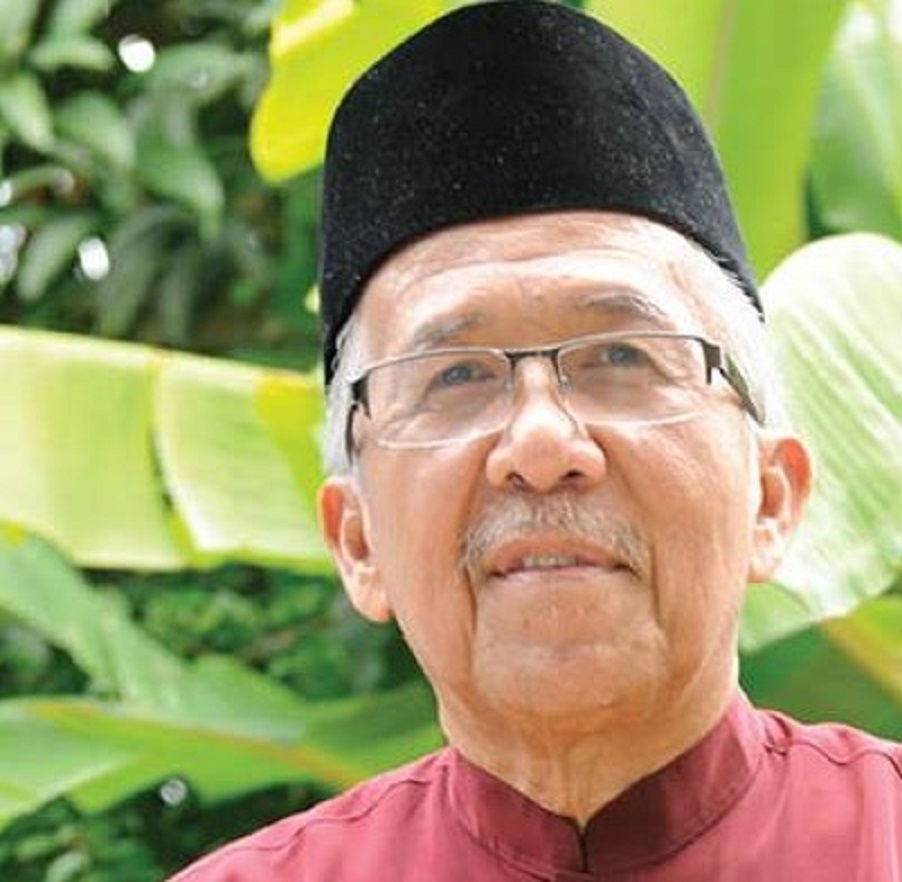
  • Ustaz Sallim Jasman Unwell, Warded In Hospital

    Ustaz Sallim Jasman Unwell, Warded In Hospital

    GET WELL SOON

    We received news that Ustaz Sallim Jasman is not well and currently being treated in a hospital.

    We seek your kind prayers for his health and recovery. May he continues to be the source of inspiration for the Singapore Muslim community.

    —————

    SEMOGA CEPAT SEMBUH

    Kami dimaklumkan bahawa yang dihormati lagi disayangi, Ustaz Sallim Jasman kini berada di hospital.

    Mari sama-sama kita mendoakan agar beliau diberi kesihatan serta kesembuhan. Semoga diberi ketabahan dan kekuatan untuk terus menabur bakti kepada masyarakat Islam Singapura.


    Source: Singapore Islamic Scholars & Religious Teachers Association – Pergas

  • Singapore PR In Jordan ICU – Family Still Seeking Donations For $123,000 Medical Fees

    Singapore PR In Jordan ICU – Family Still Seeking Donations For $123,000 Medical Fees

    He fell after being pushed during a minor pilgrimage in Mecca, Saudi Arabia.

    In the confusion, someone stepped on Mr Abdul Ghafur Mohd Ibrahim’s left ankle.

    Today, the 59-year-old bus driver is recovering in a hospital in Jordan, with his left leg amputated after it was infected by flesh-eating bacteria.

    Facing a rising medical bill that is at $123,000 currently, Mr Abdul Ghafar’s family is trying to raise money, along with the sum needed to repatriate him.

    His son-in-law Mohamad Ameen Said Abdul Kadir, 37, told The Straits Times on Monday: “We’re shocked that a small ankle injury could become so serious. We were heartbroken when we learnt he was infected by flesh-eating bacteria.”

    Mr Abdul Ghafur and his wife were part of a group that left Singapore on Dec 11 to perform their “umrah”.

    After his fall, and towards the end of the pilgrimage, he discovered big blisters on his left foot.

    As he was staying in Jordan then, he checked into Al Khalidi Hospital in Amman on Dec 23.

    For the next three days, doctors gave the Malaysia-born Singapore permanent resident antibiotics to control the infection on his ankle, which was oozing pus.

    Three members of Mr Abdul Ghafur’s family flew to Jordan on Dec 27 to keep his wife company.

    Despite the antibiotics, the infection continued to spread aggressively, said Mr Ameen, an operations manager.

    Mr Abdul Ghafur’s infection worsened after he developed high fever and low blood pressure and eventually, the left leg had to be amputated above the knee.

    Today, the bacterial infection appears to be contained, although Mr Abdul Ghafur remains in intensive care and is being supported by a ventilator.

    While he is recovering, his family has been saddled with a hefty medical bill.

    A copy of the 35-page medical bill and medical report was shown to ST.

    His 35-year-old daughter, who wanted to be known only as Madam Rabiathul, said “the medical fees are too high for us to cover”.

    Through contributions made by strangers who had seen the family’s plea for donations on social media, the family has managed to raise around $32,000, which is still not enough.

    They also expect the bill to increase.

    Mr Ameen felt the $55 travel insurance his father-in-law had paid as part of the “umrah” package was “inadequate”.

    ST understands that the travel insurance covers only $20,000 for hospitalisation and $50,000 for repatriation to Singapore.

    Mr Ameen said: “The cheapest quote to fly him back to Singapore with proper medical attention is around US$120,000 ($174,000).

    “And he is in no condition to fly.

    “What is important for the family right now is to generate as much funds as possible. We’re thankful some help is coming our way.”

    Mr Ameen said he had sought assistance from Singapore’s Ministry of Foreign Affairs.

    The family is also looking into Mr Abdul Ghafur’s personal accident insurance plan, which has a clause for permanent disability.

    Mr Ameen said: “My father-in-law’s personal accident insurer needs to see him in Singapore where his condition will be examined and verified by the insurer’s doctor before any payout is made.”

    Mr Abdul Ghafur’s plight was intially brought to light by netizens, including Ms Rubiah Suib, a colleague of Madam Rabiathul, who had appealed for donations on her Facebook on Dec 28.

    Her post, which was one of many similar posts, was shared more than 500 times.


    Source: www.tnp.sg

  • E-cigarette regulation good news for vapers

    E-cigarette regulation good news for vapers

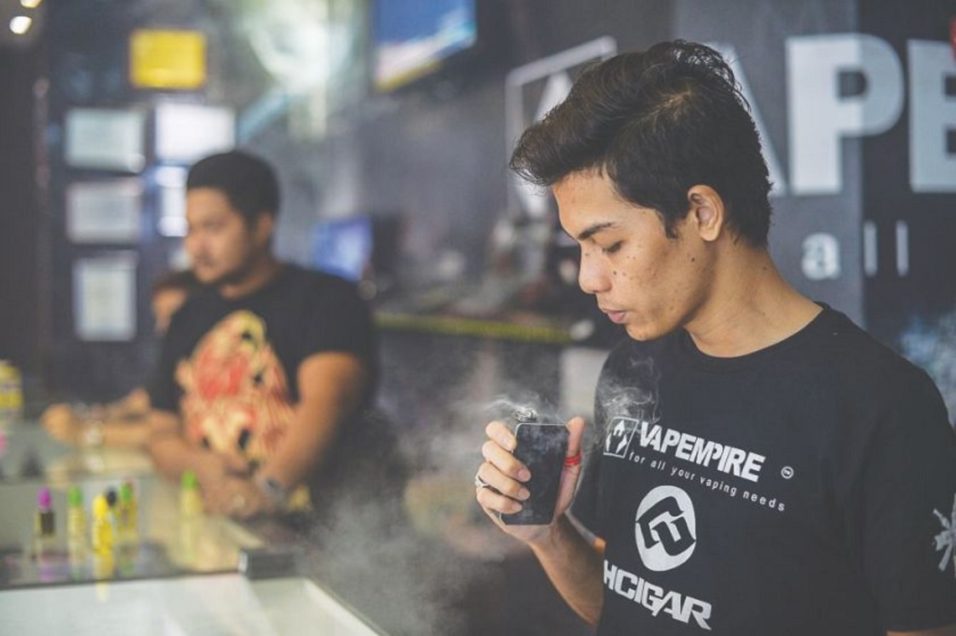
    PETALING JAYA, Jan 3 — The Cabinet’s decision to entrust three ministries to regulate the use of electronic cigarettes and vaping is the answer vape aficionados nationwide were looking forward to.

    Vape Operators Association of Penang president Muhammad Hafidz Adnan, however, said there were suggestions the authorities could consider before finalizing the rules and regulations.

    He proposed electronic cigarettes be sold in stores registered with the Domestic Trade, Cooperatives and Consumerism Ministry to ensure the devices’ were not compromised.

    “With this announcement, it is our hope the ministries would curb the sale of electronic cigarettes online as it would be tricky to regulate. Safety of vapers comes into play here and sales should only be allowed via licensed stores,” he said in a statement.

    He said the association was looking forward to work with state executive councillor for health Dr Afif Bahardin and the local government in obtaining business licences for vape shops in Penang.

    “This engagement is much needed to allow the association become a communication platform between vape shop operators and local authorities,” he said.

    Malaysian E-Vaporisers and Tobacco Alternative Association president Rizani Zakaria called on the government to speed up the issuance of business licences for vape operators as it had been a long waiting game for industry players.

    “Our long-awaited request is finally answered. We hope they speed up giving licenses to operators to conduct business with an easy mind,” he said.

    Rizani said all five states — Penang, Kedah, Johor, Kelantan and Terengganu — which imposed a ban on vape should consider lifting the prohibition to grant opportunities for shop operators who have been in the business for years.

    “Most traders are experienced and conduct their businesses in accordance to the rules. The relevant state authorities should perhaps consider giving them a chance to operate once the new legislations were in place,” he said.

    Malaysian Organisation for Vape Entity (Move) secretary Syamsul Reza Mohd Mokhtar said the decision put Malaysia on the map as one of the first few countries to regulate the vape industry.

    “We will be known as the one of the pioneers and this will definitely get a cheer and applause from vapers around the world,” he said.

    He said the much-anticipated decision would convince vapers to swap their tobacco cigarettes for electronic cigarettes instead, and subsequently boost the local vape industry.

    On Wednesday, the Cabinet tasked the Domestic Trade, Cooperatives and Consumerism Ministry with regulating and enforcing safety standards for electronic cigarette devices and batteries and vaping devices under the Consumer Protection Act 1999 (Act 599).

    It would also regulate and enforce the marking and labelling of electronic cigarette devices and nicotine-free liquid and vapes through the various Trade Descriptions Acts.

    Under the new act, the licensing, production, distribution including import, export and sale of electronic cigarette devices, nicotine-free liquid and vapes would be monitored by the ministry.

    The Health Ministry would regulate the sale of e-liquid containing nicotine under the Poisons Act 1952 and Sale of Drugs Act 1952, which only permit licensed pharmacies and registered medical practitioners to sell preparations containing nicotine for medical treatment.

    The Science, Technology and Innovation Ministry, through the Department of Standards Malaysia, would develop standards for e-cigarettes batteries and devices and the packaging of nicotine-free, e-liquid and vapes under the Standards of Malaysia Act 1996.

    Following the decision, the Health Ministry will draft a new law to replace the Tobacco Control 2004 Regulations, while the Domestic Trade, Cooperatives and Consumerism Ministry would draft a new law relating to the control of electronic cigarettes and vaping within the next two years.

    Source: TheMalayMailOnline

  • Muslims has obviously been suppressed.

    Muslims has obviously been suppressed.

    I just want to share an opinion which i think maybe i think too much or deep. Just recently, a viral video about cruelty of police officers towards the Rohingyas was captured on tape. To make it worst, a Myanmar police was the one filming their activities without showing any sign of guilt. The officers abused and kicked the Rohingyas who were seated on the ground in a line. After some investigating the Myanmar government have come out to say that 4 officers have been caught for the incident and will be taking action against them. This is good right?? But actually it is really not so let me explain. A few weeks back in the news, a man claimed to be Islam and purposely crashed a lorry in an act of terrorism. He drove the lorry into a Christmas market and killed several people. The police in Germany end up catching the wrong person and because the runaway is a muslim, the case became even bigger and is all over the news. So what is my point? I don’t know how to make comparison of one muslim guy with a entire muslim community (rohingya) anyway but if you look properly how come the one single guy gets more attention instead of the Rohingyas?? Then also what if the video was never captured, will we ever get to hear the Myanmar government admitting to abusing their community because this is rare. Senang cakap, orang melayu sudah kene tindas. Can’t you see that we Muslims have been suppressed?


    Siti

    Reader’s Contribution

  • Tricky, but necessary, to build resilience against security threats

    Tricky, but necessary, to build resilience against security threats

    Terrorism and radicalisation will be an inescapable part of our lives from here on, and the main threats for 2017 and beyond should be divided into two parts.

    The first is the foreign fighter blowback. With the so-called Islamic State (IS) suffering reverses on the battlefield in Iraq and Syria, many South-east Asian fighters will return home to Indonesia and Malaysia. They may also seek new safe havens such as in the southern Philippines.

    In addition, they will seek to leverage issues which give them propaganda mileage that can reinvigorate their social media campaigns — such as the plight of the Rohingya.

    And we should not be so quick to assume that it is simply South-east Asian fighters we will need to reckon with. One cannot discount the possibility of a wider movement of battle-hardened Uighur veterans who, for various reasons, cannot return to their home countries elsewhere.

    For some sense of what is likely to happen with these returnees, we can look to Europe, where Western fighters have been trickling home for some time now.

    Many are embittered by their experiences and disillusioned by the depravity of the IS; but some have come back even more determined to wreak havoc, and even more radicalised.

    There is no reason to suppose that a similarly mixed scenario should not play out in South-east Asia.

    RADICALS OF ANY FAITH

    The second threat is radicalisation in general. We have to accept that this is not simply an issue of Islamist radicalisation. Religious revivalism is increasingly present in other major faiths.

    Radicals inhabit the fringes of all these. And the sobering fact is that we live in a future where all sorts of individuals are going to be “radicalised” in some form or other — even those without strong religious convictions.

    We should not forget that we have had an individual, a Singapore citizen, who has tried to join Kurdish militia to fight IS. Whatever his motivations — and there is some suggestion of alienation and wanting to do good — we need to understand that, in future, all sorts of people are going to want to fight for causes, or else take up some form of muscular activism.

    This will be a rising trend and these impulses, if not managed, will lead to schisms within societies.

    Terror networks can be interdicted and taken down. Security services are actually pretty good at this sort of thing. However, what all of us need to get our heads around is the rising tide of intolerance and, more precisely, tolerance for intolerance.

    This is the second big issue we need to face. It is a phenomenon that did not start in South-east Asia, but it is creeping in. Traditional forms of syncretistic religious practice that have existed here for centuries (if not longer) are being replaced by a more hardline, less inclusive type of observance.

    This type of feeling is fuelled by social media. As Foreign Affairs Minister Vivian Balakrishnan said last year: “We now live in a world of fragmented echo chambers — we hear what we want to hear, we ignore what we don’t want to hear, or inconvenient truths are not heard.

    “And in fact, from an academic point of view, this leads to a ‘shallowing’ of discourse, a world in which there is a dearth of deep thought and cogent discussion across diverse perspectives. You get a more monochromatic world and a narrowing of minds.”

    Singapore will have to maintain its values of multiculturalism and tolerance. These will be increasingly valued in an era where these are becoming rare commodities (and, indeed, in an era where these qualities are persecuted in some quarters).

    It is my view that Singapore will increasingly come to be seen as a beacon, not simply on account of good policymaking, which we have, but because parts of the world and our immediate environment are becoming increasingly insalubrious.

    A POST-TRUTH WORLD

    The echo chambers that Dr Balakrishnan and other leaders have talked about suggest a milieu in which people can choose simply to hear what they want to hear. This is especially problematic for a number of reasons.

    One is that state and non-state actors are increasingly taking advantage of various mechanisms to subvert the truth and to peddle their own information, which may actually be quite distant from the facts. These may all the more easily be lapped up by groups of people within society who, for some reason or the other, might be susceptible to this kind of subversion.

    Consider, for example, the masterful information-operations campaign that Russia has waged in Ukraine. There was a cyber takedown of the power grid, but more importantly was the media (including social media) manipulation and distortion of information which led many to believe the Russian point of view.

    Seen from that point of view, what Russia had done was an entirely legitimate protection of Russian minorities living under persecution. The real point is, of course, that information had been bent and twisted to a level where no one was sure where fact ended and fiction began.

    As commentators have increasingly observed, we live in a post-truth world. One could also argue that Russia did something very similar in the United States election. Why not? A state can nowadays accomplish aims allied to its self-interest that promise outcomes that are much more certain than diplomacy and much less costly than warfare.

    BEWARE THE SLOW-BURN ATTACK

    The people of Singapore, therefore, should not assume that the “attack”, when it does come, will be a mass-casualty terror incident. This is what our agencies routinely hold drills for.

    But the attack might equally be a cyber takedown — either a hacking attempt (and at least one government ministry, the Foreign Affairs Ministry, has suffered a major cyber hack) or some seemingly low-level but nonetheless persistent and insidious cyber effort to chip away at the resilience of our people.

    The basic point is that, while keeping a wary lookout for Black Swans, we need to be aware of slow-burn issues too — particularly the kind that amount to attempts to sap away at the will of a people until the nation is itself shrivelled from within.

    How do we counter this? Part of the answer lies in critical thinking — the ability to ruthlessly interrogate source material that comes before us. In this, the post-truth era, those digital natives who grow up knowing — either instinctively or through some form of instruction — the difference between the objective facts and fake news will have an intrinsic advantage over others.

    A great deal will also boil down to resilience. This could be divided into two kinds. The Government has succeeded in hardening the obvious targets in Singapore and, over the past 10 years or so, focusing some attention on the “bounce-backability” of society.

    The second part is more tricky but achievable. This has to do with how our society coheres and prevents fissures from forming after an event. This next leg is about a certain toughness and resolve that we need to develop more of.

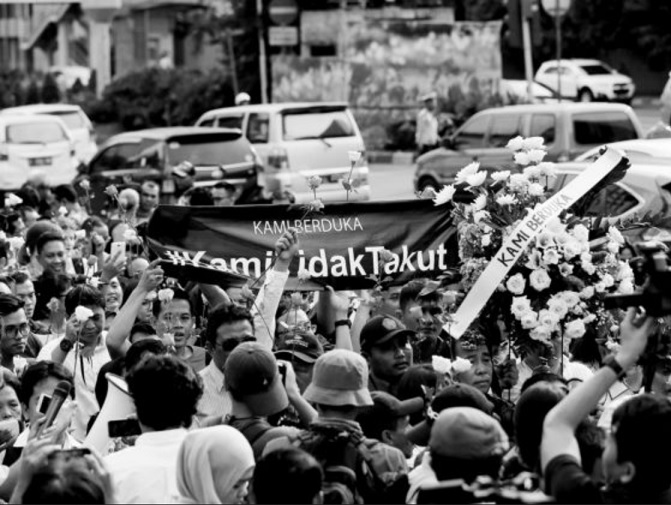
    Consider, for example, what happened after terror incidents and attacks worldwide. The Sydney hostage-taking in December 2014 was followed by a dignified viral campaign, “I’ll Ride with You”, to show solidarity with Australian Muslims. The Charlie Hebdo attacks in Paris in January 2015 saw the ground-up viral campaign “Je Suis Charlie”, while the Jakarta attacks in January 2016 saw the hashtag #KamiTidakTakut (Bahasa Indonesia for “We are not afraid”) go viral.

    Each of these was seen to be a grassroots event and response. Do the people of Singapore have the wherewithal and gumption to rise up, to come together with dignity, resilience and resolve, and with minimal government intervention? Whether and how we can we can do this will be a telling indicator of the shape or form in which we make it to SG100.

    ABOUT THE AUTHOR:

    Dr Shashi Jayakumar is a Senior Fellow and head of the Centre of Excellence for National Security at the S Rajaratnam School of International Studies, Nanyang Technological University.


    Source: Today
deneme bonusu