Blog

  • Singapore F1 Fans Bribed Security Guard To Allow Them In, Even Helped Them Take Epic Photo

    Singapore F1 Fans Bribed Security Guard To Allow Them In, Even Helped Them Take Epic Photo

    The Singapore GP, organisers of the Formula One race here, are investigating a claim that a security guard was bribed into allowing a couple to enter the Marina Bay Street Circuit.

    On Sep 17, All Singapore Stuff published a screenshot of a Facebook post showing the couple in question posing for a picture on the tracks near a Johnnie Walker advertisement board.

    Read a caption on the post:

    “3am in the morning. Bribed the security guard to let us onto track. He not only agreed, he took the photo. Non F1 fans won’t understand this, but most of us will.”

    In response to a media query, the Singapore GP told Stomp that they are looking into the matter.

    Said a spokesman:

    “The safety of our patrons is of utmost priority and we view allegation of bribery seriously. We are working with the appointed security agency assigned to the reported area, to investigate the claim.”


    Source: http://stomp.straitstimes.com

  • Damanhuri Abas: It’s Not About Anti-Halimah, It Is About The Election Process

    Damanhuri Abas: It’s Not About Anti-Halimah, It Is About The Election Process

    The attempt to label this protest as anti-Halimah/Malay is misplaced. It was never about the person, it was about witnessing how the election process was systematically undermined, shortchanging citizen’s right to vote the best independent person for the vital role of Guardian of our National reserves as well as ensuring that meritocratic credentials are safeguarded in high public offices from potential conflict of interest situations.

    While at HL, i met young concerned and disillusioned Singaporeans who asked important questions about race, race relations, racism, politics, reform, etc. Our exchanges sitting on the grass of HL revealed some interesting insights.

    1. What and who is the Malay race?

    Our race should never be what a committee decides. It is our ethnic identity inherited by birth and through organic cultural assimilation. No one should ever force an identity or race on anyone. After 52 years, society has evolved into a melting pot, creating a unique embracing Singaporean identity. This natural mix reflects social reality and is worthy of our celebration. However, when we politicise race, it gets messy very fast. This was clearly the case for this reserved PE when candidate’s race clearly do not fit the rigid pretentious race boxes and in the end was forced in anyway. It surely will be bruising. But its no fault of any candidate nor us, citizens. The blame lies squarely on those who imposed those rigid simplistic boxes on us to divide but then strangely claims it can unify.

    2. After 52 years, why is it that the Malay community needed this costly tokenism at the expense of our public money?

    Firstly, the community was never asked about it nor we wanted it. It was never our priority. The help that the Malay community needs is for the Government to stop boxing us in their box. If we had a box mentality to begin with, this country would never be multi-racial. The race boxes were legacies of Colonial past that the Government chooses to re-use instead of abandoning.

    3. What do the Malay community want?

    Fair chance to full unhindered access to equal opportunities in this country like every one else who are Singaporeans. Race based policies should stop immediately. Unjustified subliminal branding of Malays as inherently disloyal through unspoken security policies during National service must end. It is unjust and unfair that we as indigenous Malays are given a lower security clearance level by Mindef for no apparent reason explained for the last 52 years while new citizens from Mainland China, Myanmar, India, etc., etc., are given full or higher security clearance level than us. What have the Malays collectively done to inherit this blanket poisonous label?

    4. Why are there not many Malays at this protest event?

    The Malay leadership both in Government and in community have been systematically co-opted to be beholden and compliant. The outcome of which majority of the Malay community have seen and known only the PAP political leaders or friendly to PAP ones, throughout most of their lifetime. Any non-compliance to the status-quo is met with harsh consequences, ostracised and sidelined. Overtime, 52 years later, Malays are sceptical or suspicious of any non-Government related initiatives, they rather stay away and quietly support from a distance. For the Professionals, most are salaried employees and many are civil servants. So we see why the ‘endorsement’ of Mdm Halimah was fast and furious from the ‘community’. Sadly, the Malays by now are so used to singing from the same song-sheet, that they now do so, even without being asked. The rest, you can line the dots yourself.

    5. How can Singapore achieve political reform?

    The Government’s control on all aspects of life is dominant and almost total. This was achieved by design and numerous tweaking done overtime to guarantee that the political system and power structure remains unchallenged. Just think election process (GRC, gerrymandering, raising qualifying bars, short election campaign, changes to the constitutions and the parliamentary act), meritocracy vs elitism (SAP schools, nepotism and cronyism), ethnic quotas for HDB (low minority numbers used to justify GRC), the People’s Association (pro PAP), no media freedom, etc. We have a big daunting hazardous political mountain before us to climb. Every Singaporean must realise that for the opposition, public space is severely restricted, social media provides best outreach but its impact are small and limited. NGOs must participate in political related activism. Lawyers must raise their political game and no more remain a passive bystander. Finally, we need a unifying figure for this great reform effort, i.e. Dr Tan Cheng Bock or his equivalent.

    Personally, it was an afternoon well spent for the sake of our collective future. May this effort be blessed by God.

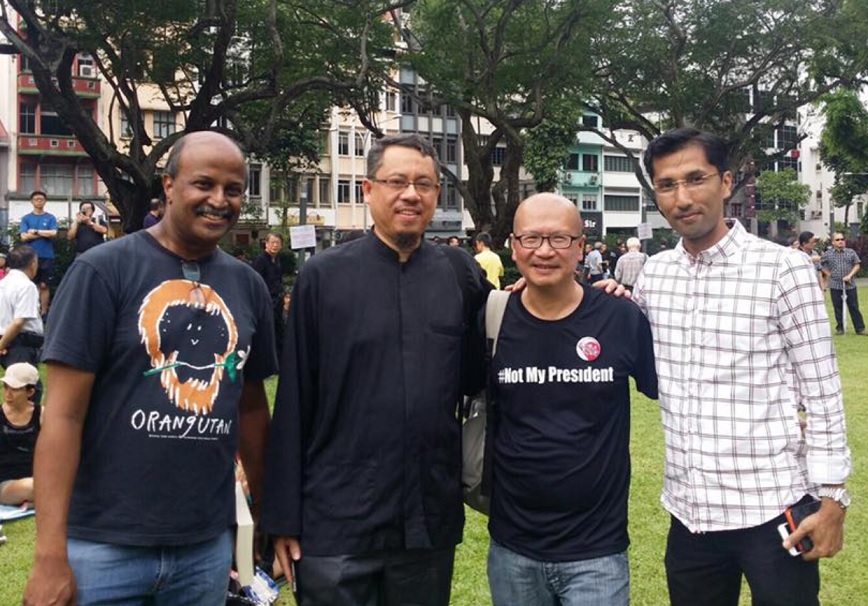
     

    Source: Damanhuri Bin Abas

  • Reasons Why Islam Forbids Anal Sex

    Reasons Why Islam Forbids Anal Sex

    Bagi anda yang teringin nak melayari bahtera rumah tangga tu, boleh la ambil informasi ni sebagai satu pengetahuan dalam kehidupan seks anda nanti..Bukan apa, mungkin ada antara anda yakni lelaki yang teringin nak cuba-cuba masuk ikut “pintu belakang” ni kan? Mungkin selepas membaca informasi ini nanti, anda akan fikirkan “rancangan” anda itu semula..Apa-apa pun, jom baca dahulu cerita kat bawah ni..

    Imam Syafie berkata dari Khuzaimah bin Thabit: “Seorang lelaki bertanya kepada Rasulullah S.A.W tentang menggauli isteri dari belakang (dari arah dubur). Rasulullah S.A.W menjawab: “Itu halal”. Apabila orang itu hendak pulang, Rasulullah S.A.W memanggilnya dan bertanya: “Apa yang kau tanyakan tadi? Pada lubang mana antara dua lubang? Pada lubang yang mana? Pada yang mana? Apakah dari belakang (tapi) farajnya? Itu memang halal, ataukah dari belakang duburnya? Maka itu tidak boleh (haram). Sesungguhnya Allah tidak malu terhadap kebenaran, janganlah menggauli wanita dari duburnya.”

    Menurut Ibnu Qayyim, larangan berjimak melalui dubur kerana:

    1. Tempat terjadinya janin pada rahim dan bukannya dubur, iaitu tempat najis.
    2. Isteri tidak dapat haknya menikmati jimak sepenuhnya.
    3. Dubur diciptakan oleh Allah bukan untuk disetubuhi.
    4. Air mani tidak dapat keluar sepenuhnya.
    5. Ia menyakitkan wanita kerana jauh daripada tabiat semula jadi.
    6. Mendatangkan fobia kepada pasangan.
    7. Merosakkan jiwa kecuali bertaubat.
    8. Wajah tidak berseri.
    9. Mewarisi kehinaan dan kerendahan diri.
    10. Menimbulkan kebencian.


    Source: Islam Itu Indah

  • Two Former Full-Time Madrasah Students Enrolled Into NUS Medical School

    Two Former Full-Time Madrasah Students Enrolled Into NUS Medical School

    TWO former madrasah students have become the first to be offered places in a medical school here. Ms Amalina Ridzuan and Mr Ahmad Abdurrahman, who each spent the full 10 years in Islamic religious schools, have made the cut to enter the National University of Singapore’s (NUS) highly competitive Yong Loo Lin School of Medicine. There are six full-time madrasahs here. In recent years, they have placed more emphasis on raising academic standards by helping students balance the demands of the religious and secular curricula. The duo also join the ranks of a select number of students who took the polytechnic route to be accepted into medicine. Last year, for instance, only 10 or so polytechnic graduates were offered places at the Yong Loo Lin School of Medicine.

    Ms Amalina, 22, who has four siblings aged 12 to 20, grew up playing doctor with them. While in secondary school, a newspaper article about a cancer patient struck her. “I really didn’t want to see (others) having to go through the same pain. That’s why I felt compelled to do something… to do my part to alleviate their pain,” she said. But the former student of Madrasah Al-Ma’arif Al-Islamiah in Geylang took longer than expected to make it to medical school. After graduating from the madrasah, she entered Serangoon Junior College but did not do well.

    “I considered doing a private degree, but I was very interested in medicine and didn’t want to spend the rest of my life doing something I didn’t like, or any other degree,” said Ms Amalina, whose 45-year-old father is a material handler and 44-year-old mother, a management support officer. So she enrolled in a biomedical science course at Temasek Polytechnic and worked hard. She will graduate on Wednesday with a grade point average of 3.98 out of 4. NUS does not comment on individuals accepted into its medical school, but has said it looks for attributes such as compassion, empathy and the ability to relate to people from all walks of life.

    Mr Ahmad will be graduating from Singapore Polytechnic on Thursday. The 19-year-old, formerly from Madrasah Aljunied Al-Islamiah, also studied biomedical science in polytechnic. His 46-year-old mother, an allied educator in a primary school, and 54-year-old father, who is self-employed in the vehicle business, enrolled all four of their children in madrasahs so that they would have a solid foundation in religious knowledge. Mr Ahmad said: “Being in a madrasah taught me time management and how to study smart, because we had so many subjects.”

    At one point, he was taking 14 subjects, including mathematics, history and others on Islamic law and etiquette. His polytechnic course and internships have given him a glimpse of his career ahead. One incident that struck him during a stint at Khoo Teck Puat Hospital was when a doctor asked him to comfort a patient during a painful procedure. “I wasn’t sure what to do, so I just held her hand and looked into her eyes. Somehow, that small gesture helped.”


    Source: The Straits Times

  • Jual Tahi Pada Harga Tinggi

    Jual Tahi Pada Harga Tinggi

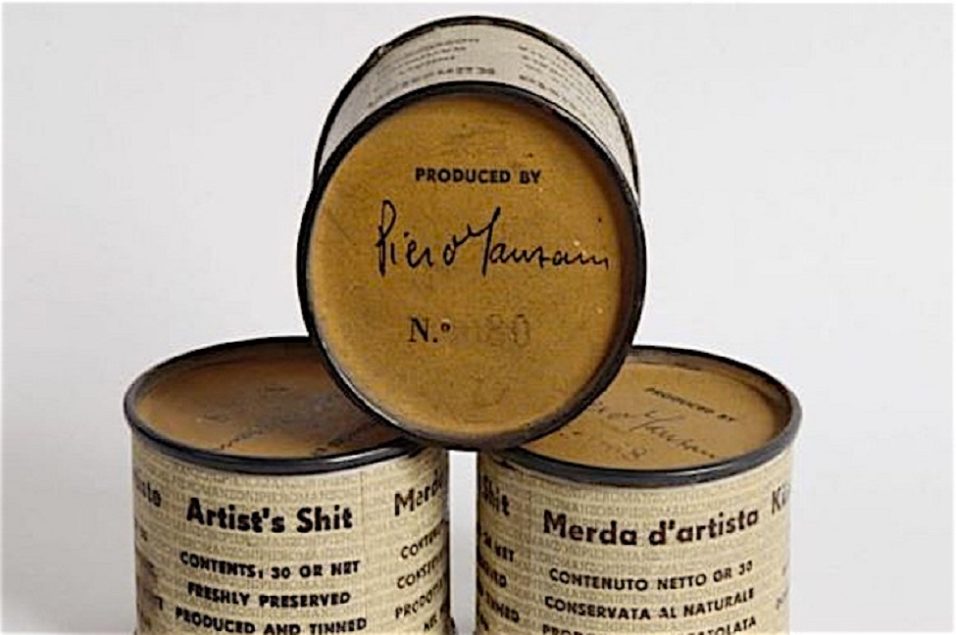
    Tak pernah terlintas di fikiran bahawa najis manusia boleh dijadikan hasil seni walaupun ia kedengaran agak ‘menggelikan’. Seorang pemilik ‘seni tahi’ mencipta koleksi najisnya dalam tin seberat 30 gram (g) dan ia mengandungi najis penggiat seni warga Itali, Piero Manzoni. Pengumpul koleksi ‘seni tahi’ sanggup membelinya pada harga tinggi hingga mencecah ribuan Dollar hanya kerana ingin mengumpul koleksi tahi.

    Idea itu tercetus daripada Piero Manzoni yang menyimpan najisnya ke dalam tin pada tahun 1961 dan dia tidak menjangka idea berkenaan dapat memberikan pulangan yang lumayan. Sebuah galeri seni bernama Tate di London telah membeli satu tin Manzoni dengan harga £22,350 pada tahun 2007. Walaupun koleksi ‘seni tahi’ ini agak pelik, namun koleksi tahi Manzoni sebanyak 90 tin kini mencecah AS$300,000 satu tin. Untuk pengetahuan anda, satu tin yang ke-54 dijual pada harga £182,50.

deneme bonusu