Blog

  • Commentary: Why Did Malay Candidates Who Qualified Refused To Challenge Halimah Yacob?

    Commentary: Why Did Malay Candidates Who Qualified Refused To Challenge Halimah Yacob?

    Dear Editors,

    Everyone is now visibly upset with the Presidential walkover but I am more upset with the passive nature of our malay candidates. Apart from Salleh Marican and Farid Khan who did not make the cut, there were high profile business persons who automatically qualified like Bank Of Singapore CEO Bahren Shaari and the CEO of PT Trans Retail Shafie Shamsuddin. Why did they not stand up and be counted for our Malay community and stop this farce of an election walkover?
    For PR Trans Retail CEO Shafie Shamsuddin, Singapore’s GIC invested 5.2 trillion rupiah (SGD$387 million) for a 17% stake in PT Trans Retail. If you extrapolate that to the full value of PT Trans Retail, it would be over SGD$2200 million. This would have allowed him to qualify without any problems.

    Same for Bank of Singapore CEO Bahren Shaari, BOS managed more than 79 billion dollars worth of assets, surely that qualifies him automatically as well.

    So why did these two upstanding individuals from our community not step up to challenge Halimah Yacob who did serve in public service but sadly has not have the experience in managing huge amounts of money like the Singapore reserves.

    Are they more concerned with making more money for themselves? Why did they not take the opportunity to give back to our community and to show Singapore that we the Malays have good candidates as well? We don’t need any special treatment to qualify for the 500 million benchmark, we have successful people who can qualify on our own merit.

    The PAP planned everything nicely and Halimah got a comfortable smooth sailing ride because our Malay representatives refused to step up to the challenge. This is a shame our community, where has the spirit of serving gone to? With too much money, people forget about their roots?

    Abdul Raheem


    Source: everyday sg

  • Commentary: The Concrete Plan Behind The Presidential Election (A Malay Edition)

    Commentary: The Concrete Plan Behind The Presidential Election (A Malay Edition)

    1. First they came and tinker with the presidential system to further entrench their grip on power

    2. To do so, they need a pawn to justify the tinkering

    3. Enter the Malays

    4. Offer highest position available in the country

    5. Rationalize by stating that the Malays can never win in an open election

    6. Raise the criteria so that only a selected few would be eligible. Limit suprises

    7. Call for an election

    8. Disqualify anyone not meeting the criteria

    9. Achieve a walkover. It doesnt matter that the preferred candidate will forever carry the burden of not having the mandate of the people. Retain control at all cost

    11. Declare endorsed candidate winner.

    12. Mission accomplished

    Well done!


    Source: Khan Osman Sulaiman

  • How Singapore Elected A President Without A Vote: Only One Eligible Candidate Thus Victorious By Default

    How Singapore Elected A President Without A Vote: Only One Eligible Candidate Thus Victorious By Default

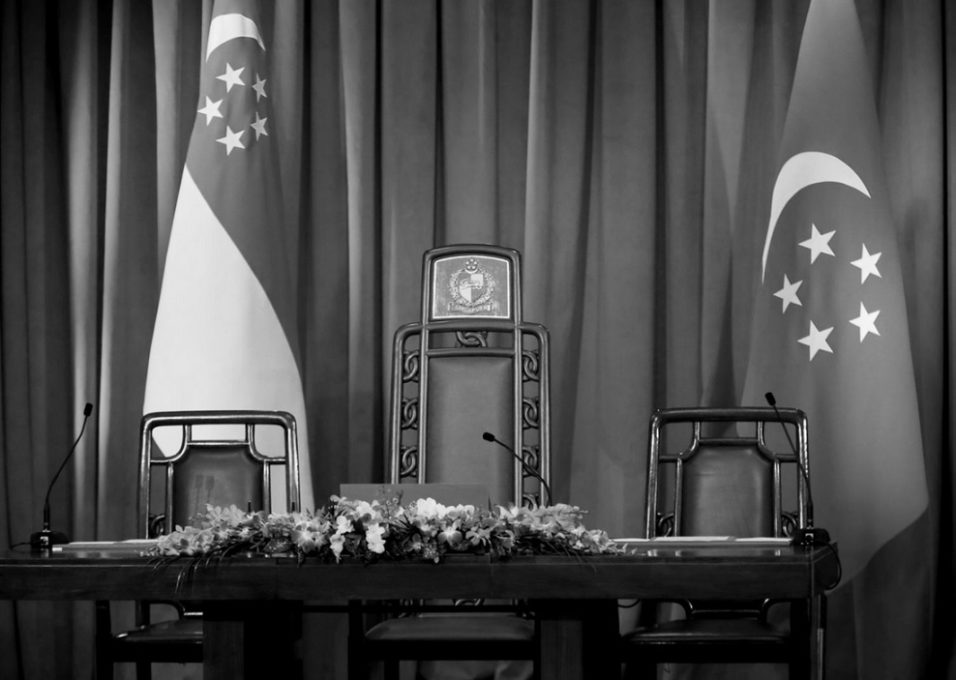
    Singaporeans were meant to go to the polls at the end of next week to vote for a new president, but they’ll no longer have the chance, with only one candidate qualifying for the race. Former Speaker of Parliament Halimah Yacob has emerged victorious by default, after other presidential hopefuls fell foul of new rules.

    “I can only say that I promise to do the best that I can to serve the people of Singapore and that doesn’t change whether there is an election or no election,” she told reporters Monday. What should be a moment of celebration — Halimah will be Singapore’s first female president — has proved contentious for several reasons and appears at odds with Singapore’s reputation as a technocratic and efficient city state. While the office of president is largely a ceremonial role in Singapore, he or she has power to veto some of the government’s decisions, for example in fiscal matters that touch on the country’s reserves, or key appointments in the public service. “The only beneficiaries from this reserved presidential election are Halimah Yacob and her team, as well as Singapore’s opposition, which now has a new line of attack against the PAP (People’s Action Party). The rest of Singapore has suffered,” Sudhir Vadaketh, a Singapore author and commentator, told CNN. Halimah was, until recently, a loyal member of the ruling PAP, which dominates Singaporean politics.
    “All Singaporeans are unhappy that meritocracy and electoral fairness, core Singaporean values, have been eroded to fulfill perceived political goals.”

    Racial politics
    In this election, for the first time, candidates to become Singapore’s president could only come from one racial group: Malays. It’s a radical policy that would likely prove divisive elsewhere but it’s one the Southeast Asian nation said was necessary to ensure better representation among the country’s three main races: Chinese, Indian and Malay.
    “It shows we don’t only talk about multi-racialism, but we talk about it in the context of meritocracy or opportunities for everyone, and we actually practice it,” Halimah told The Straits Times newspaper, before declaring her intention to contest the election.

    The new rules also set stricter criteria on the background of candidates. For example, those from the private sector are required to be a chief executive of a company, with at least $370 million in shareholders’ equity. The two other Malay presidential hopefuls — businessmen Salleh Marican and Farid Khan — failed to gain Certificates of Eligibility from the Presidential Elections Committee on these grounds, although the Presidential Elections Committee could have exercised its discretion to allow them to run for the office. Critics charge that the new rules are a way for the government to stage-manage the election and prevent opponents from running.

    In August, Singapore’s appeal court ruled against a legal challenge to the new system by ruling party lawmaker turned critic, Tan Cheng Bock. Tan had narrowly lost the previous presidential election in 2011 to Tony Tan, a former deputy prime minister widely recognized as the government-favored candidate, and planned to run again. Singapore’s population is 74% Chinese, 13% Malay, 9% Indian and 3.2% are the ambiguously named “Others.”

    New rules
    The announcement late Monday by the Elections Department that only one candidate had qualified marks an underwhelming conclusion to a controversial election carried out under changes to the elected presidency system in Singapore voted through Parliament earlier this year. Specifically, the amendment states that an election will be reserved for candidates from a particular racial group if the previous five elections have not produced a president from that racial group. In Singapore, it’s dubbed a “hiatus-triggered model.”

    “Every citizen, Chinese, Malay, Indian or some other race, should know that someone of his community can become President, and in fact from time to time, does become President,” said Lee Hsien Loong, Singapore’s prime minister, last November before the new rule was introduced. Singapore hasn’t had a Malay president since the country’s first President Yusof Ishak, who served as head of state from 1965 to 1970. Subsequent presidents have been from the Eurasian, Chinese and Indian communities.

    Debate
    The election has also triggered debate on who is Malay and raised questions over how an individual’s race can be determined. Candidates were required to be assessed by a five-member community panel to certify their race as Malay as part of the qualifying criteria. Halimah, who has successfully stood as a Malay candidate in previous general elections, is reported to have an Indian father. Moreover, Salleh Marican also has an Indian father, while Farid Khan’s identity card lists his race as “Pakistani,” the government-controlled Straits Times reported. What’s more, critics point out that, if the goal really was to improve racial representation and justice, more meaningful measures could be adopted.

    The Chinese form the majority in Singapore and often dominate in positions of power and influence. Singapore’s prime minister has always been Chinese, and it was only in 2015 that the country finally had more than one Malay minister in the Cabinet at one time. The Malay community typically have lower incomes and grapple with institutional discrimination, such as in the armed forces.

    “While reserving the presidential elections for only Malays is a highly symbolic gesture, there is a need to do more for concrete issues faced by the Malay community such as discrimination, lack of social mobility and relative poverty,” lawyer Fadli Fawzi told CNN. “I think that it is more important to focus on removing barriers and improving the lot of the man on the street rather than reserving slots for one or two individuals.”

    Speaking at a forum on Friday, Chan Chun Sing, a minister in the Prime Minister’s Office, acknowledged the unpopularity of the new system, saying that it would be a “hard journey” to convince Singaporeans that the change was necessary. He denied accusations that the amendments were made for political gain. “We are prepared to pay the political price, because we think the future of our country is much more important than any political capital that we may have,” he said.


    Source: http://edition.cnn.com

  • Commentary: Fakta Menunjukkan Bahawa Perut Buncit Bukan Hanya Wujud Di Kalangan Asatizah

    Commentary: Fakta Menunjukkan Bahawa Perut Buncit Bukan Hanya Wujud Di Kalangan Asatizah

    “Memalukan kalau Ustaz perut buncit.” (tajuk berita, di Berita Mediacorp hari ini)

    Ini adalah satu bentuk pernyataan yang berpotensi me”merpatilobang” (pigeon hole, bulan bahasa kena berusaha guna bahasa Melayu) kan sesuatu isu kepada asatizah, tanpa alasan yang jelas.

    Kenapa?

    1. Jika berperut buncit itu aib, ia bukan hanya aib bagi asatizah, tapi juga bagi bukan asatizah i.e karyawan.

    2. Fakta menunjukkan bahawa perut buncit bukan hanya wujud di kalangan asatizah.

    3. Selama mana tiada data yang menunjukkan fenomena perut buncit lebih banyak dan dominan di kalangan asatizah dari kategori-kategori lain dalam masyarakat, me”merpatilobang” kan isu ini kepada asatizah adalah tidak adil.

    4. Ada sesiapa buat kenyataan, “Memalukan kalau doktor Melayu/Muslim perut buncit, berkencing manis dsbg”?


    Source: Muhammad Haniff Hassan

  • Memalukan Kalau Ustaz Perut Buncit; Mufti Mahu Asatizah Amalkan Gaya Hidup Sihat

    Memalukan Kalau Ustaz Perut Buncit; Mufti Mahu Asatizah Amalkan Gaya Hidup Sihat

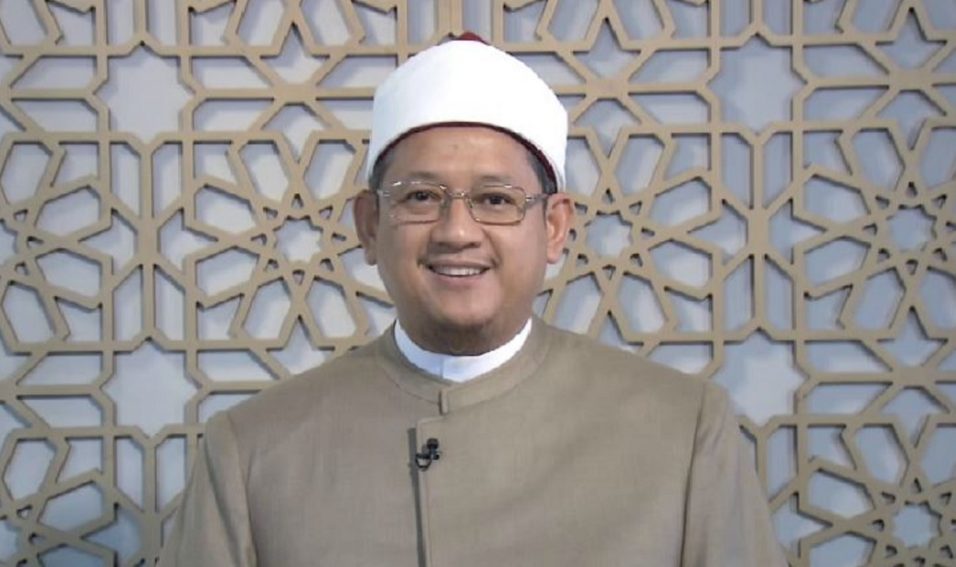
    Mufti Negara Dr Mohd Fatris Bakaram menyeru para asatizah supaya memberikan perhatian kepada kesihatan mereka dan mengamalkan gaya hidup sihat.

    Ini kerana ia bukan saja dituntut oleh agama malah ia juga diperlukan dalam golongan agamawan itu menjalankan tugas dakwah mereka.

    Sebagai ‘penghulu’ kepada para asatizah Singapura, Mufti Dr Fatris berkata, beliau mahu melihat “golongan asatizah khususnya” memberikan perhatian kepada kesihatan dan mengamalkan gaya hidup sihat.

    Menurut Mufti Fatris, ini penting bagi mereka demi melaksanakan tugas dan mengajak masyarakat untuk mengamalkan ajaran Islam, yang juga termasuk aspek menjaga kesihatan.

    Dr Fatris menyuarakan pandangan demikian dalam satu wawancara eksklusif bersama BERITAMediacorp.

    KALAU ADA USTAZ YANG PERUTNYA BUNCIT…

    Dr Fatris memberitahu BERITAMediacorp beliau pernah disentap dengan satu persoalan berkaitan kesihatan, yang diajukan kepadanya.

    “Saya agak tersentak apabila diberitahu salah seorang daripada ketua saya dahulu bila bertugas di Majlis Ugama Islam Singapura (MUIS), yang (kini) telah bersara. (Beliau) mengatakan bahawa satu perkara yang sangat memalukan, (adalah) kalau ada ustaz yang perutnya buncit.

    “Jadi saya bila dengar begitu saya rasa iya tak iya juga. Macam mana kita ini (golongan) ustaz, kita mengajak masyarakat untuk melaksanakan agama, dan antara ajaran agama adalah untuk menjaga kesihatan. Tapi kalau ada di kalangan ustaz pula yang perutnya buncit, sangat memalukan. Saya pegang itu. Sesuatu yang menyentap saya,” kongsi Dr Fatris.

    GAYA HIDUP SIHAT, ‘JIHAD’ BAGI ASATIZAH

    Lantaran itu, Dr Fatris menguatkan azamnya untuk mendisiplinkan diri, mengubah gaya hidup supaya dapat mengelakkan penyakit-penyakit serius. Ini tentu sekali boleh dicontohi golongan asatizah yang akan mendidik dan membentuk generasi seterusnya, yang akan menitikberatkan gaya hidup sihat.

    Meskipun demikian, untuk mengubah gaya hidup mungkin satu ‘jihad’ bagi para asatizah. Menurut Dr Fatris, melalui pengalaman peribadinya, ia bukanlah sesuatu yang mudah.

    “Bila jadi Mufti, bila jadi Ustaz ini, khusus sekali bila datang musim, contoh musim Maulid Nabi, musim Ramadan. Kita mendapat undangan yang banyak, majlis yang banyak dan dalam setiap majlis dan undangan itu pastinya hidangan-hidangan yang dihidangkan juga adalah dalam kategori biasa itu adalah beriani, air-air manis. Jadi itu kena jaga dan saya cuba,” beliau secara terus terang memberitahu BERITAMediacorp.

    Kini, dalam usahanya untuk terus memastikan kesihatan dijaga, Dr Fatris memilih untuk berjalan pantas sama ada bersama isteri atau beberapa lagi rakan asatizah.

    “Kalau bulan Ramadan agak kurang saya berjalan,” jelas Mufti.

    “Tetapi sekarang sedang mengembalikan rutin yang lama, seminggu dalam tiga atau empat kali, sekali jalan dalam 45 minit, satu jam, satu jam lebih sedikit,” kongsi Dr Fatris.

    Beliau menambah, sekali-kala apabila ada kesempatan, beliau akan bermain badminton bersama dengan kakitangan MUIS.

    BERITAMediacorp juga mendapat tahu bahawa antara tempat-tempat yang sekarang dijadikan ‘tapak senaman’ oleh Mufti dan rakan-rakannya ialah di kawasan MacRitchie.

    KENCING MANIS “KRISIS KESIHATAN” BAGI ORANG MELAYU

    Seruan Dr Fatris agar para asatizah memberi perhatian kepada aspek kesihatan, senaman dan gaya hidup sihat itu disuarakan sedang Perdana Menteri Lee Hsien Loong juga mengajak rakyat supaya memerangi isu kencing manis.

    Masyarakat Melayu nampaknya lebih terpukul dengan isu ini apabila PM Lee mendedahkan bahawa kencing manis adalah “krisis kesihatan” bagi masyarakat Melayu. Ini kerana 50 peratus anggota masyarakat Melayu yang berusia lebih 60 tahun menghidap penyakit kencing manis.

    Jika dibandingkan dengan kaum lain, 25 peratus daripada orang Cina berusia lebih 60 tahun menghidap kencing manis. Masyarakat India lebih kritikal dengan 60 peratus dalam golongan usia itu menghidap penyakit tersebut.

    Secara keseluruhannya sebagai satu masyarakat, 17 peratus orang Melayu di Singapura menghidap kencing manis, dedah PM Lee lagi menyuarakan keprihatinannya. Satu sebabnya adalah masalah kegemukan, satu masalah yang lebih ketara di kalangan masyarakat Melayu.

    ORAK LANGKAH ‘UBAH’ DAN ‘KURANGKAN’

    Untuk dijadikan teladan, Dr Fatris tidak bersembunyi untuk menceritakan tentang pengalaman dirinya sendiri, yang lama menghidap penyakit gout.

    “Kemudian satu peringkat, doktor beri amaran, bahawa kadar gula saya sudah sampai, kata orang itu, ‘borderline’ untuk saya jaga. Pada waktu itu saya rasakan, saya ini masih pada peringkat umur yang sepatutnya menikmati tahap kecergasan yang tinggi,” cerita beliau semasa ditemui di pejabatnya.

    Lantas apa yang Mufti Negara itu lakukan?

    “Jadi saya ubah gaya pemakanan saya, diet, minuman, makanan yang banyak bergula saya kurangkan,” tegas Dr Fatris.


    Source: http://berita.mediacorp.sg

deneme bonusu