Tag: Daesh

  • Iraq Declares The Country Cleared Of ISIS Forces. Is This The End Of Them?

    Iraq Declares The Country Cleared Of ISIS Forces. Is This The End Of Them?

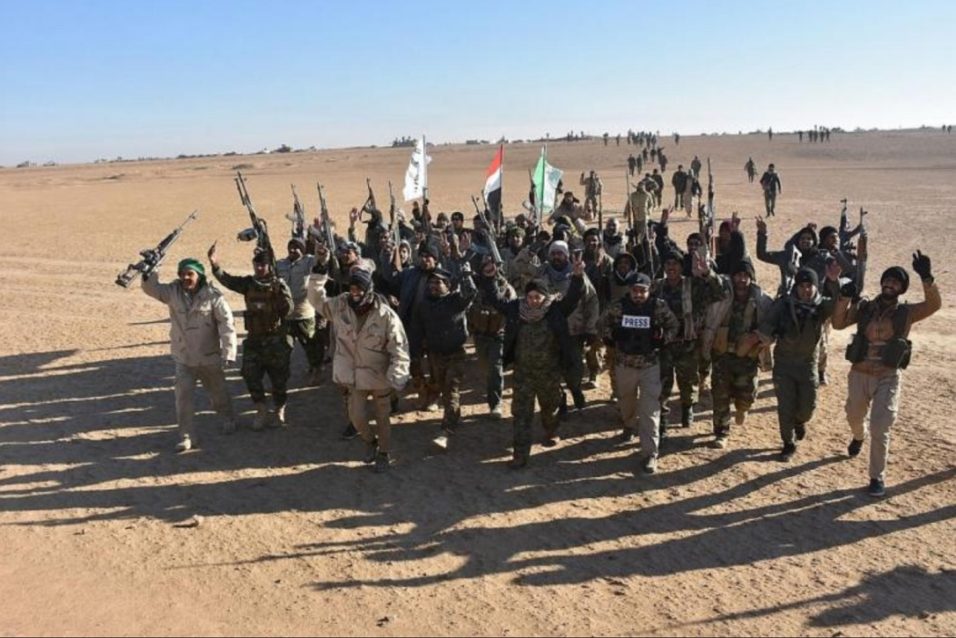
    “Our forces are in complete control of the Iraqi-Syrian border and I therefore announce the end of the war against Daesh (ISIS),” Mr Abadi told a conference in Baghdad.

    “Our enemy wanted to kill our civilisation, but we have won through our unity and our determination. We have triumphed in little time.”

    As the authorities announced a public holiday yesterday “to celebrate the victory”, Mr Abadi said in a speech that Iraq’s next battle would be to defeat the scourge of corruption.

    ISIS seized vast areas north and west of Baghdad in a lightning offensive in 2014.

    Iraq’s fightback was backed by an air campaign waged by a US-led coalition.

    The US State Department hailed the end of the jihadists’ “vile occupation” but cautioned that the fight was not over.

    “The United States joins the Government of Iraq in stressing that Iraq’s liberation does not mean the fight against terrorism, and even against ISIS, in Iraq is over,” State Department spokesman Heather Nauert said.

    Iraq’s close ally Iran already declared victory over ISIS last month, as the jihadists clung to just a few remaining scraps of territory.

    But Mr Abadi said at the time he would not follow suit until the desert on the border with Syria had been cleared.

    On the Syrian side of the border, ISIS is also under massive pressure. Last Thursday, Russia’s defence ministry said its mission in support of the Syrian regime to oust IS had been “accomplished” and the country was “completely liberated”.

    Despite the victory announcements, experts have warned that ISIS retains the capacity as an insurgent group to carry out high-casualty bomb attacks using sleeper cells.

    Other experts warned that ISIS fighters have shifted bases to war-torn Afghanistan.


    Source: AFP

  • Qatar Calls Decision By Gulf Nations And Egypt ‘Unjustified’; Allegations Against Doha Have ‘No Basis In Fact’

    Qatar Calls Decision By Gulf Nations And Egypt ‘Unjustified’; Allegations Against Doha Have ‘No Basis In Fact’

    Saudi Arabia, the United Arab Emirates, Egypt and Bahrain say they are severing diplomatic relations with Qatar.

    The Saudi kingdom made the announcement via its state-run Saudi Press Agency early on Monday, saying it was taking action for what it called the protection of national security.

    The three Gulf states gave Qatari visitors and residents two weeks to leave their countries, Reuters news agency reported.

    Saudi also closed the border and halted air and sea traffic with Qatar, urging “all brotherly countries and companies to do the same”.

    The statement appeared to be timed in concert with an earlier announcement by Bahrain, which was similarly cutting ties and halting air and sea traffic between the two countries.

    ‘Unjustified’

    Qatar’s foreign ministry said it regretted the measures by the Arab nations, calling the decisions “unjustified”.

    “The measures are unjustified and are based on claims and allegations that have no basis in fact,” the statement said, adding that the decisions would “not affect the normal lives of citizens and residents”.

    “The aim is clear, and it is to impose guardianship on the state. This by itself is a violation of its (Qatar’s) sovereignty as a state,” it added.

    Bahrain’s foreign ministry issued a statement saying it would withdraw its diplomatic mission from the Qatari capital, Doha, within 48 hours and that all Qatari diplomats should leave Bahrain within the same period.

    Egypt also announced the closure of its airspace and seaports for all Qatari transportation “to protect its national security”, the foreign ministry said in a statement.

    Etihad Airways, the UAE’s flag carrier, said it would suspend flights to and from Qatar beginning Tuesday morning.

    It was not immediately clear how Monday’s announcement would affect other airlines.

    A Saudi-led coalition which for more than two years has been fighting Iran-backed rebels in Yemen separately announced that Qatar was no longer welcome in the alliance.

    A senior Iranian official said the measures by the Arab nations would not help end the crisis in the Middle East.

    “The era of cutting diplomatic ties and closing borders … is not a way to resolve crisis … As I said before, aggression and occupation will have no result but instability,” Hamid Aboutalebi, deputy chief of staff of Iran’s President Hassan Rouhani, tweeted, referring to the coalition’s involvement in Yemen.

    US Secretary of State Rex Tillerson gave a statement on Monday while on state visit in Australia, urging the Gulf states to stay united.

    “We certainly would encourage the parties to sit down together and address these differences,” he said in Sydney.

    “If there’s any role that we can play in terms of helping them address those, we think it is important that the GCC (Gulf Cooperation Council) remain united.”

    Tillerson said despite the impasse, he did not expect it to have “any significant impact, if any impact at all, on the unified fight against terrorism in the region or globally”.

    “All of those parties you mentioned have been quite unified in the fight against terrorism and the fight against Daesh, ISIS, and have expressed that most recently in the summit in Riyadh,” he added, using alternative names for the Islamic State of Iraq and the Levant (ISIL) group.

    Hacking dispute

    The dispute between Qatar and the Gulf’s Arab countries escalated after a recent hack of Qatar’s state-run news agency. It has spiralled since.

    Following the hacking on Tuesday, comments falsely attributed to Qatar’s emir, Sheikh Tamim bin Hamad Al Thani, were broadcast in Qatar.

    Qatar’s government categorically denied that the comments, in which the country’s leader expressed support for Iran, Hamas, Hezbollah and Israel – while suggesting that US President Donald Trump may not last in power, were ever made.

    “There are international laws governing such crimes, especially the cyberattack. [The hackers] will be prosecuted according to the law,” Mohammed bin Abdulrahman Al Thani, Qatar’s foreign minister, said on Wednesday.

    UAE-based Sky News Arabia and Al Arabiya kept running the discredited story, despite the Qatari denials.


    Source: http://www.aljazeera.com/
  • Unity As A Community

    Unity As A Community

    The Muslim community inherently understands adversity- we have faced persecution because of our beliefs for centuries. Despite this, the Muslim community inherits a rich history of culture, community growth, wisdom, and knowledge. Given the global rise of Islamophobia, rise of Daesh, and continued persecutions, unity as a community should be our strength; however, the problematic attitude of our leaders in our mosques and disengagement with the youth are among the problems that sway us away from achieving a stronger community.

    As ‘Houses of God’, mosques are places where Muslims congregate to worship and praise our Lord; concurrently, they are platforms for all to gain Islamic knowledge and serve the community- whether it is through helping the less fortunate or raising awareness against injustices and problems. However, because of “Mosque Politics” and increased disagreements between community leaders, mosques have become houses of dissension and weak brotherhood. There are well defined and alarming hierarchies present within our communities. Most mosques have a committee of leaders who stay in charge, make decisions, and run daily programs. However, decisions are usually made without the approval of the entire community, eliminating the sense of community as a whole. Additionally, this system mainly centralizes power in the hands of men, who further silence women. Misogyny and cultural practices are abused to further subjugate women (i.e. solely holding her responsible for the cooking and cleaning at mosques).

    Furthermore, consolidating power creates egos, leading to a bigger divide. Because of conflicting ideas, egos create dissonance among people that leads to an inability to reach a consensus, resulting in the creation of “rival mosques”- mosques that are built out of spite towards one another. Islam stresses the importance of akhlaq, or the practice of ethics, proper etiquette, mannerly communication, and morality. Practicing such behavior establishes respect, promotes friendship, and encourages free thought. In his last will to his sons, Ali ibn Abi Talib said, “Maintain communication and exchange of opinion among yourselves. Beware of disunity and enmity.” As followers of the Holy Prophet(s), akhlaq is a cornerstone in Islamic ideology that we should all aspire to follow. In religious programs, we learn about the high morals of the Holy Household (a); but, how often do we emulate them? To eliminate communication issues, there needs to be equal representation of all groups in our mosques. Perhaps we can hold monthly community meetings that serve as platforms to respectfully express concerns. This way, it encourages member involvement and finds ways to defeat community problems.

    Many mosques are run by first generation Muslims who have adopted an authoritarian management style; sadly, this has led to a chasm between the youth and elders, resulting in youth disengagement. What community leaders fail to realize is that as time progresses, mosques must evolve and be adaptable to the needs of the time. Because of the environment young Muslims are brought up in, often very different from the time of their parents, they turn to mosques to develop a Muslim identity, for religious and spiritual growth, a center for learning, interfaith activities, and wanting to be more active in their society. Additionally, because the youth are the future leaders of the community, mosques are in need of a healthy dialogue between elders and the youth. Youth leadership at mosques is crucial for a bright future- the youth need to make time and effort to participate in the growth of their communities. In some cases, however, the main reasons for the lack of youth involvement are: inflexible attitude of leaders, lack of extra- curricular activities, and failure to understand what is being taught because of language barriers. To overcome these setbacks, some mosques invite English-speaking lecturers, hold round table discussions about various topics, and conduct sports tournaments to promote healthy competition. Such flexibility should be promoted in all mosques because it engages the youth and helps them connect with elders.

    “United we stand, divided we fall” is an expression used to inspire unity and collaboration. Its core concept lies in the collectivist notion that if individuals work together as a team, they, as a group, can succeed and achieve more. In an era where Islam and Muslims are attacked continuously, implementing unity within our own societies creates strength, excellent communication, and tolerance which can be accomplished through the joint efforts of community members. Eliminating hierarchies, providing equal representation, and building stronger relationships between the youth and elderly are all ways to foster unity and advance community development. It is time to confront problems that act as obstacles in achieving unity as a community because as He said, “… hold fast on to His rope all together, and do not be divided among yourselves…” (3:103)


    Source: MuslimVibe

  • KOMENTAR: Pengganasan – Mengapa Ia Tidak Lagi Terhad Kepada Lelaki Sahaja

    KOMENTAR: Pengganasan – Mengapa Ia Tidak Lagi Terhad Kepada Lelaki Sahaja

    Keterlibatan wanita dalam kegiatan pengganasan biasanya tertumpu di luar daripada bidang pertempuran seperti sebagai perantara dan pengumpul dana. Namun sejak kebelakangan ini wanita mula memainkan peranan barisan depan seperti membuat persiapan untuk melancarkan serangan pengganasan.

    Bagaimana gejala ini boleh timbul dan apakah faktor yang mendorong sesetengah wanita sanggup menceburkan diri dengan pengganasan secara langsung menjadi kupasan Chaula Rininta Anindya, penganalisis di Sekolah Pengajian Antarabangsa S Rajaratnam, NTU.

    Peranan wanita dalam rangkaian pengganas di Indonesia sehingga ke hari ini telah ditentukan oleh hubungan persaudaraan yang terjalin melalui perkahwinan, dengan penglibatan mereka tertumpu kepada memenuhi keperluan logistik dan kewangan bagi tujuan pengganasan.

    Tetapi terdapat trend yang semakin meningkat di mana wanita mula mengambil peranan sebagai penggempur.

    Baru-baru ini, unit anti-pengganasan Indonesia, Detachment 88 (Densus 88) telah menangkap tiga wanita yang didakwa merancang untuk melancarkan serangan bom ke atas Istana Presiden Indonesia.

    Wanita-wanita itu – Dian Yulia Novi, Arida Putri Maharani dan Tutin Sugiarti – ada kaitan dengan rangkaian pengganas pimpinan Bahrun Naim yang berpangkalan di Solo. Bahrun Naim didakwa dalang siri serangan di Jakarta pada tahun lalu.

    Beberapa hari selepas mereka ditangkap, Densus 88 turut menahan Ika Puspitasari di sebuah masjid berhampiran rumahnya di Purworejo, Jawa Tengah.

    Novi dan Maharani merupakan isteri kepada Muhammad Nur Solihin yang dipercayai ketua sel pengganas itu. Novi telah merancang untuk melancarkan serangan bom nekad di Istana Presiden Indonesia.

    Maharani tahu tentang persediaan untuk melancarkan serangan itu dan telah membantu dalam pembiayaannya. Yang menariknya, Sugiarti telah memainkan peranan penting dalam mempengaruhi Novi untuk menjadi radikal walaupun Novi adalah isteri kepada ketua kumpulan itu.

    Wanita terakhir, Puspitasari, telah membuat persiapan untuk melancarkan serangan bom nekad di Bali pada malam Tahun Baru.

    Di dalam Jemaah Islamiyah (JI) sendiri, iaitu kumpulan pengganas paling terkenal di Indonesia, wanita sebelum ini hanya memainkan peranan sebagai perantara dan menghasilkan zuriat.

    Tujuannya adalah untuk meningkatkan hubungan dan menghasilkan para jihadi masa depan sebagai usaha untuk menambah bilangan anggota kumpulan itu. JI juga bergantung kepada wanita untuk mengumpul dana bagi tujuan pengganasan jihad.

    Sebagai contoh, Noralwizah Lee Binti Abdullah, seorang wanita keturunan Cina Sabah yang merupakan isteri kepada bekas komander operasi JI Hambali, yang dipercayai menjadi ketua akauntan JI.

    Ajaran Islam klasik tidak menggalakkan wanita mengambil peranan berperang. Tetapi, dengan kebangkitan kumpulan militan sebagai Daesh (ISIS), peranan wanita dalam melakukan tindakan pengganasan semakin berkembang.

    Dengan matlamat untuk mewujudkan sebuah negara Islam dengan apa jua cara sekalipun, IS terpaksa meluaskan peranan wanita dalam pertubuhan mereka dengan lebih melibatkan mereka dalam misi-misi pertempuran dan melakukan serangan-serangan nekad.

    IS telah menubuhkan Briged Al-Khansaa, sebuah unit wanita yang melakukan rondaan di sekitar bandar-bandar seperti Raqqa dan Mosul untuk menguatkuasakan nilai-nilai Islam yang berlandaskan tafsiran fundamentalis ISIS. Wanita-wanita juga berjuang di barisan hadapan untuk ISIS di Libya.

    Peranan lebih besar dalam pertempuran dan perancangan yang kian dimainkan wanita dalam sel keganasan Indonesia menggambarkan pengaruh dan rangkaian sekutu-sekutu ISIS di Asia Tenggara yang semakin meluas.

    Kumpulan pengganas Mujahideen Indonesia Timur (MIT), yang mengikrarkan taat setia kepada ISIS, telah menjalankan latihan senjata untuk anggota wanitanya termasuk isteri komander MIT. Kita boleh menjangkakan lebih banyak pembabitan secara langsung wanita dalam kegiatan pengganasan pada masa depan.

    Dengan menggunakan wanita sebagai pengebom nekad, rangkaian-rangkaian pengganas meraih kelebihan dari segi taktikal dan strategi.

    Wanita tidak dianggap agresif atau akan melakukan perbuatan keganasan, jadi mereka boleh melindungi diri daripada dikesan dengan lebih mudah. Wanita juga boleh menyembunyikan senjata atau bom dengan lebih baik di dalam pakaian mereka.

    Ini menimbulkan masalah di pusat-pusat pemeriksaan kastam, di mana bilangan pegawai kastam wanita yang terhad untuk melakukan pemeriksaan fizikal yang ketat boleh memberi pengebom nekad wanita peluang untuk melancarkan serangan.

    Yang jelas, langkah merekrut wanita telah menambah bilangan pejuang di dalam rangkaian pengganas. Tetapi ini mungkin juga menandakan bahawa kumpulan-kumpulan berkenaan kekurangan pejuang-pejuang lelaki dan terdesak untuk mendapatkan lebih ramai rekrut.

    Idea bahawa wujudnya pengebom nekad wanita sering dianggap sensitif dan boleh mencetuskan reaksi berlebihan dan yang dibesar-besarkan. Tetapi reaksi berlebihan daripada orang ramai dan pemerintah adalah sesuatu yang diinginkan dan dieksploitasi kumpulan-kumpulan pengganas.

    Agensi-agensi yang memerangi pengganasan perlu memberi lebih banyak perhatian kepada peranan wanita yang semakin berubah-ubah dalam kegiatan pengganasan di Indonesia untuk mengenal pasti pendekatan terbaik dalam menangani pelibatan wanita dalam pengganasan.


    MENGENAI PENULIS:
    Chaula Rininta Anindya adalah pembantu penyelidik Agama dalam Program Indonesia di Sekolah Pengajian Antarabangsa S Rajaratnam, Universiti Teknologi Nanyang. 


    Source: BeritaMediacorp

  • Aleppo Residents Celebrates Liberation From Militants

    Aleppo Residents Celebrates Liberation From Militants

    The residents of Aleppo have taken to the Syrian city’s streets to celebrate the imminent official announcement of the city’s full liberation from militants.

    According to Syrian army officials on Monday, 99 percent of the formerly occupied regions of the city have been recovered by government forces, adding that the army is in the “last moments before declaring victory.”   

    “The battle in eastern Aleppo should end quickly. They (militants) don’t have much time. They either have to surrender or die,” said Lieutenant General Zaid al-Saleh, the director of the government’s Aleppo security committee.

    Press TV’s correspondent in the city says that there are reports of the complete liberation of Aleppo.

    Earlier, the so-called Syrian Observatory for Human Rights said the battle to liberate the city had reached its end and that government forces were making their final advances into the militant-held parts of the city. “The battle of Aleppo has reached its end. It is just a matter of a small period of time, no more, no less…,” said the group’s director, Rami Abdulrahman.

    He noted that the militants have now withdrawn from the last six neighborhoods they were using as hideouts in the city.

    Less than a month ago, the Syrian army started a wholesale push to drive the militants out of their stronghold in the city’s eastern side, making great strides in the process.

    Aleppo’s complete liberation from the foreign-backed militants would mark a significant victory for Syria in its nearly six-year-long campaign against foreign-backed militants. The liberation of Aleppo would deny the militants their main supply routes across the Turkish border while it would hugely undermine the morale of the militant groups.

    Daesh Palmyra offensive Aleppo diversion’

    Also on Monday, Russian Foreign Minister Sergei Lavrov said that Daesh’s latest attack on Palmyra was “apparently” launched from Iraq’s Mosul from “territories patrolled by the aircraft of the US-led coalition.” He added this “makes one think that – and I really hope to be wrong here — that it was orchestrated and coordinated to give a respite to those thugs, who are entrenched in eastern Aleppo.”

    He noted that the US had been using a conflicting policy towards the terrorists in Syria since the beginning of the conflict some six years ago, by battling Daesh but openly avoiding conflict with other terrorists groups.

    “There is a significant number of reasons to believe that [Al-Nusra] is being spared as the most effective combat-capable force, which opposes the governmental [forces] of the ground in order to be used for overthrowing the legitimate Syrian government when the time comes,” he added.

    While admitting that talks between Moscow and Washington over Syria are difficult, Lavrov voiced hopes that the US would stop exonerating the militants and commit to a “fundamental agreement” based on the “uncompromising struggle against terrorism.”

    In recent days, Daesh, the most brutal of the terror groups operating in Syria since 2014, has resurfaced in the ancient city of Palmyra in the west-central province of Homs.

    The group was driven out of the city back in March after holding it for some 10 months.

    Recently, it mobilized more than 4,000 terrorists, according to the official Syrian Arab News Agency, re-entering the city of Palmyra amid fierce clashes with the army.

    Reports on Sunday morning indicated that Daesh’s attempts to re-enter Palmyra had been reversed, but various sources said later in the day that they had managed to force their way back into the city.

    Assad receives letter from Pope

    Syria’s President Bashar al-Assad has received a letter from Pope Francis in which the pontiff voiced his sympathies for the people of Syria over the difficulties they had endured during the country’s years of conflict.

    The Vatican’s top diplomat in Syria, Cardinal Mario Zenari, delivered the letter personally to Assad on Monday.

    In his letter, the Pope condemned all manners of extremism and terrorism across the globe and especially in Syria. He also called for uniting all efforts to end the conflict in the country and to restore peace.

    Since March 2011, Syria has been hit by militancy it blames on some Western states and their regional allies. The Syrian Observatory for Human Rights and UN have put the death toll from the Syria conflict at more than 300,000 and 400,000, respectively. This is while the UN has stopped its official casualty count in Syria, citing its inability to verify the figures it receives from various sources.


    Source: www.presstv.com