Tag: ethnicity

  • Commentary: I Am Not Racist, But..

    Commentary: I Am Not Racist, But..

    ‘I am not racist, but…’

    —–

    ‘I am not racist, but I believe I am superior to an entire race of people because they are all lazy. I am just being a realist.’

    ‘I am not racist, but I love to make fun of people’s ethnicity, especially people who are darker than me. It’s just more funny that way.’

    ‘I am not racist, but there is no way I would employ someone of that race. He/she just would not be suited for this job.’

    ‘I am not racist, but “those people” really cannot be helped. Because they don’t want to be helped.’

    ‘I am not racist, but people should stop being so sensitive when I make racist jokes which are not funny.’

    ‘I am not racist, but thank God White people civilized the world.’

    ‘I am not racist, but the minorities should not express discontentment in this particular peaceful manner. There are other ways – that do not offend me, are out of my sight, do not make me aware of your problems, do not force me to confront painful realities – to do so.’

    ‘I am not racist, but I do not really like to pray beside Indians in the mosques because they smell.’

    ‘I am not racist, but I do some/all of the above. But my father’s neighbour’s cousin’s brother-in-law is from a minority race, and since I know him personally, I cannot be racist.’

    —–

    You are not racist, only because you do not wish to see yourself as a racist.


    Source: Walid J. Abdullah

  • Marine Company Chairman Farid Khan Born In Geylang Serai Is Running For Presidency

    Marine Company Chairman Farid Khan Born In Geylang Serai Is Running For Presidency

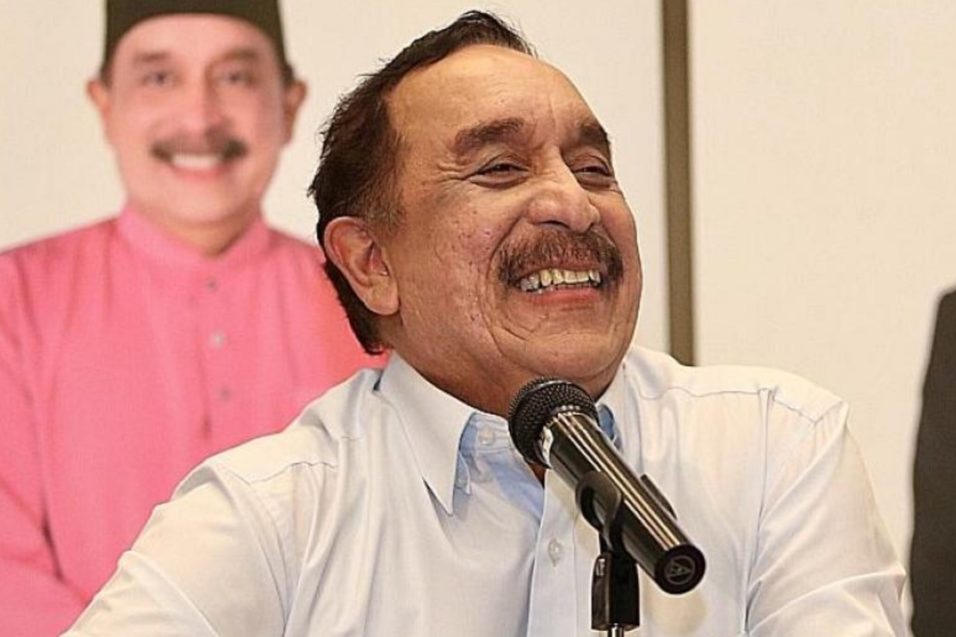
    An entrepreneur of Pakistani descent yesterday announced his bid to become the next president.

    Mr Farid Khan Kaim Khan, 62, the chairman of marine services provider Bourbon Offshore Asia Pacific, said he intends to stand in the upcoming presidential election (PE) because he wants to “serve the nation” and feels “capable of doing so to the best of my knowledge and ability”.

    This PE, due in September, has been reserved for Malay candidates after the Presidential Elections Act was amended to ensure the presidency is representative of the country’s multiracial society.

    Speaking in English and Malay, Mr Farid told reporters at the Village Hotel Changi that his identity card indicates he is Pakistani but he was born in Geylang Serai and celebrates Hari Raya every year.

    “I am of Pakistani descent and my wife is of Arabic descent. Yet our family and relatives speak Malay and practise the Malay culture. So I am part of the Malay community,” he said.

    In his speech, Mr Farid outlined five areas of concern: the growing threat of radicalism, strengthening the trust among the people, helping the needy, enhancing Singapore’s prosperity and strengthening families.

    He is the second candidate to throw his hat into the ring.

    Second Chance Properties founder and chief executive officer Mohamed Salleh Marican, 67, said on May 31 that he planned to run for president.

    Political analyst Mustafa Izzuddin told The New Paper that Mr Farid addressed his ethnicity head-on to clear the air in the hope of quelling any doubts about his candidacy.

    “He did not want the question whether he is Malay to hijack other issues he wants to discuss, and probably anticipated it,” he said.

    ELIGIBLE

    Associate Professor Eugene Tan, a law don at the Singapore Management University, echoed Dr Mustafa’s observations, noting that Mr Farid wanted to reassure his stakeholders by “asserting his claim to be eligible”.

    He said: “Certainly now that he has indicated he would make an application, there is the question of eligibility.”

    Dr Mustafa said the decision whether Mr Farid is Malay lies with the Community Committee.

    Prospective candidates must submit a form to the Presidential Elections Committee (PEC) to get a certificate of eligibility, and another form to the Community Committee to declare that they are part of the Malay community to obtain a Community Certificate.

    “I suspect the committee is going to stretch the definition to consider not just what you are born as, but what your experience is like, your environment, and whether or not the community sees you as Malay,” Dr Mustafa said.

    Prof Tan also weighed in on another requisite – private sector candidates have to helm a company with at least $500 million in shareholder equity.

    However, the PEC has the discretion to waive this requirement.

    Bourbon Offshore Asia Pacific, a subsidiary of a French multinational marine company, reportedly has shareholder equity of US$300 million (S$415 million), but Mr Farid said he is confident of qualifying.

    Mr Farid, who is married to Madam Naeemah Shaikh Abu Bakar, 61, with a daughter, 23, and son, 18, has been with the company for more than 10 years.

    It has about 800 workers in the region.

    Said Prof Tan: “If it does not appear that he qualifies outright, then he will have to go under the discretionary route, and the PEC will have to decide.”


    Source: http://www.tnp.sg

  • Mohd Khair: Singaporeans Are Capable Of Living Together Respectfully, Beyond Mere Tolerance

    Mohd Khair: Singaporeans Are Capable Of Living Together Respectfully, Beyond Mere Tolerance

    it is very HEARTENING indeed when Non-Muslim Singaporeans demonstrate deep understanding and empathy on the issues surrounding the ambiguous halal status of bazaar at Geylang Serai organised in the month of Ramadhan.

    Read the screenshots shared here in this album. They show genuine concern of Non-Muslim Singaporeans on the issue of non-halal status of some foodstalls at Geylang Serai Bazaar, organised in the month of Ramadhan.

    Such demonstration of care and concern is a fine example of how diversity is celebrated in the multiracial and multireligious society of Singapore.

    Underlying such expression of understanding and empathy is the value of RESPECT, going beyond tolerance. Such thinking also reflects maturity living harmoniously together. Together, regardless of race, language or religion, the multiracial and multireligious society of Singapore should move more in this direction in living harmoniously with one another.

    This album is saved here on this HCRS group as it reflects deep halal discernment among Non-Muslim Singaporeans towards the basic dietery needs of the Muslim consumer. Such discernment is very highly appreciated by Muslims who care so deeply on matters pertaining to halal foods.


    Source: Mohd Khair

  • Singapore’s New Malay President Will Only Be Known In September

    Singapore’s New Malay President Will Only Be Known In September

    If contested, the next Presidential Election, which has been reserved for Malay candidates, will be held in September rather than in August, which is when voting typically takes place. Minister in the Prime Minister’s Office, Chan Chun Sing, announced this in Parliament during the second reading of the Presidential Elections (Amendment) Bill. The date revision does not require changes to the law. The Government is announcing changes early for transparency and so that prospective candidates can be aware of the changes.

    In his speech, Mr Chan provided the reason for the shift in timing. He said voting for a new president has typically been held in the last week of August, to ensure the process falls within the term of the sitting President, which ends on Aug 31.

    In 2011 for example, the Writ of Election was issued in the first week of August. Mr Chan said campaigning began shortly after National Day, and coincided with the month-long National Day celebrations. The revised timing would ensure the election is not held during the celebrations.

    For the upcoming election, Mr Chan said the government will issue a Writ in the later part of August, before President Tony Tan’s term expires. The shift of the election from August to September will also “reset the clock” so that future elections will take place outside the National Day period.

    Mr Chan said the Constitution allows for an acting President to assume office from the end of the incumbent President’s term until a new President assumes office.

    “If a new President is not elected by the time President Tony Tan’s term expires on Aug 31… the Constitution provides for the Chairman of the Council of Presidential Advisers or, if he is unavailable, the Speaker, to be the acting President. The acting President cannot exercise the functions of the President indefinitely,” he said.

    Mr Chan said current laws allow for changes to the timing of the polls to be made in time for this year’s Presidential election.

    The shift in timing will also cater to the longer time period required to assess prospective candidates as part of legislative changes.

    Under proposed changes to the Act, the deadline for prospective candidates to apply for a certificate of eligibility (COE) will be extended to five days after the Writ is issued. This is up from the current three days. This will give candidates more time to prepare their applications.

    Another change being proposed is that nomination day be held at least 10 days after the day the Writ is issued, up from the current five days.


    Source: www.channelnewsasia.com

  • New Panel To Certify Ethnicity Of Presidential Hopefuls

    New Panel To Certify Ethnicity Of Presidential Hopefuls

    Potential candidates running for the presidency will need to have their ethnicities certified by a new Community Committee, under proposed legislative amendments tabled on Monday (Jan 9) for the new hiatus-triggered model to ensure the country has a minority President from time to time.

    The proposed Community Committee will be made up of a chairman and five members each from the Chinese, Malay, as well as the Indian and other minority communities. Depending on which ethnicity a prospective candidate submits an application under, the sub-committee for that particular community will determine if the individual belongs to that community.

    The Community Committee members will be appointed by the Prime Minister, on nomination by the Presidential Council for Minority Rights, according to the legislative changes mooted for the Presidential Elections Bill tabled for first reading in Parliament by Minister in the Prime Minister’s Office Chan Chun Sing on Monday.

    Last November, changes to the Elected Presidency scheme were passed into law, including instituting a mechanism that reserves an election for a particular ethnicity that has not had an elected representative for five consecutive terms. The upcoming presidential race due in August will be reserved for the Malay community.

    Under the proposed legislative amendments tabled on Monday, all prospective candidates will have to submit a community declaration, on top of the existing application for a certificate of eligibility with the Presidential Elections Committee (PEC). This applies for both open and reserved elections.

    The Elections Department said requiring a community declaration for an open election is needed to operate the hiatus-triggered reserved election process.

    Applicants can be rejected if they fail to submit an application with either committee.

    There is a possibility that in an open election, some candidates are not considered to be members of the three main communities — such as a naturalised citizen — or are rejected in their applications for the community certificates. But they can still contest in an open election as long as they meet the other criteria for the certificate of eligibility.

    In the event that no candidate is successfully nominated at a reserved election, the amendment Bill states that the Prime Minister will issue a fresh writ to call for an open election or a reserved election for the next eligible community.

    The new Community Committee is similar to the Malay and Indian and other minority communities committees found under the Parliamentary Elections Act, which determines if the potential candidate contesting in a particular Group Representation Constituency belongs to these minority groups
    Voters can know who will be on the new committee by May at the latest, just before prospective candidates can start applying for the certification. Applications for such certificates open three months before a sitting President’s term is up. President Tony Tan’s term lasts until end August.

    Given that applicants will need to submit more information to the PEC now that more stringent criteria for potential presidential candidates are in place, the application deadline was proposed to be extended to five days after the writ of election is issued, up from the current three days.

    To give the PEC more time to assess the applications, the Prime Minister’s Office also proposed that Nomination Day falls 10 days after the writ is issued, up from the current five.

    The Second Reading of the Presidential Elections (Amendment) Bill is expected next month.

    Other amendments under the Bill include improvements to the election processes, where the Returning Officer will automatically carry out a recount if the winning margin is 2 per cent or less. This is to avoid unnecessary delays. Currently, a recount is carried out only if a candidate or his counting agent applies for one — provided the winning margin is 2 per cent or less.

    Overseas voters could also have up to two calendar days after the writ is issued to register as an overseas elector, up from the current deadline on the day it was issued. Contingency procedures proposed include allowing the Returning Officer to provide up to an additional seven days for overseas votes to reach Singapore for counting.

    The same amendments for overseas voting processes will be made through future amendments to the Parliamentary Elections Act, which contains the relevant legislation.


    Source: Today