Tag: independence

  • The Ironies Surrounding Singapore’s 2017 Presidential Election

    The Ironies Surrounding Singapore’s 2017 Presidential Election

    To ensure fair play, they changed the rules unfairly.

    To ensure meritocracy, they allowed affirmative action.

    To ensure multiracialism, they stopped other races from running.

    To ensure independence from the PAP, they picked one from the PAP.

    To ensure experience in handling millions of dollars, they chose one who’s never handled millions of dollars.

    To ensure the democratic process, they made sure no one got to vote.


    Source: F.C.

  • Introducing The PAP’s New Singlish Dictionary: Something Every Singaporeans Must Know

    Introducing The PAP’s New Singlish Dictionary: Something Every Singaporeans Must Know

    In the name of PAP redefined words for self-serving political expediency, the following definitions, meanings and logics apply:-

    – Meritocracy is not the best man for the job but means selective choice based on political affinity.

    – Multi-racialism means 70% of population must always be Chinese. If not enough Chinese due to low birth rate just top up with any Chinese. Failure of which, racial problem arises because minority if increases in number will create racial tension. No evidence given just accept PAP’s logic.

    – GRC needed to guarantee minority representation because majority Chinese still racist therefore minority will never win one to one elections, as HDB racial quota policy ensures no constituency with majority, minority group is possible. Nevermind that JBJ and other minorities historically (latest being Muralli) did and can win single seats. Those are strange unexplained anomalies that are better for people to forget.

    – Malay can fail security clearance in Mindef while the new citizen Tiong can pass security. The new guy automatically more loyal and trustworthy than the indigenous Malay chap, even though originating from communist country. Again just trust PAP’s insights and wisdom.

    – No Halal kitchen in Navy ship equals no Malay is fine. Just tolerate and accept as nothing racist about it. Multi-million dollar paid PAP minister said so.

    – President must share because quietly some Malays desire it, PM cannot share as Chinese not ready for it and even if Malay want, can just ignore it.

    – And now, Black can be White, square is circle, Indian is Malay. To be decided by PAP appointed committee.

    – Country’s pledge good to say but not priority to live by, as will undermine all of the above.

    – PAP logic dictates that after 52 years of independence, people don’t wise up overtime but instead somehow become more racist naturally.

    Welcome to PAP’s New Singlish dictionary.

    Only that we, the people will pay the price by having our intellect dumbed down and our full political freedom denied in the name of their democracy (read as democrazy).


    Source: Damanhuri Bin Abas

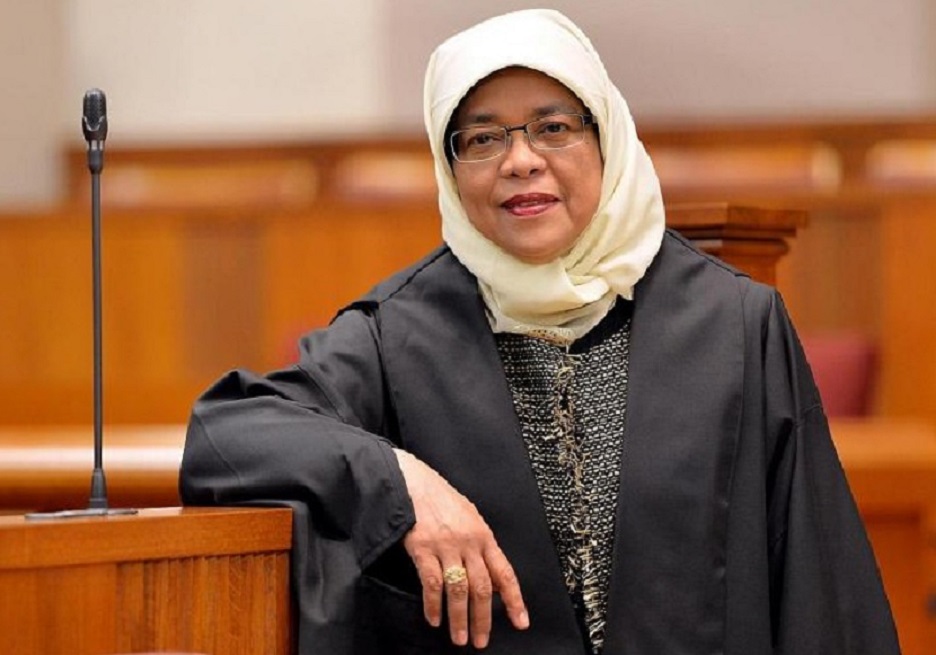
  • Veteran Radio Personality Hamish Brown Questions Halimah Yacob’s Independence To Be Elected President

    Veteran Radio Personality Hamish Brown Questions Halimah Yacob’s Independence To Be Elected President

    Prominent radio personality Hamish Brown has questioned if Presidential hopeful Halimah Yacob is as indeed independently-minded as she has claimed in a newspaper interview. In an interview with The New Paper Madam Halimah illustrated an incident where she abstained from voting on an issue after the Whip was listed, to make a point that she not always followed the directions of her political party elders in the People’s Action Party.

    “An occasion she remembered clearly was when she abstained from voting on amendments to the Human Organ Transplant Act in Parliament in 2007. Changes tabled by then Health Minister Khaw Boon Wan would allow organ recipients to reimburse donors’ expenses if they wished. She was concerned that this would lead to poor people being persuaded to “sell” their organs. The party whip was lifted, and she abstained, sending a strong signal of her misgivings.  She recalled: “I decided not to say yes. I didn’t ask the Health Minister how he felt, but I can still remember the expression on his face.””

    Writing in his Facebook Mr Brown said, abstaining from voting doesn’t send a signal that she agrees or disagrees. That Madam Halimah’s decision only showed that her position was a non-committal one.

    “…but abstaining from voting during the Human Organ Transplant Act parliamentary sitting doesn’t show that you do not toe with the party line, it only shows that between standing with voters who agree and voters who don’t, your action was neither, rather your decided course of action was to abstain from voting altogether, an act that really means, I prefer not to stand for either option and just be a fence sitter (so if the proverbial s@&/,! Hit the fan, you would go on record as not having been party to it either way) that’s what abstaining from taking a stand or voting means.”

    Mr Brown further suggested that meritocracy as it is practiced in Singapore, went out the window as soon as this presidential election was reserved for one particular ethnic race over all others.


    Source: http://www.theindependent.sg / Hamish Brown

  • Halimah Yacob’s Candidacy Will Raise Questions About Her Independence & “Malayness”

    Halimah Yacob’s Candidacy Will Raise Questions About Her Independence & “Malayness”

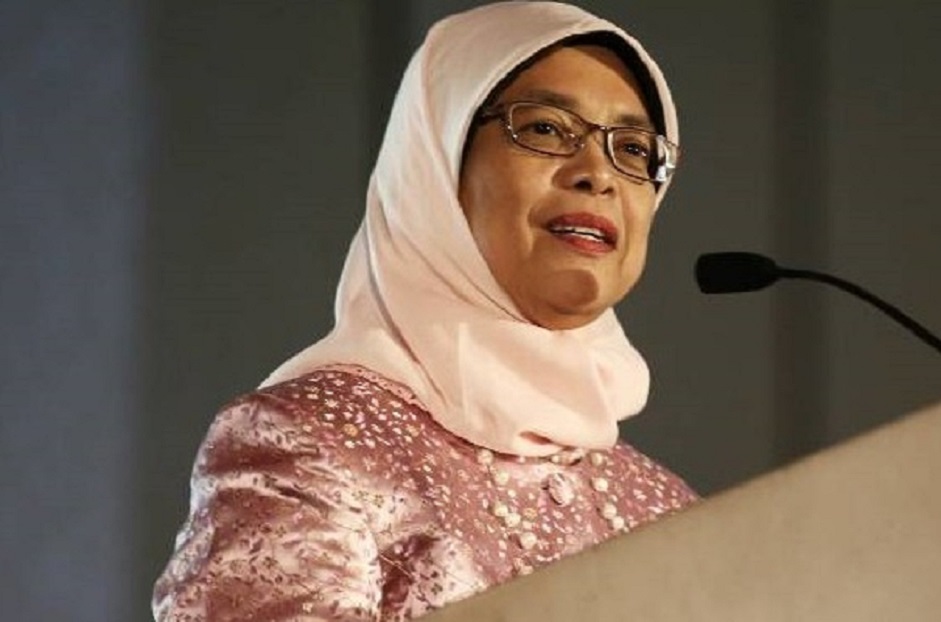
    The Speaker of Parliament, Halimah Yacob, should not run for the elected presidency, even if she is by law qualified. There are several reasons why Mdm Halimah’s candidacy would not be in the best interests of Singapore.

    But before we get into the specific arguments on this, let us recall what, fundamentally, the Elected President (EP) scheme was supposed to do.

    It is, basically, to be a check on the government of the day. Although still largely ceremonial in its functions, the EP is also endowed with various specific powers designed to hold the government to account.

    These powers include being the so-called second key to the nation’s financial reserves; having a say in the appointment of key members of statutory boards and public institutions; and the ability to instruct the CPIB to carry out investigations.

    The EP, it is to be noted, is advised by the Council of Presidential Advisers (CPA), whose members are experienced in various fields and industries.

    Mdm Halimah, as the Speaker of Parliament, qualifies under the Presidential Election Act to contest the elected presidency, even though she has little financial experience. This, some have pointed out, does not put her in good stead to oversee the financial reserves, which run into the hundreds of billions, and how the government spends these, which in itself is a complex matter.

    Although Mdm Halimah has some experience in handling public funds in her roles as a Member of Parliament for her constituency, and as a Minister of State previously, the elected presidency is an entirely different ball game altogether.

    Would she be able to understand the complexities of how the reserves are used and spent?

    The second reason why Mdm Halimah should not throw her hat into the ring in September is that even today, 28 July, she is still undecided if she would run in the elections which will take place in less than 2 months.

    One would have thought that anyone who is serious about taking on the highest office in the land would have given it much thought over an extended period of time, and would have already made up her or his mind at this point.

    And for someone who is a member of a political party, she would also be expected to resign from her party post and membership, so that there is some distance between her resignation from the party and her candidacy in the election.

    Remember that the EP is supposed to be politically neutral, and to stand above party and partisan politics.

    If Mdm Halimah decides to run for election, she would have to resign from the People’s Action Party (PAP) in very short notice, and almost immediately submit her name for the September contest.

    Former PAP MP Inderjit Singh was also apparently concerned about this, and wrote about this on his Facebook page on Friday:

    “While the constitution is open about having a current sitting government politician standing for the PE, some Singaporeans have expressed concerns on the prospects of a current government MP, still in parliament, resigning as an MP and immediately standing for the PE. The spirit of the Elected President is independence of office as intended by Mr Lee Kuan Yew when the idea was mooted. While I have no question about how each person will do his or her duty to serve the office they are elected to serve, public perception is also important. While Mr Ong Teng Cheong also did the same in 1993, I sense people are increasingly uncomfortable with this.”

    Given that Mdm Halimah has also been a PAP MP since 2001, it is questionable if she will be able to fulfill the independent role required of an EP.

    Can you suddenly resign from a party you have been with for decades and then claim to be independent of it, overnight? One may perhaps be able to do so technically, but it is not unreasonable to expect that emotionally and personally, this may not be the case.

    If, as would be expected, the PAP or its ministers, or any government-affiliated organisation (such as the NTUC), come out to endorse Mdm Halimah, it would further raise doubts about how independent she would be, if she needed the support of government ministers and organisations. Would she be able to be a check on them if she becomes the EP?

    The third reason why Mdm Halimah should not opt to run is that there have been questions raised about her “Malayness” to be a candidate in a Reserved Election for the Malay community.

    The significance of this first Reserved Election to elect a Malay president can not be understated. All candidates must be accepted as Malay, otherwise the office of the President loses its credibility and respect from the community and from Singaporeans in general.

    Questions about Mdm Halimah’s race were raised because her late father was an Indian-Muslim. Does that not make her an Indian and thus disqualified to run?

    While the law may in fact be on her side (for it gives the Community Committee the discretion to accept a candidate’s declaration of his or her race), there is also another pertinent question, as Inderjit Singh pointed out:

    “The concept of “Malayness” has also become a debatable issue. Questions about how Mendaki and SINDA classify who is a Malay and who is an Indian do not seem to be aligned with how a Malay or an Indian is defined for the purposes of a GE or a PE. For now, it is critical that the leaders of the Malay community and the government come out and make this position clear and hopefully this position will apply to all aspects of life in Singapore. I hope this can be resolved before the formal process of PE 2017 starts.”

    It is doubtful that such an intensely controversial issue would be resolved in a matter of weeks (before the election takes place). One suspects there will be even more debates, and perhaps even court challenges filed with regard to this.

    What is “Malay” and who is a Malay are now important questions given that different Government organisations have defined it differently, as some have pointed out.

    As president, the person must not be seen to have been treated differently from other ordinary Malays in society.

    It it thus of paramount importance that the question of what makes a “Malay”, in law, be set out clearly, and that the presidential candidates be held to these same standards and definitions.

    You cannot have Mendaki saying an Indian-Muslim does not qualify for its assistance schemes, and then say that an Indian-Muslim can contest in a Malay-only Reserved Election.

    And lastly, Mdm Halimah’s candidacy would leave her residents in Marsiling-Yew Tee without a minority-race MP to represent them. This would be an affront to the very idea of the Group Representation Constituency (GRC) system. Her Malay residents would be left without someone whom they could look to for help.

    Minister Chan Chun Sing has indicated that the Government will not call a by-election to elect a set of new MPs for Marsiling-Yew Tee if Mdm Halimah should leave to contest the presidential election.

    With all of the above unresolved issues and questions surrounding Mdm Halimah, it would be best if she does not contest the September polls. If she does contest and wins, it will leave the elected presidency opened to all sorts of criticisms.

    And for an institution which is supposed to be a symbol of unity for all Singaporeans, that would be most regrettable indeed.


    Source: https://publichouse.sg
  • We Didn’t Have Willing Fighters: A WWII Survivor Remembers How Singapore Fell

    We Didn’t Have Willing Fighters: A WWII Survivor Remembers How Singapore Fell

    In Mr Ishwar Lall Singh’s Yishun home, the fragments of his military past have lost their shine. A faded peak cap sits on a worn coffee table, sharing the space with long service medals, epaulettes and an old sword caked in rust. But while parts of his uniform have faded, the 87-year-old’s memories of Singapore’s fall to the Japanese remain fresh.

    (Photo: Kenneth Lim) 

    “I was a young 12-, 13-year-old boy,” Mr Ishwar said. “There was a lot of shelling and bombing, a lot of destruction of property, a lot of people being killed – I saw some dead people, with worms crawling in them. I saw that myself.”

    Mr Ishwar is a survivor of World War II and part of a group of 61 former veterans and national servicemen who share their experiences regularly with students and active servicemen, as part of a Ministry of Defence programme. Since the programme began in early 2015, the group has reached more than 12,000 individuals, including students from more than 80 schools as well as more than 8,000 people in the Singapore Armed Forces.

    “We had to queue up for a few rations of corn bread (which was) difficult to eat, rice and some vegetables,” said Mr Ishwar. “This was given on a whim and fancy – it was not a regular thing. Sometimes we queued up and waited for the ration truck to come, and it never came.”

    But for him, the Japanese Occupation was about more than going without food.

    “We lost our independence; we were not able to do what we wanted when we wanted. We lost that,” Mr Ishwar said. “The Japanese restricted us from doing quite a lot of things. For example, if you wanted to go to a cinema, there was a fear that if you went to a cinema, you may not come back.”

    According to Mr Ishwar, Japanese soldiers would pack cinema audiences into trucks at the end of the shows, driving them to Bahar in Johor.

    Mr Ishwar showing old photos from his collection. (Photo: Kenneth Lim)

    “We were under British rule, who were not actually looking after us at that time,” he said. “The Japanese were able to force themselves into Singapore because we were not willing fighters. We did not have Singaporeans who were fighting to defend their own country.”

    But Mr Ishwar was not one of them. He joined the Indian National Army in 1943. Years later, after working as a trishaw rider, storeman and laundry clerk, he joined the Singapore Volunteer Corps, known today as the People’s Defence Force.

    “We kept growing,” he said of the Singapore Armed Forces’ predecessor. “We kept getting better, we started to build camps, we had our National Day Parades, which were very obvious to show that the people were united. We realised the importance of being a free people.”

    This year marks the 75th anniversary of Singapore’s fall. And today, the father of three and grandfather of seven said his fight is against complacency, or making sure Singaporeans do not forget “the price of freedom”.

    “I am afraid that people in Singapore are not yet aware of this – partly I blame the Government,” he said wryly. “Because we have been at peace for 50 years – that’s the Government’s efficiency, the Government’s effectiveness, but this has made people (assume) that nothing is going to happen.”

    “WE WILL HAVE TO UNITE”

    While Mr Ishwar regularly shares his story as part of the engagement programme, this is only the beginning for the retired major.

    “My hope for Singapore is that it will grow, (that) it will grow peacefully, it will be allowed to grow,” he said. “We will not be bullied, we will not accept bullying – we will have to unite.”

    He said one way to do so is to ensure racial harmony truly exists in Singapore.

    “The word ‘Singaporean’ must be understood by everybody,” he said, citing weddings or festivals as one way people of different races could get to know each other better.

    “We should look at each other as that – not as Chinese, Malay or Indian. This is something we need to understand, to raise our children to think along those lines. If we can begin to understand these things, we will begin to respect each other’s religion. We will begin to respect each other’s race; we will begin to respect each other’s doings.”

    “We must always remember that a little spark in the wrong time at the wrong place can cause a lot of problems for Singaporeans,” he added. “And we don’t want that peaceful time that we’ve had for 50 years to be shattered.”


    Source: CNA