Tag: Indian

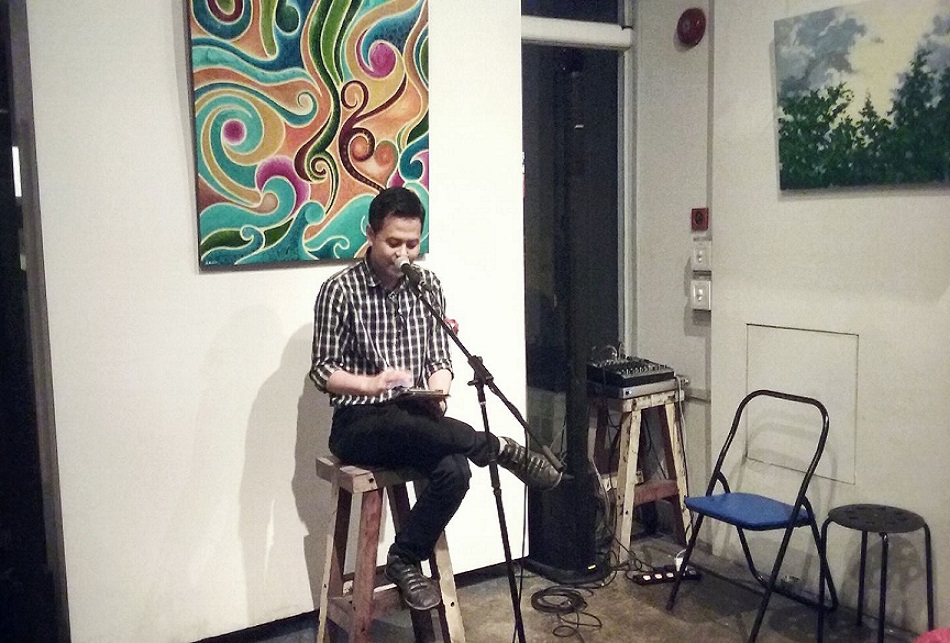
  • (Commentary) SDP Member Damanhuri Abas Talks About Race

    (Commentary) SDP Member Damanhuri Abas Talks About Race

    Now seems the best time to talk about race in light of recent events. First and foremost, I see blessings in our racial diversity. Mother earth intends us to be as diverse as she is. What we are as Chinese, Indian, Malay, Eurasian or others are inherited at birth and acquired in life through our own culture and tradition as well as the influence of wider society. Each community will celebrate its unique identity. Collectively, we are the real richness that makes up the true soul of our country. As a nation we are half a century old and undergo the normal formative stages in our identity shaping process. We should have passed the storming phase and be on our way into the norming phase.

    That storming phase is marked by a very top down highly politicised identity project for our nation. It has served its intended purpose in shaping a common narrative as a starting base. And yes, we do have that part of our history that ‘artificially’ placed us here courtesy of the Brits. We had to start somewhere and so it was politically set to be the British venture into this historically well-known economically strategic island. In that very British narrative, we all came from other lands, so be it that the indigenous people too originated from somewhere else, albeit just across the straits.

    So now as we move into the norming phase, we must strengthen that narrative into a more lucid unifying storyline bringing together the rich cultural tapestry of our diverse communities. One that is more historically sensitive and less politically serving. Progressive and building on lessons of history and not stagnating on past memories. A different set of people are needed to do so. It calls for less of the authoritative rational minds but more of the imaginative and creative hearts. Less engineering and more persuading. The artist in preference to the legalist. A truly ground up people’s project to draw from our own and collective past. A transparent exercise of heart, soul and mind to have an honest look into our history, all the bits of it.

    The dire uninspiring almost constant fear-mongering headlines of the day continues to dictate our society’s agenda. The intellectual landscape dedicated to rediscover who we are as a people is artificially absent. Instead, the focus is very much on reactionary think tanks serving externally driven agendas. Issues that divide are in focus, many others that unites are sadly sidelined. We must be ahead of this reactionary curve, that must be the mark that distinguishes us, a testimony of what education of our people surely should have brought us to, today.

    This is even more vital now, as we address the deeper issue of race and not from a myopic political view that has dictated our nation’s storming phase. We need to abandon the colonial mindset that looks at race as divisive and unhelpful, to be controlled, managed and politically exploited. Instead we must look at race through the lens of real living communities and their cherished heritage; recognized, celebrated and accorded equal importance by all. Surely the rich multi-racial Singapore story must be more than about a single person or a family. We can do it Singapore. After 52 years of nation building, we really do have the wealth of minds and the talents of hearts in abundance, waiting to be harnessed towards this beautiful noble national unifying people’s awakening project. So let us begin this worthy dignified conversation on race.


    Source: Damanhuri Abas

  • Alfian Sa’at: “If There Is A Committee To Certify The ‘Chineseness’ Of Candidates, What Kinds Of Criteria Should We Expect?”

    Alfian Sa’at: “If There Is A Committee To Certify The ‘Chineseness’ Of Candidates, What Kinds Of Criteria Should We Expect?”

    I have so many questions.
    Is a biologically Chinese person adopted into an Indian family still Chinese?
    But what do we mean by ‘biologically’?
    You can adopt a child of a different race in Singapore.
    But can the child ‘adopt’ whatever race it wants to?
    Are Chindians considered Chinese?
    Is a Chindian with a Chinese father considered more Chinese than one with a Chinese mother?
    Because patrilineal descent?
    If a Chindian is raised only by an Indian mother in the absence of a father can this person remove ‘Chinese’ from the IC and replace it with ‘Indian’?
    If a Chindian is raised by a Filipino domestic worker in the absence of both parents who are working overseas, what is this person’s race?

    If there is a committee to certify the ‘Chineseness’ of candidates, what kinds of criteria should we expect?
    Should this person be able to speak Mandarin?
    Should ‘bananas’ be disqualified?
    Is ‘banana’ a slur?
    How about OCBC–‘Orang Cina Bukan Cina’?
    Can something be a slur when used against an Anglophone elite who wield immense political and economic power in Singapore?
    How about Peranakans?
    Which makes them more Chinese: if they introduce themselves as ‘Peranakan Chinese’ or as ‘Chinese Peranakans’?

    And what if the candidate is a Chinese Muslim?
    Who was featured as one of the top Malay PSLE students in Berita Harian, because of a ‘Muslim-sounding’ name.
    And received a MENDAKI scholarship.
    But then attended a SAP school.
    And decided to change his name by deed poll to something more ‘Chinese-sounding’.
    And was then featured in Lianhe Zaobao as one of the top Chinese ‘O’ Level students.
    But still made CPF contributions to the Mosque Building and Mendaki Fund.
    Then married a Chinese Christian woman under civil marriage.
    And then had kids, one of whom wanted to be Muslim, another Christian, and another a Jedi warrior.
    If this person presents himself in front of an esteemed panel of people who are to certify his Chineseness, what will happen?
    I hope at the very least their heads explode.

    I think some of the questions above are ridiculous.
    I think ultimately there is something absurd about the idea of race–or specifically the idea of racial categorisation.
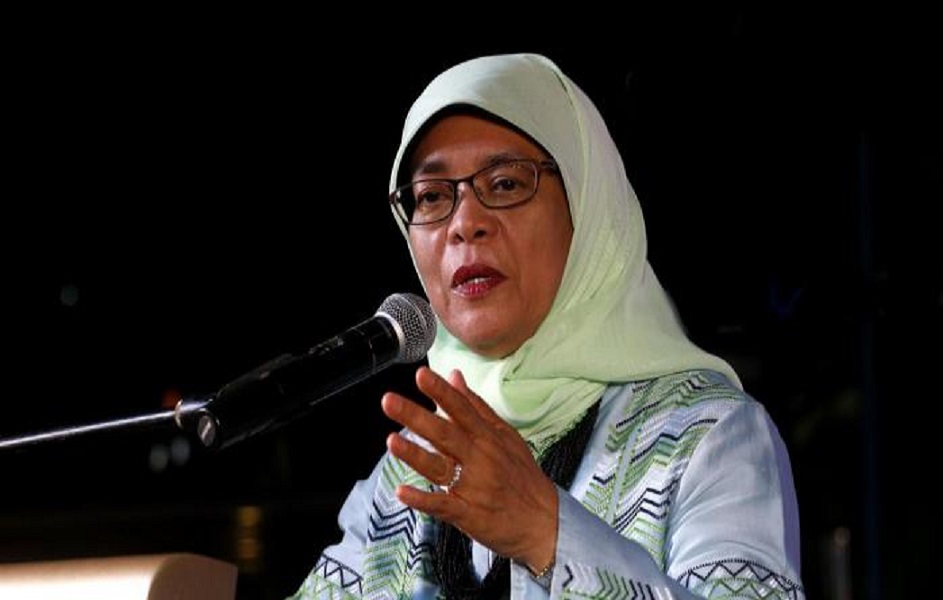
    And honestly I’m quite tired of all the ink spilled on trying to define Mdm Halimah’s race.
    Because the slipperiness and porosity and contradictions of ‘race’ are not specific to Malays or Indians.
    To be exempt from having your racial identity undergo such obsessive vivisection under the public glare is surely one of the manifestations of majority privilege.
    And to be honest the feeling is horrible, as if there is an ‘authentic performance’ of one’s race, or even worse, that one can be viewed as an exemplary or illustrative specimen of one’s racial species.


    Source: Alfian Sa’at

  • Do Indians Regard Newly Elected President As A Traitor For Disowning Her Indian Race?

    Do Indians Regard Newly Elected President As A Traitor For Disowning Her Indian Race?

    Some people still don’t get it as to why Singapore’s 2017 Presidential Election is a discrimination to the Malay community. Some questioned where got anymore pure breed Malays in Singapore?

    Actually, to measure how Malay you are, it is tightly linked to how Islamic you are. If you notice, in our mainstream media, usually news bulletins or articles will feature Malays as “Malay/Muslim” or “Melayu/Islam” without fail. So, somehow, if you want to argue that there are Malays who have denounced Islam, yes, that can be true, but bottomline is, perhaps, majority of Malays are still Muslims, whether or not they are practicing Muslims.

    However, there are some people who may want to argue that the race group you belong to depends on your father. If your father is a Malay, then the child will be Malay. And this has been the government’s stand for the longest time. That is the reason why previously, Malay children do not have to pay for their school fees (however, this privilege has been withdrawn). The new President, Halimah Yacob, was born to an Indian father, hence, why is the government still flipping prata?

    Another issue is that the government has always been pressing on the meritocracy. Whoever has the ability will be accepted into any job, especially those high-ranking jobs. The meritocratic aspect does not give privilege to any individual from whatever race or religion. This was what the government has been proud of and that from here, we can see that those who have the ability will be successful in securing the high-ranking job without accounting the individual’s race or religion.

    However, for the Singapore’s 2017 Presidential Election, the government has bypass the meritocratic principle because other races were not allowed to contest for Presidency. This caused the other races, especially the Chinese to be very angry because it is true that the Presidential Election is an unfair one. And this also shame the Malay community because it is obvious that the newly “elected” President got her high-ranking job not based on meritocracy.

    And the Indians are also angry because the “elected” President is an Indian and dear Mdm President Halimah Yacob is seen as someone who disown her own race to become Malay and hence, be eligible for Presidency. If there is a Malay who declares him/herself as Chinese just to be eligible for a career in the political office, for sure, the Malay community will regard the individual as a traitor and a disgrace to the Malay community.

    It is obvious that the new “elected” President has caused so much unhappiness and problems to Singapore even before her term started.


    Rilek1Corner

  • Malays And Indians Need To Change Their Eating Habits To Fight War Against Diabetes

    Malays And Indians Need To Change Their Eating Habits To Fight War Against Diabetes

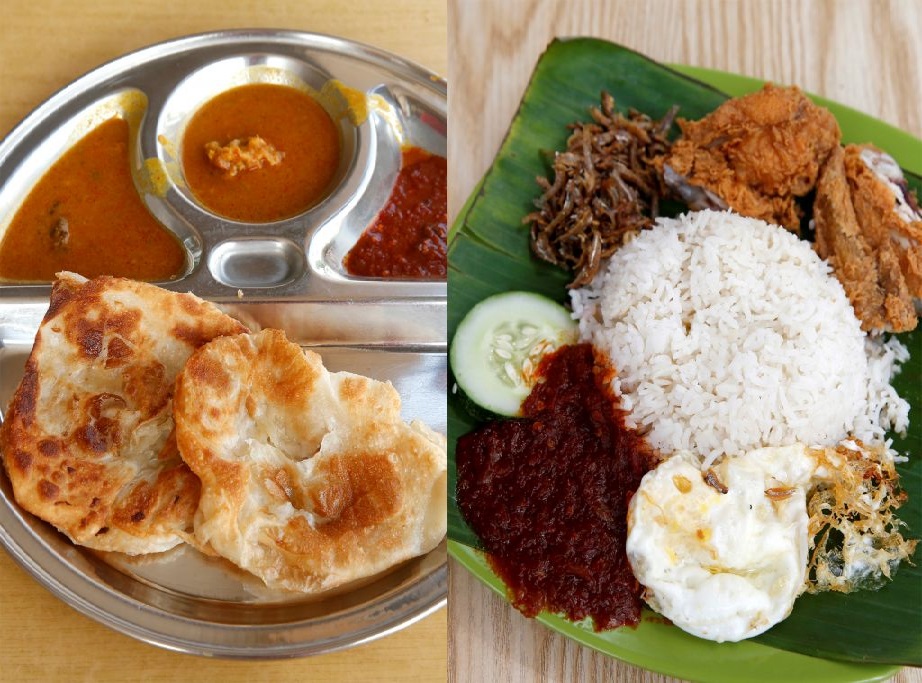
    For Malay food vendor Aida Manapi, 50, the tastiest ayam penyet (smashed fried chicken) must be crispy and glistening, and there is only one way to cook it — “deep fried”. And when it comes to roti prata, no one serves it by being stingy on ghee (clarified butter), said stall vendor Senthilvel Vedachalam, 43. Such traditional methods of cooking or serving Indian and Malay favourite dishes, along with mindsets that they have to be cooked in a certain way for best results – have made it difficult for many hawkers and home cooks to change the way they prepare these dishes. For them, unlike Chinese dishes, one cannot produce a healthier, yet still tasty ayam penyet or roti prata by simply using less oil, salt or sauce. But change they must if the two communities are to win the war against diabetes, which Prime Minister Lee Hsien Loong described as a “health crisis” for Malays and Indians during his National Day Rally (NDR) on Aug 20.

    Mr Lee also shared some sobering figures, noting that six in 10 Indians, and half of Malays above age 60 are diabetic, compared to 2.5 in 10 for the Chinese. With the fight against diabetes in Singapore being stepped up, community leaders and some members of the Malay and Indian communities have called for more targeted measures to deal with the problem. One area that needs to be addressed is their eating habits, even though those interviewed acknowledged that it will be an uphill task. Mr Rathinasamy Murugesan, owner of Greenleaf Cafe, an Indian restaurant in Little India, pointed out that many Indians eat a lot at one go, three times a day. They also tend to prefer 9pm dinners, which are close to bedtime, and need to round off their meals with a satisfying, sugar-rich dessert.

    “My Chinese friends would take the Indian sweet, and (throw up) because it is too sweet for them, but we Indians can take four or five of those,” said the 44-year-old. Getting these people to change their eating habits, even when they know that such practices heighten their risk of getting diabetes, will not be easy, he added. Taxi driver Hartono, 56, is one of those who find it difficult to change his eating habits even though he is a diabetic. He loves the rendang that is chock-full of coconut milk, and believes that Malay food should be all about “the colour and spice”. He finds such Malay dishes much more attractive than the “bland” soups, steamed food and stir-fries common in Chinese cooking.

    While his wife, a nurse, and his doctor often chide Mr Hartono for his food choices, the man himself finds it just too hard to give up his beloved buffets and nasi briyani. After losing weight during the fasting month by eating mainly cereal, it was “back to square one” after the Hari Raya season, no thanks to all the feasting during festive gatherings and wedding banquets. “The doctor talks like it’s very easy (to change), but our lifestyle is not like the Chinese lifestyle. For them, they go qigong, they go exercise … Our culture is different, we like to gather and cook, go picnic, go makan… You see (the Malays) carrying their pots to Changi Village to go there to eat, sleep, swim (all day),” he said.

    Some hawkers mentioned that their patrons are often not in favour of replacing the coconut milk in their dish with low-fat milk, as suggested by PM Lee in his NDR speech. When hawkers ask patrons if they would replace the coconut milk in their dish with low-fat milk, a common reaction is: “Sure not nice… So thin,” said Madam Salama Salim, 52, summing up her customers’ sentiments on why they do not like low-fat milk. Even though her Malay food stall at Our Tampines Hub offers healthier options, she feels obliged to go “full flavour” because of demand.

    For Madam Mizrea Abu Nazir, 45, “nasi lemak would not be nasi lemak” without coconut milk, and her stall usually uses two litres of coconut milk to cook a large pot of the rice. Her family owns the popular Mizzy Corner Nasi Lemak at Changi Village. While she does not mind cutting down on coconut milk on request at special events, the reality is that people often ask for “more”, rather than less. “In our lontong, ayam lemak, most of the cooking is about using a lot of coconut milk and oil. At the moment, I don’t (see the need to change) because everyone is still enjoying what they eat… That’s how it is,” Mdm Mizrea said.


    ‘GO TO WHERE THEY ARE’

    While anecdotal evidence seems to suggest that there is a lack of healthier choices for the Malay and Indian communities, the Health Promotion Board (HPB) said that popular Malay and Indian dishes such as mee soto, thosai masala and puttu mayam (steamed rice flour noodles) with dhal curry are among 63 types of dishes “among our everyday hawker fare that are already lower in calories”. The HPB’s current approach is to work with the managing agents for new hawker centres to encourage stall owners to offer healthier options progressively for Singaporeans.

    As of mid-August, there are over 3,100 stalls across 67 hawker centres and 450 coffee shops in Singapore, offering at least one healthier option in their menus, the HPB said, without revealing how many of those are Malay and Indian stalls. On its part, since 2016, the HPB has scaled up efforts tailored for the Malay and Indian communities in its awareness programmes by working closely with mosques, temples and community partners such as Mendaki, Mendaki, Jamiyah, Muhammadiyah and Our SWAMI Home. The board has also expanded its partners to include both the Malay and Indian activity executive committees, which organise activities at community centres.

    The Hindu Endowment Board (HEB), which holds annual health fairs at Sri Srinivasa Perumal temple in Serangoon, told TODAY that it sees a big need to ramp up efforts to promote health-screening and awareness among the Indian community. About 3,000 have been screened at the fairs over the past three years. Noting that current efforts are “not sufficient”, the HEB’s chief executive officer, Mr T Raja Segah, said discussions are underway to improve the health screening’s follow-up system, and hold more health fairs at community centres. However, to truly nip the problem of unhealthy food habits of the ethnic minorities in the bud, more needs to be done, such as “to go to where they are in the communities… See what their lifestyle is there (and) introduce changes there”, said Ms Julie Seow, a life coach at Touch Community Services’ diabetes support arm.

    For example, after failing to get Malay beneficiaries to attend its group sessions, the organisation, recognising how “communal” the Malays are, started a Malay support group. “They don’t come singly,” she said. Dr Fatimah Lateef, a Member of Parliament for Marine Parade GRC, said a long-term solution to the problem is to make diabetes risk-management “family-initiated”. She called on mothers to be “ambassador for change” in their day-to-day cooking. In her own home, Dr Fatimah shared, there is “absolutely no sugar, no salt, no oil”. Instead, she uses spices, chilli, lemon and lime to bring out the flavours. “The first thing that (people) ask is,‘Then what do you eat? Are you suffering?’ People have a (misconception) that they need to have all these to have good and nice food”. However, no one complained about her no-sugar-no-salt-no-oil food when her relatives come to her house during Hari Raya, Dr Fatimah added.


    Source: Today
  • Halimah Yacob: I Have Gone Against PAP

    Halimah Yacob: I Have Gone Against PAP

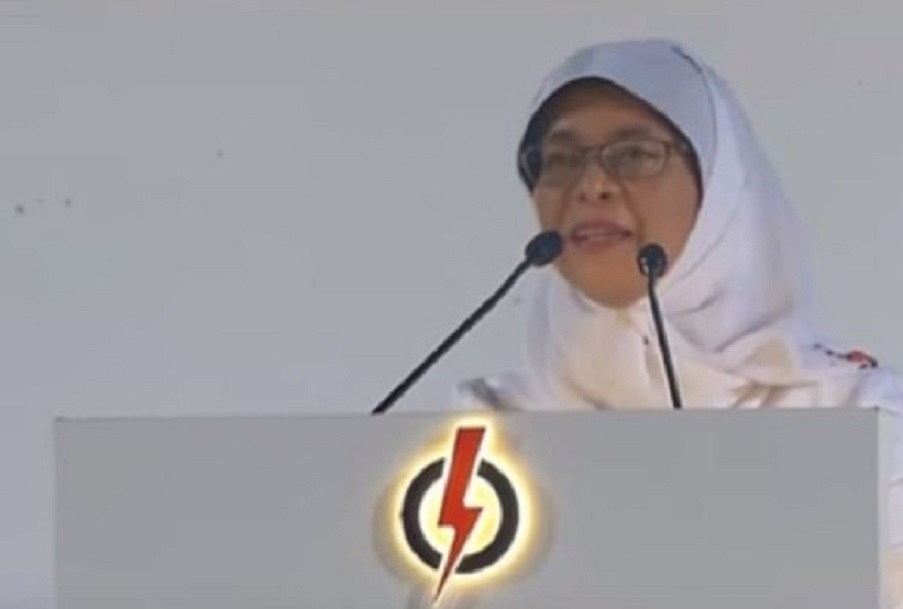
    Having been a People’s Action Party (PAP) MP for 16 years, Madam Halimah Yacob is aware that there are Singaporeans who question her ability to be non-partisan if she is elected president.

    “I know people have that concern because of my past affiliation with the PAP,” she told The Straits Times in an interview. “But I just want to say that the president has a duty first and foremost to Singapore and Singaporeans, and not to any party.”

    She also has the track record to prove her independence, noting that whether as a unionist or parliamentarian, she had not always toed the government line.

    An occasion she remembered clearly was when she abstained from voting on amendments to the Human Organ Transplant Act in Parliament in 2007.

    Changes tabled by then Health Minister Khaw Boon Wan would allow organ recipients to reimburse donors’ expenses if they wished.

    She was concerned that this would lead to poor people being persuaded to “sell” their organs.

    The party whip was lifted, and she abstained, sending a strong signal of her misgivings.

    She recalled: “I decided not to say yes. I didn’t ask the Health Minister how he felt, but I can still remember the expression on his face.”


    Source: www.tnp.sg