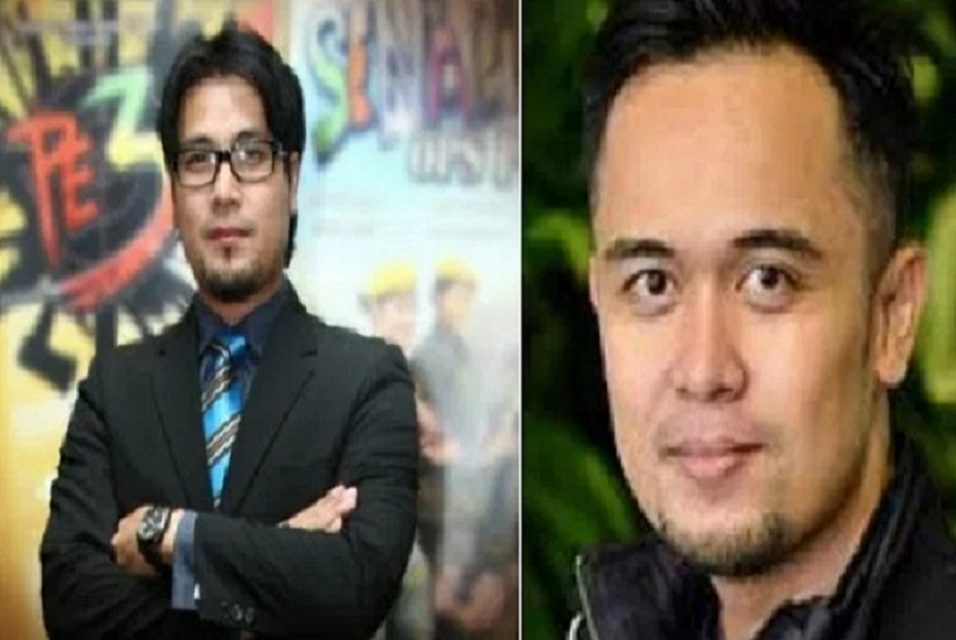
Gara-gara mengugut dan mengeluarkan kata-kata kesat terhadap Zed Zaidi, Persatuan Seniman Malaysia (Seniman) membuat laporan polis terhadap seorang selebriti televisyen Singapura iaitu Nick Mikhail Razak.
Pada Selasa lalu, Nick Mikhail mengeluarkan tuduhan itu menerusi sebuah video yang dimuat naik di Facebooknya.
Laporan polis dibuat oleh Pengerusi Biro Perpaduan dan Antarabangsa Seniman iaitu Datuk Subash Sundaramoorthy, 36, di Balai Polis Taman Melawati pada Khamis.
Menurut Subash, pihak Seniman terpanggil untuk melaporkan kepada polis mengenai perkara itu setelah merasakan tindakan Nick Mikhail itu melampau sehingga mencalarkan kredibiliti Zed Zaidi yang juga merupakan Presiden Persatuan Seniman Malaysia.
Malah jelas Subash, ia bukan kali pertama individu itu menyelar Zed Zaidi dan pihaknya sebelum ini hanya berdiam diri kerana tidak mahu mengeruhkan keadaan.
“Ini kali ketiga individu berkenaan mengugut dan mengeluarkan kata-kata kesat, fitnah terhadap Seniman dan presiden jadi atas sebab itu kita rasakan perlu membuat laporan polis kerana sebelum ini kami senyap sahaja.
“Kata-katanya iaitu ‘kalau lu langgar sama Aliff Aziz lu langgar sama gua. Sekarang wa cabar sama lu, lu pancung, lu datang kita tunggu sama lu’ adalah satu ugutan melampau.
“Kita rasa bertanggungjawab untuk mempertahankan Seniman dan presiden dari terus diperkotak-katikkan oleh individu yang tiada kaitan dengan persatuan.
“Zed sendiri tidak tahu kami akan buat laporan polis dan hanya memberitahunya pagi ini,” akhirnya.
I didn’t manage to post this story as i was too busy with work and my school.
Date : 10th July 2017
Time : 12 midnight
Place : Jurong East
I ended work at 9pm that day but i stayed until its 11pm i don’t know why though. There wasn’t a need for me to stay back at work but i just got a feeling i have to stay. I kept procrastinating until its 12am.
So as usual i took my bike and made my way.
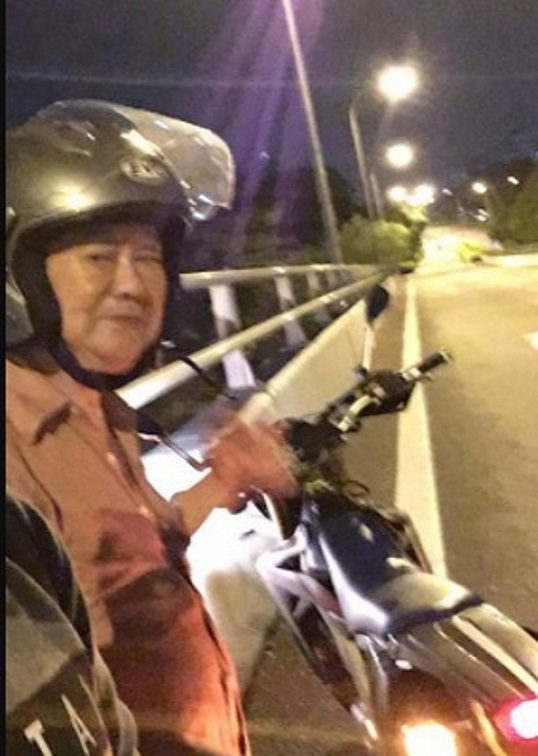
I was turning into PIE (middle of expressway) i saw an orange figure , all the vehicles passed by it without stopping so when i took a closer look it was actually this 80 years old uncle.
I stopped and took my helmet off and asked.
Me: Uncle , where you going?
Uncle : Wa , tak tahu wa kat mana. Wa sudah lupa , wa tak tahu address wa.
Translation : I dont know where i am. I forgot where i stay.
My heart broke. He was in he middle of an expressway alone with slippers on. He walked all the way from god knows where. I asked for his wallet and lucky enough there’s an address inside.
Alhamdulillah god gave me the sign to bring a extra helmet that day and He gave me the sign to stay late at work.
I don’t think this is coincidental . Its all planned by him. Its all written by him. Allah S.W.T
The uncle was sent back home safely.
If any bikers and drivers see this post please do help those in need . Its never a coincidence.
A few years ago, I was standing in line at the Customs checkpoint in Bangkok airport when a little blonde-haired boy caught my attention. He wanted to show me his toy truck and the light-up keychain hanging from his backpack. As we played together, he casually remarked that I was standing in the wrong line. ‘You should go over there,’ he said. ‘This line is not for black people.’
I stared at him, certain that I had heard incorrectly. He nodded to another line (which, like our line, was populated by people of all ethnicities) and said, ‘Black people go there.’
I looked up at his mother for an explanation. Surely, she would chastise him, or at the very least, apologize on his behalf. But she pulled him closer. When the line moved forward, she hurried him to the Customs counter to get their passports stamped, and they disappeared into the crowd. Certain that the parents had shaped that sort of thinking, I wondered at what else they said in private that made him so confident to label an adult and tell her she belonged elsewhere.
On July 23rd, Shan Wee wrote an opinion piece for The Straits Times about his child referring to Shan’s Indian friend Nikhil as “The Black One.” Uncomfortable with his son’s “bluntly racialist” description, Shan told his son that he couldn’t say that. His son argued that he didn’t know the friend’s name, an excuse that Shan found acceptable.
I was reminded again of my outrage at the mother at the airport. I assumed that Shan’s son’s bluntness was the tip of the iceberg of prejudices that were promoted at home, consciously or otherwise. I thought about manners, and the audacity of parents to model such limiting worldviews for their children.
Then my friend – let’s call her Melissa – posted a response to Shan’s article on her Facebook page. Recently, her son revealed that he and his classmates made fun of an Indian girl for being dark. I was surprised. My theory about children’s prejudices was that the apple doesn’t fall far from the tree, but Melissa is a conscientious and thoughtful parent. Melissa was also appalled; she thought she was doing enough by reading books on diversity to her son. But instead of shrugging and accepting that kids say the darndest things, Melissa opened up a productive conversation about differences with her son, starting with asking him how the girl probably felt about being bullied.
Because of Melissa’s experience, my concern has shifted from what Shan’s son said to what Shan took away from it. He wrote: “I just hope and pray that he will live life free from adult prejudices, adult sensitivities and adult divisions for as long as possible. If that means that he’ll be calling my buddy Nik The Black One from time to time, then I’m okay with that.”
Why not seize the chance to teach your child about prejudices and divisions then? How do you think Nikhil might feel about being called The Black One? How do you think I felt about being told to stand in another line because of my skin colour? Yes, children might say inappropriate things despite their parents’ best efforts to instill good manners. Let’s assume that this was what happened with Shan’s son, and the little boy at the airport. But let’s not miss the opportunity to teach them to treat people with respect, consideration and dignity as well.
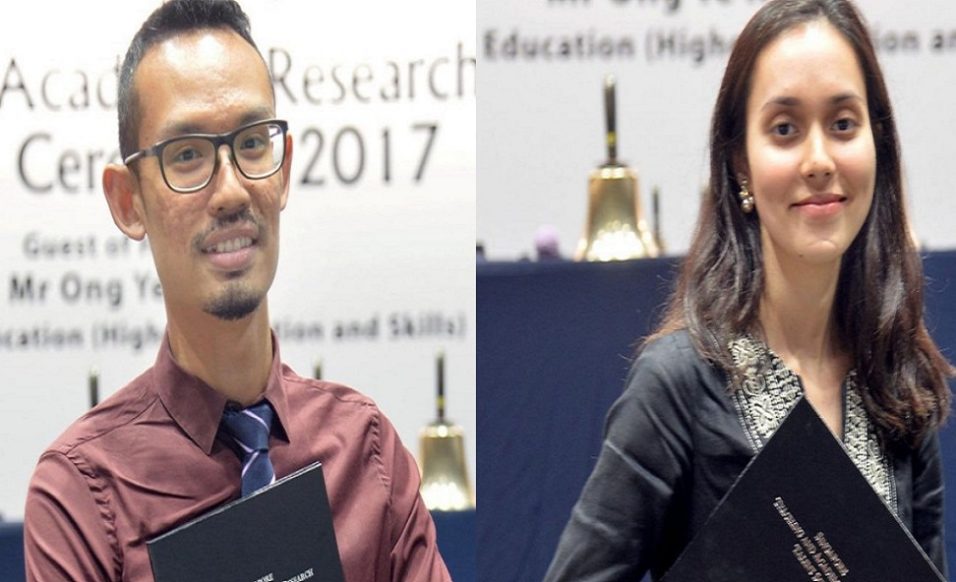
KERJAYA dua penyelidik setempat ini dalam bidang akademik dan penyelidikan mendapat suntikan dengan biasiswa yang menyokong mereka mengikuti program di universiti terulung dunia.
Cik Nurul Amilllin Hussain, 26 tahun, akan memburu ijazah Doktor Falsafah (PhD) dalam bidang geografi di Universiti Oxford.
Beliau mengkaji kemampanan dan cara orang ramai menggunakan sistem tenaga suria.
Dr Izzuddin Aris, 31 tahun, pula akan ke Universiti Harvard bagi program poskedoktoran dalam bidang perubatan.
Beliau pula mengkaji asal usul penyakit, termasuk faktor risiko di peringkat awal kehidupan – daripada sebelum kehamilan ibu hingga selepas kelahiran – yang boleh membawa kepada penyakit kronik dalam kanak-kanak dan kemudian sebagai dewasa.
Mereka merupakan antara 38 penerima Skim Bakat Pengajaran dan Penyelidikan Akademik (Start) Kementerian Pendidikan (MOE) yang menyokong warga Singapura yang ingin memburu kerjaya di universiti berautonomi setempat dan bertujuan membantu universiti itu membangun bakat akademik mereka.
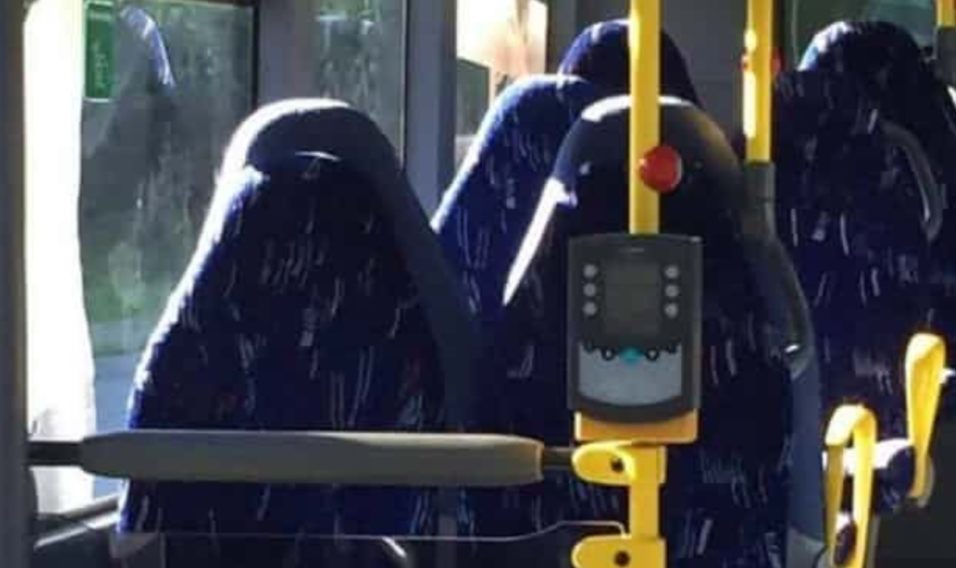
A Norwegian anti-immigrant group has been roundly ridiculed after members apparently mistook a photograph of six empty bus seats posted on its Facebook page for a group of women wearing burqas.
“Tragic”, “terrifying” and “disgusting” were among the comments posted by members of the closed Fedrelandet viktigst, or “Fatherland first”, group beneath the photograph, according to screenshots on the Norwegian news website Nettavisen.
Other members of the 13,000-strong group, for people “who love Norway and appreciate what our ancestors fought for”, wondered whether the non-existent passengers might be carrying bombs or weapons beneath their clothes. “This looks really scary,” wrote one. “Should be banned. You can’t tell who’s underneath. Could be terrorists.”
Further comments read: “Ghastly. This should never happen,” “Islam is and always will be a curse,” “Get them out of our country – frightening times we are living in,” and: “I thought it would be like this in the year 2050, but it is happening NOW,” according to thelocal.no and other media.
The photograph, found on the internet, was posted “for a joke” last week by Johan Slåttavik, who has since described himself as “Norway’s worst web troll and proud of it”, beneath a question asking the group: “What do people think of this?”
Slåttavik told Nettavisen and Norway’s TV2 he wanted to “highlight the difference between legitimate criticism of immigration and blind racism”, and was “interested to see how people’s perceptions of an image are influenced by how others around them react. I ended up having a good laugh.”
“What happens when a photo of some empty bus seats is posted to a disgusting Facebook group, and nearly everyone thinks they see a bunch of burqas?” he asked in a post shared more than 1,800 times.
The comments suggested the vast majority of the anti-immigrant group’s members saw the photo as evidence of the ongoing “Islamification” of Norway, although a small number pointed out it was in fact a picture of bus seats. One warned the group was making itself look ridiculous.
Beyer told Nettavisen: “I’m shocked at how much hate and fake news is spread [on the Fedrelandet viktigst page]. So much hatred against empty bus seats certainly shows that prejudice wins out over wisdom.”
The head of Norway’s Antiracist Centre, Rune Berglund Steen, told the site that people plainly “see what they want to see – and what these people want to see are dangerous Muslims”.
Norway recently became the latest European country to propose restrictions on the wearing of burqas and niqabs, tabling a law that will bar them from kindergartens, schools and universities. France, the Netherlands, Belgium, Bulgaria and the German state of Bavaria all restrict full-face veils in some public places.
The country’s minority government, a coalition of the centre-right Conservatives and the populist Progress party that faces elections next month, said in June it was confident it would find opposition support for the move.
Per Sandberg, then acting immigration and integration minister, told a press conference that face-covering garments such as the niqab or burqa “do not belong in Norwegian schools. The ability to communicate is a basic value.”