Tag: Marawi

  • Philippines Arrest Top Female IS Recruiter, Ex-Wife Of Radicalised Singaporean

    Philippines Arrest Top Female IS Recruiter, Ex-Wife Of Radicalised Singaporean

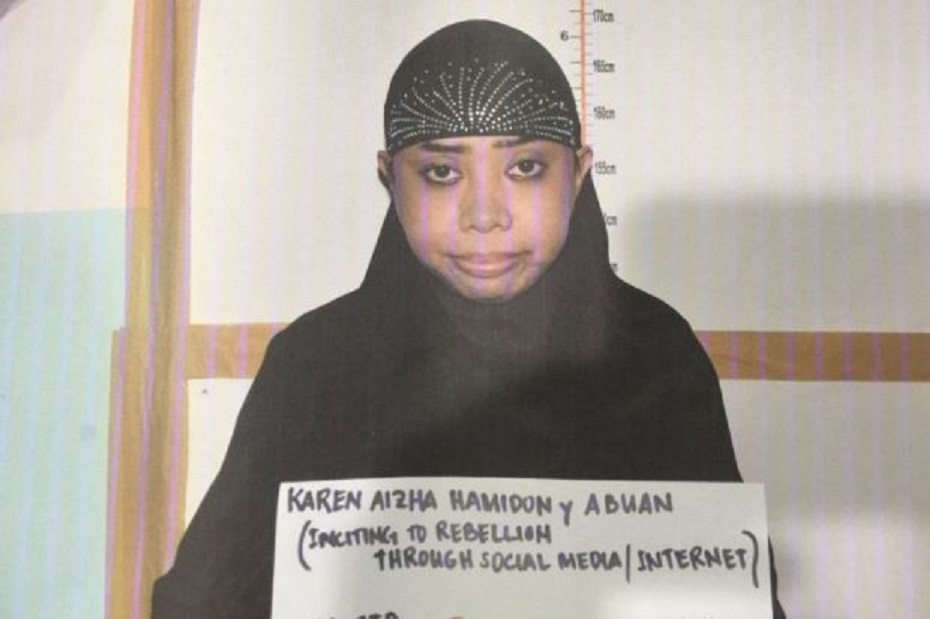
    MANILA: Philippine security forces have arrested a 36-year-old Filipino woman suspected of recruiting, via social media, fighters from around the world for the ultra-radical Islamic State (IS). Karen Aizha Hamidon was arrested in Taguig city, an hour east of the capital Manila, on Oct 11, Justice Secretary Vitaliano Aguirre announced at a news conference on Wednesday. Aguirre said Haidon was formerly the wife of Singaporean Muhammad Shamin Mohamed Sidek, a security guard detained in Singapore in August 2015 for planning to join IS and using social media to incite violence.

    Hamidon later married Mohammad Jaafar Maguid, a Filipino, who led ISIS-linked Ansar al-Khilafah Philippines till he was killed by police in January this year, according to Mr Aguirre. Aguirre said Hamidon was also a close associate of Musa Cerantonio, an Australian Islamist preacher who was purportedly recruiting fighters for IS. Rebellion charges are being readied against Hamidon in relation to 296 social media posts linked to her seeking to recruit reinforcements for besieged Muslim militants in the war-torn southern city of Marawi.

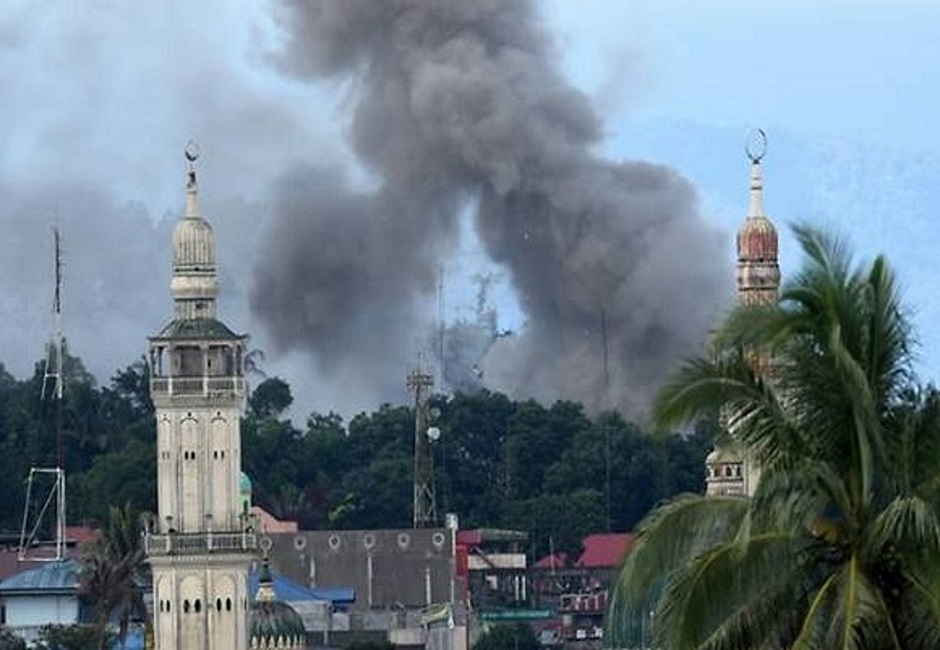
    “It is very clear that her actions are in conspiracy, or in sync, with actions of the rebels. While her companions are fighting in Marawi, her part is to further recruit fighters to assist in the Marawi siege by the IS and Maute groups,” said Aguirre. Hundreds of Muslim militants stormed Marawi on May 23 in an audacious bid to turn it into an IS “province”. They have held on to parts of the city for nearly five months. News of Hamidon’s arrest comes two days after security forces in Marawi battled and killed Isnilon Hapilon, designated by IS as its top man in South-east Asia; and Omarkhayam Maute, co-leader of a group that provided the bulk of fighters that attacked Marawi.

    On Tuesday (Oct 17), President Rodrigo Duterte declared that Marawi had been “liberated from terrorists’ influence” following the deaths of Hapilon and Maute, though the army has yet to dislodge a pocket of militants entrenched in the heart of the city. More than 1,000 militants, government troops and civilians have been killed and about 400,000 people displaced. Half of Marawi lies in ruins, levelled by air raids, artillery barrages and fierce urban fighting. Indian intelligence officials last year sought help from Philippine authorities, after Hamidon’s name cropped up as administrator of Facebook, Telegram and WhatsApp groups that sought to recruit Muslims in India to fight for IS in Iraq and Syria.

    Mohammad Sirajuddin, 33, a marketing manager with the Indian Oil Corporation arrested in December 2015, said it was Hamidon who first contacted him on Facebook and WhatsApp and convinced him to join IS in Syria. A profile provided by India’s National Investigation Agency said Hamidon’s father was a Muslim. He died when she was 20 years old. Her mother was a Christian, and brought her up as a Christian. But she and her two sisters converted to Islam about 10 years ago.


    Source: The Star
  • Malaysia’s Defence Minister Plans To Send Humanitarian Aid To Marawi

    Malaysia’s Defence Minister Plans To Send Humanitarian Aid To Marawi

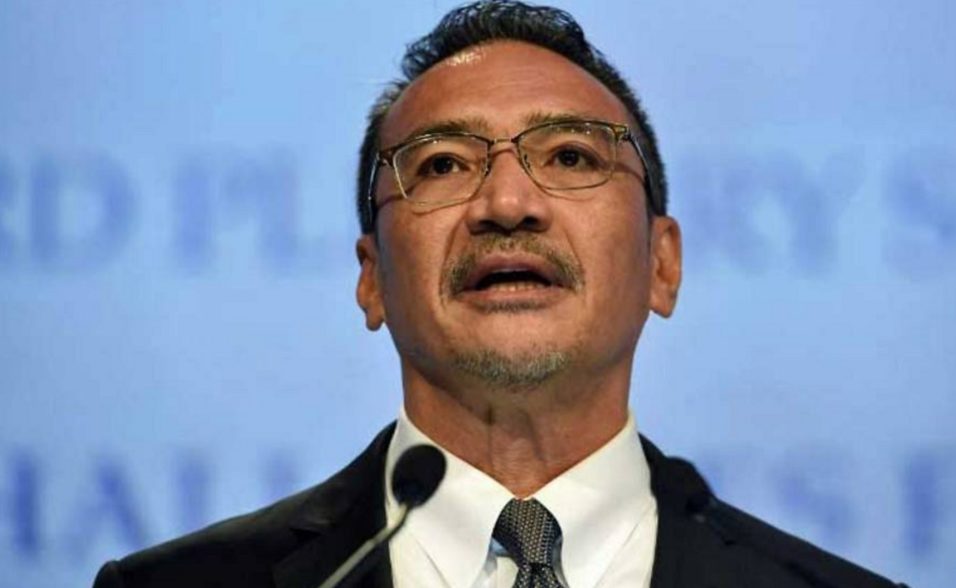
    Malaysia’s Defence Minister Hishammuddin Hussein said he is in discussions with his Philippine counterpart to send humanitarian aid to conflict-hit Marawi.

    “We want to make sure Islamic State (IS) doesn’t have a foothold in the region, whether it’s in Marawi or anywhere in ASEAN,” he said. “The winning of hearts and minds also require human touch, and that’s why we are in discussions with secretary Delfin on sending humanitarian relief to help those fleeing Marawi because we don’t want them to turn to militancy because they are angry.”

    Hishammuddin was speaking to local media after officiating Malaysia’s military trading co-op facilities at the Subang Airforce Base on Thursday (Jul 6).

    The defence minister, who last month witnessed the launch of trilateral maritime patrols in the Sulu Sea with the Philippine and Indonesian armed forces, said he hoped to launch joint air patrols soon from Subang military airport outside Kuala Lumpur.

    While details are being ironed out, he reiterated that the armed conflicts in Marawi concerned the entire region, in particular the presence of foreign fighters there.

    He added that Malaysia had stepped up its military presence in the east coast of Sabah to prevent these fighters from slipping into the country.

    “Foreign fighters in Marawi is my biggest concern, as you know there were not just Malaysians who were shot dead in Marawi,” he said. “With Islamic State fighters fleeing former IS-controlled areas like Aleppo, Mosul and Raqqa, we do not know where they are fleeing to next.”

    Hishammuddin said he will be visiting Saudi Arabia to tighten efforts in fighting IS militancy through the sharing of assets and intelligence .

    He will be meeting the Crown Prince of Saudi Arabia to discuss the setting up of the King Salman Regional Centre of Peace to counter narratives to win the war against IS.


    Source: CNA

  • Body Of Singaporean Fighter Believed To Have Been Recovered In Marawi

    Body Of Singaporean Fighter Believed To Have Been Recovered In Marawi

    MANILA: The Philippine military has recovered what they believe to be the body of a Singaporean fighter in the besieged city of Marawi.

    According to the Marawi joint task force on Tuesday (Jul 4), the Singaporean is believed to be among 11 suspected foreign fighters who have been killed so far as Philippine troops battle to regain control of militant-held areas of the city.

    Fighters from Malaysian, Indonesia, Yemen and India were among the bodies recovered, said the joint task force, adding that it has not yet completed the identification process.

    “A cadaver of a foreign-looking individual was also recovered by troops. It is believed that it is one of the reported foreign fighters from Singapore,” the military was quoted saying in local media reports.

    Singapore’s Ministry of Home Affairs had in May confirmed that a Singaporean man has been implicated in terrorism-related activities in the southern Philippines, but said it has no information about whether he is involved in the armed insurgency in Marawi city on Mindanao island.

    The southern region of Mindanao has been under martial law since May 23, after hundreds of gunmen waving black Islamic State flags occupied parts of Marawi city and triggered deadly clashes that have yet to end.

    More than 400 people, including 337 militants and 85 members of the security forces, have been killed in the fighting in Marawi. Forty-four civilians have also been killed, either in crossfire or executed by the militants, the military said.


    Source: www.channelnewsasia.com

  • Defeat Of Rebels Could Spell More Trouble For Southeast Asia

    Defeat Of Rebels Could Spell More Trouble For Southeast Asia

    Like the stirring of a hornet’s nest — as an expert here put it — the imminent defeat of Islamist militants in the southern Philippine city of Marawi could pose a bigger problem further down the road, terrorism analysts said yesterday.

    What was previously largely contained in the Philippines could escalate into a security nightmare for the region if the militants regroup in other areas near the Sulu Sea such as eastern Malaysia, and parts of Indonesia, said S Rajaratnam School of International Studies (RSIS) research fellow Graham Ong-Webb.

    Dr Rohan Gunaratna, who heads RSIS’ International Centre for Political Violence and Terrorism Research, also warned that if “regional governments fail to contain the threat, (the problem) will spill over into Singapore”.

    The Philippine military said yesterday it was close to retaking Marawi, which was held for a seventh day by the militants. More than 100 people have been killed, most of them militants, according to the military, and most of the city’s residents have fled.

    Last month, Home Affairs and Law Minister K Shanmugam underscored the growing terrorist threat in Singapore’s backyard, and warned that the southern Philippines, which is less than a four-hour flight away from Singapore, was becoming a sanctuary for returning fighters from the Middle East and from where attacks could be launched on South-east Asia.

    Speaking at an international exhibition on homeland security held here, Mr Shanmugam noted that, with the Islamic State (IS) losing ground in Iraq and Syria, the “potential locus of the threat” could move closer to home.

    Similarly, there could be unintended fallout from the efforts of the Philippine authorities to drive the militants, who consist of both local and foreign fighters from Indonesia, Malaysia and Singapore, out of their country.

    Dr Graham Ong-Webb noted that if the militants were “pushed to a corner”, they could flee the Philippines, and “find pockets elsewhere” to re-establish themselves. Using an analogy of a hornet’s nest, he pointed out that when the nest is provoked, the hornets “either attack, or … surrender, die fighting, or … fly to another location to rebuild their nest”.

    Given its size, Indonesia, for example, could potentially provide hideouts for fleeing militants to reorganise and hit back, with the help of traditional insurgents which could morph into terrorist groups “if they find it to be in their interest”.

    “It is difficult (for Indonesia) to consolidate internal security, and there (could be) pockets of insecurity, or lawlessness,” said Dr Ong-Webb.

    Assoc Prof Kumar Ramakrishna, head of Policy Studies and coordinator of the National Security Studies Programme at RSIS, noted that West and Central Java, as well as Central Sulawesi, may be “fertile socioeconomic and political ground for IS ideology to take root”. He also cited southern Thailand, where there is an ongoing insurgency. While the Thai-Muslim separatists have been “not that interested” in broader agendas such as those perpetuated by Al Qaeda or Jemaah Islamiyah, the insurgency in southern Thailand could provide a source of weapons for IS cells in Malaysia, Assoc Prof Kumar said.

    Assoc Prof Kumar said the Mindanao region “has arguably been a weak link for decades”. The fighting in Marawi, which is located on the southern Philippine island of Mindanao, confirmed Mr Shanmugam’s concerns, he added.

    The analysts reiterated that Singapore is a prime target for terrorists, and the fierce fighting that broke out in Marawi showed that Singapore should not take security for granted.

    “Singapore is a symbol of financial and economic success, any successful attack on Singapore by terrorists would be deemed a terrorists’ jackpot,” said Assoc Prof Antonio Rappa, who heads the Management and Security Studies programme at the Singapore University of Social Sciences. Last week, a suicide bombing at a Jakarta bus station killed at least three policemen and injured 12 others. The IS has claimed responsibility for the attack.

    Each successful attack in the region would embolden the terrorists, said Assoc Prof Rappa. “The weak links lie outside Singapore’s borders. In the neighbouring states, there is often a lack of sufficient public education and a high amount of security complacency,” he said.

    Lauding the establishment of the SGSecure movement, Dr Gunaratna said Singapore “should work to create competencies in the region to fight the threat”, and beef up defences against IS’ online propaganda. “The Government of Singapore needs to play a greater role to build the offshore counter terrorism operational capabilities,” he said.


    Source: www.todayonline.com