Tag: marriage

  • Husband Having Scandals, Who Should You Blame?

    Husband Having Scandals, Who Should You Blame?

    Few months ago, aku terkejut dapat satu PM dari sorang sis ni. Aku tak ingat the content exactly. Yang aku ingat cuma this line from a long PM, “Sis, saya nak tau apa hubungan awak dengan suami saya.” Dari bulat muka kecik tu, aku clicked View Profile. Laki siapa pulak yang aku da “kacau” ni.. Sampai kat profile cik kak ni, aku nampak gambar suami dia. Berair mata aku, terkekek2. Its not the first time aku kena “serang” dengan isteri orang yang cemburu buta. Aku paling pantang perempuan yang tuduh2 tak gunakan akal.

    Kalau suami korang like gambar Janna nick, means dia ada affair dengan Janna Nick ke? Korang PM tak si Janna nick tu? Kenapa dia tak boleh tanya suami dia, “Awak ada affair ke dengan perempuan ni?” Kalau suami jawab ye, then too bad lor. Kalau suami kata tidak, then investigate further lor but please eh, nak investigate, kena cerdik. Bukan main mengkhinzir buta. Aku pernah dapat few PMs from few ladies yang kononnya agree dengan postings aku bab cheating husbands ni. Setakat ni, aku da received about 5 PM for the same issue. Husband dia ada perempuan lain and isteri ni fully aware, tapi dia mati2 salahkan perempuan tu sebab rosakkan rumahtangga dia. Aku da banyak wasted my precious time dengar stories camni. Si isteri tak terima bila aku tanya why they stay in that kinda marriage. Husband jenis suka tukar2 partner. Banyak GF.

    These wives pulak susah payah pergi serang si gf ni kat rumah dorang. Malukan gf ni kat FB. Hina dia. Condemn dia rabak2. Abih si suami tu apa? Mangsa keadaan? Malaikat? Suci dalam debu? Pls la, wake up la eh. If you choose to stay with a cheating husband, then zip it. Jangan ceritakan aib suami pada sesiapa. If you need help to get out of the marriage, then go through the proper channel. Jangan sedap mulut blame one party je. Cheating is not a mistake. Its a choice. Dia tak hormat you as a wife and you are okay with that, so live with it. Yang aku tak faham, why si isteri ni beriya2 salahkan perempuan tu je. Padahal si suami tu, da tau ada isteri, ada anak2, masih nak ada scandal.

    So salah siapa sebenarnya? Hati kita semua milik Allah SWT.  Nak tawan hati, kena doa and mintak pada Allah. Kadang2 kita cintakan orang melebihi cinta kita pada Allah.  So kita akan diuji dengan benda yang paling kita sayang.. Tiap kali ada masalah, try to do a root cause analysis. Muhasabah.. Tanya macam2 soalan yang berkaitan dengan why..

    Why.. <soalan>
    Why.. <soalan>
    Why.. <soalan>
    Why.. <soalan>
    Why.. <soalan>

    At the end of the whys, in shaa Allah you akan jumpa a solution. May Allah SWT eases the affairs of all the sistas yang tengah tension pikirkan if their husband is cheating on them ke tidak. May Allah SWT help all of you to do the right thing. I will not entertain anymore topics about husbands for a while. Da muak.


    Source: Khainis Tahir

  • AMLA: New Rules To Be Implemented For Muslim Couples On Marriage And Divorce

    AMLA: New Rules To Be Implemented For Muslim Couples On Marriage And Divorce

    Muslim couples who are minors will have to attend a compulsory marriage preparation programme, while couples seeking a divorce also have to attend a marriage counselling programme, as part of a string of changes to the Administration of Muslim Law Act (AMLA) passed in Parliament on Tuesday (Aug 1).

    Muslims who are younger than 18 and want to get married must attend and complete a marriage preparation programme approved by the Ministry of Social and Family Development. These sessions are aimed at helping couples better understand, clarify and address any concerns that they and their families may have about marriage.

    They will also learn essential skills like how to build a stable marriage and family at marriage education workshops for the minor couples to learn essential skills and knowledge to build a stable marriage and family.

    Parents of these couples, who will now also be required to give consent to the marriage, are also encouraged to be involved in such sessions. Previously, only the consent of the wali, the lawful guardian for the marriage of a Muslim woman, is required.

    Muslim marriage numbers are on the rise, while minor marriages – where at least one party was below 21 years at the time of marriage – have been in “steady decline.” Divorce rates have also remained stable.

    Nevertheless, Minister-in-charge of Muslim Affairs Dr Yaacob Ibrahim pointed out that minor marriages are more “vulnerable”. Citing the trend of Muslim marriages involving younger grooms, the recent marriage cohorts have seen one and a half times the divorce rate compared to older grooms, he said.

    “This move thus reinforces the importance of parents’ or guardians’ support in a minor marriage as their guidance, especially in the crucial initial years of the marriage, is critical to help younger couples build strong marriage foundations for a lifetime,” said Dr Yaacob.

    To provide greater support for divorcing Muslim couples, they will be required to first attend the Syariah Court’s Marriage Counselling Programme, before seeking a divorce, so as to see if the marriage can be saved.

    About 64 per cent of divorce cases in the last five years involved at least one child of the marriage under 21 years old, with more than 85 per cent of these involving at least one child under 14 years.

    Since the Syariah Court introduced the programme in 2004, over 33,000 couples have been counselled, and almost half of these marriages have been saved, said Dr Yaacob.

    If the couples decide to go ahead with the divorce, this programme will provide the platform to discuss care and living arrangements for their children, while counsellors on hand can refer them to other services like financial assistance or education support for school-going children.

    The Syariah Court will also have the power to refer parties for further counselling or a family support programme at any stage of their divorce proceedings.

    For instance, it can order a registered medical practitioner, psychologist, counsellor, social worker, or mental health professional to examine and assess the child.

    The AMLA covers the three public agencies – the Islamic Religious Council of Singapore (MUIS), the Registry of Muslim Marriages (ROMM) and the Syariah Court – dedicated to implement and administer the provisions of the Act.

    The AMLA was last amended in 2008 to strengthen these key institutions, as well as to improve the quality of life for the Muslim community in Singapore.

    Several amendments were also made to enhance the management of Muslim assets, most notably the wakafs (Muslim endowments) and the Mosque Building and Mendaki Fund (MBMF).

    In 2017, MUIS disbursed $3.1 million of the revenue generated from wakafs to various beneficiaries such as mosques, madrasahs, and Muslim organisations. This amount is nearly 3 per cent more, or about $90,000, compared to the previous year.

    Of the total disbursement, more than $1.52 million was channelled to 27 mosques to help fund upgrading projects and to support mosque programmes.

    “All these are a result of MUIS’ management of the wakafs, which include careful planning to ensure maximisation of wakaf returns, and attracting good tenants for wakaf properties…We must continue to ensure that the wakafs are well managed so as to maximise their potential,” said Dr Yaacob.

    To enable MUIS to better safeguard against the mismanagement of wakafs, there will be expanded grounds under the AMLA to which a trustee or mutawalli (those appointed to manage the wakaf) can be removed. For instance, when a mutawalli fails to furnish information or particulars as required by MUIS, or fails to allow MUIS’ inspection of wakaf properties, accounts, and records. This is to ensure greater transparency and clarity, and to allow for more timely intervention.

    Current provisions enable MUIS to do so when it appears that the wakaf has been mismanaged, or if there have been no trustees appointed. However, for these conditions to be met, the wakaf “might already be in jeopardy”, explained Dr Yaacob.

    Additionally, the appointment of a new trustee to a wakaf will be void unless there is MUIS’ prior approval in writing, so that MUIS can ensure that the individuals appointed as trustees are qualified to manage the wakaf.

    A court must also not entertain or proceed with any proceedings relating to the appointment or removal of wakaf trustees and mutawallis, as it will fall on parties to work with MUIS to such matters.

    MUIS will also be able direct a portion of the income of the wakaf towards a sinking fund, primarily for the upkeep and development ofthe wakaf , such as repairs or installation works.

    Citing how many of the trust deeds of older wakafs do not specifically address long-term upkeep of the wakaf, including that of the creation of a sinking fund to maintain it for the long run, Dr Yaacob said that such properties often fall into disrepair given the lack of sufficient savings or reserves.

    Lastly, he reiterated that the MBMF can be tapped for the purchase of new or additional land or property for existing and future mosques, as well as for the building or maintenance works of any religious education premises or facilities.

    Wrapping up his speech, Dr Yaacob said: “The amendments we are proposing today seek to better protect Muslim families because they are the very building blocks of a strong and resilient community.We want to reinforce our institutions so that they are effective in serving the community.”

    He added: “We want to enhance the management of our assets so that the community continues to benefit from them and prosper.”


    Source: http://www.todayonline.com

  • Man Angry With Estranged Wife Bantai Children, Sentenced To 4-Months Jail

    Man Angry With Estranged Wife Bantai Children, Sentenced To 4-Months Jail

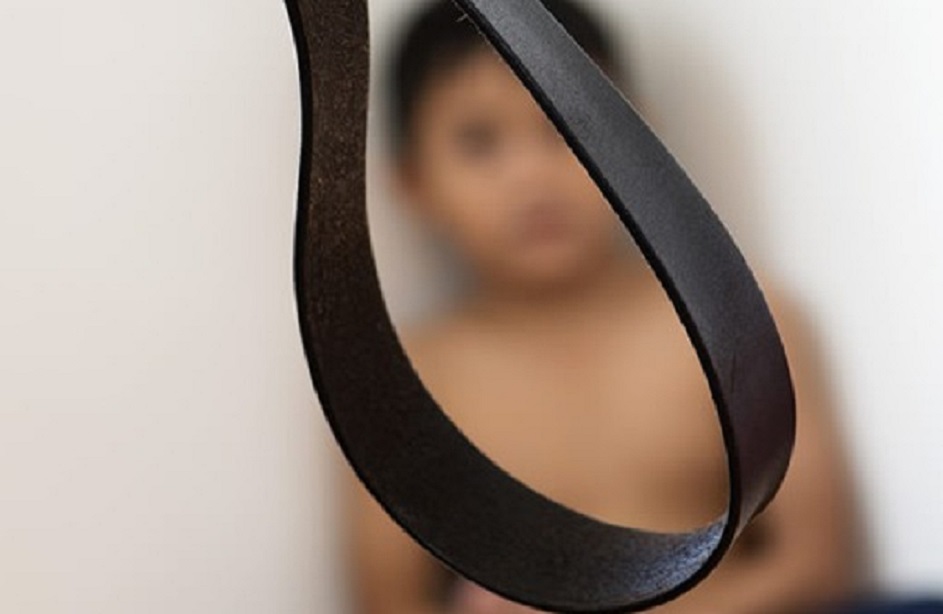
    A father hit his young children with a fabric belt and even held an ignited lighter near them.

    The 33-year-old father of five did it because he had insisted his children were not telling him the truth about his estranged wife’s whereabouts.

    The man, who cannot be named to protect the identities of the children, had lost contact with his wife after she left the flat in Boon Lay some time before January last year.

    Yesterday, the unemployed man was sentenced to four months’ jail for two counts of ill-treating his 10- year-old son and nine-year-old daughter.

    He was also jailed for a day and fined $1,000 for a separate offence of stealing $41 worth of cigarettes from a minimart in Boon Lay.

    Four other charges – ill-treating his 10 year-old son, causing hurt to the boy’s stepmother and two counts of dishonest misappropriation of property – were considered in sentencing.

    Deputy Public Prosecutor Sarah Ong said the abuse happened on Jan 29 last year. The accused was home with four of his children when he asked the victims if they had any information about his estranged wife. Both said they did not.

    He became angry, accused them of lying and grabbed a folded fabric belt to hit his son.

    The boy was struck on the shoulder and was in pain, but his father continued to hit him as he tried to dodge the blows. In all, the boy was struck about 10 times all over his body. The man then turned to his daughter and hit her about five times with the same belt.

    Later, the accused approached his son with an ignited lighter and held it near the boy’s left arm. It was close enough for the boy to feel the heat.

    The man did this while quizzing his son about his wife’s whereabouts, and also did the same thing to his daughter.

    When his daughter cried and said she was not lying, he kept the lighter and walked away.

    Multiple bruises were found on both children, with red marks on the boy’s arms and chest.

    The accused also stole cigarettes on April 17 last year at 4.13am.

    His jail term will start after the expiry of his current sentence of three years and six months for taking drugs.

    The accused could have been fined up to $4,000 and/or jailed for up to four years on each charge of ill-treating a child which caused the child unnecessary physical pain.

    The maximum penalty for theft in dwelling is seven years’ jail and a $30,000 fine.


    Source: www.straitstimes.com

  • Commentary: Inter-Racial Marriages Nothing Special, Until I Met Those Facing Challenges

    Commentary: Inter-Racial Marriages Nothing Special, Until I Met Those Facing Challenges

    My own inter-ethnic relationship has been obstacle-free, writes Kane Cunico, but a documentary on mixed marriages has spurred others to share with me the struggles they face in gaining acceptance.


    SINGAPORE: Sàam gu ma, sei gu ma, baat gu che, sahp suk – Cantonese words I would have never imagined myself learning by heart, had I not married my ethnically Chinese wife whose dad’s side of the family is from Ipoh, Malaysia.

    Respectively, they mean this:

    Sàam gu ma: My father-in-law’s third oldest sister.

    Sei gu ma: My father-in-law’s fourth oldest sister.

    Baat gu je: The eighth sibling in the family and my father-in-law’s younger sister.

    Sahp suk:  The tenth sibling and my father-in-law’s younger brother.

    In my Indian-Eurasian household, which feels neither very Indian nor very Eurasian, we just call them aunty (insert name) and uncle (insert name).

    I have always been indifferent to my cultural roots, flippant to a point. I wouldn’t consider myself religious, but I am constantly open and curious about other people’s heritage.

    The same goes for my wife, who identifies herself as a third-culture kid.

    We both were fortunate to have parents who were willing to break their own cultural and religious traditions for their children, and compromise on a wedding that made everyone happy. Even while dating, race or religion never became an issue. I would call us rather happy-go-lucky.

    But the recent On The Red Dot series, Love Is (Colour) Blind, prompted me to reflect on just how lucky perhaps we were. The documentary profiled three mixed-race couples who spoke about the ups and downs of their relationships, from gaining family acceptance to bringing up their mixed-heritage children.

    In response, hundreds of netizens have commented on Facebook, eager to share their own experiences in inter-ethnic marriages. I was heartened to see all those different races and religions coming together – it was like those United Colors of Benetton ads I wished the world could be more like.

    Watch: The story of Martin and Esther

    But on the flip side, friends and not a few commentators on Facebook have asked: “Why is this even a story? Why talk about this? What’s the big deal? Inter-racial marriages have been around for a long time. Why single it out?”

    And in a way, they were right. I had never before seen it as a problem.

    WE’VE HAD IT EASY

    Yet in talking to some of those who wrote on our Facebook page, and re-watching the episodes, it struck me – my wife and I have had it easy, relationship wise.

    The same can’t be said of Facebook writer Hui Jing Ong. A Singaporean Chinese who is Buddhist, she married an Indian national who is Sikh. They have two children.

    In a telephone interview, she told me: “My parents are divorced, but my father until now cannot accept our marriage or children. He’s kind of a racist. My mum says as long as I’m happy, she’s okay with it.”

    Hui Jong Ong with her husband, Gurdev Singh, have two children. (Photo: Hui Jing Ong) 

    Another Facebook user, Jasmine Jay, had dated her husband-to-be for four years. He is Malaysian, Malay and Muslim, and she is Singaporean, Sikh and Catholic.

    Three and a half years ago, when she became pregnant, they decided to tie the knot. For three months, both deliberated on who should convert. They ultimately decided neither should. His family snubbed their wedding.

    “Even my mum said no to the wedding. But since the birth of our daughter, his family have accepted us,” said Jasmine in a phone interview.

    She added: “Today we have two children. I have a younger son and we both agreed the children will be Catholic.”

    Despite the continuing struggles, both have found happiness where their relationship once floundered in a quagmire of disapproval.

    Last year, 4,142 marriages in Singapore involved couples of different races, making up 21.5 per cent of all marriages for the year. In 2005, inter-ethnic marriages made up just 14.9 per cent.

    So mixed marriages may be becoming normalised; but many couples still face familial and societal obstacles to make it work.

    Watch: The story of Simon and Veronica

    Friends of ours in inter-racial relationships have had to try hard to win over their culturally traditional in-laws-to-be, who were worried about what others in their community might say or think.

    And such cultural conservatism isn’t just confined to our parents’ generation. Some young couples my wife and I meet have no qualms telling us that they wouldn’t want their children dating someone of another race.

    A recent survey by Channel NewsAsia, in partnership with the Institute of Policy Studies, reflects some of these response. The survey found that fewer than one in four Chinese respondents were accepting of a non-Chinese marrying into the family; while fewer than half of Indian respondents indicated acceptance of a non-Indian into their family, according to the survey.

    WHEN CHILDREN COME INTO THE PICTURE

    For newlyweds like my wife and me, who are looking forward to having children, we know we cannot keep taking a laissez-faire approach to our mixed marriage.

    At some point, matters of race and religion will come up, and perhaps these may actually turn out to be issues for both sets of parents, as Jasmine learnt.

    “Managing families – that is still a challenge,” said the 23-year-old stay-at-home mother and trained nurse.

    “So many awkward moments. How you spend your festivities and whose religion you follow. You will argue about what cultural name the child will have. Should it be Indian or Malay in our case? And what religion will the child practice?” she added.

    Jasmine Jay with her husband, Abdul Rahim, daughter Raphaela 3, and son Rayden, 6 months. (Photo: Jasmine Jay)

    “To be honest, it is tough, but my husband and I, only because we are quite neutral with race and religion, we told our parents to leave the decision to us. So we gave the children neutral names. There is no “daughter of” to follow my Indian heritage, and no “bin or binte” to follow his Malay heritage.

    “But the beauty is that they get to be a part of both our cultural and religious practices and festivities,” said Jasmine.

    “So just follow your heart and fight for your right, and hopefully, both sides can still remain a strong family.”

    Watch: The story of Norsham and Anne

    Another Facebook user, Hazre Salim, told me it’s really about planning far ahead.

    A Malay Muslim, he married a Chinese Buddhist about two years ago after they dated for a year. Hazre, a secondary school educator, was upfront about how religion was important to him. With her full understanding, they both pre-empted their parents very early on in their relationship.

    “I knew first and foremost there were going to be challenges: Parents, friends, religion. But we had supportive parents,” the 35-year-old said.

    “There will be instances where we cannot solve the problem straight away. Children will definitely be an issue; we will face it when it comes.

    “But we both believe that when two people get together and have faith and trust in each other, it will work out,” said Hazre, adding that when they cannot resolve matters on their own, “we go to our parents and figure it out”.

    Hazre Salim and Nur Iviana Tham sought the approval of their parents early on. (Photo: Hazre Salim)

    Hazre’s and Jasmine’s advice are timely. My wife and I will soon have to decide which religion our child will be a part of, and what second language they should learn at school.

    What race do we categorise our children under, when their ancestral tapestry has Italian, Indian, Chinese and Peranakan heritage woven into it?

    These are questions we do not have the answers to yet. But we are fortunate and optimistic.

    Fortunate, to be in a place where inter-ethnic marriages are fast becoming normalised, if they aren’t already; and where strangers, who have shared their stories online, are willing to give us the perspective we need.

    Optimistic, that our families, made up of a suks, gu mas, aunties, uncles, mums, dads, mamas and grandmas, are around to hopefully be as open as they have always been with two happy-go-lucky and culturally impartial children.


    Source: CNA

  • 13 Year Old Adik Greatest Wish? To Break Fast With His Mother

    13 Year Old Adik Greatest Wish? To Break Fast With His Mother

    Ahmad is like many other 13-year-olds.

    He is bold, boisterous and is optimistic in a way only a young person can be.

    But his greatest wish is to break fast with his mother.

    For the second year in a row, he is spending Ramadan away from her.

    It is only when this subject was raised that we saw a change in the boy.

    “I’m quite jealous when I see some of the residents go out and break their fast with their family members,” Ahmad told The New Paper, with notable sadness.

    Ahmad (not his real name) has spent more than a year at Pertapis Children’s Home.

    According to Mr Sophian Kayat, the head of the home, Ahmad and his older brother were placed in the home’s care in March last year after a court order to protect them.

    Their mother had been abused by Ahmad’s stepfather.

    She stays in a separate welfare home.

    I’m quite jealous when I see some of the residents go out and break their fast with their family members.

    — Ahmad

    When Ahmad was first admitted to the home, he understood why he was being separated from his mother, but it was still hard.

    “Ahmad is close to his mother so when he was first admitted here, he was moody and easily agitated,” said Ahmad’s case manager, Miss Hamidah Otheman, 25.

    “It took him three to four months before he was able to deal with his emotions and settle into life in the welfare home,” she added.

    Ahmad described last year’s fasting month: “I was very sad because it was the first time that I was fasting away from my mother.

    “This year, it’s better because I’m already used to it and I have friends here.”

    Ahmad breaking fast with some donors.
    BREAKING FAST: Ahmad breaking fast with donors. The donors had sponsored the food that day.

    When TNP visited the home in Kovan, Ahmad was having his school holidays.

    He and the other children at the home clamoured to play games during their morning break.

    During the school holidays, the children are allowed to play from 7.30am to 9am.

    He loves to play football. The home has a small field — about a quarter the size of a normal football field.

    “I support Chelsea and Fernando Torres is my favourite player,” he shared between kicks towards an old goalpost.

    A young resident at the home looking on as Ahmad and his friends play football.
    OBSERVING: A young resident at the home looking on as Ahmad and his friends play football.

    Even though Ahmad is away from his mother, but he does not complain about the home.

    In fact, he credits the home for helping him to get through the Primary School Leaving Examination (PSLE), which he took last year.

    “The tuition and the support programmes that they have helped to push my grades up and I was able to pass my PSLE,” he said.

    Ahmad doing his worksheets which were given to him by the home.
    PRACTICE: Ahmad practicing the worksheets which were given to him by the home.

    “I want to study hard and get into polytechnic and study aerospace engineering,” said the secondary school student.

    “I heard that there are a lot of jobs as an aerospace engineer.”

    This is more than personal ambition. He wants to be able to give back to the welfare home.

    “Maybe in the future, I can sponsor an event for them or maybe make an activity programme for them,” he said.

    Ahmad is close to his mother, so when he was first admitted here, he was moody and was easily agitated.

    — Miss Hamidah Otheman, Ahmad’s case manager at Pertapis

    But for now, all he wants is to be reunited with his mother.

    According to Mr Sophian, Ahmad’s wish may be granted in the near future.

    He says that the next stage for Ahmad is to spend and extended home leave with his mother.

    “So long as safety is not compromised, we should be heading towards reunification.”


    Source: www.tnp.sg