Tag: Muslim

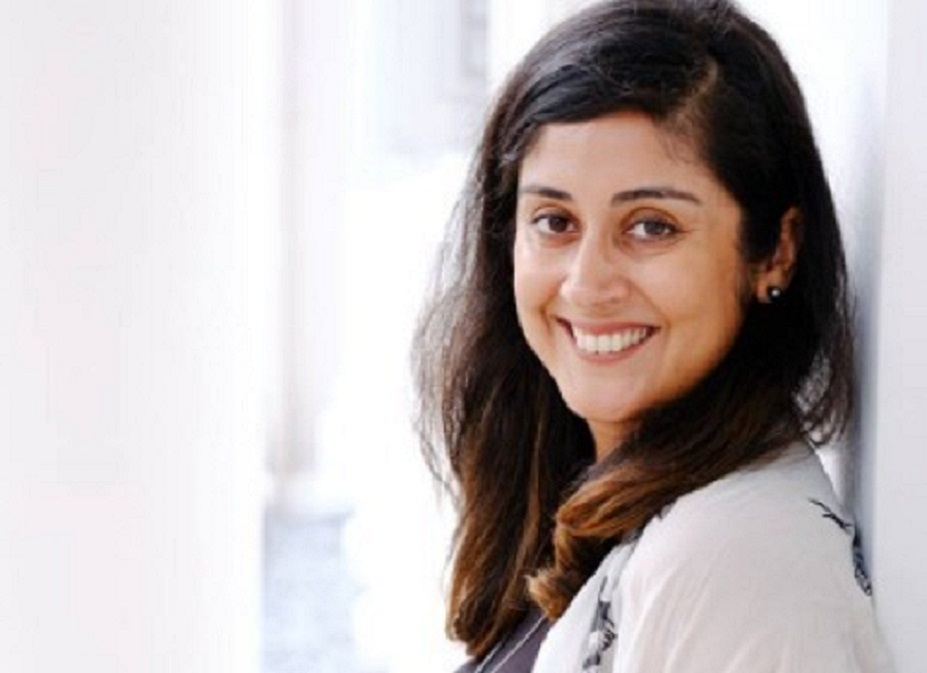
  • Punjabi Author: Racist Parents Breed Racist Children

    Punjabi Author: Racist Parents Breed Racist Children

    A few years ago, I was standing in line at the Customs checkpoint in Bangkok airport when a little blonde-haired boy caught my attention. He wanted to show me his toy truck and the light-up keychain hanging from his backpack. As we played together, he casually remarked that I was standing in the wrong line. ‘You should go over there,’ he said. ‘This line is not for black people.’

    I stared at him, certain that I had heard incorrectly. He nodded to another line (which, like our line, was populated by people of all ethnicities) and said, ‘Black people go there.’

    I looked up at his mother for an explanation. Surely, she would chastise him, or at the very least, apologize on his behalf. But she pulled him closer. When the line moved forward, she hurried him to the Customs counter to get their passports stamped, and they disappeared into the crowd. Certain that the parents had shaped that sort of thinking, I wondered at what else they said in private that made him so confident to label an adult and tell her she belonged elsewhere.

    On July 23rd, Shan Wee wrote an opinion piece for The Straits Times about his child referring to Shan’s Indian friend Nikhil as “The Black One.” Uncomfortable with his son’s “bluntly racialist” description, Shan told his son that he couldn’t say that. His son argued that he didn’t know the friend’s name, an excuse that Shan found acceptable.

    I was reminded again of my outrage at the mother at the airport. I assumed that Shan’s son’s bluntness was the tip of the iceberg of prejudices that were promoted at home, consciously or otherwise. I thought about manners, and the audacity of parents to model such limiting worldviews for their children.

    Then my friend – let’s call her Melissa – posted a response to Shan’s article on her Facebook page. Recently, her son revealed that he and his classmates made fun of an Indian girl for being dark. I was surprised. My theory about children’s prejudices was that the apple doesn’t fall far from the tree, but Melissa is a conscientious and thoughtful parent. Melissa was also appalled; she thought she was doing enough by reading books on diversity to her son. But instead of shrugging and accepting that kids say the darndest things, Melissa opened up a productive conversation about differences with her son, starting with asking him how the girl probably felt about being bullied.

    Because of Melissa’s experience, my concern has shifted from what Shan’s son said to what Shan took away from it. He wrote: “I just hope and pray that he will live life free from adult prejudices, adult sensitivities and adult divisions for as long as possible. If that means that he’ll be calling my buddy Nik The Black One from time to time, then I’m okay with that.”

    Why not seize the chance to teach your child about prejudices and divisions then? How do you think Nikhil might feel about being called The Black One? How do you think I felt about being told to stand in another line because of my skin colour? Yes, children might say inappropriate things despite their parents’ best efforts to instill good manners. Let’s assume that this was what happened with Shan’s son, and the little boy at the airport. But let’s not miss the opportunity to teach them to treat people with respect, consideration and dignity as well.


    Source: Balli Kaur Jaswal
  • 2 Anak Melayu Cemerlang Lanjut Pelajaran Di Oxford, Harvard

    2 Anak Melayu Cemerlang Lanjut Pelajaran Di Oxford, Harvard

    KERJAYA dua penyelidik setempat ini dalam bidang akademik dan penyelidikan mendapat suntikan dengan biasiswa yang menyokong mereka mengikuti program di universiti terulung dunia.

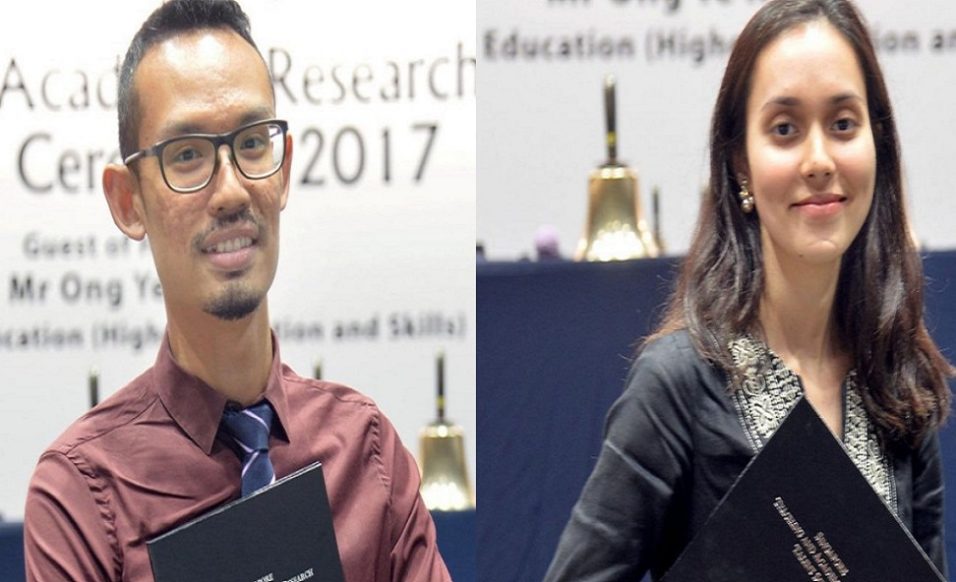
    Cik Nurul Amilllin Hussain, 26 tahun, akan memburu ijazah Doktor Falsafah (PhD) dalam bidang geografi di Universiti Oxford.

    Beliau mengkaji kemampanan dan cara orang ramai menggunakan sistem tenaga suria.

    Dr Izzuddin Aris, 31 tahun, pula akan ke Universiti Harvard bagi program poskedoktoran dalam bidang perubatan.

    Beliau pula mengkaji asal usul penyakit, termasuk faktor risiko di peringkat awal kehidupan – daripada sebelum kehamilan ibu hingga selepas kelahiran – yang boleh membawa kepada penyakit kronik dalam kanak-kanak dan kemudian sebagai dewasa.

    Mereka merupakan antara 38 penerima Skim Bakat Pengajaran dan Penyelidikan Akademik (Start) Kementerian Pendidikan (MOE) yang menyokong warga Singapura yang ingin memburu kerjaya di universiti berautonomi setempat dan bertujuan membantu universiti itu membangun bakat akademik mereka.


    Source: www.beritaharian.sg


  • Netizens Exposed Identity Of Man Who Robbed Taxi Uncle

    Netizens Exposed Identity Of Man Who Robbed Taxi Uncle

    Dear Editors,

    This young man who is not disabled stole from a taxi driver during his trip and used the money he stole to pay the driver. If you have no money, don’t take taxi, don’t do such scumbag acts.

    After netizens CSI his identity, this Faidil deactivated his Facebook. Let’s see if you can run away from the police.

    Here are his details: The alleged taxi thief’s facebook profile is Faidil Didil and his real name is Muhammad Faidil Bin Samri

    Here is his picture.


    Hope the police take action against him. Shameless to steal from a hardworking taxi uncle.


    Yasser

    A.S.S. Contributor

    Source: www.allsingaporestuff.com

  • Malaysia Sparks Anger After Banning Book Published In Singapore About Moderate Islam

    Malaysia Sparks Anger After Banning Book Published In Singapore About Moderate Islam

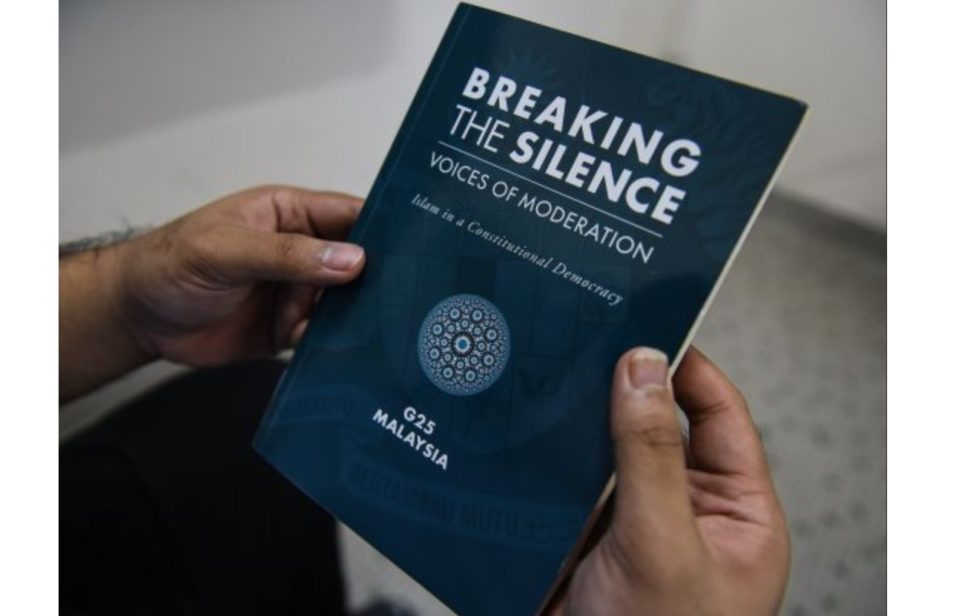
    Activists and authors in Muslim-majority Malaysia reacted with outrage Tuesday (Aug 2) after authorities banned a book aimed at promoting moderate Islam, as concerns mount about growing conservatism.

    The book, Breaking The Silence: Voices Of Moderation — Islam In A Constitutional Democracy, is a collection of essays whose publication was organised by a group of prominent Muslim Malaysians pushing a more tolerant form of Islam.

    The ban, signed by Deputy Prime Minister Ahmad Zahid Hamidi, said that printing or possessing the book was “likely to be prejudicial to public order” and “likely to alarm public opinion”.

    Anyone breaching the ban on the book — which was published in neighbouring Singapore — can be jailed for up to three years.

    Malaysia routinely bans books, movies and songs that may contain sensitive material regarding religion or sex, but critics say the government has been clamping down harder in recent times.

    The book was the brainchild of a group of high-ranking former civil servants and diplomats known as the “G25” — for the number of its founding members — which was formed to push back against intolerance, and some of the essays were written by its members.

    Mr Chandra Muzaffar, one of the authors featured in the collection, said the ban showed the government’s “authoritarian approach to Islam”.

    “It’s a collection of essays which is intended to show that extremists and bigoted thinking on matters pertaining to the practice of Islam in the country should be combated in an intellectual manner,” he told AFP.

    Ms Marina Mahathir, a rights activist and daughter of former long-serving premier Mahathir Mohamad, said the ban — signed last week — was aimed at silencing government critics.

    “It is about silencing anybody who has a different view,” she said.

    Critics say the government clampdown on anything deemed un-Islamic has accelerated in recent times as Prime Minister Najib Razak’s party seeks to appeal to its Muslim Malay base amid speculation elections could be called in the coming months.

    In July the hit song Despacito was banned on state TV and radio due to its racy lyrics after pressure from an Islamic political party.

    More than 60 per cent of Malaysia’s population of over 30 million are Muslim, but the country is also home to significant religious minorities.


    Source: http://www.todayonline.com/

  • Academic: Calls To Make Malay Official ASEAN Language Futile

    Academic: Calls To Make Malay Official ASEAN Language Futile

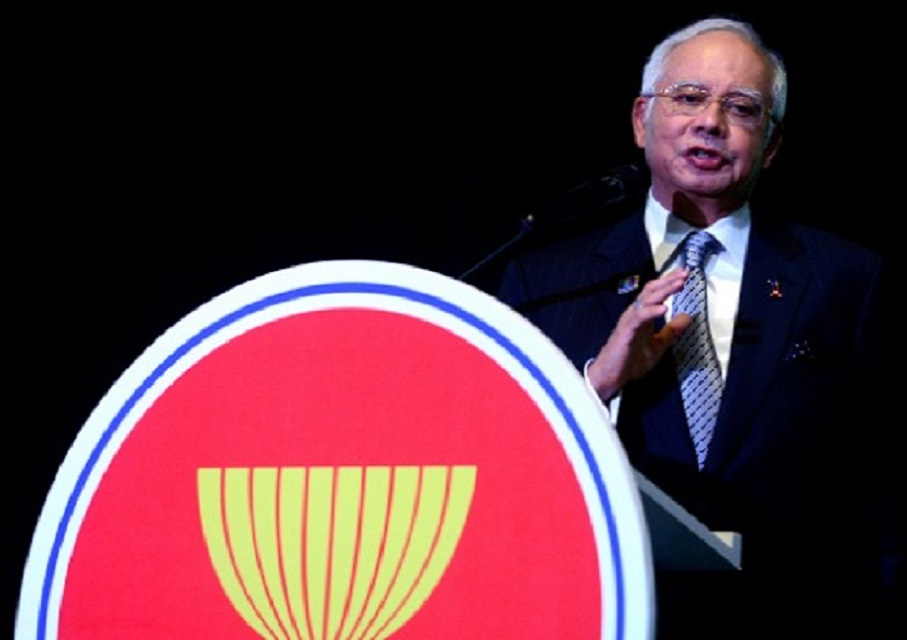
    The proposal to adopt the Malay language (Bahasa Melayu) as ASEAN’s “main and official language” is a non-starter, and even futile. This call, made by Malaysian Prime Minister Najib Tun Razak in Kuala Lumpur on 26 July 2017, comes after a similar suggestion by his Communications and Multimedia Minister Salleh Said Keruak in 2015 when Malaysia held the rotating ASEAN chairmanship. He made the case that Malaysia “need to show that the Malay language is a relevant and dynamic language that can act as the ASEAN language.”

    These calls will fall on deaf ears outside of selected audiences in Malaysia. In the first instance, ASEAN has adopted English as the working language since its establishment in 1967. This practice was later institutionalised in the ASEAN Charter in 2007, Article 34 of which unequivocally states that “the working language of ASEAN shall be English.” Revising this provision requires the unanimous support from Malaysia’s fellow ASEAN member states, most of whom may find it onerous to support a seemingly nationalistic cause to promote the cultural and linguistic heritage of only one particular member state.

    It is interesting to note that the ASEAN Leaders, in approving the Charter, opted for the term “working language” instead of “official language,” which can be interpreted as a sign of respect for the plethora of member states’ national languages. The adoption of any part of a specific Southeast Asian language as the official language would stir political backlash from other ASEAN communities, which may interpret the move as a form of political and cultural dominance. Arguably, the English language might be a non-native language of a former colonial power in the region, but this “neutral” attribute serves to unite ASEAN’s diverse socio-cultural make-up, providing a level political playing field for all member states.

    The fact that English is lingua franca has facilitated ASEAN’s interactions with its Dialogue Partners and the wider global community.  ASEAN can play a more effective role in bring the “regional story” beyond Southeast Asia and reaching out to other regions using a global language. In multilateral organisations throughout the world like the United Nations and World Trade Organisation, English is the working language. Thus, attempts to replace English as the working language with any other languages would rollback ASEAN’s gains in positioning the regional organisation as a global entity, and hamper future efforts to connect with the wider global community.

    At face value, Prime Minister Najib’s proposal is an attempt to bolster his political credentials by championing the Malay language ahead of the general elections due by May 2018. However, his actions cannot be summarily dismissed as a domestic matter because as an ASEAN Leader, he has the recourse to push this cause at ASEAN Summits. If he follows through with this unrealistic proposal at the regional level, he might force his fellow ASEAN leaders into the conundrum of having to defend the primacy of their respective languages and promote their language as ASEAN’s main and official language as well.

    Instead of focusing on the trivial, ASEAN should attend to more urgent and pressing matters of community-building. Playing up the divisive nature of language politics might fray ASEAN unity.

    The writer, Dr Tang Siew Mun, is Head of the ASEAN Studies Centre, ISEAS–Yusof Ishak Institute.


    Source: https://iseas.edu.sg