Tag: Najib Razak

  • Malaysia’s Prime Minister Najib Razak To Issue Statement On US Recognition Of Jerusalem

    Malaysia’s Prime Minister Najib Razak To Issue Statement On US Recognition Of Jerusalem

    MALAYSIA will make an official statement on the United States’ decision to recognise Jerusalem as Israel’s capital, a move that is certain to have repercussions in the Middle East.

    Deputy Prime Minister Datuk Seri Dr Ahmad Zahid Hamidi said the Prime Minister would be making an announcement on the matter.

    He told reporters this after a 30-minute meeting with Hamas Political Bureau member Dr Maher Salah on the sidelines of the Umno general assembly here yesterday.

    Dr Maher said such a move would cause more concern among the Arabs and asked the Organi­sation of Islamic Cooperation to intervene.

    “This move is in contravention with international laws and the rights of the Palestinians. Jerusalem is the capital of Palestine and belongs to Islam.

    “I laud the Deputy Prime Min­ister’s stand on this issue,” he added.

    It was reported that US President Donald Trump would be declaring a formal recognition of Jerusalem as the capital of Israel and move its embassy from Tel Aviv.

    Later yesterday, Dr Ahmad Zahid launched the Home Ministry’s booth at the Putra World Trade Centre for the assembly.

    The booth will offer services from all agencies under the ministry, including the police, Prisons Dep­artment, Immigration Depart­ment and National Registration Department.

    He also unveiled a 238-page book on the ministry’s achievements and performance since he became Home Minister.

    Dr Ahmad Zahid, who is also Umno vice-president, took time off to sit in debates at the Umno Youth, Wanita Umno and Puteri wings.

  • Najib Razak: Although My Father Or Grandfather Isn’t From Kerala, I Am Known As The Father Of Indian Development

    Najib Razak: Although My Father Or Grandfather Isn’t From Kerala, I Am Known As The Father Of Indian Development

    In what may be another attempt to court ethnic minority voters, Malaysian Prime Minister Najib Razak has declared himself a champion of development for the Indian community. He highlighted that he insisted on appointing a senior civil servant to head the Customs Department, despite objections to the candidate’s ethnicity.

    Addressing the Malaysian Indian Congress (MIC) general assembly yesterday, the Prime Minister said: “Although my father or grandfather isn’t from Kerala, I am known as the father of Indian development.”

    It was a sarcastic broadside against his mentor turned critic Dr Mahathir Mohamad, who is now chairman of the opposition Pakatan Harapan coalition. The former premier’s lineage includes ancestors from the southern Indian state.

    Mr Najib told the 2,000 MIC delegates that the opposition is merely trying to confuse people by labelling Malaysia a failed state.

    “The question is, what have they (the opposition) done for the Indians compared with what BN (Barisan Nasional) has done, more so after I took over the leadership of the country from Abdullah Badawi,” he said.

    “With his (Mr Abdullah’s) permission, I initiated (a) Cabinet committee on Indian affairs to further develop the Indian community because I realised that without intervention and political will, Indians would be neglected, marginalised and left behind.” The MIC is a component party of the ruling BN coalition.

    Mr Najib said he also prioritised Indians in the selection of the new director-general of Customs. “I do not mind telling you, even the appointment of the new director-general of Customs was difficult. I received petitions not to pick an Indian for the post,” he recounted.

    “I said no, he (Mr T Subromaniam) deserves the post because he is the most senior. I stood my ground.”

    In March, Mr Subromaniam was appointed to head the department. His appointment came despite grassroots efforts to petition for the post to go to a Malay candidate.

    However, some Indian community leaders were sceptical about Mr Najib’s comments. “When he held many important posts in the government prior to becoming the prime minister, what has he done for the Indians? Basically nothing,” said Mr A Rajaretinam, president of Malaysian Indian group Rapat.

    The Premier is believed to have been wooing the Chinese and Indian minorities, fuelling speculation that the general election could be held later this year.

    In July, Mr Najib said the government will study a request from the Indian-Muslim community to be recognised as Bumiputera. Earlier this month, he said he wanted to see a “stronger Chinese representation in the BN government”.


    Source: http://www.todayonline.com

  • Malaysia Sparks Anger After Banning Book Published In Singapore About Moderate Islam

    Malaysia Sparks Anger After Banning Book Published In Singapore About Moderate Islam

    Activists and authors in Muslim-majority Malaysia reacted with outrage Tuesday (Aug 2) after authorities banned a book aimed at promoting moderate Islam, as concerns mount about growing conservatism.

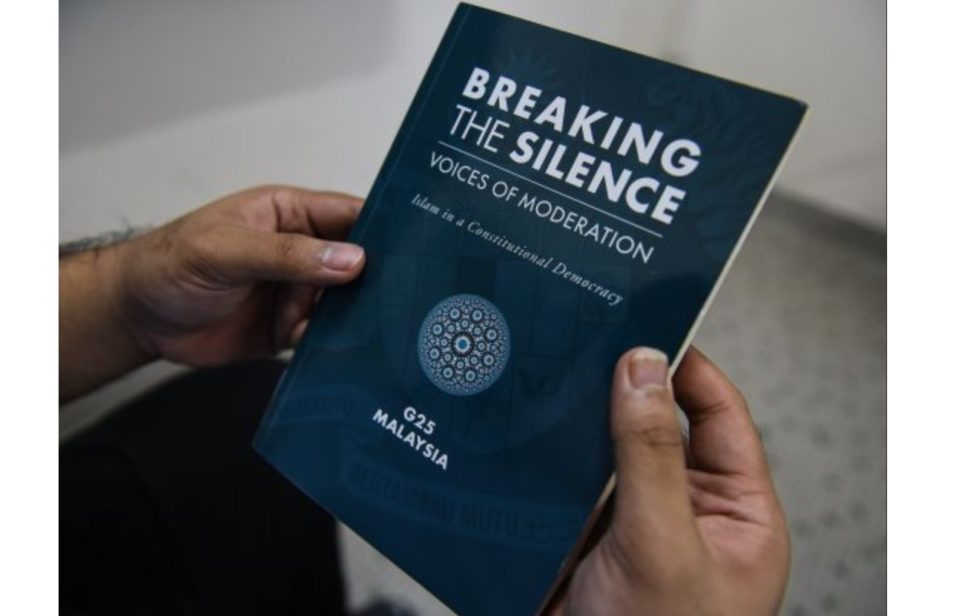
    The book, Breaking The Silence: Voices Of Moderation — Islam In A Constitutional Democracy, is a collection of essays whose publication was organised by a group of prominent Muslim Malaysians pushing a more tolerant form of Islam.

    The ban, signed by Deputy Prime Minister Ahmad Zahid Hamidi, said that printing or possessing the book was “likely to be prejudicial to public order” and “likely to alarm public opinion”.

    Anyone breaching the ban on the book — which was published in neighbouring Singapore — can be jailed for up to three years.

    Malaysia routinely bans books, movies and songs that may contain sensitive material regarding religion or sex, but critics say the government has been clamping down harder in recent times.

    The book was the brainchild of a group of high-ranking former civil servants and diplomats known as the “G25” — for the number of its founding members — which was formed to push back against intolerance, and some of the essays were written by its members.

    Mr Chandra Muzaffar, one of the authors featured in the collection, said the ban showed the government’s “authoritarian approach to Islam”.

    “It’s a collection of essays which is intended to show that extremists and bigoted thinking on matters pertaining to the practice of Islam in the country should be combated in an intellectual manner,” he told AFP.

    Ms Marina Mahathir, a rights activist and daughter of former long-serving premier Mahathir Mohamad, said the ban — signed last week — was aimed at silencing government critics.

    “It is about silencing anybody who has a different view,” she said.

    Critics say the government clampdown on anything deemed un-Islamic has accelerated in recent times as Prime Minister Najib Razak’s party seeks to appeal to its Muslim Malay base amid speculation elections could be called in the coming months.

    In July the hit song Despacito was banned on state TV and radio due to its racy lyrics after pressure from an Islamic political party.

    More than 60 per cent of Malaysia’s population of over 30 million are Muslim, but the country is also home to significant religious minorities.


    Source: http://www.todayonline.com/

  • Mahathir Hits Back At Dig About His Indian Roots

    Mahathir Hits Back At Dig About His Indian Roots

    Former Malaysian premier Mahathir Mohamad has been trading barbs with Prime Minister Najib Razak over the last two years over the scandal involving state fund 1Malaysia Development Berhad (1MDB), with Datuk Seri Najib defending his record and mounting counter attacks.

    In the past week, however, the attacks against Tun Dr Mahathir have also come from Deputy Prime Minister Ahmad Zahid Hamidi, as the government tries to weaken the standing of the 92-year-old politician among Malay voters.

    Dr Mahathir was a feared strongman during his 22 years as prime minister until 2003, but it is now open season for him as he leads the opposition alliance into the next election.

    Dr Mahathir still has some influence among older Malays, as his leadership brought economic prosperity to Malaysia and lifted many Malay families from poverty.

    Mr Najib has attacked Dr Mahathir in recent weeks by reminding the public that many scandals happened during the Mahathir era, including the foreign-exchange losses incurred by the central bank in the 1980s, which ran into billions of dollars, local media has reported.

    Mr Najib also claimed that the MRT system should have been built long ago to boost public transport, but Dr Mahathir instead threw billions of dollars away setting up a national car industry through Proton.

    Datuk Seri Zahid joined the attacks last weekend when he took a dig at Dr Mahathir’s ancestry, saying the veteran politician’s identity card (IC) showed he was Indian because his name was stated as Mahathir a/l Iskandar Kutty. The “a/l” refers to “anak lelaki”, or “son of”, a naming convention used by Malaysians of Indian descent. Malay men on their ICs carry “bin”, which refers to “son of”, in the patronymic style used in Malaysia.

    Mr Zahid also read out the full IC number of Dr Mahathir, which alarmed some observers as this was supposed to be confidential information.

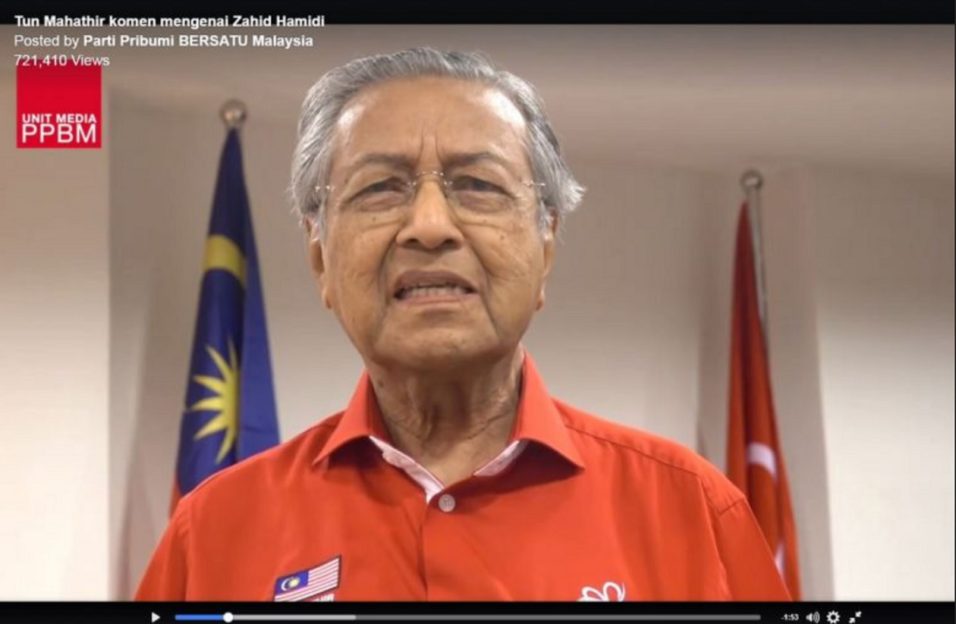
    The former PM called Mr Zahid, who is also Home Minister, a “big liar” as there was no such IC.

    “This is good enough to show that Zahid is a big liar. A big liar because he cannot show the blue-coloured identity card,” Dr Mahathir said on Monday, in a video on the Facebook page of his party Parti Pribumi Bersatu Malaysia. “I can still remember the first identity card I received. I was still in university at the time.”

    Dr Mahathir’s daughter Marina Mahathir said Iskandar was the name of her father’s grandfather.

    While not denying her Indian heritage, she said the late Iskandar had married into a prominent Malay family.

    Mr Zahid’s deputy at the Home Ministry, Datuk Nur Jazlan Mohamed, defended his boss yesterday, saying the IC is a public record and there was nothing wrong in sharing that information with the public.

    Dr Mahathir, in the same video, made his own explosive claim about Mr Zahid. The Deputy PM – not long after he was elevated to the position by Mr Najib – had asked him for support to become the next prime minister, said Dr Mahathir.

    “Zahid should remember, when he became the DPM, he came to see me to try and seek my sympathy, my support,” Dr Mahathir said in the video. “I told Zahid the truth. Even if Najib were to resign, which is impossible, Zahid must still wait for Umno to decide who should replace Najib.”


    Source: http://www.straitstimes.com/
  • Academic: Calls To Make Malay Official ASEAN Language Futile

    Academic: Calls To Make Malay Official ASEAN Language Futile

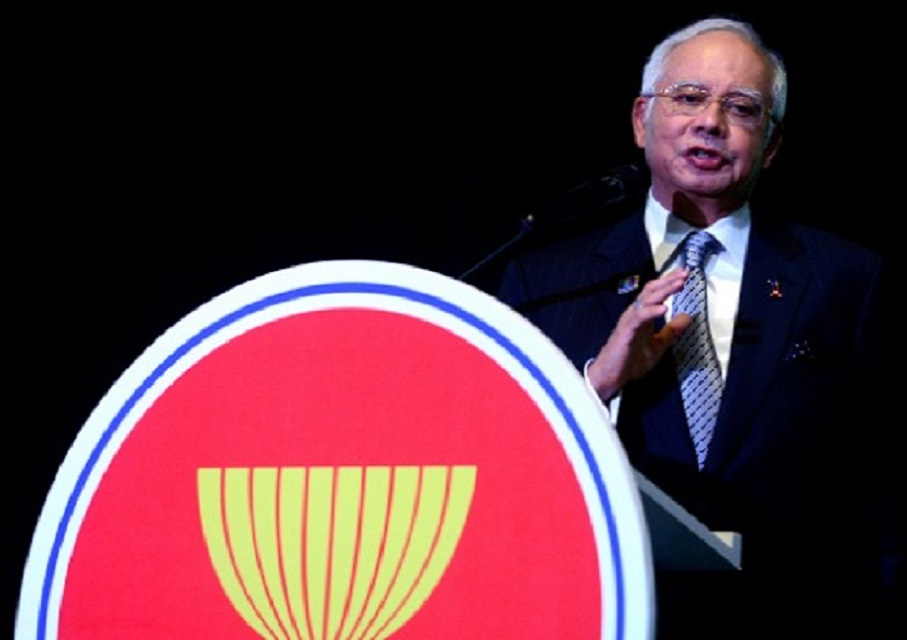
    The proposal to adopt the Malay language (Bahasa Melayu) as ASEAN’s “main and official language” is a non-starter, and even futile. This call, made by Malaysian Prime Minister Najib Tun Razak in Kuala Lumpur on 26 July 2017, comes after a similar suggestion by his Communications and Multimedia Minister Salleh Said Keruak in 2015 when Malaysia held the rotating ASEAN chairmanship. He made the case that Malaysia “need to show that the Malay language is a relevant and dynamic language that can act as the ASEAN language.”

    These calls will fall on deaf ears outside of selected audiences in Malaysia. In the first instance, ASEAN has adopted English as the working language since its establishment in 1967. This practice was later institutionalised in the ASEAN Charter in 2007, Article 34 of which unequivocally states that “the working language of ASEAN shall be English.” Revising this provision requires the unanimous support from Malaysia’s fellow ASEAN member states, most of whom may find it onerous to support a seemingly nationalistic cause to promote the cultural and linguistic heritage of only one particular member state.

    It is interesting to note that the ASEAN Leaders, in approving the Charter, opted for the term “working language” instead of “official language,” which can be interpreted as a sign of respect for the plethora of member states’ national languages. The adoption of any part of a specific Southeast Asian language as the official language would stir political backlash from other ASEAN communities, which may interpret the move as a form of political and cultural dominance. Arguably, the English language might be a non-native language of a former colonial power in the region, but this “neutral” attribute serves to unite ASEAN’s diverse socio-cultural make-up, providing a level political playing field for all member states.

    The fact that English is lingua franca has facilitated ASEAN’s interactions with its Dialogue Partners and the wider global community.  ASEAN can play a more effective role in bring the “regional story” beyond Southeast Asia and reaching out to other regions using a global language. In multilateral organisations throughout the world like the United Nations and World Trade Organisation, English is the working language. Thus, attempts to replace English as the working language with any other languages would rollback ASEAN’s gains in positioning the regional organisation as a global entity, and hamper future efforts to connect with the wider global community.

    At face value, Prime Minister Najib’s proposal is an attempt to bolster his political credentials by championing the Malay language ahead of the general elections due by May 2018. However, his actions cannot be summarily dismissed as a domestic matter because as an ASEAN Leader, he has the recourse to push this cause at ASEAN Summits. If he follows through with this unrealistic proposal at the regional level, he might force his fellow ASEAN leaders into the conundrum of having to defend the primacy of their respective languages and promote their language as ASEAN’s main and official language as well.

    Instead of focusing on the trivial, ASEAN should attend to more urgent and pressing matters of community-building. Playing up the divisive nature of language politics might fray ASEAN unity.

    The writer, Dr Tang Siew Mun, is Head of the ASEAN Studies Centre, ISEAS–Yusof Ishak Institute.


    Source: https://iseas.edu.sg