Tag: PM Lee

  • Michael D Barr: Singapore’s Government Embroiled In Domestic Crisis Management

    Michael D Barr: Singapore’s Government Embroiled In Domestic Crisis Management

    Author: Michael D Barr, Flinders University

    2017 was a horrible year for Singapore’s government — and for Prime Minister Lee Hsien Loong in particular.

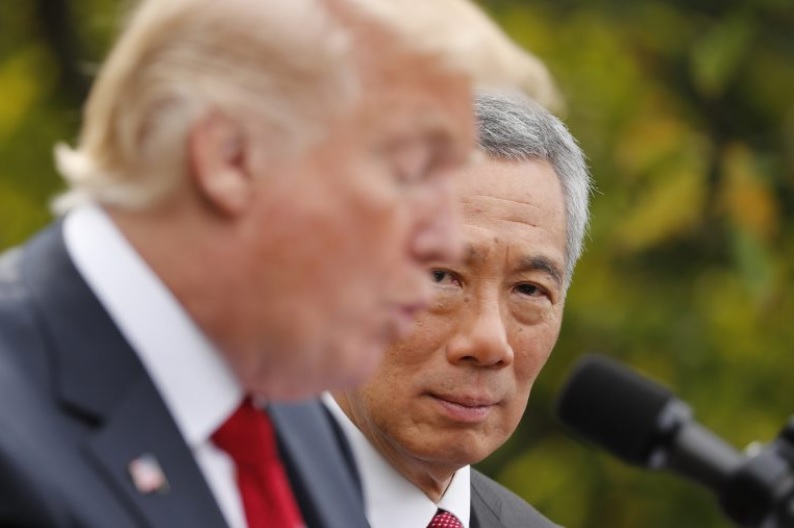
    It began with an open and vocal stoush with China. Late in 2016 the Chinese government confiscated millions of dollars’ worth of Singapore’s military hardware passing through the port of Hong Kong. The action was in part retaliation for Lee’s vocal endorsement of the US position on China’s militarisation of the South China Sea.

    China released Singapore’s military hardware in late January, but then sent a new message of displeasure — Singapore was not welcome at Xi Jinping’s Belt and Road Forum in May 2017. While Lee did not attend the Forum, he later led high-level delegations to both Beijing and Washington, successfully recovering much lost ground.

    Singapore’s ongoing balancing act between China and the US will continue in 2018 with a new factor in play — it is Singapore’s turn as Chair of ASEAN. This position puts Lee on the front line of regional attention. Awkwardly for this balancing act, Lee’s first statement as incoming Chair was a declaration of hope that the United States would continue its engagement with ASEAN and the region.

    Recovering lost ground in foreign policy might be a modest achievement. But domestically, the government is in a state of perpetual crisis management interspersed with misguided political judgements.

    The first domestic crisis of 2017 erupted in June when Lee’s brother and sister, Lee Hsien Yang and Lee Wei Ling, turned to foreign media and social media to reveal ongoing legal disputes over their father’s will. The dispute was not over money but rather over control of the family home. Prime Minister Lee wants to turn it into a national monument to his father, but his siblings want to follow their father’s wishes by bulldozing it.

    This family argument over inheritance became a national issue when the siblings accused Lee Hsien Loong of abusing his power as prime minister to build a family cult around his father’s name — all to bolster his own standing and to smooth the eventual rise to the prime ministership of his son, Li Hongyi. This unresolved dispute has damaged both the Lee brand and Li Hongyi’s prospects of entering politics.

    A second major crisis erupted in October when the regular pattern of train breakdowns on the Mass Rapid Transport system escalated into a major episode — a pumping station in a tunnel failed during an ordinary storm causing an entire train line to be closed by flooding for 20 hours. The cause of the problem proved to be mundane — maintenance work had been neglected and work sheets falsified.

    The Minister for Transport Khaw Boon Wan magnified the damage by unilaterally exonerating both the government and the senior management of Singapore Mass Rapid Transit Corporation. He was particularly singled out for exonerating its CEO Desmond Kuek, whom he thanked as a ‘volunteer’ — a role for which he is paid S$1.87 million (US$1.39 million) per year. Khaw went on to praise him for having his ‘heart in the right place’.

    This episode of ordinary mismanagement was politically significant because it highlights an established pattern of widespread administrative failures and deteriorating government services under Lee’s watch. It also confirmed the perception that highly paid ‘establishment’ figures are protected from the consequences of their actions. Back in 2008 Lee offered similar protection to former deputy prime minister and minister for home affairs Wong Kan Seng when he let an alleged terrorist escape police custody. Wong retained his positions in Cabinet for another three years because Lee stated he had only made ‘an honest mistake’.

    The government has also made several political missteps in 2017. Such missteps included Lee’s odd selection of topics for his National Day Rally Speech in August — a speech equivalent to the US State of the Union address. With Singapore facing challenges on many fronts — managing Xi Jinping and Donald Trump, the South China Sea, rising protectionism, trains, the economy and challenges to Singapore’s role as an air hub — he lectured the population on the dangers of diabetes, which seems to have left most people nonplussed.

    Singaporeans had also been anxiously awaiting new developments on Lee’s successor since he announced in 2016 that he intended to step down as prime minister in 2020. In a country where both the populace and the markets expect long lead times for prime ministerial succession planning — generally a warning of five years or more is given — concern is starting to grow that no clear successor has either been named or emerged.

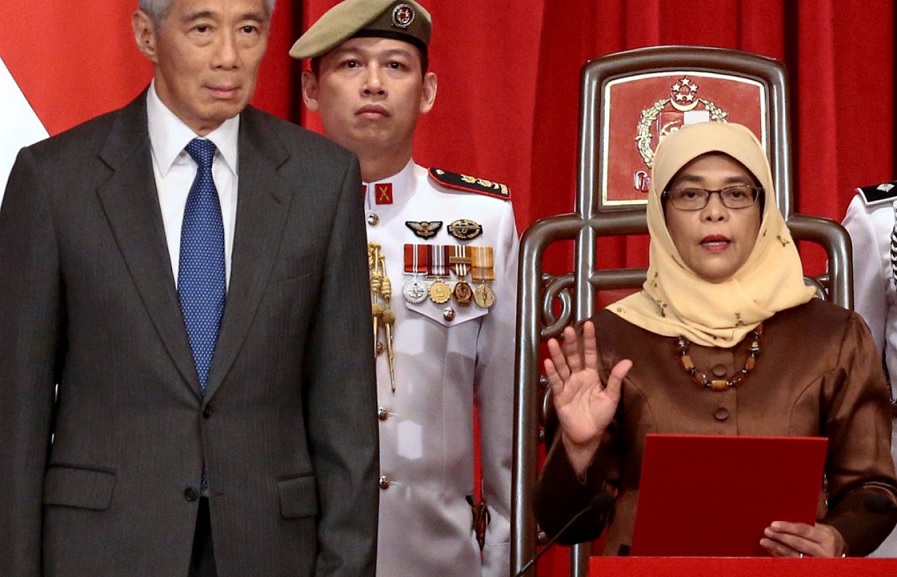
    Perhaps Lee’s greatest misstep was his handling of the presidential election. The government’s preferred candidate for president was almost defeated in the 2011 elections by popular Chinese rival Tan Cheng Bock. Tan was planning to run again and so the government excluded him by restricting eligibility for election to ethnic Malays under the rather thin cover of enhancing multiracialism.

    This was effective in removing any challenge from Tan, but left just one candidate in the race after two of the three Malay candidates were excluded on other grounds. The episode left a widespread impression that the constitution and the electoral rules are just the plaything of the government, and has done significant damage to both the standing of the presidential office and the government.

    While Singapore’s government has made some positive steps in terms of foreign policy in 2017, its handling of domestic issues has been sub-par. It was a particularly messy year for a government that claims to be preparing for a generational handover in 2020, and it does not bode well for the longevity of the Lee Kuan Yew model of governance.

    Michael D Barr is an Associate Professor of International Relations in the College of Business, Government and Law, Flinders University.

    This article is part of an EAF special feature series on 2017 in review and the year ahead.


    Source: eastasiaforum.org
  • Chee Soon Juan: By All Means, Let’s Continue To Humiliate Our Minority Citizens

    Chee Soon Juan: By All Means, Let’s Continue To Humiliate Our Minority Citizens

    THE SAGA OVER the Elected Presidency (EP) has again, thanks to the Prime Minister, dredged up the hideous truth that our political system is indefensibly undergirded by racialist and racist thinking.

    The official line of the EP rhapsodised about the need for racial harmony and the safeguarding of multiculturalism. The truth, as everyone else who is not a party apparatchik knows, was about ensuring that only the most PAP-aligned of souls helmed the presidency.

    In a similar vein, the creation of the Group Representation Constituency (GRC) system was never about ensuring adequate ethnic minority representation in Parliament but rather to further stack the system against the opposition.

    An outgrowth of the reserved presidency and the GRC policies require our Malay, Indian and “Other” friends to obtain certification of their race. I find such a practice absolutely abominable. We certify skills, training experience and even livestock. But human beings?

    I cringe whenever my party colleagues of minority ethnic descent undergo this degrading process during elections. They have to submit an application asking for recognition of their bloodline and/or racial identity. In return, they get a document certifying who – or more accurately what – they are.

    (And they have to do this at every election. Perhaps our bureaucrats think that some strange morphological transformation may occur undetected in between elections.)

    This policy is mandated by a majority Chinese-dominated political structure. It is the ultimate humiliation that one ethnic group can impose on another, a practice which I daresay would be unequivocally denounced in civilised societies, societies with a modicum of human decency.

    It is a practice that cheapens the individual and brutalises the soul of this nation. It makes us all lesser humans.

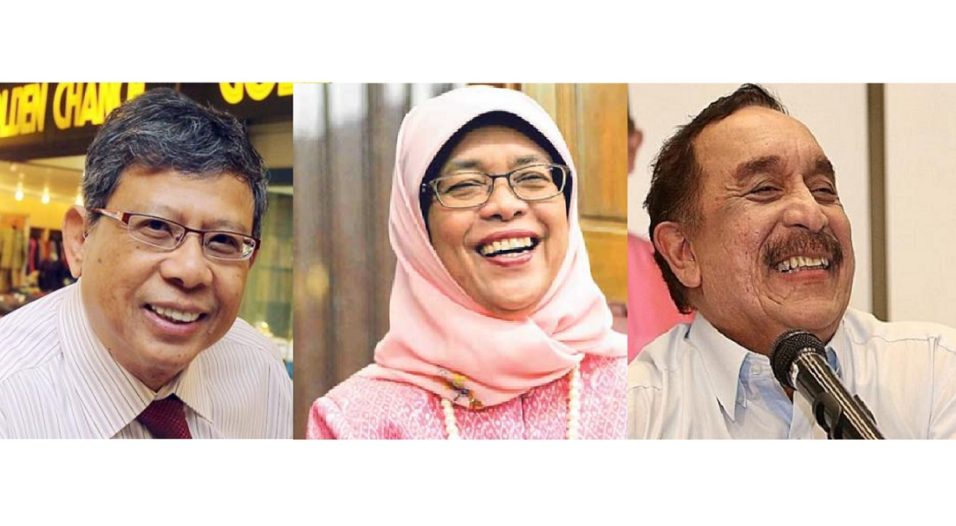
    But what is even more mystifying is why the Halimahs and Tharmans and Yacobs in the party agree to subject themselves to such abasement. Is there no intellectual spine in these people? Surely they understand that genuine equitable political representation goes beyond the tokenism of reserved presidencies and parliamentary seats.

    The reality is that these folks are, first and foremost, politicians and like most politicians, their instinct is to protect their power. The aforementioned schemes allow them to do just that. The wretched practice of certification of minority candidates can be rationalised away or, if not, compartmentalised and placed back in the far recesses of one’s conscience.

    But at what point does one draw the line between political fealty and personal dignity? What price does one have to pay and how much of one’s soul does one have to trade to retain that power? What happens when Mephistopheles comes a-knocking to collect what he is owed?

    If our race-conscious friends at the PAP are genuinely concerned about fissures that cause ethnic division in our society, they need look no further than their own policies. Policies like our education system where top schools are deliberately moved to affluent districts where the overwhelming majority of Malays do not reside. Or policies that widen income inequality in an economy where a disproportionate number of the Malay community are stuck in low-income jobs without minimum wage. Or policies that stipulate a quota of ethnic minority residents who are permitted to live in any one HDB estate (and thereby constricting the market for them should they want to sell their flats).

    Read also A Singapore For All Singaporeans

    It should not be hard to recall that America elected a black man as its president, Londoners picked a Muslim of Pakistani descent as their mayor and the Irish chose a son of Indian immigrants to be their prime minister. Are we Singaporeans somehow less enlightened and colour blind?

    Or is the PAP employing the age-old divide-and-conquer stratagem from its Singapore-is-not-ready-for-a-minority-PM playbook and then mollifying its critics by placing minority politicians here and there?

    Singapore needs a leader whose vision of politics looks beyond the pigmentation of our skin. We need someone who calls to us as a race – the human race, who appeals to the noblest spirit of our being, and who inspires the loftiest ideals that we, as a society, possess.

    May we find that leader – and soon.


    Source: http://www.cheesoonjuan.com

  • Three Possible Reasons That Can Lead To A Walkover Election And Win For Mdm President Halimah Yacob

    Three Possible Reasons That Can Lead To A Walkover Election And Win For Mdm President Halimah Yacob

    1. No signs of preparation for the election

    Knowing that the PE2017 would involve the whole nation to be at the voting booths, it is very unlikely that the government will mobilize its civil service officers at a short notice without any prior briefing. Has there been any information from sources in the civil service about blocking of leaves?

    2. PAP candidate might lose if there is a straight contest between candidates

    Therefore there is a high possibility that the two non-PAP candidates Salleh Marican and Farid Khan will be disqualified by the Election Department, making this upcoming reserved election for Malays a walkover victory for Halimah Yacob who is walking into Istana with her status as former Speaker of Parliament, and not as a CEO of a company with $500 million shareholders equity.

    3. Prime Minister Lee Hsien Loong is not his father

    There are rumors going around saying that there would not be an election, but some questioned if the PAP administration dare to fix the presidential election so blatantly enough to appoint its chosen candidate. Some argued that it will not be let off easily if it did so happen.

    Again, many Singaporeans may have lost interest in the upcoming reserved elections due to the amount of tasteless drama and conspiracies surrounding it. Yet, despite the outcome of the election, no matter who the president is, we need to think about one important thing, “Just how far is the PAP willing to go to protect its monopolistic stranglehold on political power?”


    Rilek1Corner


  • Malay Family Used To Prove A Point On Meritocracy, But Singaporean Malays Generally Still Sidelined

    Malay Family Used To Prove A Point On Meritocracy, But Singaporean Malays Generally Still Sidelined

    Talking about meritocracy when the Malay community are still being marginalised? 

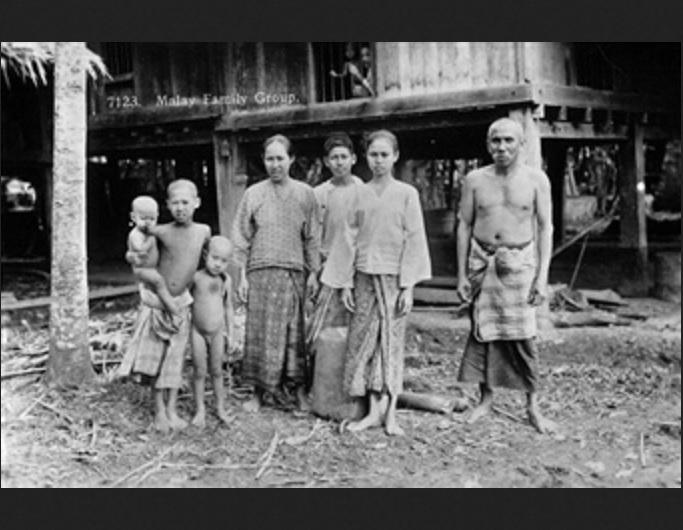
    If you are really serious about meritocracy, these are some of the things you can do for the Malay community since a “Malay family” has been specifically chosen for the National Day Rally speech.

    Abolish the SAP school system. It is racist for non Chinese students who are deprived of this opportunity, and all schools are not equal for as long as SAP schools are still around.

    Employ more Malays in the defense sectors as much so as other races are able to apply and secure a job. Equal opportunity and ability-based. Malays are not stupid or incapable.

    Don’t use always use Malay CNB officers to catch drug addicts which usually are Malays. Other races too can do a similar job as their Malay colleagues in apprehending those criminals.

    Mendaki and the government must render help to all Muslims no matter Malays or Indians or Arabs.

    Don’t have the impudence to call it a meritocracy if all these problems still persist.


    Rilek1Corner


  • PM Lee’s National Day Rally Speech Puts A Malay Family In The Spotlight As Exemplary

    PM Lee’s National Day Rally Speech Puts A Malay Family In The Spotlight As Exemplary

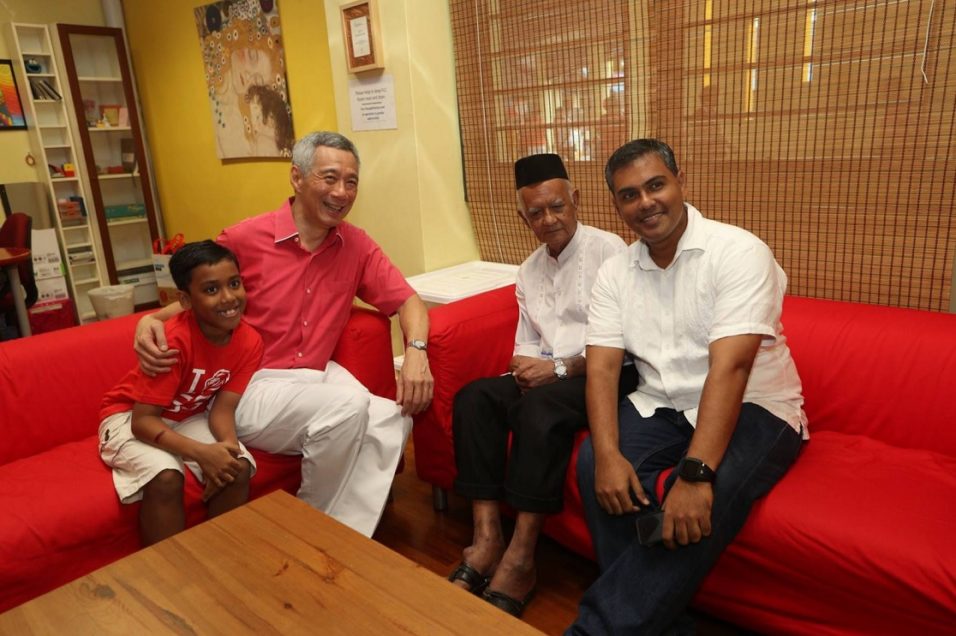
    In January, I presented Edusave Awards to my residents in Teck Ghee. One family I met moved me.

    I presented an Edusave Merit Award to Adam, a student from Teck Ghee Primary School. After the ceremony, I met Adam’s father, Aziz. He showed me an old photo of him, receiving an SBC House Union Bursary from me in 1986! So I have presented awards to father and son, 31 years apart! It was a special moment for Aziz, Adam, and also for me.

    I also met the grandfather, Ahmad, who was a gardener with SBC, the old Mediacorp. That is why Aziz qualified for the Bursary all those years ago.

    It is my Government’s duty to build for our future, so that every family can be like Ahmad, Aziz and Adam. This is the Singapore of the last half century: Every generation striving and building for the next, keeping our eye on tomorrow and investing in our children. Undaunted by challenges, but instead working together to overcome obstacles, seize every opportunity and realise a bright future for all of us.

    Thank you and Good Night!


    Source: Lee Hsien Loong / MCI