Tag: religion

  • They (PAP) wanted to disrupt our plans, but God have a better plan for us (SDP); Damanhuri Abas

    They (PAP) wanted to disrupt our plans, but God have a better plan for us (SDP); Damanhuri Abas

    “Greetings friends and thank you for coming. What a nice place.. this is. We didn’t plan for this.”

    “They wanted to disrupt our plans, but God have a better plan for us.”

    Epic round of applause.

    That was how Damanhuri Abas started his speech at the SDP’s Campaign Kick-Off 2019 where he spoke on National and Malay issues. Close to 2 years ago if you remember, the man responded to an accusation that he uses religion to incite some ‘untoward things’. Yet today, this opposition politician who is driven by religion is standing on that stage. 

    You can watch more here.

    At the end of his speech, Damanhuri recited a Malay pantun that he wrote sometime after joining politics. 


    tanah liat, asal usul ku
    jasad dicorak, Tuhan yg satu
    siapa gerangan, anak melayu
    khazanah silam, sejarah lalu

    pulau ujong, dikenal dahulu
    bumi temasek, pantai membiru
    kota singa, nama negeri ku
    sergam indah, jasa ayah ku

    tempat melabuh, pedagang lalu
    gagah berani, laksmana melayu
    armada cheng ho, pernah berlalu
    duduk penjajah, haram bersatu

    kini merdeka, warga negara ku
    suratan takdir, kita disatu
    bangsa cina, india melayu
    minda penjajah, jadi seteru

    pelbagai kaum, berkah yg satu
    kibar bendera, bangga selalu
    merah putih, lambang jiwa ku
    kita rakyat, engkau dan aku

    maruah dibela, bukti cinta ku
    sumpah setia, ikrar sepadu
    berbeza acuan, tetap bersatu
    langit ku junjung, bumi pertiwi ku

    [English translation]:

    From clay, I’m made,
    shaped, by the One
    who is he, the Malay lad
    untold heritage, history’s past

    Tales of old, isle at the end
    Temasek’s soil, with azure sea
    lion city, my country’s name
    awe and majestic, with my father’s hardwork

    A port of call, to traders’ past
    courageously brave, the Malay warrior
    Cheng Ho’s armada, sailed nearby
    colonials came, begins the divide

    Free again, my countrymen
    destiny’s fate, gathers us
    we are Chinese, Indian and Malay
    colonial’s divide, we detest and fight

    Our racial mix, blessed by One
    forever proud, flags raised high
    red and white, embodies my soul
    we are citizens, you and I

    Honour protected, for you my love
    loyalty promised, unity pledged
    our molds differ, remains united
    the sky above I raise, on this land of mine

  • Are Megachurches A Concern For Singaporean Society?

    Are Megachurches A Concern For Singaporean Society?

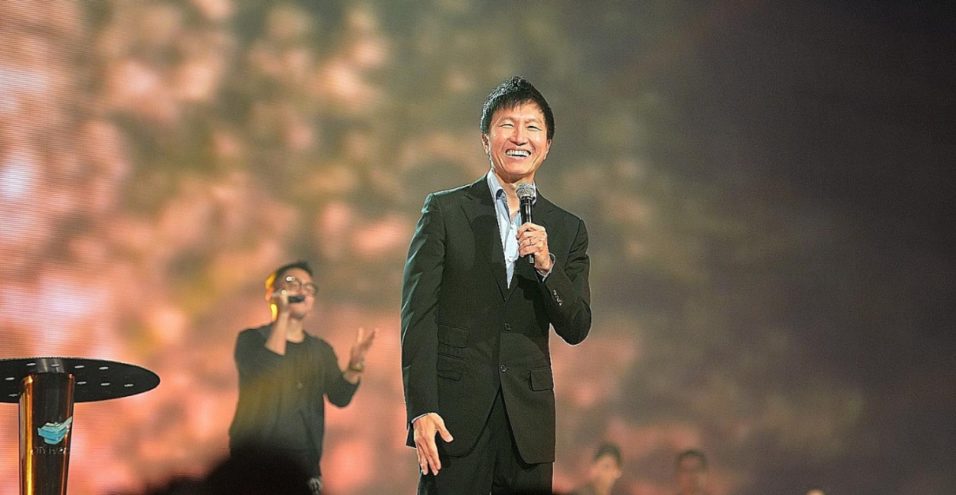
    The news that Kong Hee won his recent court case should not come as a shock. While it is still too early to judge our society’s reaction over CHC, suffice to say, CHC supporters are satisfied.

    Kong Hee’s verdict is a concern for Singaporeans. The growth of megachurches (which scholars define as churches which have a following of more than 10,000 people and are not aligned to any particular branch of Christianity) in Singapore has led to the development of networks of power and influence with little checks and balances (not even democratic elections), and which could be potentially exploited in the future for problematic purposes. [1]

    Why have megachurches in Singapore been so successful? As Terence Cheong [2] notes, it is because of the “market logic” that these megachurches ascribe to. This includes charismatic leadership culture and the mass-appeal of a Pastor who, instead of wearing archaic dresses, acts as a friendly, cool fatherly figure. This mixture of American evangelicalism with Singaporean capitalism taps on the emotional and spiritual needs of the emerging middle class. It is these factors which have allowed megachurches in Singapore to prosper.

    In comparison, other religions either comply with Singapore’s ethos of social harmony (e.g. Buddhism and Taoism) or are clearly aware of the OB markers for religion here. This applies to mainstream Christian branches and Islam – with the experience of Operation Spectrum, the Silat arrests, and the recent spat over the Islamic cruise in South East Asia ostensibly being a show of force by the government to prevent religious institutions from propagating alternative ideas that may destabilise Singaporean society.

    Therein lies the genius and the success of the megachurches in Singapore – their beliefs are totally in harmony with the State and are popular with the “emerging” middle class. The provision of KPI(s) to followers, recruiting of additional members, the creation of networks, and the amount of megachurch merchandise are consistent with Singapore’s capitalist system. These attributes are familiar to the emerging middle class, not fancily-dressed pastors swinging around incense, and through this, membership in the megachurches are surging.

    Perhaps then, the government found itself in a dilemma – even if it found Kong Hee’s actions problematic, to persecute him as a Marxist provocateur or whatever gobbledygook would have been disastrous for the government. There is no compelling narrative to shatter his reputation in order to dissuade his followers. The government cannot frame him as a Marxist, terrorist, or fundamentalist because Kong Hee is none of that. He is ostensibly a pastor ordained by God who happens to make a few million dollars – if anything, he is a very successful CEO.

    However, I argue when it comes to these megachurches, its CEO is never just a CEO.

    The megachurch is still a church at the end of the day. Its form of charismatic leadership allows a pastor to differ from a CEO. A pastor commands and claims to be ordained by God himself, unlike the CEO of Uber or Microsoft who is ordained by a Board of Directors. This connection to God gives the pastor a level of conviction and influence, and the ability to command his followers in the name of God. This has the potential to provide the Pastor considerable (and perhaps disproportionate) weight in Singapore’s socio-political-economic agora.

    Therein lies the problem, the size of these networks and power structures in these institutions can potentially allow a Pastor to wield considerable influence in business or politics. The system of developing large numbers of followers could see these churches reach the higher echelons of Singapore’s power structure.

    In mainstream churches and mosques, the pastor, minister, or imam has superiors. In the case of the Catholic Church, there is the Archdiocese and the Pope. For the imams, all doctrines come under the auspices of MUIS.

    What about the megachurches? How do we prevent their teachings becoming radicalised or their followers exploited? If all their teachings go through one man/woman, behind closed doors and beyond the regulatory reach of the government, what prevents this message from potentially being corrupted?

    Furthermore, the megachurch system differs from the ways businesses operate. While businesses may networks or connections – they rarely can directly inspire or mobilise the masses for political purposes, and in Singapore’s case there is also no reason to do so. Sembcorp or Keppel cannot, for example, compel their staff to all vote for a particular political party in an election; but what is stopping a leader of a megachurch from doing so in the name of God?

    However, something needs to be made explicit – I do not think that any of these megachurches will, in the near future, undermine security, stability or even the rights of religious and racial minorities in Singapore. Terrence Cheong has highlighted that many megachurches in Singapore have liberal views and are primarily obedient to the overused bible quote regarding Christ and Caesar. The lack of an ideological antithesis to the Singaporean capitalistic model and the ability to mobilise the masses is a concern for society, but not an immediate one.

    Viewing megachurches as cults would not be productive either. Instead, we should consider whether there needs to be checks and balances in play concerning their institutional structure, and the relationship between them and society.

    We need a frank discussion with members of these churches. How do we prevent these networks from being exploited by a power-hungry individual? Kong Hee and other megachurches have only God above them – what if one day someone attempts to exploit this power – not just for monetary gain, but, to disrupt Singapore’s society?

    Source: consensusg


    Rilek1Corner
  • American-Muslim Preacher Yusuf Estes’s Views Not A Threat To Social Harmony

    American-Muslim Preacher Yusuf Estes’s Views Not A Threat To Social Harmony

    As a Christian, I do not see how the views of American-Muslim preacher Yusuf Estes denigrate the Christian faith or “damage social harmony”, by claiming that it is “not part of Islam to celebrate other people’s holidays” or questioning the religious basis for Christmas. (“S’pore blocks American-Muslim preacher from entering to preach on Islamic-themed cruise”, Dec 2)

    A Muslim is fully entitled to refrain from participating in religious festivities of other religions.

    Article 16(3) of the Singapore Constitution guarantees that no person shall be required to receive instruction in or to take part in any ceremony or act of worship of a religion other than his own.

    In a 1999 case, the Singapore Court of Appeal explained that this is meant to protect a person’s right to choose his own religion. For example, a Muslim cannot be “required to take part in” a Christian ceremony such as the Holy Communion.

    Furthermore, Estes’ view that Christmas was ‘from the Solstice celebration, and had been going on for hundreds of years before the time of Jesus’, is neither new nor offensive.

    It is a widely known among many scholars that Jesus Christ was not born on Dec 25 of 1 AD.

    Historians and Christian scholars alike recognise that the ancient Roman Empire celebrated Saturnalia, a winter solstice festival, at or about the time of Dec 25 each year.

    According to Sam Moorhead of the British Museum, after the Roman Empire embraced Christianity as its official religion, Saturnalia was incorporated as a Christian holy day.

    While many Christians celebrate Christmas, there are also those who do not.

    The discussion is an ongoing one, among Christians and non-Christians alike, as to the origins of Christmas or whether it is acceptable to “redeem” such ancient Roman festivals. This is a natural and reasonable exercise of freedom of speech and religion.

    However, it is quite another thing for the Government to stifle the discussion by deeming certain perspectives as offensive or denigratory.

    In order to promote respect for religious freedom and harmony, the right of every person to pursue religious truth and live in line with his conscience should be respected and upheld. Short of real threats to public order, health or morality, the Government should respect the right of every person to profess, practise and propagate his religion.


    Source: todayonline

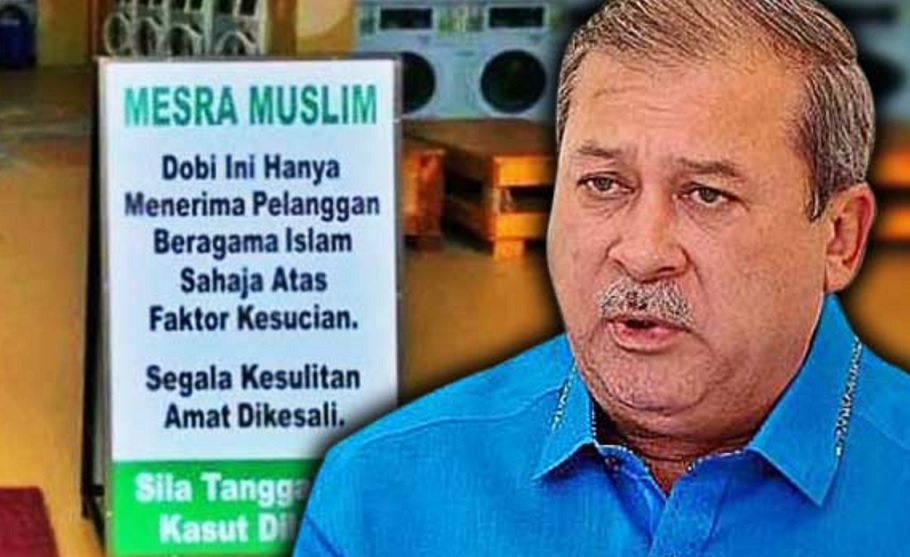
  • Sultan Johor Response To Muar’s Muslim-Only Laundrette: ‘Nonsense, This Is Not A Taliban State’

    Sultan Johor Response To Muar’s Muslim-Only Laundrette: ‘Nonsense, This Is Not A Taliban State’

    Johor ruler Sultan Ibrahim Sultan Iskandar has ordered the Muslim-only laundrette in Muar to stop its controversial policy or risk being shut down.

    “I cannot accept this nonsense. This is Johor, which belongs to Bangsa Johor and it belongs to all races and faiths. This is a progressive, modern and moderate state.

    “This is not a Taliban state and as the head of Islam in Johor, I find this action to be totally unacceptable as this is extremist in nature,” the visibly upset Johor ruler said, as quoted by The Star.

    He has since ordered the state Islamic religious affairs committee chairperson Abdul Mutalip Abd Rahim, the religious council and the district council to investigate the matter.

    The ruler also confirmed that he had spoken to the state’s mufti, Mohd Tahrir Samsudin, as well as state executive councillor for religion Abd Mutalip Abd Rahim over the matter.

    “I want the owner to apologise to me and the people of Johor. He has made Johoreans very angry and embarrassed because this is not the Johor we want.

    “The owner has gone against the vision of a united, harmonious, moderate and tolerant Johor. If he still insists on carrying on the Muslim-only practice, he can leave Johor.

    “I suggest he set up shop in Afghanistan. His thinking is sick and goes against everything that Johor stands for.”

    Confirming that he and his family members were “deeply appalled” by the action of the laundrette owner, the Johor ruler said it would lead to more narrow-minded actions in the name of Islam if such actions were not stopped.

    On the owner who, in the wake of the controversy, has since put up a new sign to say it was “Muslim-friendly”, the sultan said: “Don’t try to be clever. It’s still the same. The owner needs to have his brains cleaned up.

    “I want to put a stop to such extremism. Extremism has no place in my state. We take pride in being Bangsa Johor and I want to know where the owner of this launderette learn his Islam?

    “Islam teaches the faithful to be tolerant and respect other people and faiths,” he said at Istana Bukit Serene yesterday.

    Pointing out how mosques in Johor were open to non-Muslims as long as they were properly dressed, the sultan said he could not imagine non-Muslims being banned from entering mosques, saying he was concerned over rising religious extremism.

    “I wonder where this launderette owner washes his clothes when he is overseas? Is he saying only the clothes of Muslims are clean and those of non-Muslims are unclean? That’s what he means, I believe.

    “From now on, I am directing the state executive council and all the councils to insist that any business owners who carry out such blatant discriminatory practices should have their licences revoked. Don’t mess around with your narrow-minded religious prejudices.”

    He said he could not keep quiet on the issue, as if this was allowed to go unnoticed, “then next we will have taxis for only Muslims or non-Muslims”.

    He added that he also did not want other races to carry out similar actions.

    Pictures of the Muar laundrette went viral last week, when it was reported that a sign on the premises reminded customers that only Muslims were allowed to use its laundry machines.

    Johor prince Tunku Idris Sultan Ibrahim had expressed shock over the laundrette’s policy while several others, including Perlis mufti Mohd Asri Zainul Abidin and prominent banker Nazir Razak, criticised the move.

    The operator of the laundrette, however, denied being a racist and insisted that he only wants to ensure that cleanliness be maintained at all times


    Source: www.malaysiakini.com

  • Muar’s ‘Muslims-Only’ Laundromat: Racism, Inciting Division Or Strictly Business Owner’s Rights?

    Muar’s ‘Muslims-Only’ Laundromat: Racism, Inciting Division Or Strictly Business Owner’s Rights?

    A self-service laundromat in Jalan Junid, Muar, which caters only to Muslim patrons, has sparked controversy on social media.

    Photographs of the shop’s signboard with the words – “For Muslim customers only. Muslim-friendly. Leave your shoes outside” – placed at the laundromat entrance have gone viral on Facebook.

    Netizens were divided in their opinion. Some praised the move, saying that it was done for the benefit of Muslim customers concerned given possible mixture of ‘najis’ (impurities) in the wash loads, while others criticised it as being unfair.

    Facebook user Zachary Arshad said he was disappointed at what the laundromat is doing as it could divide the community.

    “I’m Muslim, and this is completely overrated and unacceptable. Islam does not teach this. Islam is for all, Islam is to unite the people, not divide. This will only cause further divide among the people,” said Zachary.

    Others however felt that the owner’s actions were justified.

    Facebook user Suresh Pandian agreed with the laundromat’s owner’s move.


    Above: A photograph of the shop’s signboard with the words – “For Muslim customers only. Muslim-friendly. Leave your shoes outside” – placed at the laundromat entrance have gone viral on Facebook. Photo: New Straits Times

    “Well, if the owner is a Muslim and wants to run it in a Muslim way , I don’t think there is anything wrong with it . That is his right.”

    “Why are there a lot of negative comments here? (He) hasn’t mentioned anything racist,” said Suresh on the ‘Persatuan Gaya Hidup Sihat Pelabuhan Klang’ Facebook page.

    Indra Aditya, meanwhile, urged people to look at the issue positively.

    “A majority of his customers may have complained about being uncomfortable in sharing the usage (of the equipment) with non-Muslims.

    “This is not about being racist or about any religion…this is business,” said Indra Aditya.

    The religious authorities, meanwhile, believe that the owner is acting within his rights.

    Johor Islamic Religious Affairs Committee chairman Abd Mutalip Abd Rahim said there was nothing wrong for the owner of the laundromat in imposing such a restriction as it was his right as a business owner.

    “Non-Muslims should not worry because there have options to patronise other laundromats elsewhere.

    “As Muslims who live in a multi-racial society, we cannot be too rigid in upholding such matters, but at the same time, should not belittle this effort taken by the operator of the laundromat either,” Mutalip told the New Straits Times.

    He said the state government has no plans to impose any such regulations statewide, and he urged people to better understand the concerns of Muslims in such issues.

    Johor Mufti Tahrir Samsudin said he welcomed the initiative taken by the business owner because some Muslims were doubtful in using self-service laundromats.

    “If someone wants to do it, then it is a good thing because some Muslims hold doubts over laundromat services.

    “It is better for Muslims to be free of such doubts when it comes to cleanliness as it will help Muslims fulfil religious obligations,” said Tahrir.

    Asked about the concept of laundromat services in Islam, Tahrir said that such a service should make sure that clothes are cleaned from minor and severe impurities.


    Source: http://www.todayonline.com