Tag: religion

  • Tampines Pork-Throwing Neighbour Still Terrorising Widow Despite Court Action

    Tampines Pork-Throwing Neighbour Still Terrorising Widow Despite Court Action

    Marliah Jonet, a 62 year-old widow, has faced daily harassment from a neighbor, 63 year-old Lee Dji Lin, however there appears to be nothing the authorities can do about the belligerent neighbor, who was diagnosed with a psychiatric disorder.

    According to Marliah, she has called the police to her flat over 6 times this month alone at Block 247, Tampines Street 21, but the situation has not improved. Even a district judge’s 2 year mandatory treatment order has not helped. Lee had been sentenced to mandatory treatment in June by a District Judge after Lee had been caught for throwing pork at another Malay neighbor in Tampines. Lee, who lives directly below Marliah’s unit, was charged for wounding the religious and racial feelings of her neighbor and harassment.

    Now that the court case is over, Lee has returned to her usual abusive ways. She shouts out insults in a mixture of English, Malay and Hokkien several times a day at Marliah. She has even hit hard at Marliah’s own personal tragedy, calling Marliah “a Satan who ate her husband and duaghter”. Marliah lost her daughter to a virus in 2006 while her husband died of a heart attack in 2012.

    Lee has also shouted insults claiming that Marliah is “bored and whoever wants to have fun (with Marliah) can do it for free”.

    Reporters who staked out at Marliah’s house have attested that Lee would suddenly start shouting the insults intermittently throughout the time they were there. When reporters approached Lee’s gate, the woman refused to come out and speak with them.

    Marliah is not Lee’s only victim. A Chinese family who used to live in the unit opposite of Lee moved out after she destroyed their altar and threw a chopper at the corridor outside their unit a few years ago.

    “She took a broomstick and hit their altar until it was destroyed. They were my friends (for a long time)…we were among the first to move into this block. But because of her, they had to move away,” one neighbor lamented.

    Another neighbour, who is a property agent, said, “She fought with the (Chinese) neighbour almost everyday. She also once took a chopper and threw it outside the neighbour’s place.” The agent spoke on the condition of anonymity for fear of facing trouble from Lee.

    “She also threw urine and water from her kitchen, and no one dared to hang out their clothes. When she was away in the IMH (Institute of Mental Health), everyone dared to hang out their clothes.”

    Another neighbor, who said she enjoyed an amicable relationship with Lee’s family in the past, said that Lee turned nasty when their family was seen speaking to the police, who were interviewing neighbors over the pork throwing incident. Since then, Lee has been pouring dirty water at their doorstep and shouting at her children. Lee has even made a false report to the residents’ committee that the family were illegal tenants.

    Complaints made by all the neighbors affected by Lee to the Housing & Development Board and the police have fallen on deaf ears.

    “This is harassment and I’ve suffered for seven long years. How can anyone take this? It hurts a lot when she brings up my husband and my second daughter. It took me three years of crying to get over her,” Marliah told police officers who arrived to settle yet another disturbance from Lee in the presence of reporters. She burst into tears as she spoke.

    Source: www.allsingaporestuff.com

  • Halimah Yacob: Racial Harmony In Singapore Should Be Celebrated

    Halimah Yacob: Racial Harmony In Singapore Should Be Celebrated

    A wushu group and a silat group performed together on stage at a cultural event in Eunos attended by Speaker of Parliament Halimah Yacob last night.

    The wushu performance was by the Wudang Sheng Hong Health Preservation Centre from the nearby Lorong Koo Chye Sheng Hong Temple.

    The silat performance was by the Si Rumpun Padi group from the Alkaff Kampung Melayu Mosque.

    Such racial harmony would be unthinkable in some other countries and should be celebrated, Madam Halimah said at the event organised by the People’s Association grassroots groups in Aljunied GRC.


    Source: www.tnp.sg


  • Celebration Of 50 Years Of National Service Forgets Past Discrimination Against Malays

    Celebration Of 50 Years Of National Service Forgets Past Discrimination Against Malays

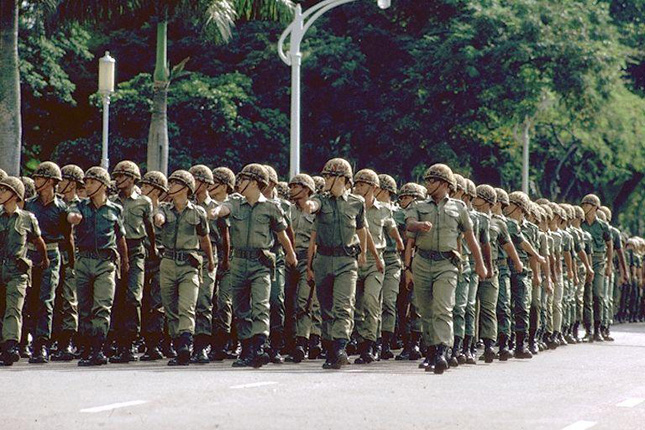
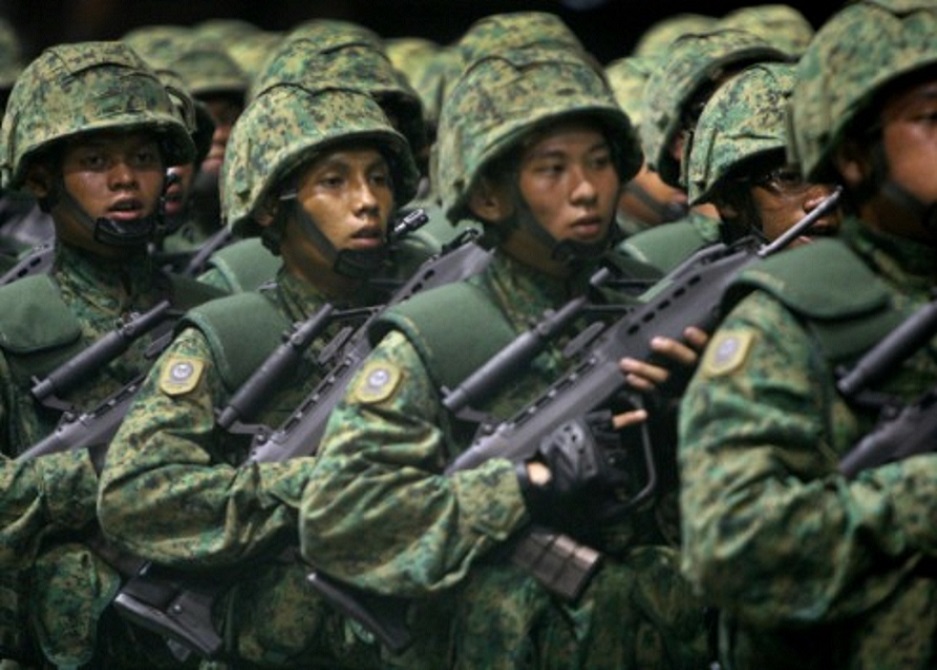
    Despite all our gripes and grouches about National Service (and its yearly reservist call-ups) it’s widely regarded as A Good Thing for a variety of reasons: Singapore has too small a population to rely on citizens volunteering for the military, it forces people from different backgrounds to assimilate, etc. etc.

    It’s been 50 years since mandatory conscription came into effect, and it’s become a cultural phenomenon unique enough to inspire films and literature revolving around national service. Criticisms abound, of course, but nobody can deny that Singapore stands ready when disaster (or God forbid, war) goes down.

    NS50, the year-long commemoration of National Service’s 50th anniversary, however does not bring back warm nostalgic memories for all Singaporean men. We’re not even talking about recalling the time you messed something up and caused everyone else to be punished, nor the time you wore the same dirty underwear for a week straight in the field — we’re talking about structural discrimination that disadvantaged people based on their race.

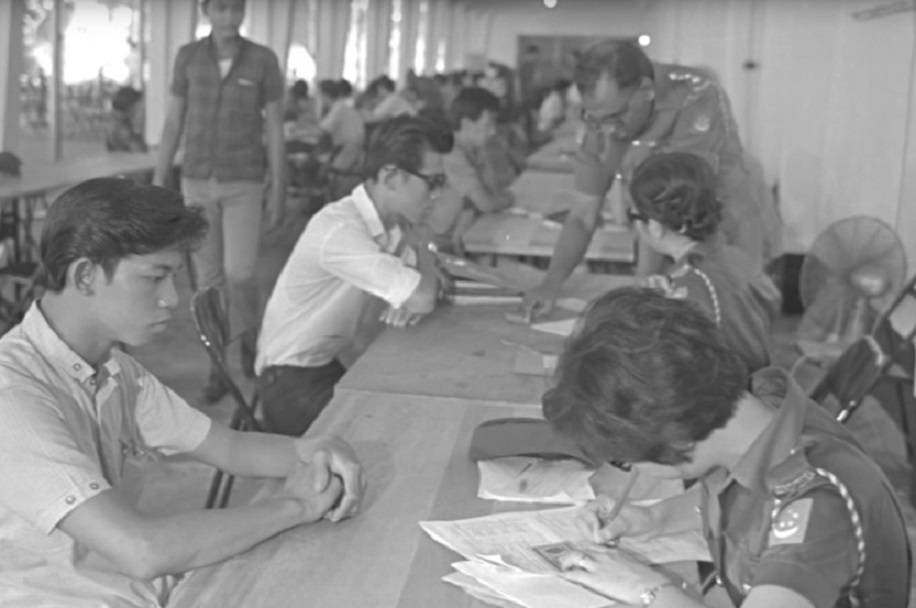
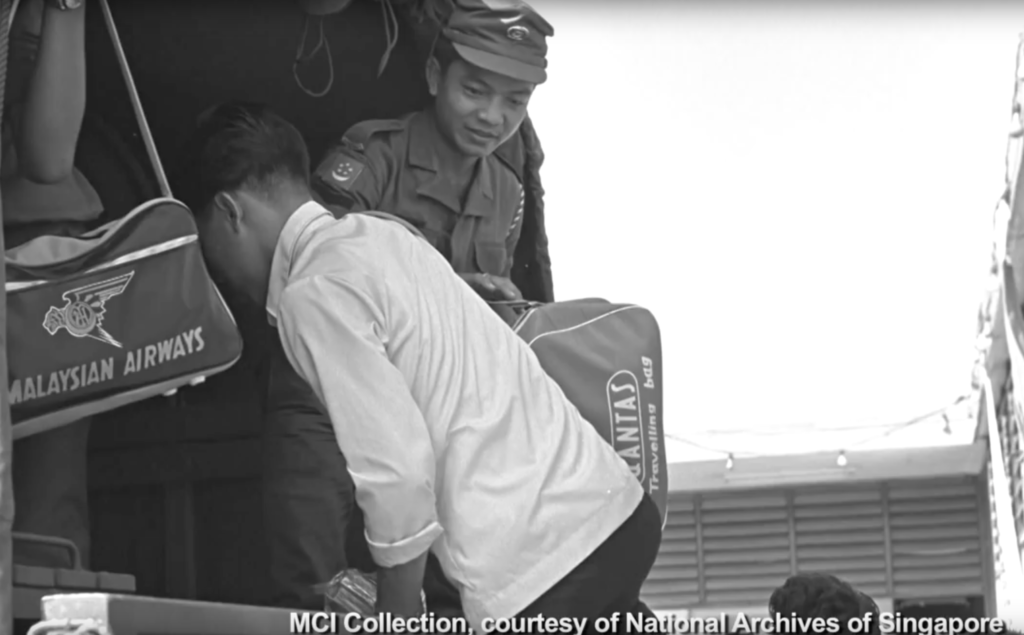
    Suspiciously missing from all the NS50 bluster and forced pride is the fact that Malay youths were virtually (not officially, mind you) excluded from conscription from 1967 till 1977.

    Even when they were eventually let in, they were mainly positioned to serve in the police force or the fire brigade. The small minority of Malays who manage to be called up into the military were given menial jobs, and are (almost always) excluded from key defense roles such as intelligence, the air force, commandos, artillery units and more — a practice that arguably continues to this day.

    The Ministry of Defence keeps insisting that the selection of personnel in various military vocations is not based on race. “The ethnic composition of commanders is similar to that in the general population,” Minister for Defence Dr Ng Eng Hen said in a  2014 response to a Parliamentary query about the racial breakdown across National Service vocations.

    The unofficial, widely understood reason is this: There is uncertainty as to where the loyalties of the Malay community lie should Singapore engage in war with neighboring Muslim-majority countries such as Indonesia and Malaysia.


    Alon Peled, an associate professor and political scientist at the Hebrew University of Jerusalem, noted in his paper (A Question of Loyalty: Ethnic Minorities, Military Service and Resistance) that discrimination against Malays in the military didn’t need to be spoken out loud to be felt.

    “By the second half of the 1970s, Malay exasperation with military recruitment and discrimination polices reached an all-time high. Even without official data, Malay parents knew that their children alone were not called upon to serve. Malay officers and (non-commissioned officers) who had been transferred from field command positions to the logistics corps were also frustrated. Nearly every officer knew that military units had informal quotas on Malays.”

    Though pleas were made to Malay leaders to change things, the figures of the day didn’t help ease the malaise. They stated that Malay youth lacked education and couldn’t speak English well (even though drafted Chinese Hokkien youth were the same). They argued that the government didn’t have enough facilities to train Malay soldiers (even though race should make no difference to when it comes to military training).

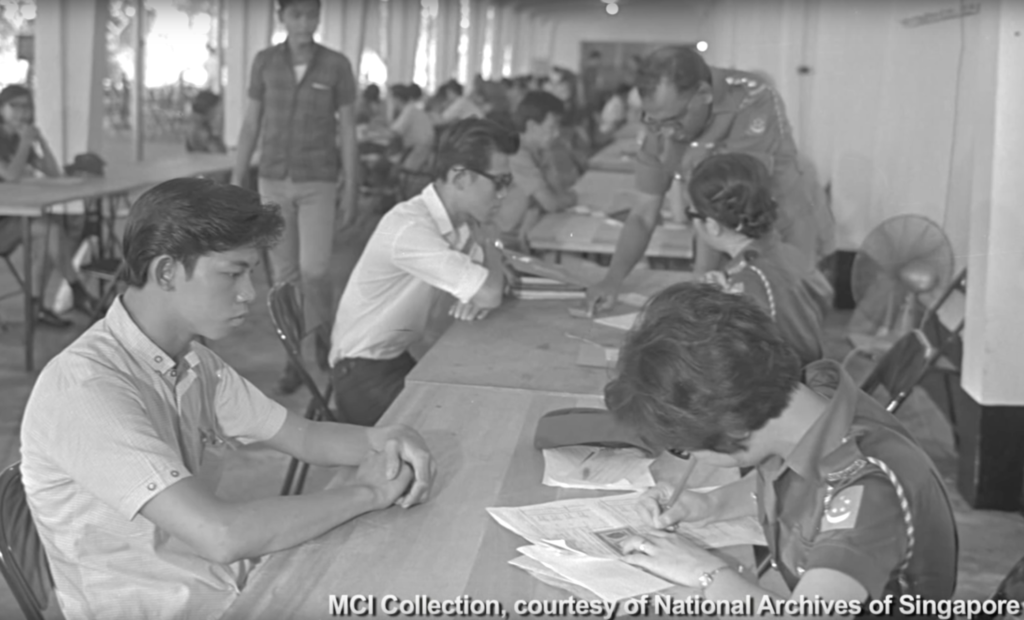
    1969 image from National Archives of Singapore

    It may not be much of an issue today, but the impact of Singapore’s blatant exclusion of Malays in the service back then was severe. Tania Li argues in her book Malays in Singapore: Culture, Economy, and Ideology that it left the Malay community behind in socio-economic standing.

    “There was an unfortunate side effect to the non-recruitment of Malays into National Service. Employers in Singapore are generally unwilling to recruit or train young male workers who have not completed National Service or obtained exemption papers as these youths can be called up at any time. Since Malays were not officially exempted from National Service, Malay youths were unable to obtain apprenticeships or regular jobs, and many were forced into an extended limbo period of about 10 years from ages 14 to 24 … (this) was in part responsible for the high percentage of Malay youths who became involved in heroin abuse during the late 1970s”.

    Peled repeats similar sentiments.

    “Malay servicemen were pushed out of the military, and young Malays found that the military doors, once their prime avenue for social mobility and a promising career, were firmly closed. Years of exclusion resulted in social bitterness, frustration and a major collision between the state and its principal ethnic minority group”.

    The silent ostracizing did not last, fortunately. Policies were eventually eased as the Malaysian invasion threat diminished, and Malay citizens were slowly integrated into the military. By the 1980s, more Malays were being posted in sensitive positions, including the Commando Battalion, while more began graduating as officers.

    The memories of the past however are hard to erase, and for former Straits Times’ senior political correspondent Ismail Kassim, the ongoing NS50 campaign did nothing but revive painful memories. Nonetheless, he asserts that it’s a good time for the government to make amends for the past wrongdoings.

    “Surely it is not beyond the ability of the present star-studded scholar-leaders to think of some way to assuage the hurt of the past.”


    Source: https://coconuts.co

  • Damanhuri Abas: PAP No Champion Of Racial Equality, Malays Marginalised

    Damanhuri Abas: PAP No Champion Of Racial Equality, Malays Marginalised

    This is another ugly truth of how labels are conveniently thrown by them at persons to distract from the issue of contention.

    They are no champion of racial equality. For if they were, there would be no discriminatory practises of excluding the Malays from so-called sensitive positions in the SAF for the last 5 decades sowing the poison of distrust into the minds of Singaporeans towards the entire race, the Malay schools would not have closed down, the Madrasah would have stop ‘begging’ long time ago for a decent premise to educate our children while SAP schools are showered with endless tax-payers money, or would the Malays be systematically marginalised in so many other ways in society. Instead, race have been abused by the PAP to institutionalise deceptive mechanism such as the GRC to their political advantage. And now the EP.

    The fact that after more than 50 years of PAP led Malay leadership in government, the Malays are still behind in education, over represented in drug abused cases, prison inmates, delinquents, divorce, low income, etc., etc., are a damning indictment of the failures of the chosen PAP Malay leadership. The reserved EP is neither our community’s priority, need nor want for a show-puppet Malay President. Its a disgrace.

    We have seen few days ago what parliament has become when 1 party rules and now the last bastion of the people’s defence will simply become another tool of the PAP.

    Come on Singaporeans, lets take back our country from the current double tongue bunch of financially bloated elites that knows no shame oozing out their hypocrisy and taking the entire nation for their joy ride.


    Source: Damanhuri Bin Abas

  • Dr Tan Cheng Bock: My Challenge Is To Uphold The Constitution, Not Undermine Race And Religion

    Dr Tan Cheng Bock: My Challenge Is To Uphold The Constitution, Not Undermine Race And Religion

    My fellow Singaporeans

    The High Court has decided against my application. My lawyers are studying the 65-page judgment in which Justice Quentin Loh acknowledged that I have “put forward serious arguments on the start of the count”.
    I am, of course, disappointed with the result and will announce whether I will appeal, after this weekend.

    Meanwhile, I am more disappointed with a Channel News Asia (CNA) report on 7 July 2017, 2.53 pm. In the paragraph titled “Dr Tan “Selfishly” Trying To “Undermine” Multi Racial Presidency’, the report quoted:
    [“His motives are purely selfish and he has shown no regard for the principle of multiracial representation which Parliament intended to safeguard,” Deputy Attorney-General (DAG) Hri Kumar Nair said.]

    I wish to respond.
    First, the report gave the impression that Justice Loh accepted the DAG’s remarks about me (which was also unfair and untrue). In fact, the judge did not entertain this submission anywhere in his judgment, presumably because that submission was irrelevant to the case.
    Second, in my political life, I championed multi-racialism and continue to do so. I was fortunate enough to take care of a constituency comprising 27% Malay constituents. We served together well and they graciously supported me with record high election percentages including 88% in 2001. I am thankful for the great rapport I had with my Malay constituents and grassroot leaders – some of whom still continue to visit my home during Chinese New Year until this day.

    For the DAG to call me “selfish” and having “no regard for the principle of multiracial representation” is hitting below the belt, highly inflammatory and encroaches into dangerous racial politics. The DAG is a public servant and an ex-PAP MP. He should not have made such a statement, which is now widely reported by the press.

    This case is not about race. It is about process and procedures. It is about upholding the Constitution. Let’s keep it that way.


    Source: Dr Tan Cheng Bock