Tag: Sunni

  • Aku Tak Kenal Siapa Shia

    Aku Tak Kenal Siapa Shia

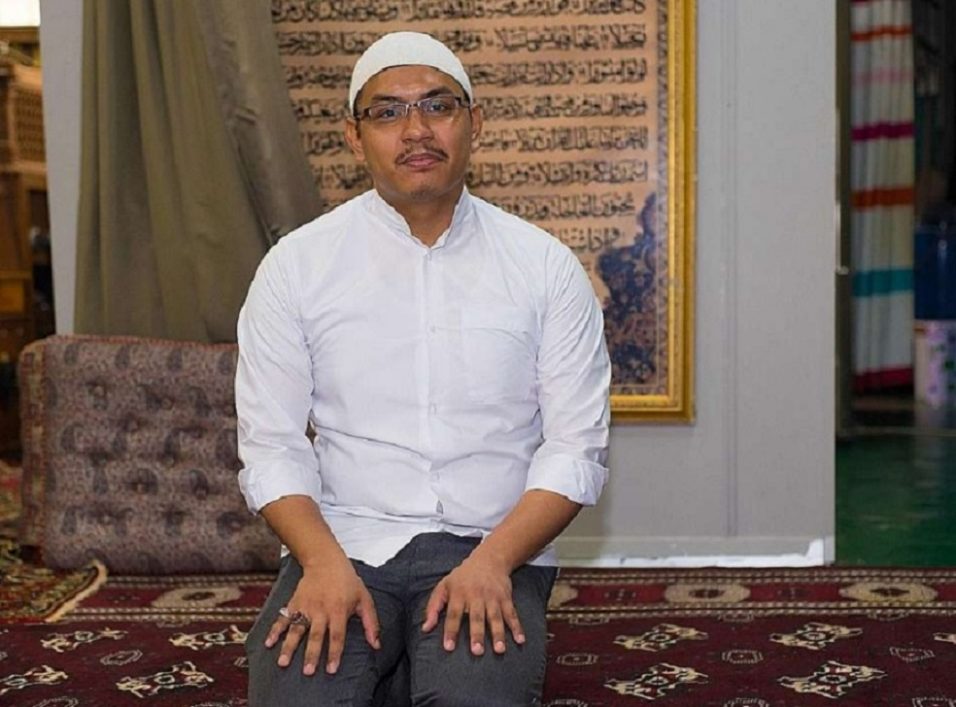
    I never had a friend who is Shia or anything other than Sunni. I was brought up in Singapore as a normal Muslim child. went to school, had a decent education and made several friends of different ethnicity.

    As i grew older, i had to fill up more forms like the G50, insurance papers or even resume and interview details of myself, and i got to know about my sect. that was when i learnt that i am a sunni. embarrassingly, i was a drop out from religious school back then when i was younger due to certain circumstances so this was something new to me. “Ini kau letak je sunni”, that was what i was told to write by a friend without any hesitation. And i still remembered it till today.

    So out of curiosity i asked him what the other side of sunni was (if there is any) and i was told about Shia. A small community of muslims that are of different teachings from us that we should not really speak of or supposed to know of. It was a surprise to me but i did not pursue the issue any further. Perhaps i would never know anything more anyway.

    I don’t know anything about shia or who are these shias in singapore. some people say that they may be among us and we would not know it. the question now comes down to how can we effectively embrace everyone in Islam, if there are like “closeted” muslims living around us though abiding by the same religion Islam? can they come out? Or are they not supposed to come out?


    Teh O

    Reader’s Contribution

  • Al-Qaeda Chief Denounces Islamic State Liars

    Al-Qaeda Chief Denounces Islamic State Liars

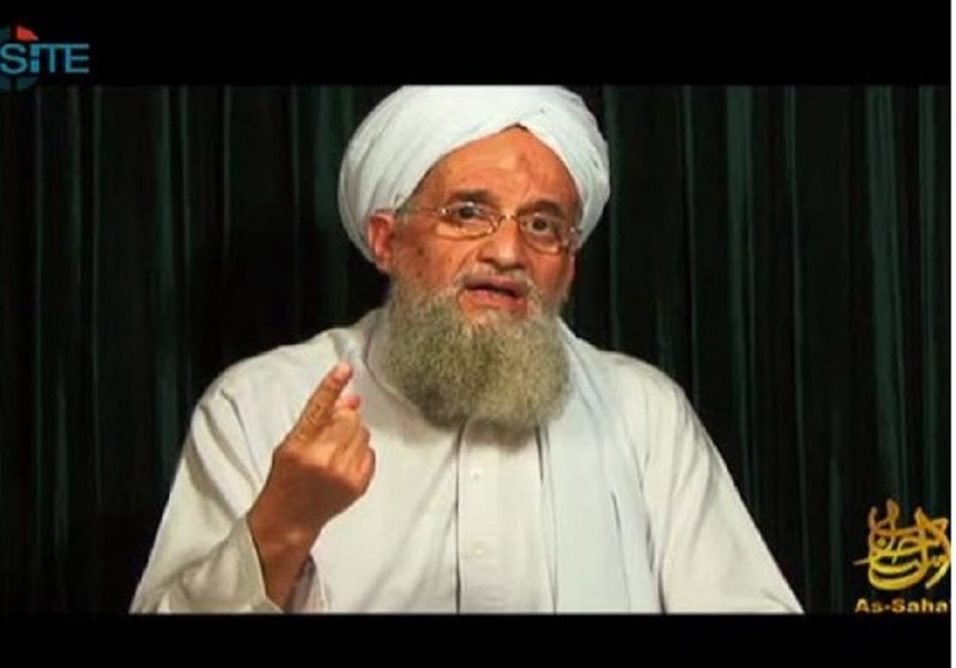
    WASHINGTON — Al-Qaeda leader Ayman al-Zawahiri has denounced what he said was a dishonest propaganda campaign by rival jihadist group the Islamic State against his organisation, in an audio message released Thursday (Jan 5).

    In the message found and translated by US-based watchdog the SITE Intelligence Group, the Egyptian extremist accuses IS leader Abu Bakr al-Baghdadi of slandering his group.

    Al-Qaeda, founded by the late Osama Bin Laden, is locked in a battle with the so-called Islamic State — which sprang from its Iraqi faction — for the leadership of a global jihad.

    In his message, the 65-year-old Zawahiri complained that Al-Baghdadi had alleged that Al-Qaeda opposes sectarian attacks on Shiites and was prepared to work with Christian leaders.

    “The liars insist upon their falsehood, to the extent that they claimed we do not denounce Shiites,” Zawahiri said, according to the translation of the message, which was released by Al-Qaeda’s media arm.

    Zawahiri denied he had said that Christians could be partners in the governance of a future Islamic caliphate, having only said that they could go about their affairs within it.

    “What I have said is that they are partners in the land, such as agriculture, trade, and money, and we keep their privacy in it, in accordance with the laws of our Sharia,” he said.

    And he insisted he had not called for Shiite Muslims to be spared, but had suggested focusing attacks on Shiite-led Iraqi forces and not on random atrocities against civilians.

    “I had told them several times to stop explosions in markets, husseiniyats and mosques, and to concentrate on military, security and police forces and Shiite militiamen,” he said.

    A husseiniyat is a Shiite place of worship and the Iraqi security forces, in their battle against the Islamic State group, are backed by Shiite religious militias.

    The Islamic State group and Al-Qaeda have both carried out hundreds of attacks on civilian targets, but some Al-Qaeda propaganda has called for less indiscriminate tactics.

    Zawahiri also denied Al-Baghdadi’s charge that Al-Qaeda had supported ousted former Egyptian president Mohammed Morsi, an Islamist who attempted to rule through the ballot box.

    The Al-Qaeda leader, who took charge after Bin Laden was killed by US commandos in 2011, is thought to be somewhere in Pakistan’s unruly border region hiding from a global manhunt.

    He communicates with the group’s remaining supporters through semi-regular video lectures, reiterating — as in his latest message — the need to target the United States.

    But Thursday’s message did not include any footage of Zawahiri speaking.

    The audio message restated the urgency of this goal — “Tell America, to other than Allah we do not kneel” — but also argued for a dialogue on tactics with other jihadists.

    “We are not infallible, but we are human beings and we hit and we miss. We must listen to advice,” he admitted, while rejecting Al-Baghdadi’s criticism.

    “What we want is to manage a conversation between those who are working for Islam — and the people of jihad at their forefront — around the best method and wisest techniques to bring victory to the religion,” he said, according to SITE. AFP


    Source: www.todayonline.com

  • A Singaporean In Iran: Life In A Shi’ite Seminary

    A Singaporean In Iran: Life In A Shi’ite Seminary

    Mr Ahmad Murtadha Rosli, 26, is not your typical Singaporean university student. He attends classes from 8am to 5pm every Saturday to Thursday and shares a dormitory with nine other students.

    His teachers are all men who wear turbans and long, flowing cloaks and teach using thick, vintage tomes. That is because Mr Ahmad is studying in a hawza that is a renowned Shi’ite Islam seminary in Qom, Iran.

    Shi’ite Islam is the second-largest sect of Islam, after Sunni Islam. Both branches agree on many aspects of the religion, but are divided over Prophet Muhammad’s rightful successor.

    More than 85 per cent of the world’s 1.5 billion Muslims are Sunni. In Singapore, Shi’ites make up less than 1 per cent of its Muslims, the majority of whom are Sunni.

    The hawza in Qom, home to about 70,000 students, teachers and academics, is the largest Shi’ite seminary in the world. Smaller seminaries exist in other parts of Iran and in neighbouring Iraq, and even in Canada and the United Kingdom. Hawza graduates are accomplished in fields like Islamic law and faith. Many go on to become religious teachers, while some end up in politics. Iran’s Supreme Leader, Ayatollah Ali Khamenei, graduated from Qom.

    The seminary attracts students from across the globe. Many come from India and Pakistan; others from countries like China, Austria and Russia. Singaporean students are rarer. Mr Ahmad’s father, Ustaz Mohammad Rosli Hassan, graduated from Qom nearly three decades ago. Now 52, Ustaz Rosli is the leader of the 5,000-strong Shi’ite community in Singapore.

    “My name was placed under ‘Thailand’ when I first joined because ‘Singapore’ wasn’t in its system,” said Mr Ahmad. “There were a few other students from Singapore but, sadly, they (didn’t finish), maybe because the way of living over in Iran is too different.”

    Since there was no other suitable candidate, Mr Ahmad added, he felt a responsibility to eventually replace his dad as leader.

    Ustaz Rosli said: “Not everyone likes that role; it is a very challenging role. The community needs leadership – whether it comes from my family or not, it doesn’t matter. I am happy that Ahmad is willing (to take over from me), but there are tough challenges ahead.”

    BACKACHES AND LONELINESS

    The seeds of Mr Ahmad’s calling were planted when he was a 10-year-old seeing the hawza for the first time during a holiday in Qom. “I always told my dad I wanted to go there,” he said.

    He attended secular schools and went from Yusof Ishak Secondary School to Ngee Ann Polytechnic, from where he graduated with a Diploma in Civil and Environmental Engineering. The decision to make the switch to a religious institution did not come easily.

    “Being a religious teacher, you won’t be earning a lot,” Mr Ahmad said, as he worried about raising a family and not having enough savings to buy an HDB flat. “I thought about all that – it’s a sacrifice I have to make for the community.”

    Two years ago, after completing his national service as a firefighter, Mr Ahmad packed his bags and left. “I thought it was like going to any other boarding school,” he said. “But at the end of the day, it’s a very different lifestyle.”

    Until recently, Mr Ahmad’s classrooms did not have air-conditioning, computers and projectors. When he stepped inside his small dorm, he was shocked to find bunk beds that did not come with mattresses. “I was sleeping on a wooden frame,” he said. “My back was aching very badly.”

    When it comes to classes, Mr Ahmad has the same timetable – comprising subjects like Persian, Quran studies and Islamic history – every day. Revision is done in pairs, where students take turns explaining a topic they learnt in class to each other. The school believes that encourages critical thinking and helps students to clarify misconceptions.

    Mr Ahmad also had to adapt to unfamiliar conditions in Qom, a desert city 125km south-west of the capital, Teheran. “Singapore is very green, but Qom is very brown,” he said. “If you leave your shoes outside for three days, it will be covered with dust.”

    On Fridays, when it is the weekend and there are no classes, Mr Ahmad plays football on a synthetic pitch with his friends from Malaysia. As meals are not provided on Fridays, they would cook dishes from home, like tom yam and chicken curry. “But it’s hard to find red chilli there,” he said. “Whenever someone visits, we would ask them to bring chilli powder or flakes.”

    However, the company of friends did not stop him from missing home. “Sometimes, I would be very lonely,” he said. “I would just sit in my room and look at old pictures on my phone.” Despite that, Mr Ahmad felt encouraged by his desire to please his parents, whom he described as “very religious”. “This is the time I can prove to them that I want to be successful,” he said.

    His moment of glory came when he scored full marks for an Arabic exam, a subject he initially struggled in because he lacked the foundation. “I would spend four hours doing my homework over and over again, just so I could get it right,” he recalled.

    Mr Ahmad plans to study in Qom straight through to a PhD in the fundamentals of Islamic law – a process that will take at least 10 years. He doesn’t intend to return to Singapore until his father “decides to retire one day, or if he’s too old or sick”.

    Right now, Mr Ahmad is taking a break from his studies. He has been back in Singapore since March last year to get married to his girlfriend of six years. The pair met and got together during their polytechnic days, when she was still a Sunni interested in the Shi’ite sect. About a year into their relationship, she switched over.

    “Before, her parents were good to me,” he said. “After finding out that I was a Shi’ite and that she was slowly converting, things changed.” When Mr Ahmad approached her parents about tying the knot, they rejected him. So, the pair went straight to the Registry of Muslim Marriages. According to the Administration of Muslim Law Act, a Muslim marriage can still be solemnised by a religious official, or kadi, even if the bride’s parents object to it. But after questioning Mr Ahmad about his Shi’ite background, the kadi refused to proceed with the marriage.

    “Now, we have to appeal through Muis (the Islamic Religious Council of Singapore); they are helping us a lot in settling the issue,” he said. Ustaz Rosli is confident his son will prevail in this “unwanted episode”. “Like it or not, he will be married officially in Singapore,” he said.

    Mr Ahmad expects to know the outcome of his appeal soon. If things go to plan, his future wife will accompany him back to Qom, where she intends to enrol in the hawza. He just wants his ordeal to be resolved quickly. “I’m very much missing everything in Qom,” he said. “I wish the authorities would do things a lot faster.”

    LIKE FATHER, LIKE SON

    For Ustaz Rosli, life in the hawza could not have been more different. He arrived in Qom in 1986, during the tail end of the Iran-Iraq war that killed nearly half a million people.

    “People were living in a tough situation,” Mr Ahmad recalled his father telling him. “Everything was so expensive back then.” During meal times, he added, students were issued coupons that entitled them to a serving of meat. “They didn’t get to eat meat or chicken on a daily basis, like how it is now.”

    Ustaz Rosli graduated in 1990 before returning to Singapore, where he is now president of the Jaafari Muslim Association, a Shi’ite organisation based in Geylang. “There were people before us who lived through life in the seminaries with difficulties,” he said. “Anyone who wants to succeed me must be spiritually strong.”

    Ustaz Rosli has also been a full-time religious teacher for more than 25 years, a job that has taken him to countries like Indonesia, the Philippines and the United States, where he gives lectures on Islamic studies. Mr Ahmad said his dad wanted to challenge the perception that religious teachers cannot be successful. “Back then, people used to think that there was no future in being an ustaz,” he said.

    When Mr Ahmad comes home, he wants to be a religious teacher too. He thinks he will have no problems registering under the Asatizah Recognition Scheme, which requires Islamic religious teachers in Singapore to have at least a diploma in Islamic studies from a recognised institution.

    The mandatory scheme, which kicks in from this month, aims to recognise qualified teachers and combat extremist ideology. “Although the majority of Muslims in Singapore are Sunni, Islam in Singapore is not monolithic. Sunnis and Shi’ites have lived in harmony in Singapore for many years,” said a spokesman for Muis. The scheme will ensure that asatizah can “serve as a reliable source of reference” for the Muslim community in Singapore, he added. “The Asatizah Recognition Board has begun engaging asatizah as well as centres providing Islamic education.”

    Mr Muhammad Al-Baqir Buang, who is president of the Muslim Youth Assembly, another Shi’ite group with about 200 members, said: “The scheme will help to reduce extremist or radical thoughts from being spread to the masses by unqualified teachers. However, I have doubts about how far it can be implemented, given that there are some asatizah who teach in homes, and other loopholes that can’t be totally monitored.”

    Nevertheless, Mr Ahmad said the scheme helps to deter “extreme” Islamic teachers who might label Shi’ites as heretics. “The authorities are trying to promote harmony between Shi’ites and Sunnis,” he said. “That is something that is good.”


    Source: www.straitstimes.com

  • Iraq Launches Mosul Offensive To Drive Out ISIS Terrorists

    Iraq Launches Mosul Offensive To Drive Out ISIS Terrorists

    Iraqi government forces launched a U.S.-backed offensive on Monday to drive Islamic State from the northern city of Mosul, a high-stakes battle to retake the militants’ last major stronghold in the country.

    Two years after the jihadists seized the city of 1.5 million people and declared a caliphate from there encompassing tracts of Iraq and Syria, a force of some 30,000 Iraqi and Kurdish Peshmerga forces and Sunni tribal fighters began to advance.

    Helicopters released flares and explosions could be heard on the city’s eastern front, where Reuters watched Kurdish fighters move forward to take outlying villages.

    A U.S.-led air campaign has helped push Islamic State from much of the territory it held but 4,000 to 8,000 fighters are thought to remain in Mosul.

    The Pentagon said that Iraqi forces were meeting objectives and were ahead of schedule on the first day of the offensive.

    Residents contacted by phone dismissed reports on Arabic television channels of an exodus by the jihadists, who have a history of using human shields and have threatened to unleash chemical weapons.

    “Daesh are using motorcycles for their patrols to evade air detection, with pillion passengers using binoculars to check out buildings and streets,” said Abu Maher, using an Arabic acronym for Islamic State.

    He and others contacted were preparing makeshift defenses and had been stockpiling food in anticipation of the assault, which officials say could take weeks or even months. The residents withheld their full names for security reasons and Reuters was not able to verify their accounts independently.

    The United States predicted Islamic State would suffer “a lasting defeat” as Iraqi forces mounted their biggest operation in Iraq since the 2003 invasion that toppled Saddam Hussein.

    But the offensive, which has assumed considerable importance for U.S. President Barack Obama as his term draws to a close, is fraught with risks.

    These include sectarian conflict between Mosul’s mainly Sunni population and advancing Shi’ite forces, and the potential for up to a million people to flee Mosul, multiplying a refugee crisis in the region and across Europe.

    “We set up a fortified room in the house by putting sandbags to block the only window and we removed everything dangerous or flammable,” Abu Maher said. “I spent almost all my money on buying food, baby milk and anything we might need.”

    The United Nations’ humanitarian coordinator for Iraq said the military had told the U.N. it expected the first significant population movement to begin in five to six days, suggesting that is when the assault would move to the city itself.

    Lise Grande said Iraqi security forces would transport fleeing civilians, who would be vetted to ensure Islamic State fighters could not hide among them, following residents’ reports that militants had shaved off their beards to escape detection.

    Video showing rockets and bursts of tracer bullets across the night sky and loud bursts of gunfire was shown on Qatar-based al-Jazeera television after Prime Minister Haider Abadi announced what he called “the heroic operations to free you from the terror and oppression of Daesh”.

    “We will meet soon on the ground in Mosul to celebrate liberation and your salvation,” Abadi said in a speech on state television in the middle of the night, surrounded by commanders of the armed forces.

    HUMANITARIAN CRISIS FEARED

    Early on Monday, Abadi sought to allay fears that the operation would provoke sectarian bloodletting, saying that only the Iraqi army and police would be allowed to enter the mainly Sunni city. He asked Mosul’s residents to cooperate with them.

    Local Sunni politicians and regional Sunni-majority states including Turkey and Saudi Arabia warned that if Shi’ite militias take part in the assault they could spark sectarian violence.

    The Iraqi army dropped tens of thousands of leaflets on Mosul before dawn on Sunday, warning residents the offensive was imminent, assuring them it “will not target civilians” and telling them to avoid known locations of Islamic State fighters.

    Reflecting authorities’ concerns over a mass exodus that would complicate the offensive and worsen the humanitarian situation, the leaflets told residents “to stay at home and not to believe rumors spread by Daesh” that could cause panic.

    Resident Abu Abdullah said he had wanted to witness the beginning of the offensive.

    “We heard repeated explosions at a distance, so I went to the rooftop to see fireballs, even if it was dangerous. I was happy that the operation to liberate Mosul started,” he said.

    In 2014, Islamic State leader Abu Bakr al-Baghdadi proclaimed a “caliphate” in Iraq and neighboring Syria from Mosul’s Grand Mosque. The group faced little resistance but has employed brutal methods to maintain control. On Monday, it circulated photographs showing children executing alleged spies.

    Russian President Vladimir Putin, criticized over the level of civilian casualties during Syrian government operations backed by Moscow in and around the city of Aleppo, said on Sunday he hoped the United States and its allies would do their best to avoid hitting civilians in the attack on Mosul.

    The United Nations has said the battle would require the world’s biggest and most complex humanitarian effort, which could leave up to 1 million people homeless and see civilians used as human shields or even gassed.

    There are already more than three million people displaced in Iraq as a result of conflicts involving Islamic State and up to 100,000 Iraqis may flee Mosul to Syria and Turkey. Medicine is in short supply in Mosul and food prices have risen sharply.

    “Families in Mosul started stockpiling food yesterday in case the fighting reaches our streets and we can no longer go out,” said Saeed, a resident.

    “Daesh are still in Mosul and it’s not true that they left. They are continuing to erect blast walls in the streets to obstruct any advance.”

    (With additional reporting by Maher Chmaytelli and Stephen Kalin in Baghdad, Michael Georgy in Erbil and Stephanie Nebehay and Tom Miles in Geneva; writing by Philippa Fletcher; editing by Giles Elgood and Gareth Jones)


    Source: www.reuters.com


  • Kanak-Kanak Syria Luah Perasaan Takut Di Twitter

    Kanak-Kanak Syria Luah Perasaan Takut Di Twitter

    SYRIA: Saban hari kita dikhabarkan tentang keadaan menyedihkan di kota Aleppo, Syria, di mana ratusan nyawa yang tidak bersalah terkorban akibat peperangan di sana.

    Lebih menyayat hati, apabila antara nyawa yang terbang melayang di tangan mereka yang tidak bertanggungjawab, adalah kanak-kanak yang tidak berdosa.

    Bagaimana pula perasaan kanak-kanak ini yang setiap hari mendengar bedilan demi bedilan bom dan melihat anggota keluarga serta rakan-rakan mereka mati satu persatu dan hanya menunggu masa, yang entah bila, untuk diri mereka sendiri menjadi mangsa.

    PUNYAI LEBIH 35,000 PENGIKUT

    Bagi Bana Alabed, tujuh tahun, apa yang dilaluinya dikongsi bersama lebih 35,000 pengikut di laman Twitter beliau.

    Baru-baru ini, Bana memuat naik gambar dirinya yang sedang duduk sambil memegang sebuah buku dan boleh dilihat juga anak patung milik beliau berada di sisinya.

    Bersama gambar itu Bana menulis: “Selamat Petang dari Aleppo. Saya sedang membaca untuk melupakan tentang perang.”

    Aleppo, bandar kedua terbesar di Syria, terbahagi dua semasa negara itu berada dalam konflik yang berlarutan.

    Kehidupan seharian para penduduknya, yang terperangkap antara puak pemberontak dengan pasukan-pasukan pemerintah, menjadi satu kesukaran yang terpaksa diharungi, lapor BBC.

    MINTA DIDOAKAN SUPAYA SELAMAT, DAPAT TERUS HIDUP

    Catatan Twitter Bana, dalam bahasa Inggeris dibantu oleh ibu beliau yang merupakan seorang guru, menarik perhatian terhadap kesusahan yang dilalui mereka di Aleppo, kawasan yang dikawal puak pemberontak.

    Salah satu catatan Bana, iaitu sebuah rakaman video, yang menunjukkan beliau bersama dua orang adik-beradik lelakinya, Mohamed, lima tahun dan Noor yang berusia tiga tahun – dengan mesej “Sedang melukis bersama adik-adik sebelum kapal terbang datang. Kami memerlukan keamanan untuk melukis.”

    Menerusi catatan-catatan, gambar dan video yang dimuat naik ke laman Twitter @AlabedBana, warga siber dapat serba-sedikit merasai pengalaman Bana dan keluarganya.

    Malah, ada juga video-video di mana para pengikut boleh mendengar bunyi letupan bom dan Bana atau ibu beliau Cik Fatemah meminta agar didoakan supaya mereka dapat terus hidup dan terselamat.

    Salah satu rakaman video itu menunjukkan Bana berdiri di tepi tingkap sambil menutup telinga dan letupan bom boleh didengar, dengan catatan yang berbunyi: “Saya amat takut saya akan mati malam ini (…) Bom akan membunuh saya – Bana”.


    “MENGAPA TIADA ORANG BANTU KITA?”

    Menerusi wawancara bersama BBC, Cik Fatemah berkata, anak perempuan beliau benar-benar mahukan “seluruh dunia mendengar suara kami”.

    “Bana bertanya, ‘Ibu, mengapa tiada orang membantu kita?” kata Cik Fatemah.

    Meskipun sebahagian catatan yang dimuat naik di laman Twitter beliau begitu membimbangkan, Bana seperti sudah lali dengan keadaan itu.

    “Beliau sudah lihat semuanya di sini,” kata Cik Fatemah.

    “Beliau melihat sendiri kawannya terbunuh dan rumah kami dibom. Malah beliau melihat sendiri sekolah beliau hancur akibat bom. Semuanya menjejas beliau,” tambah ibu Bana menerusi panggilan video, yang terputus-putus, bersama BBC.


    BEKALAN MAKANAN BERKURANGAN, UBAT HABIS

    Menurut Cik Fatemah, Bana bercita-cita menjadi seorang guru bahasa Inggeris seperti beliau setelah dewasa kelak.

    Namun, beliau sudah tidak ke sekolah sejak tahun lalu meskipun beliau ingin meneruskan persekolahannya.

    Selain itu, Cik Fatemah memberitahu BBC, bahawa keluarga mereka masih dapat memanfaatkan tenaga elektrik menerusi tenaga solar namun khidmat internet dan telefon yang teruk menjadikannya sukar untuk menghubungi mereka.

    Menurut Cik Fatemah, bekalan makanan dan perubatan juga semakin lama semakin berkurangan.

    Baru-baru ini, menurut beliau, anak bongsunya jatuh sakit dan dikejarkan ke hospital.

    Malangnya, mereka diberitahu bahawa bekalan ubat sudah habis.

    Sedang akaun Twitter itu mula meraih jumlah pengikut yang ramai, Cik Fatemah memberitahu BBC bahawa terdapat sesetengah pihak yang menuduh beliau mengendalikan akaun “palsu” atau mempergunakan anak beliau bagi tujuan propaganda.

    Malah, penguasaan bahasa Inggeris Bana turut menjadi persoalan warga siber.


    DITUDUH GUNA ANAK BAGI TUJUAN PROPAGANDA

    Cik Fatemah berkongsi bahawa bapa Bana merupakan seorang peguam yang bekerja di sebuah pusat guaman yang terletak di kawasan bandar.

    Cik Fatemah sendiri mempelajari bahasa Inggeris di sebuah institut bahasa selama tiga tahun serta merupakan penuntut jurusan undang-undang di sebuah universiti.

    Beliau sendiri mengajarkan bahasa Inggeris kepada Bana sejak kanak-kanak itu berusia empat tahun.

    Maka, apabila dituduh berbohong beliau menyifatkannya sebagai mengecewakan.

    Semasa wawancara bersama BBC, Cik Fatemah bertanya sama ada wartawan dapat mendengar bunyi ngauman pesawat dari ruang udara mereka, sambil menambah bahawa ia akan berlarutan selama berjam-jam.

    “Mereka akan jatuhkan bom tanpa sebarang perasaan belas.

    “Kami bukan pengganas. Kami bukan ISIS,” tegas beliau. “Kami semua di sini tidak bersalah.”

    Source: http://berita.mediacorp.sg