Author: Rilek1Corner

  • Student’s Sacrifices For O Levels Pay Off

    Student’s Sacrifices For O Levels Pay Off

    The secret to her success? She gave gave up her social media accounts and social life to concentrate on her studies.

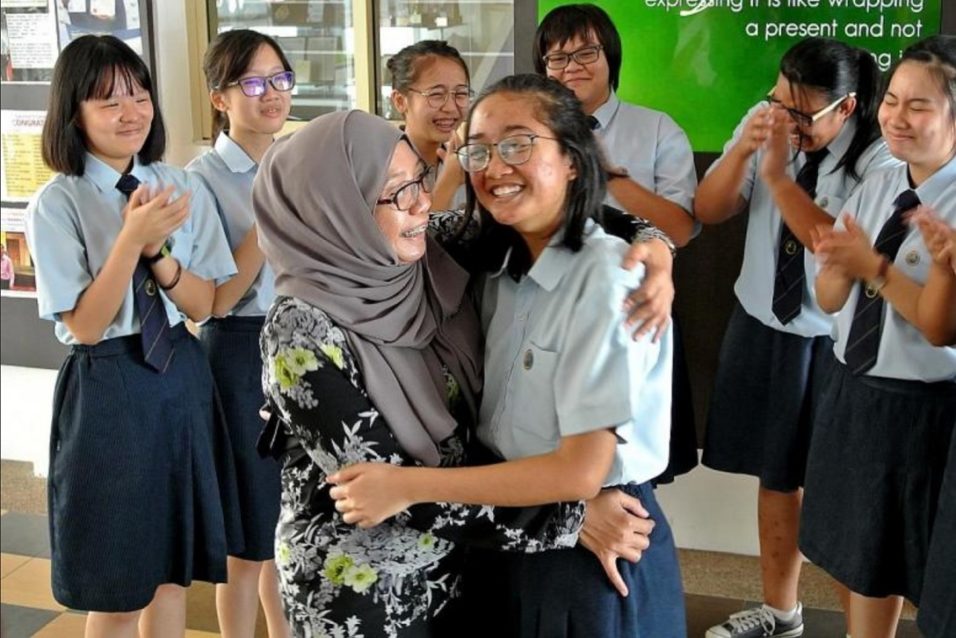
    Yesterday, that discipline paid off for 16-year-old Haziratul Zakirah – who was one of the top scorers from Hong Kah Secondary School with an L1R5 score of 13, which included three distinctions.

    The class of 2016 set a record with yesterday’s results. Students who took the O levels last year outperformed their seniors with 84.3 per cent attaining at least five passes, surpassing the 83.8 per cent set by the 2015 cohort.

    When Zakirah’s result was flashed on the screen in school, she started to cry.

    She told The New Paper later: “I felt so relieved that all my hard work and sacrifices have paid off.”

    She recounted how she had spent about four hours each day studying after returning home from school at around 6pm. On weekends, she would study for about nine hours on one day and spend the other day resting.

    Zakirah, who has three siblings, said she was inspired by her mother, who is the sole breadwinner.

    She said: “My mother works very hard so that my siblings and I can be successful in life. I don’t want to waste that effort.” Madam Siti Rodiyah, 48, a planning engineer, told TNP: “I wasn’t really surprised with Zakirah’s result because I had seen how hard she worked. But whatever her results, I am very proud.”

    Zakirah scored eight for her L1R4, and based on last year’s criteria, she’s eligible for her dream course – biomedical science at Ngee Ann Polytechnic.

    Zakirah, who grew up watching doctor shows on television, hopes to become one in the future.

    She was also her school’s student council president and National Police Cadet Corps squad leader. She even found time to volunteer.

    Zakirah said: “I have been through a lot of challenges, and I know what it feels like to need help. This made me want to help others so they have a reason to smile.”

    Her mathematics teacher, Mr Dao Jun Sun, 35, said that he was not only proud of her grades but also her character.

    “That, to me, is her real success,” he said.


    Source: TNP
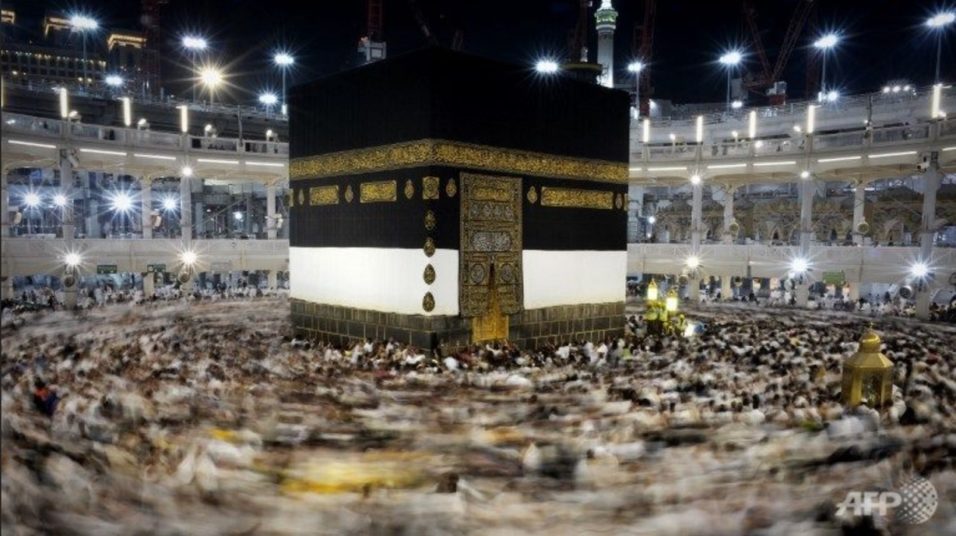
  • Kuota Haji Indonesia Bertambah Lebih 40,000, M’sia Bertambah Sekitar 5,500 Tahun Ini

    Kuota Haji Indonesia Bertambah Lebih 40,000, M’sia Bertambah Sekitar 5,500 Tahun Ini

    Arab Saudi bersetuju memberi kuota haji tambahan kepada Indonesia dengan peningkatan sebanyak lebih 40,000 jemaah haji tahun ini.

    Presiden Joko Widodo dalam satu sidang media khas hari ini (11 Jan) berkata, dengan itu, jumlah bakal jemaah haji Indonesia pada tahun ini ialah sebanyak 221,000 orang berbanding 168,800 tahun sebelumnya.

    Keputusan memberi kuota tambahan itu kata Presiden Jokowi, disampaikan dalam satu perjumpaan khas antara wakil kerajaan Arab Saudi dengan Menteri Agama Indonesia pada minggu lepas.

    INDONESIA DAPAT KUOTA KHAS 10,000

    “Kerajaan Arab Saudi bersetuju untuk mengembalikan kuota sebanyak 211,000 jemaah kepada Indonesia dan kemudiannya memberi kuota khas sebanyak 10,000 lagi tambahan jemaah untuk tahun ini,” kata beliau seperti disiarkan secara langsung dalam berita televisyen tempatan.

    Sejak 2013 kerajaan Arab Saudi memotong hampir separuh kuota jemaah haji Indonesia atas alasan mengurangkan jemaah dari seluruh dunia ekoran kerja-kerja menaik taraf Masjidil Haram di Makkah.

    M’SIA GAGAL DAPATKAN KUOTA BARU 30,000

    Kuota jemaah haji Malaysia pula dikembalikan kepada jumlah asal iaitu 27,800 orang untuk tahun ini, berbanding 22,320 orang sebelum ini.

    Demikian dedah Menteri di Jabatan Perdana Menteri Datuk Seri Jamil Khir Baharom semalam (10 Jan).

    Beliau berkata kerajaan Arab Saudi mengembalikan kuota berkenaan selepas menarik balik pengurangan kuota jemaah haji sebanyak 20 peratus yang dikuatkuasakan pada 2013 terhadap jemaah asing.

    “Malaysia mengucapkan terima kasih kepada kerajaan Arab Saudi kerana mengembalikan kuota asal jemaah haji tersebut,” kata Datuk Seri Jamil.

    Beliau menambah, kerajaan Malaysia memohon kuota 30,000 jemaah tetapi kerajaan Arab Saudi memberi jumlah kuota asal iaitu 27,800 orang.

    Source: beritamediacorp

  • “Saya OKU, Saya Tidak Tipu”

    “Saya OKU, Saya Tidak Tipu”

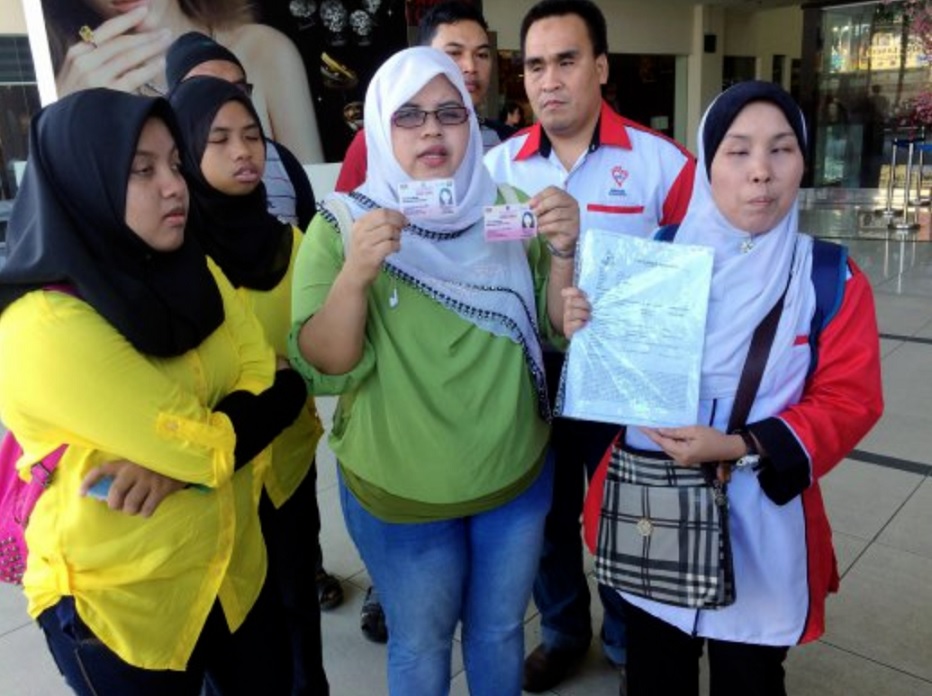
    Seorang wanita orang kurang upaya (OKU) menafikan dakwaan kononnya menipu menjadi buta dengan menjual tisu seperti tersebar dalam laman sosial.

    Noraslina Rajoni, 43, menghadapi masalah penglihatan tahap kedua sejak lahir dan mempunyai kad OKU bagi membuktikan keadaannya. Mata kanannya buta sepenuhnya manakala mata kirinya hanya boleh mengesan warna terang.

    Beliau mewarisi penyakit Allahyarham ibu bapanya, Rajuni @ Rajimin Moin, 70, dan Asiah Mahmod, 67, yang mempunyai masalah penglihatan.

    Noraslina berkata, kecaman terhadapnya timbul selepas kakitangan bank memuat naik gambar di Facebook (FB) yang mendakwa beliau menipu orang ramai dengan menyamar sebagai buta dan menjual tisu.

    “Memang saya masukkan wang RM14,000 ke dalam akaun milik saya di sebuah bank di Bandar Baru Uda, di sini, tapi bukan semuanya duit saya. Duit saya cuma RM3,000, selebihnya duit anak kedua saya yang juga menjual tisu serta duit beberapa kawan OKU yang lain.”

    “Mereka kerap menumpang menyimpan duit dalam akaun saya dan ini adalah hasil jualan kami selepas beberapa bulan. Kalau nak kata saya menipu buta itu memang fitnah kerana saya ada kad OKU sah.”

    “Saya buta dan saya tidak menipu orang ramai dengan meminta sedekah, sebaliknya menjual tisu yang dibeli dengan modal kira-kira RM500,” katanya pada sidang media di sini, hari ini.

    Sejak beberapa tahun lalu, Noraslina membeli tisu secara pukal dan akan menambah stok sebelum kehabisan. Beliau menyimpan hasil jualan dalam akaun berserta wang anak-anaknya dan ada masanya beberapa rakan OKU yang tidak mempunyai akaun bank, turut menumpang hasil jualan mereka.

    Sementara itu, Timbalan Presiden Pertubuhan Amal Pembangunan Usahawan OKU Penglihatan (PERKUM) Malaysia, Mohammad Faiz Asangku Abdullah, berkata pihaknya kesal dengan tindakan kakitangan bank berkenaan mengambil gambar dan mendedahkan butiran peribadi mangsa. Katanya, pihaknya akan meneliti untuk mengambil tindakan undang-undang ke atas kakitangan bank berkenaan.

    Baru-baru ini, gambar seorang wanita mengutip derma di Dataran Bandaraya dekat sini, dan memasukkan sejumlah wang tunai didakwa hasil kutipan meminta sedekah, menjadi viral di laman sosial hingga menimbulkan kemarahan netizen.

    Source: bharian

  • You Know Why Malays And Indians Get Less Sleep? – Radio Kiss 92FM

    You Know Why Malays And Indians Get Less Sleep? – Radio Kiss 92FM

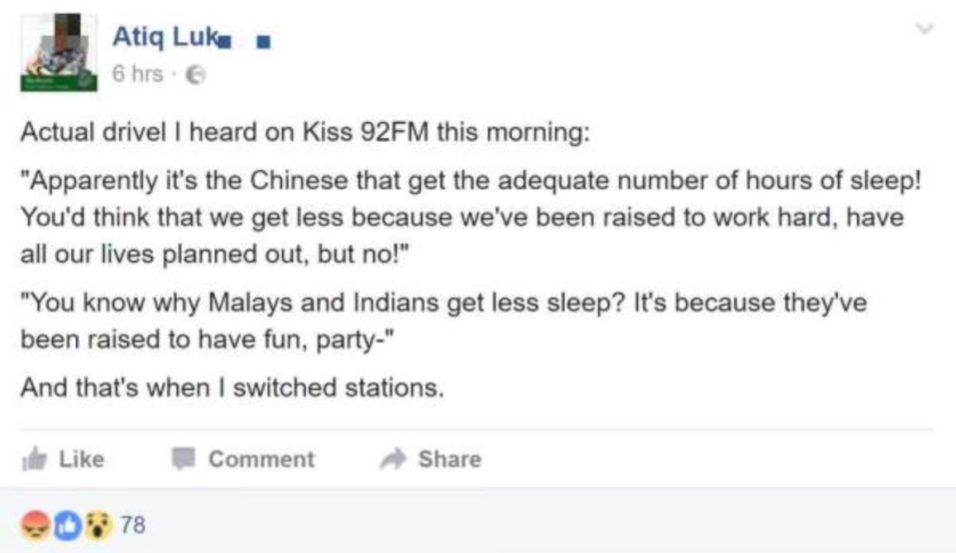
    Local radio station Kiss 92FM’s  morning radio DJs Maddy, Jason and Arnold made a racially insensitive remarks which stereotyped the Malay and Indian minorities in Singapore. In a FB post, someone claimed to have heard the unpleasant remark over the radio and was immediately turned off by it.

    The radio station were suprised at the sleep report claiming that most Chinese Singaporeans got enough sleep whereas minorities get less sleep. It is unclear who actually made the comment but one of the DJs opined that Malays and Indian Singaporeans get less sleep because they were raised to have fun and party.

    Is this the becoming of Singapore’s local radio station? Have they no regard for the feelings of the Malay and Indian community in Singapore even if it were meant to be a joke? I totally agree with the FB user who posted the photo; not going to listen to Kiss 92FM again.


    Jaafar

    Reader’s Contribution


  • ‘There Are No Homes Left’: Rohingya Tell Of Rape, Fire And Death in Myanmar

    ‘There Are No Homes Left’: Rohingya Tell Of Rape, Fire And Death in Myanmar

    When the Myanmar military closed in on the village of Pwint Phyu Chaung, everyone had a few seconds to make a choice.

    Noor Ankis, 25, chose to remain in her house, where she was told to kneel to be beaten, she said, until soldiers led her to the place where women were raped. Rashida Begum, 22, chose to plunge with her three children into a deep, swift-running creek, only to watch as her baby daughter slipped from her grasp.

    Sufayat Ullah, 20, also chose the creek. He stayed in the water for two days and finally emerged to find that soldiers had set his family home on fire, leaving his mother, father and two brothers to asphyxiate inside.

    These accounts and others, given over the last few days by refugees who fled Myanmar and are now living in Bangladesh, shed light on the violence that has unfolded in Myanmar in recent months as security forces there carry out a brutal counterinsurgency campaign.

    Their stories, though impossible to confirm independently, generally align with reports by human rights organizations that the military entered villages in northern Rakhine State shooting at random, set houses on fire with rocket launchers, and systematically raped girls and women. At least 1,500 homes were razed, according to an analysis of satellite images by Human Rights Watch.

    The campaign, which has moved south in recent weeks, seems likely to continue until Myanmar’s government is satisfied that it has fully disarmed the militancy that has arisen among the Rohingya, a Muslim ethnic group that has been persecuted for decades in majority-Buddhist Myanmar.

    “There is a risk that we haven’t seen the worst of this yet,” said Matthew Smith of Fortify Rights, a nongovernmental organization focusing on human rights in Southeast Asia. “We’re not sure what the state security forces will do next, but we do know attacks on civilians are continuing.”

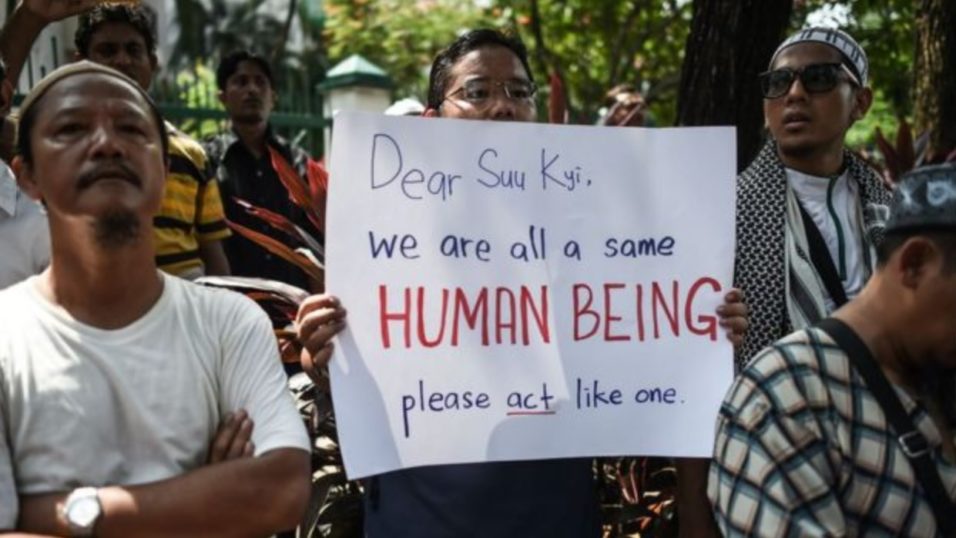
    A commission appointed by Myanmar’s government last week denied allegations that its military was committing genocide in the villages, which have been closed to Western journalists and human rights investigators. Officials have said Rohingya forces are setting fire to their own houses and have denied most charges of human rights abuses, with the exception of a beating that was captured on video. Myanmar’s leader, Daw Aung San Suu Kyi, the recipient of a Nobel Peace Prize, has been criticized for failing to respond more forcefully to the violence.

    The military campaign, which the government describes as a “clearing” operation, has largely targeted civilians, human rights groups say. It has sent an estimated 65,000 Rohingya fleeing across the border to Bangladesh, according to the International Organization for Migration.

    “They started coming in like the tide,” said Dudu Miah, a Rohingya refugee who is chairman of the management committee at the Leda refugee camp, near the border with Myanmar. “They were acting crazy. They were a mess. They were saying, ‘They’ve killed my father, they’ve killed my mother, they’ve beaten me up.’ They were in disarray.”

    Soldiers were attacking villages just across the Naf River, which separates Myanmar from Bangladesh, so close that Bangladeshis could see columns of smoke rise from burning villages on the other side, said Nazir Ahmed, the imam of a mosque that caters to Rohingyas.

    He said it was true that some Rohingya, enraged by years of mistreatment by Myanmar forces, had organized themselves into a crude militant force, but that Myanmar had dramatically exaggerated its proportions and seriousness.

    Rohingyas are “frustrated, and they are picking up sticks and making a call to defend themselves,” he said. “Now, if they find a farmer who has a machete at home, they say, ‘You are engaged in terrorism.’”

    An analysis released last month by the International Crisis Group took a serious view of the new militant group, which it says is financed and organized by Rohingya émigrés in Saudi Arabia. Further violence, it warned, could accelerate radicalization among the Rohingya, who could become willing instruments of transnational jihadist groups.

    Muhammad Shafiq, who is in his mid-20s, said he was at home with his family when he heard gunfire. Soldiers in camouflage banged on the door, then shot at it, he said. When he let them in, he said, “they took the women away, and lined up the men.”

    Mr. Shafiq said that when a soldier grabbed his sister’s hand, he lunged at him, fearful the soldier intended to rape her, and was beaten so severely that the soldiers left him for dead. Later, he bolted with one of his children and was grazed by a soldier’s bullet on his elbow. He crawled for an hour on his hands and knees through a rice field, then watched, from a safe vantage point, as troops set fire to what remained of Kyet Yoepin.

    “There are no homes left,” he said. “Everything is burned.”

    Jannatul Mawa, 25, who is from the same village, said she crawled toward the next village overnight, passing the shadowy forms of dead and wounded neighbors.

    “Some were shot, some were killed with a blade,” she said. “Wherever they could find people, they were killing them.”

    Dozens more families are from Pwint Phyu Chaung, which was near the site of a clash between militants and soldiers on Nov. 12.

    According to Amnesty International, the militants scattered into neighboring villages. When army troops followed them, several hundred men from Pwint Phyu Chaung resisted, using crude weapons like farm implements and knives, the report said. A Myanmar army lieutenant colonel was shot dead, and the troops called in air support from two attack helicopters.

    Mumtaz Begum, 40, said she was awakened at dawn when security forces approached the village from both sides and began searching for adult men in each house.

    She said she and her daughter were told to kneel down outside their home with their hands over their heads and were beaten with bamboo clubs.

    She said her 10-year-old son was shot through the leg, her daughter’s husband was arrested, and her own husband was one of dozens of men and boys in the village who were killed by soldiers armed with guns or machetes that night. Villagers, she said, “laid the bodies down in a line in the mosque and counted them.”

    Ms. Begum’s daughter, Noor Ankis, 25, said the next morning soldiers went from house to house looking for young women.

    “They grouped the women together and brought them to one place,” she said. “The ones they liked they raped. It was just the girls and the military, no one else was there.”

    She said the idea of trying to escape flickered through her head, but she was overcome by fatalism. “I felt there was no point in being alive,” she said.

    Ms. Ankis pulled her head scarf low, for a moment, removing a tear. She said she had been thinking about her husband.

    “I think about how he took care of me after we got married,” she said. “How will I see him again?”

    Sufayat Ullah, 20, a madrasa student, said that he was home with his family on the morning of the attack and that the first thing he registered was the sound of gunfire. He realized quickly, he said, that he could only survive by escaping. “When they found people close by, they attacked them with machetes,” he said. “If they were far away, they shot them.”

    Mr. Ullah ran from the house and bolted for the creek at the edge of town, and he dived in, swimming as far as he could. He said he spent much of the next two days underwater, finally scrambling onto the bank near a neighboring village. Only then did he learn that his mother, father and two brothers had burned to death inside the family house.

    “I feel no peace,” he said, covering his face with his hands and weeping. “They killed my father and mother. What is left for me in this world?”

    Source: nytimes

deneme bonusu