Author: Rilek1Corner

  • Malaysian Cops Hunting For “Thaipusam Moral Police”

    Malaysian Cops Hunting For “Thaipusam Moral Police”

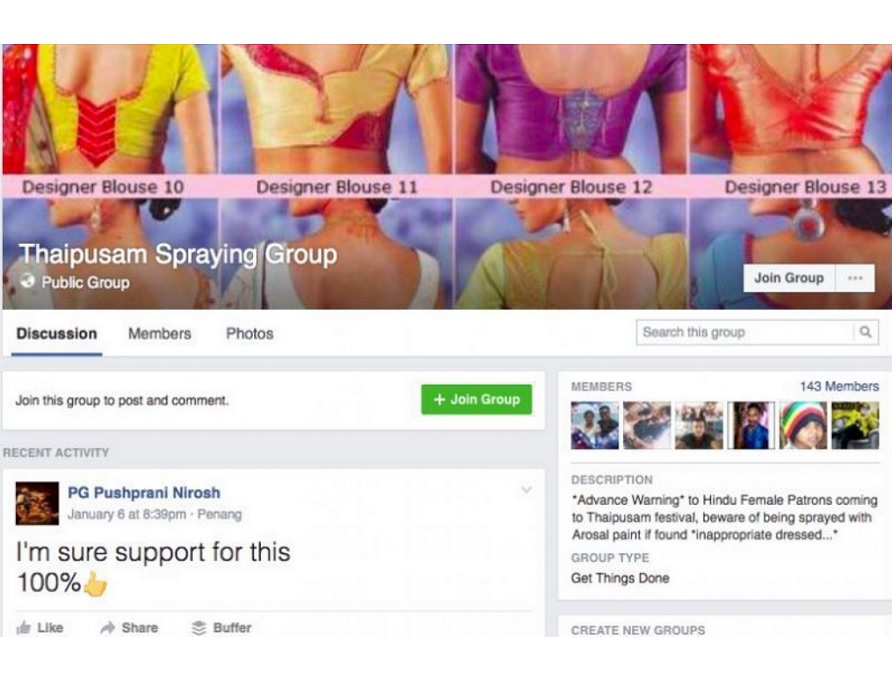
    Malaysian police said they are trying to track down those behind a Facebook group that threatened to spray paint the bodies of Hindu women who dress “inappropriately” during the Thaipusam festival next month.

    In a report by The Star Online, the police urged the public to inform them of any relevant information regarding the “Thaipusam Spraying Group”.

    “What these individuals are planning to do is unlawful, and we will not allow it.

    “If anyone is caught breaking the law, they will be dealt with,” Selangor police chief Commissioner Abdul Samah Mat told the portal.

    Mr Abdul Samah assured the public that the police will maintain security during the festival, celebrated with processions towards temples such as in Batu Caves and George Town.

    Meanwhile, Hindu Sangam Religious Advisory Board member Dr Thilagavathy Kanagaretnam was reported defending the group, claiming that its intention to prevent women dressed inappropriately was not wrong.

    Despite that, Dr Thilagavathy admitted that their planned actions were “drastic”.

    Thaipusam Task Force coordinator G Gunaraj was also reported saying that it will not condone such vigilantism.

    “There is a dress code that should be followed and we can only educate people to follow it. We can’t force them and it is not right to do so,” Dr Gunaraj said.

    The public Facebook group called “Thaipusam Spraying Group” was recently created by one “Henry Barnabas”, with more than 140 members at the time of writing.


    Source: Today

  • Meridians Seeking Help For Hilmi And Family After Bus Crash In Muar

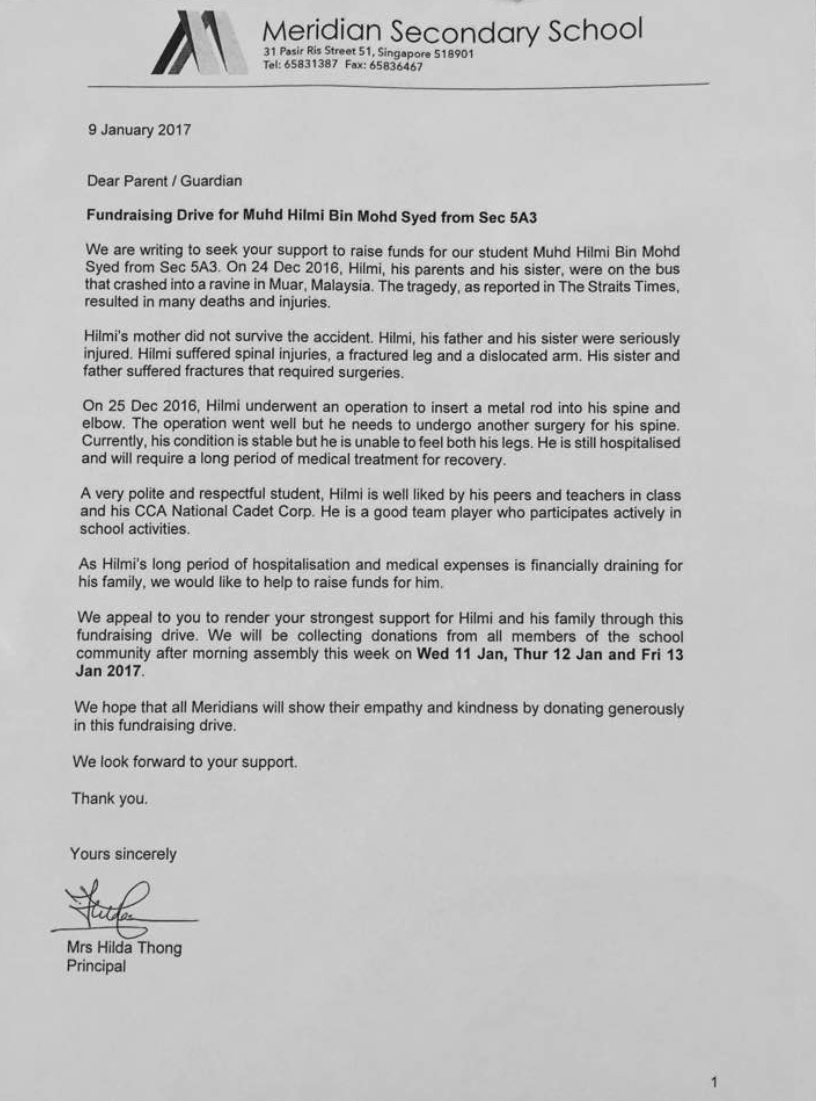
    Meridians Seeking Help For Hilmi And Family After Bus Crash In Muar

    Please help in whatever way we can.
    We will never know when it will be our (loved ones’) turn.
    .
    Can dikir barat teams/badan kebajikan/kesatuan yg ada kelebihan hulurkan bantuan? Tak banyak, sedikit pun jadilah. Kita kotakan kata-kata yg kita laung-laungkan selama ini. Tak mudah buat aku menangis siot. But his plight shattered me.
    .
    Can someone initiate derma kilat di masjid or during the mega event at tamp west cc pada hari sabtu ini? #perihaldk
    .Budak lagi. Baru ‘nak memutik. Sudah mula pincang dlm kehidupan. Nasib anak-anak kita, bagaimana?
    .
    Yes, you may share this post. Please share this post.

    Source: Zaidy Nandir

  • What Is Islamic Law? — Jahaberdeen Mohamed Yunoos

    What Is Islamic Law? — Jahaberdeen Mohamed Yunoos

    It may sound ironical to ask the question what is “Islamic law” in the 21st century when it is generally thought that the body of what constitutes Islamic law has already been crystallised and settled.

    If indeed it has crystallised into a recognisable and unchangeable body, then it is logical that there would only be one universal Islamic law. However, an observation of Islamic law between various countries and even between various states in Malaysia would evidence the fact that the laws are not uniform.

    It would seem that what is Islamic law is still developing, in a state of flux and diverse. Shariah, on the other hand is a separate concept altogether.

    Every Muslim would agree that Islam is a simple religion. The pillars of Islam are said to be only five that is, declaration of faith or the syahadah, the daily five times prayer, fasting in the month of Ramadan, payment of the zakat and the performance of the pilgrimage by those who can afford it.

    However, Islam is seen not only as a religion in the typical sense but also as way of life that is complete and encompasses every aspect of our life.

    In other words, Muslims believe and accept that Islam provides the necessary guidance and imposes certain obligatory behaviour in order to achieve the pleasure of God in this life and the next.

    It is this belief that has lead the scholars of Islam to discern principles, precepts and law affecting life from the scriptures and the Sunnah of the Rasul.

    Thus, began the role of the jurists or scholars of law in interpreting and developing various legal, social, economic and religious laws, conducts of behaviour and so on for the Muslim. These active role of the jurists began some many decades after the passing of the prophet.

    I believe they reflected the intellectual response to the needs of a growing civilisation to derive various legal principles and codes of conduct necessary to create an orderly society consistent with the understood commandments of Allah in the Quran and the injunctions of the Sunnah.

    It is from such need and environment that the development of usul al fiqh or Islamic jurisprudence took place.

    In Islamic jurisprudence history, the al madhahib or schools of law that became famous are the Hanafite, the Malikite, the Shafi- ite and the Hanbalite though there were also other schools in the history of Muslim jurisprudence.

    It is important to pause at this stage to reflect and note that prior to the development of these schools of jurisprudence, the primary source then for Muslims was simply the Quran and the Sunnah of the Prophet.

    With the development of the schools of jurisprudence, therefore, the primary sources of Islamic law expanded to become the Quran, Sunnah, Ijma’ (consensus of the jurists) and Qias (judgement upon juristic anology).

    Later, other secondary sources of Islamic jurisprudence were developed. Hence, there clearly was liberalisation of the sources from which Islamic jurisprudence began to expand and develop.

    Any modern lawyer will appreciate this development as law is considered to be a “living creature” that develops as life and its circumstances change and develop.

    However, it is worrisome whether some conservative scholars today are fully aware that no human being’s interpretation of Allah’s will can be absolute because only Allah alone is the Absolute Interpreter.

    If this point is correct and properly understood then “Islamic law” as developed and developing can be relevant to contemporary situations and the very understanding of what embodies “Islamic law” can undergo fresh perspective without departing from its fundamental adherence to the Quran and most authentic Sunnah.

    In the history of Muslim jurisprudence, a study and consideration of what are the objectives of the Shariah also too place. From a modern perspective, this would be an inevitable development.

    The great university professor and scholar of Islam Imam Al Ghazali identified five essentials of the maqasid or the objectives of Syariah namely, preservation of religion, human life, the faculty of reason, progeny and material wealth.

    As to whether or not the objectives or the maqasid should be limited to five is a subject of vigorous debate among the scholars.

    Later scholars have added on to these five for example, the attainment of justice. This debate is understandable and in fact encouraging because life is constantly evolving with new experiences, new sets of circumstances, higher levels of knowledge, information and technology and discovery of new facts.

    Hence, the perception and understanding of life today cannot be limited to the experiences and perception of life by previous scholars alone.

    After all, Muslims believe that the law giver is Allah and any scholar cannot have a claim to monopoly of interpreting Allah’s intent, however knowledgeable he may be acclaimed to be.

    It can, therefore, be seen from the discussion that “Islamic law” is in a state of development as is the case with many other aspects related to Muslim thinking such as political Islam, Islamic economics and so on.

    The field of Islamic law and jurisprudence has become a complex discipline and Muslims must be careful that the legalistic aspect of Islam does not overshadow the spiritual and moral aspect of the religion such that it stifles faith or creativity of the individual Muslim in particular and the society in general.

    In the context of Malaysia, as a Muslim, it is my hope that contemporary Muslim scholars maintain an open mind within the principles of the Quran and the most authentic Sunnah when they discuss and try to apply the Islamic law as developed by classical jurists who, without doubt has made great and laudable efforts.

    There is sufficient evidence in Muslim jurisprudence history that the classical jurists never claimed their interpretations and their views to be beyond criticism or rejection if it is not consistent with the Quran, most authentic Sunnah or not relevant to the times.

    In this regard it may be helpful to realign our Muslim outlook, for example, to evaluate whether some of the legislation that has been passed by our Parliament are in fact consistent with the primary sources of Islamic jurisprudence and hence “Islamic”.

    This may be a better and useful approach than trying to impose classical formulation of laws in contemporary settings which are different.

    If my argument is correct, this may lead to a more holistic understanding of what Shariah is unlike the current trend that what is defined as “shariah laws” are the only ones that are “shariah.” With this approach, probably large segments of what is now classified as “civil laws” may qualify as “shariah.”

    I opine that the government’s effort to introduce the idea of Shariah compliance is a step towards this direction in the long run.


    Source: themalaymailonline

  • 6 Penyanyi Muda Singapura Yang Perlu Diberi Perhatian Tahun 2017 Ini

    6 Penyanyi Muda Singapura Yang Perlu Diberi Perhatian Tahun 2017 Ini

    BERITAMediacorp: Siapakah bakat-bakat baru muzik Melayu Singapura yang dirasakan akan merancakkan lagi persada seni tempatan tahun ini?

    Yang pasti, industri muzik Singapura sedang diperkayakan dengan bakat-bakat muda yang mempunyai kekuatan masing-masing dengan pelbagai genre muzik mereka mempertaruhkan.

    Lagu-lagu nyanyian mereka juga semakin mengisi segmen-segmen permintaan lagu di stesen Radio RIA 89.7 FM dan juga carta Lagu Paling Popular Minggu Ini( LPMI).

    Selain menyanyi, bakat-bakat tempatan juga mampu menghasilkan lagu-lagu ciptaan mereka sendiri secara persendirian ataupun mereka bekerjasama dengan komposer tempatan untuk menghasilkan lagu-lagu yang berjaya menguasai ruang udara kedua-dua stesen radio Melayu tempatan.

    Dalam laporan ini, BERITAMediacorp menonjolkan enam bakat muda dan baru – Isnina, Farhan Shah, Haikal Ali, Mai Dhaniyah, Faridzuan Faris serta Amy Hakimi – dan mendapatkan apakah harapan dan aspirasi mereka untuk tahun 2017 ini.


    (Gambar: Isnina)

    ISNINA

    Isnina antara bakat baru Singapura yang lagunya “ Buaya” menjadi antara pilihan pendengar di radio RIA 89.7FM untuk segmen-segmen permintaan seperti JukeBox897, #Goje dan I-Overdose. Bakat nyanyian beliau digilap sejak umur sembilan tahun apabila turut serta bersama keluarga berkaraoke.

    Single pertama Isnina “Buaya” dicipta olehnya sendiri dan pertama kali mendapat melodi menerusi alat Ukulele sebelum dicantikkan” oleh penerbit bernama Fakir J Mario dan Kuzai dari Greendoor Studios.

    Kejayaan lagu Buaya membuatnya “lebih bersemangat untuk menulis” lagu baru bagi tahun 2017 nanti. “Tak sabar nak kongsi (lagu baru) untuk 2017” katanya baru-baru ini. Hanya menerusi lagu-lagu ciptaan beliaulah diharap dapat menjadi identitinya yang tersendiri.

    “Isnina berharap agar pendengar dapat menjiwai lagu-lagu saya. Saya juga ingin meluaskan pengetahuan saya dalam dunia hiburan. Saya ingin berjumpa ramai orang (dalam industri), bekerja dengan mereka dan mudah-mudahan dapat menulis untuk mereka, selain dari membuat persembahan,” luah Isnina kepada BERITAMediacorp.

    Juga dalam senarai ‘harapan’ beliau, ialah untuk dapat bertemu dengan artis dari Malaysia dan Indonesia, berkerja atau menulis untuk mereka dan juga membuat persembahan di sana.


    (Gambar: Farhan Shah)

    FARHAN SHAH

    Farhan Shah, seorang penuntut jurusan pemasaran dan komunikasi dari Universiti Western Australia, baru sahaja melancarkan single terbarunya Terjatuh Hati terbitan Haramain Osman dan Judah Lyne dari The Lion Story. Beliau juga rancang merakamkan single pertama Inggeris dan sebuah EP.

    Meskipun masih menuntut di Perth, Farhan rajin mencari masa pada hujung minggu atau cuti sekolah untuk pulang ke Singapura merakamkan lagu baru atau membuat persembahan.

    Untuk 2017, Farhan ingin menghasilkan lebih banyak lagu, sebuah EP dan konsertnya yang kedua jika ada kesempatan.

    Ini luahan beliau kepada BERITAMediacorp: “Ramai anak muda Singapura yang sangat berbakat di Twitter, Instagram dan Youtube. Salah satu harapan Farhan untuk tahun 2017 ialah untuk terus menolong memupuk bakat-bakat muda Singapura agar industri kita menjadi lebih rancak and bertenaga.”

    Farhan kini mengidam untuk merakamkan album pertama jika ada peluang atau berkolaborasi dengan artis-artis seberang tambak menerusi sebuah lagu atau persembahan. Itulah yang sedang diusahakan kini dengan harapan ia akan berjalan dengan lancar.


    (Gambar: ParanormalMY)

    HAIKAL ALI

    Penyanyi yang menempah nama di Anugerah Planet Muzik(APM) 2016 menerusi single Bertemu Kembali, Haikal Ali, kini sedang berkerjasama dengan The Lion Story untuk menulis dan merakamkan sebuah lagu duet bersama seorang lagi penyanyi dari Singapura.

    “Saya tidak dapat memberi banyak maklumat disebabkan projek ini masih di peringkat perancangan” terangnya.

    Single pengenalan Haikal sudahpun ditonton lebih 105,000 kali di YouTube, sekaligus satu pencapaian yang cukup memberangsangkan bagi artis Singapura ini.

    “Dulu hanya sebuah mimpi, kini sebuah kenyataan. Kalau nak kira paling banyak, tak salah saya, ada juga yang lebih tontonan dari saya tetapi saya ingin ucapkan terima kasih kepada peminat-peminat di Singapura dan di luar Singapura kerana menerima lagu Bertemu Kembali dengan baik.

    Shoutout kepada Paranormal Records, The Malaya TV yang merakam dan menggubah MV tersebut dengan baik dan juga Mawar Rashid yang sudi menjadi “kekasih” saya dalam video itu,” kongsi Haikal kepada BERITAMediacorp.

    Sebelum ini, ada yang menyangka bahawa suara Haikal adalah milik penyanyi dari Indonesia.

    “Kalau sekarang, saya hanya cuma rasa ‘neutral’ tentang ini. Saya berterima kasih mempunyai suara saya,” jelas anak muda berusia 23 tahun ini.

    Beliau menyerahkan kepada Tuhan, seandainya ada rezeki untuknya melebarkan sayapnya ke Kuala Lumpur atau Jakarta:

    “Saya hanya beri yang terbaik mungkin, kalau rezeki saya di sana saya ikut, kalau di sini saya ikut. Cikgu sekolah menengah saya pernah ingatkan saya ‘di manapun kita pijak, ini bumi Allah’ jadi tak kira lah dimana saya berada, selagi saya boleh sumbangkan sesuatu untuk kehidupan orang lain saya akan teruskan,” ujar Haikal kepada BERITAMediacorp lagi.


    (Gambar: Mai Dhaniyah)

    MAI DHANIYAH
    Penuntut tahun tiga Politeknik Republik, Mai Dhaniyah, yang kini popular menerusi lagu Kasih yang masih rancak diudarakan di radio, bertekad untuk terus menyanyi dan berusaha untuk memantapkan kerjayanya sebagai penyanyi. Selain menyanyi secara solo, beliau juga menyanyi bersama kumpulan A Cappella.

    Mai mengakui, single kedua berjudul “Kasih” mendapat tempat di hati para pendengar walaupun mungkin ramai yang belum kenal kepada penyanyinya. Beliau akur kurang mendapat liputan di media massa.

    “Mungkin Mai sebagai artis independent yang tidak terikat dengan mana-mana pihak, jadi promosi kami lakukan sendiri,” katanya jujur kepada BERITAMediacorp.

    Mai pernah diberi kesempatan pada November lepas untuk membuat showcase di KawKaw SG bersama artis/pelawak Hamzah Adon, bagi mempromosikan lagu Kasih.

    Sungguhpun begitu, Mai berkata menyanyi adalah satu hobi baginya buat masa ini.

    “Cuma pada waktu ini belum masanya untuk Mai menyanyi sepenuh masa kerana harus fokus pada pelajaran dan selepas itu untuk mencari pekerjaan yang sesuai,” kongsi beliau lagi.

    Mai bakal merakamkan single beliau yang ke-3 pada tahun 2017 ini. Beliau akan terus bekerjasama dengan penerbit yang sama iatu Faizal Sapuan. Bagi beliau, Faizal adalah salah seorang penerbit yang memahami kekuatan serta kelemahan suaranya.

    “Ada perancangan untuk membuat album/mini album tapi mungkin ini mengambil masa yang lebih sikit, untuk memastikan mutu dan lagu yang sesuai untuk Mai,” dedah beliau lagi kepada BERITAMediacorp.

    Objektif beliau dalam industri hiburan tempatan adalah untuk mencipta identiti tersendiri supaya bila dengar lagu nyanyiannya, pendengar akan tahu itulah vokal Mai Dhaniyah.

    Banyak lagi yang beliau ingin capai dan harus pelajari seperti ilmu mencipta lagu untuk Mai sendiri dan untuk penyanyi lain juga.

    (Gambar: Faridzuan Faris)

    FARIDZUAN FARIS
    Faridzuan Faris adalah seorang lagi bakat tempatan yang mendapat perhatian penggemar muzik tempatan. Beliau kini mahasiswa tahun kedua jurusan Perniagaan di Universiti Nasional Singapura (NUS).

    “Selamat Tinggal Sayang” merupakan single pertama beliau yang mendapat perhatian penggemar muzik setempat. Single keduanya “Selamanya” masih giat dipromosikan.

    Untuk tahun 2017, beliau berhasrat untuk kembali kepada asas dalam bidang muzik dengan mempelajari gitar dengan lebih mendalam lagi.

    “Gitar alat muzik yang saya sering gunakan untuk menulis lagu. Buat masa sekarang ini, saya ingin terus menulis lagu, berkolaborasi dengan rakan-rakan muzik dan buat lagu-lagu cover dahulu.”

    Meskipun disibukkan dengan pengajian, Faridzuan tetap akan memberikan tumpuan kepada kerjayanya sebagai penyanyi: “Muzik boleh dilihat sebagai saling melengkapkan sekolah. Bila tidak sibuk dengan pengajian, saya akan buat muzik.”

    Untuk tahun 2017 nanti, anak muda ini berharap untuk “mengeluarkan lagu yang akan diterima oleh pelbagai umur dan mengukuhkan lagi identitinya sebagai penyanyi pop R&B”.

    Selain itu, beliau dan sekumpulan kawan kini memulakan inisiatif @localyoungtalents di Instagram, di mana mereka “ingin menggalakkan lebih ramai anak muda untuk tampil ke hadapan membuat muzik”.

    Mereka sempat membuat showcase pertama mereka pada 18 Disember lalu dan mendapat sambutan yang menggalakkan.

    “Diharapkan inisiatif LYT ini akan menjadi sumber inspirasi bagi rakan-rakan lain untuk menyemarakkan lagi industri muzik Singapura,” kata Faridzuan penuh harapan.


    (Gambar: Mohamad Farhadi)

    AMY HAKIMI
    Diperkenalkan menerusi single Aku Redha ciptaan Olly Maguire, penyanyi Amy Hakimi bertekad untuk “terus berusaha meningkatkan prestasinya agar dapat memberikan persembahan yang lebih baik untuk pendengar dan orang sekeliling yang selalu menyokongnya”.

    Beliau selesai merakamkan lagu berjudul Teman bersama artis-artis Voz Management seperti Ajib Alkaff, Jumali Sanotri, Juffri, Andri ETH Band dan bakat baru Aaryz Shiraz.

    Jika tiada aral melintang, pada Mac 2017 nanti Amy akan muncul dengan single kedua ciptaan beliau sendiri yang mengekalkan genre slow rock.

    Apakah yang akan Amy lakukan untuk kekal bersaing dengan artis-artis Singapura yang kini semakin hari semakin ramai?

    “Amy akan cuba pelajari di mana kekurangan Amy dan perbaikinya. Semua ada kehebatan masing masing jadi Amy akan buat yang terbaik atas doa ibu ayah dan mereka yang menyokong Amy,” terang penyanyi bersuara lantang itu kepada BERITAMediacorp.

    Untuk projek seterusnya, Amy sudahpun berbincang dengan pihak pengurusannya untuk mencipta lagu sendiri.

    Jika ada peluang, beliau turut ingin cuba melebarkan sayap ke Malaysia dan Indonesia setelah menceburkan diri dalam industri muzik tempatan dengan lebih mendalam lagi nanti.
    Source: Berita Mediacorp

  • Singapore’s Stagnant Start-Ups

    Singapore’s Stagnant Start-Ups

    Facebook, Amazon, eBay. Other than cultures of innovation, disruption and now serious valuations, something that all these once start-ups now tech-giants have in common is that they aren’t Singaporean.

    Ok, obviously global tech start-ups are largely an American phenomenon. But even at the level of local and regional start-ups, the Little Red Dot is lagging behind with very few recognisable names in the start-up game.

    What about Grab taxi, you ask? Well, it is Malaysian-founded, though now Singaporeanised thanks to investment and this too is another recurring problem where local start-ups are struggling despite Singapore’s financial ecosystem pouring money into regional ventures.

    With strong intellectual property legislation, excellent connectivity, a range of government programs in support of innovation and diverse options for funding, Singapore is — on paper at least — a paradise for start-ups.

    However, as regional ventures have flourished on Singapore’s soil local entrepreneurs appear to be missing out. According to a recent Tech in Asia article, local ventures have raised only a fraction of the funding raised by their foreign counterparts.

    Singapore has much to celebrate and be proud of… but it needs to relook its start-ups policy. This after billions of dollars’ worth of government funding directed at local start-ups for several years.

    To some extent, of course, the discrepancy in the performance between local and regional ventures is inevitable. Start-ups operating in Indonesia, India or China benefit from huge domestic markets and are an attractive proposition to investors.

    Also there are clear gaps to be filled in these markets that don’t always exist in Singapore where international companies already operate comfortably.

    However, Singapore with its sizeable economy and talent pool should be producing internationally and regionally competitive start-ups. Just look at Israel, a country with a similar population, GDP and high-tech base, which is churning out start-ups at a formidable pace including the home-grown navigation app Waze which was bought by Google for US$1 billion (RM4.47 billion).

    Something isn’t quite right, our start-up ecosystem is not working for local entrepreneurs and this is a problem.

    Though some might say it’s simply meritocracy with foreign start-ups having better revenue models and harder working teams, the reality is that Singapore as a nation must develop its core at every level particularly at the level of tech-innovation and entrepreneurship.

    If you look at the labour market, Singaporeans are now heavily favoured — with restrictions on S-passes and employment passes benefiting qualified Singaporeans.

    But in terms of the start-up ecosystem, we seem to be at an active disadvantage, seen as consistently less worthy of investment than those operating in larger markets with lower barriers to entry.
    Here’s my hypothesis:

    1. Singapore start-ups haven’t moved to capitalise on the country’s competitive advantages. While we don’t have a large market we do have a sophisticated research base, and a more complex financial ecosystem than most of our neighbors. This means Singapore can compete in niche products like genetics and robotics, but for too long our local start-up offerings have been along the lines of retail solutions, payment gateways etc. simple clones that haven’t developed deeper technologies even though we should have the talent to do so.

    2. The second problem may also be the government’s own largesse. Billions of dollars’ worth of grants, incubators and ambitious funding programs don’t guarantee success. One of the dangers of these schemes is that a lot of start-ups become vehicles for obtaining funding and don’t have the business plans and commitment needed for success. Better targeted funding which offers to co-fund or match funding raised by founders with clearer milestones is essential to propelling a healthy start-up economy.

    3. The global start-up narrative has focused on a small number of visionaries — fearless leaders in their garages and basements ingeniously disrupting their way to success. It must be noted though that most successful businesses in Asia are family businesses with family and community support structures. It might be time our funding and development models reflected this with family units encouraged to fund projects and ownership structures, loans etc that facilitate this. While this is somewhat unconventional, involving the family/community has the advantage of removing the fear of failure many isolated Singaporean entrepreneurs have — as risks are now shared.

    4. Finally, the key weakness in terms of creating successful start-ups is our increasing distance from  our immediate region. Despite amazing transport connectivity to every part of Asia, Singaporeans are too used to seeing the country as a bubble. As such, Singapore’s conditions do not reflect those of the region and Singaporeans are not geared to solving the regional problems which present the largest opportunities. A population that’s increasingly speaking Mandarin and English but not Malay, leave alone Tagalog or Bengali, is not well-equipped to succeed where we have the greatest competitive advantage – our neighbourhood. Raised to see our neighbours as dirty and dangerous, young Singaporeans are not willing or able to scrap it out on the streets of Jakarta or Dhaka but this is where the opportunities are and if we don’t break down these psychological barriers, start-up success will remain elusive.


    Source: themalaymailonline

deneme bonusu